ETFO’s 365 Black Canadian Curriculum

The last time that we were in the school together was in March. Believe it or not, some classrooms still had the omnius date of when school changed – March 13, 2020 – up on the board. One thing that was still up and brought a sense of joy was the Black History Month display that was in the library. Last school year, I was blown away by the amazing display of books that our Teacher Librarian created so that students could freely explore Black history and story. I found myself drawn to it every time I walked into the space because there were a number of books that I hadn’t explored and it was refreshing to see. 

To be honest, I struggle with Black History Month being the shortest month of the year. I’ve written before about my feelings around having months where we celebrate and move on past the everyday realities that are the lives of our students and dare I say, educators. I also always feel a certain level of pressure to do something and then feel frustrated that I, as a black person, has to be the “one” to do the “Black History Month thing”, rather than it being a collective decision. Last year I sat back and wondered what might be done. All too often this month allows schools and districts the opportunity to click the equity checkbox, yet students and educators like me recognize and understand this as performative work. When Black history and story are relegated to one month of the year, what message does this send? Does this in turn tell non-Black students as they grow up, that February is the only time to check that equity checkbox?

In this post, I want to highlight ETFO’s 365 Black Canadian Curriculum. I’ll be honest and say that it is a resource that I need to spend more time in myself. Much of the history taught widely has been American and yet there are so many remarkable Black Canadians, past and present. 

By clicking the link above, you’ll find a compilation of resources – calendar, lesson plans, workshop, and poster – that support educators and students in learning about Black Canadian history. On each day of the calendar, a Black Canadian is highlighted with information on: what they are known for; notable facts; photos; and articles about the person. When first looking at the list, I was blown away by how many of the people I didn’t know. If you haven’t taken a look at the calendar or resource, spend some time doing your own learning. I know that we often get excited about using a resource with students and with this one, I think we need to get excited about doing some learning for ourselves. That being said, please don’t use not enough time for your own learning as an excuse to not teach about this in your classrooms. ETFO has removed this excuse by compiling the resources and having them in one place. Don’t discount it, you might be pleasantly surprised by how much you learn, how interested you become and how much you enjoy it.  

The hands-on teacher resources are available in both French and English and include worksheets for primary, junior and intermediate students. This past week, I used the lesson on Molly Johnson. Students were engaged in the lesson and the great part was that students were blown away by the fact that she’s not only a Canadian jazz singer, songwriter and broadcaster on CBC. She also won a Juno Award and a National Jazz Award. She was named an Officer of the Order of Canada. She co-founded the Kumbaya Foundation AIDS charity and she has toured all over the world. The fact that she happens to look like some of us within the classroom space was a bonus. With handwashing, the lessons are short but for our next Music class, we will continue the lesson as students were so engaged and wanted to know more. 

It’s time to reflect on the history and stories that are being taught in schools. How are we ensuring that Black Canadian history and story are also being taught within our classrooms? ETFO has a great curriculum that can be easily incorporated. Let’s ensure that Black history isn’t only being shared from an American lens of the past during the shortest month of the year but that it’s celebrated within classrooms on a daily basis. Let’s learn together and please share with me what you’ve tried in your classroom.

Saying, “I am not racist” is not enough pt 1

“One either endorses the idea of a racial hierarchy as a racist or racial equality as an antiracist,” Kendi writes, adding that it isn’t possible to be simply “not racist.”
from New Yorker Magazine article Aug 18, 2019

It’s not enough to say, “I am not racist,” and I feel that it is time for us all to join in the battle against anti-black racism and racists. Recent events and tragedies in the news are too numerous to mention (Arbury, Taylor, and Floyd). They have left my mind spinning, and I want to do something supportive and meaningful with the privilege I have as a blogger for ETFO.

I am a white, middle-aged, cisgendered male who has watched from the sidelines, trying to mind my manners and my business for far too long. I have become uncomfortable with the skin I am privileged to be born in without becoming part of the solution to overthrow the overt and ignorant racist actions of my predecessors, contempories, and self. I want to use my next two posts to encourage all educators to join me on a journey that leads to our collective allyship in the fight against racism.

Educators find themselves on the frontlines of many socially volatile spaces. It is impossible not to be in the middle of things that impact our world because we are responsible for teaching critical thinking skills as part of our work with students. More importantly, our students are directly affected whether it is by witnessing daily violence and oppression in media or because of way they are made to feel by existing systems because of the colour of their skin. They need to see their teachers standing up for them. We have fought for good working conditions. Now it’s time for another fight against anti-black racism.

This means asking questions, listening for understanding, and allowing for ideas to be shared that lead to growth and change – especially during times of great unrest in the news. This also means being uncomfortable when answers to questions cannot be found at the back of a textbook or anywhere else for that matter.

To be sure, teachers are dealing with torrents of important issues right now and we must prioritize one above the others if we haven’t done so already – that is racism. First, we need to know where we each stand before any of us can commit to overcoming the central issue of  the day, week, month, year, and history of humanity around racism? So where do you stand as an educator? Are you trying to keep your head down, your nose to the grind stone, and avoiding making any waves on the calm waters of your practice? Admittedly, there can be a lot of peace and safety by being a witness to someone else’s battle.

But that safety is not a privilege that everyone has, there is something bigger at stake than our comfort in all of this. It is the entire fabric of our existence as educators to be the ones who foster change and encourage potential in our students. We are also really good at taking a stand along side of the oppressed in order to make something good out of bad situations. It’s time we weave a new and stronger layer.

In some places we witness systems, employers, and staff working together and taking stands against racism in solidarity. I know school boards have been embroiled in significant issues to do with anti-black racism in the past years. Some have been making slow progress to correct their past mistakes and lead forward. Breaking down Structural/systemic racism is crucial, but it must happen at the same time as we identify the signs of individual racism. Check out the 9 slides on this post from @theconsciouskid:

https://www.instagram.com/p/CAtmbeXJwOW/?utm_source=ig_web_copy_link

In know that there are countless educators already learning and working together educate themselves and others in order to move from allies to activists through social and academic spaces.

Consider the wisdom in this quote from Ijeoma Oluo

“The beauty of anti-racism is that you don’t have to pretend to be free of racism to be anti-racist. Anti-racism is the commitment to fight racism wherever you find it, including in yourself. And it’s the only way forward.”

There is so much being done already to equip hearts and minds for this battle. Yet, it seems that ideological differences continue to be amplified in the media, and allowed to build up until the pressure below the surface of a once capped/dormant social volcano rises up. A volcano has erupted somewhere else. Now, those lying dormant in our own backyards are experiencing significant seismic activity. So are you going to be standing at the bottom when the lava flows? Probably not, because like me, our privilege has us miles away watching out of harm’s way.

I understand that not everyone is capable of standing in the streets to demand justice and change, but of each of us can use the privilege of our voices to show support, demand change, and to state unwaiveringly, “I am anti-racist!” Once you’ve said it, it’s time for action.

This is a much bigger commitment than saying, “I am not racist,” because it is not enough to say that you are not something. The time for neutrality is over. Saying, “I am anti-racist!” means you are standing up against anti-black racism, and are willing to take action. It means that you are going to help others get out of danger when the volcano explodes.

Your turn. “I am anti-racist!”

If you said those words, most likely, you are already taking the steps to move from acknowledgement that racism is an issue that plagues our world. It means you are working as an anti-racist ally. As teachers, we are used to taking on challenges in the face of adversity.  Now how can the tragedy of recent events north and south of the border be used to support our students in and out of the classroom so that something positive can come from recent tragic events? It’s our turn to ask how we can help?

In Saying, “I am not racist” is not enough part 2 I will continue this thought stream and will share what I plan to do in my own life to grow into allyship and activism. For now, let’s say it together, “We are anti-racist”.


Say Less, Ask More

Sometimes the smallest change can make a huge difference, especially in education. Things such as greeting students individually upon arrival at school can set the tone for the entire day.  Small changes in habitual behaviours can improve communication and relationships with students.

Over the last few months I’ve been reading the work of Michael Bungay Stanier.  Most recently I’ve been reading “The Coaching Habit: Say Less, Ask More and Change the Way You Lead Forever”.  I admit, that at first blush, it doesn’t sound as though this book has much relevance to elementary education.  However, as I was reading I kept making connections to communicating with students more effectively to encourage independence.  As learning becomes more inquiry based in many classrooms, teachers are having to move into more of a coaching role.  I think that the education sector as a whole has made some assumptions that teachers know how to be effective coaches and facilitators.  In my own teaching practice, there has been a huge learning curve.  Teaching through inquiry isn’t about leaving students to their own devices.  Students generally aren’t familiar with the curriculum and other than being children, they aren’t experts on child development.  Educators have to be guides for student learning.  But what exactly does that mean and how do we transition to this type of teaching?

For me the biggest change and challenge in becoming more of a guide in my classroom was talking less and letting the students do the learning. I am a problem solver, helper and rescuer and I’m sure many teachers can relate, which is why it is so hard to be quiet and back off.  I’ve also learned that asking questions might be easy, but asking effective questions is a skill for teachers and students alike.

So what did I learn from a “coaching” book that might help a classroom teacher? Keep in mind, these examples might be better suited for the older grades.  You might need to keep it a bit more simple for Kindergarten.  However, in most cases, better questions get better answers.  Here are some examples:

A student comes in from recess and is visibly upset.  Instead of asking, “What’s wrong? Did something happen at recess?  Can I help?”  Try asking just one question, “What’s on your mind?” and then be quiet and listen. The question “What’s on your mind?” is a focused question and invites someone to get into the heart of the matter. Sometimes all that is needed is a venting session and the child feels better.  You don’t always have to be a rescuer or problem solver. Most of the time, kids just want to be heard.

Normally in a situation like this I’ll ask, “Can I help?’ or “Would you like some help?”  However, the small change to “HOW can I help?” helps the student to articulate their request.  In addition, it gives them the opportunity to identify the solution and not have the adult jump in to solve things for them.

Tweaking the questions that we ask could improve communication and lead to more effective answers.  In addition, asking focused questions could empower students and lead to more independence. Michael’s work and questioning techniques are helpful for dealing with the people in your workplace.  You can sign up for Michael Bungay Stanier’s “The Coaching Habit” Podcast online and find other great coaching resources at Box of Crayons .


Holiday Break Assumptions

December is stressful for so many reasons.  Seasonal concerts and plays, crafts and the general hustle and bustle around this time of year.  While teachers attempt to make things fun and engaging for the last few weeks before the holiday, there are a few things to consider about assumptions that as educators we might make about our students.

Not every child is looking forward to the holidays.

As working adults we look forward to the break from our daily occupations at this time of year.  For us it means a chance to regroup and reconnect.  However, for some students it may mean a lack of routine and structure which can provoke anxiety.  The reality is that some students may find school the safest place in their lives.  The two weeks off of school at the end of the December will inevitably happen for everyone however, not every kid is looking forward to it.  So it may be best not to focus on the “Countdown to Break.”

Children living in poverty.

For those children living in families who celebrate the season with any kind of gift giving, this can be a time of stress and anxiety for parents and invariably children.  According to parenting expert Alyson Schafer, “Parents of low-income families will often put themselves last in order to shield their kids from poverty and the parents’ health and well-being suffers for it.”  Some parents may even skip meals or prescription medication in order to have enough money to buy gifts.  Whether the children are aware of their family’s financial situation or not, they will witness wealthier classmates getting more at this time of year and it can be difficult for those children.   While this is the time of year that many schools engage in a food drive, teachers need to remember that some students may not be able to donate and in fact, there may be students in your class or school whose family accesses the food bank.  It doesn’t mean that would need to stop these charitable acts.  As educators we just need to be aware of the assumptions that we make about our students when we engage in the activities.

Those “fun” activities aren’t always “fun” for everyone.

This time of year gets busy in a school.  There are often more announcements, events and things for sale or collection.  Students who already struggle in school find this time of year difficult because of the multitude of interruptions to regular routines.  When possible, keep things as simple as possible for your students.  I have always found that keeping as much routine as possible in my classroom at this time of year provided much needed comfort and predictability.


Learning From & With Students

Student-led clubs are amazing! My question with trying to give space for students to truly lead has always been, how do we start? From there I start to ask: How do we determine what might be of interest? Who is the club truly for? How do we gage its level of success? The list really could go on as I sit and think it through. What sometimes happens is a club that is so “scaffolded” that it really isn’t student-led.

As you may already know, I am new to my school community this year. With that in mind, I’ve been making efforts to understand more about the lives and experiences of those within.  In this work, I’m really trying to ensure that students see themselves represented in what we do in school. After speaking with my principal, we thought of creating a space or club related to culture, where students were the ones organizing some of our school events and celebrations. Unsure of who might be interested or if it would truly be of value to our community, I wrote out an announcement inviting students to attend a brief meeting to chat and I was blown away by the response.  Overwhelmingly, students were interested in having their voices heard and leading the way in helping our school in being a more inclusive place. 

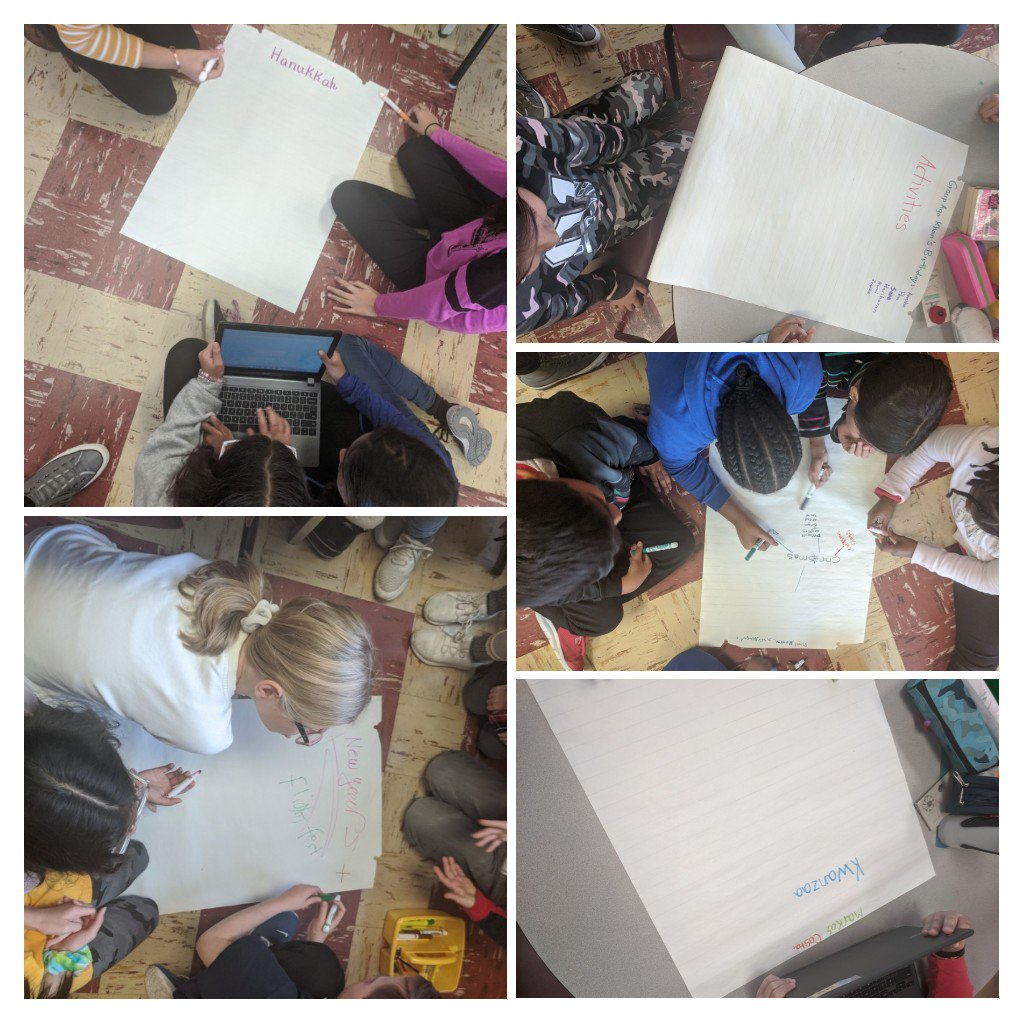
Now I know that we have to go beyond cuisine, celebrations and clothing when really digging in and understanding diversity and I hope that this group is a place where those real conversations can start. We recently voted on a name for our group – the Diversity Club – and we’re hard at work planning out a winter celebration for families. The idea being that we plan an evening where families can come into the school, learn about diverse cultures through hands-on activities and conversations with each other. Students have chosen 5 celebrations that are happening over the next month and will lead activities that evening so that families understand these days of significance in a deeper way. 

We’ve only just begun and it’s really great to see how enthusiastic students are in wanting to share who they are with others. I love how once given space and time, students feel a sense of freedom and ownership and are going well beyond what I could have imagined. Our Slone Celebrations Night is a couple of weeks away and I’m so excited to continue to facilitate this club as students continue to put their mark on our school and make it truly the hub of the community that it should be.

Triggers and Habits in Teaching Part One

Dreaded Seating Arrangements

Almost every teacher I talk to says, “I have a really difficult class this year.”  The difficulties identified are most often tied to “behaviour” issues.  In my experience effective classroom “management” can be connected to dynamic programming and developing solid relationships with students. Many of us go to things like Class Dojo or incentive programs to “manage” behaviour and some have their merits.  However, they might “manage” behaviour, but does it help student to learn to self-regulate?  I understand that there are students who have behaviour safety plans that can provide challenges and I do not mean to downplay the effect that even one student’s behaviour can have on an entire class.  However, there are ways in which we can have small tweaks in our triggers and habits in teaching that will have a positive outcome on developing a community of learners.

So what is a trigger?  A trigger in psychological terms can  used to describe sensations, images or experiences that re-visit a traumatic memory.  It can also mean to make something happen very quickly; a reaction.  It is also referred to as an event that kicks off the automatic urge to complete a habit.*  Habits are seen as something that people do often or regularly.  Habits can even be unconscious behaviours and sometimes difficult to stop.  What do triggers and habits have to do with teaching?

Over the years I think I have become more self aware in the classroom about my own triggers and habits.  It is easy to continue to do a routine in a classroom simply because it is something that we have always done. Even when we have sound pedagological reasoning, it can be difficult to change or cease a habit. For example, for many years I put names on the desks of students before they entered the classroom on the first day of school.  I don’t really know why I began this habit.  Besides a wedding, some kind of gala or a reservation at a restaurant, I get to choose where I sit every day.  It is a fairly important life skill.  I’m not going to find my name on a seat on the city bus.  Once I recognized that this routine was purely out of habit and was “triggered” by the first day of school, I decided to change it up.  On the first day of school with a grade 4-5 class, the students came into the room and sat wherever they wanted. I admit that this made the perfectionist in me who loves order, routine and habit rather uncomfortable.  I had some students sit in groups, some in pairs and some on their own.  Then we had a class meeting about how they had felt when they entered the room and had to make their seating choice.  There was talk of anxiousness, sweaty palms, heart rate increase, fear of missing out and for some it was no big deal.  I decided to create a google form to survey the students about where to sit in the classroom, how often we would change it up and who would decide.  The results of the survey were fascinating.  Some students wanted me to choose where they sat and wanted to have that same spot every day for 194 days.  Some never wanted to “sit” in a group but wanted to be a part of it during group work time.  We came up with a plan that each Monday the students would choose where to sit for the week and the students who wanted a regular spot would be able to keep it and the other students would respect their choices without question.  We also had some extra choices for seating that students could go to if their choices for that week weren’t working out.  The students gained incredible insight into self-regulation.  I heard things like, “I sat with Gracie all week and we’re such good friends, I didn’t get my work done so I’m not going to sit with her next week.”  or  “I don’t hang out with Olivia but I know she is a serious student so I’d like to sit with her in a group.”

It isn’t easy to be self aware while we are trying to keep our head above water, collect permission forms, listen to announcements, adjust our day plan for the assembly that was announced, deal with a parent that wants to chat in the hallway AND teach curriculum.  I GET that…however, being aware of triggers and habits and making small tweaks to our teaching behaviour can make a big difference in our classroom community.

*106:Triggers-The Key to Building and Breaking Habits, Chris Sparks, 2018


Daring Classrooms

I state the obvious when I say that teaching is a demanding job.  If you are reading this, you are most likely a teacher and this is not news to you.  I’d like to highlight a resource that feeds the soul of a teacher (and quite frankly a human being) while also providing some strategies for integrating that soul feeding into your classroom practice for your students.  Wait, what…that exists?  It is a website from Brene Brown called Daring Classrooms.  If you haven’t heard of her yet, you can find “The Call to Courage” on Netflix and/or her Ted Talk on Vulnerability.  She is inspirational in leadership, in life and in work.  Here is a snippet from her #DaringClassrooms website:

“Teachers are some of our most important leaders. We know that we can’t always ask our students to take off the armor at home, or even on their way to school, because their emotional and physical safety may require self-protection.

But what we can do, and what we are ethically called to do as teachers, is create a space in our schools and classrooms where all students can walk in and, for that day or hour, take off the crushing weight of their armor, hang it on a rack, and open their heart to truly being seen.

Teachers are the guardians of spaces that allow students to breathe and be curious and explore the world and be who they are without suffocation. Students deserve one place where they can rumble with vulnerability and their hearts can exhale.

And what I know from the research is that we should never underestimate the benefit to a child of having a place to belong—even one—where they can take off their armor. It can and often does change the trajectory of their life.

Teachers: Everyday should be Teacher Appreciation Day. I am so grateful for you and your willingness to show up and create brave, safe spaces where our children can learn, grow, and be seen.”

Some of the short (8-12 minute) video resources from Daring Classrooms include:

How do we avoid the pressure to please?

How do teachers manage oversharing?

How do we help parents understand failing as part of the learning process?

Does the word “disappointed” shame students?

In addition to the video resources there are free downloads for resources, parenting the classroom and daily life.  There are pdfs that you can print out for working with students.  My favourite one is the list of core emotions.  Sometimes when students have triggers they can’t always name or explain the emotion that caused the trigger in behaviour.  Being able to learn about the names and the definitions of core emotions is helpful for students to self-regulate.

Every year in a classroom brings new challenges.  In fact, every day in a classroom will bring on a new challenge.  I hope that as you lead your own #DaringClassroom you will find this resource helpful and that it may feed your teacher soul.

New Ideas and Connections

This year has certainly been full of unknowns.  We are working with an expired contract.  Reorganization happens with my board late in September.  Just as I successfully created a smooth flow and eager learning with my students, my assignment was jostled around.  As a teacher, I’m flexible with changes. As a human I struggle with change.

As my grade 7/8 class finished handing in their Cell and Ecosystem models, I was moved to a different teaching assignment.  The Cell and Ecosystem unit was completed after students learned how to complete timelines, flow charts and word webs.  These graphic organizers were used as the research component for building their models.

Barrie Bennett has conducted some thorough research about different types of graphic organizers and written the resource, “Graphic Organizers”.  https://www.youtube.com/watch?v=YVasHWQo28c  This is a useful tool to help students develop their research skills and present their understanding in an organized in depth way. Many of my science ideas were gathered from teachers at ETFO’s Summer Academy and NSTA annual presentations.  Some of the resources I gathered and continue to draw my instructional ideas from, are designed and written by ETFO teachers. “Take a Closer Look, A Media Literacy Resource” and “The Power of Story” are both excellent resources with lessons which can be easily adapted for todays quickly changing world.


I am now using my mental health and wellness skills and knowledge to provide support in other areas of the school population. One of the wonderful resources I am using is the fiction story, “Blue Gold” by Elizabeth Stewart. This story brings many areas of social justice to the forefront.  While introducing curriculum content of Language Arts and Health, research and discussions are easier when students can connect to life stories of youth from around the world.

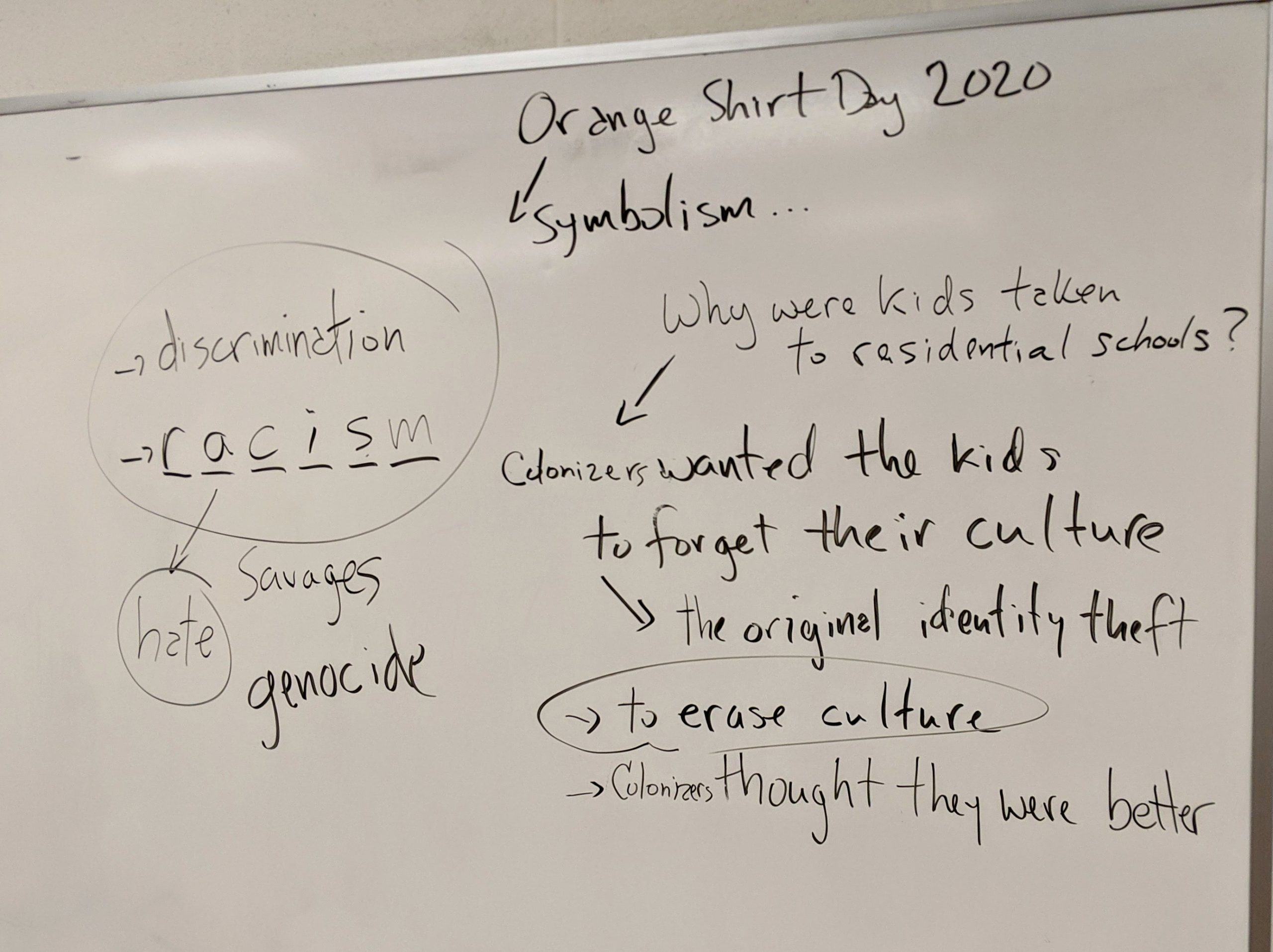
To compliment this with local stories, I have introduced, “Speaking the Truth. A Journey of Reconciliation”. http://orcabook.com/speakingourtruth/ While I am becoming educated around indigenous issues I have found myself reflecting and relating to many important issues. Monique Gray Smith presents a fantastic tool for these learning purposes. The joy of teaching for me is also learning and adapting my lessons in an engaging way.


I Am From Poems – Building A Positive Classroom Community

I’m hoping that it’s been a great start back for everyone! The month has certainly gone by quickly. Having been out of the classroom for a year and being at a new school community, it was definitely all nerves on the first day. I always try to keep in mind that students might be feeling the same way walking into the new school year. While many of my students have been in the same school together since kindergarten, I have a few students who are new to our school this year and have been thinking of ways to make sure that they feel right at home in our classroom. 

Building a positive classroom community is important starting from day one. As a part of building our classroom community, I often ask students to consider who they are as individuals and what they bring to our classroom space. One activity that I have enjoyed over the years is creating I Am From poems. In the past I’ve jumped right into creating We Are From poems where students work with a partner to find commonalities and differences and share them to the larger group. Once they have created a joint poem, we combine different parts of each poem to create one large classroom poem where everyone is reflected.  This year, instead of creating We Are From poems, we started off instead by creating our own individual poems to share with each other. 

You might be wondering what I Am From Poems are. For years, educators have used George Ella Lyon’s Where I’m From poem to inspire students to consider their own narratives. While there are different templates that can be used, I use this template to help guide my students in creating their own. 

On the second day of school, the students in my class were tasked with thinking about who they are and where they are from, learning that our experiences shape who we are as individuals, along with other factors in our lives. By the end of the week, rough copies of amazing poems were complete and students were thinking about the symbols they would use to represent their identities. Just in time for our Curriculum Night, good copies of our poems went up and we had the chance to create continuous line portraits to accompany them. 

Identity work is so important for building a safe and caring classroom community. What ideas do you have for this year? How are students showing who they are and bringing their experiences to the classroom and their learning? If you have great ideas, please share them here!

School year start up

A new school year has begun again and I am once again teaching grade eight, in my opinion, the most exciting and enriching grade I have taught so far.

The first few weeks have been incredible because of the honest conversations we had week one about how great their year can be if they make it that way. We talked about fun trips, ideas and awards that go on during their grade eight year. We talked about what the ideal classroom looks like, sounds like and smells like (ha!) so we made some ideas on how we can achieve those goals. The students have done an amazing job so far on adhering to all of the goals they set out for our own classroom.

A few things have been making this start up so incredible:

  1. There are many student leaders in the classroom who have helped to set the tone for all of the other students in the room. They model positive behaviours and shut down negative ones. There is little to no times where I have interjected to tell them what I expect because another student has already done that for me.
  2. I have already received the help during breaks and afterschool of about 9 or 10 students with teams that go on at our school. These leadership activities have made them stand out in the classroom as well as the extra responsibility has made them thoroughly enjoy each day. That feeling that they are making a difference in their school shows everyday in their mood and behaviours. I am hoping even more students will be interested in these opportunities as only ten of the 26 have stepped up so far. I have awarded these students with small circular stickers that they put on their desk organizers. At the end of the year, we will see who has volunteered the most and those students will be eligible for a token of appreciation (not sure what that will look like yet). It will also help the staff with selecting grade eight awards because they will see who has given up so much of their time for our school community.
  3.  I have offered students homework to complete every night which will help them prepare for grade nine. 19 out of the 26 students have taken this homework and completed it each night. I have three ESL students who I am working on preparing appropriate homework for them so then it will be 22 out of 26. We take up this homework each morning and new homework is given out every night before they go home. The fact that it is optional makes students actively take the initiative to better themselves and their after school time. I am so proud of these students as I mentioned it will help them get ready for grade nine and the few students who took that opportunity last year had the highest marks in the school (they won the principal’s award). It is great hearing groups of students want to hang out after school to work on homework. It is definitely a good after school option for them.
  4. I also have offered students level four or above and beyond opportunities that go with each task we have completed as a class. Seeing those 10-12 students select that option is awesome as they are actively selecting to do better and to challenge themselves each day. I remember being in school not knowing the difference between all of the levels and not knowing how my teacher came up with my mark. I make sure all of my students know how they can excel to the highest level possible.


I think all of these things working together have made it impossible for the students in my room to have a negative experience or to make the day negative for someone else. It is incredible to see such focus and leadership day to day and it makes me so proud of my class. I was away last week at a junior baseball tournament (coached by two of my students) and my supply left only this note, “Your class rocks!” This would not have been possible last year as I must have missed many of these steps in the school year start up. I am really hoping the year will continue in this positive manner.

Having faith in your students and challenging them daily is the best way to go 🙂