Demystifying

Inside

Here’s some Math for you.

May 31 + 1 = June = tomorrow

Despite its awkward elegance, this is only a temporarily true statement. In less than 24 hours it will be 364 days until it is true again. I am not sure 1/365 is a good ratio for truth. Despite these odds, I want to share some figures with you. So happy last day of May 2018 to all of my colleagues in education. Isn’t Math fun? Don’t worry, there will not be a test at the end.
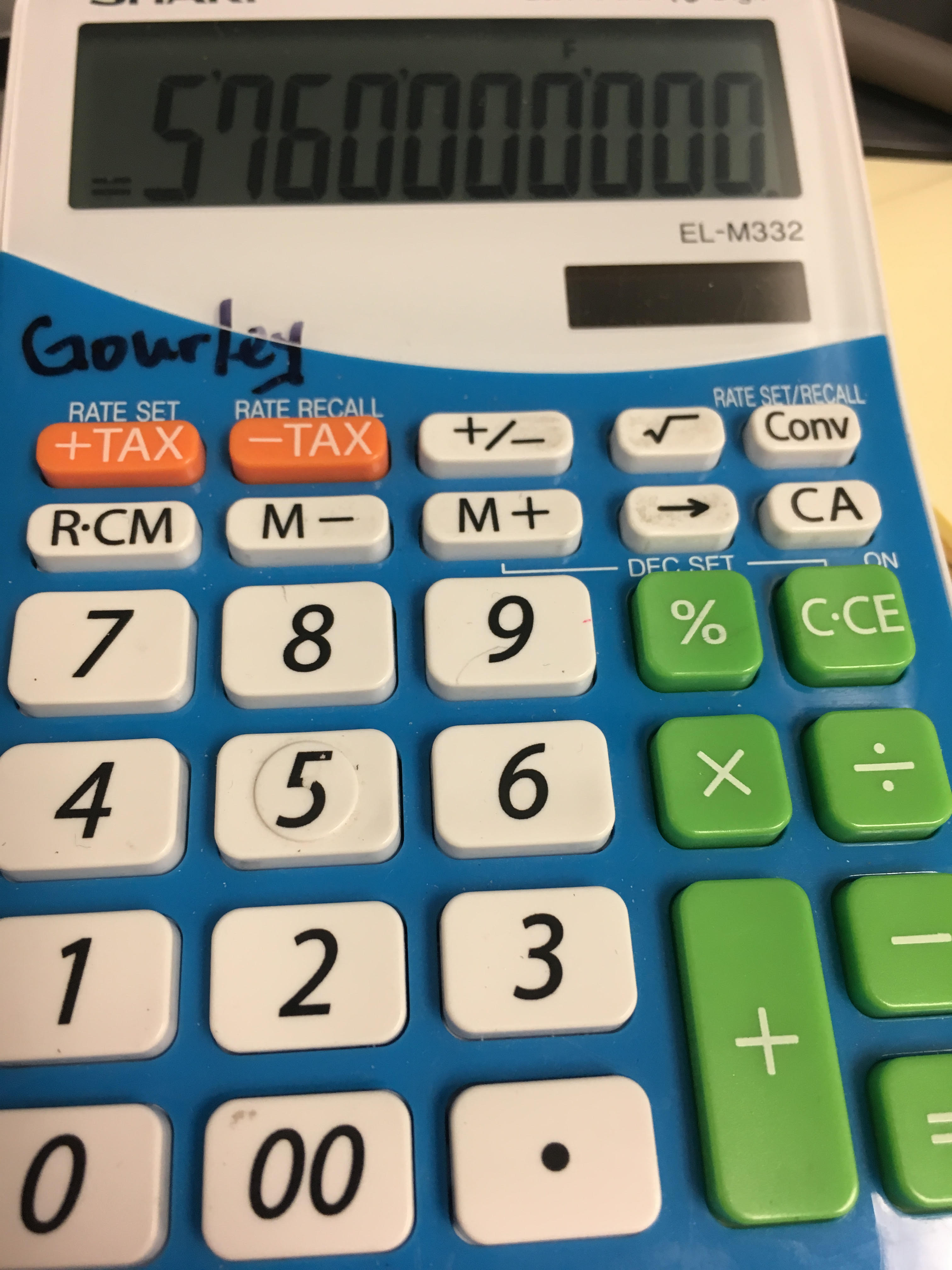
CalculatorFrom a fractional point of view we will have completed 9/10ths of our instructional months at the sounding of today’s dismissal bell. That equates to roughly 180 days +/- in the classroom.

At 350 minutes per day in school(lunch excluded) that means approximately 70 000 minutes of planning, instructional, assessment, supervision, leadership, counseling, and communication time this academic year, so far.  Multiply that by our membership of roughly 80 000, it means we have worked about 5.60 billion minutes or 93.3 milion hours inside of school walls in 9 months.

Add in the other 110 000 educators teaching from K to 12 in our province, I might need a new calculator.

Outside

Now consider the time spent in education outside of school. Let’s say that 4/5s of our union membership brings home anywhere from 2 to 3 hours of work with them each evening(180 days x 150 minutes x 64 000 members = 1 728 000 000 minutes or 28.8 million hours).

And then there’s the weekends. On average I spend 3 to 4 hours per weekend, reading, planning, and assessing. Let’s say 200 minutes to be safe(not conservative) over 40 weekends per year that is another 8000 minutes or 133+ hours for me. Now if 60% of our colleagues are also doing this, it means an additional 383 million minutes or 6.38 million hours.

Are you still with me? I also lead clubs and coach which adds at least another 90 minutes per week. 90 minutes x 40 weeks = 60 hours or 1.5 weeks of a work year spent coaching and mentoring. If 50% of our teachers are doing this it adds another 2.40 million hours since September. All invested in the lives and well being of learners beyond the classroom.

When I add it all up in the past 9 months our membership have worked roughly 133+ million hours since the start of the year. Dividing 133 000 000 hours by 80 000 educators we get an average of 1662.5 hours over 40 +/- weeks or easily 41.563 hours per week – again a fairly spartan(not conservative) estimate.

I know that these figures appear subjective, but I have intentionally minimized many of them to allow for possible inaccuracies to avoid sensationalizing data. However, I am seeing the extremes and maximums far more often than not. When I calculate the time I spend in this calling, it is far greater than 50 to 55 hours per week. My spouse might argue it’s well past 60 hours per week.

I just see it as time well spent and 100% sure I’m not alone.

Thank you for all the minutes and hours you pour into education. I look forward to finishing the final 10 % of this year strong. Wishing you all the same.
Celebrating “Invisible” Progress

A student in my class spoke to me for the first time today. It was the tiniest whisper and only one word, but for this particular student it was big, important progress. She has never been observed speaking to adults at school, only a few other children in the classroom. After trying everything in my ability and to my professional knowledge to build a nurturing relationship with her, finally something changed enough that she felt comfortable speaking to me for the first time. It brought tears to my eyes – another memorable moment in teaching for me.

This has got me thinking about all of the important, not always noticeable, progress being made by my Kindergarten students every day. We don’t always stop and take the time to think about the development of the whole child that is taking place. Educators tend to focus on reading, writing and mathematics behaviours in Kindergarten. Of course, this is an important aspect of the curriculum but it’s also the easiest to observe, measure and assess. Perhaps because it is the easiest to observe, we can sometimes forget to celebrate the more hidden things.

Kindergarten is full of invisible progress. Though, invisible is probably not the right word. Progress in Kindergarten is quite visible if you know how to look for it.

If students are given the opportunity to play, even more so if the play environment is set up intentionally, they will be constantly and rapidly growing. Through the right lens, we can observe social and emotional development in all play that takes place. Kindergarten students are never “just playing”. Their play is a hands-on exploration of the world, but more importantly it acts as testing ground for young children to try out their social skills, problem solving abilities and experience the emotions of everyday life in a safe environment. Children are building confidence and resilience. They are making mistakes, experiencing failure and experiencing success. They are intensely studying the world around them. There are no screening tools, checklists or assessments to measure this growth. It is sometimes hidden, often subtle, and only observed when we purposefully look for it. Just don’t forget that lens.

Our young learners are making huge cognitive, social, emotional and physical gains every day in our classrooms. Progress in problem solving while building with blocks, gains in understanding social cues in the dramatic play centre, discoveries of problem solving strategies in the sensory bin when a conflict arises, building resilience when trying to independently open a snack at the eating table – it’s everywhere. Sometimes we just don’t notice this progress until something profound happens: like a student who struggled with transitions all year suddenly handles them with ease, or a student uses their words to solve a conflict with a peer rather than reacting emotionally as they have all year, or like today, builds enough belonging and confidence to speak to a teacher for the first time.

As we head into Communication of Learning season, I hope we are reminded to stop and celebrate the “invisible” progress that our students have made this year. There will be some students who may not have progressed as well as we would have liked to see in academics, but we can rest assured that our students did learn every single day. They did progress, whether it be socially, emotionally, physically, or in countless other important life skills. I always say that in Kindergarten, we’re growing people – and that really is what we do!


Do-over day

https://www.flickr.com/photos/42931449@N07/5263539723

Have you ever wished that you could do something over again to make it better?
In education, this could be everyday, every week, every month, and every year in our classrooms. If we let it.

Have you ever taught a lesson more than once in order to ensure your students understood and could master the concept(s)? What, you’ve done this over and over!? You don’t say?

This happens more often than all of us think and that’s okay. I learnt very quickly in my career that last year’s grand slam lessons do not always guarantee success when used in the years to come. Hence the need for the do-over, or reinvention in order to revive or re-invigorate what we teach.

What about a retest? A few years ago, I completely misread my students’ progress on a Math strand and the results were glaringly obvious that I failed them. After an open discussion about the daunting unit, I had students take their tests, crumple them up, and throw them around the classroom. It was like a giant breath of fresh air had blown into the room as everyone exhaled.

We restarted the unit from ground zero and had a “do-over day” a couple of weeks later with much improved results. As a result, our class grew closer as a learning community. Students knew that I had their best interests at heart and that learning in our class did not come with an expiry date as laid out in dusty long range plans. After all the curriculum says, “by the end of each grade…” and not immediately after an assessment of learning.

Recently, my students were preparing to share a series of movie trailers they created about the book Loser by Jerry Spinelli. Each group, of 2 or 3, was asked to pull key elements from the text and to present them in the form of a live drama or digital version.

After much planning, production, and practice, the big day arrived for everyone to share their work. Not surprisingly, there were a number of interpretations of the text being shared and the trailers were being presented and screened. And then it happened.

Whether it was nerves or a case of over-preparation(I think it’s a thing), the majority of presentations shared were not the shiniest outputs from this group. Cue the do-overs. When I suggested this, the students seemed generally wary about it, but I was serious. With some descriptive class feedback, we started over again with much more positive results.

Now think about your classroom? Is there room for the do-over within your walls and halls? Imagine the opportunity to reinforce the idea that failure can still be a positive result when it is used as a stop along the way rather than the final destination to success. I believe that the more we build this into our pedagogy, the more our students will be willing to take chances, make mistakes, and move forward.

Thank you for reading. Please share your “do-over” stories in the comments section below.

Free Creation Apps to Show Student Thinking

I was asked to present a workshop about using technology in the Primary grades over a year ago and got into a debate with the Principal at the host school about apps.  The Principal was quite excited about the apps that he intended to purchase for his teachers to use with their students and he showed me his list.  I was surprised.  None of the apps were creation apps.  They were all “practice basic skills and keep kids quiet apps”. I showed him my list of preferred apps.  It was his turn to be surprised.

“These apps that you have chosen for the teachers are a lot like fancy worksheets for kids to practice basic skills.  Those skills are important, but doing a worksheet on an iPad might be a little more engaging, but it is still a worksheet, and an expensive one at that!  The apps that I am going to share with the staff today are all apps that students can choose from to show their thinking in a fun, engaging way that also provides opportunity for feedback and editing.” Unfortunately, he didn’t stay for the workshop.

The main difficulty that I have found with apps is finding something that you can use in schools that doesn’t cost a lot of money and isn’t just a free trial or have “in-app purchases”.  I don’t mind paying a few dollars for an app but when you get into the double digits for a school, it isn’t sustainable.  I thought I would share a few free creation apps that I have used with both the primary and junior grades.  I have also included some samples.  None of the samples are done by students, but I can assure you that each of these are quite intuitive and easy even for primary grades to use.  Each of the apps has a link to it in the App Store for further information.

Shadow Puppet EDU  The name is deceiving and the little white bunny on the app icon is too.  It basically provides a video of a slide show in which you can add voice and text.  Students can link to the already sourced for copyright pictures provided within the app or take pictures from their iPad or with the camera.  The students find this one easy to use but tricky to edit some of the text.  It uploads to Seesaw and other platforms easily.

Here is a sample of Puppet EDU:


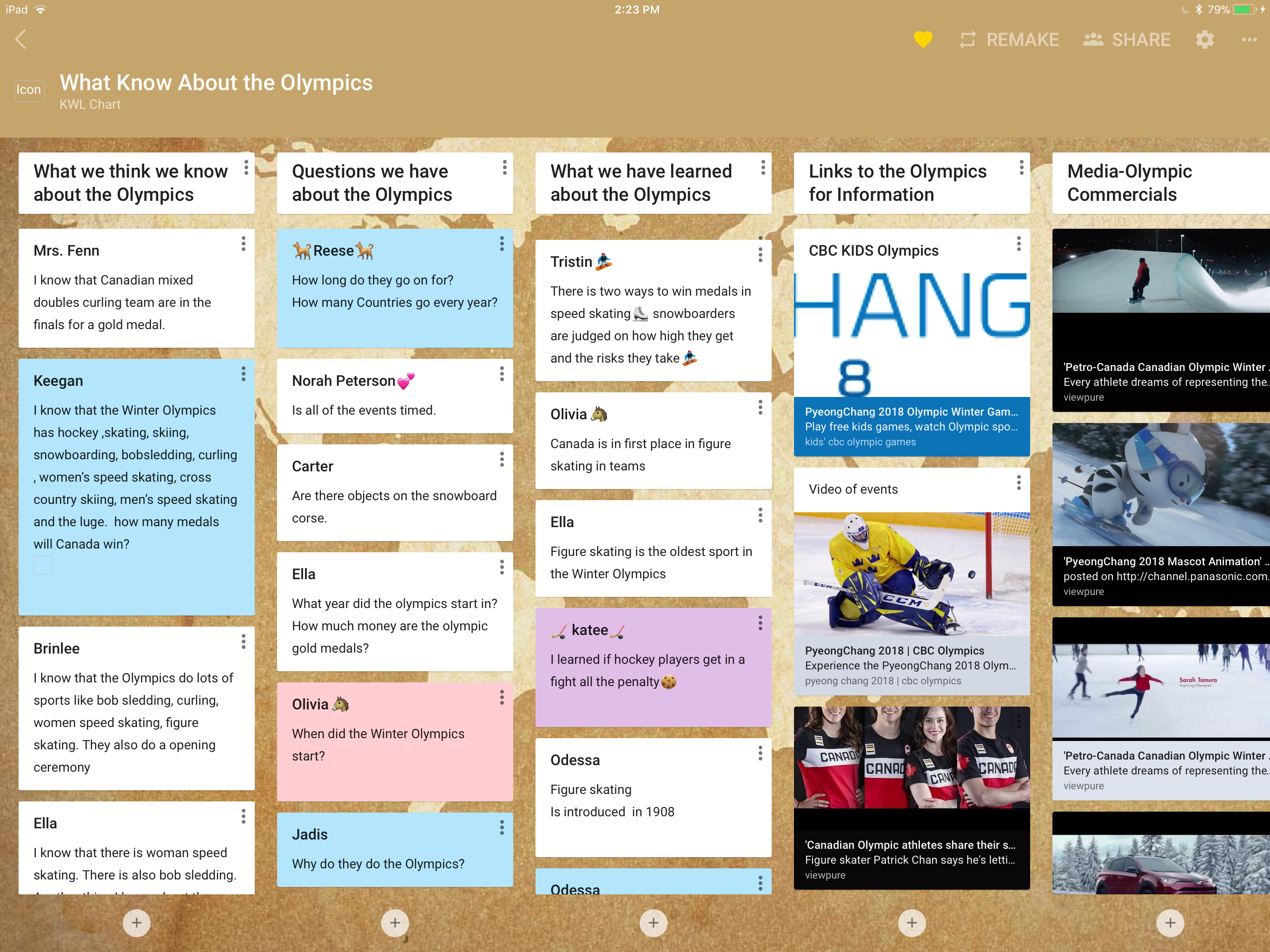
Padlet  I have used this a lot in order to begin a new unit of inquiry on something.  It provides a place to put safe links and videos that I have sourced for the students as a starting point and reference.  In addition, the students can collaborate their thinking with sticky notes. You can share it publicly with other Padlet users, but we keep ours private at this point.  We may share our Padlets with other classes at our school through the use of the QR code and password.  The sign is uses a QR code which you can print out. We are using Padlet for our unit on the Olympics.  The students will then create their own Padlet to share with classmates on an Olympic event that they will research.  Students will be invited to provide feedback to one another.  This is a screen capture of our Olympic Padlet:

2E085D6F-B02D-4F0E-828C-4DA00F168CA1

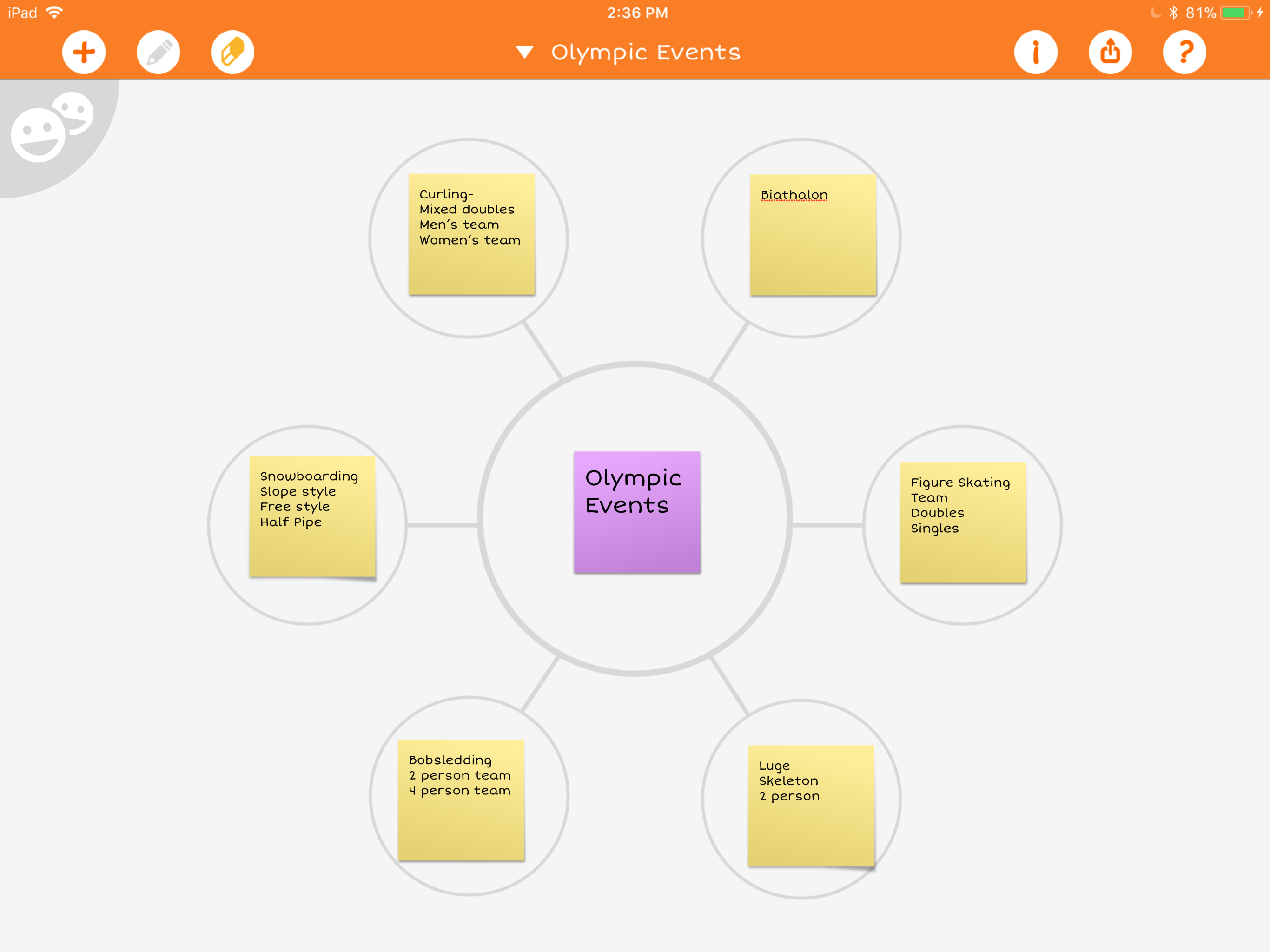
iBrainstorm  This app allows students to add sticky notes, text or hand written notes to templates like Venn Diagrams.  In addition, up to 3 other people can be invited to collaborate on the same template in real time. You can take a screen shot and save it to photos.  It also uploads to multiple platforms easily.

1DC21708-D63F-4C35-968A-3EEB52AC0F12

The Downside

It’s a wonderful time of the year…ish. However, there are a few downsides.
Starting with the scary winter weather commutes, bone-chilling outdoor supervision at -16C, or the daily loss of at least a half hour of instructional time while students remove their winter wear or gear up for recess. Today I was convinced that a child went out for recess and returned as a snowman. It was touch and go whether we would need a lifeguard on duty once all of the snow the students brought inside began to melt.

Then, there’s the realization, that maybe, just maybe I missed assessing something for my upcoming report cards. That sent a shiver down my spine. In my mind I just wrote report cards a few weeks ago. 10 weeks is a few, right?

The end of January signals the half way mark of our instructional year and things are clicking in the classroom. We have our routines back in place, students have shown a lot of growth since September, and there is a feeling of hope in the air at times. Maybe that’s tied to the temperature rising a few degrees and for the days when the trek between the portapack and the main building does not require a Sherpa or tethering students to a guide rope. With chilly temperatures, indoor recesses, and daylight still getting longer, this time of year can sneak up on your mental health and well being to blind side you when your not expecting it.

https://commons.wikimedia.org/wiki/File:Sherpa_Glacier,_Cascades.JPG#file CC BY-SA 4.0

Today, a student was having a bad day. No one saw it coming. I was called into another class to provide support. The student was experiencing an anxiety attack. The entire class was genuinely concerned for them, and offered their support and kind words. Seeing this warmed my heart on a chilly day, but it also screamed about the fragility that exists in our learners. In my opinion, we never get the whole picture of our students lives. Finding time to fit it all in beyond the superficialities is difficult when deadlines and commitments loom.

Although we are in each others’ presence 6+ hours per day, we are often humans doing more so than humans being aware of one another when they are feeling sad, frustrated, or stressed. I am finding it more and more important to let students vent about what is weighing on their minds. Yes, it’s during instructional time, but it is an absolutely integral part of my classroom mental health strategy.

If my students are sharing from their hearts, they will also know they are being heard in a safe and supportive space. If we miss these chances in favour of trudging through the lessons hoping it will just go away, or that the student will get over it in time, then we are at risk of missing our opportunity to help our students when they need us most. There is a downside to this that could lead to depression, disconnection, and despair.

In his 2017 TEDxKitchenerEd Talk, Andrew Campbell shares the reason why he meets his students at the door each day. While watching him share this incredibly personal message, I wondered whether all of the other educators in the theatre wanted to be back at school at that very minute to greet their own students. I know the next day couldn’t come fast enough for me. I wanted to make sure they knew they mattered, that our classroom cared, and that even though we had just started the year, I cared too. It is only through these connections with students that I see any learning made truly possible.

The choice of whether to support, stand still, or dismiss could mean the world of difference to someone who is struggling. Choosing to connect and care over the curriculum at times may be the cure. No downside there.


Don’t Give Up on a Tough Class

I have one class that is very tricky. It is a very large class with a lot of emotional, physical and academic needs. It is the two periods in the week that I wish I had a clone of myself so that I could meet everyone’s needs immediately all the time (with this class I might need an army of clones).

I would rate the autumn with this class as alright. We have had our ups and downs. Some periods have gone well. Some have not. The thing that has been most consistent with this class is that I refuse to give up on them and their ability to do well in Music.

I feel at this point in the year, I have tried so many strategies to get the classes running smoothly and find ways to support my weaker students. However, it wasn’t until this past week that I feel like I have made a breakthrough!

I have finally landed on a combination of whole group instruction, peer-supported creations and individual choice.

Getting to know the students has been an important factor in this positive change. I have had several conversations with many of the students about sports, animals, music and all of their interests. I have used that knowledge to help build a relationship with them and inform my decisions around content for upcoming classes. I know for one of my students who is having the most difficult time at school right now, he really loves sports. I am planning to do a basketball dance this term to incorporate his interests.

I also have some students in the class who are significantly below grade level. Many of these students are embarrassed to ask other students for help. They are weak in reading and writing and therefore, they are very reluctant to work with many of the students in the class. Last week, I went to each of them individually and asked if they felt comfortable with anyone in the class. I let them choose who their partner was and since they all had a say in who they were going to work with, they all had a level of comfort in working in the class.

I met with the classroom teachers about good accommodations that I could provide for their students with upcoming assignments. I have also conferred with the classroom teachers about medical needs and emotional needs.

I have built in the usage of many of my student’s strengths. Everyone has so many amazing skills and I have tried to highlight them. I have a student who can’t read but is great at tech. He is my technology advisor and the kid I send everyone to when we have problems. Another student can’t read either, but is an incredible singer and rapper. He can improvise at the drop of a hat and can generate ideas at a speed I cannot match. When we need lyric or rhythm ideas, we know who we can count on.

I have continuously worked on trying to improve the climate. Last week, before we started our partner activity, I had the students do the game Two Truths and a Lie with their partner to build a relationship with their new partner. Taking time away from curriculum to build climate has been worth the investment.

Using choice as a motivator has also worked exceptionally well. Students begged me to allow them to listen to music of their choice when they are finished their compositions. “For sure!” I said. We are developing a pre-approved list of music to listen to.

Ultimately, the most important thing is not to give up. Have a good cry, a particularly big piece of chocolate cake and a long phone call complaining to your friend about your difficulties. After that, analyze what is going on that is not working, and start a plan tomorrow. And if that doesn’t work, try something else on the next time. It might take time, but it is worth it!

Learning to swim

https://www.flickr.com/photos/eviltomthai/5129962638 CC By 2.0

I remember laughing when our teacher taught us that fish swim in schools. You know how kindergarten students think, right? Naturally, I wondered which classroom at my school held the aquarium? Would dolphins be there too? Then came the cruelest lesson of all; dolphins are not fish. Why was I even there?

All these years later, I understand that we were the fish in that educational ocean. We were taught to swim in a school at school zigging back and forth as if in a constantly choreographed current. Sit here, read this, write this, stand here, go there, eat, play, run, think, solve this, and repeat.

We were learning to swim in our little school to survive life. Zagging in and out of the doors and halls from class to class like small fish between coral reefs and vegetation.

We swam for all of our might and soon discovered 2 things; the current kept getting stronger, and that danger was always lurking in the water. Without learning to swim, we were at risk of being singled out, devoured, or even worse, drowning. Yup, fish can drown…kinda.

The reality that fish can drown(suffocate) makes me think that even when students seem like they are swimming along fine, they could still be at risk. How we teach our learners to swim and navigate the waters comes with equal parts skill, frustration, and grace too (thanks to the Tragically Hip). So are we teaching our students to swim for their lives, or are we over fishing them to death with rote lessons, busy work, and too many assessments?

When Giovanni Caboto, aka John Cabot, and his crew discovered the rich stocks of cod fish off of the Grand Banks he told the King of England that there would be enough fish to feed the kingdom until the end of time.

Little did he know that within a 500 hundred years, the Grand Banks would become over fished and the cod population was nearly decimated. The lessons learned over the past two hundred years in education are caught in a similar net.

Our students are over tested. The system has cast the same catch-all nets for too long. They feel too much stress, and they see the world of their future as a total mess. The oceans they’re inheriting are clogged with the debris left behind by their predecessors. Remember, these are the same people who gave us standardized testing, drill and kill Math, regurgitated learning, and grammar police state nightmares in both official languages.

Ironically now, there is also a figurative and literal garbage patch to clean up thanks to current education systems and its ancestors. What was once a thriving home full of opportunities and diversity is now a murky, polluted, and estranged place. Insert image of bleached coral here.

What I fear the most is that our students’ reasons for learning are disappearing like the cod on the Grand Banks. Without an intervention, the desire to learn that is coded into our youth faces extinction too. Can we revive this generation of learners by teaching them to swim, by cleaning their waters, and providing the safe habitat for them to thrive?

Book group

A colleague of mine started a book club for educators in our school. We read the book “The boy who was raised as a dog” which takes you on the journey of various stories from the child psychiatrist, Bruce D. Perry. The book group involved seven to eight educators discussing the assigned chapters we had read for the week. I highly recommend this read for any teachers who have ever struggled with a “challenging” student. The book details the accounts of many children Perry encountered whose traumatic past altered their future. The book teaches all teachers to have a compassion that is so necessary for these traumatized children.

We discussed many things during our meetings each week. We started discussing the chapters but the conversations always had a way of covering anything and everything. The meetings helped me go into each day with an open mind and a compassion for a child’s situation that I did not have before. You rarely think of the reason someone behaves “badly” or defiantly. We may just assume that that is the way that child is. Many of us may have not stopped to think of the reason for that action. Realistically, we all have a lot on our plates that day and we may be thinking of a quick way to discipline the child. The book helped our book group members to think of ways to help these children in class so that they may have a successful future outside of it.

Today was our last meeting and we took the last twenty minutes to reflect on our love for teaching. How amazing of a feeling it is when you have that moment in the classroom (or outside) when you just get that feeling of “this is the most incredible job on earth!” We all discussed moments we have felt like that and how incredibly lucky we are to be teachers. The book group was a great way to celebrate and to continue our love for learning. If anyone would like more information about this book, please let me know. The book could change your entire outlook on those “tough” situations, reminding us never to give up on a child or to jump to negative conclusions especially when we do not know their entire situation.

Connecting Area and Perimeter to Art-Piet Mondrian

Whenever possible, I search for ways to integrate the curriculum to create deeper learning opportunities for students and connect to the world around them.  It has always been easy to make connections between geometry and art.  Measurement and art wasn’t something that I had integrated much before.  However, in working with my Teacher Candidate from the Trent University Faculty of Education program, we were excited to see what the students would create.  It only goes to show you that when teachers are able to work collaboratively, wonderful programming ensues for students.

We have been working on perimeter and area for a little while, but students were still having trouble figuring out the difference between the two concepts.  We started by giving the students 9 square tiles.  Students were asked to create a 3 x 3 array of square tiles and determine the perimeter and the area.  The perimeter was determined to be 12 and the area determined to be 9.  From there, students were given a number of different challenges to reduce the area but maintain the perimeter of 12.  The challenges grew increasingly difficult.

1.  Reduce the area by one square unit but maintain the perimeter of 12 units.

2.  Reduce the area to 7 square units while maintaining the perimeter of 12 units.

3.  Reduce the area to 6 square units while maintaining the perimeter of 12 units.

4.  Reduce the area to 5 square units while maintaining the perimeter of 12 units.

5.  Reduce the area to 4 square units while maintaining the perimeter of 12 units.

6.  Reduce the area to 3 square units while maintaining the perimeter of 12 units.

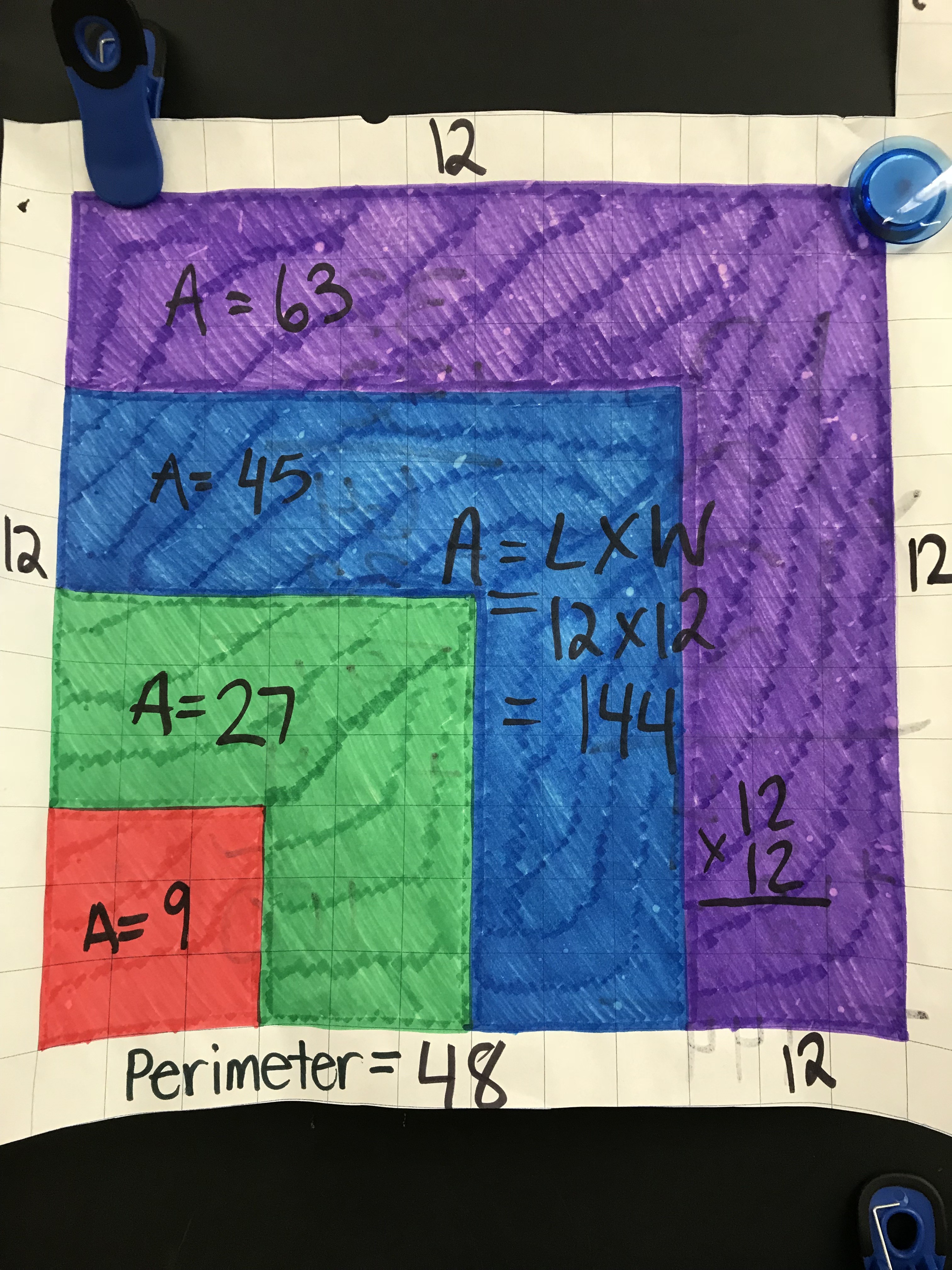
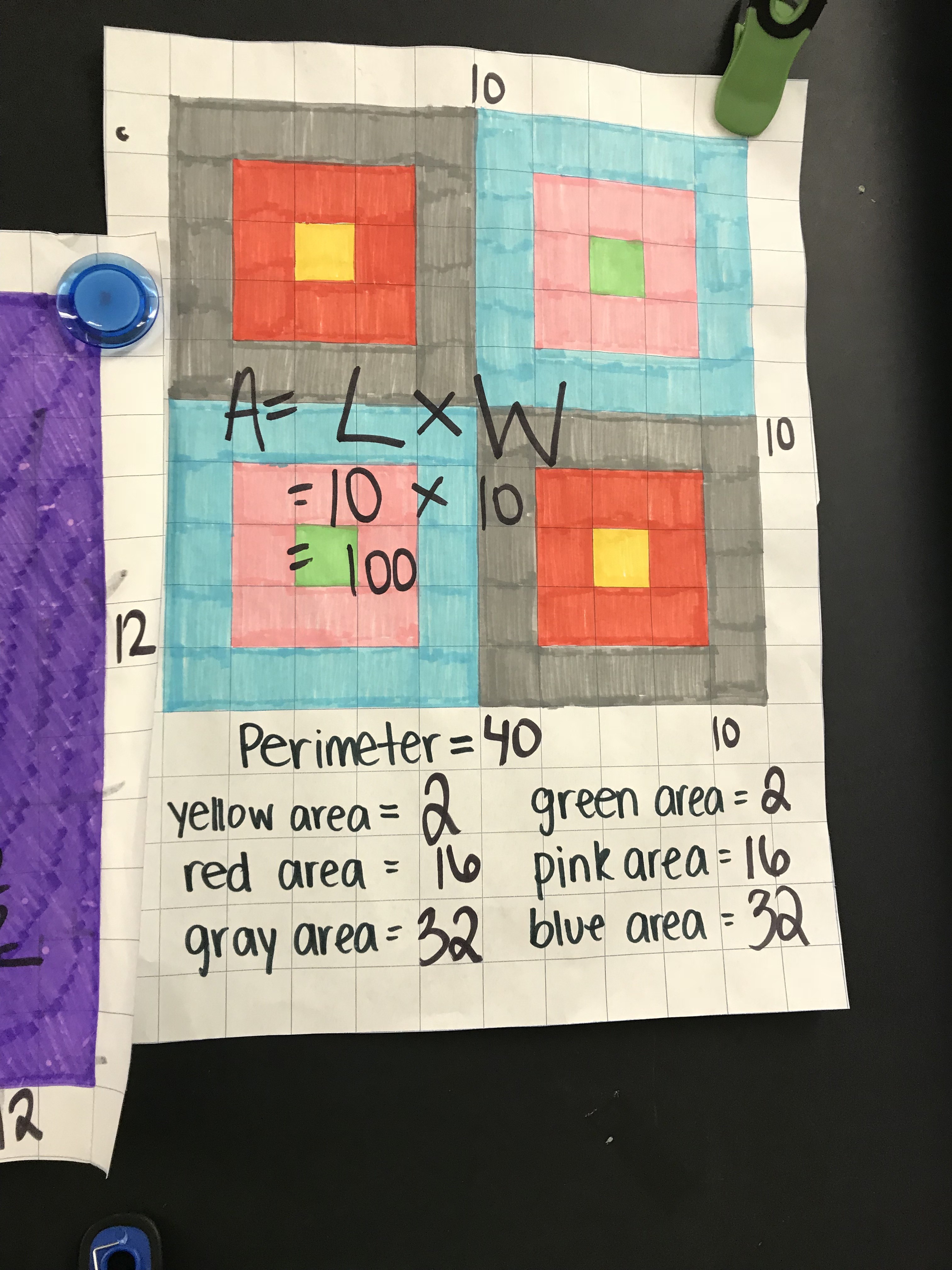
After having the students share their different solutions we thought we would show the students artwork that Ms. Marchiori created inspired by Ellsworth Kelly’s “Colors for a Large Wall”.  In a guided math lesson the students figured out the area and perimeter of different parts of the artwork.  The way in which students figured out the answers to the area demonstrated that they had a much better understanding of the difference between area and perimeter than they had previously.

artworkmath                   artworkmath2


At this point, we wanted to get into the artwork and considered the work of Piet Mondrian.  Piet Mondrian is famous for the work that he created using primary colours, horizontal and vertical lines and squares and rectangles.  Perfect for working with area and perimeter and for incorporating the different elements of art.

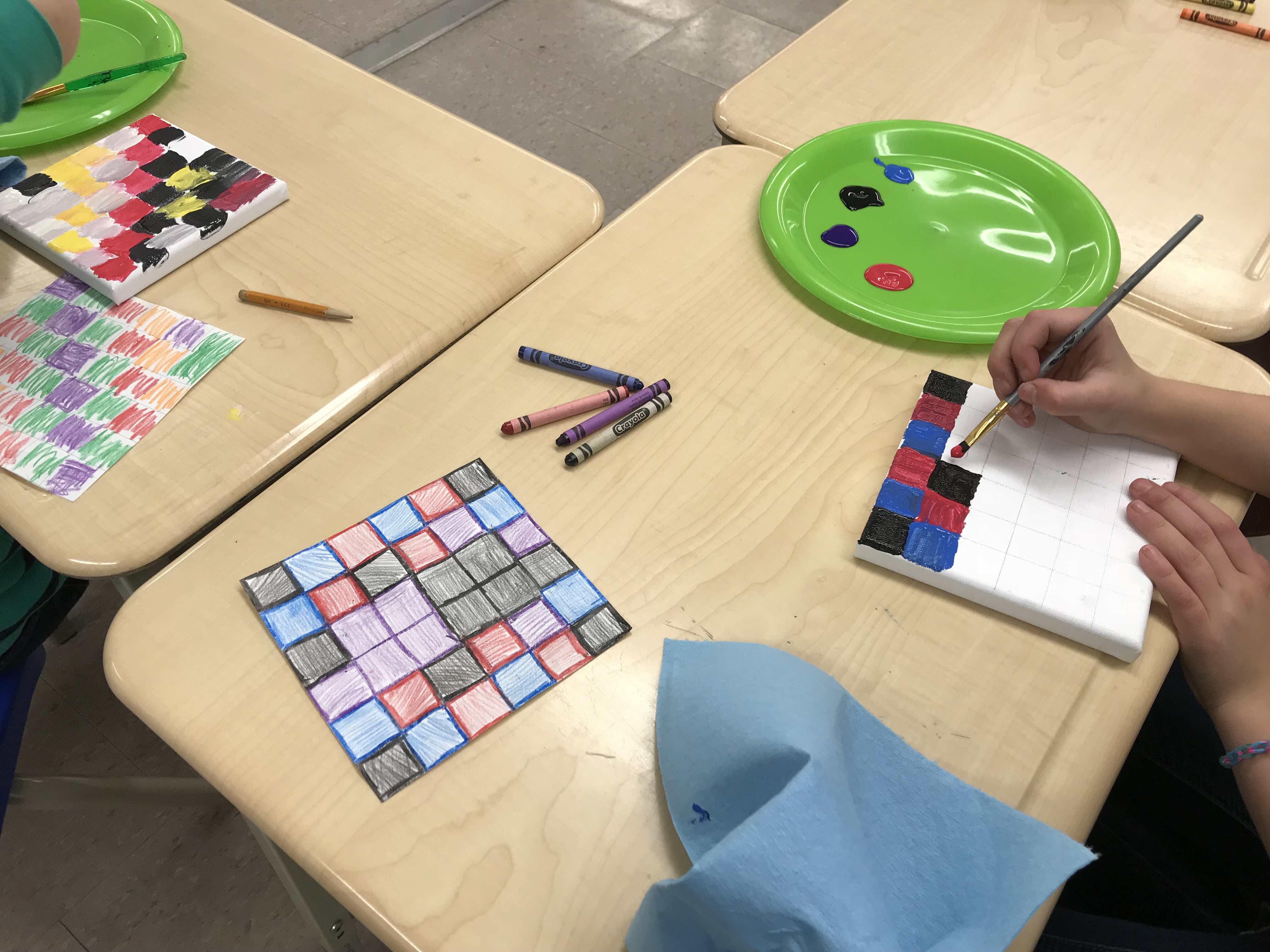
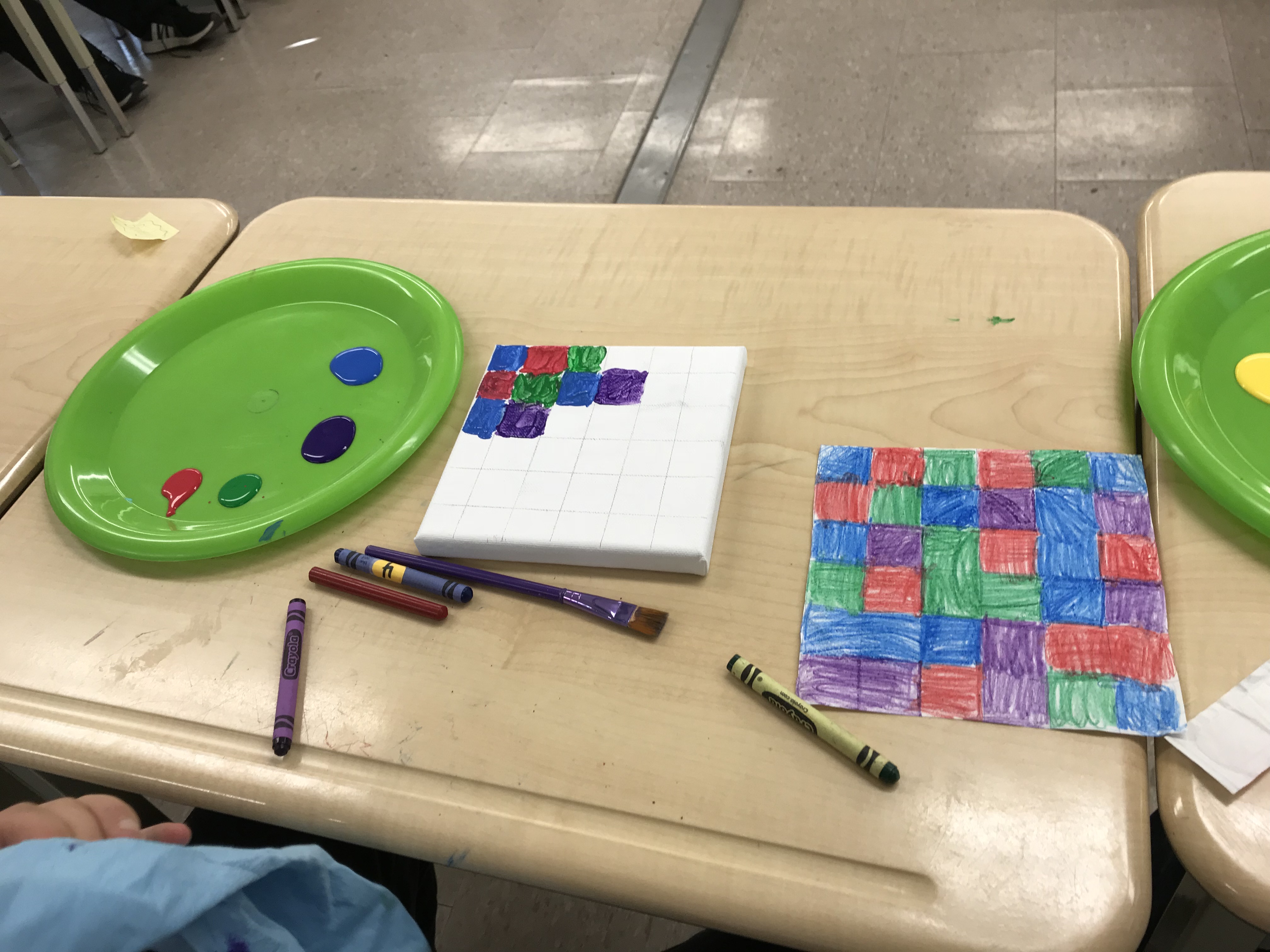
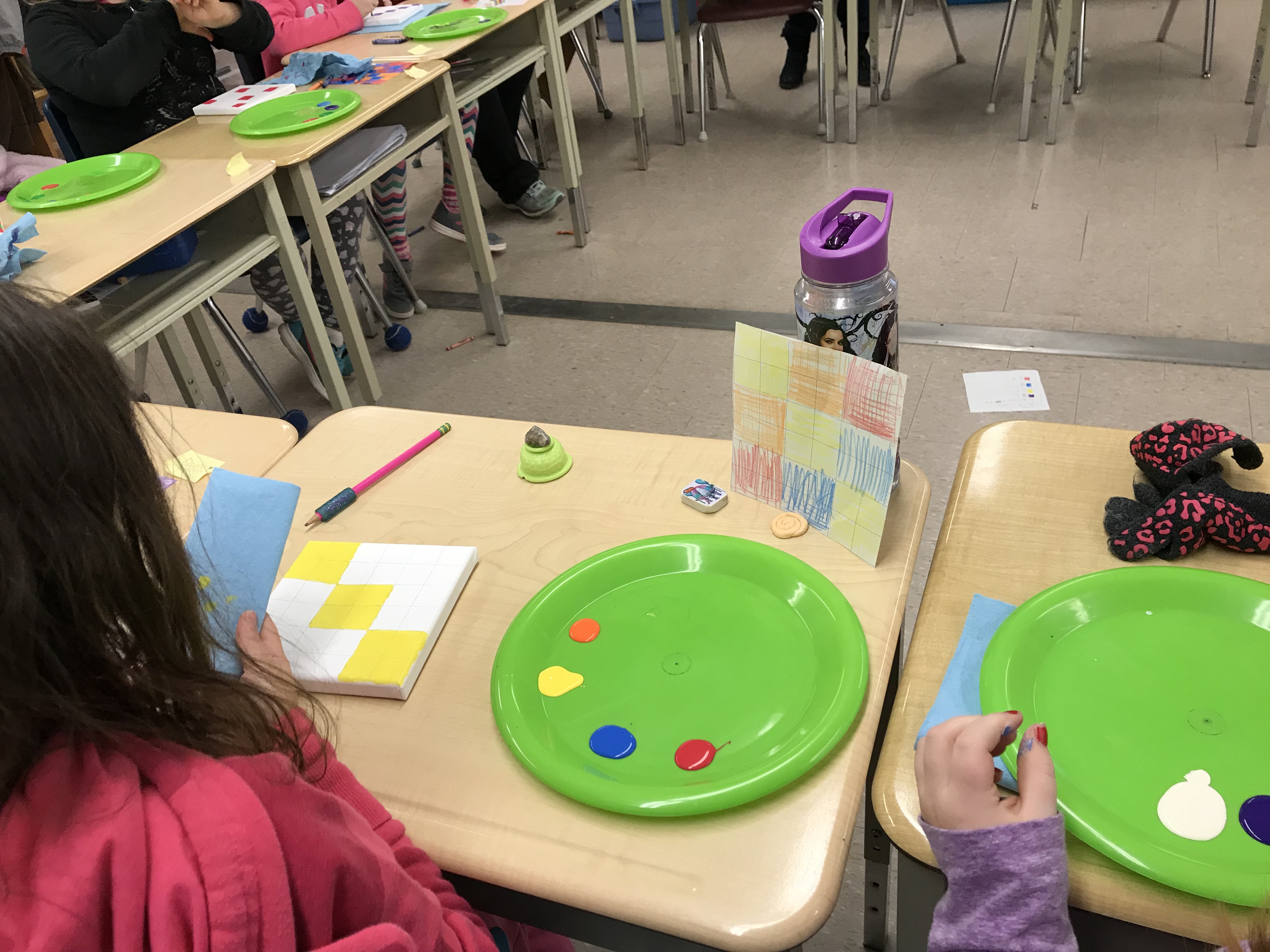
Ms. Marchiori showed the YouTube video of Piet Mondrian’s artistic life in a nutshell.  Afterwards, the students then created their own Mondrian inspired artwork using chart sized grid paper (6’X6′) and crayon.  To continue our math focus, the students then had to calculate the area of each of the colours that they used and write that on the back of their art “plan”.  From there, the students used acrylic paint on canvas with grids drawn in pencil to recreate their “plan” for their art.

artwork3 artwork 4 artwork 1

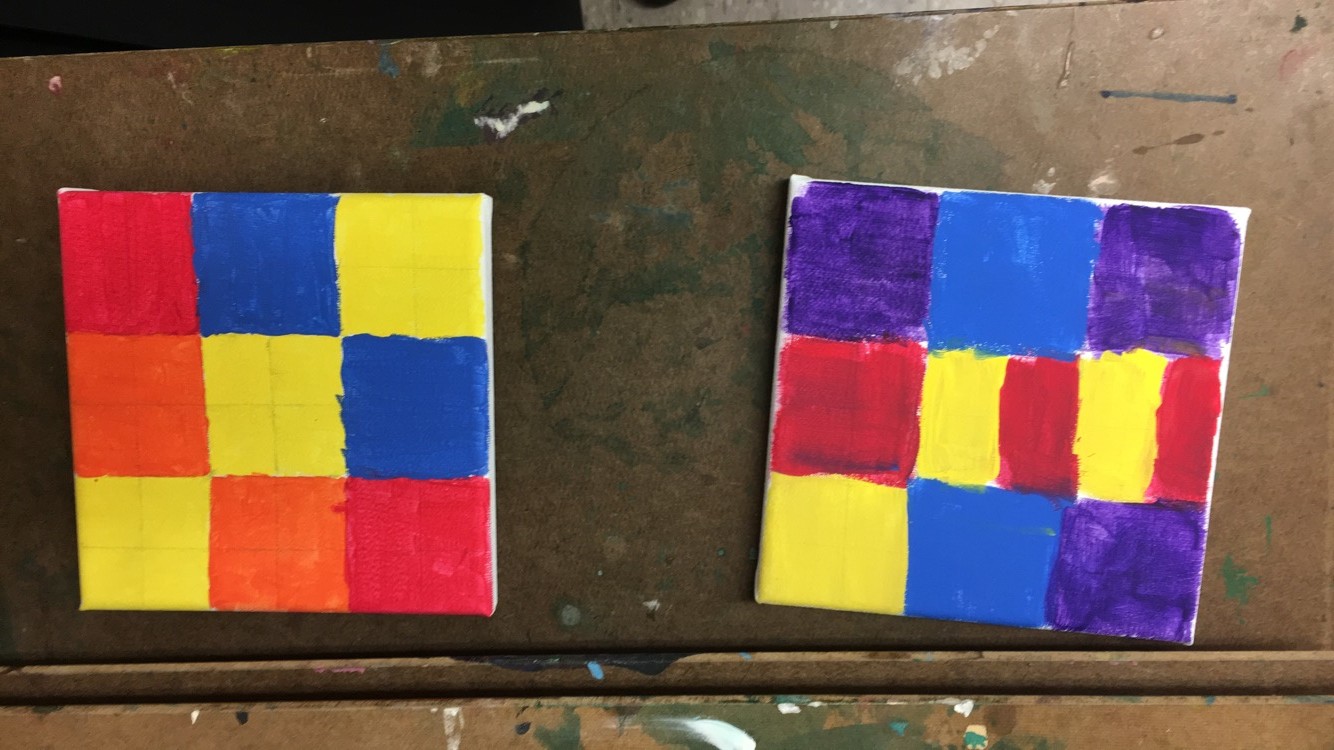
A few of the finished artwork samples;

IMG_4067  IMG_4065 IMG_4064

This artwork would also connect to fractions.  Students could express their colour content in a fraction, reducing it to it’s simplest form and then compare which colours covered the largest fraction of the area of the painting.  When the artwork is complete, the students will be adding an artist’s message about what they learned during the process about area and perimeter, about the elements of line, colour and shape and about Piet Mondrian.  This week we will be creating Mondrian inspired artwork while exploring balance and colour in art using much of the same grid technique but with the medium of crayon resist and watercolours.


An easy to use student friendly assessment tool

hqdefault

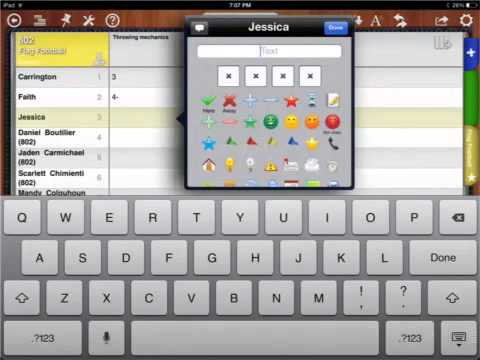
After meeting my new NTIP mentor the other day, she introduced us new instrumental music teachers to an app called “iDoceo”. I had used this before but had never really gotten into it. Since hearing about it again recently, I have become so attached to it.

iDoceo allows you to assess students quickly on the go on your ipad. The app is free in the HWDSB catalogue and maybe in other boards as well. When commenting on the process or product of a certain student, you can use icons, recordings, comments or other notes. These icons are easy to use and you can copy and paste them. You can then add them to another student’s column with an easy double tap. For instrumental music teachers, this is helpful because you can add a small recording to your student’s file so that you can listen to it again if you missed it the first time.

Students can also always view their marks and I use the icons to record these marks. So if a student wants to see how he/she is doing with “attitude/behaviour/self control” he will view his name and see what icon is beside it. The options are a green smiley for always/level four, a yellow smiley for usually/level 3, an orange smiley for sometimes/level two and a red frown for rarely/level 1. Students have a quick and visual way to view their process or product marks in class. Of course during performances I will still use a rubric for them to take home but for everyday efforts, this app is amazing! I always have students coming up to me asking to view their marks. They are eagerly searching for those green happy faces.

I love the app so much that I have brought it into my 4/5 split class. I use it for their learning skills so especially while they are working in a group, I record their efforts for the day.

I think that children love to know how they are doing and something as simple as a coloured happy face is an easy check for them. Of course it is hard for me to always remember to keep the iPad in my hand but over time I will certainly get used to it.

iDoceo-available on ipads. Check it out!