What does it mean to learn? For me, learning is the trajectory between not knowing and arriving at new understanding. What, then, does it mean to teach? Teachers have long been grappling with this question and exploring the best way to define this through the study of pedagogy. Pedagogy is the method one engages to facilitate learning. It makes the difference between those who know a lot of information (content knowledge) and those who know how to skillfully craft learning experiences that will facilitate the acquisition or construction of information. Thus, to teach means to employ pedagogy.
So beyond big words, what does good teaching look like? This is something that I consistently reflect on to see how much I’ve grown and developed as an educator. Seven years ago, as a new teacher, my enthusiasm around teaching revolved around how much knowledge I could share with my students. This was usually demonstrated by how much I spoke. Since then, my vision of teaching and practice of pedagogy has drastically shifted in that now I believe a good day of teaching takes place when my students do much of the talking and we all engage in the learning. Effective teaching, though ultimately reflective of student learning, is the intentional construction of experiences that invite curiosity and nurture the construction of new understandings. In other words, good teaching nurtures the conditions necessary for learning to occur rather than the teacher saying a lot of “stuff”.
As a math teacher, I get excited when learning opportunities arise that provokes dissonance and ignites curiosity. The careful blend of the familiar and not yet known motivates students to embrace challenges that have a low threshold but a high ceiling. Students are engaged in a real life problem that causes them to arrive at many stumbling blocks of previous understandings and must harness perseverance in order to proceed forward in constructing understanding. In such cases, I often encourage my students to “embrace the struggle” as the the inverse reaction to dissonance is learning. This way, students become motivated learners not because of a sticker or a final grade, but simply for the joy of learning. Bottle up this experience and you get good teaching – the intentionally crafted growth-opportunities nurtured by teachers. These experience don’t happen when teachers do all the talking, these things happen when teachers allow students to experience their own journey between what is known to that which is understood. This is what it means to learn.
“We come to work for our students but isn’t it nice when we get along with the adults? (Heart and Art Book of Teaching and Learning, pg. 12)
As teachers, we are so careful to nurture positive learning environments for our students to learn and thrive in. We are mindful of the social, emotional, physical and mental well-being of our students and work diligently to ensure that they are safe and secure in our care. Our families are grateful for the love in which we care for our learners and they are resolved in knowing that the adults in the building are committed to their personal well-being of their children. How then, do we nurture this same kind of environment for ourselves and our colleagues? After many years of working with many different educators, I’ve come to realize that adults are super comfortable addressing the needs of students but act in ways that are incongruent with how we take care of ourselves. Collectively, we are intentional about teaching students to be respectful and cooperative, but how might we nurture these great habits amongst ourselves? The following, though not an exhaustive list, are some things we can try tomorrow to foster healthy working relationships amongst our colleagues:
Send a thank you note or email to express gratitude.
Visit the staffroom for lunch at least once a week. Sharing a meal lends itself to conversation that allows you to get to know those you work with and appreciate the diversity they bring.
Start a wellness club that encourages physical, social and mental well-being through physical activity and healthy eating.
Escape your “divisional cubical” and reach out to those you may not have the opportunity to work with. We have more in common than we think.
Start-up a book club. My favourite thing about reading a good book is talking about it. Why not explore a text together and see how much that ignites collegiality amongst the staff.
Say “please” and “thank you”. Manners just makes the world a better place.
Presume positive intentions but also be honest when an offence has occurred. Talking it out with the presumed offender will invite a learning opportunity, as opposed to engendering future conflict and harbouring resentment.
Smile wide and laugh loud. The radiance of a smile and the joy of laughter always makes for a welcoming.
As the adults in the building, we really need to take care of each other. We are growing the adults of the future and the model we set is read more nuanced than the one we say we expect. Let our actions speak volumes in our commitment to serving our learners. Let us serve the community. Let us serve each other.
Aaaaah, fresh air! It’s like the earth turned on an air purifier and sun lamp to awaken us from our annual hibernation. There is excitement all around and almost everyone at my school seems to have a bounce in their steps. This is probably because we are not getting weighed down by clunky boots, toques, scarves, mittens, snow pants, and parkas.
Spring has arrived, and the classroom has come alive again.
Is there anything like a fresh breath of air that comes with Spring? From our class window we watched a stubborn, dirt-laden snow pile melt into oblivion. We beat you this year Winter! And now we wait for the field to dry so we can, once again, run free over our own school savanna without fear of a mud bath.
Now that it’s official, it means there are a little more 9 weeks of school left for 2015-16. Thoughts of changing classrooms, grade assignments, or moving to a new school are popping up like the buds on a tree and returning Canada Geese. And then it hits – the sudden realization that reports cards are due in 7 weeks…or less.
This post is not intended to scare you, but to encourage you through what are some of the most incredible chances to teach, learn, and grow your classroom community. Have you taken advantage of planning some lessons that include the great outdoors?
One of my favourites is called Survivor – School Perimeter. In this lesson teams of students must complete Math challenges for a chance to win the choice of measurement tool they’ll use to find the perimeter of our building. Tools range from a broom handle, ruler, metre stick, rope, and Popsicle sticks. Students get to enjoy the time outside while sharpen their measurement and team skills in a large scale task. The activity culminates with students drawing scale diagrams of the school based on their measurements.
photo by Nero K. used with permission
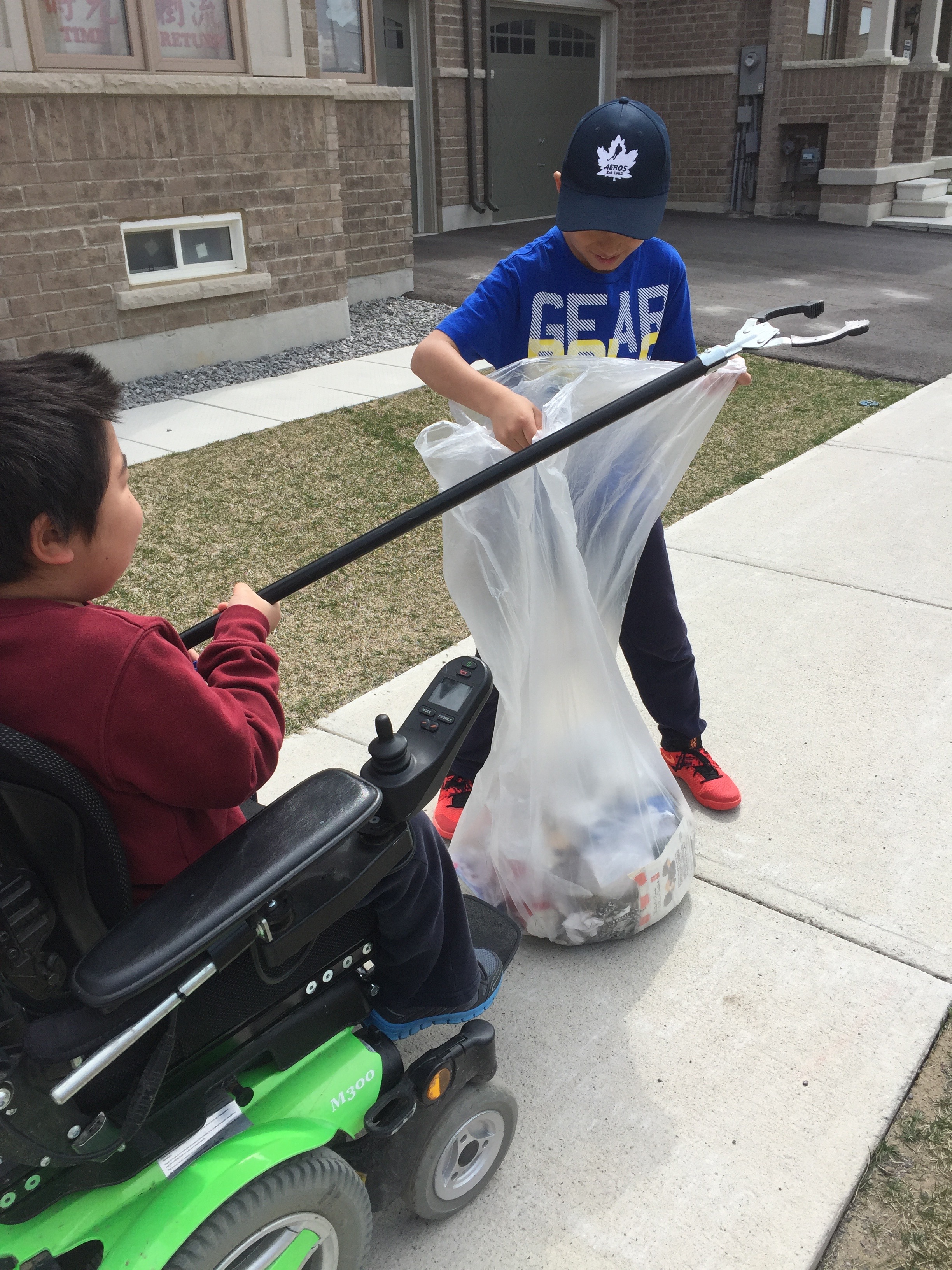
The great weather has also lead to community service projects. Last week our school celebrated Earth Week and spread out through our neighbourhood collecting trash from the lawns, sidewalks and side streets. Students were given gloves, a few trash bags and a half hour to tidy one block of our subdivision in Markham. This activity promoted civic pride, community outreach, and good environmental stewardship. Students could see the visible difference of their collective efforts and felt a sense of ownership and pride by their actions.
So with the weather warming, and the instructional days flying by faster than geese with jet packs heading north it’s time to get outside, take a deep breath, and enjoy some incredible outdoor learning opportunities. Thank you.
By Muffet – flickr.com, CC BY 2.0, https://commons.wikimedia.org/w/index.php?curid=16416451
Do you have a favourite outdoor activity or go to lesson now that the weather has improved? Please share it in the comments section below and help keep the conversation going. See you out there.
If there’s one thing I’m constantly reflecting on, changing, and rethinking, it’s my assessment practices in the classroom. I’m not sure I’ll ever feel like I’ve found a way to track my students’ progress that works for me 100%, but I’m getting close! I’ve spent some time recently chatting with colleagues about how I assess my students, and based on the feedback I’ve gotten from them, I decided I would share my general assessment practices here in case anyone might find them helpful.
My assessment binder has a variety of components: class lists with a bunch of little checkboxes where I track completed work, marks, and so on; class lists with a comment box after each student where I write anecdotal notes about specific tasks; a large table where I keep sticky notes with anecdotal observations throughout the week; other pages I find helpful along the way. I’ll try to address these all specifically in this blog post.
Daily/Ongoing Assessment
I start every day with a discussion or a small task designed to reinforce something my students learned the day before. Discussion questions provide my students with the opportunity to practice their language skills in a relaxed way. Questions range from silly what-if situations to more serious topics like bullying. While my students are discussing the topic, I make notes about their speaking and listening skills on small post-it notes (one per student). These notes not only record students’ strengths and areas of need, but also inform my teaching in the sense that I can target my lessons to common areas of need or errors being made by many students. I try to focus on different students each day so that by the end of the week, I’ve noted something about every student in the class. When I have a moment, the post-its go on a laminated table I have.
The table has a box for each student in my class. Throughout the week, as I write down notes about students, I keep the post-its on the table in my assessment binder. At the end of the week, I transfer those notes into an electronic document for each student. I have one document for each student, which allows me to look back over the year and see my observations for that student all in one place. After I’ve transferred the notes to my computer, I usually shred the post-its. Sometimes the post-its are about specific subjects rather than learning skills or behaviours, and in those cases I may choose to keep them elsewhere rather than my computer files. I have an area of my binder for each subject, so it’s easy to keep the post-its in the appropriate part of the binder when necessary.
Sometimes I have a question or two on the board which I ask students to answer in writing rather than having a discussion. For example, this past week I have been teaching my students about light, so occasionally when they come into the room in the morning I have asked them to answer questions about what we’ve learned. This shows me who is understanding the material, who needs a bit more guidance, who is totally off-base, etc.
Task-Specific Assessment
When I want to keep notes about students’ achievement relating to a specific task, such as a project or presentation, I use a class list with a comment box next to each student’s name. I keep notes on feedback I provide to students, collaboration with peers, etc. in those boxes. This way, when I provide feedback to students, I still have a copy of what I said to them on-hand and can see the whole class at a glance. I keep those sheets divided by subject/strand in my assessment binder. They’re used for reporting and evaluation of student progress in specific subject areas.
Reading Assessment
I do GB+ evaluations (the French equivalent of PM Benchmarks) every two months with my students. These running records get placed in alphabetical order in a section of my assessment binder specifically for them. I like to keep all of the running records from the beginning of the year to the end.
Those are the three primary ways in which I track student progress. It works reasonably well, though there are definitely improvements I could make to my system. I find it easy to find information when I need it, which is handy when meeting with students’ families or trying to look back on the feedback I’ve provided to a specific student over the past few months.
One last piece of advice, regardless of what system you use to track student progress: back everything up. Whether you use a paper system, an electronic system, or a combination thereof, make sure you have a copy of your notes somewhere. You never know when something might go awry with your binder, your computer, your files… speaking as someone who has lost a term’s worth of data unexpectedly? Don’t be that person who has to scramble to figure out student marks and comments at the last minute when your hard drive fails!
When my students arrive into my alternative behaviour classroom in September, so do their parents and families. The family’s beliefs and attitudes about school have been shaping ever since their child became a part of the formal school system. For the family of my students, that means that most communication from the school has almost certainly been a negative scenario that had unfolded. So when I complete my first call home in September what do you think the response is from the parent who answers the phone? You are right, “Okay what did my child do now?”
Just as it takes time to build relationships with your students, so does it take time and effort to connect with families. This is especially true for families of students who have struggled in school or have had difficulty adjusting to school and classroom expectations. For me this starts with an onslaught of ‘Sunshine Calls’. A Sunshine Call is a strategy that I use to gain the confidence of my families by showing that I care about their child, I believe in their child and will balance the type of information that comes home and not dwell on the negative (attribute based approach).
The best analogy I can use to explain the benefits of this strategy is to compare it to banking. The more positive deposits that I put into my account (compliments, sunshine calls) the stronger that balance will be. When I do have to make a withdrawal (call home about a negative scenario) my positive balance will hold me over and the relationship will remain stable and the family will be more likely to support me knowing that it must be concerning for Mr. B. to be calling home about it.
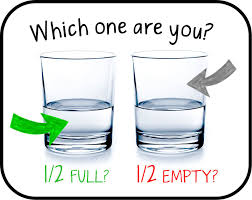
What is exciting for me, is when my students start to understand and realize that their best efforts and positive changes will be shared often and ongoing with their family. I start by asking them if they would like me to call home and tell their parents about some positive scenario that took place that day. They 100% of the time say an astounding yes. As they come to realize this is a regular part of our classroom, they begin to ask me to call their family and let them know about their math work or reading. That is the time that I know why I will always look to see the glass as half full.
This is the second post in my word series in spirit of circling the bases of baseball and education. I’m back at the plate to take another swing. Click here for an instant ‘read’play of my first at bat.
It’s the 7th inning, and your back at the plate, again. So far you have popped out to short stop, struck out looking, and are starting to regret getting out of bed today because you are sitting on 2 strikes already for this at bat; and the pitcher is feeling pretty smug about setting you down for the third time in a row.
photo by jcclark74 CC0
You shake off the crowd noise and focus on the pitcher itching to make you look bad, again. Here it comes. The moment that defines you, validates you, and proves to the watching world, and yourself, that you deserve to be here. Your focus is Zen like. You want to hit one out of the park so badly, and leave the doubters gawking in awestruck wonder of your talent, and requisite, albeit, controversial bat-flip.
Here’s the pitch! Muscles tensed, eyes trained to the ball, hips and hands executing the swing in a fraction of a second, and in your mind play the immortal words of Jerry Howarth, “There she goes!” But the sound you hear is more of a thunk! You make contact, and the ball leaves the bat with barely enough force to escape the infield. Somehow, you are on base with a blooper, and after 2 failed attempts to get on base, you take what you can get. Time to make the most of it.
The classroom, like the baseball diamond, is where learning gets ugly and messy. Mistakes are going to be made, and that’s ok. Thoughts of perfection on every play only lead to frustration and disappointment. They are also unrealistic and can come at the detriment of the learner/player.
In baseball, like education, the goal is to get better every day. Results may often not be a result of what was planned or prepared for, but they allow us immediate feedback to keep our heads in the game. Do we quit when things are not going our way? Of course not. A perfect lesson in education, like a home run in baseball or pitching a perfect game, may be moonshot goals that should not keep us from swinging for the fences anyway.
Funny how life is like that too. The sweetest victories usually come after the most difficult times. As long as we are willing to be learning we are capable of achieving something. Success will look different from day to day. Are we preparing our students to stay in the games, step up to the plate, and take their swings? How we prepare our students will make all the difference. This comes through coaching, practice, resilience, and confidence. There is only one way to make this happen and it comes from believing in our students.
In a sport loaded with statistics, it is easy to glean relevant information about everything in baseball. Did you know that the last person to hit 400 was Ted Williams of the Boston Red Sox. It was in 1941 and few players ever since have even come close to attaining, what is arguably, the most illusive achievement in professional baseball. Education has been known to keep stats too. Between government standardized tests, and need for assessment metrics from JK to infinity in the classroom, there is no shortage of data. But what of it? Are we using the data to its fullest? Are there better ways to measure success in the classroom like Sabremetrics I mentioned in my first post?
Baseball Player by Paul Brennan little paul – Public Domain
Imagine that since 1941, not a single player has been able to hit the baseball 4 times out of every 10 at bats. That’s a 40% success rate! What if we looked at our students that way. Would any of them be in the hall of fame with a success rate like Ted Williams? What would are world look like if our students were lauded for their swings and misses as much as their hits?
To some, it gets worse. In the modern era, if a player is able to hit the ball 3 times out of 10 over lengthy career he too has a good chance of being enshrined in the Baseball Hall of Fame*. That’s by being successful only 30%. This got me thinking. How are you celebrating the success of your students? Are you finding them stressing over their last at bat(test result, essay, project)? Are they able to learn each time they come to the plate and take a swing without losing confidence when they get out?
In her incredible TED Talk Every kid needs a champion Rita Pierson shared how important it was to celebrate success in learning, even if it was a failure by all standards. I often lose track of this myself and need to take stock of the little victories that happen in the process. As teachers, if we are greeting students heading back to the dugout after an out with disappointment or derision then we are missing a chance to build confidence in them, and a chance to help reflect and prepare for what needs to happen for success next time.
If we can share this with our learners then success is possibly only a few innings away. In this way we can encourage and equip students to be ready for when their turns in the batting order come around again.
Most of the learning I’ve experienced as an elementary school student is a blur. There are few moments, however, that stand out as pivotal and that have helped shape my experiences as an educator today. One of such moments was grade 7. It was in grade 7 that I learned the word mediocre. Before then, I had never encountered this word and once introduced, it was truly a powerful moment for me. In learning this word I was given language to express an idea that I didn’t even know had existed. This is the power of language and this is why I fell in love with words. My fascination with the ways in which words can be intentionally nuanced to convey ideas with such lyrical intensity fascinates me; not only because of the creative ways in which ideas can be constructed, but also because it is a tool for granting access to discourses that without them one would remain silenced. I experienced the power of language but also that language was power. This experience brought me to my journey of engaging my students in the politics of language and exploring ways I could grant them access to platforms of thinking simply by equipping them with the language of power.
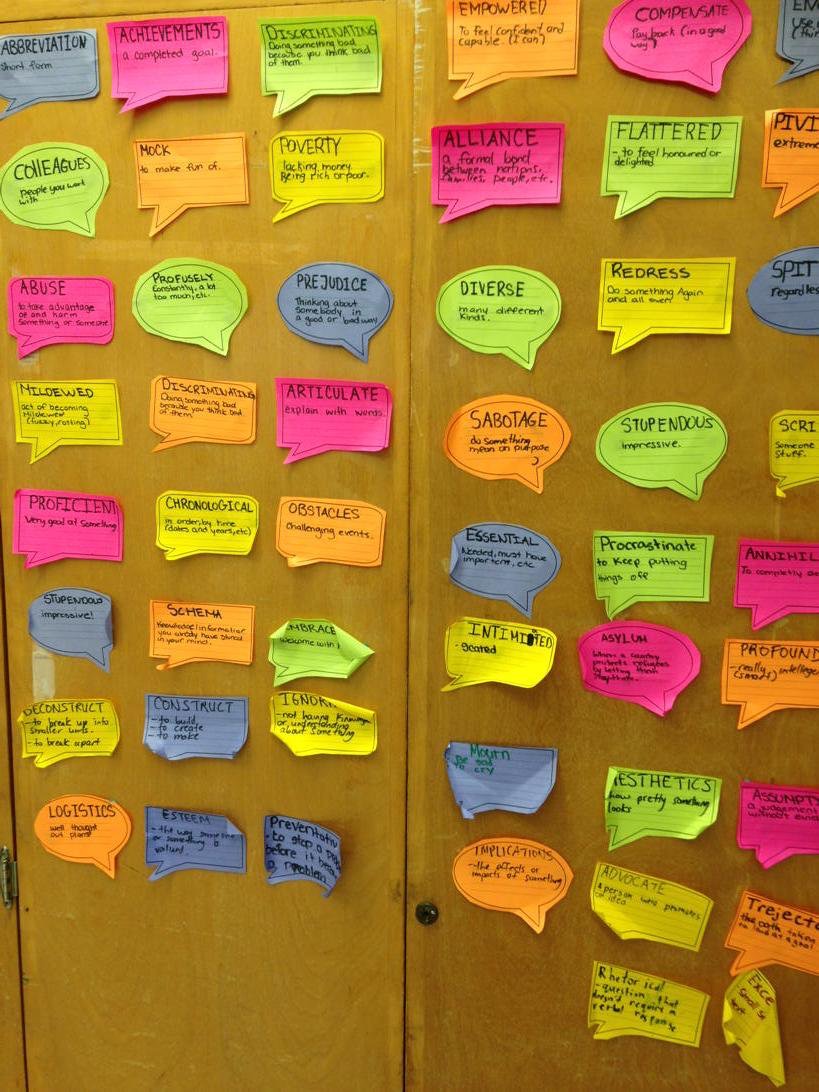
More than mere vocabulary boosters, words of the day or word studies, when introduced in meaningful contexts, can not only enrich student vocabularies, but can also give volume to their voices as thinkers, activists and world changers. My journey toward empowering learners with the language of power began in my first year of teaching. It was a grade two class and I was terrified. I had no idea what to do or how to go about it. It seemed like all the learning from my formal teacher education went out the door as soon as the students walked in. I realized I was in trouble when I would speak to my students only to receive blank stares. What I wrestled with was whether or not to make what I was saying more child-friendly or to simply bring the children up to speed and create many teachable moments with the words that I used. The result was the latter and we began an anchor chart entitled “Ms. Nelson’s Fancy-Schmancy Words” where when students stopped me mid-sentence to seek understanding of a specific word I used and it would be added to the list along with its definition and the sentence in which it was used. Now, 7 years later, the anchor charts have evolved into a word wall in which students are constantly identifying not only new words that I used but also introducing ones of their own and adding words they find in the literature they read or listened to on a daily basis. The love for words became contagious and the thirst for learning new ones was intrinsic.
Students were then invited to use words, or the language of power, as tools in exerting voice to an authentic audience. Students were empowered by words when they interviewed all 5 Mayoral Candidates in the 2015 Mayoral Election. Students wrote speeches and presented them as great orators in front of invited community members that included the local crossing guard, a church pastor and family and friends. Students raised awareness by writing blogs about the impact of their social identities and shared these sentiments with the school community. Their words spoke to issues of social justice and coloured the imagination with distinct imagery, was a power to be wielded in the pens and voices of elementary school students.
Word wall from my Grade 5/6 class: sabotage, aesthetics, logistics, schema, implications profound, trajectory, embrace, chronological, deconstruct, procrastinate, intimidated
The notion of neutrality speaks to the experience of being impartial or unbiased. It speaks to the absence of asserting value, power or privilege over another or the act of being impartial, unprejudiced and nonpartisan in nature. There are many areas of teaching and learning where the existence of prevailing politics is named and sometimes challenged: Whose stories do we include in the social studies/history curricula? What literature is considered to be the cannon? What art forms are considered cultured? But when educators think about the tapestry of math education, this notion of it being neutral tends to be widely agreed upon because of the perceived objectivity and absolutism that characterizes the ideas that are explored. But I wonder…is math really neutral?
“Math is about numbers. Surely it is neutral.”
This year, in supporting English Language Learners in math, I have learned many new Mandarin and Cantonese words from my students. More specifically, I’ve learned the inherent ways that Chinese characters are written to nurture a conceptual understanding of quantity. For example, the number eleven is written 十一 which means “ten-one” or can be understood as “ten plus one”. Similarly, the number twenty is written 二十 which could be understood as “two tens” or “two times ten”. Finally, the number thirty-three is written 三十三 Which could be understood as “three ten and three” or “three times ten plus three”. The fact that the word for the number eleven, when represented in English, has no relationship to the the concept of quantity speaks to the way numbers are represented are not neutral. This discrepancy in language representation speaks to the biased nature numbers are conceptualized through language. Thus proving an inherent bias in the ways in which numbers are conceptualized and number sense is acquired. Similarly, the bias toward English representation of numbers can limit the conceptual understanding of languages that represent numbers in a more conceptually friendly way.
“Math is about problem solving. Every has the capacity to solve problems.”
Consider the following problem: Brandon travels to the city using the subway. Each car seats 30 travelers. How many people might be on the subway if there are 10 cars? What background knowledge might students need to have in order to understand the context yet a alone respond the the problem mathematically? While the problems we pose to our learners may involve numbers that can be calculated and manipulated in flexible ways, the context, when coming from particular experiences, can deny access to the learning that needs to be achieved. In other words, if the context from which we invite students to explore math concepts can be carefully crafted in order for our learners to be able to relate to the ideas, they can also be unintentionally crafted in ways that could limit students access. In this way, contexts are never neutral because they come from a particular place of knowing or experiences that not all students have access to.
So there you have it. I’ve explored two very simple ways bias is experienced in math discourse. The presence of even one form of bias discredits the neutrality of math. If math, a lens for viewing the worlds through numbers, shapes and patterns, can be ladened with bias and politics, what else about the schooling experience share this similar trait?
Spring is definitely here, perhaps this is not so evident in our temperamental weather, but by the fact that baseball season is back. In honour of that I wanted to share some connections to how being a student of the game is like learning in the classroom.
I look at baseball as a sport for all ages and genders. Everyone can play. In some ways, a baseball diamond could be the ultimate classroom with so much going on at anyone time in the stands, in the dugout, and on the field.
Baseball is a game of scenarios. There are constant situations to be thought through in every game and there are statistics kept from little league to the major leagues. Just think of all the other Math skills at play in the concession stands, ticket offices, and accounting/payroll departments. Math is an important part of baseball.
Baseball is a game of Physics. How a ball rotates from the pitchers hand towards home plate determines its trajectory. The angle and bat speed at which a player makes contact with a ball determines its flight duration and distance. Major League Baseball measures everything possible on the field that happens in a game, including ball rotation, pitch velocity, swing(bat speed), and field area covered in a program called Sabremetrics. I wrote this TED Ed lesson called Future of the game: Baseball latest statistical revolution to show how it is used.
Weather plays a role here too. Forecasts determine whether games can be squeezed in or postponed. Data from on-field temperature, and prevailing winds gets noted too. Imagine the engineering required to design the perfect outdoor ball park because no two seem to ever have the same design.
Baseball can be altered and adapted to suit the level of all its players. There is Kickball(soccer baseball), marshmallow baseball(played with a tennis racket and a bag of marshmallows), and Rounders. Some might even prefer the game of Cricket as it may be more familiar to their students than baseball. All of these adaptations have similar fundamentals and transferable skills.
Baseball is a team sport. No one can play all of the positions at once. It requires collaboration. Everyone plays a role whether in the field or waiting to bat. Baseball is a thinking game. Many of the lessons of life come from playing it. I mentioned Math and Physics before, but there are other areas that come in to play here too;
Emotional- Players can get caught up by a moment, or when a mistake gets made. This can lead to other mistakes if focus required to make the next play. Baseball teaches its players to keep their minds on the game. It also shows students that mistakes are going to happen. How they recover from them is an important part of the game/lesson.
Mental – With all of the statistics kept in baseball it is important for players to know what to do with the information. Processing on the fly and responding just like in the classroom comes from preparation aka practice. Players and students alike prepare for games/tests receiving coaching/instruction and next steps for improvement.
Feedback – Whether playing baseball or learning in the classroom there is always feedback. Some is positive and some is negative. This can depend on something as simple as mindset, timing, and delivery. With students the risk of being kicked off the team is never on the table. There are no minor leagues in education. Teachers are in the room to help all of their students make contact with the ball and circle the bases with their learning. Regardless of the type of feedback teachers and coaches are there to instruct, identify talents, and encourage their students.
When a player strikes out, there will be another chance to bat. When a player walks a batter or misses a throw, there will be another chance coming their way soon. The lesson is always be thinking and practising for the next opportunity whether it is in the classroom or on the field.
So as the players take to the field for the next umpteen months take some time to share this incredible game in your classroom. Take time to enjoy the Science, Math and chance to develop life strong habits of resilience and teamwork.
Cancer is a ruthless disease. It knows no boundaries, respects no ideologies or cultures, and disrupts the lives of everyone affected by it. Cancer has a twin in education. It’s bullying.
Recently, I was creating some TED Ed lessons about bullying(in its various forms –The Cyber Bullying Virus and Bully Dance). This got me thinking about the following question;
What makes bullying so virulent that it can evade, morph, and destroy generation after generation?
What if we looked at bullying like it was a medical epidemic? If we called it a disease, which it truly is, would it be treated more seriously? Could it then be given the same attention and urgency as HIV/Aids, Ebola, and Cancer are in the medical world?
Or have we built up our immunity to the existence of bullying in our schools that says if it is not happening to us? Like cancer, bullying is serious. Its symptoms leave lives in havoc along its path.
Yet, for all of the attention(meetings, resources, legislation), research, assemblies, and instructional time invested into eradicating bullying across multiple lifetimes it has not disappeared. With fingers pointing in all directions it is time we all look to our youth to solve the problem of bullying because the adults have made a mess out of it.
Remember back in 2014 when school trustees, all adults, managed to create a working environment so toxic that the police needed to be called in to deal with the troubles. My students asked why the adults couldn’t get along? I couldn’t answer it with anything other than bullying.
How do we justify this behaviour to a media savvy student body when those in positions of leadership are modeling “do as I say, not as I do” by their actions?
The course of treatment for the cancer of bullying is simple. Let students lead.
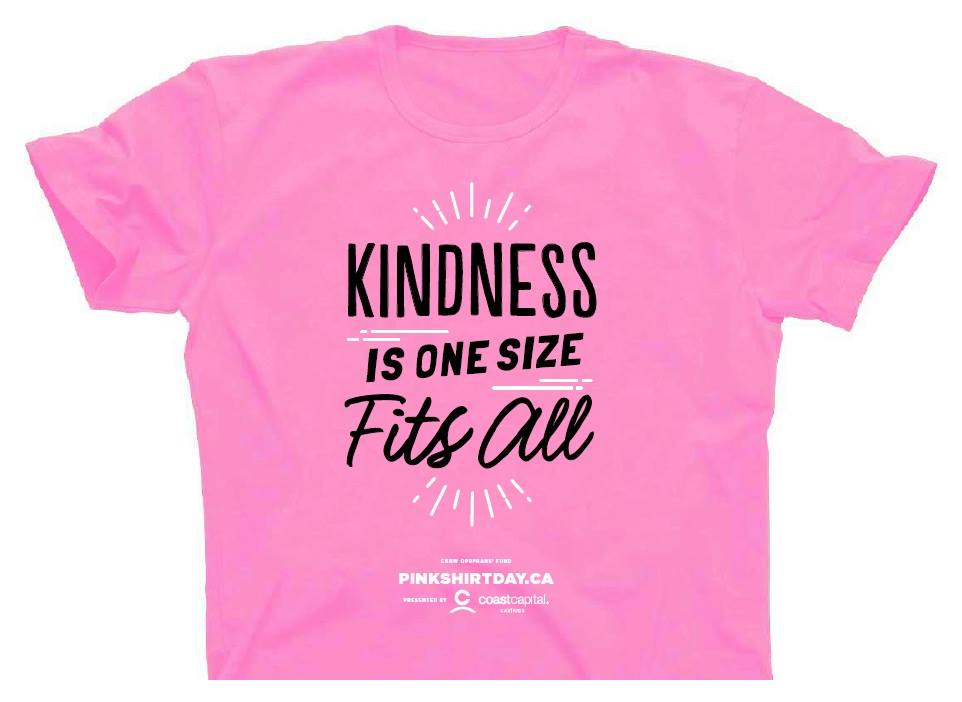
Students possess limitless energy, potential, and ideas so why not equip, empower, and get out of their way to do great things? A powerful example of a student led initiative to stop bullying is Pink T-Shirt Day. It started in 2007 at a Nova Scotia high school where a grade 12 student defended a grade 9 be being bullied because of the colour of his shirt. It has since become celebrated as a national day of awareness, with schools across the country holding stand up to bullying by wearing pink events.
One of the reasons Pink T-Shirt Day is such a success comes from students leading the way. It has now fostered other wear pink events to fight bullying, homophobia, and transphobia. My school will be participating in its 2nd Day of Pink of 2016 on April 13th. At its core, pink shirt day is a way for everyone to stand together in order to focus on everything that unites us. I feel more student led events like this would set a positive and lasting example for people who have struggled with bullying at all levels of education from classroom to committee.
When students are allowed to lead they naturally rise to the task. Want proof? Look at the impact that Ryan’s Well, Free the Children, and Me to We have made on our world. Each amazing initiative inspired by a student.
Think about how you can encourage your students to be agents of change and social good in the fight against bullying in your school. I would love to hear if your school participates in Day of Pink activities. Tag me here or on Twitter @willgourley.
p.s.
I had Jell-O in the title because I was looking for a silly focus point in the title. There is an explanation of my true dislike for Jell-O at …why I hate Jell-O on escheweducationalist.wordpress.com.



 all home and tell their parents about some positive scenario that took place that day. They 100% of the time say an astounding yes. As they come to realize this is a regular part of our classroom, they begin to ask me to call their family and let them know about their math work or reading. That is the time that I know why I will always look to see the glass as half full.