Holocaust Education Week

In my school, the focus is on small group instruction, specially targeting reading. On a daily basis, I am looking at pulling small groups to focus on a literacy skill. During Holocaust Education Week (November 1-9), I pulled my small groups and we read “My Secret Camera”, an article in the Nelson literacy grade eight text that focuses on making inferences. 

With each small group, students took turns reading the photo essay. I also looked at vocabulary as on each page, students came across words that they were unsure of. So we made sure to define unknown words, especially as for some, this was new learning and a very sensitive topic. Students had some prior knowledge and were able to use that as well as looking at the photos to make inferences. Students were shocked as the photos in this photo essay were quite telling as they painted the picture of the harsh realities during the Holocaust. 

After reading the essay, I gave students a chance to answer orally. We have been doing a lot of written responses and I thought it was a great opportunity (especially seeing as I wanted to be finished with the activity in one class) to answer orally. Students were asked to answer one of the three questions:

  • Do you find it easier to make inferences by viewing the photos or reading the text?
  • How does the author want you to feel after reading this photo essay?
  • What inferences about the Łódź Ghetto can you draw from the photos? 

Students were able to refer to specific parts of the text and certain photos while answering each question. 

I was able to work with each student by the end of the week and felt that everyone learned a lot and were able to give it their all. As many schools have copies of the Nelson Literacy text, I encourage you to have your students read this photo essay as it was a very powerful lesson for my students. 

For more information about Holocaust Education, please visit this ETFO resource page which was featured in our member news on November 8th:https://www.etfo.ca/socialjusticeunion/anti-semitism/resource-links

Additional resources can also be found here: Link

Reference:

Hume, K., & Ledgerwood, B. (2008). My Secret Camera. In Nelson Literacy (pp. 20–23). essay, Nelson Education.

Unplugged Coding in the FSL Classroom

This past weekend was ETFO’s French as a Second Language Conference. It was an incredible opportunity to meet and connect with educators from across the province to share ideas about best practices in the FSL Classroom. I had the fortunate opportunity this year to present on fun and creativity in the FSL classroom. My brother, Sean Lambert, was also a facilitator and shared about students getting up and moving.  Planning for this conference gave us the opportunity to bounce ideas off of one another and share some of what we have been doing in our classrooms. In his session, he shared about unplugged coding activities to support reading and to help students in learning about directional language. In this post, I’m sharing a bit about his session.

What Is Unplugged Coding

Unplugged coding is teaching coding concepts without using devices. By using directional arrows, and/or coding blocks, students are learning how to code without writing lines of code. When coding unplugged, students can use their knowledge to work on computational challenges that will help them understand the concepts they may use in coding projects. Unplugged coding offers students the opportunity to get up and moving and this in turn might help to support students in deepening their understanding of vocabulary and/or some of the concepts taught in a unit. 

Reading & Directional Language

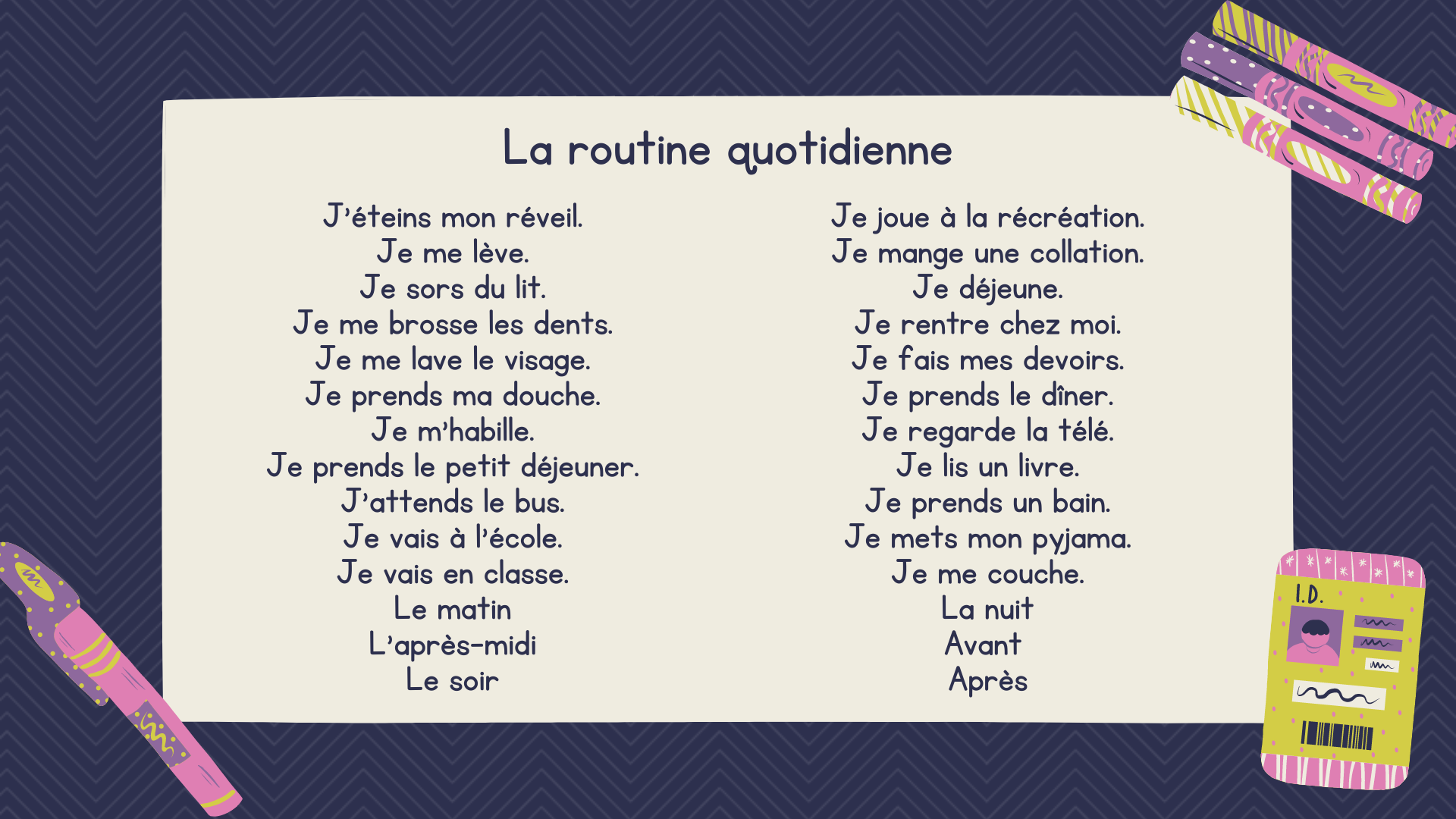
In his presentation, my brother set up grid mats on the floor for participants. On the mat, there were a number of images that were directly related to the story about the events of a person’s day. Participants were asked to read the story and then use the cards with directional arrows to determine how they could move across the mat, landing on the images, in order of their occurrence in the person’s day. Participants mentioned that the kinesthetic nature of getting up and moving around and connecting the images to the story made it a fun way to interact with the text.

An Extension

Given a model and a list of the vocabulary used in the unit, an extension would be for students to write their own stories to share with others in their class and have them navigate the mat to determine the code. Students could also create a game or activity whereby they use directional language and the reader has to determine the steps they took in sequential order. For example, if we are still talking about daily activities or routines, students could follow directions to determine what happened from the beginning to the end of someone’s day. 

The conference was amazing and it was really great to meet so many educators from different parts of Ontario and to hear about the work they are doing with students in their classrooms. Throughout the day, I kept going back to my notebook to jot down notes about new ideas that I could take back and use in my classroom. Up next, some unplugged coding!


What is Translanguaging?

A few years ago I had the pleasure of welcoming Maryam (student’s actual name has been changed), a grade 8 newcomer student from Afghanistan. She had multiple years of interrupted schooling due to the political situation in her home country, and arrived in middle school speaking a very emergent level of English while being fluent and literate in Pashto and Urdu. At the time, I was working as an ESL/ELD teacher in the school, supporting all classes in the school with programming for English Language Learners. Her homeroom teacher raised the inevitable question: how do I program and assess a student with such unique needs?

One of the best ways to accommodate newcomer students with literacy and oral communication skills is to use translanguaging strategies. So what exactly is translanguaging?

Translanguaging, as academic and educator Ofelia Garcia states in EAL Journal, is “the act performed by bilinguals of accessing different linguistic features or various modes of what are described as autonomous languages, in order to maximize communicative potential.” Translanguaging is all about students using all of their linguistic resources to explore new learning, making connections with prior knowledge, and communicating their knowledge and lived experiences. It is asset-based and honours the rich linguistic resources multilingual learners bring to the classroom.

Sure – there are moments during instruction where accuracy, concision and proficiency in English will be the focus. But translanguaging practices should be encouraged in areas where the work is content-based. Language acquisition is a journey, and learning should always be accessible no matter what part of that journey a student is on.

How Can I use Translanguaging in the Classroom?

Start by creating a translanguaging-friendly learning space by encouraging students’ use of home languages at the start of the year. Take a language survey to find out what students are speaking at home and with friends and relatives, who has literacy skills in a different language, or who is taking heritage language classes. Once you know the linguistic and cultural assets students are bringing to the classroom, you will also be better equipped to be more culturally responsive. Keep multilingual dictionaries in students’ languages in the classroom, or teach a lesson on how to use digital translation tools like Microsoft Translate, Google Translate, or SayHi. Show students how to set multilingual captions on sites like Youtube. While students may find that digital translations are not always accurate, they can help students who are in the earlier steps of English language acquisition to understand new content.

Use multilingual word walls, media, signs, and posters in your school’s or class’s top languages. If you are multilingual, model translanguaging by communicating with students that also speak the same language. Pair same language speaking students strategically in seating plans or group work. Once multilingualism is seen as an asset and a norm in the learning environment, you can start to see translanguaging occur organically in academic and social contexts.

Translanguaging from Instruction to Assessment

Embed translanguaging throughout your teaching cycle, from instruction to assessment. Encourage multilingual language learners (MLs) to take notes in their home language and/or English during class: it is common for newcomer students think that they are only allowed to use English in class, which should never be the case. Offer multilingual content whenever possible, encouraging the use of subtitles when video content is being shared. When labeling diagrams or visuals, MLs can have the option of using multiple languages, which helps to build critical academic vocabulary for content based subjects.

Text sets are another great way to scaffold and differentiate learning in content-based areas like Science, History, or Geography. To create a text set, gather a set of materials related to one area of learning that enable students to engage with the content in different ways. For example, text set might include similarly themed articles at different reading levels, content in languages used by students in the classroom, related diagrams and photos, photos, and links to different sites and videos. Creating text sets can take time – team up with other teachers to create different sets you can use throughout the year or a teaching cycle.

Finally, offer students opportunities to complete summative learning tasks or assignments in the language or languages they feel most confident using in addition to English. When students with more confident in their first language have the opportunity to use it in school, it can be empowering and create an opportunity for families to engage with their child’s learning. If you do not speak the same language as the student, you can ask a colleague who does to help with assessment, or ask the student to complete a secondary task to translate their work using dictionaries and translators. Make sure your rubric and success criteria are adapted to reflect the curriculum expectations and the student’s STEP: keep in mind that their learning goals may be different from that of their non-ELL peers.

Interested in taking a more detailed look at using multiple languages in your teaching? Check out Classroom Assessment in Multiple Languages (2021, Corwin Press)  by Margo Gottlieb for a comprehensive guide. There are so many ways for multilingual students to share their knowledge beyond writing and speaking in English. Once you identify the best strategies for enabling MLs to express their ideas and learning, you will see their growth and confidence flourish.

Forest of Reading and Literacy Award Programs

As school starts up again every January, I always look forward to the recommendation list in my public library ebook section for the Forest of Reading program, an annual initiative in Ontario to get kids reading from a wide variety of levelled books (picture to high school chapter reads).  There are so many new local authors I have had the chance to be exposed to from this program and I have yet to find a student that couldn’t find something that interested them either from the list of fiction or non-fiction books.

Much can be written about the positives and negatives of student incentivization to read more, but in this case I feel that the Forest of Reading and other programs in Canada and around the world strike the perfect balance of getting students excited about competing with others for reading the most books as well as getting the chance to interview with teachers about their completed selections. In our region, students get to accompany their classmates in the school board to a celebration at the local sports arena to hear from some of the authors in person as well as see arts presentations and hear the final winner in each category for Favourite Book.  The connection to seeing people talk about their inspiration motivated students to think about what ideas they could have that could one day be in a book, or how they could persist in not giving up in a variety of career fields.

One of my favourite aspects about the Forest of Reading is that it promotes equity in how the books are distributed.  If you can’t get a copy from the local library in print or digitally, school libraries receive funds to distribute multiple copies of some of the books to students where teachers can have them read independently or as a class so they don’t miss out.  Every year, I see that some authors have had another one of their books selected sometimes in the same series which shows their ability to connect with the committees and students.  Forest of Reading is also great at promoting diverse reads where even tough subject matter is communicated in a way that students can understand and relate to.

When I taught in a school with middle school grades as well as early elementary years, I always wanted to ensure that students were able to tell me something they learned or thought about after reading the book, even if it wasn’t one they would recommend personally.  In addition to ensuring students weren’t looking up crib notes as much, it gave me insight into how students felt about characters and what sparked their interests.  It also gave me insight into what other sorts of recommendations we could make to have them continue their reading journeys.

Given the state of the world these past few years, literacy is always something that we can encourage with our students to open doors as well as become involved with, as a family.  The Forest of Reading name is perfect in inspiring the image of children starting a lifelong journey into a world of possibilities, and reminding teachers to continue to read in their spare time as well.


“Breathe-in experience, breathe-out poetry.” M. Rukeyser

April is National Poetry Month.

During this challenging year, poetry has supported critical and courageous conversations, offered some comfort and hope, while honouring pain and anger. Here are some examples of what this work has looked like and sounded like in our Grade 2 classroom:

Igniting the Spark: Amanda Gorman
The whole world was inspired by the poetry and brilliance of Amanda Gorman in January 2021. Her poem, “The Hill We Climb” filled us with light during this time of “never-ending shade”. Her story about overcoming a speech impairment reminded us all to believe in ourselves and find our voice. I shared her poem and her TEDTalk with my students, and she was the spark for our inquiry about the power and possibilities of poetry.

Power Poems for Small Humans:
I have reached for poems during difficult times when I could not find the words to express my feelings. Jillian Christmas is a Vancouver-based slam-poet, who is an organizer and activist in the arts community. I have shared her poem, “On Honouring Anger” in response to racial violence and injustice that continues to impact students, staff and families, and requires educators to take action.

This poem, and other powerful voices can be found in an anthology called “Power Poems for Small Humans”, published by Flamingo Rampant. Flamingo Rampant is a micro-press that publishes children’s books that center and celebrate stories of kids taking action, disability pride, 2SLGBTQ+ voices, racial justice and more. Please check out their website and bring their books into your classroom library!

Yesterday, I Had The Blues:
When we were learning remotely, I used the Poll feature on ZOOM to check-in with students. One day, the question was: “How are you feeling today? Choose a colour to describe how you are feeling.” Students were invited to analyse the data, and share why they chose the colour. Then, we talked about different ways that people experience colour. We listened to the story, “Yesterday, I Had the Blues” by Jeron Ashford Frame, and made text-to-self connections.

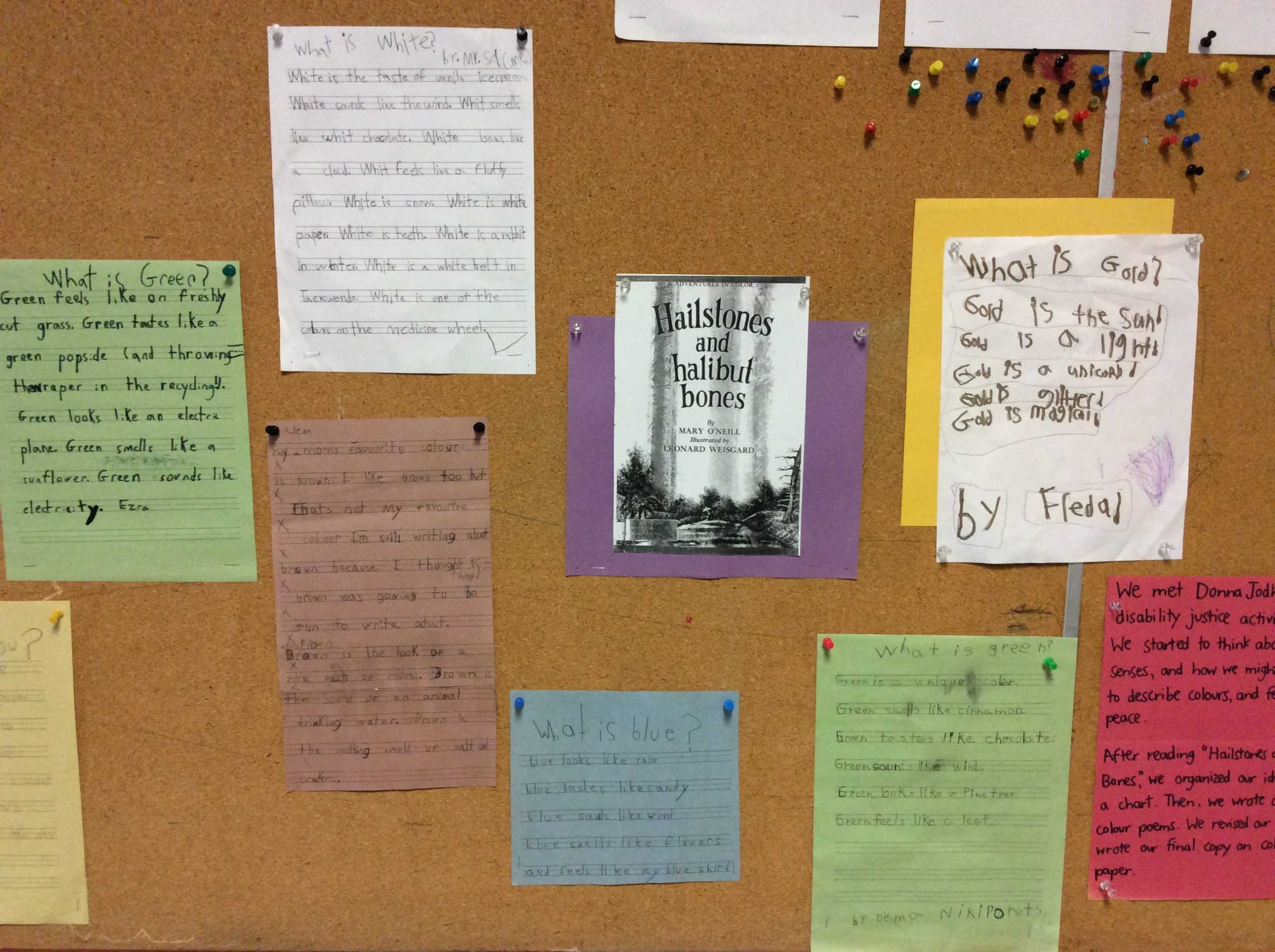
Next, we read selected poems from “Hailstones and Halibut Bones” by Mary O’Neill. I love this book, but it is important to preview the poems, because there is one poem that uses outdated language, and needs to be unpacked or revised. Each poem begins with the same question, (e.g. What is Orange?) and uses the five senses to describe colour in poetic ways. I created a graphic organizer, and students were invited to write their own Colour Poems.

Pink!
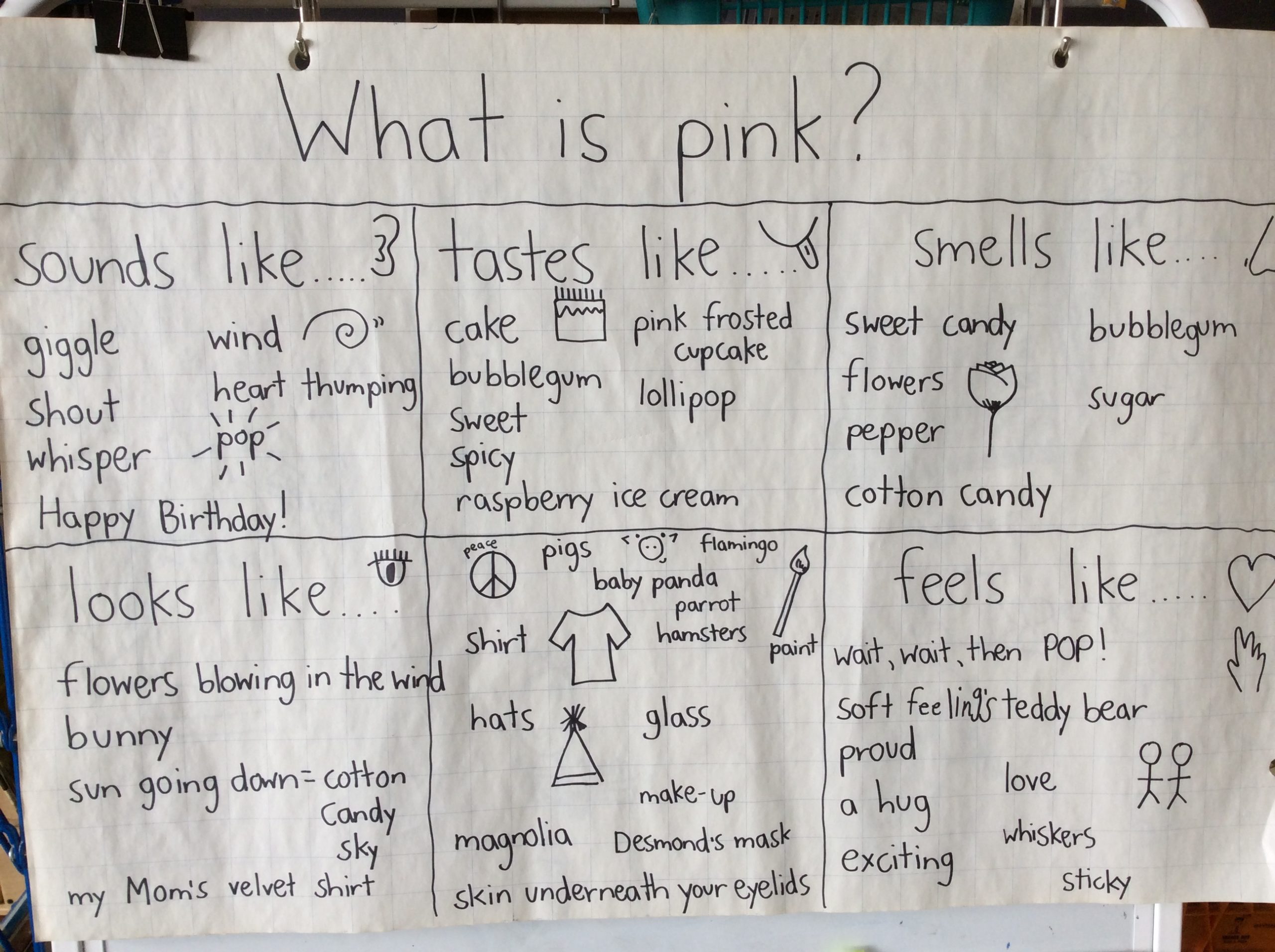
On the International Day of Pink, we had a discussion about how some people think that pink is a “girl’s colour.” We talked about where these ideas come from, and how these gender rules might make people feel excluded. We created a poster using post-it notes to capture our ideas, in the style of a JAMBoard. Then, we wrote our own “What is Pink?” poems and displayed them in the hallway. 


Quick as a Cricket:
After reading, “Quick as a Cricket” by Audrey Wood, students wrote poems using the template, “I’m as ____________as a ___________.” This was a fun and accessible way to learn about the poetic device of similes. A simile compares two different things using “like” or “as” in an interesting or unexpected way.

Gratitude Poems:
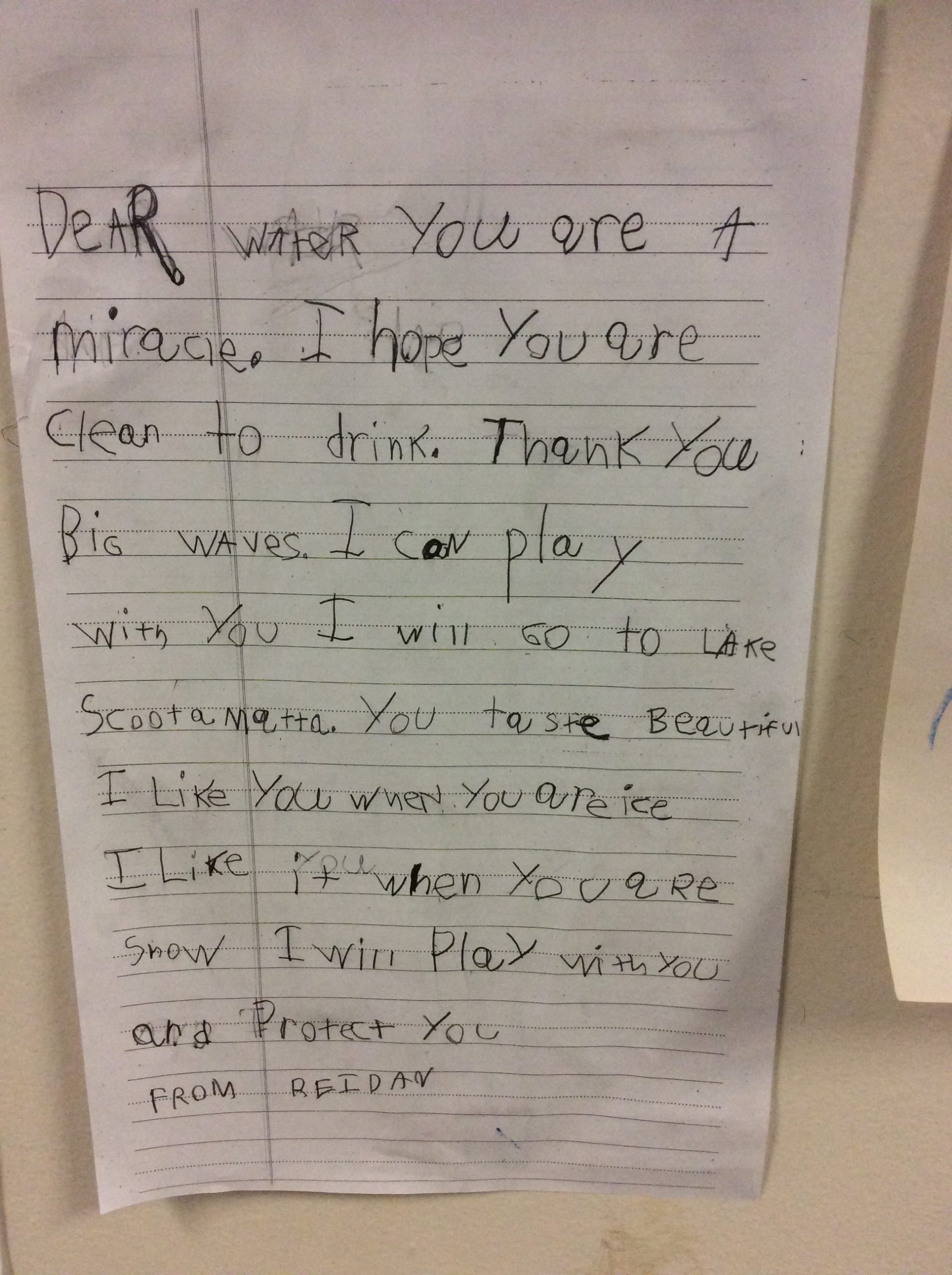
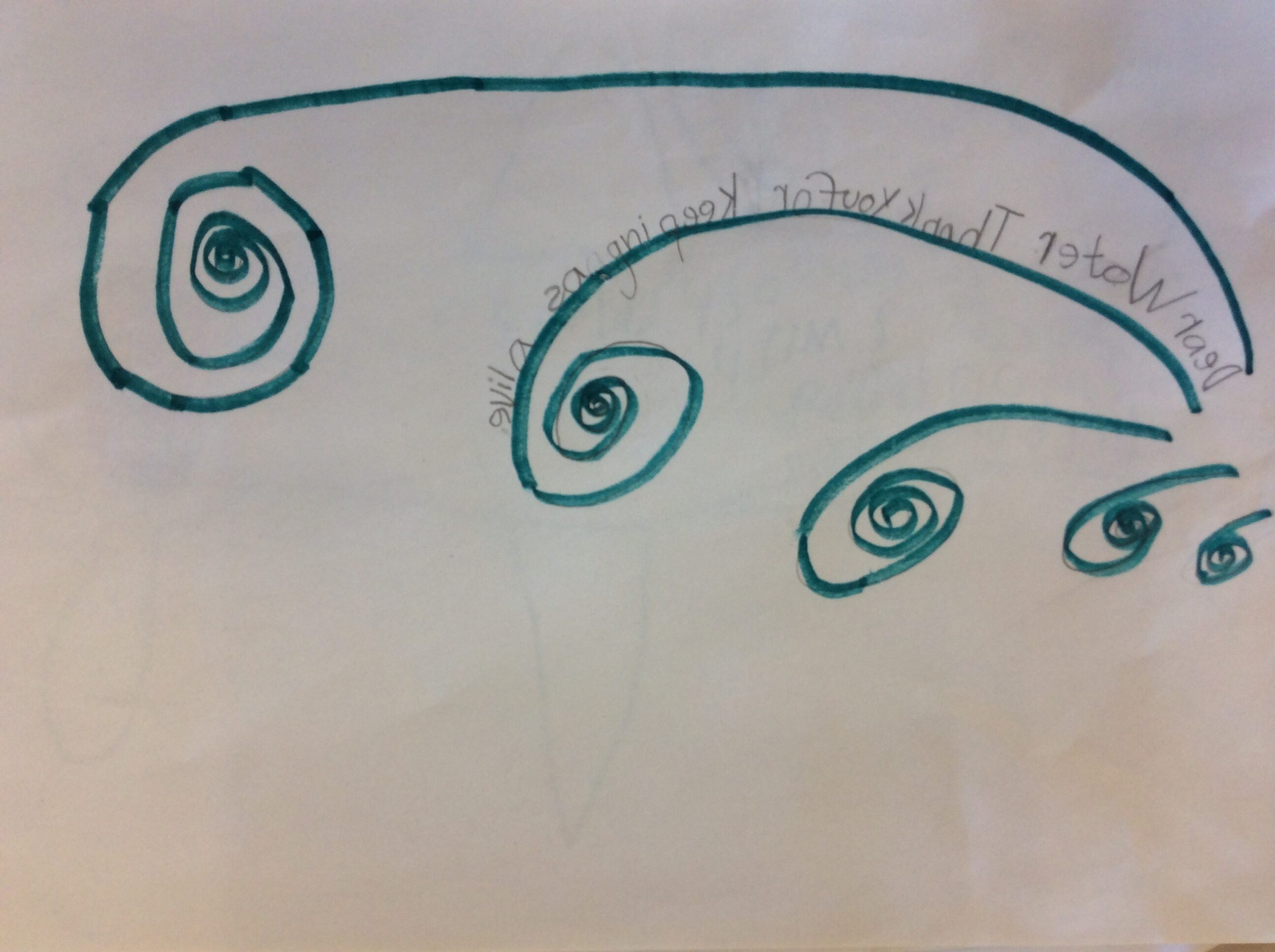
After reading several poems from a collection called “ThankU: Poems of Gratitude”, we wrote our own “Dear Water,” poems. Students used the following sentence prompts to write a letter to our relative: “I love….I think….I will….I hope….You are….” On World Water Day, we read our letters to each other in the Rainbow Garden and talked about what we value, and how we might protect water. 


Splish! Splash! Splat!
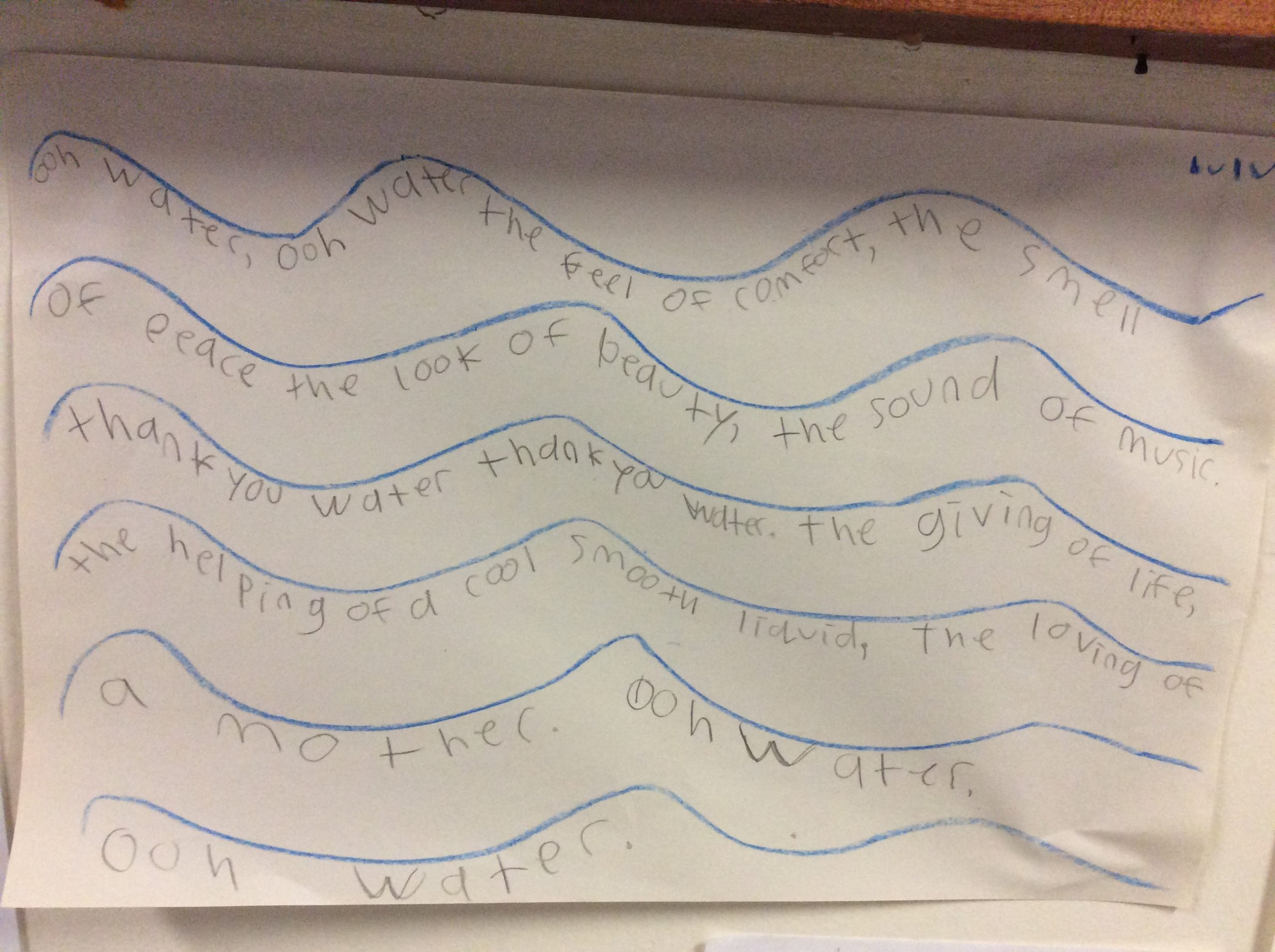
One rainy day, we brainstormed different sounds that water makes. Then, we learned about Concrete poems, which are poems that take the shape of the subject that they are describing. Students chose a shape and wrote a poem about water. 


Respond and Rebuild:
We will continue to explore poetry, self-expression and identity by writing an “I am Me….” poem. This lesson plan is from www.welcomingschools.org and can also be found in ETFO’s newest resource, Respond and Rebuild CRRP Lesson Plans. I am looking forward to integrating movement and choral reading to this work.

What are your favourite poems or poets to explore in the classroom?


Distance Learning Ideas

During these different times, I’ve been planning for a new type of learning – distance learning – with little to no idea of how it might actually be implemented. As I plan, I thought there may be some who would find what I have done of value. I’m using this post to share some of the resources that I might use with students.

Language

Writing and Oral Communication

Persuasion is an art! To be able to develop a persuasive argument, you have to make sure that you have enough information to support your position on a matter. When you find topics that are of personal interest, people tend to have an opinion right away and can start to justify their thoughts. For this type of activity, I’m thinking of giving students one of the following prompts and asking them to come up with a persuasive argument including at least 3 supporting details for their opinion. Students can upload their arguments either in video or writing in a platform like Google Classroom and then they can possibly respond to each other’s arguments with counter-arguments. To extend this idea further, students can be grouped into teams based on their opinions and participate in a debate for or against the specific topic presented. 

Possible prompts:

  • When we start school again, we should have a 4-day school week. Do you agree or disagree?
  • During the pandemic, people have been using masks and gloves to move around the city. There is a shortage in hospitals. Should people donate their masks and gloves to hospitals?
  • When the pandemic is over, life will go back to being the way it was before. Do you agree or disagree?

Reading and Media Literacy

In our class, we’ve been reading and investigating non-fiction texts. Students were also in the process of writing their own themed magazines based on their own research on a topic. To continue with non-fiction reading, I thought it would be great to take some time to continue to read online magazines or texts. While reading, students can take notes of what they are learning using a graphic organizer like this one from Scholastic. This is just an elementary example but depending on what you are focused on, you can create your own for your students. From there, I thought that students could use what they have learned to create an infographic on a specific topic of interest. Keeping in mind that infographics have a visual component, students can use a tool like Google Drawings to create their own layout for their infographics. One online magazine that is now making all of its content free is Brainspace. There are a variety of topics that might be of interest to students. 

Math

I’ve found that hands-on activities have been the most well-received by my students and their families during this time. While there are a variety of Math games online – mPower, Math Playground, Prodigy, IXL – sometimes it’s nice to sit down and try an activity that allows you the opportunity to build critical thinking and problem-solving skills. There are so many different activities online but one that I quite like is from The Centre for Education in Mathematics and Computing. Their printable activities for students in Grades 4 to 12 are fun and educational ways to do mathematics and computer science while at home practicing social distancing. The resources include games, new problems to solve, applications, videos, pointers to existing materials on their website. Once they have finished solving the problems with their families, students can share their solutions and strategies with each other online in writing or in a video, using a platform like Google Classroom.

Design Thinking

Students can use our current pandemic – Covid-19 – to design something totally new! This is a project that can be done over time and students can share what they have been working on in an online platform such as Google Classroom. At each stage of the process, they can share their work with the teacher or each other. 

Have students start by identifying problems that they are hearing about on the news or from online sources. They could write these on sticky notes, paper or using a tech tool. Teachers could use Padlet to create an online problem board for all students to include their ideas.  From there, students could potentially design an app or a solution that could connect community members as they are socially distancing themselves or something else that they have identified as a problem. The sky’s the limit! 

After researching and understanding the problem, students can pick one specific problem, and focus on how it is affecting a specific person (user). Here are 2 recent articles (International Covid-19 and Coronavirus Affecting the Way We Do Things) that they can use along with other online sources. 

Students can use this template – created in partnership with Smarter Science and the TDSB – to document their learning throughout the process. Once finished, students can create their own pitch for their idea, creating a short video or slide presentation for their peers.

These are just some of the ideas that I’m thinking about as we venture into this new type of learning next week. I’m not sure how it will go or what might work but I’m open to learning and trying something new. 

Graphic Novels – Engaging Learning for All Readers

Meeting with families was a little different this year due to job action.  Last month, I met with a family to discuss their child’s progress. Although we weren’t meeting about concerns, this was a very insightful meeting, as we spoke about engaging students in reading for enjoyment. I was a little surprised because this child always raises their hand to participate in reading activities in the classroom and this definitely got me thinking about reading overall.

After some reflection, I realized that as an educator, I’m constantly asking students to read for a specific purpose: to gather or organize information for research; to check for comprehension; or to sometimes aid in writing. Sure, I’ve told students to read for enjoyment but I started to think about whether or not I’ve taught them how to find books that they enjoy. Have I given them time to just sit and read without asking them to do something after? How do we navigate the space of having students read for a purpose while also honouring them developing their own love of reading? How do we help them to maintain this balance as the demands of reading increase through the grades? This also got me thinking personally about my reading habits. When picking a book, I usually go for the trial and error method.  I try a book, like it and find similar books by the same author or genre to continue reading. Or I hate it and stop reading anything similar. How do we help students to learn what is out there?

During the weeks before the break, while on trips to the library for our book exchange, I started to have more open conversations with my students about what I like to read and why. I spent some time pulling out different books that I liked and it was so neat to see students wanting to take a look at what I liked to read and who trusted my recommendations. This had me thinking about book reviews and how powerful they are. I’ve read books based solely on the word of someone I trusted. How might we foster spaces where students could freely share their reviews of books, not because they had to write a book report but because they wanted to have the opportunity to share.  I also realized that my students need to see me reading – more specifically what I am reading – which opened up opportunities for conversations that are authentic. While in the library, I started reading some of the graphic novels and realized that many of them were so packed with amazing themes and could also be great for book clubs with students. 

My three latest graphic novel reads are New Kid by Jerry Craft, Invisible Emmie by Terri Libenson, and Guts by Raina Telgemeir. While reading, I realized that each of the graphic novels could be used for deep conversations about the realities of navigating the very real difficulties of growing up. Conversations around race, fear, identity, and being valued could really be dug into by studying out these novels within the classroom setting. This got me thinking about this lovely section in our library that often gets so much use from students but not as much from the educators in our building. One question that popped into my head was, How might we use this section to engage all readers as they learn to identify what they enjoy reading?

Beyond these deep conversations, there’s a lot that could be learned from reading graphic novels. Similar to narratives, students can find the elements of a narrative within (characters, setting, plot, etc.). Beyond that here are a few ideas of how I think they might also be used.

Before reading:

  • Copy a few pages of the text and remove the dialogue. Have students infer what is happening in a section of the graphic novel and justify their thinking. 
  • Copy different parts of the text and have students piece together the sequence of events based on what they see. 
  • Copy an integral part of the text. Remove the dialogue and have students write what they believe is happening in that section of the text. Ask them to think of what led up to that part and perhaps what happens next.

During Reading:

  • Have students reflect on different features within the text. For example, how might the colours, shape, and style of the font and/or text bubbles influence your understanding of the text? 
  • Make predictions of what might come next. Have students draw the next few panels of the story. 
  • How does the imagery add to what is being “said” to the reader? Have students point out clear examples from the text.
  • Ask students to consider the inner or outer dialogue happening. How do you know which is which? How might this give readers an even deeper insight into the experiences of the character?
  • Panels in graphic organizers are oftentimes different sizes, why might that be? What can we gather about information within larger panels?

After Reading:

  • Extend the story. What might happen in a sequel? Draw the beginning 3 panels of the next part of the story.
  • Summarize the text in 5 panels. How might these 5 panels clearly show the plot within the graphic novel?
  • How did the art in the text contribute to your understanding of the characters or the overall story? What role did the colours play in evoking emotion?

These are just some of my ideas for using graphic novels with students. Since many students have graphic novels at home, I wonder if this might be something that we can use going forward in this new realm of continuing the learning at home as we perhaps use this time to help students identify what they enjoy reading.  Let me know your thoughts.

Halloween learning opportunity

During the past few weeks, my students have been writing short scary stories. They have been working in groups to create stories with creative characters, a strong plot and a problem that arises in their story. 

About a month ago, my students were thinking hard to plan for our first drama task of the year. Knowing Halloween was at the end of the month, they wanted to plan a Halloween task. They wanted to have some sort of haunted house that would involve all of the grade eight students. Unfortunately that wasn’t able to happen, but for the 30 students that did participate, they worked well to create an exciting final product. 

With my students help, what we ended up deciding on was that each scary short story would be performed in our class in the haunted house. We would present our scary short stories. Five stories ended up being brought to life. Each story had unique characters, a unique stage, audience setup and music soundtrack. For that reason, students who did not want to act helped in other ways such as stage crew, music creator or class collector. This short story project ended up turning into a show for six classes to view. 

Students decorated the room to their liking the day before towards the end of the day. They worked hard to set up a spooky setup that would work for everyone. A student in my colleagues class donated decorations for the entire project and the students had fun setting them up. A few days prior to decorating, two of my students went around to the grade five and six teachers and asked them to sign up for a viewing time. The classes would come on October 30th to view the five shows. 

The performances went very well! Students were evaluated on the writing of their stories for literacy as well as many drama expectations for their performances. They were marked on their ability to plan and shape the drama throughout their many performances and were also evaluated based on their ability to use the elements of drama. They did an amazing job telling each of their created stories to their peers. 

It was great to see such collaboration for this project as many students invited other actors into their group as they enjoyed writing a story that would include as many as up to ten actors. They let students audition for the part and then the show became their own as well. Teachers complimented the students on their amazing show creation and very well written stories. The kids had a great time and are excited to try something like this again during the winter holidays. I am so proud of my students for their collaboration skills during this project and their ability to take on such a large task. I am excited for their next opportunity to showcase their incredible leadership abilities and their group work skills. 

Breakout EDU

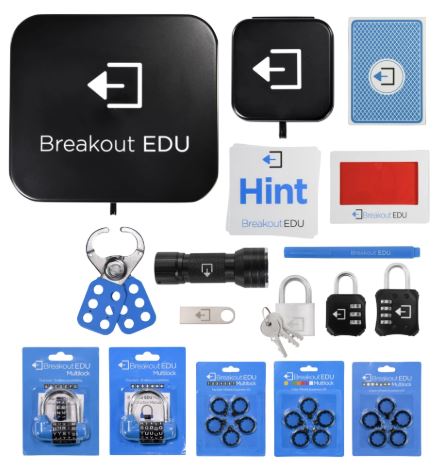
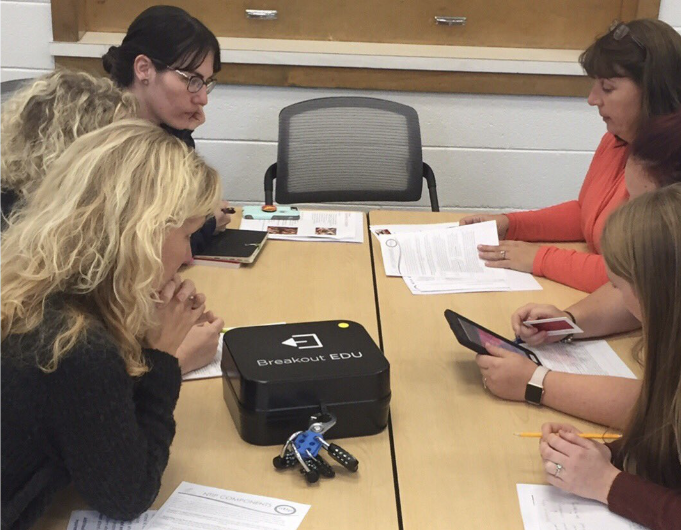
Breakout EDU is like an Escape Room in a box. The players use teamwork and critical thinking to solve a series of challenging puzzles in order to open a locked box. The first time I experienced Breakout EDU with my students I was not the designer of the game.  Another teacher had designed the Breakouts and we were using it as a provocation for an inquiry on the Olympics.  I was amazed at how much I wanted to help my students.  It was difficult to watch them struggle and yet, that is where the learning happens.  We want our students to BE “gritty” and we need to provide opportunities for students to develop that grit.  Breakout EDU is a great way in which to have the students experience “the struggle”.  The kit looks like this:
https://www.breakoutedu.com/

The kit itself is quite pricey and unless your school already has one, it is quite an investment.  However, you can make your own with a tool box and locks purchased from a variety of stores.  You can also create online digital Breakouts that create the same kind of collaborative, problem solving activity just without the cool locks.  Here is the link to some curated online “digital” breakouts.   I haven’t looked at all of these for curriculum alignment, but it will give you some ideas to use to create your own digital breakouts.

“Breakout” is sort of a misnomer.  You are actually “breaking in” to the box using a number of clues students solve puzzles in order to open the various word, number and key locks.  This can connect to the curriculum in a number of different ways and can be used effectively as an introduction, provocation or summary for learning.  You aren’t going to get too terribly deep into content when students are busy trying to solve for clues.  For me, Breakout EDU is far more about developing the 6 C’s; collaboration, creativity, critical thinking, communication, citizenship and character building.   It is fascinating to have students work in groups to solve problems with a common goal.  Breakout EDUs provide opportunities for students to practice developing their learning skills and gives the teacher the opportunity to collect data as the learning is self-directed.  The activities lead easily into self-reflection of learning skills. Below are some of the questions that I find valuable for the consolidation portion of a lesson after a Breakout EDU activity:

Questions for Reflection

1.  How did you determine roles in your group?

2.  What did you find most difficult?

3.  What did your group do really well together?

4.  What would you do differently next time?

5.  How did you contribute to the group?

6.  How did you work to include everyone in your group?

Once students are familiar with the Breakout EDU format (depending on the age/grade level) they can then create their own Breakouts for their classmates.  The students interact with the learning from a different perspective and have to find the most important information to highlight for the clues in the development of the Breakout.

So what are the drawbacks?  Breakout EDU is competitive.  The students are working against each other and/or against the clock.  You have to know which students can handle that type of pressure. Working in groups on a common task may be difficult for some students with self-regulation issues so you have to know your students well and plan accordingly, as you would for any group activity.

Finally, Breakout EDU is also a great tool to use with your staff.  If you have a lot of information to get through and you want the participants to get to some salient points and the Google Slide presentation just isn’t cutting it, using a Breakout EDU will make for an interactive, team building staff meeting!  It is also great to have the adults experience the struggle that we all want students to go through to develop grit and resilience.

Like with any tool, it takes time and research to ensure that it is right for your classroom.  The more I use Breakout EDU in my teaching,  the more I think of ways to use it!

Orange Shirt Day

Orange Shirt Day is tomorrow – September 30th! While I strongly believe conversations around reconciliation between non-Indigenous and Indigenous peoples need to happen on a daily basis, Orange Shirt Day provides an opportunity for action and awareness.  In this post, I’ll be sharing a couple activities we have done this year and how we will be continuing to learn about reconciliation. 

Based on the life of Jenny Kay Dupuis’ grandmother, I Am Not a Number is a powerful book that brings to light a part of Canada’s history and its treatment of Indigenous children and families. It’s a text that I have read with students over the past few years that has helped my students understand the impacts of residential schools not only on those who attended but also the impacts over subsequent generations. 

Every year, I think about how to use the text in different ways and this year our pre-reading activities were inspired by an educator in London, Graham Shular. For our activity, small groups of 3 or 4 students were given an image from the book that was glued to a piece of chart paper that was sectioned off into 4 parts. Students were asked to write down their answers to one of the following in each of the sections:

  1. What do you notice?
  2. What emotions does the image evoke?
  3. What do you think is happening?
  4. Why do you think that is happening?

 The groups were given 4 minutes to first take a look at the image and then they were given 4 minutes to discuss and jot down their ideas on the chart paper for each question. 


I was amazed at how engaged students were in the task, as was another colleague, Alison Fitzsimmons, who also did a similar activity with the students in her class. This activity was a great way for me to see what students already knew about residential schools and it was also helpful in understanding what messages students were getting in the imagery of the book.

Later, as we read, students were given large sticky notes and asked to jot down their wonders, questions and anything of impact as we read. Many were surprised at the treatment of Indigenous children and their families and that it was imposed and sanctioned by the Canadian Government. This prompted many to think about what we can currently do to ensure true reconciliation. While I want students to gain a great sense of empathy, I also want them to understand the resilience of those impacted and the rich history of Indigenous peoples over time. 

Tomorrow, we will be starting to look at our Land Acknowledgement. Said every morning during the announcements, students need to understand its significance and the people on whose land we have the privilege of learning. I am looking forward to us digging in to better understand treaties and the diverse communities of Indigenous peoples. 

Tomorrow is Orange Shirt Day. Will you be wearing orange? What activities have you done with students? What work might we continue to do to ensure true action around reconciliation? ETFO has incredible resources to get you started. Click here to find them!