Equity and Inclusion for All : Culturally Responsive Teaching and Assessment Pedagogy

The role of culturally responsive teaching is to understand who students are as people and who they are within their community. This pedagogical approach acknowledges, responds to, and celebrates fundamental aspects of student culture while providing equitable and inclusive education for students of all backgrounds and identities. This is especially important for students who identify as First Nations, Métis, and/or Inuit (FNMI). Essentially, in teaching through a lens of culturally responsive pedagogy, student identity is honoured.

What is student identity?

Deborah McCallum states identity is “connected to the groups we affiliate with, the language we use, and who we learned the language from. I believe that each of us has various identities according to the different groups that we belong to, and that this has implications in terms of the languages and discourses we use.” (McCallum, November 28, 2017).

Specific characteristics of culturally responsive approaches include educators taking the perspective of :

  1. positively valuing perspectives of parents and families
  2. communicating high expectations for all students
  3. adapting learning within the context of students’ culture, background, and identities
  4. student-centred instruction and assessment
  5. considering students’ culture, background, and identities within instruction
  6. reshaping and adapting curriculum to address students’ cultural and identity issues
  7. teachers stance as facilitators with students providing input to guide learning

(adapted from Ladson-Billings, 1994)

How does culturally-relevant pedagogy benefit teaching?

Teachers need to be reflective of who their students are and how best to adapt with instruction and assessment to their needs. As reflective practitioners, teachers learn to adapt their teaching to meet the needs of their students. Here, the focus of teaching goes away from the curriculum and towards the learning needs of the students.

Schön (1987) stated that in teachers’ reflection, learning influences behaviour through the teachers’ self-discovery, self- assessment, and deciding the appropriateness of instruction. It is through teacher reflection that the opportunity, the motivation, and the environment reflects on the idea that learning belongs to the learner, the student. In this process, teachers take on the role of and status of facilitator over the traditional role of an “expert” teacher (Schön, 1987).

In using a reflective stance (Schön, 1987), teachers incorporate issues of equity, inclusion, and social justice as a necessary element in their day to day teaching practices. The development of culturally relevant teaching strategies is necessary in order to challenge learners to think critically about their own learning and who they are as learners. In other words, to feel included, students need to see themselves within the curriculum and instruction (Hutton, 2019).

By including their identity in education, students become more engaged in their culture in the context of learning. This helps develop perspective and skills to adapt to present day reality in order to address skills and knowledge for the future (Hutton, 2019).

How does culturally-relevant pedagogy impact families and communities?

It is very important that teachers learn about their students’ families and backgrounds. In learning about the families and communities, students embrace their own understanding of challenges across various cultural communities and backgrounds (Hutton, 2019). This is an importance stance to take given the diversity of students in all Ontario schools.

Developing healthy family-school relationships promotes family involvement and cultural awareness which further develops the supports needed to improve overall student achievement (Epstein, 1995). In addressing the distinctions of families and communities, this results in a varied understanding how families contribute to schools which are part of their community. Depending on language and cultural expectations, different levels of involvement and engagement usually vary (Ladson-Billings, 1994).

Communication between school and home is a critical factor in developing relationships and building overall school capacity. Teachers and families work together to support schools by providing resources and in developing knowledge of diverse learners. Therefore, the community becomes an extension of the community (Ladson-Billings, 1994).

The importance of culturally-relevant pedagogy in teaching First Nations, Métis, and Inuit (FNMI) Students

With a history of abuse (i.e. residential schools),  assimilation (i.e. absorbing FNMI people into European culture), and neglect (i.e. substandard funding of education and healthcare), educators need to address ways to meet the specific needs of FNMI students in order to increase overall educational achievement (Ladson-Billings, 1994).

Culturally-relevant pedagogy addresses the connection between school and home by promoting communication, forging relationships, and building capacity for all students. At this juncture, teachers and families support diverse learners through local resources and knowledge sharing (Ladson-Billings, 1994).

The importance of culturally-relevant pedagogy in teaching students who do not identify as FNMI

Given the diversity of students across Ontario, classrooms that show diversity of culture need to represent meaningful and relevant depictions of groups of people. Pedagogy should reflect the complexities of cultures, cultural products, and students as individuals. Further, the portrayal of background needs to reflect cultural history and changes that have evolved today which includes the diversity within groups. In other words, students need to identify with curriculum and instruction. Educators must to become more culturally aware in order to meet the needs of their students and the communities where schools stand (Ladson-Billings, 1994).

Understanding student diversity in classrooms and in schools

Getting to know students is a powerful approach to help teachers understand who students are and the roots of their family history and culture. In honouring who students are in classrooms and in communities, teachers can adapt instruction and impact engagement in accessing what matters to students in their lives. By moving towards students’ cultural and learning interests, students thrive academically (Ladson-Billings, 1994).

Understanding culturally informed pedagogy in the context of assessment

Teachers undertaking culturally informed pedagogies take on the dual responsibility of external performance of assessment (i.e. large scale government assessments) and building community involvement along with student-driven learning. In balancing the demands of culturally revitalized pedagogy with the demands of present day approaches to assessment, teachers embrace pedagogy that promotes student success by not just propelling FNMI students forward academically … but to also in reclaiming and restoring their cultures (Ladson-Billings, 2014). Ladson-Billings (2014) states that “the real beauty of a culturally sustaining pedagogy is its ability to meet both demands without diminishing ether” (p. 83-84).

Best Practices for Culturally Responsive Teaching & Assessment.

The Culturally Responsive Educator Mindset (adapted from Ontario Ministry of Education, 2014, p. 4 & 5)

  1. Socio-cultural consciousness: Teachers are aware of how socio-cultural structures impact individual students’ experiences and opportunities towards
  2. High expectations: Teachers hold positive and affirming views of student success from all backgrounds.
  3. Desire to make a difference: Teachers work towards more equity and inclusion as change agents.
  4. Constructivist approach: Teachers understand that students’ learning is constructed through their own knowledge (or schema).
  5. Deep knowledge of their students: Teachers know who their students are by knowing about students and their families. Teachers then know how individual students learn best and where they are at in their learning.
  6. Culturally responsive teaching practices: Teachers design and build instruction based on students’ prior knowledge in order to stretch students in their thinking and learning.

Effective Cultural Pedagogy (adapted from Ontario Ministry of Education, 2014, p. 6 & 7)

The quality of teacher instruction and expertise outweighs challenging circumstances that students can bring to the classroom (Callins, 2006; Willis & Harris, 2000). With effective inclusive instruction, there is a promise of high academic rigour within the framework of culturally responsive pedagogy and with the supports to scaffold new learning (Gay, 2002; Ladson-Billings, 2001). Some strategies below were adapted from the work of  Kugler and West-Burns (2010):

  • Using professional judgement, teachers recognize that curriculum can be expanded upon in informal and the subtle ways in which the curriculum defines what is and what is not valued in students’ schools and society.
  • Using inquiry-based approaches to student learning, teachers engaged and self-directed learners. In this approach, students are supported in making decisions about their learning that can integrate who they are and what they already know with their home and community experiences.
  • Using a variety of resources, including community partners, teachers ensure the learning environment and pedagogical materials used are accessible to all learners and that the lives of students and the community are reflected in the daily classroom learning.
  • When using resources, materials, and books teachers insure that local and global perspectives are presented and a reflective in the students’ lives.
  • Teachers need to know and build upon students’ prior knowledge, interests, strengths and learning styles to ensure they are foundational to the learning experiences in the classroom, in the school, and in the community.
  • Teachers need to ensure that learning engages a broad range of learners so that varied perspectives, learning styles, and sources of knowledge are considered.
  • When differentiating instruction and ways to demonstrate learning, teachers ensuring both academic rigour and a variety of resources that are accessible to all learners.
  • Teachers need to advocate to ensure that the socio-cultural consciousness of students is developed through curricular approaches, emphasizing inclusive and accepting education, to inform an examination and action regarding social justice in education.

Have a restful March Break,

Collaboratively Yours,

Dr. Deb Weston, PhD

References

Callins, T. (2006, Nov./Dec.). Culturally responsive literacy instruction. Teaching Exceptional Children, 62–65.

Epstein, J. L. (1995). School/family/community partnerships. Phi delta kappan76(9), 701.

Gay, G. (2000). Culturally responsive teaching: Theory, practice, & research. New York: Teachers College Press.

Hutton, F. (2019). Notes on culturally responsive pedagogy.

Kugler, J., & West-Burns, N. (2010, Spring). The CUS Framework for Culturally Responsive and Relevant Pedagogy. Our Schools, Our Selves, 19(3).

Ladson-Billings, G. (1994). The dreamkeepers. San Francisco: Jossey-Bass Publishing Co. Downloaded from https://www.brown.edu/academics/education-alliance/teaching-diverse-learners/strategies-0/culturally-responsive-teaching-0#ladson-billings

Ladson-Billings, G. (2001). Crossing over to Canaan: The journey of new teachers in diverse classrooms. San Francisco: Jossey-Bass.

Ladson-Billings, G. (2014). Culturally relevant pedagogy 2.0: aka the remix. Harvard Educational Review84(1), 74-84.

McCallum, D. (November 28, 2017). Identity and Culturally Responsive Pedagogy , Canadian School Libraries Journal, School CultureVol. 1 No. 2, Fall 2017. Downloaded from https://journal.canadianschoollibraries.ca/identity-and-culturally-responsive-pedagogy/

Ontario Ministry of Education. (November 2013). Culturally responsive pedagogy: Towards equity and inclusivity in Ontario Schools, Secretariat Special Edition #35, Ontario Ministry of Education, Downloaded from http://www.edu.gov.on.ca/eng/literacynumeracy/inspire/research/cbs_responsivepedagogy.pdf

Schön, D. A. (1987). Educating the reflective practitioner.

Willis, A.I., & Harris, V. (2000). Political acts: Literacy learning and teaching. Reading Research Quarterly, 35(1), 72–88.
Importance of Safe Water for Aboriginal Children’s Education

drinking water

Access to potable water is a fundamental human right and essential to ongoing  human health. Good health is also essential for students to obtain an education. For over 20 years, conditions of water safety and quality on reserve lands continue to be an ongoing concern in Canada. “Despite a substantial amount of funding allocated toward improving water infrastructure on reserve, an alarming proportion of communities face boil and drinking water advisories” (White, Murphy, & Spence, 2012, p. 1). As reserve land is under the Government of Canada’s jurisdiction, bureaucracy via regulatory frameworks, legacy of colonization, funding formulas, governance and policy issues remain as roadblocks to ensuring access to safe water on lands where Aboriginal students attend school.

Limited access to safe water impacts health creating discrepancies and disproportionate levels of disease and early death among Aboriginal people. Further, health discrepancies between Aboriginal and non-Aboriginal people are also directly and indirectly related to social, economic, cultural, and political inequities (Adelson, 2005).

Even though, in 1989, Canada played a prominent role in drafting the United Nations Convention on the Rights of the Child (UNCRC), a United Nations Child Find (UNICEF) report cited the plight of Aboriginal children due to lack of adequate housing, education, and clean water (UNICEF 2007).  In 1997, the Government of Canada documented promises to improve living condition for Aboriginal children (Minister of Indian Affairs and Northern Development 1997). The 2007 Senate report (Canada, Standing Senate Committee on Human Rights 2007) recommended a legal framework and an independent national children’s commissioner to monitor implementation of children’s rights federally and to coordinate federal, provincial and territorial policies that affect children. But with no legal framework or commission to monitor change, very little continued to be done to improve living conditions.

Poor living conditions impact children’s lives as Aboriginal children have a 1.5 times greater probability of dying before their first birthday, higher rates of hospitalization for acute lung infections and accidental injury (Canadian Institute for Health Information 2004), higher rates of apprehension by child welfare services, and a greater chance of having to live in a series of foster homes outside their community (Trocmé, Fallon et al. 2005). Further, living in poverty means that a large proportion of Aboriginal children lack the basic necessities. “Aboriginal homes are often poorly constructed and ventilated; their plumbing systems are often inadequate for the number of residents; and their clean water supply is often unreliable. Six percent of these homes are without sewage services, and four percent lack running water and flush toilets” (Assembly of First Nations 2006).

One in three Aboriginal people consider their main drinking water unsafe to drink with 12 percent of communities have to boil their drinking water (Chan et al. 1997). Contaminants in the water and food supply create concerns for the health and wellness of young Aboriginal children. For example, one study found that more than 50 percent of Inuit in a Baffin Island community had “dietary exposure levels of mercury, toxaphene and chlordane exceeding the provisional tolerable daily intake levels” (Chan et al. 1997).

In 2019, the Canadian Government continues to address healthy living conditions only when emergencies and outbreaks start hitting the media. The big challenge is for the Government of Canada to increase a sustainable level of investment to produce long-term improvement of living conditions for the Aboriginal children. Aboriginal children are being denied clean water in Canada (Klasing, 2018).

In Canada, Aboriginal children living in rural and northern Canada are the least-supported children in the basic aspects to support qualify of life. Persistent inequities in health care, housing, access to safe water, protection from family violence, early childhood education and protection of cultural and linguistic heritage all impact these children’s lives and their ability to attain a quality education.

What will it take for Canada to ensure equity and dignity for Aboriginal children?

Collaboratively Yours,

Dr. Deb Weston, PhD

Classroom Resources to Support Inquiry

Grade 3 – Water the Gift of Life: Investigating Environmental Impacts

 In our own words: Bringing authentic first peoples content to the K-3 classroom

Deepening Knowledge: Resources for and about aboriginal education – Kindergarten/ Primary/ Junior/ Intermediate/Senior/ French/ Aboriginal Language

Our word, our ways: Teaching First Nations, Métis, and Inuit learners

Aboriginal Children Canada Must Do Better: Today and Tomorrow

References

Adelson, N. (2005). The embodiment of inequity: Health disparities in Aboriginal Canada. Canadian Journal of Public Health/Revue Canadienne de Sante’e Publique, S45-S61.

Assembly of First Nations. 2006. Royal Commission on Aboriginal People at 10 Years: A Report Card. Ottawa: Assembly of First Nations.

Ball, J. (2008). Promoting equity and dignity for Aboriginal children in Canada. Institute for Research on Public Policy.

Canadian Institute for Health Information (CIHI) and Canadian Population Health Initiative. 2004. “Aboriginal Peoples’ Health.” In Improving the Health of Canadians. Ottawa: CIHI. http://secure.cihi.ca/cihiweb/products/ IHC2004rev_e.pd

Chan, H.M., P.R. Berti, O. Receveur, and H.V. Kuhnlein. 1997. “Evaluation of the Population Distribution of Dietary Contaminant Exposure in an Arctic Population Using Monte Carlo Statistics.” Environmental Health Perspectives 105 (3): 316-21.

Klasing, A. (November 20, 2018). Why is Canada denying Indigenous peoples clean water? Globe and Mail. Assessed February 1, 2019. https://www.theglobeandmail.com/opinion/why-is-canada-denying-its-indigenous-peoples-clean-water/article31599791/

Minister of Indian Affairs and Northern Development. 1997. Gathering Strength: Canada’s Aboriginal Action Plan. Ottawa: Minister of Public Works and Government Services Canada. Assessed February 1, 2019.  http://dsp-psd.pwgsc.gc.ca/Collection/R32-192- 2000E.pdf

Trocmé, N., B. Fallon, B. MacLaurin, J. Daciuk, C. Felstiner, T. Black. 2005. Canadian Incidence Study of Reported Child Abuse and Neglect. Ottawa: Public Health Agency of Canada. Assessed February 1, 2019.  http://www.phacaspc.gc.ca/cm-vee/csca-ecve/index-eng.php

United Nations Children’s Fund (UNICEF). 2007. Child Poverty in Perspective: An Overview of Child Well-Being in Rich Countries. Innocenti Report Card 7. Florence: UNICEF Innocenti Research Centre. Assessed February 1, 2019.  http://www.unicef-irc.org/publications/pdf/rc7_eng.pdf

White, J. P., Murphy, L., & Spence, N. (2012). Water and Indigenous peoples: Canada’s paradox. The International Indigenous Policy Journal3(3), 3. https://ir.lib.uwo.ca/iipj/vol3/iss3/3/

December Celebrations

Why does it bother me that just one faith is represented in some areas? After, “Googling” -“Holidays in December”.  I now understand. Open your minds and hearts to all in this diverse country that we live. These are just a few of the Celebrations in December…according to “Google

Bodhi Day 

Buddhist holiday that commemorates the day that the historical Buddha, Shakyamuni, experienced enlightenment (Bodhi). According to tradition, Siddhartha had recently forsaken years of extreme ascetic practices and resolved to sit under a peepal tree and simply meditate until he found the root of suffering, and how to liberate oneself from it.

Boxing Day

Some sources say that Boxing Day became a holiday because servants traditionally worked Christmas Day, but had the following day off, since their employers gave them a gift following their service. Another says that church alms boxes, where people donated money and items for the less fortunate, were opened and distributed the day after Christmas creating a new December holiday. Today, many people have Boxing Day off, where it is celebrated, and the growing post-Christmas sales have marked it as a major shopping day.

Christmas

This Christian holiday in December has many similarities to St. Nicholas Day, as far as December holidays around the world go, but it has very different roots. Christmas takes place on December 25th and celebrates the birth of Jesus Christ, whom Christians believe is the son of God.

Eid  and Eid Al-Adha. 

Celebrated at the end of Ramadan (a month of fasting during daylight hours), and Muslims usually give zakat (charity) on the occasion which begins after the new moon sighting for the beginning of the month of Shawal

The Day of the Virgin of Guadalupe

A popular Catholic feast that celebrates the belief that a man encountered the Virgin Mary, Mexico’s patron saint, in Mexico City on December 9 and 12, 1531.

Hanukkah

A special day times eight, this Jewish holiday also known as the Festival of Lights, is one of many December holidays around the world and is celebrated for eight nights and days.

Kwanzaa

This young holiday in December is less religious and more ideological, and strives to reconnect individuals with their African culture. Created in 1966 by Mualana Kareng, a professor of African studies, activist, and author, Kwanzaa is celebrated from December 26th to January 1st. Derived from the Swahili word meaning “first fruits of the harvest,” each day of Kwanzaa is dedicated to a principal that Kareng believed represented the best within communities. These principles are unity, self determination, collective work and responsibility, cooperative economics, purpose, creativity, and faith.

Omisoka (Japanese)

Typical activities that are done on Omisoka, or New Year’s Eve, include visiting temples or shrines, countdown parties, and catching Kohaku Uta Gassen, a famous music program show, on television.

St. Lucia’s Day

Another festival of lights, celebrated in Sweden, Norway  and the Swedish-speaking areas of Finland on December 13 in honour of St Lucia. One of the earliest Christian martyrs,  St. Lucia was killed by the Romans in 304 CE because of her religious beliefs.

St. Nicholas Day

On the anniversary of St. Nicholas’ death on December 6th 343 A.D., this holiday pays tribute to a man who spent most of his life helping those in need.

The Yule (Pegan)

This season is full of magic, much of it focusing on rebirth and renewal, as the sun makes its way back to the earth. Focus on this time of new beginnings with your magical workings.


School Choice and Challenging Charter Schools in Canada

Image result for School Choice and Challenging Charter Schools in Canada cartoon

As a citizen of Canada, I am a strong and proud advocate of access to public education. According to John Dewey, public education reinforced a democratic community that can break down barriers “of class, race, and national territory which kept men from perceiving the full import [importance] of their activity” in democracy (Dewey, 1916).

The purpose of establishing charter schools in Canada was to increase the need for flexibility to meet students’ needs as public schools were “seen as bound by excessive regulations stemming from provincial laws, school district policies and union contracts” (Brown, & Lawton, 2013). Charter school advocates often cite the need for schools to be responsive to “the demands of parents and are places where innovative educational practices are difficult to achieve” (Brown & Lawton, 2013). “Proponents say that uniformity of public schools is a detriment to the quality of students’ education and that more choices of programs and competition among schools are needed so that ineffective schools are closed” (Brown & Lawton, 2013).

Charter schools differ in the rules that govern them. Some charter schools can pick and choose students while other schools offer lotteries. Some charter schools are essentially private schools while others received some public funding charging tuition fees for attendance.

Initially, charter schools promised better levels of education, greater efficiency in spending public dollars, and high test scores. Charter schools have been functioning long enough to assess the credibility of these promises through research studies.

Bettinger (2005) compared standardized testing in both charter and neighbouring public schools and found that “test scores of charter school students did not improve, and may actually decline, relative to those of public school students.”

 Bifulo and Ladd (2006 ) found that students made “considerably smaller achievement gains in charter schools than they would have in public schools”. Further, the authors found negative impacts on student learning due to high levels of student turnover.

After the desegregation of schools in the United States, “new policies were enacted allowing school choice, charter schools, and neighbourhood attendance zoning” (Archbald, Hurwitz, & Hurwitz, 2018). The authors engaged in a 26 year longitudinal study on the impacts of school choice and charter schools showing “greater segregation by race and income among schools accelerated after the policy changes” (Archbald, Hurwitz,  & Hurwitz, 2018).

Mindzak (2015) cited that after 20 years, charter schools “have held a precarious existence” as “only a handful of charter schools remain in Canada.” Mindzak cited the importance of “some of the historical, cultural, regional, and political dimensions of education in Canada” and further stated that the “rejection of charter schools should represent a continued commitment to public education and the principles of equity and social justice” (2015).

Charter schools are sometimes seen as places for the best and brightest students to learn so they can achieve the highest level of educational success. Bouridieu and Aarseth (2015) showed that school choice reinforces elitism in order to reproduce structure of status and privilege.

In the end, charter schools did not fulfil the promises of their success. Students did not receive better education and the public did not receive a greater efficiency in the spending of public funds. Note that in some cases, funds were diverted from the funding of public schools for the partial funding of these semi-private schools.

Instead of greater academic success, students were segregated based on race and income (Archbald, Hurwitz, & Hurwitz, 2018). Charter School students did not achieve higher test scores than their public school counterparts (Bifulo &  Ladd, 2006). In Canada today, only a few charter schools remain (Mindzak, 2015) and thus many “ineffective” charter schools were closed.

By creating barriers to learning through the segregation of students without privilege, charter schools go against The Canadian Charter of Rights and Freedoms (the Charter)that guarantees equal rights and treatment based on a number of grounds, including race, national or ethnic origin, colour, religion, sex, age, or mental or physical disability”.

The Ministry of Education (2008) goes on to state that in public education “Equity and excellence go hand in hand. … In a truly equitable system, factors such as race, gender, and socioeconomic status do not prevent students from achieving ambitious outcomes. Our experience shows that barriers can be removed when all education partners create the conditions needed for success (p. 8).”

Canada is unique in its commitment to public education and the principles of equity and social justice. Canada’s public education system is effective as it allows all students, regardless of their privilege, to achieve their best. Our public education system reinforces our democracy.

As teachers, we need to keep fighting for an education system that John Dewey would embrace and be proud of.

Fight for our public education … it’s worth it!

Collaboratively Yours,

Dr. Deb Weston, PhD

References

Archbald, D., Hurwitz, A., & Hurwitz, F. (2018). Charter schools, parent choice, and segregation: A longitudinal study of the growth of charters and changing enrolment patterns in five school districts over 26 years. Education Policy Analysis Archives26, 22.

Bettinger, E. P. (2005). The effect of charter schools on charter students and public schools. Economics of Education Review24(2), 133-147.

Bifulco, R., & Ladd, H. F. (2006). The impacts of charter schools on student achievement: Evidence from North Carolina. Education Finance and Policy1(1), 50-90.

Bouridieu P & Aarseth, H. In Maudlin, J. G., & Gaztambide-Fernández, R. (2015). ‘Private schools in the public system’: school choice and the production of elite status in the USA and Canada. In Elite Education (pp. 73-86). Routledge.

Brown, D,, & Lawton, S., Charter Schools (2013). In The Canadian Encyclopedia. Retrieved from https://www.thecanadianencyclopedia.ca/en/article/charter-schools

Dewey, J. (2004). Democracy and education. Courier Corporation.

Government of Canada. (1982). The Canadian Charter of Rights and Freedoms (the Charter), Constitution Act, 1982, Part I.

Mindzak, M. (2015). What Happened to Charter Schools in Canada?. Equity & Excellence in Education48(1), 105-117.

Ministry of Education. (2018). Reach Every Student: Energizing Ontario Education, Toronto: Ministry of Education, Ontario.

Gender Rights = Human Rights

gender theory

Education is one of the foundations of Canadian society … and so are human rights.

In Ontario, education is a “publically funded education system to support and reflect the democratic values of fairness, equity, and respect for all” (Policy/Program Memorandum No. 119, Developing and Implementing Equity and Inclusive Education Policies in Ontario Schools, Ministry of Education, 2013).

The Ministry of Education recognizes that factors such as race, sexual orientation, physical or mental disability, gender, and class can create students’ barriers to learning. There is evidence that some groups of students continue to encounter discriminatory barriers to learning. Research shows that when students feel connected to teachers and other students, they do better academically (Goleman, 2006).

So what does this mean to teachers?

Through Policy/Program Memorandum No. 119, school boards must seek out barriers to learning for all students. Teachers therefore must also address barriers to learning due to factors such as race, sexual orientation, physical or mental disability, gender, and socioeconomic status.

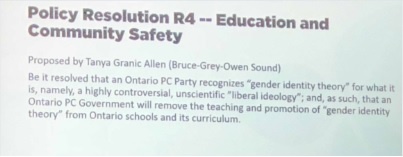
Recently, the Ontario PC Party passed a resolution to debate recognition of gender identity which was proposed by Tanya Granic Allen of the Ontario PC party.  The resolution read as follows:

“Be it resolved that an Ontario PC Party recognizes ‘gender identity theory’ for what it is, namely, a highly controversial, unscientific ‘liberal ideology’, and, as such, that an Ontario PC Government will remove the teaching and promotion of ‘gender identity theory’ from Ontario schools and its curriculum.”

The debate of whether this “theory” is “unscientific or not”, is not meaningful to all the students in Ontario who differ in their gender identity. Students who differ in their gender identity exist in our schools and in our classrooms.

I will say this again, students who differ in gender identity are real and in Ontario classrooms. Students who differ in gender identity need to be supported through their human rights and freedoms and need to be protected against abuse and bullying.

By not discussing gender identity in classrooms presents the possibility of students who differ in gender identity not being accepted for who they are and how their difference is also real. Not discussing gender identity in classrooms puts these students at risk of abuse and bullying. Not discussing gender identity in classrooms means that teachers are being asked to pick and choose factors that can be barriers to student learning. Teachers must consider all aspects of the Ontario Human Rights code that include honouring students’ diversity in  race, sexual orientation, physical or mental disability, gender, and socioeconomic status.

In not discussing gender identity, schools who ignore barriers to student learning risk violating the Policy/Program Memorandum No. 119, Developing and Implementing Equity and Inclusive Education Policies in Ontario Schools which advocates for “democratic values of fairness, equity, and respect for all” (Ministry of Education, 2013).

In promoting to “remove the teaching and promotion of ‘gender identity theory’ from Ontario schools and its curriculum” is not going to happen as this statement is against the Ontario Human Rights Code. The Ontario Human Rights Code supersedes any curriculum and therefore teachers can promote human rights within the Ontario Human Rights Code anytime in classrooms. Discussing gender and sexual orientation issues are part of the Ontario Human Rights Code.  

Be aware, that Tanya Granic Allen has a history of odious discrimination against gender and sexual orientation rights, as well as the rights of other religious groups. The Ontario Liberals released a 2014 Granic Allen video which “spewed hatred and homophobia”. The CBC News article (May 5, 2018) states that “Ontario PC Leader Doug Ford says former party leadership hopeful Tanya Granic Allen will no longer be a candidate for the party” and followed with “We are a party comprised of people with diverse views that if expressed responsibly we would respect”. Ford goes on to state that “However, the fact is her characterization of certain issues and people has been irresponsible” but then Ford continues with “She is a welcome addition to our strong and diverse PC team.”

Granic Allen was removed by Ford “as a candidate for the party in the spring election [2018] after controversial social media messages she posted were made public” (Jeffords, November 17, 2018). Granic Allen is not a Minister of Provincial Parliament of Ontario for Bruce-Grey-Owen Sound; Bill Walker, MPP holds that position. Granic Allen, in May 2018, wrote in the National Post that “The accusation by the Liberals and the press that I am somehow against the dignity and human rights of LGBT+ people is a lie” (Granic Allen, May 8, 2018).

Granic Allen also has made comments against, gay marriage and Muslin dress. CBC news cites Granic Allen tweets and blogs dating back to 2013 speaking out “against gay marriage and compares women wearing burkas to ‘ninjas’ and ‘bank robbers.’ (David Donnelly, CBC News, April 10, 2018).

Another article cites Granic Allen as a “kingmaker” for Ford. “Without Granic Allen in the race, Ford wouldn’t have had enough votes to eke out his narrow win over Christine Elliott, and he [Ford] may not have leaned as hard to the right to court social conservative members” (Fitzpatrick, March 14, 2018).

The bottom line is that it does not matter if people differ in their opinions about gay marriage or gender issues, or even Muslim dress; what does matter is that when opinions violate and impact people’s rights and freedoms according to Ontario Human Rights Code, these becomes legal issues.

Respect for all.

Collaboratively Yours,

Dr. Deb Weston, PhD

References

CBC News, (April 10, 2018), Tanya Granic Allen under fire for online comments against gay marriage, Muslim dress, CBC News. Downloaded from https://www.cbc.ca/news/canada/toronto/tanya-granic-allen-under-fire-for-online-comments-against-gay-marriage-muslim-dress-1.4613483

CBC News. (May 5, 2018) Tanya Granic Allen no longer an Ontario PC party candidate after ‘irresponsible’ comments, Doug Ford says, CBC News. Downloaded from https://www.cbc.ca/news/canada/toronto/tanya-granic-allen-no-longer-an-ontario-pc-party-candidate-after-irresponsible-comments-doug-ford-says-1.4650360

Fitzpatrick, M. (March 14, 2018). Who is Tanya Granic Allen, the kingmaker in the Ont. PC leadership race, and what’s next for her? CBC News, Downloaded from https://www.cbc.ca/news/canada/toronto/who-is-tanya-granic-allen-the-kingmaker-in-the-ont-pc-leadership-race-and-what-s-next-for-her-1.4574500

Goleman, D. (2006). Social Intelligence: The New Science of Human Relationships. New York, NY: Bantam Dell, A Division of Random House.

Granic Allen, T. (May 8, 2018). Tanya Granic Allen: I’ve been slandered. It’s time to set the facts straight, The National Post, Downloaded from https://nationalpost.com/opinion/tanya-granic-allen-ive-been-slandered-let-me-set-the-facts-straight

Jeffords, S. (November 17, 2018). Social conservatives say their voice is being ignored at Ontario Tory convention, The Canadian Press. Downloaded from https://www.thestar.com/news/queenspark/2018/11/17/social-conservatives-say-their-voice-is-being-ignored-at-ontario-tory-convention.html

Ontario Ministry of Education. (2013). Policy/Program Memorandum No. 119: Developing and Implementing Equity and Inclusive Education Policies in Ontario Schools, Government of Ontario. Toronto.

Ryan, R. (November 17, 2018). Ontario PC Party passes resolution to debate recognition of gender identity, Global News. Downloaded from https://globalnews.ca/news/4673240/ontario-pc-recognize-gender-identity/

David Suzuki’s message to us all

Today the grade seven and eights at our school were invited to attend the Eco Summit at Mohawk College. It was an exciting opportunity where we got to listen to motivated students from around Hamilton speak about the change they were making in their school community and beyond. Local poets, musicians and activists spoke as well about the changes we could be making and how the earth desperately needs our help.

I knew I had to prepare my students for in their mind what could have been a boring day listening to speakers. I needed to create an interest in them before they sat down in Mohawk’s auditorium. I shared with them a BBC article I had recently read about the key things we can do to keep the earth’s temperature from rising beyond what it can handle. I shared with them how we need to cut down and eliminate certain things or places such as Portugal (as I felt this summer) will be uninhabitable very soon.

I soon saw that this trip was a bit mature for some of our younger grade sevens and even for some of our eights. They did not quite have in them the interest in climate change. Only a few of our eights were brave enough to ask the student guest speakers some questions such as: how did you get your teachers or people in general to pay attention to your causes? How can we make a change? What is the most important issue facing us at the moment? Etc.

I did however find a few key takeaways in the main keynote address of the day. We were VERY fortunate to hear from David Suzuki via video conference. I wrote some notes regarding his message to our group today. Here are the main points:

  • we need to radically reduce our use of fossil fuels
  • we should research and read more about the blue dot agenda and we can do so by going onto bluedot.ca
    • once there, you can click take action
  • we can learn more by reading about the David Suzuki foundation
  • we can email the MP in our area and ask them to sign the MP pledge for environmental rights
  • anyone 18 or older needs to vote in the upcoming federal election for the most environmentally conscious leader
  • fight for the IPCC recommendation
  • it is important that we as educators offer solutions to our children without scaring them about the future
  • shift to what is called a biocentric view rather than what our world currently has, the human centric view
    • we need to see us a part of a web of living things
  • our students are the heroes of the future


That last point really stuck with me. Sure they may have been zoning off during David Suzuki’s talk or not listening to the inspirational music videos, but we cannot give up hope on our heroes of the future. Even if just a few of them take a stand, we can hope that they will be the change we need to see in this world. I encourage everyone to try to do some of the points as listed above. Also, a great read is this BBC article that challenges us to start making changes as well:

https://www.bbc.com/news/science-environment-45775309
Also, here is an amazing message to get a conversation started with your class about doing their part to make the world a more liveable place
https://youtu.be/B-nEYsyRlYo

Unless someone like you cares a whole lot, nothing is going to get better. It’s NOT. -Dr Seuss

Barriers to Student Learning – Black Youth

Barriers 2
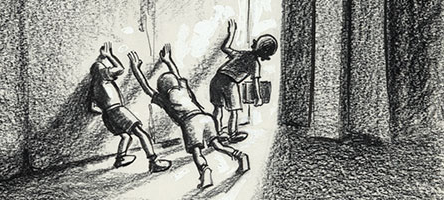
Illustration downloaded from http://www.loc.gov/teachers/classroommaterials/presentationsandactivities/activities/political-cartoon/about.html


Education is one of the foundations of Canadian society. If you are wondering why your board is addressing issues of equity and inclusion recently, a policy/program memorandum has impacted the way Ontario public school boards are conducting their business of education.

Through the Policy/Program Memorandum No. 119, Developing and Implementing Equity and Inclusive Education Policies in Ontario Schools, it is stated that there is a need for our “publically funded education system to support and reflect the democratic values of fairness, equity, and respect for all” (Ministry of Education, 2013).

The Ministry of Education recognizes factors such as race, sexual orientation, physical or mental disability, gender, and class can create barriers to learning. There is evident that some groups of students continue to encounter discriminatory barriers to learning. Research shows that when students feel connected to teachers and other students, they do better academically (Goleman, 2006).

Please refer to Barriers to Student Learning – An Overview for a more details outlined in Through Policy/Program Memorandum No. 119.

So what does this mean to teachers?

School boards must seek out barriers to learning for all students. Teachers therefore must also address barriers to learning due to factors such as race, sexual orientation, physical or mental disability, gender, and socioeconomic status.

Through Policy/Program Memorandum No. 119, school boards, and teachers, must address barriers to learning that fall within prohibited grounds of discrimination set out in the Ontario Human Rights Code.

There is significant evidence to show that Black youth face significant barriers to learning within their schools. School boards such as the Toronto District School Board and the Peel District School Board have identified barriers to learning for Black youth who face systemic discrimination and who do not feel connected to their teachers or their school communities.

In developing and implementing equity and inclusive education to address Memorandum Number 119 (2009) education policy within Ontario, the Peel District Board of Education (PDSB) has identified a part of their student community who is experiencing systemic barriers to learning. These barriers to learning are supported through research that shows that black male students feel excluded, have fewer opportunities, and experienced an achievement gap in their learning. Further, research also shows that these barriers to learning are rooted in systemic biases and in negative teacher and peer perception of Black males identity and ability (Peel District School Board, 2018). These biases result in an over representation of levels of suspension and expulsions and lower levels of representation in gifted programs and high school completion (Maynard, 2017).

System-wide, cultural responsive pedagogy and practices are being put into place to have Black male students feel more included in meaningful curriculum and instruction. This curriculum should be reflective of Black voices and help students see themselves within the lessons. This curriculum should address Black culture from all over the world, and not just from “Jamaica” (Peel District School Board, 2018).

In order to integrate the experiences of Black Canadians into the curriculum, the PDSB is providing instructional resources to be embedded into core courses and through inquiry as well as classroom resources to reflect the student body (Peel District School Board, 2018). Teachers and teacher librarians will play a critical role in building culturally responsive schools. Further, purposeful assessment and student voice will to integrated into school practices. This action plan is also embedding equitable and inclusive practices in board policies and programs while identifying and removing discrimination, biases, and system barriers to the success of Black male students. There has been a system wide leadership commitment to this initiative thus changing the board’s climate and the prevention of discrimination and harassment of Black male students’ board wide. To ensure accountability, the PDBS will be tracking the impact on data of expulsion and suspension rates, gifted student numbers, and graduation rates in Black male students ensure accountability and transparency.

In the next few blogs, I will further address some of the barriers to learning that students face based on their race, sexual orientation, disability, gender, and socioeconomic status.

If you would like me to address barriers to learning for a specific student group, please provide a suggestion below.

Collaboratively yours,

Deb Weston

Note that, although I do not have any direct experience with the barriers to learning addressed in this blog, I do identify as an educator who advocates for equity and for all students, especially when it comes to breaking down barriers to learning.

References

Caton, M. (January 31, 20198). Ontario Black Youth Action Plan aims to break down barriers, Windsor Star. Downloaded from https://windsorstar.com/news/local-news/ontario-black-youth-action-plan-aims-to-break-down-barriers

Goleman, D. (2006). Social Intelligence: The New Science of Human Relationships.-New York, NY: Bantam Dell, A Division of Random House.

Gordon, A. (October 2, 2017). Summit on barriers faced by Black male students comes to Toronto, Toronto Star. Downloaded from https://www.thestar.com/yourtoronto/education/2017/10/02/summit-on-barriers-faced-by-black-male-students-comes-to-toronto.html

Maynard, R. (2017). Canadian education is steeped in anti-black racism, The Walrus Magazine.

Ontario Ministry of Education. (2013). Policy/Program Memorandum No. 119: Developing and Implementing Equity and Inclusive Education Policies in Ontario Schools, Government of Ontario. Toronto.

Peel District School Board. (2018). We Rise Together: The PDSB action plan to support Black male students. Peel District School Board of Education.

Barriers to Student Learning – An Overview

Priviledge

Education is one of the foundations of Canadian society. If you are wondering why your board is addressing issues of equity and inclusion recently, a policy/program memorandum has impacted the way Ontario public school boards are conducting their business of education.

Through the Policy/Program Memorandum No. 119, Developing and Implementing Equity and Inclusive Education Policies in Ontario Schools, it is stated that there is a need for our “publically funded education system to support and reflect the democratic values of fairness, equity, and respect for all” (Ministry of Education, 2013). The Government of Ontario has established three core priorities in education:

  • high levels of student achievement
  • reduced gaps in student achievement
  • increased public confidence in publically funded education (Ministry of Education, 2013)

In “providing a high-quality education for all is a key means of fostering … diversity is affirmed within a framework of common values that promote the well-being of all citizens” (Ministry of Education, 2013). The Ministry of Education recognizes factors such as race, sexual orientation, physical or mental disability, gender, and class can create barriers to learning. There is evident that some groups of students continue to encounter discriminatory barriers to learning. Research shows that when students feel connected to teachers and other students, they do better academically (Goleman, 2006).

Through Policy/Program Memorandum No. 119, all publically funded school boards are required to address equity and inclusive policies covering in three areas of focus including:

  • shared and committed leadership by the ministry, boards, and schools to eliminate discrimination through the identification and removal of biases and barriers
  • equity and inclusive education policies and practices to support positive learning environments that are respectful and welcoming to all
  • accountability and transparency with ongoing progress demonstrated and communicated to the ministry and the community (Ministry of Education, 2013)

The policy further goes on to state that “school board policies must be comprehensive and must cover the prohibited grounds of discrimination set out in the Ontario Human Rights Code. The code prohibits discrimination on any of the following grounds: race, colour, ancestry, place of origin, citizenship, ethnic origin, disability, creed (e.g., religion), sex, sexual orientation, gender identity, gender expression, age, family status, and marital status” and the intersectionality that may occur within this list (Ministry of Education, 2013).

So what does this mean to teachers?

School boards must seek out barriers to learning for all students. Teachers therefore must also address barriers to learning due to factors such as race, sexual orientation, physical or mental disability, gender, and socioeconomic status.

Through Policy/Program Memorandum No. 119, school boards, and teachers, must address barriers to learning that fall within prohibited grounds of discrimination set out in the Ontario Human Rights Code. This policy will impact all ways Ontario teachers conduct their business of education.

In the next few blogs, I will address some of the barriers to learning that students face based on their race, sexual orientation, disability, gender, and socioeconomic status.

If you would like me to address barriers to learning for a specific student group, please provide a suggestion below.

Collaboratively yours,

Deb Weston

References

Goleman, D. (2006). Social Intelligence: The New Science of Human Relationships.-New York, NY: Bantam Dell, A Division of Random House.

Ontario Ministry of Education. (2013). Policy/Program Memorandum No. 119: Developing and Implementing Equity and Inclusive Education Policies in Ontario Schools, Government of Ontario. Toronto. Downloaded from http://www.edu.gov.on.ca/extra/eng/ppm/119.pdf

Drawing The Line

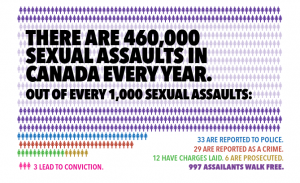
Each year, in Canada, approxScreenshot 2018-09-30 at 9.18.11 PMimately 460,000 women are sexually assaulted, although only a fraction of them report the assault to the police (1). In a day and age where this statistic holds true, it’s hard to imagine that our government is wanting to go back to a time where consent and gender identity aren’t being discussed in classrooms as a part of the Health Curriculum. Simply ignoring the very real issues that our students face in 2018 doesn’t make them go away, nor does it help to develop a society that is action-based and ready to implement change.
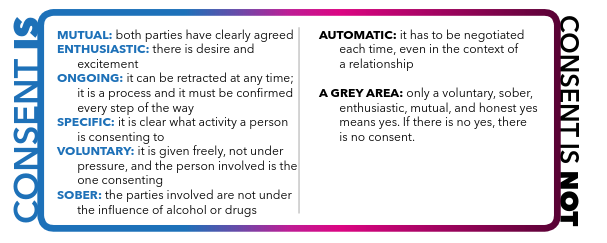
Earlier this year I was really excited to hear about ETFO’s and White Ribbon’s resource – Drawing The Line. Now I might be slightly biased as my brother is a contributing author but I was thrilled to see a resource that not only provided data-driven information for educators but also included a comprehensive guide for age-appropriate lessons for students in grades 1 to 8. I love that the guide addresses bystanders and offers students ways in which to respond to to sexual violence. Not only do the lessons connect to the Health and Physical Education Curriculum but expectations also in Language and the Arts are included in many of the lessons. This guide is truly a proactive approach to teaching students about healthy relationships and is one that every educator should read and implement in their classrooms. I know that in the past, ETFO was offering sessions on this resource and I hope that they continue.

Screenshot 2018-09-30 at 9.18.44 PM

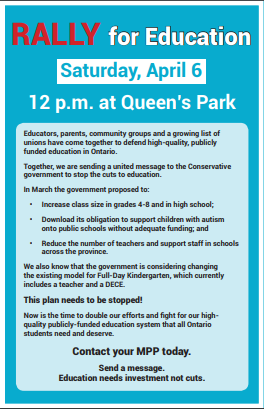
With hotlines or tiplines being made available, it’s sad to say that we are in such a time where educators are somewhat in fear of teaching what we know to be essential for our students’ safety and healthy development. We need to be having these conversations because unless we do, nothing will change and perpetrators will feel empowered to continue. As you may already know, at the beginning of September, ETFO filed a legal injunction to pause the rollback of the 2015 Health curriculum. The union believes the government’s directive creates unsafe and unhealthy learning and working environments. In the meantime, how are you working to unpack these issues with students? They’re in the news and on the same social media platforms that students are interacting with. How will the work we do today impact the statistics in the future? In the next year, 5 or 10? If you haven’t already, please check out this resource as well as the other resources that ETFO has to offer.

1. Holly, Johnson, “Limits of a Criminal Justice Response” (University of Ottawa, 2012), https://books.openedition.org/uop/592?lang=en

Welcoming Refugees … by any other name

St Louis Jewish in Germany Refugee Ship 1939

Turned Away: Tale of St. Louis and the fate of its 907 German Jews.

Welcoming Refugees by any other name

While reading the Toronto Star, I came across an article by Martin Regg Cohn writing about his experience meeting refugees making their way through the Vermont forest into Canada. This made me think about black slaves coming to Canada through the Underground Railroad beginning in the late 1700s. This further got me thinking about all the people who have come to Canada seeking refuge after being forced to leave their country in order to escape war, persecution, natural disaster or just to find a secure place to live and raise their family.

Canada (and its previous names of British North America, Upper and Lower Canada, and New France), has always been a destination for refuge. Today and before confederation in 1967, our nation would not have grown in population or diversity without the seekers of refuge. There’s been significant waves of refugee seekers over Canada’s last 250 years. I was surprised at the extend of the list!

This is a partial list from the Government of Canada’s Canada: A History of Refuge

1776: 3,000 Black Loyalists, among them freemen and slaves, fled the oppression of the American Revolution.

1783: Sir Guy Carleton, Governor of the British Province of Quebec, and later to become Lord Dorchester, safely transported 35,000 Loyalist refugees.

1789: Lord Dorchester, Governor-in-Chief of British North America, gave official recognition to the “First Loyalists” – those loyal to the Crown who fled the oppression of the American Revolution to settle in Nova Scotia and Quebec.

1793: Upper Canada became the first province in the British Empire to abolish slavery. In turn, over the course of the 19th century, thousands of black slaves escaped from the United States and came to Canada with the aid of the Underground Railroad, a Christian anti-slavery network.

Late 1700s: Scots Highlanders, refugees of the Highland Clearances during the modernization of Scotland, settled in Canada.

1830: Polish refugees fled to Canada to escape Russian oppression.

1845-1851: Irish refugees escaping the Great Potato Famine.

1880-1914: Italians escaped the ravages of Italy’s unification as farmers were driven off their land as a result of the new Italian state reforms.

1880-1914: Thousands of persecuted Jews, fleeing pogroms in the Pale of Settlement, sought refuge in Canada.

1891: The migration of 170,000 Ukrainians began, mainly to flee oppression from areas under Austro-Hungarian rule, marking the first wave of Ukrainians seeking refuge in Canada. 1920-1939: The second wave of Ukrainians fled from Communism, civil war and Soviet occupation. 1945-1952: The third wave of Ukrainians fled Communist rule.

1947-1952: 250,000 displaced persons (DPs) from Central and Eastern Europe came to Canada, victims of both National Socialism (Nazism) and Communism, and Soviet occupation.

1950s: Canada admitted Palestinian Arabs, driven from their homeland by the Israeli-Arab war of 1948.

1950s-1970s: A significant influx of Middle Eastern and North African Jews fled to Canada.

1956: 37,000 Hungarians escaped Soviet tyranny and found refuge in Canada.

1960s: Chinese refugees fled the Communist violence of the Cultural Revolution.

1968-1969: 11,000 Czech refugees fled the Soviet and Warsaw Pact Communist invasion.

1970s: 7,000 Chilean and other Latin American refugees were allowed to stay in Canada after the violent overthrow of Salvador Allende’s government in 1973.

1970-1990: Deprived of political and religious freedom, 20,000 Soviet Jews settled in Canada.

1971: After decades of being denied adequate political representation in the central Pakistani government, thousands of Bengali Muslims came to Canada at the outbreak of the Bangladesh Liberation War.

1971-1972: Canada admitted some 228 Tibetans. These refugees, along with their fellow countrymen, were fleeing their homeland after China occupied it in 1959.

1972-1973: Following Idi Amin’s expulsion of Ugandan Asians, 7,000 Ismaili Muslims fled and were brought to Canada.

1979 -1980: More than 60,000 Boat People found refuge in Canada after the Communist victory in the Vietnam War.

1980s: Khmer Cambodians, victims of the Communist regime and the aftershocks of Communist victory in the Vietnam War, fled to Canada.

1990s: By the 1990s, asylum seekers came to Canada from all over the world, particularly Latin America, Eastern Europe and Africa.

1992: 5,000 Bosnian Muslims were admitted to Canada to escape the ethnic cleansing in the Yugoslav Civil War.

1999: Canada airlifted more than 5,000 Kosovars, most of whom were Muslim, to safety.

2006: Canada resettled over 3,900 Karen refugees from refugee camps in Thailand.

2008: Canada began the process of resettling more than 5,000 Bhutanese refugees over five years.

2015: Close to 6,600 Bhutanese refugees arrived in Canada. Canada completes a seven-year commitment and welcomes more than 23,000 Iraqi refugees. Canada commits to and begins resettling 25,000 Syrian refugees.

2017: Canada announces historical increases in multiyear resettled refugee admissions targets, as well as new commitments for resettling refugees from Africa and the Middle-East.

2018: Canada resettled more than 1,300 survivors of Daesh in 2017 and 2018.

If it were not for Canada’s generosity to refugees and immigrants, my mother’s family would not have made it to Canada. Her family consists of Scots Highlanders escaping the Highland Clearance in 1830, British Loyalists and Quakers refusing to participate in the War of 1812, and Irish refugee escaping the starvation of the Potato Famine between 1845-1851. My Northern Irish immigrant father, on the other hand, was escaping bad business deals.

Canada, as a place, has not always been generous to refugees. In 1939, the William Lyon Mackenzie King government turned away 900 Jews escaping Nazis rule in order “to keep this part of the continent free from unrest and from too great an intermixture of foreign strains of blood” (Prime Minister King, 1939). Note that a third of these Jewish refugees died in concentration camps. During World War 2, Canada allowed less than 5,000 Jews into the country – a small quantity considering the numbers for the United States (200,000), Great Britain (195,000), Argentina (50,000), and Brazil (27,000) welcoming Jews into their countries.

In what we now call Canada, British governments created their own refugees through the expulsion of the thriving community of Acadians in 1755 and the ongoing expulsion of indigenous peoples from their traditional lands.

Be aware, that once settled in Canada, people were not safe from human rights violations. In 1941, 22,000 Japanese Canadians were interned in camps along with 660 Germans and 480 Italians. My very intelligent mother-in-law lost her opportunity to complete her high school education after being interned in Lemon Creek, B.C. Many of the internees were born in Canada but were treated as foreigners. The Chinese, who’s hands build Canada’s first national railroad, paid a Chinese only Head Tax for every person entering Canada between 1885 and 1923.

Given its history of welcoming refugees, why is there such a great debate about the current refugee crisis in Canada? If I look at the past refugees and immigrants, a great deal of immigrants could be classified as WASP – White Anglo Saxon Protestants who spoke English. Canada has opened its doors for non British, non English or French speaking refugees and immigrants. In the early 1950s, Canada welcomed my children’s grandparents from Yugoslavia. All the families and relatives lived in one house until each family could afford to buy their own house (this is not unlike what some families do today). The Yugoslavians did not speak English, but they were White.

As classroom teachers, we know who is coming into our country as it is evident from our classroom compositions. I often share that if it were not for refugees and immigrants, I would not have a job as a teacher. I have taught many refugees from all over the world including Africa, Bosnia, Kosovo, Thailand, Syria, Iraq and the Middle East. I have been honoured to teach them and to hear their stories.

I believe that the current refugees are receiving pushback from some Canadians (i.e. who’s families were also immigrants and refugees) because many of the refugees coming to Canada are not White. I believe that this pushback is solely due to racism.

Refugees and immigrants, regardless of place, time, or label, sacrifice everything for a chance at a better life when they set foot in Canada. When talking about human rights in my classroom, I always remind my students that if we do not stand up for the human rights of others, ours could be at risk.

If Canadians allow for the discrimination against our current refugees, we are setting ourselves up for a future of more discrimination, regardless of status in Canada. Do Canadians really want to repeat the tale of the St. Louis and the fate of its 907 German Jews? More recently, do Canadians want to see more children like 3 year old Syrian-Kurdish Alan Kurdi lose their lives while their families seek more secure places to live?

Alan_kurdi_smiling_playground

This blog is dedicated to the refugees I had the honour to support as a Red Cross volunteer this summer. I wish you all success in your new country, Canada.

Collaboratively Yours,

Deb Weston

References

https://www.thestar.com/opinion/star-columnists/2018/08/20/my-border-encounter-with-a-migrant-family.html

https://www.canada.ca/en/immigration-refugees-citizenship/services/refugees/canada-role/timeline.html

http://thechronicleherald.ca/novascotia/1174272-canada-turned-away-jewish-refugees

https://en.wikipedia.org/wiki/Chinese_head_tax_in_Canada

https://www.dummies.com/education/history/world-history/canadian-history-for-dummies-cheat-sheet/

https://en.wikipedia.org/wiki/Death_of_Alan_Kurdi