
Welcoming Refugees … by any other name

St Louis Jewish in Germany Refugee Ship 1939

Turned Away: Tale of St. Louis and the fate of its 907 German Jews.

Welcoming Refugees by any other name

While reading the Toronto Star, I came across an article by Martin Regg Cohn writing about his experience meeting refugees making their way through the Vermont forest into Canada. This made me think about black slaves coming to Canada through the Underground Railroad beginning in the late 1700s. This further got me thinking about all the people who have come to Canada seeking refuge after being forced to leave their country in order to escape war, persecution, natural disaster or just to find a secure place to live and raise their family.

Canada (and its previous names of British North America, Upper and Lower Canada, and New France), has always been a destination for refuge. Today and before confederation in 1967, our nation would not have grown in population or diversity without the seekers of refuge. There’s been significant waves of refugee seekers over Canada’s last 250 years. I was surprised at the extend of the list!

This is a partial list from the Government of Canada’s Canada: A History of Refuge

1776: 3,000 Black Loyalists, among them freemen and slaves, fled the oppression of the American Revolution.

1783: Sir Guy Carleton, Governor of the British Province of Quebec, and later to become Lord Dorchester, safely transported 35,000 Loyalist refugees.

1789: Lord Dorchester, Governor-in-Chief of British North America, gave official recognition to the “First Loyalists” – those loyal to the Crown who fled the oppression of the American Revolution to settle in Nova Scotia and Quebec.

1793: Upper Canada became the first province in the British Empire to abolish slavery. In turn, over the course of the 19th century, thousands of black slaves escaped from the United States and came to Canada with the aid of the Underground Railroad, a Christian anti-slavery network.

Late 1700s: Scots Highlanders, refugees of the Highland Clearances during the modernization of Scotland, settled in Canada.

1830: Polish refugees fled to Canada to escape Russian oppression.

1845-1851: Irish refugees escaping the Great Potato Famine.

1880-1914: Italians escaped the ravages of Italy’s unification as farmers were driven off their land as a result of the new Italian state reforms.

1880-1914: Thousands of persecuted Jews, fleeing pogroms in the Pale of Settlement, sought refuge in Canada.

1891: The migration of 170,000 Ukrainians began, mainly to flee oppression from areas under Austro-Hungarian rule, marking the first wave of Ukrainians seeking refuge in Canada. 1920-1939: The second wave of Ukrainians fled from Communism, civil war and Soviet occupation. 1945-1952: The third wave of Ukrainians fled Communist rule.

1947-1952: 250,000 displaced persons (DPs) from Central and Eastern Europe came to Canada, victims of both National Socialism (Nazism) and Communism, and Soviet occupation.

1950s: Canada admitted Palestinian Arabs, driven from their homeland by the Israeli-Arab war of 1948.

1950s-1970s: A significant influx of Middle Eastern and North African Jews fled to Canada.

1956: 37,000 Hungarians escaped Soviet tyranny and found refuge in Canada.

1960s: Chinese refugees fled the Communist violence of the Cultural Revolution.

1968-1969: 11,000 Czech refugees fled the Soviet and Warsaw Pact Communist invasion.

1970s: 7,000 Chilean and other Latin American refugees were allowed to stay in Canada after the violent overthrow of Salvador Allende’s government in 1973.

1970-1990: Deprived of political and religious freedom, 20,000 Soviet Jews settled in Canada.

1971: After decades of being denied adequate political representation in the central Pakistani government, thousands of Bengali Muslims came to Canada at the outbreak of the Bangladesh Liberation War.

1971-1972: Canada admitted some 228 Tibetans. These refugees, along with their fellow countrymen, were fleeing their homeland after China occupied it in 1959.

1972-1973: Following Idi Amin’s expulsion of Ugandan Asians, 7,000 Ismaili Muslims fled and were brought to Canada.

1979 -1980: More than 60,000 Boat People found refuge in Canada after the Communist victory in the Vietnam War.

1980s: Khmer Cambodians, victims of the Communist regime and the aftershocks of Communist victory in the Vietnam War, fled to Canada.

1990s: By the 1990s, asylum seekers came to Canada from all over the world, particularly Latin America, Eastern Europe and Africa.

1992: 5,000 Bosnian Muslims were admitted to Canada to escape the ethnic cleansing in the Yugoslav Civil War.

1999: Canada airlifted more than 5,000 Kosovars, most of whom were Muslim, to safety.

2006: Canada resettled over 3,900 Karen refugees from refugee camps in Thailand.

2008: Canada began the process of resettling more than 5,000 Bhutanese refugees over five years.

2015: Close to 6,600 Bhutanese refugees arrived in Canada. Canada completes a seven-year commitment and welcomes more than 23,000 Iraqi refugees. Canada commits to and begins resettling 25,000 Syrian refugees.

2017: Canada announces historical increases in multiyear resettled refugee admissions targets, as well as new commitments for resettling refugees from Africa and the Middle-East.

2018: Canada resettled more than 1,300 survivors of Daesh in 2017 and 2018.

If it were not for Canada’s generosity to refugees and immigrants, my mother’s family would not have made it to Canada. Her family consists of Scots Highlanders escaping the Highland Clearance in 1830, British Loyalists and Quakers refusing to participate in the War of 1812, and Irish refugee escaping the starvation of the Potato Famine between 1845-1851. My Northern Irish immigrant father, on the other hand, was escaping bad business deals.

Canada, as a place, has not always been generous to refugees. In 1939, the William Lyon Mackenzie King government turned away 900 Jews escaping Nazis rule in order “to keep this part of the continent free from unrest and from too great an intermixture of foreign strains of blood” (Prime Minister King, 1939). Note that a third of these Jewish refugees died in concentration camps. During World War 2, Canada allowed less than 5,000 Jews into the country – a small quantity considering the numbers for the United States (200,000), Great Britain (195,000), Argentina (50,000), and Brazil (27,000) welcoming Jews into their countries.

In what we now call Canada, British governments created their own refugees through the expulsion of the thriving community of Acadians in 1755 and the ongoing expulsion of indigenous peoples from their traditional lands.

Be aware, that once settled in Canada, people were not safe from human rights violations. In 1941, 22,000 Japanese Canadians were interned in camps along with 660 Germans and 480 Italians. My very intelligent mother-in-law lost her opportunity to complete her high school education after being interned in Lemon Creek, B.C. Many of the internees were born in Canada but were treated as foreigners. The Chinese, who’s hands build Canada’s first national railroad, paid a Chinese only Head Tax for every person entering Canada between 1885 and 1923.

Given its history of welcoming refugees, why is there such a great debate about the current refugee crisis in Canada? If I look at the past refugees and immigrants, a great deal of immigrants could be classified as WASP – White Anglo Saxon Protestants who spoke English. Canada has opened its doors for non British, non English or French speaking refugees and immigrants. In the early 1950s, Canada welcomed my children’s grandparents from Yugoslavia. All the families and relatives lived in one house until each family could afford to buy their own house (this is not unlike what some families do today). The Yugoslavians did not speak English, but they were White.

As classroom teachers, we know who is coming into our country as it is evident from our classroom compositions. I often share that if it were not for refugees and immigrants, I would not have a job as a teacher. I have taught many refugees from all over the world including Africa, Bosnia, Kosovo, Thailand, Syria, Iraq and the Middle East. I have been honoured to teach them and to hear their stories.

I believe that the current refugees are receiving pushback from some Canadians (i.e. who’s families were also immigrants and refugees) because many of the refugees coming to Canada are not White. I believe that this pushback is solely due to racism.

Refugees and immigrants, regardless of place, time, or label, sacrifice everything for a chance at a better life when they set foot in Canada. When talking about human rights in my classroom, I always remind my students that if we do not stand up for the human rights of others, ours could be at risk.

If Canadians allow for the discrimination against our current refugees, we are setting ourselves up for a future of more discrimination, regardless of status in Canada. Do Canadians really want to repeat the tale of the St. Louis and the fate of its 907 German Jews? More recently, do Canadians want to see more children like 3 year old Syrian-Kurdish Alan Kurdi lose their lives while their families seek more secure places to live?
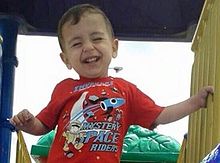
Alan_kurdi_smiling_playground

This blog is dedicated to the refugees I had the honour to support as a Red Cross volunteer this summer. I wish you all success in your new country, Canada.

Collaboratively Yours,

Deb Weston

References

https://www.thestar.com/opinion/star-columnists/2018/08/20/my-border-encounter-with-a-migrant-family.html

https://www.canada.ca/en/immigration-refugees-citizenship/services/refugees/canada-role/timeline.html

http://thechronicleherald.ca/novascotia/1174272-canada-turned-away-jewish-refugees

https://en.wikipedia.org/wiki/Chinese_head_tax_in_Canada

https://www.dummies.com/education/history/world-history/canadian-history-for-dummies-cheat-sheet/

https://en.wikipedia.org/wiki/Death_of_Alan_Kurdi

Summer Professional Learning

The summer is here and if you are anything like me, it’s the perfect time for some professional learning. Ok…well maybe after the long weekend so at least you’ve had a bit of time to unwind from a hectic month at school. You may be wondering, “what’s out there this summer for me to learn?”. Well, here are 2 great opportunities that I am excited to be a part of this summer.

Screenshot 2018-06-30 at 4.51.25 PMMakerEdTO – Every year, during the first week of July, educators who are excited about Making get together for the MakerEdTo Conference which is held at the York School.  From inspiring keynotes to hands-on sessions, this is a conference that I’ve been inspired by for the last couple of years. What I appreciate most is having the time and space to play and talk with colleagues about applications in the classroom in order to get new ideas for the following year. Maker Festival Toronto is also happening July 7th & 8th at the Toronto Public Library.


Screenshot 2018-06-30 at 4.51.07 PMETFO’S Summer Academy  – With over 55 courses this year, ETFO’s Summer Academy has something for every teacher who is looking for more than just a day workshop but rather an opportunity to network and connect with like-minded educators for 3-day courses on topics from Kindergarten to Design Thinking and Technology to Mathematics. I’ve been fortunate enough to learn from some of these amazing educators and I’m certain that you’ll leave feeling excited about trying something new or more confident about a specific area in your teaching practice.  I’m facilitating courses on Getting Started with G Suite Edu in Stratford on July 17th, 18th & 19th and Empowering Students Through Design Thinking on July 31st, August 1, & 2nd. Consider joining me!

Prefer to do some professional learning on your own? ETFO has amazing Resources that are available. From resources for Occasional Teachers to resources and Book Lists on Social Justice topics, there is such a wide variety of information available for reading on your own time.

This summer, I hope that you take some time for yourself to rest, relax and enjoy the beautiful weather and if – like me – you get the professional learning bug, seize the opportunity and enjoy it!

Gender Equity in 2018


women-clipart-at-work-6

The Canadian Charter of Rights and Freedoms outlines what gender equity should look like … but do women really have gender equity in 2018?

In education and workplace participation, gender equity has made some strides.

  • in 2015, women are almost as likely to have a high school (82.5% women vs. 89.3% men) or university degree (83.1% women vs. 89.9% men)
  • in 2015, 77.5% of women were employed compared to 85.3% of men, up from 21.6% in 1950 and 65.2% in 1983
  • in 2015, women are more likely to be away from work (30.0% women vs. 23.9% men) and more likely to be away for a full week of work (38.4% women vs. 24.8% men)
  • in 2015, women are more likely to work part-time (18.9% women vs. 5.5% men)
  • in 2015, women are more likely to do volunteer work (67.2% women vs. 53.0% men)
  • In 1976 – men had higher levels of employment based on the marital status
    • 1976 men – 78.0 % employed single/never married, 92.7% employed married/common-law, and 82.3% employed separated/divorced/widowed
  • In 2015 – women employment rates of women no longer differ based on marital status
    • 1976 women – 79.4% employed single/never married, 44.6% employed married/common-law, and 59.2% employed separated/divorced/widowed

Nevertheless, challenges remain:

Too few women are advancing into leadership roles.

  • Women make up just 21.6% of Financial Post 500* board member (2016)

Women are under-represented in politics in 2015.

  • 26% of those elected to the 42nd Parliament are women
  • women made up 28% of municipal councillors and only 18% of mayors

Women continue to be responsible for the majority of care giving and household unpaid work.

  • women vs. men still spend (25.7 hrs/week) more time caring for their children (in 2010 women 50.1 vs. 24.4 hours/week on unpaid child care)
  • women vs. men are twice as likely to spend more than 10 hours per week unpaid work caring for seniors (49% women vs. 25% men)
  • women vs. men spend 5.5 hours more on housework (13.8 hrs women vs. 8.3 hrs men per week)

Women in the workforce tend to earn less than men.

  • women earn $0.876 for every dollar men earn, largely as a result of inequity between women and men within occupations (2015)

Women continue to experience high rates of gender-based violence.

  • Women have a 20% higher risk of violent victimization than men (2015)
  • Women account for 87% of victims of sexual offences and 76% of victims of criminal harassment (2015)

Some groups are at particular risk for gender-based violence.

  • 10% of aboriginal women were about three times as likely to report being a victim of spousal violence as 3% of non-Aboriginal women (2015)


How does this impact ETFO members?


As 82% of elementary teachers identify as women, women’s issues directly impact elementary teachers.


  • With too few women (21.6%) in leadership roles, women’s voices are not heard.
  • With under-representation of women in politics, women’s needs and equality are not addressed.
  • With more women spending their time, away from work, on unpaid work (caring for children and seniors, housework, volunteer work) , this unpaid work is not valued.
  • With women taking more time off work than men, this means women pay for higher sick leaves and long term leaves (on a personal note, when my children were young, I used 15 days of vacation days, before teaching, to take care of sick children and had no vacation that year). Again, women’s time at work is not valued as much as men’s time at work – if it was, more men would be taking time off to deal with family responsibilities.

Further, our ETFO colleagues are 20% more likely to be victims of violence than men and 87% of victims of  sexual violence. Our aboriginal ETFO colleagues are 3 times more likely to be victims of spousal violence.

Fortunately, female and male ETFO members are paid equitably based on experience and qualifications.

How do we change this?

  • Advocate for women leaders and leadership
  • Advocate for men to take on more caregiving and household responsibilities
  • Advocate for better, more inexpensive and supplemented childcare
  • Start small by changing attitudes and behaviours of women’s paid and unpaid work
  • Challenge gender stereotypes and subtle sexism encountered every day
  • Challenge sexism and discrimination that allow gender inequality to exist
  • Go for leadership roles and run for office

How can you change this on a personal level?

  • Expect men to take as much responsibility as women to care for children and seniors
  • Expect men to take parental leave so women to go back to work
  • Expect men to take as much responsibility as women for household chores
  • Hire house cleaners to clean your house, even if they clean part of the house
  • Advocate for better, more affordable/supplemented childcare, where the childcare workers are fairly paid


In Canada, gender equity is exists but it’s not completely equal. Let’s hope women can make similar strides in improving stats in leadership, unpaid work, and gender violence that have happened in education and employment. Let’s hope in the next 10 years, the stats noted above will look more equal, more equitable, and less biased towards women.

Happy International Womens’ Day 2018

Collaboratively Yours,

Deb Weston

Interesting Resources:

http://interactive.unwomen.org/multimedia/timeline/womenunite/en/index.html#/1840

http://www.unwomen.org/en/digital-library/multimedia/2018/2/infographic-rural-women

http://interactive.unwomen.org/multimedia/infographic/changingworldofwork/en/index.html

http://www.un.org/en/women/endviolence/

https://kids.britannica.com/kids/article/International-Womens-Day/602161

https://www.teachstarter.com/blog/free-international-womens-day-resources-activities/

https://www.internationalwomensday.com/School-Resources

http://www.caaws.ca/gender-equity-101/what-is-gender-equity/

Sources:

*The Financial Post’s ranking of Canada’s largest companies by revenue.

all data from Stats Canada

http://www.swc-cfc.gc.ca/commemoration/iwd-jif/equality-egalite-en.html

http://www.statcan.gc.ca/pub/89-503-x/2015001/article/14694-eng.htm

http://www.statcan.gc.ca/daily-quotidien/170308/dq170308b-eng.htm

Weston, DPA, 2015. Downloaded from http://hdl.handle.net/10464/6191

Teaching About the Genderbread Person

I’m taking the new ETFO AQ … Teaching LGBTQ Students Additional Qualification Course. I’m learning a great deal about stigma, discrimination, and privilege. PS I’m a LGBTQ2S Ally.

gingerbread-person-orientation1

Genderbread-Person-3.3-HI-RES

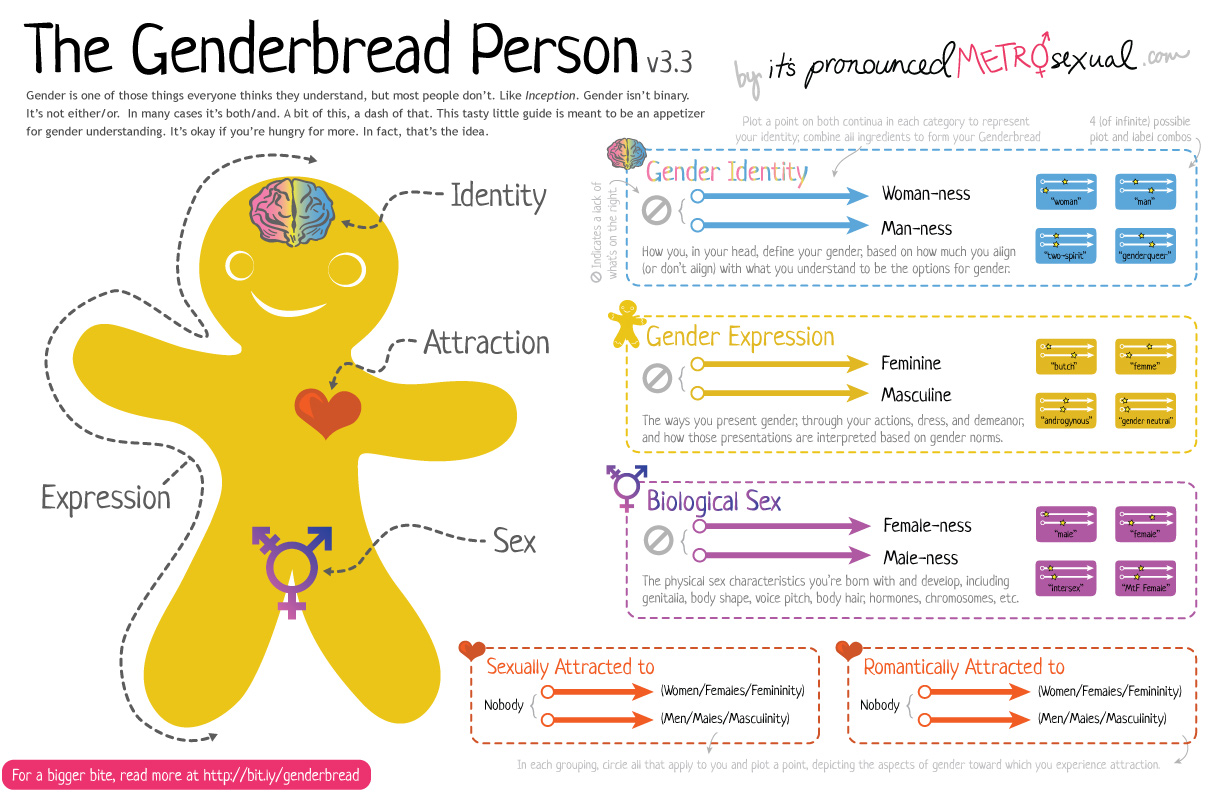
The first day of the course, we discussed the Genderbread Person which really help me understand the diversity in  people, and especially in LGBTQ2S communities. This concept was developed by Sam Killermann. I’ve included several of Sam’s resources below.

Aspects of the Genderbread Person (my understand of the Genderbread Person concept):

Gender Identity deals with how a person thinks about their gender.

Gender Expression deals with how a person presents with regards to gender.

Biological Sex is how male, intersexed, or female a person is born.

Sexual Orientation deals with who a personal is sexually attracted to but no necessarily who they fall in love with. This means that a person may be sexually attracted to another person and want to sleep with them but may or may not be romantically attracted to them.

Romantic Orientation deals with the opposite where a person may be romantically attracted to another person but may or may not to be sexually attracted to them and want to sleep with them.

All of the above occur on a separate continuum. This means Gender Identity, Gender Expression, Biological Sex, Sexual Orientation, and Romantic Orientation are all on a separate continuum. For example a person could identify as male, express themselves as male, be biologically female, have a preference for males both securely and romantically – or in other words, a girl who looks and presents as a boy but still likes to have sex and love boys (based on a real life case).

Remember about 1 in 10 or 10% of our students likely identify as LGBTQ2S so it’s important to understand about the equity issues around the identities. Knowing about LGBTQ2S is not just about celebrating a day of pink, it’s about embracing the issues everyday!

Collaboratively Yours,

Deb Weston

Check out these resources below

Genderbread Personb v3

One Huge Prickly Reason Why Anti-LBTQ Folks Don’t Change Their Views

Let’s Talk About Bathrooms

5 Reasons Why So Many People Believe Feminism Hates Men and Why They’re Not True

Dear White, Straight, Cisgender, Man People: You Are Privileged

Comprehensive* List of LGBTQ+ Vocabulary Definitions

30+ Examples of Cisgender Privilege

Solution for the “Confusing” Gender Neutral Toilet Sign Issue

Video: Understanding the complexity of gender

Video: From Boxes to “-Ness” A Journey Exploring Gender

Video: Social Justice is for Everyone

Moving Beyond “Cultural Months”

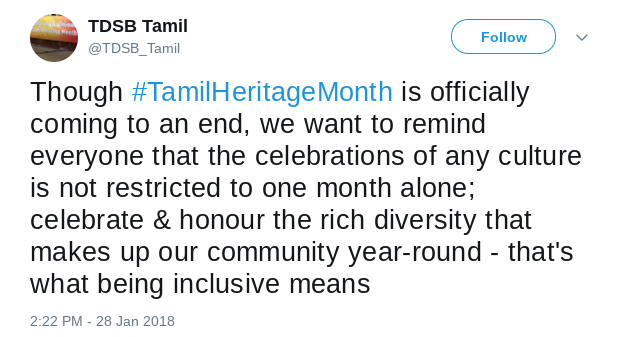
I don’t mean to be flippant but I’m sometimes leary when we have a month to celebrate a particular racialized group. What happens to their history or their identities during the rest of the year? I recently saw this post on Twitter and it got me thinking – how do we ensure that we go beyond these months and into a deeper desire for ourselves as educators and our students to value the diversity that exists in our classrooms?

Screenshot 2018-01-28 at 5.15.07 PM

Checking Our Bias

In our board, we have had many conversations around bias and equity. How are we moving from conversations and into action? In what ways are we really ensuring more equitable outcomes for our students and colleagues who are racialized? We all have bias and privilege to one degree or another. When we acknowledge our bias and privilege and are conscious of it in the spaces in which we exist, we are better equipped to extend equity and honour the experiences of others. In doing so consistently, we become those who seek out and foster ways in which to level playing field for others. What is your bias? What are your thoughts about the students that you serve? How does your bias impact the way in which you serve your students?

Courageous Classroom Conversations

Over the past few years of teaching, I’ve realized to a greater degree, the value in having conversations about the world around us with students. Earlier on in the year, we had conversations around Colin Kaepernick and other NFL players taking a knee. I had a colleague who was shocked that I was talking about it in the classroom. We have to remember that our students are living in and experiencing the same world that we are. They are keenly observing and are not oblivious to what is going on. Shouldn’t they have a space to engage in conversations about what is happening, not from a stance of judgement but of fact finding and meaningful sharing about its impact on them and the communities in which we live? By shying away from these conversations, we do a disservice to our students because that is what is real and authentic in our world and they need the opportunity to understand, discuss and determine ways in which they are able to navigate these situations in the hopes of bringing about a different tomorrow. This too is a part of education

Meeting The Needs Of Our Students Based On Their Realities

Shaughnessy is the 5th school that I have had the privilege of teaching at here in Toronto. Each school has had a different community and it’s been exciting to get to know and understand who my students and their families are. When we take the time to find out what is of value to our students and our community and teach from there, we truly start to meet the needs of our students. High expectations with lessons that are authentic and are based on the interest of our students increases engagement and allows for our students to make connections to the curriculum that are meaningful and relevant. This is what gives them greater opportunity to flourish based on who they are. We all want greater student success, why not find out what is meaningful to our students and work from there to ensure that they are represented in our lessons, tasks and classrooms?

Special months are great for celebrations of cultures but as this Tweet reminds us, let’s consider ways in which to go beyond a particular monthly celebration and make sure that our diverse identities are celebrated throughout the year.

Kindness and Gratitude

My hope in asking for a junior division assignment was that the students would be more independent however, I also knew that in exchange, I would be likely dealing with the issues of the tumultuous “tween” years.  My expectations for this group were particularly high because I had taught nearly half of them for two years in grades 1 and 2 and I felt as though I knew them pretty well.  Unfortunately, we have been having social issues in our classroom and the students are having difficulty treating each other with kindness.  I wasn’t prepared to have to “teach” kindness and gratitude at this age.  After 20 years in the primary grades, I suppose I assumed they would already know how to be kind.  Let me be clear.  They are not horrible kids and having raised two kids through the “tweenage” years I know the behaviour is driven by hormones etc.,  Kindness becomes more complicated in the junior grades as the social constructs change and being popular and fitting in becomes that much more important.  What I’m trying to get across to the students is that kindness is actually more powerful than being mean but they aren’t yet all buying into it…yet.  I’m not giving up.

We started by reading the book “Wonder” by R.J. Palacio together as a class.   After every few pages there was so much to unpack in discussion with the students about empathy, “precepts” for living and loyalty in friendship.  In discussions, the students were easily able to empathize the injustices suffered by Auggie and were angered by the actions of the antagonist, Julian. We also went to see the movie in order to compare the stories and they thoroughly enjoyed the experience and were thoughtful in their assessment of the themes and the major differences.  In reality, however, they were having a hard time putting all of this knowledge into practice with one another.

I needed to dig a little deeper and do some research and I happened upon a great website connected to the book; #choosekind is a campaign attached to Palacio’s book and it started us on a journey of kindness.  We’ve also been using lesson plans from the Random Acts of Kindness website and have begun daily gratitude journals.  We started restorative circles using our talking stick using Restorative Circle prompts. We have created our rules and agreement for our circle.  It has been a slow start because we are starting with topics that are allowing students to relate to one another and are not value or character based sensitive topics yet as we work to build trust in the circle.  Our first couple of prompts were, “What are 3 things that you cannot live without?” and “Who is your hero?” Not everyone is able to come up with something right away and sometimes we have to circle back, but it is a beginning.

We also wanted to do something as a class that was more global and would make an impact on people whom we didn’t even know.  In Peterborough, we have a store called Under One Sun.  They are part of a larger organization that supplies crafts from artisans in Haiti, “Restoring Dignity Through Artistry”.   We decided to participate in a Christmas ornament fundraiser which helps to create jobs and sustain families in Haiti. Some of the money goes to the artisans for healthcare, childcare, education and materials and some of the money comes back to the school.  Our class of 22 students alone sold more than $1000.00 worth of ornaments.  This fundraiser makes a difference in our community and for families living in Haiti and broadens our student’s awareness of global issues of poverty.  In addition, we are going to learn how to make paper bead jewelry ourselves as gifts for our own families.

As we move into the holiday season, December is a great month to think about giving, gratitude and kindness.  We are going to be working with the Senior Centre down the street, hanging our art work, singing songs to entertain and presenting a dramatic re-telling of “A Promise is a Promise” written by Robert Munsch.  We have created a kindness calendar which includes random acts of kindness for each day that do not cost money.  Hopefully, day by day, discussion by discussion the students will come to realize the power of kindness.

So why teach LGBTQIT human rights?

 Holding hands

 “Coming out hasn’t come as far as we think”

(Emma Teitel, national affairs columnist, Toronto Star, August 11, 2017, A8)

“Coming out” as a LGBTQIT* person, by making friends and family aware that they are not part of the heterosexual majority, has many implications. Specifically, LGBTQIT people who are not part of the “heterosexual” norm deal with great social, health, emotional, and economic barriers. Our LGBTQIT students, colleagues, and parents, regularly deal with discrimination on many levels including bullying and threats of violence. This is why not all LGBTQT people come out. According to an online Quebec survey (commissioned by the Foundation Jasmin Roy, an anti bullying/violence organization), it was reported that 45 percent of LGBTQIT respondents said they kept their sexual orientation or gender identity hidden due to worries of discrimination (Teitel, August 11, 2017). In the survey, 81 percent of LGBTQIT respondents agreed that Canadians are open-minded about gender and sexuality but 75 percent believed that more work needed to be done to support the LGBTQIT communities (Teitel,  August 11, 2017).

So why do teachers need to teach LGBTQIT human rights?

Why do teachers need to address these topics in Ontario classrooms? (especially when some parents disagree with teaching about sexuality and gender)

Health and Phy Ed 2015

The new health and physical education curriculum (Government of Ontario, 2015a), dealing with LGBTQIT topics, was updated in 2010 after remaining untouched since 1998. After protests by some religious groups, the Liberal government backed away from an attempted update of the health and physical education curriculum in 2010 (National Post, February 2015). The Ontario Health and Physical Education Curriculum was the most outdated curriculum in Canada (Rushowy, September 2015).

In 2015, Premier Kathleen Wynn vowed that the updated curriculum would be implemented in the 2015/2016 school year.

In September 2015, the curriculum was introduced into Ontario schools. There was a strong backlash from parents and communities. Often the groups opposed to any curriculum dealing with sexuality and gender were misinformed by the content of the contentious parts of the health curriculum. To repond to this, the Government of Ontario developed A Parent’s Guide: Human Development and Sexual Health in the Health and Physical Education Curriculum (Government of Ontario, 2015b).

The Peel Board of Education’s director, Tony Pontes, stated that “We cannot — we will not — by action or inaction endorse discrimination,” who cited Ontario’s Human Rights Code as applying to people of all sexual orientation and gender identity. Mr. Pontes went on to state that “Supported by legal opinion, bolstered by our core values, I would no more say yes to someone wanting a child excluded because of a discussion about LGBTQ than I would a discussion about race or gender.” (Rushowy, September 2015). Further, Mr. Pontes stated that while some parents had “genuine concerns”, the board would work to address issues brought up by the critics of the updated sex-ed curriculum. These critics misinformed parents in order to “raise fear, generate untruths and build constituencies of protest based on false information” (Rushowy, September 2015). Mr. Pontes, the director of the Peel Board of Education, found this unconscionable. In addition, Mr. Pontes stated that the Peel Board of Education was willing to lose students over its stance of inclusion for all (Rushowy, September 2015). Some school boards lost students and some teachers lost teaching positions (based on my own anecdotal observations). Often, there are costs as a result of taking a stance to uphold human rights.

In 2015, even though I was not a “Health and Physical Education” teacher, I did deal with issues around sexuality and gender. In our school, we had students and colleagues that prHuman Development Guideesented as LGBTQIT. In addition, we discussed LGBTQIT inclusion during the Day of Pink  and while discussing human rights topics. I received notes from parents asking me not to talk about same sex couples on the Day of Pink. I also had students missing from school on the Day of Pink. Some parents believed that discussions of inclusion were only limited to specific school days. Parents needed to realize that teachers talk about inclusion, as needed, especially when students rights are being suppressed. Inclusion is not limited to skin colour, culture, religion, chosen head coverings, ethnicity, ancestry, citizenship, disability, or diet.

Teachers do not get to pick and choose which topics of inclusion they will address because all issues regarding human rights apply.

Some of my teacher colleagues have stated that they do not honour LGBTQIT rights. Some students have told me that their parents do not believe in LGBTQIT rights. I have had parents phone me to tell me not to discuss LGBTQIT rights in class. Imagine what would happen if a parent, student, or teacher stated that they did not want teachers to teach about the rights of people of different races or religions.

As teachers, we must honour the rights of all people because we provide educational services within the province of Ontario. It is part of our role, as teachers, to uphold human rights and protect against discrimination as per the Ontario Human Rights Code.

Every person has a right to equal treatment with respect to services, goods and facilities, without discrimination because of race, ancestry, place of origin, colour, ethnic origin, citizenship, creed, sex, sexual orientation, gender identity, gender expression, age, marital status, family status or disability.  R.S.O. 1990, c. H.19, s. 1; 1999, c. 6, s. 28 (1); 2001, c. 32, s. 27 (1); 2005, c. 5, s. 32 (1); 2012, c. 7, s. 1. (Ontario Human Rights Code, updated December 5, 2016)

As teachers, there is no opting out of the Human Rights Code.

Toronto Star national affairs columnist, Emma Teitel was accepted by her family and friends when she told them she was gay. She stated that coming out “sucks, even for the lucky ones like me” (Teitel, August 10, 2017). Yes, her family and friends accepted her for who she was. She affirmed that there is still a long way to go. Teitel stated that she still faces challenges when kissing her partner in public without getting “molested by creeps”. She hopes that one day  that “thousands of transgendered people [will] no longer fear for their lives every time they step out their doors” (Teitel, August 10, 2017). Ms. Teitel wishes this for all  people in the LGBTQIT community.

As a parent of a gay adult child, I hope one day my daughter can live her life with her partner, in peace, without being stared at every time they hold hands in public. I hope that with the work of the Ontario education system, being LGBTQIT will be part of an inclusive culture in Ontario.

Collaboratively Yours,

Deb Weston

*LGBTQIT is a short form for Lesbian, Gay, Bisexual, Transgendered, Questioning, Intersexual, Two-spirited people (please note this is my most recent understanding of the term)

References

Government of Ontario, (2016). Ontario Human Rights Code. Downloaded from https://www.ontario.ca/laws/statute/90h19

Government of Ontario. (2015a). The Ontario Curriculum, Grades 1-8: Health and Physical Education, 2015 (revised), Government of Ontario. Downloaded from http://www.edu.gov.on.ca/eng/curriculum/elementary/health.html

Government of Ontario. (2015b). A Parent’s Guide: Human Development and Sexual Health in the Health and Physical Education Curriculum, Government of Ontario. Downloaded from http://www.edu.gov.on.ca/eng/curriculum/elementary/HPEgrades1to6.pdf

Rushowy, K., (September 2, 2015). Peel board won’t exempt kids from learning about gay families, gender issues, Toronto Star, Downloaded from https://www.thestar.com/yourtoronto/education/2015/09/02/peel-board-wont-exempt-kids-from-learning-about-gay-families-gender-issues.html

Teitel, E., (August 10, 2017), Coming out sucks, even for the lucky ones like me, Toronto Star, Downloaded from https://www.thestar.com/news/canada/2017/08/10/coming-out-sucks-even-for-the-lucky-ones-like-me-teitel.html

Teitel, E., (August 11, 2017), Coming out hasn’t come as far as we think, Toronto Star, A8. Downloaded from http://thechronicleherald.ca/opinion/1493875-opinion-coming-out-hasn%E2%80%99t-come-as-far-as-we-think

The National Post. (February 23, 2015). National Post View: New sex ed curriculum should be sensitive to all sides, The National Post, Downloaded from http://nationalpost.com/opinion/national-post-view-new-sex-ed-curriculum-should-be-sensitive-to-all-sides/wcm/596af7c3-9704-4a2f-aad7-543cb8bbc99a

“Watch, Listen, and Show Respect”

Last week on a warm Wednesday evening, I had the very good fortune of attending an event where the Honourable Senator Murray Sinclair spoke to an auditorium full of educators and students. Although he has become a senator, he may be better known for the work he did as Chief Justice Sinclair, head of the recently concluded Truth and Reconciliation Commission (TRC) which investigated and made recommendations for the government of Canada, following the documents and testimonies of hundreds of survivors of the sad legacy of the Indian Residential School system.

To start the evening, we were all welcomed by a drum group, followed by greetings and prayers from First Nation, Metis, and Inuit elders. As soon as Senator Sinclair took the podium, there was a standing ovation. Even before he spoke to the audience, there was deep respect shown for him and for all he stands for. The immense and comprehensive task he and fellow members of the TRC were responsible for unveils an unbelievably long and dark chapter in Canadian history – a chapter that has only recently begun to be learned about in Canadian schools. This was at the heart of what Senator Sinclair was to speak about and what we had all come to hear. As he began to speak, however, he completely caught us off-guard with the way he introduced himself. For almost twenty minutes, his speech was hilarious, but never irreverent, as he made fun of himself, revealing a side of his persona which one might not otherwise infer, given the critically important role he played as Chief Justice presiding over the traumatizing and cruel personal histories of Indian Residential School Survivors. Instead, here was a man who, along with the humourous asides and wit, shared a warmth and respect for the world. Even if he had not gone on to speak about the role of education in reconciliation, Senator Sinclair would have, none the less, taught us by example how to lead a good life.

His message was clear – education caused the problems affecting Aboriginal families and communities, and education can now be part of the solution. All Canadian citizens need to learn about the history of Indian Residential School schools in Canada. Senator Sinclair suggests our role as educators is to begin by helping our students to do three things; to watch, to listen, and to show respect. We, too, must do the same. It is a simple recommendation to help bring reconciliation to our classrooms and it will mean so much for all our futures if we are able to model and teach our students how to be good listeners and observers, who show respect for all.

Students making a difference

Throughout this school year, it was one of my goals to not only start a fundraiser that would benefit a charity somehow but to have students orchestrate most if not all of the procedure. At my school Ancaster Meadow, I asked a group of 30 grade eights to plan with me a day entitled “All Star Day”. Together with myself the grade eights:

  • chose two charities for all monies collected to go towards
  • selected how the day would work picking the events at All Star Day
    • 3 point competition $10 to play
    • All star skills competition $10 to play
    • All Star game where kids from grade five to seven would play and would be coached by grade eights $20 to play
    • All star game where grade eights would play the teachers $20 to play
  • help run the day and organize the crowd to watch the event

There were many other tasks involved to help make the day a success. I went to 30 different companies to ask for donations as well as other companies to sponsor t-shirts, lunch the day of and volunteers were involved from Redeemer University.

The day went off without a hitch and we raised $2000 total, $1000 going to each charity. After this day, every grade eight came to me asking to lead more events, raise money for more charities, etc. They had all these ideas that are impossible to all say yes to because it is May at the end of a school year and the ideas they have would take many months to plan for. However, students do have the potential to make the greatest difference in their school. Whenever you have an idea, put it in the hands of your students and trust that they can take it anywhere. I have never seen kids more involved or more into what they were doing in a school building then I saw on that day. I cannot wait for next school year when I can do that same event again, keep building on it and inspiring children to know that they can make a difference and have an amazing time while doing so.

If you would like to see videos from our event, you can youtube: Ancaster Meadow All Star Day. IMG_4604

Is Math Neutral?

The notion of neutrality speaks to the experience of being impartial or unbiased. It speaks to the absence of asserting value, power or privilege over another or the act of being impartial, unprejudiced and nonpartisan in nature. There are many areas of teaching and learning where the existence of prevailing politics is named and sometimes challenged: Whose stories do we include in the social studies/history curricula? What literature is considered to be the cannon? What art forms are considered cultured? But when educators think about the tapestry of math education, this notion of it being neutral tends to be widely agreed upon because of the perceived objectivity and absolutism that characterizes the ideas that are explored. But I wonder…is math really neutral?

“Math is about numbers. Surely it is neutral.”
This year, in supporting English Language Learners in math, I have learned many new Mandarin and Cantonese words from my students. More specifically, I’ve learned the inherent ways that Chinese characters are written to nurture a conceptual understanding of quantity. For example, the number eleven is written 十一 which means “ten-one” or can be understood as “ten plus one”. Similarly, the number twenty is written 二十 which could be understood as “two tens” or “two times ten”. Finally, the number thirty-three is written 三十三 Which could be understood as “three ten and three” or “three times ten plus three”. The fact that the word for the number eleven, when represented in English, has no relationship to the the concept of quantity speaks to the way numbers are represented are not neutral. This discrepancy in language representation speaks to the biased nature numbers are conceptualized through language. Thus proving an inherent bias in the ways in which numbers are conceptualized and number sense is acquired. Similarly, the bias toward English representation of numbers can limit the conceptual understanding of languages that represent numbers in a more conceptually friendly way.

“Math is about problem solving. Every has the capacity to solve problems.”
Consider the following problem: Brandon travels to the city using the subway. Each car seats 30 travelers. How many people might be on the subway if there are 10 cars? What background knowledge might students need to have in order to understand the context yet a alone respond the the problem mathematically? While the problems we pose to our learners may involve numbers that can be calculated and manipulated in flexible ways, the context, when coming from particular experiences, can deny access to the learning that needs to be achieved. In other words, if the context from which we invite students to explore math concepts can be carefully crafted in order for our learners to be able to relate to the ideas, they can also be unintentionally crafted in ways that could limit students access. In this way, contexts are never neutral because they come from a particular place of knowing or experiences that not all students have access to.

So there you have it. I’ve explored two very simple ways bias is experienced in math discourse. The presence of even one form of bias discredits the neutrality of math. If math, a lens for viewing the worlds through numbers, shapes and patterns, can be ladened with bias and politics, what else about the schooling experience share this similar trait?