Blog

Progress Reports

It is that time of year again! Progress reports are due in most boards this month. It is a hard task to think about what your students have done in just a month and a half of school.

I like to give students time to reflect on their learning skills as well as what they have done in each subject. Each year I create a survey for students to self evaluate themselves. Then, I include comments from this evaluation on their progress report. I like to use google forms to create the survey so all of their answers stay in my google drive.

For learning skills, my current grade eight class has made it quite challenging to comment on. They have good and bad days but it is important to set these students up for their next grade. Getting an “E” has to be true at all times since next year I am nervous about how their learning skills would measure up. I gave my students time to come check their current learning skills today and only one student came to my desk to see their mark. At my old school, the entire class used to line up to check their current learning skills. I feel that they may know they aren’t doing the best since they did not come to see their marks.

For math and literacy, progressing very well is very hard to receive as a level four is hard to achieve at all times. I have explained this to my class so that they will not be disappointed by the “progressing well” comment on their reports.

Other subjects we are just getting started on so the “progressing well” comment is hard to justify. “With difficulty” and “very well” also wouldn’t make sense since we have just begun. It is for that reason I find the progress reports timeline a bit challenging and I wish students had a bit more time to dive into each subject. It is hard to get students interested in their marks as well for the first time in my career so this thought makes me nervous for them in high school as well as for the rest of the year.

Is getting students interested in their marks something I can teach or is it just something students come to school with? I am hoping my students will gain that desire soon.

The Fundamentals of Teaching Balanced Math

math

Balanced math programs are not something new. Balanced math programs have always taught the fundamentals of math.

Many years ago, the board I teach for released an excellent poster outlining their approach to balanced math. The poster consisted of the importance of teaching: attitudes to math, approaches to instruction/assessment, teaching through problem solving, purposeful practice, basic facts and operational skills, and purposeful use of resources. When I saw the poster I was thrilled to see math pedagogy that aligned with my own teaching practice.

I have taught math from grade two to university level. Regardless of the grade or level of math, I believe there are four fundamental pillars in math instruction:

  1. Real world applications: Math instruction needs to connect to the real world – here students see the purpose of learning math such as measuring the diagonals of a door to ensure it is squarely/correctly installed or calculating how much paint you need to paint a room.
  2. Problem solving: Math should be taught with problem solving – problem solving adds complexity in applying math facts and operations skills within context and especially when connected to the real world.
  3. Practice to develop automaticity: Practicing addition and multiplication facts is not the most exciting part of math but without knowing them, students have to use more of their working memory to figure out the facts. This use of working memory/executive function leaves less space for working on the math that is in front of the student.
  4. Manipulatives/hands-on math: Manipulatives are not just for primary or junior grades, all students need them to make sense of abstract math concepts. I used math manipulatives to teach grade 8 students how to solve algebraic equations. Once the students did this with the manipulatives, they could work out the problems on paper. Even when I took university math courses, I always drew pictures of the math problem so I could understand my task better.

Other boards of education are also promoting balanced math programs. These boards of education may give their math programs a different name, but essentially the programs are similar.

In 2018, jobs that require math pay more than jobs than do not require math. This is a key reason to learn math!

These jobs include scientist, engineer, technologist, electronics specialist, robotics engineer, economist, game designer, roller coaster designer, animator, pilot, sports announcer, professional photographer, financial planner/analyst, cryptographer, research analyst, accountant, lawyer, marketing researcher, real estate agent, software designer/tester, global warming specialist, professional cook, and math teacher.

Math is important to students’ lives. It helps students make sense of the world as well as ways to figure out practical things like managing their money, doing home renovations, and making sense of their cell phone bills.

Do math, teach math, explore math.

If you know of anymore resources to share, please comment below so I can check them out!

Collaboratively Yours,

Deb Weston

More Information

Ford wants to get back to basics with math — but educators say balance is best

SEEING AS UNDERSTANDING: The Importance of Visual Mathematics for our Brain and Learning

York Region District School Board Comprehensive Math Program 

Peel District School Board Balance Math Instruction K-12 Program

Why is it important to study math?

Math Resources for Parents and Teachers

Queens University

Mathies

Peel District School Board Parent Guide to Learning Math Today

Peel District School Board Engage Math for Parents

Parents Guide to the Fundamentals of Math

School Kiss and Ride Zone Safety for All

Kiss and Ride

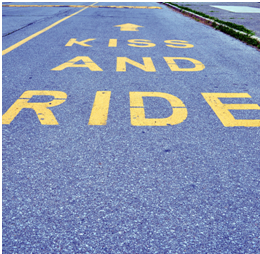
School Kiss and Ride zone locations are designed to drop off and pick up children in vehicles before and after school. In some schools over 200 students are picked up and dropped off every day. In winter and on rainy days, this number increases relative to worsening weather conditions. In addition, parking lots are often located beside and as part of the Kiss and Ride drive through. Kiss and Ride lanes are designed to have up to 100 vehicles driving through during a 20 minute period.

It is important to keep all students and staff safe. Rules and guidelines are put in place to keep vehicles moving and to ensure the safe entry and exit of students from vehicles. Some of these rules include:

  • Drivers adhering to limiting speeds
  • Drivers, parents and students following school staffs’ instructions
  • Drivers not parking and waiting in the Kiss and Ride lane (It’s called Kiss and Ride NOT Kiss and Park)
  • Drivers yielding to pedestrian traffic
  • Drivers treating staff, students, volunteers, passengers, and other drivers with respect
  • Drivers not double parking beside the Kiss and Ride lane (students crossing between vehicles could be injured by other vehicles)
  • Adults making sure students fully exit or enter the vehicle before driving away from the Kiss and Ride lane
  • Ensuring all passengers, especially students, have seat belts on at all times while in the vehicle
  • Drivers remaining in the vehicle while in the Kiss and Ride lane so as to not block the flow of traffic
  • Drivers not parking in the Fire Route or School Bus zone
  • All people following directions of crossing guards and school staff acting as crossing guards
  • Drivers not idling vehicles in the Kiss and Ride lanes or Parking Lot zone areas

There rules and guidelines are put into place to prevent accidents. Students, parents, and school staff are injured every year. In February 2018, a student was and killed hit by a car as a result of vehicles inappropriately parking near a school (Maharaj, 2018). Another school closed their Kiss and Ride lanes after safety concerns became overwhelming (Milton Canadian Champion, 2013). As a teacher on Kiss and Ride duty, I have personally witnessed near missed of vehicles almost hitting children and adults.

Kiss and Ride Zones can also be a problem by exposing children and adults to high levels of pollution. A University of Toronto study (Adams & Requia, 2017) showed that Kiss and Ride school zones contain a “Halo of air pollution” due to idling vehicles nearby (Elliot, 2017).

Teachers need to be especially vigilant in keeping themselves safe while on duty in Kiss and Ride areas and in school parking lots. For the most part, teachers should use their common sense and professional judgement. Here are a few common sense suggestions to keep you safe from injury at the Kiss and Ride:

  • Do not help students in and out of vehicles – your arm could be injured if a vehicle drives away or you could injury a student while closing a vehicle door (think car doors closing on little fingers!)
  • Do not put your back to vehicles – you cannot see where they are or how they are moving
  • Teachers do not have to enter cross-walk zones if they feel unsafe – do not use your body to block a car
  • Do not put up with abuse from drivers and/or parents
  • Do not intervene in Kiss and Ride/Parking Lot disputes between drivers – you are there to supervise students, not adults
  • Use your professional judgement to consider reporting dangerous drivers or students not in seat belts to the administration

If you have any additional common sense suggestions in keeping all people safe in Kiss and Ride Zones, please share them with me and I will add them in this blog.

Collaboratively Yours,

Deb Weston

References

Adams, M. D., & Requia, W. J. (2017). How private vehicle use increases ambient air pollution concentrations at schools during the morning drop-off of children. Atmospheric Environment, 165, 264-273.

Elliot, J. (August 10, 2017). School drop-off zones expose kids to high levels of pollution: study, CTV News. https://www.ctvnews.ca/health/school-drop-off-zones-expose-kids-to-high-levels-of-pollution-study-1.3540552

Maharaj, S. (February 28, 2018) Scarborough student’s death sparks call for safer school zones, Global News. https://globalnews.ca/news/4054718/duncan-xu-kennedy-public-school/

Milton Canadian Champion. (2013). Traffic issues bring safety blitz to Escarpment. Milton Canadian Champion. https://www.insidehalton.com/news-story/2885147-traffic-issues-bring-safety-blitz-to-escarpment-view/

Drawing The Line

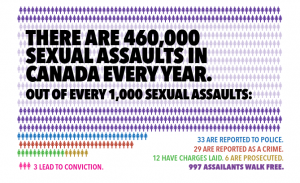
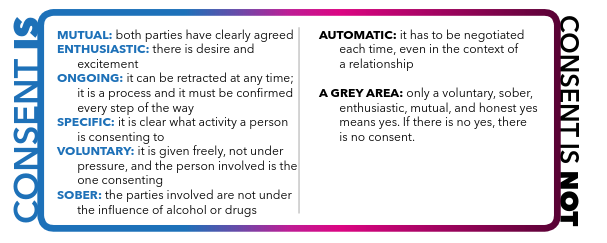
Each year, in Canada, approxScreenshot 2018-09-30 at 9.18.11 PMimately 460,000 women are sexually assaulted, although only a fraction of them report the assault to the police (1). In a day and age where this statistic holds true, it’s hard to imagine that our government is wanting to go back to a time where consent and gender identity aren’t being discussed in classrooms as a part of the Health Curriculum. Simply ignoring the very real issues that our students face in 2018 doesn’t make them go away, nor does it help to develop a society that is action-based and ready to implement change.

Earlier this year I was really excited to hear about ETFO’s and White Ribbon’s resource – Drawing The Line. Now I might be slightly biased as my brother is a contributing author but I was thrilled to see a resource that not only provided data-driven information for educators but also included a comprehensive guide for age-appropriate lessons for students in grades 1 to 8. I love that the guide addresses bystanders and offers students ways in which to respond to to sexual violence. Not only do the lessons connect to the Health and Physical Education Curriculum but expectations also in Language and the Arts are included in many of the lessons. This guide is truly a proactive approach to teaching students about healthy relationships and is one that every educator should read and implement in their classrooms. I know that in the past, ETFO was offering sessions on this resource and I hope that they continue.

Screenshot 2018-09-30 at 9.18.44 PM

With hotlines or tiplines being made available, it’s sad to say that we are in such a time where educators are somewhat in fear of teaching what we know to be essential for our students’ safety and healthy development. We need to be having these conversations because unless we do, nothing will change and perpetrators will feel empowered to continue. As you may already know, at the beginning of September, ETFO filed a legal injunction to pause the rollback of the 2015 Health curriculum. The union believes the government’s directive creates unsafe and unhealthy learning and working environments. In the meantime, how are you working to unpack these issues with students? They’re in the news and on the same social media platforms that students are interacting with. How will the work we do today impact the statistics in the future? In the next year, 5 or 10? If you haven’t already, please check out this resource as well as the other resources that ETFO has to offer.

1. Holly, Johnson, “Limits of a Criminal Justice Response” (University of Ottawa, 2012), https://books.openedition.org/uop/592?lang=en

New Year, New Role

Education has always had a huge place in my heart. On several occasions, my mom has recounted stories of me teaching my stuffed animals as a young child. This was even before my starting school and getting a taste of what being a part of the education system would be like. Although my path to the big question of what I want to be when I grow up – by the way, I’m still figuring that all out – veered in different directions, I find myself today in a place that I am truly enjoying within education.

A couple of years ago, I remember being asked the question of what I would do next in education and I always thought that I would never leave the classroom. I was excited to work with students on a daily basis. Discovery and laughter were two things that I could guarantee would happen daily. Over the past 9 years, my students have been the one thing that motivated me to become a better educator. Not merely for the sake of saying that I am a good educator but with a desire to take the time to grow in order to better meet the needs of the students that I had the privilege of serving. Never in a million years did I think that when presented with an opportunity to try something new, that I would start to consider it.

This past June I decided to take a leave and a leap with an amazing team at Future Design School. In August, I started my new role as an Education Lead and it’s been an amazing experience. Having the opportunity to work with educators across North America on creating exceptional learning experiences for students that empowers them to develop Future-Ready skills, is truly powerful.

So far in my new role, I’ve learned 3 things:

  • Enjoy the new learning
  • Learners are learners, whether they are children or adults
  • Take time to reflect

Enjoy The New Learning

I think this is the first time that I’ve taken such a big leap and jumped into something totally new. In the process of supporting educators in a variety of ways, I myself find it fulfilling to also be on my own journey of education on many levels. I love that there is always something new to uncover and that I have an opportunity to be apart of something fantastic that I too get to have an opportunity to help grow. I’m inspired daily to be part of a team who is passionate about transforming education and willing to share what they know with others. While I have worked with students around Design Thinking in the past, I’m understanding on a deeper level the “why” and reason for so much of the process. It’s amazing, the more I learn, the more I discover how much more growth there is to experience.

Learners Are Learners, Whether They Are Children Or Adults

I’m learning that scaffolding of any new learning is important for children AND adults. I know that this should be a simple concept for me to have realized a while ago but it has now become very clear. The definition of learning – the acquisition of knowledge or skills through experience, study, or by being taught – remains the same no matter the age of the individual. Being clear and explicit doesn’t change because of age. Nor does involving the learner in the learning change simply because of the demographic. Adults enjoy getting up in sessions and having the opportunity to talk through ideas with others. They love sharing their thoughts and experiences when designing learning experiences for their students. As educators we’re moving away from being the “sage on the stage” to the “guide on the side” and the same holds true when working with adults. I’m still learning about working with adult learners and know that best practices in the classroom are also keys to that work.

Take Time To Reflect

I think that I have always been a reflective person but I’m making the time to journal and reflect on my experiences even more. As a kinetic learner, I know that I learn best by actively doing, succeeding or failing and having opportunities to reflect, ask questions of others, and trying again. One thing that I am going to be working on this year is not being afraid of asking questions. I’m pretty confident in asking when I don’t understand something, however, I know that there are times when I am unsure and during these moments I’m a little more hesitant and sometimes like to figure things out. My goal this year is to learn as much as I can and I know that this requires that I be reflective and vulnerable in asking questions.

It’s a new year and a new role for me and I am really embracing it. Are you in a new role this year? If so, I would love to hear what you have been up to and your thoughts around starting something new. What prompted the change? What are your learning? Don’t be left out if you’re not in a brand new role, there’s always an opportunity to experience something new in education. Let’s start a conversation as we work towards growing as educators.

Building blocks

This post is a follow up to Building upon balance. It also has a companion post titled Wyoming 1971 if you want a trip back in time that adds more context to my thinking.

In the 1980’s, if you wanted to attend a university program you needed to complete a 5 year high school school diploma. Grade 13. The big one. It was a make or break year for any and all of us with aspirations of a white collar middle-class jobs whether they be Engineering, Medicine, Law or Finance. That was it. There were no other jobs(sigh).

Grade 13 meant you could choose some of your courses. Some. You still had to take English and at least one Math course. I chose the easiest one, Functions and Relations, or so I thought. By mid-term I was on my way to a failing grade(60%) with poor results at every turn. I wondered why it wasn’t clicking? I had an 85% in Grade 12 Math so a decent mark should not have been out of the question. My teacher was good enough most days, my effort was only questionable some days, but scraping by was not going to get me into university. I ended up with a 51%.

I wondered why things had not come together? Then I realized that my grade 12 Math class had been nearly a year before. My school was on the semester system, and that meant if you took Math in Term 1, you might not be taking it again until a year later. At the bare minimum if I do the Math right, it meant 8 months of not keeping previously acquired skills sharpened if your course ended in January. I limped through the course, somehow graduated, went to university, and got kicked out 3 years later for academic underperformance. Could not practicing Math on a more frequent basis have contributed to my lacklustre results?

Like so many people I was mad at Math. I wasn’t good at it(cop out). I didn’t have a Math brain to solve for x or any other letters of the alphabet for that matter(fixed mindset). I used my Math skills for bargains, business, and family budgets(with a calculator). I did not take another Math class until 20 years later in teachers college. I rediscovered my love for Math after many hours of review and practice problems because I saw it not as problems and symbols on a page, but as a challenge and chance to be a problem solver. It was like working out for the first time and instead of my body waving the surrender flag, it was my brain most of the time. After a number of months, some, but not all of the concepts were returning. However, I had lost a lot of form and vocabulary. To put it another way, the blocks of my foundation were in bad shape and in need of a rebuild(still working on it).

A few years into the future I stood in front of my first Math class as a teacher. To no one’s surprise, the first few weeks were like peddling a bike with square wheels. It took a while to wear down the edges in order to build momentum. The students needed time to build up their brain muscles too. It had been nearly 3 months since their last Math lesson and although the blocks were formed, they were no longer as firmly fixed to their foundations for the time being. It was like a knowlege hemorrhage had happened over the summer. This made me wonder whether I could change the way Math and other subjects could be taught to reduce this from happening each year?

The following September, it became clear that there was some evidence supporting my observation that students were losing their academic edges over the summer break. I wanted to find out whether any academic studies were considerate of this and if there were ways to slow it down or stop it. In a study from 2016 titled Summer Math Loss, this occured much more frequently as a result of socio-economic factors, but that was not the issue at my school which by and large did not mirror the demographics mentioned in the article. However, the Harvard Study provided a practical solution that would help regardless of socio-economic status. Simply, share a little bedtime Math along with that last story of the night. From experience, I can say that a little Math conversation can go a long way. It could be a matter of planning a family fun day or saving for a new toy. It could also happen earlier in the day while driving somewhere by playing license plate Math. Whatever time of day it happened would add some rock solid reinforcement about remainders, ratios, and everyday numeracy. The article goes on to share 4 ways to overcome a “summer slump” that could be easily applied in all seasons.

If it can be done at home, then it can definitely be done in the classroom over the 10 months of learning each year. Teachers can now work at threading or interleaving concepts throughout the entire school year. When we shift from the teach, test, and move on model of instruction to the teach, apply, connect, assess, and revisit model our students’ abilities to acquire, apply and retain concepts will improve. I see the value in doing whatever it takes to help my learners succeed. On one hand a longer school day or year may be the answer. For others, it may still come in the form of more worksheets(please no). There is also the spiralled or interleaved approach that constructs the foundations of understanding block by block the whole school year long.

We have 9 months of incredible opportunities ahead of us. I hope you are already seeing the hard work you are pouring into your classrooms paying off and that the foundations are being strengthened for a growth filled year to come.

Note:

I started this post with the intention of arguing about why we need a more balanced school year because our students are not retaining what they have learned. I softened my stance after reading a few papers in the research(some are linked above). I wanted to share my experiences of losing my own skills when they went unused over time. It ended up as a reflection and a call to action, not to tear down the walls, but to strengthen them around our students as often as possible.

I hope you enjoyed reading this post. Please consider sharing it with others and commenting to keep the conversations going strong. Thank you.


Google Forms as Pedagogical Documentation Tools


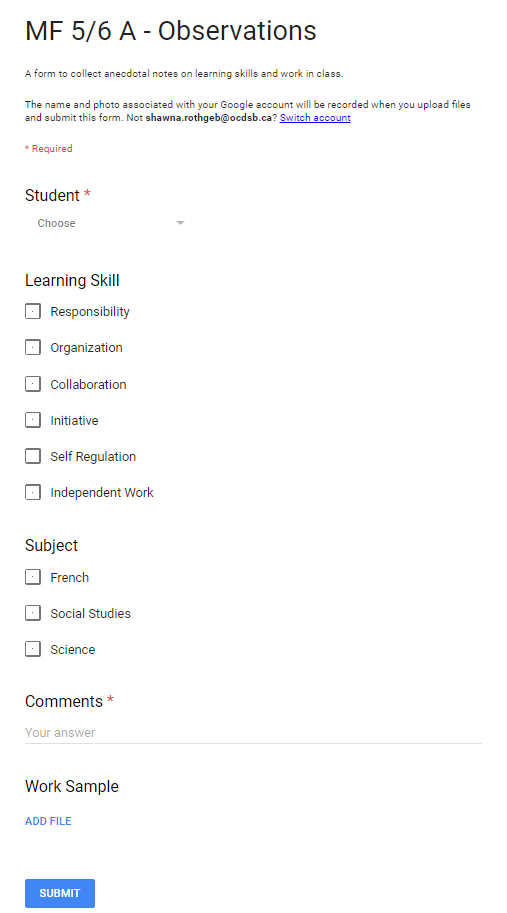
I really love using Google Forms for anecdotal notes (something like this). I hate having to keep track of sticky notes, photos/samples of student work, class lists with comments, etc. and then try to make sense of it all come report card time. A few years ago, I was introduced to the magic of Google Forms at a tech workshop, and I immediately jumped in. Since then, I’d say that the most common tech question I’m asked as my school’s digital lead is, How do I set up pedagogical documentation with Google Forms?

So… here I am with a tutorial! Fair warning: this post is photo-heavy because I’ve provided screenshots throughout.


Step One: Create a New Form

 

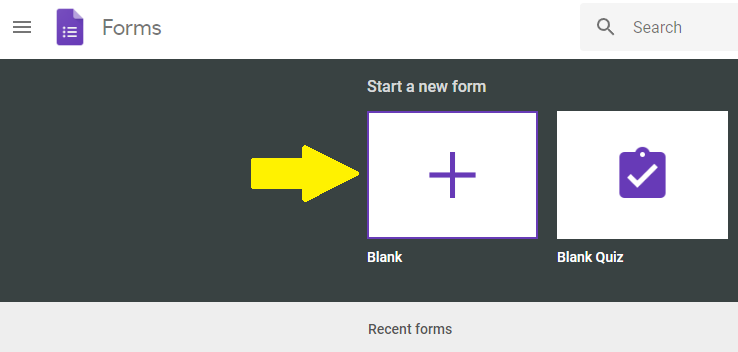
forms tut 1


Open up Google Forms and hit the “Blank” button under “Start a new form”. You should end up with something like this:
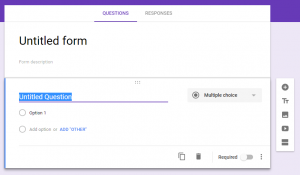
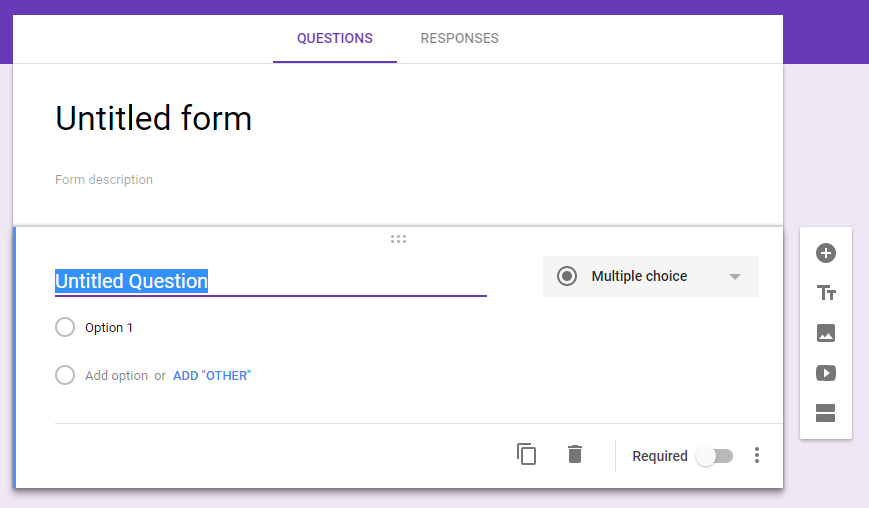
forms tut 2

Step Two: Change the Title & Add Student Names

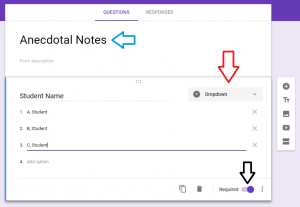
Set the title (blue arrow) to something you’ll remember. If you have multiple classes, you should include the class name in the title. Then name the first question “Student Name” and select dropdown from the menu to the right (red arrow). Time-saving tip: if you have an electronic class list file, you can highlight a column of student names, copy (ctrl + C), and paste the names into the response field for the question. It’ll populate the list with all of the names from that column.

I recommend setting this question as “Required” (black arrow) so that it won’t allow you to complete the form without selecting a student.
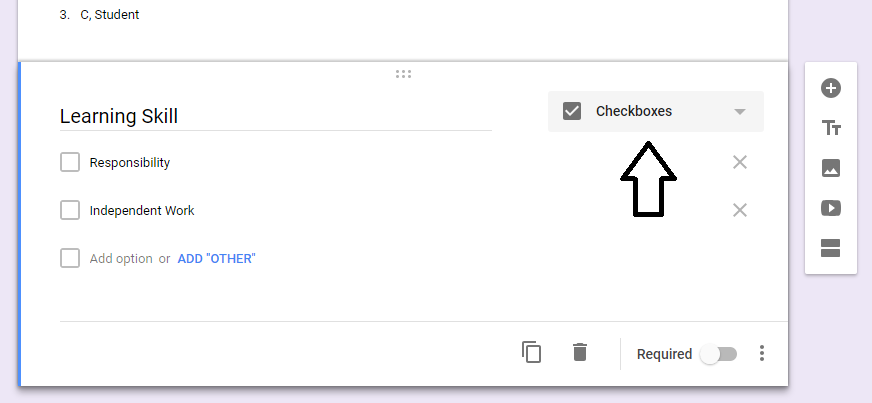
forms tut 3

Step 3: Create the Learning Skills (or Subject) Question

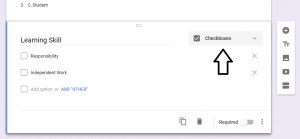
Your next question should be where you select which learning skills and/or subjects you are commenting on. I like to set this question to a checkboxes response style (black arrow) so that I can select multiple learning skills/subject areas when appropriate. I often set this question as “required” as well.
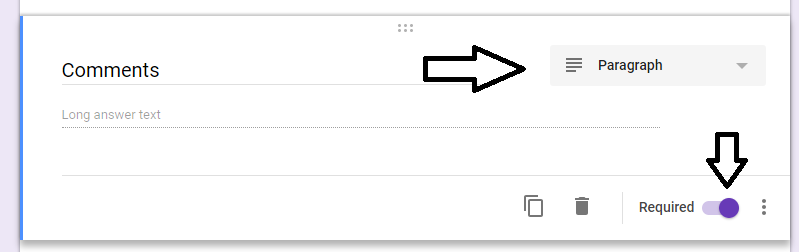
forms tut 4

Step 4: Create the Comments Field

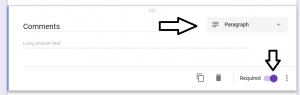
Next, you want to create a place for you to type in your observations. Google Forms is pretty intelligent and automatically selects paragraph as the response style when you name the question “Comments”. Paragraph simply means that when you open up the form, it’ll give you a large field to type into. I recommend paragraph over short answer so that you don’t hit a character limit. I recommend setting this question as required, since it’s… you know… kind of the point of the form. 
forms tut 5

Step 5: Create a File Upload Question (if you want)

I always include a “file upload” option with my anecdotal forms so that I can attach samples of student work (scanned work, photos, files from Drive). It can be really useful if students are doing group work, hands-on activities, or work that is otherwise hard to keep around. Also useful for keeping your piles of student samples to a minimum!

When you first select “File Upload”, you’ll get a notice like this, and you just need to click “Continue” (black arrow):
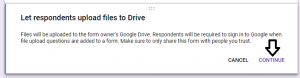
forms tut 6

Then your question should look like this:
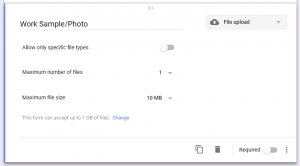
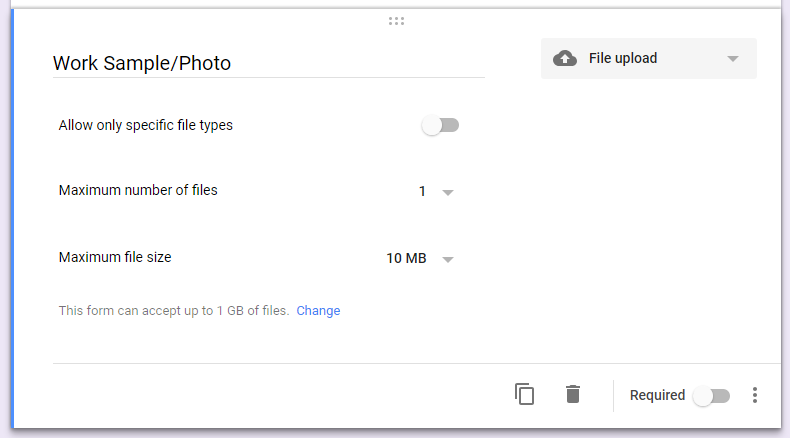
forms tut 7


I don’t play around with the options there, personally. I like to leave it open and flexible.

Step 6: Set Your Form to Collect Responses in a Spreadsheet

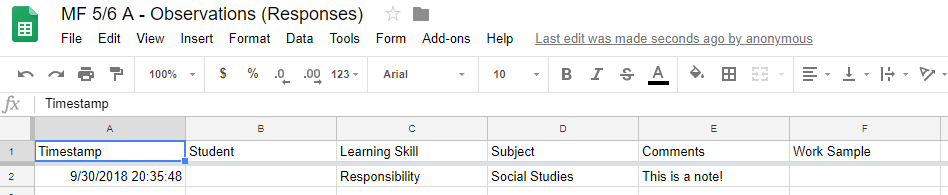
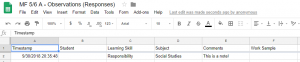
This is one of the best parts of Google Forms: if you ask it to, it’ll collect every response you submit in a spreadsheet, where you can access ALL of your anecdotal notes in one place. You can sort by student name, learning skill, whatever. Responses will be date/time stamped, so you know when you made the observations. You definitely want to do this.

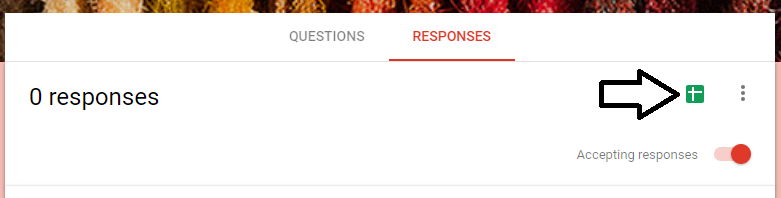
To set your form to collect responses in a spreadsheet, first select “Responses”…
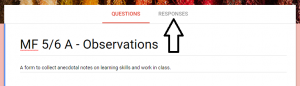
forms tut 8

Then click this little green button (the Sheets icon)…
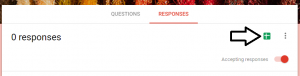
forms tut 9

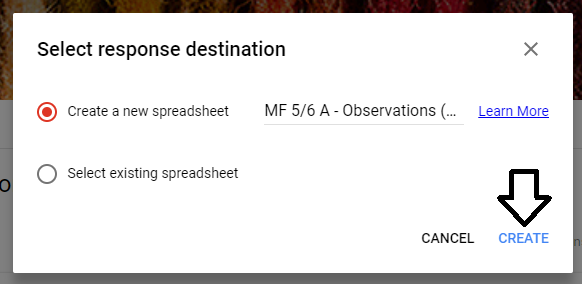
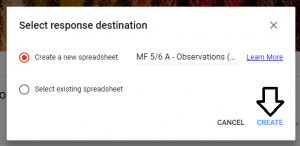
It’ll pop up with a window that looks like this…
forms tut 10

And when you hit “Create”, it’ll take you to your new spreadsheet, where responses will automatically be added as you submit them! It’ll look something like this:
forms tut 11


That’s it! You’re done! Your form is now ready to use. 

Final suggestions:

  • Bookmark it and add the bookmark to your bookmarks bar for easy access.
  • Share it with teaching partners so that all of your observations are in one place.
  • If you use Google Classroom and have multiple classes, make the header for your form the same as the header for Google Classroom so that you know you’re in the right one.

Hope some of you out there found this useful! If you’re looking for a more visual/simple way to track student work and learning skills, especially those in Kinder and Primary, consider using Google Keep instead of forms.

 

Tools and Resources for Math Talks

One of the reasons that I spent so many years teaching the primary grades is that teaching math to older students terrified me.  Growing up I struggled with math.  I changed schools in the middle of my grade three year and missed a great deal of multiplication and division instruction which haunted me for the rest of my math learning.  I remember crying at the kitchen table over my homework and my father being distraught over not being able to help me.  I totally understand how a student feels when they shutdown and “can’t” get it.  That understanding along with having excellent tools and resources helped me immensely when I taught grade 4 and 5 mathematics.

Math Growth Mindset

Jo Boaler is a professor of mathematics education at Stanford University and the co-founder and faculty director of youcubed.  This fabulous website provides unique, research based instructional approaches to teaching math.  There are videos for students of different age ranges and the “Week of Inspirational Math” was what helped me to create a positive math learning environment with a growth mindset in my Junior grade classroom.  It doesn’t have to be the first week either-you can do it at any point.  Jo Boaler has also co-written a series of mathematics instructional resources called “Mindset Mathematics” for each of the junior grades.

Math Talks

Number Talks: Whole Number Computation, Gr K-5: A Multimedia Professional Learning Resource became my go-to resource when I began daily number talks with primary students and it made the transition to teaching math in the junior grades much easier.  The format of math discussion remains essentially the same no matter what grade level.  It is an expensive resource but well worth it.  If you want to give math talks a try there are some more affordable online resources that you can use as well.

Math for Love is a website that provides a number of online math talks for K-5.  EduGains gives a brief synopsis of how to develop your math learning community in your classroom.  Another great online resource for daily math talks is Which One Doesn’t Belong?  This website provides all sorts of pictures for math discussion. Eventually my students began creating pictures for other classes to use for their math talks after using the examples on the website. Math Talk Resources is a comprehensive spot for math talk information and connects you to many different math talk resource websites.

When students have the opportunity to discuss math and hear fellow student’s different perspectives, they begin to see their own entry point into every math problem.  They also begin to see the value of challenging each other’s ideas respectfully and adding to one another’s ideas. “What do you see and what do you wonder?” is a much friendlier way to open up math discussion than, “Who can give me the answer?” I am convinced that because my students engaged in respectful math talks they were able to transfer these skills into other discussion topics in our classroom.  For me, the anxious math teacher, math talks became the highlight of our daily math lessons and sometimes, the highlight of my day.


Returning to Work as a New Parent

Four weeks ago, I returned to work after being on parental leave for ten months. It was my second parental leave, so this time around, I felt much more prepared: I knew I wouldn’t be as rested, energetic, or rational as usual, so I did what I could to make my return easier on me. I took the time over the summer to plan out the first few weeks, wrote my long range plans in July, had my annual learning plan ready to go…

I was ready. Returning to work was still brutally hard.

It didn’t help that I had a challenging assignment, with many students in need of additional support that just does not exist in the French Immersion stream. It didn’t help that my second child doesn’t sleep as well as my first, so I was operating on an average of 3-4 hours of sleep. Mostly, though, coming back to work with a young child at home is just really, really hard.

The second week of school, I found myself reassuring a fellow teacher that feeling overwhelmed was a normal part of adjusting to life as a parent and teacher. She had just come back to work after having her first child, and she’d had a particularly rough night at home, followed by a rough morning in class. Everything she was feeling, I had felt myself – not just this past month, but two and a half years ago, too, when I went back to work after having my first child. I remembered how it felt to have someone else validate how I was feeling, reassure me that I wasn’t alone, and tell me that everything I was going through was normal.

Here is what I would like you to know, new parents who are now navigating life as both parent and teacher:

You are not a bad parent or a bad teacher, but you will feel like both. It took me a year of being back at work before I felt like I was almost back to being “myself” as a parent and a teacher. It was incredibly difficult to know that I wasn’t able to give the same level of attention to parenting or teaching that I was used to, and I hated feeling dissatisfied in the job I was doing on both fronts. I didn’t like rushing out of the house in the morning without being able to play with my baby. I didn’t like rushing out of school at the end of the day with calls left to make, assignments left to mark, and my plan for the next day being little more than a skeleton. I was sure that I was damaging my relationship with my baby and letting my students down.

Neither of those things were true. My baby still loved me just as much as she did before I went back to work. My students were still learning and enjoying school. Some assignments never did end up being returned with grades, and some days I didn’t get to see my baby at all because I would leave before she got up and get home after she was in bed, but it was fine. I was still a good parent. I was still a good teacher. My baby and my students were still thriving – just as yours will.

Your priorities will change. I’ve always been heavily involved in clubs, eager to take professional development courses, willing to stay late at work to ensure that things were organized and prepared for the next day. Now, I’ve scaled back my extracurricular involvement dramatically, I haven’t done much PD outside of a few AQs, and I only stay late at work when I have absolutely no choice. It’s hard to make myself leave at 3:30 every day, because I know I’m leaving behind a pile of work that will never really get any smaller, but I have to or I won’t see my children before bedtime. Having time together to eat, talk, and enjoy each other’s company as a family is really important to me. Work, which used to be my top priority, now comes in second. I’ve watched my colleagues make the same decisions – leaving earlier, passing the torch for clubs and sports teams, making less time for work and more time for their family.

It gets better. It may take a long time, but you will get to a place where you feel like you have things under control. You will start to feel like you can balance your teaching life and your life as a parent. Then something will come along to change that (like having a second child, or your kids starting school, or your home life changing) and you’ll feel out of sync again, but it will come back. It’s hard every time, but it isn’t forever.

Ultimately, your children and your students will be fine. You may do more worksheets than you used to because some days you just don’t have it in you to teach that hands-on, super engaging, but very exhausting lesson you had planned. You may serve a dinner you said you’d NEVER serve because some days you will get home and not be able to fathom anything more complicated. That’s okay. Your students will still learn. Your children will still bond with you. You’ll have to make some hard decisions to do what’s best for you – and even when some days are absolute disasters and you’re an emotional wreck, it’ll still be okay.

Be kind to yourselves, parents. You can’t be everything to everyone, and some days, you’re going to feel like you failed at everything. We’ve all been there. Reach out to your colleagues for help, even if only to talk through what you’re feeling. Lean on them. We’re all in this together, and I promise you that we’ve got your back.

Activities for Community Building in A Special Needs Class

This year, I am new to my school. My students are all new to the school. 2 out of 3 ERFs in the class are also new to the school. It is a whole bunch of new!! With all this newness,  we have spent a lot of September getting to know each other and our school. Figuring out where everything is and exploring our school has helped us develop a sense of pride and community within our new class and school. Here are a few activities that we used to get to know our school and each other:

1. School Scavenger Hunt

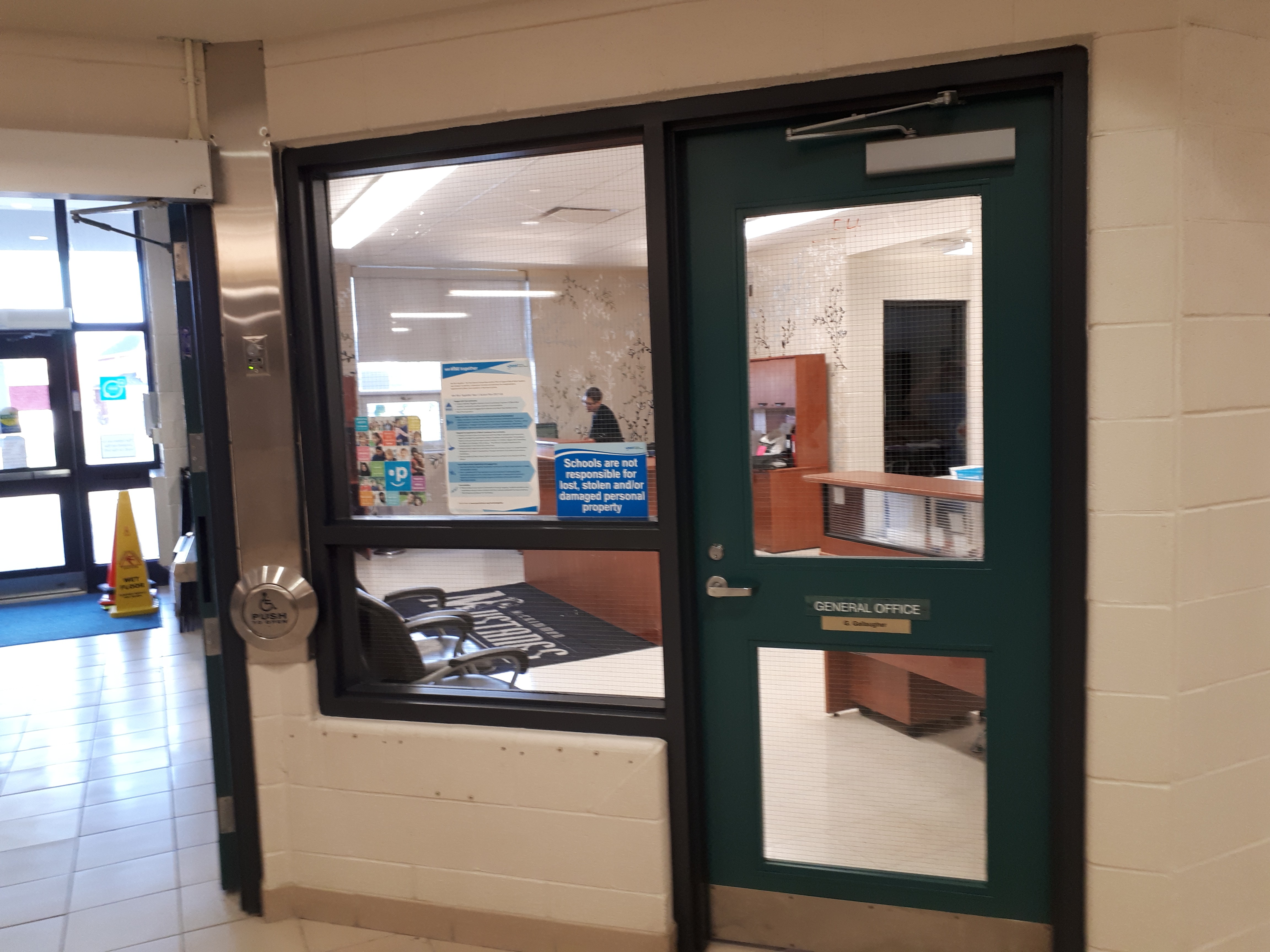
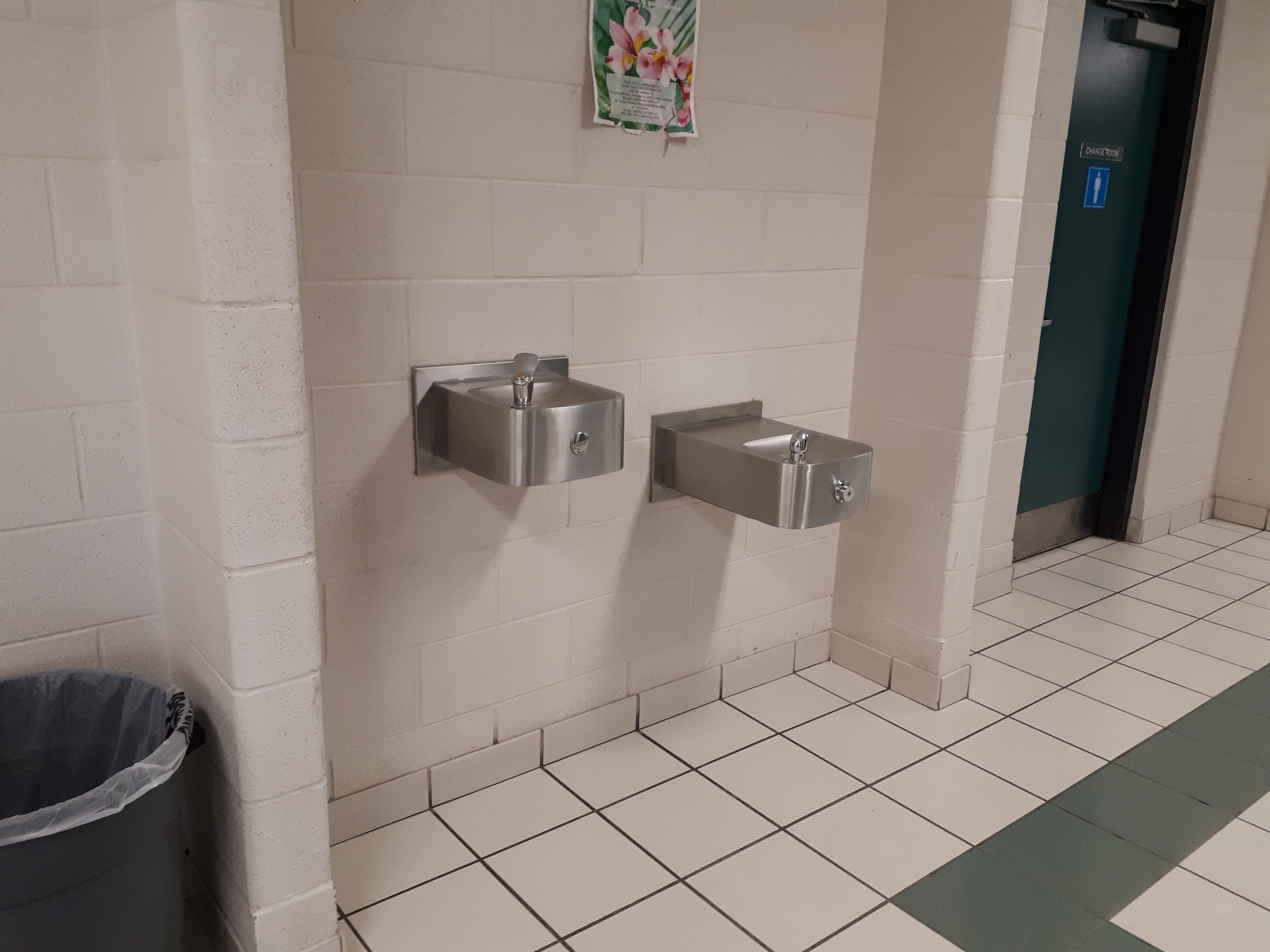
In the first week of school, we took the class on a few scavenger hunts. We looked for things that were really practical such as:

                                                                                               the office

office

   or the water fountains

water fountains

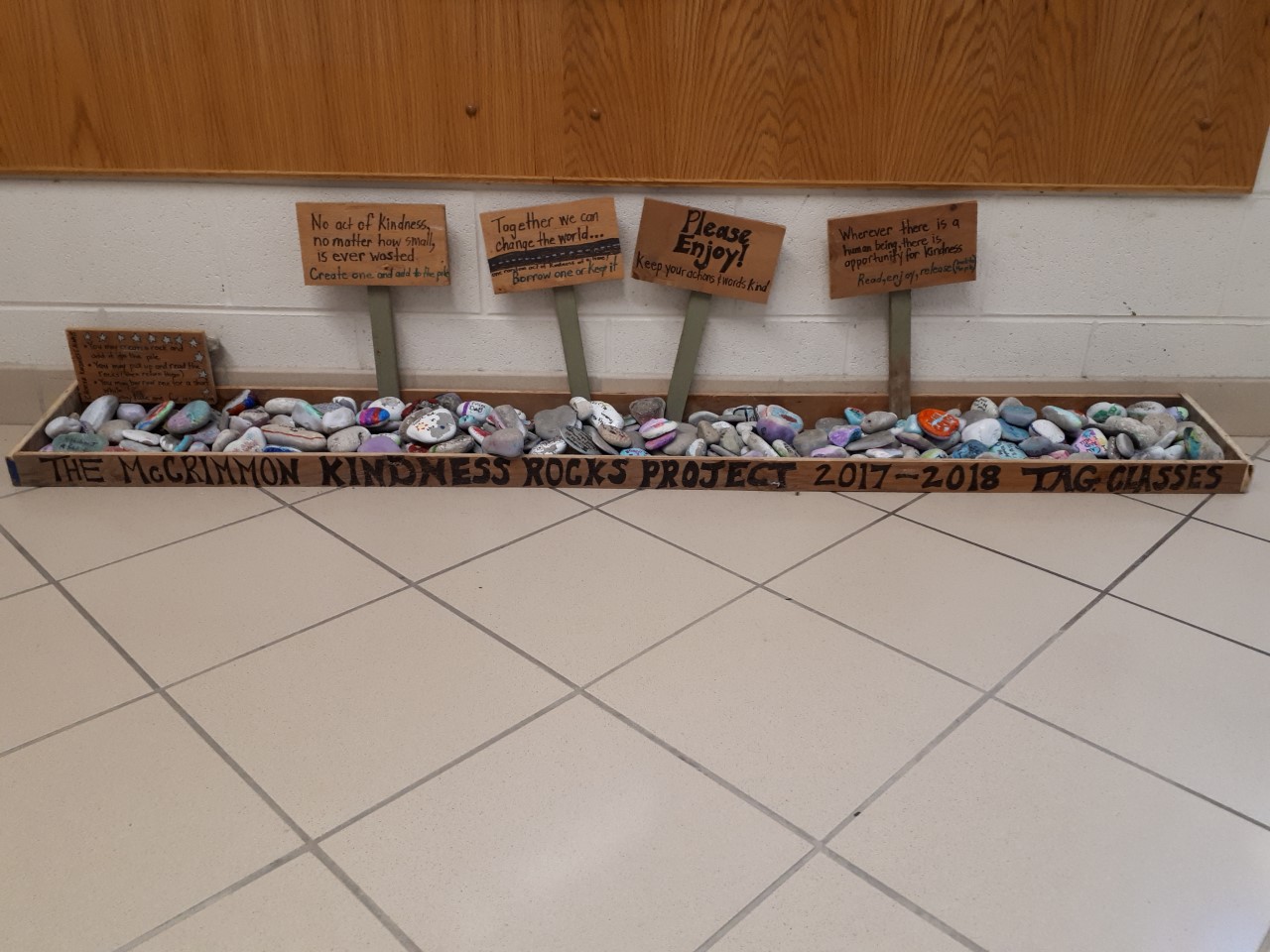
But I also included some really cool items in my school such as “The Kindness Rock Project” to help develop a sense of pride about the school.

Rock picture


The sheet that we used for our search is here: School Scavenger Hunt

2. During our Morning Meeting,  we took some time to get to know each other

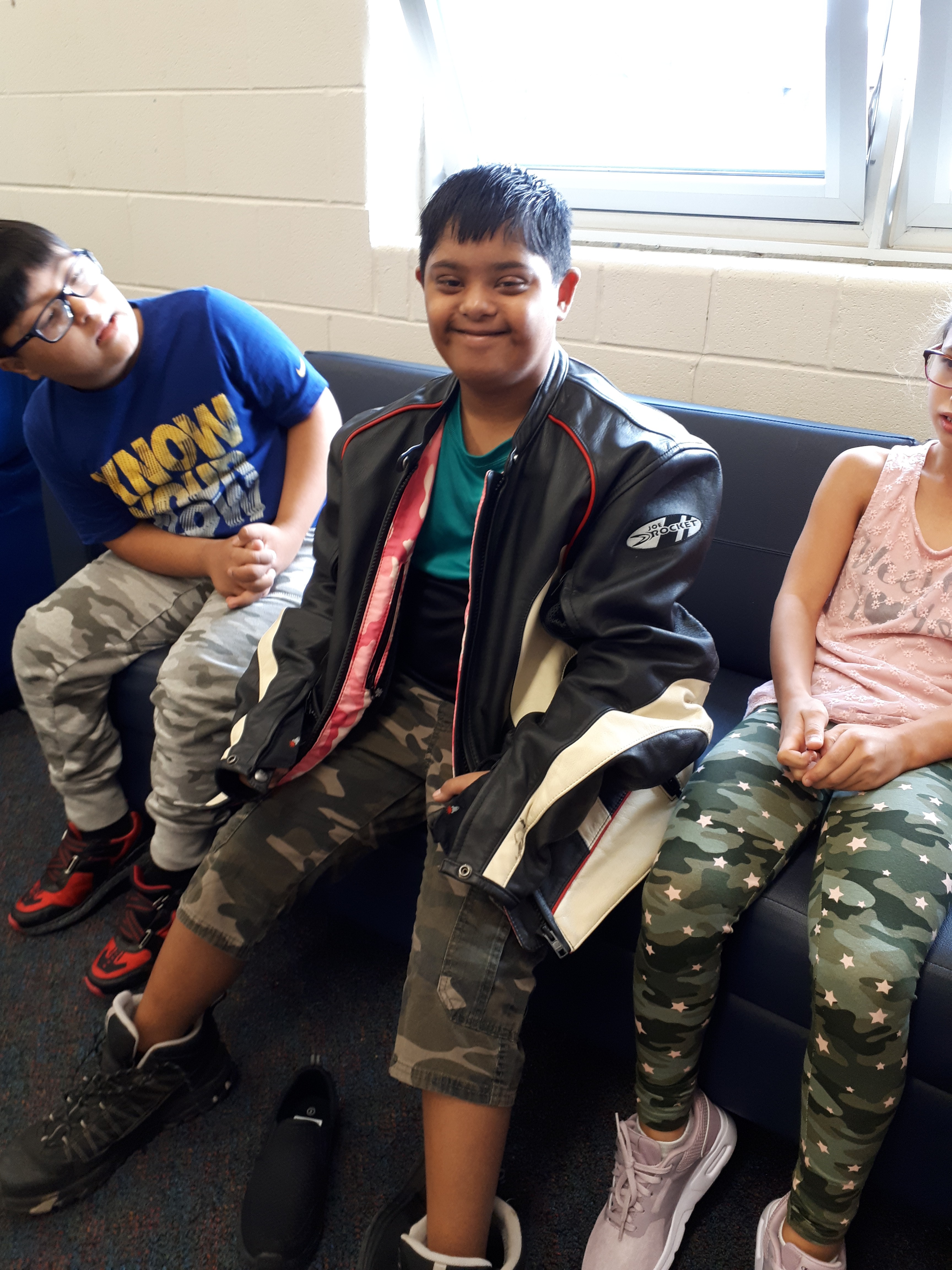
We learned about how I love riding motorcycles as we testing out my jacket.

Krish3

We learned about how Miss. Gale is really into hockey

Mariana3

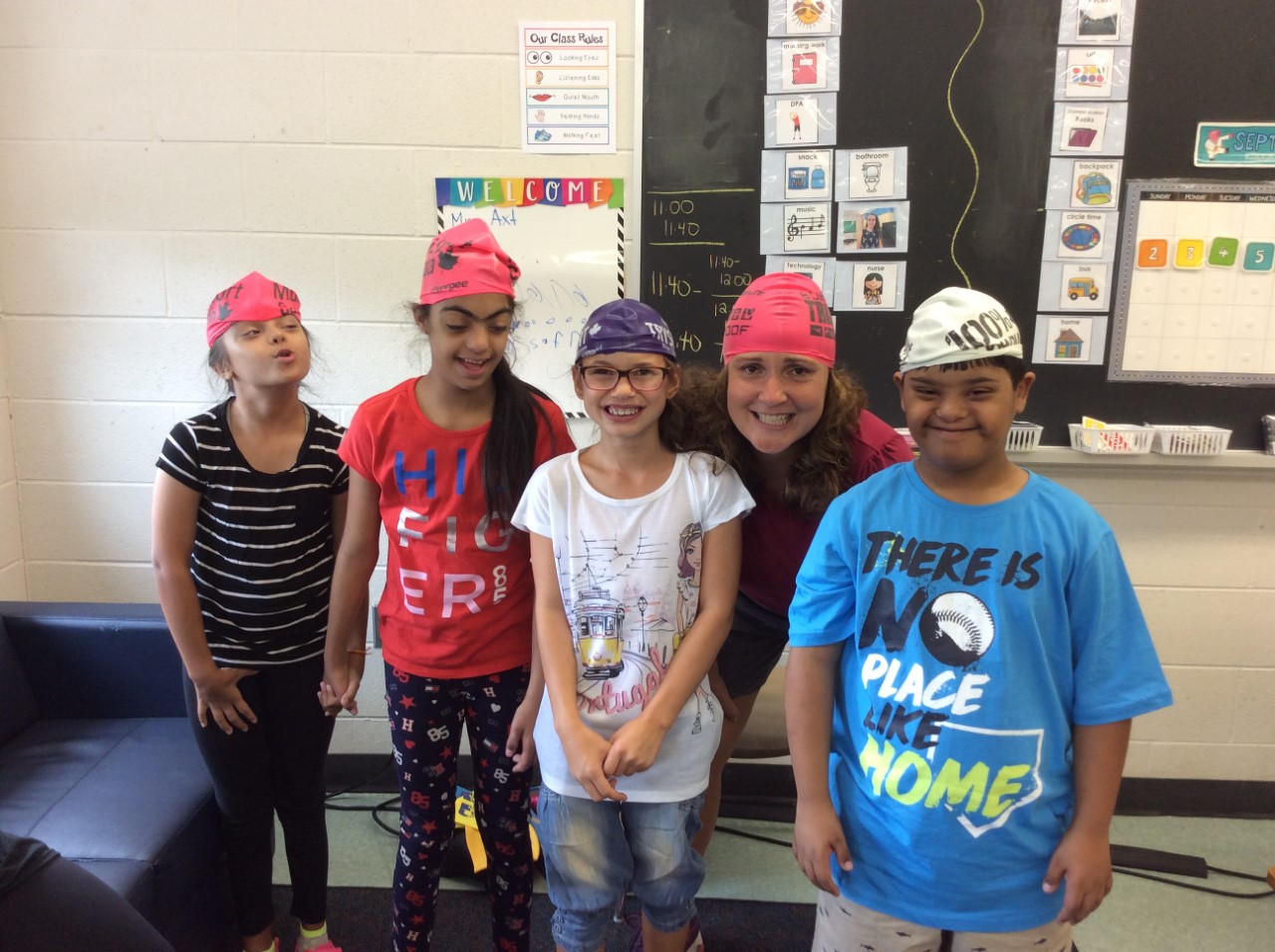
We learned about a love for swimming

Safrin and Kashvi

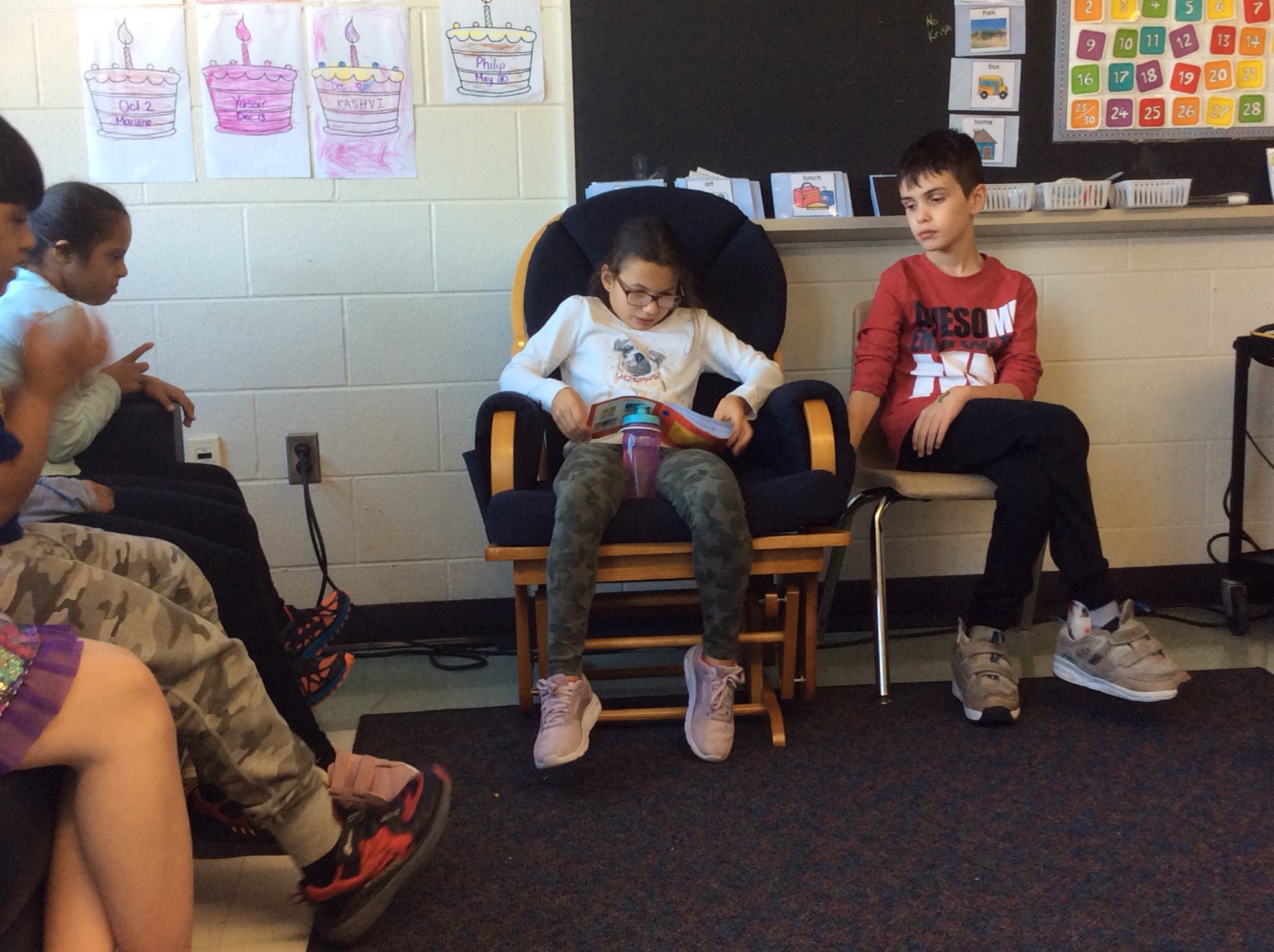
and a love of reading

Mariana5

3. We also had all of our families visit us for an ice cream party before school began.

Kabin ice cream

Relationships are the foundation of any successful classroom and will help us on our journey of learning this year.