In Part one of this blog post I talked about coding with relation to the deep learning competencies and learning skills. However, there are greater implications of teaching kids to code. I am a huge science fiction and dystopian fan. I think I am attracted to the resourcefulness of the characters in the movies and books. The characters that have hands-on life skills and leadership qualities are valued and survive. Let me be clear, I do not view the classroom as a dystopian or science fiction society…well…unless we are suffering from a severe heat wave. I think that understanding the way the technology on which we rely on a daily basis, is a skill worth exploring. That understanding also builds an appreciation of the work of coders and others in the computer science industry. After taking 20 minutes to code a square with a small spherical robot a student said to me, “Wow. Can you imagine how much time it took to code everything in FortNite? Every step my character takes, everything it wears or every background must be lines and lines of code.” That was a pretty serious revelation for a 9 year old.
It isn’t science fiction that there is a huge demand for computer science programmers and developers. According to Code.org, 71% of all new STEM (Science, Technology, Engineering, Math) jobs are in computing, yet only 8% of STEM graduates are in Computer Science. According to the employment website Indeed.com there are currently over 2500 full time job openings in the greater Toronto area in the field of Computer Science with annual salaries between $60,000 and $140,000. Learning to code increases the odds of securing a lucrative STEM career, especially in a world where computing jobs are growing exponentially. Coding has quickly become a vital skill in the work world. Elementary teachers can begin to open doors for students by exposing them to coding in a fun and interactive way. It is safe to say that coding language will develop into something much different before our students get into the workforce. It isn’t about the “content” or “language” of code. It is about teaching them a new way of thinking that they could apply to any coding language or problem solving situation. According to Code.org, many colleges and Universities are looking for experience with coding on entrance applications. It is difficult to ignore the statistics.
With Alexa, Google, and Apple in homes, cars, pockets and on wrists we know that this our reliance on computers as a society isn’t going away soon. Exposing students to these new learning opportunities to develop their deep learning competencies is necessary for development as learners and in the end, may prove quite lucrative for their futures.
I consider myself a fairly techie teacher. However, until recently I hadn’t really tried my hand at coding or robotics. Well, I had, but I had lost interest as I quickly felt as though I was out of my depth. So, I did what I always do when I really want to learn something about teaching, I go to a colleague that has the knowledge and I try it WITH the students. Collaborative inquiry.
Until recently, I didn’t see what the big deal was or why it was important to teach coding to students. Yeah, playing with robots is fun but what does that have to do with curriculum? When I started working with and learning coding along side students I had a change in mindset. There is a lot of math, strategic planning and visualization in coding. Coding may not always directly relate to curriculum content-that is true. However, in terms of teaching students about the deep learning competencies, coding is key. If you aren’t sure what I mean by the deep learning competencies; they are referred to as the 6 C’s. Here is a link to the New Pedagogies for Deeper Learning paper but I have extracted a summary of the 6 C’s for a quick reference:
Character: Character refers to qualities of the individual essential for being personally effective in a complex world including: grit, tenacity, perseverance, resilience, reliability, and honesty.
Citizenship: Thinking like global citizens, considering global issues based on a deep understanding of diverse values with genuine interest in engaging with others to solve complex problems that impact human and environmental sustainability.
Collaboration: Collaboration refers to the capacity to work interdependently and synergistically in teams with strong interpersonal and team-related skills including effective management of team dynamics, making substantive decision together, and learning from and contributing to the learning of others.
Communication: Communication entails mastery of three fluencies:digital, writing and speaking tailored for a range of audiences.
Creativity: Having an ‘entrepreneurial eye’ for economic and social opportunities, asking the right questions to generate novel ideas, and demonstrating leadership to pursue those ideas into practice.
Critical Thinking: Critically evaluating information and arguments, seeing patterns and connections, constructing meaningful knowledge and applying it in the real world.
I reflected on these 6 C’s as I wrote the learning skills for my grade 4/5 students this year. I spend the most time on my reports creating the Learning Skills for each student. They are personal and they reflect each individual student. As a parent, it is what I am most interested in reading about my own child. The 6 C’s are competencies not only for school, but for life. While students were exploring coding I had them working in pairs or small groups to give them the opportunity to communicate, collaborate and show leadership. When the code didn’t work, they were able to go back and find the error and correct it and try it again with results right away. Sometimes they found it painstaking and I had to let them work through that and they were glad in the end when I didn’t give them the easy way out and they solved things on their own. When they learned something in coding, they quickly wanted to share their learning with other students. I gave basic instruction about the program to start using a youtube tutorial and then let the students go. Students who often don’t do well in groups with “typical” academic tasks often excelled as leaders in coding because it is a divergent way of thinking and they had a self-check strategy built into the task. It was incredible to witness the amount of learning that was taking place.
You don’t have to have robots to code. There are online coding websites that teach kids to code such as code.org and Scratch. The students even as young as grade 3 are easily able to use these sites to code. Scratch Jr. is available for younger students. The sites have great tutorial videos and somehow the students seem to just start discovering and creating things intuitively. They begin helping each other when they see that someone has created something cool and ask the creator to show them how to do it too.
I am proud to say that I can now code a square, star and a small obstacle course using blocks and a Sphero robot. My students discover new things every day and share them with me. It is definitely a new age in teaching.
A friend shared their thoughts on why cars have huge windshields? To them, it was so drivers and passengers could get the widest/fullest view of what was to come on the road ahead.
They added that the rearview mirror was smaller because it was meant to serve only as a reminder of the road already traveled, and that our focus would be best fixed on the future rather than what has happened in the past.
As part of our role as lead learners in the classroom we are constantly asked to prepare for our students for the future. How well are educators preparing for the future when they are equipping themselves with prescribed resources that are older than their learners? At times it seems like the rearview mirror is blocking the entire windshield. For some, the road ahead is so cluttered by the past that it’s hard to see at all.
https://www.flickr.com/photos/ashleybuxo/15321215129/ CC by-SA 2.0
I wonder what it would be like to drive where the only view was like a peep hole on a door?
In itself, there is nothing wrong with using a tried and true resource in the classroom. We all have our favourites. My friend said that they use the windshield-rearview mirror analogy when they speak with people who are nervous about taking risks or are so stuck in the past that they are forgetting to live in the present or consider what’s coming.
What I am suggesting is that it should never come at the peril of losing sight of the future and our surroundings based solely on what has worked or been purchased in the past. Our schools are full of textbooks that are outdated the moment they are published. How are you keeping learning fresh and moving forward in your classroom when it comes to resources? I have cycled Language and Math resources this year. I try to give my students something fresh that has not been recycled from previous years’ plans. It took some time and searching, but the energy, encouragement, and engagement have been worth the effort.
As we wind down the instructional year, it might be a good idea to say goodbye to some old friends in order to welcome in some new ones. You might discover something new that has been waiting for you and if not a change is always as good as a rest. I get that change is difficult. I know that veering off of a familiar path can cause many to worry over the uncertainty. I promise that the destination will be worth the decision to make that departure. Make sure you have lots of windshield washer fluid to wash the bugs off on your journey. After all, you want to see the amazing destinations waiting on the road ahead. Bon voyage.
The post within a post
When I wrote this piece, I was intentional with my pronoun choices. In the opening paragraphs, they, them, and their were used instead of she, he, his, and her. I learned this from a wonderful PD session with a former student from the YRDSB who spoke on gender fluidity with our school staff. I mention this here to point out that the use of them, their, and they would serve us well in our writing to recognize that gender and identity are still often not being considered in all spaces, and that our ability to be inclusive and open can be challenged and stretched even further.
If you would like to see more about this please check out this amazing student voice talk by Noah Gibson shared at the YRDSB Quest for Well-being A Collective Responsibility.
The other day in my grade 4/5 class I decided to try a flexible schedule day where students would have the list of subjects available to them on the board with specific tasks under each subject. This is how the day unfolded.
Students entered the room after French and were confused by the fact that the schedule board was blank. Some of them right away started reading the black board and noticed the various subject headings. Under each heading it said grade four and grade five. The subject choices (which are the subjects that I teach on my one day LTO) were: social studies, music, math and library. In library, they are writing their own books right now so that was a writing choice.
I explained to my students that from 9:30 until 3:10, they would have the choice to pick whatever task they wanted and that they could move on when they wanted. If they completed a task, they could come hand it in to me or hand it in on google classroom. On the board I specified which tasks were to be done on google classroom. The only task on the board that required direct instruction was the grade five math task. When students were selecting that task, I asked them to come see me so I could explain it. This happened every so often throughout the day if students chose math.
I also put a “self regulation/independent work” challenge into the day where I told the class if I noticed them working hard and not getting off task, I would give them a green happy face in my app (which I have previously explained) called iDoceo. Before each break, they could come check in with me to ask how many happy faces they had.
At the end of the day, students were able to reflect on the entire experience. Here are the comments directly from the students.
Students comments about their flexible schedule/task day:
I liked the various choices of subjects
I liked how the option to switch when I wanted was there
This allowed us to get things done in our own timing
If you finished early with one task, you could move onto the other without asking what to do next
I liked the flow of free choice
There was no “have to” involved, I loved the flow of free choice
More time to finish things
“You are basically treating us like high school students”
Of my 25 students, all 25 raised their hand when I asked “How many of you prefer this type of schedule to the schedule we usually have?” The schedule we usually have is 60 minutes math, 80 minutes social studies, 40 minutes music..etc.
These were the students comments about the competition where they were asked to stay on task and work responsibly and they would be rewarded with a green smiley face in my app if they were working well:
The smiley faces made us work harder, they were good motivation
I loved the competition aspect of the day
Something to try for rather than just working
I liked finding out how many I had before each break
It reminded me of a race because you would still get smiley faces even if you didn’t win at the end of the day but you still had finished the race
Some people like competition so you can think about it like that or you could just work like usual
Makes you try different things
I really encourage all educators to try this flexible schedule thing! It was just a way of me looking for students that could handle the independent work challenge. The flexible schedule thing came to me while I was looking for a way to challenge students to stay on task and to work independently. I will definitely try this again next week as the kids LOVED it and as you can read, they loved the pressure free environment it allowed them to work in.
I have felt guilty about my job since the first year that I started teaching. I have always felt that I did not do enough, didn’t contact parents enough, didn’t make it fun enough, didn’t write down observations or assessments enough, didn’t do enough intervention with those struggling readers, writers, mathematicians, didn’t do all of the wonderful Pinterest extras, didn’t go above and beyond enough, didn’t volunteer for enough extra curricular activities, didn’t give enough timely critical feedback, didn’t document behaviour enough, didn’t post enough on Seesaw and the big one is not feeling like I get enough work done on the weekend. When I told a colleague about this recently he said, “If you were only doing half of the things that you do, you would still be working harder than me and a whole bunch of your colleagues!” I thought to myself, “Really? I thought everyone else was working harder and doing more than I was and seemed to have it all together.” The truth of it is though, most of us feel like I do and we feel the same way about our colleagues. Rationally, I know that we can’t “do” it all. However, I somehow feel that I might if I just keep trying! Crazy, right?
I lamented to a friend recently that I don’t get enough done on a weekend and always feel guilty on Sunday night. “I have 48 hours every weekend. You’d think I’d be able to get something done! I manage to watch Netflix and read my book. Why do I feel like such a lazy teacher every Sunday night?” Her wise answer was this, “You think you have 48 hours to do work? I suggest you write down what you do in a weekend, write everything down from sleeping to eating to doing the laundry and driving your son around. You’ll see you don’t have 48 hours to do work. You also need to balance with family time and self care. Reading your book or watching Netflix is not being a lazy teacher. It is practicing self care.” So, I did it. I wrote down everything I did in a weekend. Guess what? I had precisely 3-4 hours to do some teacher type work which is on average the amount of work I do practically every weekend.
Social media keeps me connected with friends and family all over the world. Sometimes, however, it also becomes a land mine for guilt. I find myself thinking, “I should be doing that or what a great idea!” I used to send home a hand painted pumpkin at Halloween and hand painted Christmas decorations for every student every year. When I stopped doing it, no one said a word. That is not what the students remember me for years later. They remember the connection and the relationship. They remember my quirky sense of humour and the hand puppet named Butch who is a little irreverent and likes to use the word underwear in whatever song it will fit. I have discovered that I’m not the Pinterest teacher and I have to be okay with that.
After20+ years of teaching I still struggle in thinking that I haven’t done enough but I’m trying to look at all of the things that we have accomplished this year rather than all of the “great ideas” on the many lists that I didn’t accomplish. I will cut myself some slack. I will look at self care as a positive and necessary thing and not a lazy one. On the lists I make now I will put family time first, accompanied by good sleeping habits and good eating habits. Keeping me healthy makes me a better teacher and a better person. So if you struggle like I do, here is a video that a friend suggested to me to help me get through those negative self-talk times when I feel that I am not enough.
Have you ever wished that you could do something over again to make it better?
In education, this could be everyday, every week, every month, and every year in our classrooms. If we let it.
Have you ever taught a lesson more than once in order to ensure your students understood and could master the concept(s)? What, you’ve done this over and over!? You don’t say?
This happens more often than all of us think and that’s okay. I learnt very quickly in my career that last year’s grand slam lessons do not always guarantee success when used in the years to come. Hence the need for the do-over, or reinvention in order to revive or re-invigorate what we teach.
What about a retest? A few years ago, I completely misread my students’ progress on a Math strand and the results were glaringly obvious that I failed them. After an open discussion about the daunting unit, I had students take their tests, crumple them up, and throw them around the classroom. It was like a giant breath of fresh air had blown into the room as everyone exhaled.
We restarted the unit from ground zero and had a “do-over day” a couple of weeks later with much improved results. As a result, our class grew closer as a learning community. Students knew that I had their best interests at heart and that learning in our class did not come with an expiry date as laid out in dusty long range plans. After all the curriculum says, “by the end of each grade…” and not immediately after an assessment of learning.
Recently, my students were preparing to share a series of movie trailers they created about the book Loser by Jerry Spinelli. Each group, of 2 or 3, was asked to pull key elements from the text and to present them in the form of a live drama or digital version.
After much planning, production, and practice, the big day arrived for everyone to share their work. Not surprisingly, there were a number of interpretations of the text being shared and the trailers were being presented and screened. And then it happened.
Whether it was nerves or a case of over-preparation(I think it’s a thing), the majority of presentations shared were not the shiniest outputs from this group. Cue the do-overs. When I suggested this, the students seemed generally wary about it, but I was serious. With some descriptive class feedback, we started over again with much more positive results.
Now think about your classroom? Is there room for the do-over within your walls and halls? Imagine the opportunity to reinforce the idea that failure can still be a positive result when it is used as a stop along the way rather than the final destination to success. I believe that the more we build this into our pedagogy, the more our students will be willing to take chances, make mistakes, and move forward.
Thank you for reading. Please share your “do-over” stories in the comments section below.
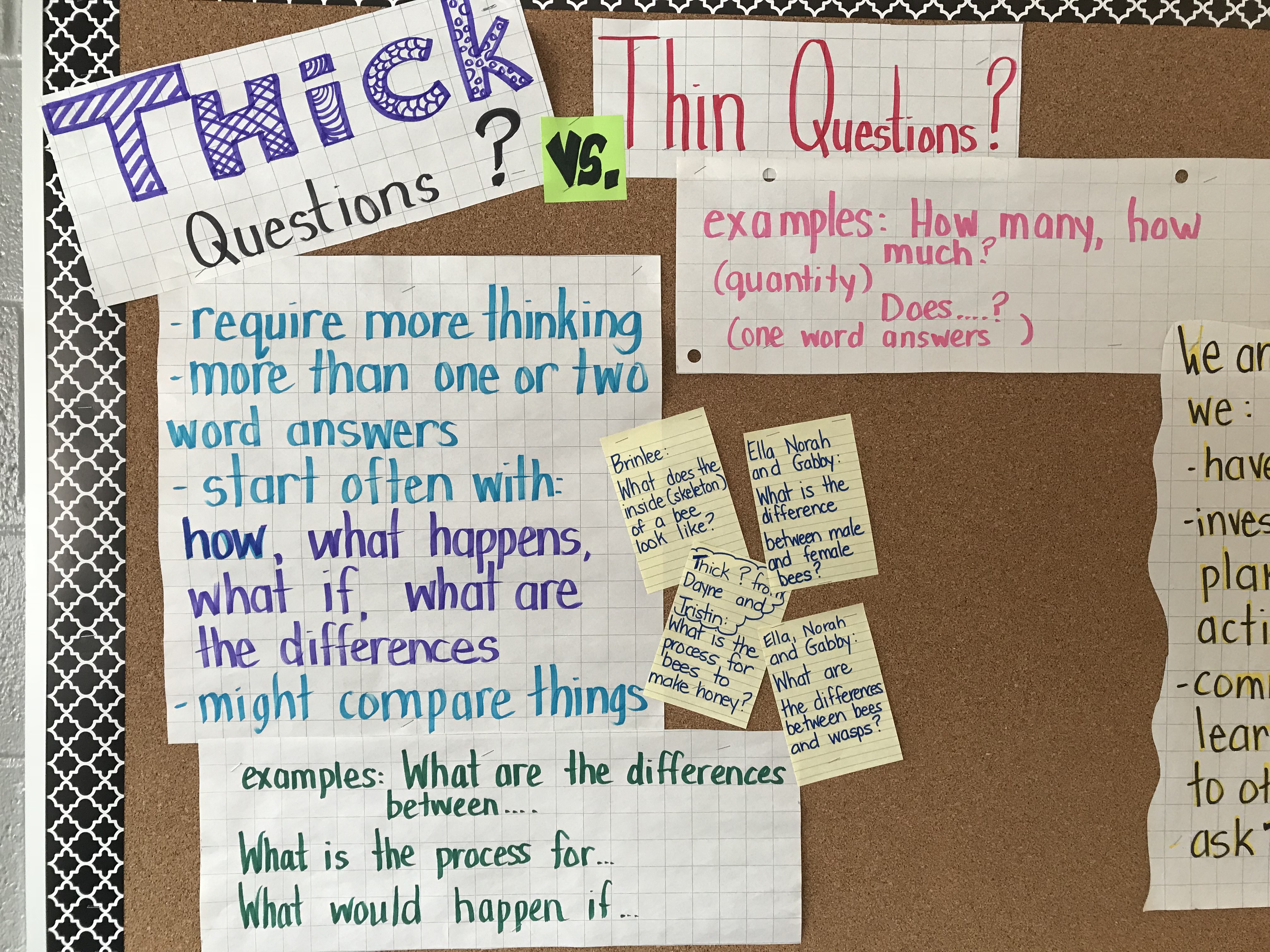
In reading part one of my inquiry blog, one might think, “That’s all lots of fun, but building a bee house isn’t exactly something that I can write on the report card.” You would be absolutely right. The learning is imbedded in the exciting things. It is intentional and it is authentic. Connecting with a local expert, using technology for research and having hands on activities with students engaged scratches the surface of inquiry. Our deep learning with this unit began with the types of questions that we were asking. I noticed that when the students began asking questions on Padlet that Siri could have easily answered many of their questions with one or two word answers. This lead to a series of lessons on “THICK” vs. “Thin” questions. We added better questioning to our goals.
The students also noticed that I had included a lot of infographics on the Padlet. Infographics are seen everywhere in social media to communicate information efficiently and visually. However, students need to know how to use this information, how to synthesize it, how to put it into their own words and how to source it. We spent a significant amount of our language periods on reading and interpreting infographics.
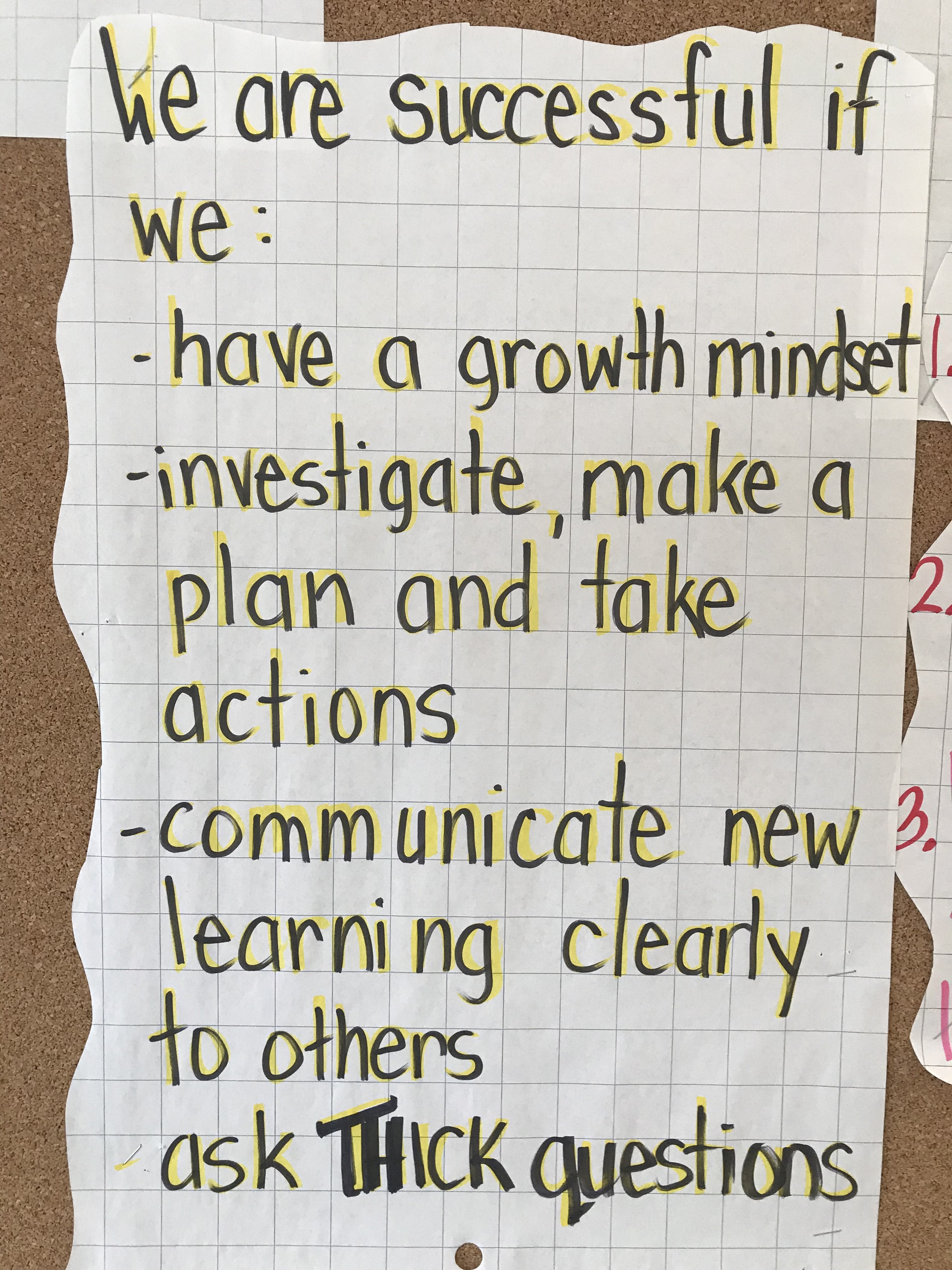
Our learning goals and success criteria went way beyond making houses for bees and honey tasting. Students wanted to DO something to help bees. We created our learning goals and criteria together:
Early on in the inquiry we watched an informative YouTube video called, We Can Save the Bees Together. Sarah Red-Laird, bee enthusiast and scientist, gave us a number of ideas of actions that we could take. The students decided that one of the things that they wanted to do was to call for stronger legislation about mono cropping and pesticide use in farming. They wanted to write letters to politicians and change makers. In addition, when Susan Chan, local bee researcher visited, she “planted the seed” about creating a non-stinging bee friendly garden in our school yard. This prompted students to write letters to local school officials to solicit assistance and guidance. One of our students from Curve Lake First Nation decided to write the Chief and Band Council to ask them to consider building a bee friendly garden in their community. The desire for letter writing lead to a series of lessons on how to write a professional letter, how to proofread and how to edit in a meaningful and authentic learning context for students. The students also felt that educating others about conservation of bees was important so they are now working on developing presentations that they can take to other classes as well as media advertising to share their learning and call others to action.
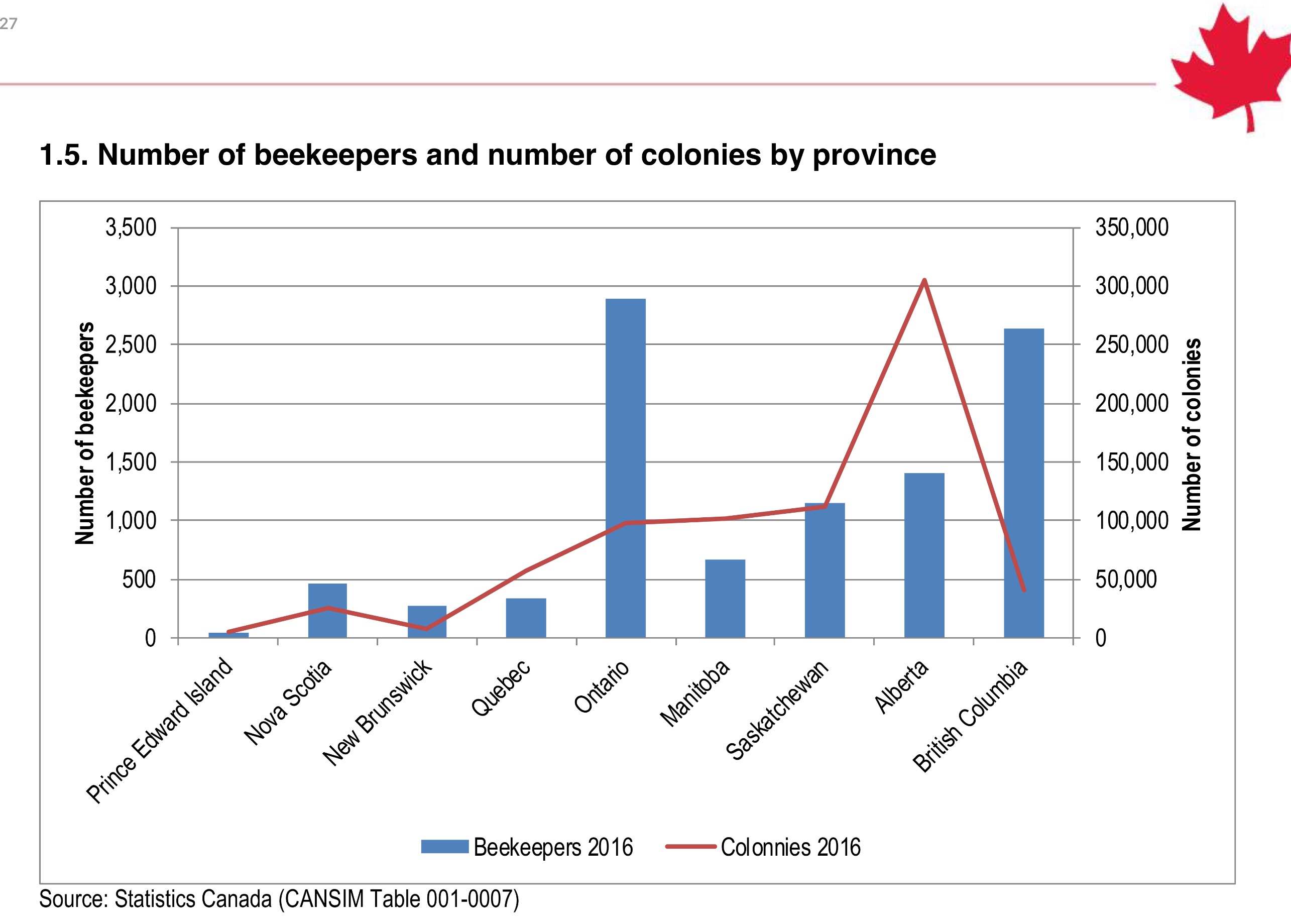
In math, we had been focusing on data management. It fit in perfectly to what we were doing with our inquiry! There is an incredible amount of data about bees on the Statistics Canada website. We read real graphs with information that the students cared about, we labelled the important parts of the graphs and we will be creating our own surveys and graphing the information from different areas of our inquiry.
Honestly, the best part of inquiry is when the students start to direct their own learning. I guide them. I provide thought provoking questions and “what if” scenarios. They make choices and feel good about doing something that is affecting real change. Inquiry is empowerment for students. This students aren’t done with this inquiry yet-they have many more plans ahead! Stay tuned.
There’s more to Modern Learning than delivering lessons on to smartphones.
There’s more to Modern Learning than having a paperless class.
There’s more to Modern Learning because there just is…
And I’m fine with that because there is more to Modern Learning.
So much so, that we are seeing more and more educators trying to define it even if others seem to be defying it.
Walk into a K- 8 classroom and you’ll most likely see students and teachers using smartphones, tablets, MS desktops, Apples, and Chromebooks. Perhaps they’re inquiring about a recent lesson, or digging deeper into a passion project during Genius Hour? Maybe the whole class is playing Kahoot with their French teacher?
From a distance it looks amazing. I have been the teacher who has witnessed all of the above and I’ll throw in a Google Classroom, TED Ed Lessons, Padlet, and raise you a Twitter. Can you hear the government types and administrators applauding and patting themselves on the back for allowing it to happen. However the applause should be for the educators who have led the charge to implement Modern Learning into their spaces. They are willing to take risks, try new things, and make mistakes to reach their Modern Learners. Teachers are in the trenches of learning everyday and understand the what, why, and how of their classrooms.
Outside looking in
To outsiders, visions of devices and technology in every hand sum up their understandings of modern learning. A cynic may equate Modern Learning as simply a shift from text books and worksheets to students completing digital versions of the same old thing.
Keep in mind, “Modern learning” is not limited to tech use alone, but will be for this post. Technology in the hands of educators and learners has now become the conduit through which learning takes place. When modern tools and passionate instruction are paired, learning becomes more relevant and engaging to students. Imagine being able to ask a question and have time to search for the answer immediately with only a few keystrokes and clicks?
“Technology’s primary effect is to amplify human forces, so in education, technologies amplify whatever pedagogical capacity is already there.” Jørgen MORTENSEN
Board wide access to WiFi means more and more students are taking notes during lessons using the technology at their fingertips. At the same time, teachers are gathering evidence of learning too. And, still others are watching a cool cat video or streaming music? It’s all possible in the modern learning classroom. However, as many educators have already discovered, the use of smartphones can be a friend and foe in the classroom and comes with a few caveats.
A smart device is a tool in the learning toolbox not a cure all. It is not the only one and as such should never be relied upon for a quick fix or for ushering in the ‘educational renaissance’. Consider what Jason Lodge writes,
Enhancing education is a complex, wicked problem because learning and teaching are multifaceted phenomena, involving biological, technological, psychological, social, economic and pedagogical factors.
Reading this provides little comfort to my understanding of Modern Learning. In fact it leads me deeper down the rabbit hole in pursuit of understanding it better. Despite the wonder promised by all of this technology, students are still engaging with it far more often to connect and communicate rather than curate, create, and collaborate on content.
True story time
The other day I observed a grade 6 student using a device at an inappropriate time. As I approached, she quickly hid it(an iPhone 6+). Like a phablet that size can be hidden. I asked what she was so consumed by on her device that she was defying school policy? She shared it was a fan site for Ariana Grande.
Not the worst use of WiFi by a student, but off topic to be sure. After a few more questions I asked her to explain to me what she liked about Ariana Grande. We chatted about the March For Our Lives rally and about her performance. The convo continued and I got to know more about the student rather than defaulting to a YOU SHOULD KNOW BETTER moment, followed by the standard lecture on appropriate use of technology.
Maybe this approach can be considered as Modern Learning too. If not, we can call it Modern Pedagogy that builds relationships and connections before asking students to fall into curricular compliance without context. Maybe Modern Learning has to be willing to defy convention?
By taking the time to discover her interests, some barriers were taken down. It was only afterwards that I suggested that classtime was intended for curriculum, and that I would suggest a Genius Hour activity in the near future where she could combine learning with her personal interest in Ms Grande – all the while helping other students discover, scratch, and share their own intellectual itches.
Another approach
At other schools, students are now required to lock their smartphones away for the learning day as an effort to reduce misuse and device distractions. What the link did not mention was that the school probably has students on computers or tablets as part of the instructional space. Anyone who has booked a computer cart or lab knows that students can become as easily distracted by these tools too.
So what ends up happening are these absolutes and dictums from class to class and school to school. It is obvious that some teachers are more open to embrace this more easily than others. Perhaps it is an admin or system issue, but there does not appear to be a consistent policy about device useage in schools. The dissonance in all of this for me is that we ask our students to innovate, we give them the most amazing and powerful learning/communication devices on the planet and then expect them to be able to put them aside to listen to a lesson that is being pulled from a text book or source older than they are. In other cases, students are creating multi-modal masterpieces of identity and ingenuity.
How about engaging and empowering them to use their devices for everything that is possible, trusting them to make good decisions, and having them create the criteria for use in classrooms? At the same time, educators can model appropriate use by sharing documents, links, updates, and evidence of learning via Twitter or class web sites.
The technology is not going away. The when, where, why, and how it will be used needs some defining so that students are not seen as defying school when they use their devices. Then maybe Modern Learning can be more than just more with technology.
Over the last few years many people have become disgusted and disenchanted with the platform of Twitter. I agree that it can be an echo chamber for those who like to hear their own voice. However, I also know that it can be an effective Professional Learning tool. I have created an entire Professional Learning Network on Twitter because of the people that I chose to follow and I am diligent about blocking people who are spreading unworthy tweets. My Twitter account posts nothing personal. It is about my own professional learning. With Twitter colleagues challenge my thinking regularly. Questions that I have for my educational colleagues are answered immediately and without judgment. Global connections are made easily and then I use these connections to learn with my students.
Let me give you a few examples of how I’ve used Twitter in the classroom. One of my students brought in a rock with a fossil on it from his backyard. We took a photo and tweeted it out to find out if anyone could tell us what it was and the approximate age. Within an hour we heard back from a scientist at the ROM. He had an answer for us and was happy to help. In fact, he told us that corresponding on social media at the ROM as a scientist IS his job! One of the students brought in a mushroom from the woods near their house. We tweeted out to our PLN because they wanted to know whether or not it was edible. We were answered immediately and there were many links to other sites for information that sent us on a further journey into the wonderful world of fungi. Consequently, the advice from our Twitter contact was to never eat anything you find in the woods unless you are a scientist. In music, we were learning the words to a song by the Alternate Routes band and the students asked to tweet the band. They tweeted us back thanking us for the support and encouraging us to keep singing. We found some great classes across Canada to Skype with through Twitter and did mystery number finds with other grade 1 and 2 classes. You get out of Twitter what you are willing to put into it.
I have gotten more out of 15 minute Twitter education chats than I have out of some day long workshops. The educators on Twitter chats are there by choice and they are passionate about education. The questions are specific and the answers are in 140 characters. The best part is, you don’t even have to comment if you don’t feel comfortable. You can just sit back and learn. I have also met these Tweeters in person at IT conferences and taken their workshops. Knowing the presenters ahead of time and having a connection is like going to a concert when you already know the newest album really well; it makes the experience richer and deeper.
Here are a few EDUTweeters that I suggest you follow to get started:
Twitter may not be your thing, but don’t knock it until you’ve tried it as your #PLN. I guarantee you will find some ideas for #deeperlearning or #inquiryed.
Have you ever asked kindergarten students what bugs them? Well, we were on a mission to do just that and I’m pretty amazed by what they have come up with!
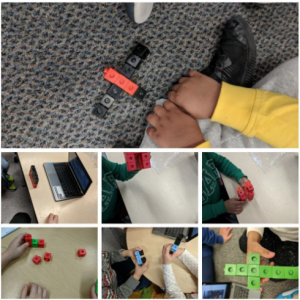
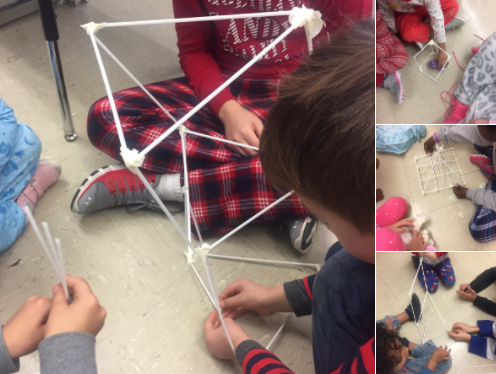
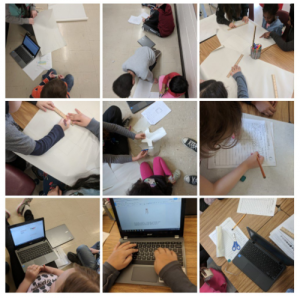
Over the years, my students and I have had the opportunity to work with younger students for Reading Buddies. And while it’s always great to have a chance to read to each other, I wondered if there was something more that could be done in order to foster true collaboration and maybe even a leadership role for my older students. This year, we partnered with a kindergarten class in the hopes of seeing how we might be able to engage kindergarten students in STEM activities. From building with linking cubes to creating amazing structures with straws, my students have been growing in the area of questioning and documenting the works of their buddies. They’ve learned that kindergarten students can cut in straight lines, given a bit of guidance and that with the right questions, they can have incredibly imaginative conversations.
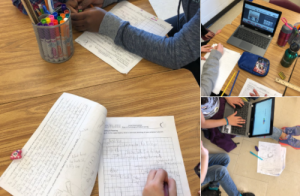
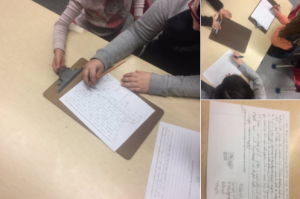
Using the Engineering Design Process, we are currently working on creating solutions for some of the things that bug them. We started the process with a brainstorming sheet and I should have left the bugs off of the top because it quickly became that the biggest problem were bugs themselves. I need to keep in mind that kindergarten students can be literal. After some discussion, we realized that while there were many who were bugged by bugs, some found it difficult to tie their shoes or carry their backpacks. Others found it a challenge to keep their devices out of the hands of their older siblings and still others found that the blocks in Kindergarten weren’t decorative enough and were way too big.
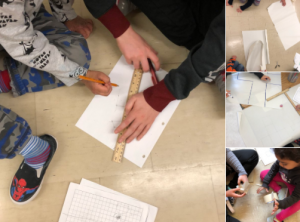
Our next step was to use a Design Template to really identify the specifics of the bug and then to work on designing a solution, including a list of materials. After some research with their buddies, this past week, we took some time to create paper prototypes of our solutions to ensure that what we envisioned was something that we might actually be able to bring to life. It was glorious. I asked my students to really take a step back and allow for the kindergarten students to be the lead in building with paper and they rose to the occasion. From asking for rulers to create straight lines to sharing that a cube has 6 faces, the kindergartens were really excited to share what they already knew and weren’t shy to ask for a helping hand when they needed it.
Next week we are on to our build and learning about hand tool safety in kindergarten. It’s sure to be a new adventure and I can’t wait to see and share the actual solutions that they create.
In what ways are you collaborating with others in your building? Is there a way in which you might allow for greater student leadership through a similar partnership? I’m always wondering what educators are doing in their buildings to foster collaboration amongst staff and students. Let’s start a conversation and share ideas here.






 Next week we are on to our build and learning about hand tool safety in kindergarten. It’s sure to be a new adventure and I can’t wait to see and share the actual solutions that they create.