Building Thinking Classrooms – The Ice Cream Problem

This year, my colleague and I have had the chance to participate in professional development from our Math Department around Building Thinking Classrooms. We’re learning about the 14 teaching practices for enhancing learning and working with teachers at our school on implementing the practices in junior classrooms. My colleague and I shared our learning around the first three practices and as a junior team, we agreed to work on the Ice Cream Problem – found on page 96 of the book – with students. In this post, I’m sharing a little about the first three practices and what I noticed when students worked through this problem. 

Types of Tasks

When it comes to building thinking classrooms, the goal is to give students thinking tasks. Thinking tasks require students to problem-solve. When we consider the Mathematical Processes in the Ontario Math Curriculum, to solve problems, students must: draw on their prior knowledge; try out different strategies; make connections; and reach conclusions. Building Thinking Classrooms suggests that we begin with engaging in non-curricular tasks and move into curricular tasks, as the culture of thinking begins to develop. I struggle a little with the categorization of some tasks being non-curricular because I often see mathematical thinking – particularly in the area of numeracy – in tasks that have been labelled non-curricular.

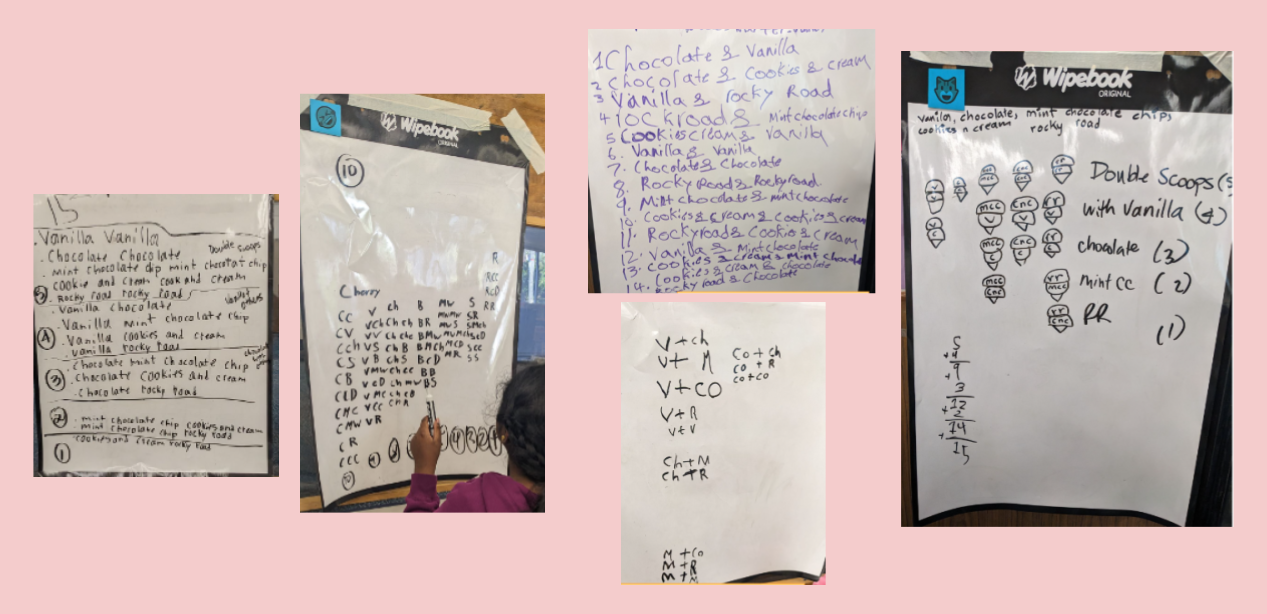
In the classes that I partner with, I’m absolutely amazed by the way that students are demonstrating their thinking as they have been working on solving the Ice Cream Problem. While the problem asks students to consider the combinations with 10 flavours, we started off with 5 and our first extension was to move into 6 flavours. I’ve seen different strategies used and I have also seen students reflecting on what they have done in the past when given an extension to the problem. I have one class that is particularly excited to come down to the library to solve problems that they see as different. It’s neat to see how excited they are to talk through and work through the problems in their groups. 

Looking for non-curricular tasks? Diana Hong has curated a number. There’s also a spreadsheet of curricular tasks and a site curated by Kyle Webb that you might find of use. 

Randomized Groups

On pages 44 and 45 of Building Thinking Classrooms, we learn about the benefits of randomized groupings based on what was noticed over time:

  • Willingness to collaborate – open to working with anyone they were placed with.
  • Elimination of social barriers – learning from and with other people allowed for the crossing of social boundaries and a greater awareness of others.
  • Increased knowledge mobility – sharing of ideas with others.
  • Increased enthusiasm for Math learning – as social barriers decreased, there was an increase in enthusiasm around Math in this type of way.
  • Reduced social stress – in the selecting of groups both for students who do and who do not have strong social bonds. 

Students know when they are being grouped by readiness or for any other reason. In order for students to believe in the randomness of groups, the groups have to be visibly random.  Using cards, popsicle sticks or Flippity, randomized groups are easy to create. Also, when students know what group they are in and where to meet their group, transitions are more easily facilitated. 

Groups of 3 are ideal in the junior classroom. I created simple emoji cards that I shuffle and hand out to students. Once they have their cards, they find the matching emoji at their workstations and get going on their task. I have been so impressed by how students just find their groups and get to work. Rarely have I had students comment on not wanting to be in a particular group or not wanting to work with someone. This could in part be because they know that groups are always changing and that they will most likely be working with someone else the next time they are given a task. 

Vertical Non-Permanent Surfaces

Off and on, over the years I’ve used Wipebooks and the windows in our classroom as vertical non-permanent surfaces for students to work on. Whether or not I understood the “science” behind it, I noticed that students enjoyed seeing their work or solutions up on the wall and I also noticed that it helped students share their ideas or strategies with others more easily. It was up and visible to all. Also, as a teacher, I could literally see how students were working just by glancing around the classroom.

On pages 58 to 61 of the book we learn a little more about the findings based on using vertical non-permanent surfaces:

  • When students work on whiteboards, they can quickly erase any errors, which, for them, reduces the risk of trying something. 
  • Standing necessitates a better posture, which has been linked to improvements in mood and increases in energy. 
  • Having students work vertically makes their work visible to everyone in the room, thereby increasing the porosity between groups and heightening the possibility that ideas will move between groups.

For our Ice Cream Problem, I saw all three points in action. Students wrote, erased, re-wrote and organized their ideas with confidence. Groups that were stuck glanced around the room and got ideas from others to get them started or help them consider a different way of organizing their solutions. Students have really loved working on the Wipebooks and are often shocked by how quickly time flies when solving problems in their groups. 
This year we are on a journey to support students in their enjoyment of Math. Stay tuned as I’ll continue to share more about what I’m noticing in the coming months.

ETFO’s ICT Conference

This month I had the honour of facilitating a workshop at ETFO’s ICT Conference. This year the conference was offered through ETFO’s Women’s Programs and it was a great couple of days learning from and with teachers across Ontario. This conference has always been near and dear to my heart because it was the first ETFO conference that I presented at years ago. In this post, I’m sharing a little about my session and some ideas you might consider trying with students In this post, I’m sharing a little about my session and some ideas you might consider trying with students.

Creating Art with Google Drawings!

My session was entitled: Creating Art with Google Drawings! The goal was to offer teachers the opportunity to play with Drawings, to share ideas with one another, and to consider what they might take back to their classrooms to try with students. 

I started off the session with an overview of Google Drawings and its features. I shared a cheat sheet that could be used to further familiarize oneself with the tool. From there, we jumped into using Drawings and had some fun with it.

Creating a Picture Using Shapes

Math is all around us and why not learn about shapes while working on art? After all, shape is one of the elements of art. I shared a few books that I have used over the years to help students learn about and identify shapes in the real world:

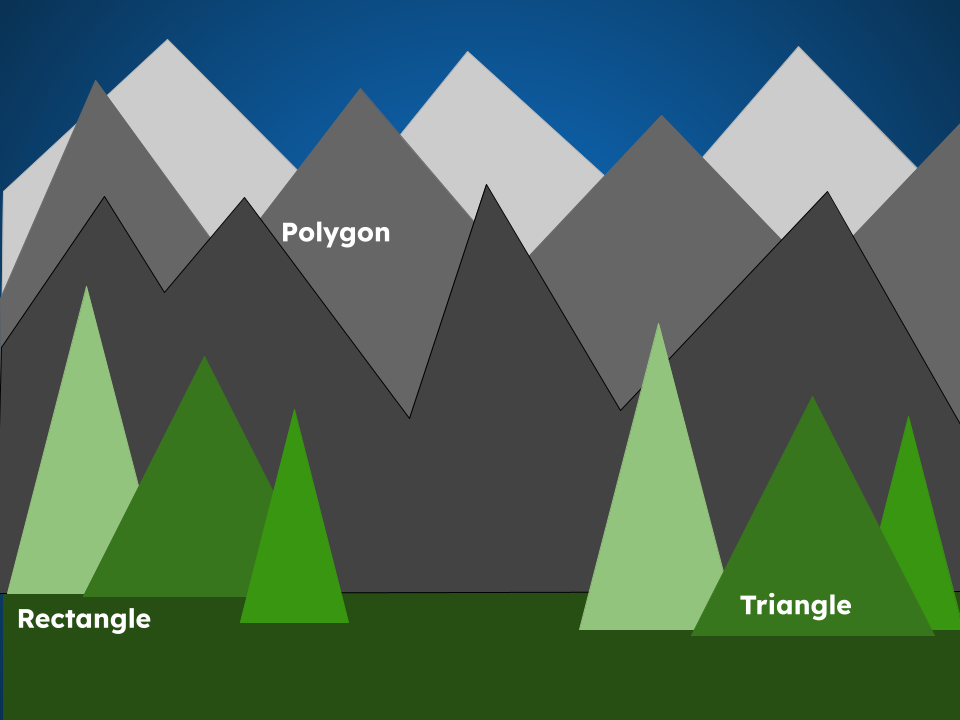
From there, participants were tasked with using 3 or more shapes to create a picture. They were also asked to label the shapes in their picture. I created a simple landscape but it was really incredible to see how creative participants were and the images they created.

This video shares how you can make a colour block landscape if you are interested in trying out a similar activity with students. 

Creating a Mosaic

Mosaics are found all around the world. From mosques and murals to stairs and fountains, mosaics have served as a means to beautify a space and also to tell stories. I shared a few with participants to get us thinking about mosaics around the world.

  • Vietnam – The Ceramic Mosaic Mural
  • Iran – Shah Cheragh Holy Shrine
  • Switzerland – Mosaik Brunnen
  • Brazil – Selarón Steps 
  • South Africa – Piazza Mosaic

It was no easy feat and yet participants were ready to go and worked towards creating their own mosaics. Some chose birds and flowers while others chose rainbows and butterflies. Zooming in and becoming very familiar with Polyline, participants worked their way to creating incredible masterpieces. Here’s a video that walks you through the process if you are interested in trying it out for yourself or working on mosaics with students. 

Google Drawings is the ultimate blank canvas and an incredible tool for creation. During the conference, I had a great time working with incredible teachers and creating masterpieces using Drawings. If you haven’t attended in the past, please look out for next year’s ICT conference. It’s hands-on, and lots of fun, and hopefully, you walk away with a few things to try with students. Even though I was facilitating this year, our discussions led me to consider other ideas for creation with students.

All Good Things…

We’ve all heard the saying, “All good things must come to an end”.  Blogging for the Heart and Art of Teaching and Learning has been an honour and a learning experience. Starting in 2017, I wasn’t sure what I was walking into and yet, here we are in 2023 and I can honestly say that I have learned a great deal. This is my last year blogging for the Heart and Art and in this post, I will share some of what I have learned.

Black Women’s Voices Are Needed in Education

The title alone should suffice and really needs no explanation but I’m happy to go a little more in-depth. In June 2020, I wrote a post about Crazy Hair Day. In it, I shared personally about my hair journey and the number of Black women who reached out to share similar experiences and feelings around the day was shocking. Not because I saw myself as being the only one who experienced trauma in school related to hair but because there were so many and that in 2020, we still felt as though our voices and objections to these days were not being and continue to not be heard.

Black women have a lot to say in the world of education based on our lived experiences as students of the system and also as we navigate it as teachers. I believe that our experiences are unique and as we continue to have conversations related to equity, those experiences need to be heard and change needs to happen. While that post was written over 3 years ago and there were many conversations in schools happening around spirit days, I wonder what has changed. And that’s just one area that needs to be interrogated. How are Black women and their experiences in education being valued? There are certainly a number of policies that have been created and I’m interested in how that leads to action. 

Growing a Thicker Skin

Over the years, I’ve written a lot about work that I have done in the classroom. When I look back, it’s sometimes shocking to see what I have done in the past and how it’s no longer a practice that I would consider doing today. I’ve grown as an educator because of conversations I’ve had, books I’ve read and opportunities to reflect. 

Over the last couple of years, there have been people who have chosen to critique my work in public rather than having a conversation directly with me. While I know that my work is public and open to scrutiny as I post it, there are moments when it doesn’t sit right with me. It’s in times like these that I am learning to grow a thicker skin. It’s not that I’m above reproach but if you’re really interested in making me a better teacher, reach out. Share your incredible strategies and work with me. Comment on my post and let’s have a conversation. I sometimes find it interesting whose work gets critiqued and this is probably another reason why we might need to continue to listen to the voices of Black women.

Reflection in Practice is Essential

I mentioned before that there are some things that I have written about in the past that wouldn’t make the cut now. Blogging has etched these in my educational journey and I’m so grateful for it. I’ve seen ways in which I have grown over the years through reflection and it excites me. Taking time to be reflective and understanding ways in which I’ve needed to change my thoughts or actions has made me a better teacher. Teaching is a practice. In the words of Maya Angelou, “Do the best you can until you know better. Then when you know better, do better.” We have so many opportunities to learn and grow in education. Let’s work towards doing better.

I look forward to what this year will bring in my blogging adventures. To those whom my work has impacted and whom I’ve had the privilege of meeting on this journey, thank you. Let’s have a great year!

P.A. day

Psst. The ‘s’ in P.A. is silent. Well that would be how many outside of education might see these days when staff are at schools while students frolic and faff about with their families. Nothing could be further from that misconception. I wonder if there are any educators left who can recall a time in their careers when these days didn’t exist. A quick search on the interwebs revealed very little information beyond some government pages. After this week’s learning, my full brain was not willing to click on for more.

It was a P.A. day in my school board and, in the spirit of “P.A.” days past, come with their share of work for educators at all phases of their careers. On the day’s menu: attention to countless operational matters, safety videos, wellness/mental health videos, and new curriculum/instructional insights. As anyone who has participated in this day in prior years this year’s “P.A..” day learning lineup seemed much more robust.

At my school, we met in the morning to discuss students at risk, sign off on safety plans, watch important video reminders related to our professional duty and safety. There we were 50+ together, synchronizing our minds on all aspects on so many important pieces to the puzzle picture we call education.

Hours of learning/refreshing our minds plus some prep time later, we were then given a chance to work through some fresh thinking on literacy and math by division. This included some instructional approaches to the new language curriculum, as well as some time to browse board curated math resources. With all the boxes ticked, there was just enough time for some planning during an afternoon prep time which included giving some feedback on an assignment.

It was a full day. As I worked through the day a couple of questions came to mind;
1a. Was this enough time to really allow the flood of content to permeate my cerebral space?
1b. If not, when do I find time to let that happen?
2. What was it like at other schools? How much time was spent in self-directed/exploratory activities around the new approaches in language and math? Was it enough? If there are others like me, when do we find that time to continue with this learning? Is there a life/work imbalance expected then?
3. With so much of the content prescribed from the system level, are there other approaches to consider in order to deliver the mandated compliance pieces while maximizing new learning opportunities?

For many of us, it is impossible to forget the stark differentiation between losing a finger or a toe and loss of limb in the Workplace Injury module, and those dearly departed ladder safety videos. I still wipe the rungs of my ladder because of them, even at home. Even as much of this familiar and important content has evolved, I felt overstimulated and overwhelmed with all of the learning that was prescribed for this “P.A.” day. Was I the only one? Was it the pace?

In the weeks and months to come, there will be more learning added, and I will have to proceed with it at my own pace as a learner. In some cases, it might already mesh with my learning style as I discovered that the suggested strategies for math learning have finally caught up with my teaching style.

I am happy to try out and learn new things, but even when I go to the grocery store and load up for a week or two, I have never cooked everything that was brought home for just one meal. That shared, it will be a couple of weeks before what I started will truly be processed and completed even though we were given a day. I guess this “elephant will be eaten one bite at time” (adapted from Desmond Tutu).

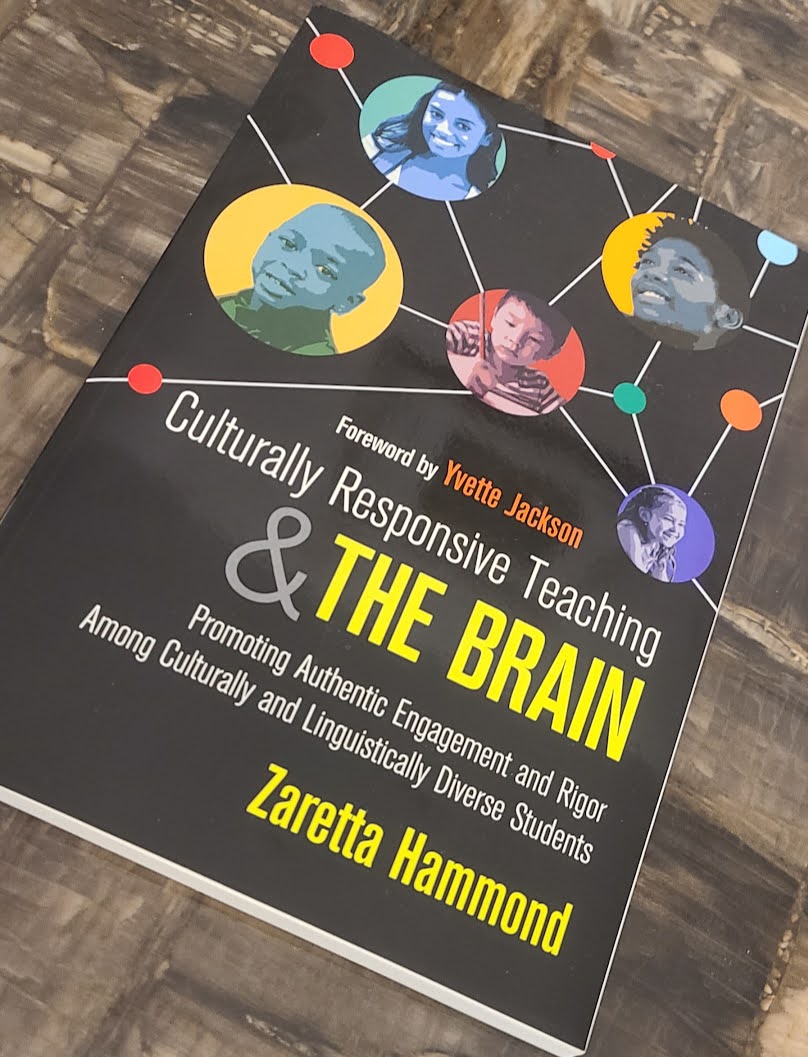
Culturally Responsive Teaching and the Brain

“Culturally Responsive Teaching and the Brain” by Zaretta Hammond (2015) explores the intersection of culturally responsive teaching practices and brain research. The book delves into how teachers can better engage and support students from diverse cultural backgrounds by understanding how the brain processes information and responds to different instructional methods. It addresses the critical need for educators to acknowledge and embrace students’ cultural identities and backgrounds while fostering optimal learning experiences in the classroom. This book offers valuable insights into how educators can effectively engage diverse learners and create inclusive learning environments.

Cultural Diversity and Educational Equity:
The book begins by highlighting the importance of cultural diversity in the classroom and its direct impact on educational equity. It discusses how students from various cultural backgrounds bring unique perspectives, experiences, and learning styles, which educators can leverage to enrich learning. Hammond emphasizes the significance of understanding the cultural influences that shape students’ cognitive development and the role of educators in acknowledging and respecting these influences.

Neuroscience and Learning:
In the following chapters, the book delves into neuroscience and its implications for teaching practices. Hammond presents research findings that shed light on how the brain processes information differently based on cultural background and experiences. By understanding these neural mechanisms, educators can tailor their instructional methods to match the diverse needs of students, thereby optimizing learning outcomes.

The Cultural Learning Framework:
Hammond introduces the Cultural Learning Framework, a practical and evidence-based model designed to guide educators in implementing culturally responsive teaching strategies. The framework provides insights into understanding cultural norms, community dynamics, and the impact of stereotype threat on student performance. It also emphasizes the role of the teacher as a cultural broker, fostering trust and building strong relationships with students and their families.

Culturally Responsive Pedagogy in Practice:
The book explores various culturally responsive pedagogical practices educators can integrate into their classrooms. Examples include incorporating culturally relevant texts, integrating students’ cultural practices into the curriculum, and promoting collaborative learning to encourage cultural exchange among students. Hammond emphasizes the significance of teaching students metacognitive strategies to develop self-regulation and critical thinking skills. Hammond provides practical examples and case studies throughout the book to illustrate how culturally responsive teaching and brain-based strategies can be implemented in various educational settings. The author emphasizes teachers’ continuous growth and development in their journey toward becoming culturally responsive practitioners.

Implicit Bias and Stereotype Threat:
Addressing the prevalent issue of implicit bias and stereotype threat, Hammond highlights these factors’ negative impact on student’s academic performance and self-esteem. The book offers practical guidance on how educators can identify and mitigate their biases and create an inclusive and supportive learning environment that fosters student success.

Professional Development and Teacher Training:
The book underscores the need for ongoing professional development and teacher training to equip educators with the knowledge and skills necessary to implement culturally responsive teaching practices effectively. It advocates for school-wide efforts to promote culturally responsive education and create a collaborative and supportive learning community for teachers and students.

Culturally Responsive Teaching and the Brain by Zaretta Hammond is an indispensable resource for educators and educational stakeholders seeking to create inclusive learning environments and improve academic outcomes for diverse student populations. By bridging the gap between neuroscience and culturally responsive teaching, Hammond offers practical and evidence-based strategies to nurture all students’ cognitive, emotional, and social development, regardless of their cultural backgrounds. Embracing cultural diversity in education empowers students and contributes to a more equitable and socially just society.

that kid

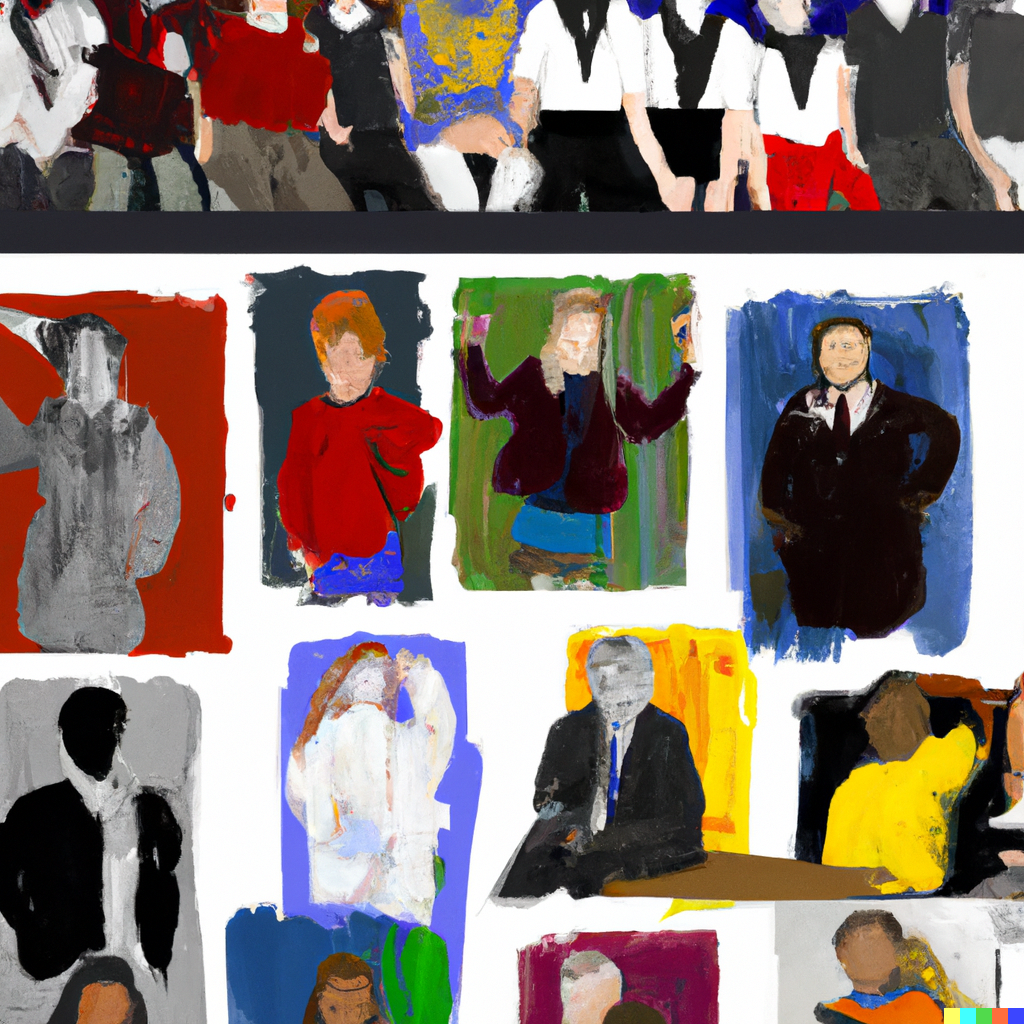
Created by DALL-E
a-class-photo-of-faceless-students-in-the-styles-of-Monet-Rembrandt-Kandinsky-and-Warhol prompt by author

I was thinking about that kid and I found myself getting emotional. 

You know the one. We all do. Whether the name(s) or face(s) you thought of are in your class this year or not. We all have one or two students who popped in there almost immediately. I am not going to sugar coat this either because it got emotional. When I think about that kid, my feelings range quite widely here. Anger, joy, sadness, peace, et al have all staked their claims in my amygdalae and other rose coloured spaces in my emotional thought centre.

My first “that kid” came when I was quite new to teaching. I probably owe them an apology for pushing too hard about their studies without considering how hard it must have been to be truly trying their best, but not meeting the expectations of which I was thoroughly* convinced were so clearly taught and put within reach. Like I mentioned above, an apology has been uttered on a couple of occasions for that learner into the universe. 

There are two other feelings that happens sometimes, relief and angst. Relief that you were able to make it through a year together and grow. Angst over what I missed or, straight up, got completely wrong. My most recent that kid reads like this: 

Is quiet – too quiet.
Sticks to the sidelines as if crazy glued there.
Struggles to start something, and struggles even more to finish.
Whether it is a transition, a sentence, or a math challenge mine has got me thinking about what I need to do differently next time because there will be a next time no matter how hard I work to learn the lessons from the past to use now and in the future.

As teachers, I’ve noticed that we tend to be pretty hard on ourselves much more often than we realize or care to admit. It’s who we are as reflective practitioners who seek to make things better for our learners. I have noticed that we fret far more about any flaws in our work even when there are few if any cracks in our foundations. We are constant works in progress alongside our students and we wear it on our sleeves when it doesn’t go well. 

Sometimes, that kid gifts you some victories too. You see, all that time spent investing in that kid can turn out to be a life enriching moment for you as an educator and even more so for that kid as a scholar. Since my first that kid nearly 15 years ago, I have marveled at hearing from students who are completing degrees at amazing schools and starting to write the next chapters of their lives. This week I ran into a student who will be doing just that.

To be honest, it wasn’t all sunshine and lollipops with this particular that kid. If poor choices, bad behaviour, and work avoidance were credit courses, this learner would be top of the class. Fast forward 6 years and they are about to begin a very challenging degree program at a top university. That could have only happened with significant support, responsibility, accountability, and commitment. In other words, the exact opposite to where they were back then. So what turned this scholar around? How did the switch get flipped, and who did the flipping? I was certainly thrilled to receive such news knowing that there would be more good things to come as a result of them finding their stride as a student. Whoever helped this “that kid” turn over a new leaf has changed one young person’s life not for good, but for great. 

I am also aware that there are some who will never get to experience an about face like the that kid above, and I need to take ownership of that and work to improve going forward. Maybe my next that kid will not fall through the cracks through their education? I know that there is always room to improve what and how we do this job of ours. I know that teachers have countless conversations in order to find and fit the complex puzzle pieces we know as students together. I know that there is no single strategy or approach that will reach 100% of our students. What we need to remind ourselves is that we come pretty close to perfection, and we do it across a decade plus of siloed collaboration, between the panels, whether we realize it or not. 

When you think about it, each of our students could have as many as 50 teachers over their K to 12 careers. Of course homeroom teachers occupy the bulk of those first 10 years yet that still means there are countless points of influential interaction to be had between an entire cast of educators all working in concert to make sure each that kid gets and gives the best. 

This job asks us to accept and understand that we often will never know how the work we put in with our students will support them in the future. Closure is not a luxury many elementary teachers ever have once our students move onward and beyond our schools, but that should not bring us down because there is always that kid who takes the time, after several years have gone by, to reach out and connect again: to share how much they appreciated what was taught to them in and out of the classroom all those years ago. 


*On a random note: the word thoroughly breaks down into tho roughly. So now my idea of thorough will always be considerate of whether I was thorough or tho rough

Unplugged Coding in the FSL Classroom

This past weekend was ETFO’s French as a Second Language Conference. It was an incredible opportunity to meet and connect with educators from across the province to share ideas about best practices in the FSL Classroom. I had the fortunate opportunity this year to present on fun and creativity in the FSL classroom. My brother, Sean Lambert, was also a facilitator and shared about students getting up and moving.  Planning for this conference gave us the opportunity to bounce ideas off of one another and share some of what we have been doing in our classrooms. In his session, he shared about unplugged coding activities to support reading and to help students in learning about directional language. In this post, I’m sharing a bit about his session.

What Is Unplugged Coding

Unplugged coding is teaching coding concepts without using devices. By using directional arrows, and/or coding blocks, students are learning how to code without writing lines of code. When coding unplugged, students can use their knowledge to work on computational challenges that will help them understand the concepts they may use in coding projects. Unplugged coding offers students the opportunity to get up and moving and this in turn might help to support students in deepening their understanding of vocabulary and/or some of the concepts taught in a unit. 

Reading & Directional Language

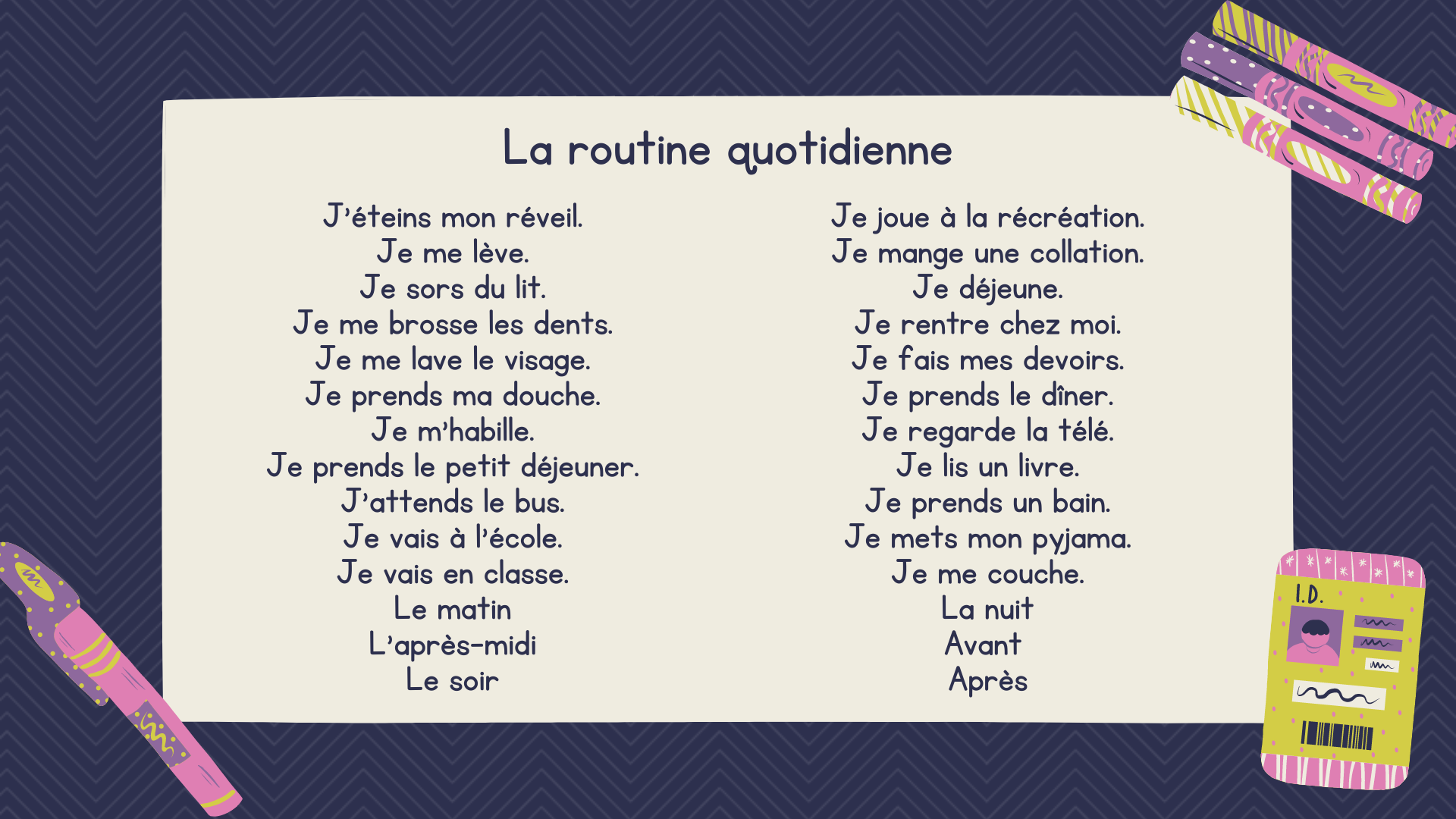
In his presentation, my brother set up grid mats on the floor for participants. On the mat, there were a number of images that were directly related to the story about the events of a person’s day. Participants were asked to read the story and then use the cards with directional arrows to determine how they could move across the mat, landing on the images, in order of their occurrence in the person’s day. Participants mentioned that the kinesthetic nature of getting up and moving around and connecting the images to the story made it a fun way to interact with the text.

An Extension

Given a model and a list of the vocabulary used in the unit, an extension would be for students to write their own stories to share with others in their class and have them navigate the mat to determine the code. Students could also create a game or activity whereby they use directional language and the reader has to determine the steps they took in sequential order. For example, if we are still talking about daily activities or routines, students could follow directions to determine what happened from the beginning to the end of someone’s day. 

The conference was amazing and it was really great to meet so many educators from different parts of Ontario and to hear about the work they are doing with students in their classrooms. Throughout the day, I kept going back to my notebook to jot down notes about new ideas that I could take back and use in my classroom. Up next, some unplugged coding!


fractures

an image of fractions made with a blend of colourful geometric shapes in the style of Picasso and Klimt via Dalle 2
Image – fractions made with a blend of colourful geometric shapes in the style of Picasso and Klimt via Dalle 2 prompts by author

Bumps, bruises, cuts, and scars dot my skin. They serve as little reminders of the life that has been lived on the outside. Whether visible to others or not, I cannot look at them without recalling most of the moments and misadventures that caused them. I see these marks as near misses and continue to add more to my collection whether it is in the kitchen, workshop, or enjoying time with others.

Call this post ‘fractures’?

In my half century plus adventure time, I have not broken many bones along the way. Other than most of my fingers, a couple of ribs (which made baseball and golfing really tough that year), and my nose back in grade 6 playing football on the school team, I have been very fortunate not to ever be fitted with an itchy or cumbersome cast – although there is still time.

My collection of near misses and minor breaks have taught me quite a bit. I have to take my physical existence seriously when it comes to my actions and inactions. Perhaps my injuries are the products of inattention on my part? Perhaps I let my guard down with what-could-possibly-go-wrong thinking? Perhaps I needed to pay closer attention going forward? Somehow I am sounding like my parents and teachers and it’s bringing me back to the purpose of this post – fractures.

There is not a single one among us who enters the classroom each day without fractures. You see, we have all endured down times, loss, failure, and disappointment at one point in our lives or another. Whether physiologically or psychologically, fractures come along with life’s other certainties such as death, taxes, and dishes(without apologies to Ben Franklin). What we make of our fractures is often where we find our strength and determination.

If a bone breaks, the body begins the healing process immediately. Once something goes snap, the cells organize themselves to start the repair process. Interestingly enough, it is not like your brain is the boss yelling at the workers to do their jobs or go faster. At this point it is along for the ride because the body already knows what to do. The brain just takes the credit. “My what a nice job we did healing that tibia over the past 6 weeks.” Despite attending to the remediating a reconstruction project, the body can still get about other daily cognitive business, but when someone’s mind or spirit becomes fractured, the body is often likely to deteriorate in the process until healing and restoration are complete. So why is this so hard?

Fractures in our personal and thought lives are never usually front and centre though. Adding to this mystique is the elusive nature of mental health in general. Our fractured spirits are not easily seen by untrained minds and are often interpreted as rude behaviour or that maybe you need a time out to gather your thoughts. This is also common in our students. It is also compounded because, many times, they are processing emotions that seem difficult to articulate due to confusion and fear of being judged, cast out, mocked, or all of the above.

The Ontario Grade 6 Health Curriculum gives us some solid teaching and learning points that I have really been trying to build into the life skillsets of students in and out of our class time. Interestingly enough, this teaching really meshes well with the book The Tools by Phil Stutz and Barry Michels which happens to be my current personal read, but that’s a blog for a different site.

So often we are faced with situations that are followed by a barrage of feelings and much more often than not we find ourselves reacting rather than responding. As our lessons have progressed, students have learned to assess the situation, identify their emotions, and then use strategies for resolution. Yet, even with the skills we are implementing into our daily interactions, the struggle to be honest and free of fear about our fractures and feelings is really hard to reckon with one another. This goes for teachers just as much as students.

We need to step outside of our comfort zones which double as camouflaged cages of social media level perfection and problem free happiness. We need to normalize that life is messy at times and that things can be and become broken. If we take time to pick up the pieces and put them back together there is a chance that these fractures can be mended.

In many cases the silence is even more deafening when it comes to issues of mental health in the classroom. Judging by recent news reports in response to the provincial budget causes me to believe we are in for more and more fractured students slipping through the cracks in our schools.

Yes, we can acknowledge it, but more often than not we are still too fractured as a society to truly support each other when there is so much need already. The keys has been and will continue to be in the hands of educators. As we walk through the hallways and curate our classrooms, take time to help the fractured around you by making time to acknowledge them (yourself), listen (talk with someone), and help them (yourself) heal.

Cultural Humility

At a recent P.A. Day, we were learning about “Cultural Humility” and how every person should somehow reflect on this on a daily basis. One definition I found is, “Cultural Humility Is: A personal lifelong commitment to self-evaluation and self-critique whereby the individual not only learns about another’s culture, but one starts with an examination of [their] own beliefs and cultural identities.” (inclusion.uoregon.edu)

Cultural Humility is a lifelong process

During our discussions, we talked about how this is a lifelong process, not just something you think about for a month. You need to always be aware of your own biases, maybe based on your personal beliefs or your cultural beliefs. As educators, it is even more important that we take time to think about this on a daily basis.

Everyone is equal

Part of this process is to recognize that no culture is superior and to also learn about other cultures. I think we can do a great job at this by making sure our classroom libraries reflect all cultures, that we make sure we are learning about every celebration and not just one from one culture, and also making sure that the articles and curricular content we are sharing is based on more than one cultural story. This is how we can start to make sure our cultural humility is shown in our own practice.

Be honest when you are unsure

We do not have to know all the things at all times (even though students think we do). It is okay to look things up, to be aware of what we know and do not know. There are so many great resources especially within our own ETFO articles that can help us learn more about this topic. I particularily enjoyed the content during February, having discussions about the Black History Month poster, etc. So it is best to be honest when you are not sure about a specific topic.

Learn about other cultures

I remember being a 13 year old in a Catholic School unsure of the other cultures around me. I knew there were other religions and other nationalities but I had never really learned about anything outside of my inner circle (my own culture). It wasn’t until high school that I started to find out about other cultures and by then, I had already lost so much time getting to know other people. This is why I love how creating these opportunities to learn about other cultures will help others see outside of their inner circle. I have a grade eight student who is so hoping to run a Culture Day by the time she graduates and I hope we have time to get it going. I think this is important of us educators too- if there is a culture we are unsure about, we could do some more research to find out about it.

Our school board has a program that was created to help our students understand more about this topic. Our program is called “LDR (Learn, disrupt and rebuild) and our Module 3- Exploring Human Rights helps students dig deeper into these topics. I challenge you all to think about your own cultural humility as it is a personal commitment but also a lifelong one.

antiques and collectibles

Recently, I had enough energy at the end of a work week to do something unusually out of character when it comes to my free time. What was it you ask? Nothing. I did nothing school related for an entire 48 hours. Well it was almost 48 hours, but who’s counting? What counts, is that it happened over that magical weekend of the school year when report cards are completed and next term planning, assessment, and fretting were up to date.

The ability to experience this “blue moon”occurrence was directly due to this cosmically-convergent educational allignment and allowed for some spontaneously spirited adventure. Energized, caffeinated, and curious I went to an antiques and collectibles store to browse their wares knowing there was nothing pressing in the backburners of my mind. I was free to roam. 

Full disclosure

I struggle with shopping and wandering through retail spaces without a specific purpose, most of the time, my visits are only out of necessity and not as a way to wile away the hours. On this particular day however, before I could keep on strolling past the entrance doors, I was on the top floor. With my spouse and son leading the way, it became very apparent that I was in for a treat.

Back to my story

This place had everything from china plates, old Tupperware, vintage clothing, vinyl records, VHS tapes, jewelry, and books crammed throughout its four floors. In fact, there were so many other items that another visit is definitely in the cards the next time the stars allign. It was as if collectors of odd memorabilia and retro housewares throughout time had converged in one space. (I’ll come back to this idea. Please read on.)

The 2 plus hours we spent pacing the aisles of this place came with all of the kitchy over-stimulation that accompany musty books, retro clothing, milk crates brimming with albums, and constant trips down memory lane from the relentless onslaught triggering my fond and fading memories. Given my unusually relaxed state of mind, I also found myself taking inventory of my life when it came to things that were held dear and things that have been allowed to disappear unless dug out through deep sensory recollection.

Cue the thoughts about being in the classroom 

Now I have not spent two hours in one indoor space, other than work or home, voluntarily since COVID 19 broke out. So this day was very different from most in the past 3 plus years. As I wandered the store, I started to ask myself what needed to be thrown out, gifted to someone, or recycled in my teaching space? Maybe it was seeing all of these items occupying space throughout the store that created this thought ripple?

I know that it is easy to accumulate resources in this profession and I have gathered and then lugged my share of boxes from class to class and school to school, but recently I find myself taking a different approach to my, let’s say, hoarding nature by going through each resource and deciding whether it is time to keep it, gift it, or toss it. My goal here is to reduce the clutter that might be getting in the way of new ideas and resources coming into my classroom. If I am only holding on to the same ones because they are comfortable and known, I might not be doing any favours for my students. 

Just like that antiques and collectibles shop revealed that day, there are somethings worth hanging onto because of their value. This could be a tried and true unit plan or favourite resource that is used on regular rotation throughout your career. In other cases, it might be a dust collector that never took off. As we seem to be shifting away from text books, and in response to changing curricula, it is probably best that teachers take inventory of what they have been carrying around in the hopes that someday it might be useable in the classroom.

Other than Math manipulatives, art supplies, and novels, I have learned that everything in my classroom should only be a temporary fixture that can be replaced or retired when it comes to instructional resources. If reading that makes you uncomfortable, that’s okay. I am not talking about wasteful consumption along the lines of fast fashion, but my thinking is that we can become stuck in the safe and familiar. It is in our nature to stick to our favourites at the risk of missing out on something unknown, possibly more relevant, without realizing it. 

I had a Fables unit for Gr 4 that I wrote about 12 years ago. It was beautiful, comprehensive, so descriptive, and complete. It was a show piece sitting in its binder and although I worked hard on that unit, I never used it again. As I was going through my resources, I opened it up again only to realize that this work would be counter-intuitive for me to share with my students. The fact that it was laden with worksheets to copy and lacklustre lesson activities made me realize the amount of changes that have occurred in my own pedagogy. I pulled the pages out of the binder and blue binned them back to the recycler in the hopes that something better will be printed on them next time. It was hard to accept that most of that work was no longer relevant, but it was an important reminder about how we have to shake off the love/bias we have for our own ideas in order to get better. In other words, leave the antiques and collectibles behind sometimes. 

I have held the walls of that box up even while outside forces were trying to pull them down for me to try something new. As teachers we develop a sense of what will and won’t work through our experience(s), what walking through this shop made me realize was that what worked from the past is not guaranteed to work in the future. We are using resources and methods that were used to teach us when we were students in grade school. Sure we have tech and access to every truth and lie via the internet, but that should not preclude us from taking stock of what we use on a regular basis or to boldly seek how to change it all up on a regular basis. 

Thank you for reading. Please share and leave a comment if you would like to continue the conversation.