Podcasts for Students

Excitedly, I am back in the classroom in September! Over the past few weeks, I’ve started thinking about new ways to engage my next cohort of students. As I’ve been thinking, a friend reached out to share that her son has been enjoying podcasts and that got me thinking about how they might be useful in the classroom.  I started listening to the few mentioned to me by my friend and through searching, realized just how many there are for children. For this post, I’ve included a little about the few that I’ve started listening to so far and how they might be useful in the classroom. By no means is this an exhaustive list, nor have I really had the time to dig into this idea but I’m starting here and will continue to take time over the summer listening and trying to find ways to move students from podcast consumers into perhaps podcast creators.

Six Minutes 

Description from Kids Listen: Eleven-year-old Holiday is pulled from the icy waters of Alaska with no memory of who she is or where she came from. Are her mom and dad really who they say they are? And when she begins to develop incredible abilities, she’ll soon discover she’s not alone in the world. Six Minutes is a new mystery adventure for the whole family. Starting on March 1st, new six minute episodes, twice a week, all year long…and beyond. 

In the first episode, the Anders family goes on a whale watching trip and finds something miraculous floating in the water. While listening to this episode, I immediately found myself using my imagination to think of what the setting and characters might look like. Because there were no visuals provided, I had to envision the space as the story started to unfold. I started to wonder about having students draw their visualizations as they listened. What would they include on a page and why? What elements might be most important for some and less for others? How might students justify their reasons for adding what they did to the page. I started to think of the creativity and critical thinking skills that could be developed through conversations about what their images may include. I like the fact that the episodes are short. Six minutes is just enough time to capture your attention while leaving you wanting more. I might also think about developing key questions to ask students for each of the episodes, getting them to piece together elements of the story as they unfold, while making predictions of what might come. I only listened to a few of the episodes and this is definitely a podcast that I would listen to myself.

Tumble Science Podcasts for Kids

Description from Kids Listen: Exploring stories of science discovery. Tumble is a science podcast created to be enjoyed by the entire family. Hosted & produced by Lindsay Patterson (science journalist) & Marshall Escamilla (teacher).

As a Science enthusiast, I was intrigued by this podcast and of course I decided to listen to one of the most gross episodes, The Tower of the Vomiting Robot with Anna Rothschild. While it took some time to get into the actual episode, the podcast told how a robot named Vomiting Larry, helped scientists discover how to stop the spread of Norovirus. I thought it was great that this episode sought to find out from grade 4 students what they thought was gross. I think this could be a great way to also include answers from your own students. This episode also got me thinking about the practical applications of technology to advance research about disease prevention and possibly a new design project for grade 5 students in relation to the human body. I also thought that it was neat that there was a blog post about the episode where students could investigate more, if they wanted to. A great way to bring in real-world science to the science we do in classrooms with students. 

The Unexplainable Disappearance of Mars Patel 

Description from Kids Listen: The Unexplainable Disappearance of Mars Patel is a high-quality serial mystery story for middle graders, performed by actual kids. Think Goonies, meets Spy Kids, meets Stranger Things for 8-12 year-olds. Listen along as eleven-year-old Mars Patel and his pals JP, Toothpick, and Caddie set out on an audacious adventure in search of two missing friends. The mysterious tech billionaire Oliver Pruitt might have a thing-or-two to say about their quest, because as he likes to say, To the stars! In fact, that’s just where they might be headed.

With three seasons to this podcast, I love the fact that it’s narrated by actual children. It’s in their voices and I see how it might be totally relatable and of great interest to them. A little longer in length – 30 minutes – it might be a little long for some to listen to in its entirety in the classroom but I’ve heard that it’s engaging for students and time seems to pass very quickly. I like how Oliver Pruitt in the first episode drops you into H. G. Wells Middle School. Again, I can see how students could visualize what is happening as well as make predictions on what might come in the next part. 

The following is a list of sites that I will be investigating over the summer to find podcasts that might be interesting to introduce to my students. That being said, I know that choice and voice are extremely important and I also look forward to having conversations with my students around what they may already be listening to. Again, while I’m new to this idea of podcasts in the classroom, these lists are simply ones that I have found online that may or may not include podcasts that are ideal for your students. I think it’s wise to take a listen first and determine that for yourself. In these lists, you’ll see that there is some overlap and perhaps that might be a place to start as you investigate. 

Kids Listen – An app that has podcasts sorted in categories based on age. I found it easy to listen to podcasts on my Chromebook which also got me thinking about the ease of use within the classroom depending on the technology available. 

We Are Teachers – Curated list of the 18 best podcasts for students in elementary, middle and high school and also gives a sample activity to try along with listening to the podcast.

Cult of Pedagogy – Offers a brief reason what podcasts are and how they can be listened to, along with 8 educational podcasts with a sample episode and brief descriptions of each. 

Scholastic – Gives you a list of 9 podcasts, telling you what they are best for, why it’s worth it and where to find them.

Common Sense Media – With fantastic tips for parents and children, this list of the 20 best podcasts has them organized by category based on genres or activities. 

Common Sense Media – Another list specifically for little kids, truly highlighting that podcasts can be for everyone.

Finding Cleo – Definitely for older students, this link is to a teacher’s guide developed by the Dufferin Peel Catholic District School Board educators, for this podcast. Included are letters to parents, suggested assignments for the episodes and further resources. 

Have you used podcasts with students? If so, how? What worked and what didn’t work? I would love to hear your experiences and get some ideas from you.

However you spend your summer break, I hope that it’s filled with time to relax and rejuvenate for the upcoming year. Have a happy and safe summer!

Collaborative Inquiry Celebration

The other day, many teachers from across my school board gathered together to share with other educators how their year long inquiry project went. As I have mentioned in previous posts, mine was about starting our own business as a class and inspiring my students through leadership. I shared with the other educators these successful stories from our project “8A TREATS”:

  • how many of my less successful students with traditional subjects have been excelling during this project
  • the success my students had with gathering data from classes around the school
  • collecting permission forms from the entire school
  • advertising by making imovies, posters and using a dinosaur mascot to travel around with a fake smoothie
  • tallying the smoothie results for flavours and sizes with spreadsheets
  • counting and tracking the money with spreadsheets
  • find and then order paper straws from Amazon to be environmentally friendly
  • working with a budget that was donated from the student success foundation
  • designing logos as a class, voting on the best one and then collaborating with a clothing design company to recreate this on their products
  • painting and creating a wall in our classroom that will be the location behind our brand
  • creating a video to explain the project as well as talk about our favourite parts

Image-21    (<<<our student create wall)


Our next steps with our project:

  • doing the math to find out how much of each ingredient we will now (plus extra) to make the smoothies
  • ordering the cups
  • setting up our classroom as a pop-up smoothie store
  • making 340+ smoothies on June 6th with our 22 students

It was very exciting sharing this project with my fellow educators. My students were very excited knowing that this project was shared with other teachers. They were proud when I told them how excited other teachers were to find out about this student centered initiative.

There were other educators who shared exciting inquiry projects:

  1. My colleague Lydia shared about her “Community Helpers” project where her grade one students inquired in various ways about the many community helpers in our neighbourhood. She had a guest police officer come by as well as had the students use their hands to explore various jobs. They were able to build, play with food as well as research all of the jobs available to them. The final touch was when my grade eight class came to help them put their thoughts together in an inquiry package. It was great to see her students so passionate about their future. To find out about her project, you can visit her twitter account @AppolonialydiaL. You can also view her project on this link <iframe class=”wp-block-mexp-vimeo hwdsb-tv” src=”//hwdsb.tv/media/grade-one-collaborative-inquiry-2019/?embed=true” width=”560″ height=”315″ frameborder=”0″ allowfullscreen></iframe>
  2. Teachers used a choice board to give students options when creating or completing tasks. These boards are made in collaboration with the teacher at the beginning of the year to go over all of the ways that presenting or completing every day tasks can be done that year. Apps are explored and used in new and innovative ways. I cannot wait to create a choice board in my literacy class next year. There was also a SAMR model student choice matrix that was introduced to us. It’s not the app that makes the project/task, it is how it’s used.
  3. I also heard about makerspaces from one of my other colleagues Cara. She introduces these daily in her library and students are able to create very interesting projects from her instruction cards set up at the tables. They are always able to be creative, explore and build in her library. They also explore media literacy during these creative library sessions.

There were many other projects I could not get to since we only had a half hour to explore and the other half hour was to share about our own projects. Some other apps worth checking out are: seesaw, read&write, book creator, keynote, canva, geogebra, TC studio and pear deck.


A meme of a teacher wishing for a single point rubric.

Effective Assessment and Feedback: The Single Point Rubric

RUBRIC MEME

I’ve never really been focused on grades in my classroom. Some educators and parents might find it shocking to read a teacher put that in print.  However, what I mean is that I seldom talk to my students about levels and letter grades.  I focus discussion around feedback, improvement, exemplars and success criteria.  When rubrics were all the rage I used them rather unsuccessfully. I found that traditional 4 level rubrics were about evaluating after the fact rather than providing feedback that can be acted upon during the learning. Rubrics are sometimes handed to the students as a “big reveal” when the project has been evaluated without any chance for acting on feedback.  I don’t believe that success criteria should be a secret to be kept from students.  It isn’t fair that students are thinking, “Well, if you’d only told me that was an expectation I’d have been happy to include it.  I can’t read the teacher’s mind!”  Clear is kind.  Be clear about the learning goals and success criteria for an assignment and give the students a rich task that they will have to dig into and get feedback to act upon during the learning.

Apart from the evaluative vs. the assessment function of a traditional rubric there are two other things that I dislike about the traditional 4 level rubric.  The first thing is that traditional rubrics inform students about what the bare minimum is that they have to do to complete something.  Some students will look at level 2 and do only just what it takes to fulfill that level.  Secondly, level 4 is meant to go above and beyond the expectations.  In a traditional rubric, students seeking level 4 don’t need to think outside the box at all.  All of the criteria for a level 4 is clearly stated-no thinking necessary.

The answer to this assessment question?  For me it was the Single Point Rubric.  Using the single point rubric changed the learning for my students and shifted my assessment practices. It focuses on what the student is doing well, what the student can do to improve in the work and exactly what the learning goal and the success criteria is for the learning.  However, it also allows for the above and beyond to be driven by the student.  It lets the student pleasantly surprise the teacher with creative thinking.  It is a clear and kind way to deliver feedback to students to encourage them to be successful in their learning.

I have included an example for a grade four  Single Point Rubric Literary Response.  Feel free to copy and change it to suit your needs.

If you would like to learn more about Single Point Rubrics:

Cult of Pedagogy

Edutopia-6 Reasons to Try the Single Point Rubric


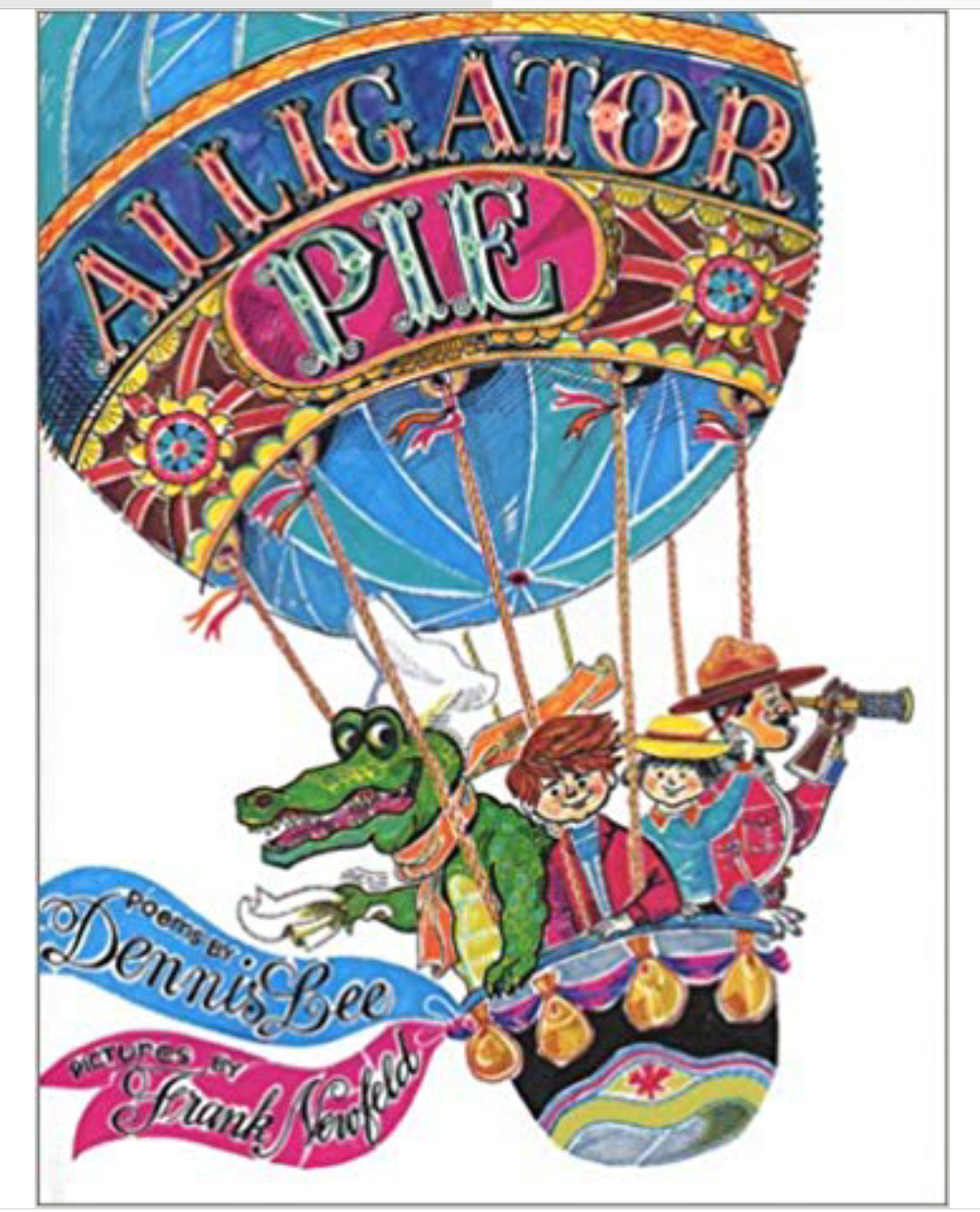
An image of the cover of Alligator Pie.

Chime and Chant Language Learning

When I was in the Faculty of Education one of my Associate Professors was Jean Malloch, author of “Chime In” and other professional teaching resources.  I learned from her the importance of rhythm and rhyme in the early acquisition of language.  I also love to read and write poetry.   While growing up my sisters shared their own love of  the poetry of Ogden Nash and Dennis Lee.  These poets formed the beginning repertoire of poetry that I have shared with my students over the years with the addition of poets Shel Silverstein, Ken Nesbitt and Loris Lesyinski to name a few.

At the beginning of the school year when teaching in the primary grades, I would create a ‘Chime and Chant’ duo tang for students with two or three poems about September, fall, school and character. Each week during the school year we would add a new poem.  Sometimes it was just because they were fun to read and perform.  Other times they were connected to our topics of study.  We worked together reading these poems chorally in different ways: call and answer, parts attributed to groups of students, leaving out the last word of the line and having the students chime in as well as reading with actions, different types of voices and dramatic effects.  These short poems also provided opportunities for me to teach beginning reading strategies such as word prediction, reading word families and segmenting words.  We would practice our poetry daily and often the students would have the majority of the poetry memorized by the end of the week.  Sometimes while standing and waiting during a transition time we would chant a familiar poem together without even using our duo tangs.  We would take poems apart, mix them up, change the words and use the poems to identify word families, commonly used words and word endings.  Students would increase their fluency in reading and add to their vocabulary.  We stored our poetry books in the student’s book bags and which ensured that when students went to their independent reading time they always had something that they could read independently.  When students partner read they would often choose to read poems chorally.  When students read to their grade four buddies they would proudly show off their reading skills with their Chime and Chant books. As some students soared in their reading, they would choose some of the poems that they wanted added to their Chime and Chant books independently or I would provide some new more challenging poems during their guided reading time.  As the year progressed, the Chime and Chant books became more personalized. We would still chant some of our favourite poems together and I would still share a poem a week but students but less emphasis was placed on the whole class process as they gained their own reading strategies.

Beginning writing in the primary grades can be daunting for some students.  I used poetry writing to provide structures that were easily accessible for beginning writers.  Diamanté, list, free form and fill in the blank poetry structures were among some of the formats that we used.   When I taught students to write poetry we would create shared poems with the structure for a number of days and generate word charts to provide students with familiar vocabulary to reference in order to scaffold the learning and when they were ready, the students would put their own poems together.  After writing the poetry students would then practice reading their poetry, add actions and dramatic effects and then present their poems chorally in front of the class or create a video of their reading.  Some went further and created green screen effects to add to their poetry presentations.  Poetry generated student evidence of learning for reading, writing and oral communication.  It provided a routine and structure to a part of our day that was comfortable for the students and fostered their learning.  Poetry provides shared reading and writing opportunities in a format that is comfortable for children and doesn’t overwhelm them.

Loris Lesynski 

Shel Silverstein

Ogden Nash

Dennis Lee

Ken Nesbitt


Authentic Learning

One question that has been on my mind is how do we ensure that we are honouring diverse learning styles and interests within the constraints of the curriculum? I’ve always thought that when students are excited about what is being taught, they’ll be engaged in the process but I wonder if it might be more than that. I’ve been taking some time to reflect on where the idea of authentic learning and student engagement.

So far, I’ve gathered that the following 3 things are important when speaking on the subject of student engagement:

  1. Ensuring that multiple learning styles are honoured so that student needs are met during the learning process.
  2. Students being able to see themselves within what is being taught.
  3. Students seeing the relevance  of what is being taught to their daily lives.

When these 3 things are a part of the learning experience for students, true engagement can take place. I would like to take some time to reflect on the third point during this post because I believe this might be the sweet-spot for authentic learning.

Earlier on I spoke to the fact that we have a curriculum from which to guide the learning in our classrooms. While this is static, we have the opportunity to be innovative in the way in which we choose to unpack the curriculum with students. I strongly believe that gone are the days where the educator is the content deliverer and that the role of the student is to be the receiver of said content. We’ve moved away from the Sage on the Stage and into the role of being the Guide on the Side. With that in mind, the question becomes, how do we ensure that students are learning based on what the expectations are?  Furthermore, how do we ensure that what is being learned is relevant to the lives of students? In other words, how do we ensure that the learning is authentic for the students in front of us?

As much as possible, when introducing a topic or subject area, I focused on finding a real world problem that would speak to what we would be learning about. In Math we investigated angles through the stability of structure in interesting buildings in the world around us while taking some time to identify angles through images in everyday life. In Science we dug into user-centered design when considering hurricane solutions while learning about the forces acting on structures and mechanisms. In Language, we dug into the impact of words and their meaning through song. In every instance, a question framed what students were going to be learning about. I tried to create a question that was as open as possible so that students would be able to explore the topic based on their own interest. While working on hurricane solutions, some students focused on creating new infrastructure while others worked to communicate their learning through the creation of a program. For both students, the learning was authentic in that it spoke to their interest and allowed them to consider how they might have an impact in a real way.

I’m learning more and more about the value in this type of learning for students. As they learn, they are developing transferable skills and are able to set the pace for their learning and how they wish to share what they are learning with others. The curricular content is being discovered while students are making connections to the real world and understanding why the learning might be important.

Thinking about how to boost authentic learning in your classroom? Perhaps start by considering a real world problem that connects to the curricular area that students are learning about and posing an open question that gets them thinking.  

Non Fiction vs. Fiction?

The majority of what I read and write daily is non fiction.  If I were to attach a statistic to it, I would hazard to say that 95% of what I read and write on a daily basis is non fiction.  I like to write poetry and narratives too but I seldom have the time to do that and it is only for pleasure.  I read fiction daily too.  I read about 2 to 10 pages each night before falling asleep with my kindle on my chest.  Many years ago I was introduced to the work of Tony Stead at a Reading for the Love of It conference.  It changed my practice as a teacher forever.  Tony made me realize that almost all of my classroom library was filled with fiction, all of my class read alouds were fiction and the majority of the writing that my students were doing was fiction in some form or another.  I was not exposing them to enough non-fiction text and I was not preparing them for adult literacy.  Using “Is that a Fact?” by Tony Stead and “Reading with Meaning” by Debbie Miller I began to create a literacy program for my primary classroom that had a much stronger focus on non fiction.  I also began using my Scholastic book order money to augment my classroom library with nonfiction texts whenever possible.

I began explicitly teaching how to not only use, but to create non fiction text.  This focus engaged those readers who had struggled most.  There is far more information that can be read and synthesized through pictures in non fiction texts which enables all students, including the struggling readers, to contribute to discussions and make sense of text.  Curiosity drove students to have a purpose for reading and authentic purpose is everything.  We created “Wonderboxes”, an idea from Debbie Miller of small recipe boxes filled with index cards where students wrote down their questions and wonders.  It wasn’t labeled inquiry teaching at that point, but in retrospect it is what we were doing.  The students also created “Non Fiction Text Feature Notebooks” in which they designed illustrations that demonstrated the function of the various non fiction text features.  More recently my grade 4 and 5 students used a screen casting app called Explain Everything in order to create short videos explaining non fiction text features.  After learning what these text features were used for, students were able to interact with non fiction texts more efficiently to find what they needed.  In addition, they began using these text features in their own writing, especially when uploading to blogs and creating Google Slide presentations.

I still value the world of fiction-especially for read alouds. I know the magic of getting lost in a book or a better yet a book series and I want my students to have that experience too.  Being able to connect with another person over the topic of a book that has been thoroughly enjoyed is why book clubs and literature circles exist.  However, I am also aware that it isn’t for everyone.  A few years ago a colleague admitted to me that she had never enjoyed novel read alouds as a student because she just couldn’t visualize what was happening in the story in her own head.  For whatever reason she was unable to provide the running movie that went along with the narration from the teacher.  My first reaction was, “How sad!” but then I began to wonder just how many students I have taught over the years that felt exactly the same.  My literacy program became a more balanced diet of fiction and non fiction.  I encourage you to look through your own classroom library and review the read alouds that you have planned for the school year and take stock of how much of it is non fiction.  You just may want to augment your classroom literary diet with something that includes diagrams, labels and a glossary.

Taking the time to collaborate and learn how to bridge the gap

Once a month, my colleagues and I go to a highschool to look at a math sample from each of our “marker students”. There are a group of about ten of us which is made up of highschool teachers, elementary teachers and math facilitators. We take time to identify what the student knows, what they are struggling with and how we know this. The main point of these meetings that occur each month is to bridge the gap between elementary and high school. We are trying to review the necessary skills that kids in grade eight will need for next year and then we will spend large amounts of time focusing on these skills in addition to the topics we currently are expected to cover. It is very helpful to know which topics to spend the most amount of time on so I will look forward to the times in the future when we will be discussing those items.


At these sessions, we talk about what the student’s work shows us, if they are struggling with something, what does that tell us about how they are learning. We call this section of debriefing the interpretations.

The next part involves looking at next steps for students and teachers. It is a great use of time and helps us as teachers look at students we need to help further and then, we directly review how to help them reach these next steps.

All teachers get to share their marker students and then we spend time talking about how these students can get some help to further understand the questions and the overall math concepts.

The challenges we face when planning and attending these sessions include selecting a rich task that we can really dive into once we gather as a group. We tried using past EQAO assessments but couldn’t find any open ended questions. We then turned to some other test questions. I also find it hard to find the time to pull these students aside to help them once we find out ways to do so after the fact. The skill is so specific once we find out what they need help with that it seems hard to just discuss it as an isolated math skill.

The benefits to meeting like this is the amount of minds on tackling the questions and looking at helpful next steps. I really look forward to all of these educators coming into a classroom with me to help the students who are struggling in a real life setting. That will be great for all of the students, especially since they would then have at least ten educators in the room to help them grasp the challenging topics.


Coding for all

hourofcode.com 

This has become an annual event across the nations.  In Canada, 200,000 technology jobs will not be filled in the year 2020. Hour of Code is a great way to teach about some of the opportunities available to students. December 3 – 7 is also known as Computer Science Education Week and Canada Learning Code Week. I will have students participate in a variety of activities relating to these coding activities.  This is a way to introduce and enrich the learning of students from all grades.


Hackergals Hackathon

Hackathon has also become an annual event. December 12th schools from across Canada will participate in an event which they have been learning and practicing for this past few months. Hackergals vision is to empower young girls across Canada to explore the possibilities in coding. Women are under represented in technology and this event strives to expose many girls to computer science in the classroom.


First Lego League(FLL)-

www.firstinspires.org is another activity that students eagerly participate in.  It does have an extra cost unlike the Hourofcode and Hackergals which are both free.  FLL is an event that instills many skills and abilities to all who participate.  It is a team building, code learning, exciting journey for all who participate.  Lego League has many different avenues for all grade levels.  December is the competition time where students will participate in a Qualifying Tournament to determine who will move to the next level of play. Involvement of the community provides much success for may teams.


I have enrolled teams in all three of these events.  These individuals grow in many ways and often take leadership roles in next steps.  I encourage anyone who has the support of staff and community to become actively involved in any of these activities.

Barriers to Student Learning – An Overview

Priviledge

Education is one of the foundations of Canadian society. If you are wondering why your board is addressing issues of equity and inclusion recently, a policy/program memorandum has impacted the way Ontario public school boards are conducting their business of education.

Through the Policy/Program Memorandum No. 119, Developing and Implementing Equity and Inclusive Education Policies in Ontario Schools, it is stated that there is a need for our “publically funded education system to support and reflect the democratic values of fairness, equity, and respect for all” (Ministry of Education, 2013). The Government of Ontario has established three core priorities in education:

  • high levels of student achievement
  • reduced gaps in student achievement
  • increased public confidence in publically funded education (Ministry of Education, 2013)

In “providing a high-quality education for all is a key means of fostering … diversity is affirmed within a framework of common values that promote the well-being of all citizens” (Ministry of Education, 2013). The Ministry of Education recognizes factors such as race, sexual orientation, physical or mental disability, gender, and class can create barriers to learning. There is evident that some groups of students continue to encounter discriminatory barriers to learning. Research shows that when students feel connected to teachers and other students, they do better academically (Goleman, 2006).

Through Policy/Program Memorandum No. 119, all publically funded school boards are required to address equity and inclusive policies covering in three areas of focus including:

  • shared and committed leadership by the ministry, boards, and schools to eliminate discrimination through the identification and removal of biases and barriers
  • equity and inclusive education policies and practices to support positive learning environments that are respectful and welcoming to all
  • accountability and transparency with ongoing progress demonstrated and communicated to the ministry and the community (Ministry of Education, 2013)

The policy further goes on to state that “school board policies must be comprehensive and must cover the prohibited grounds of discrimination set out in the Ontario Human Rights Code. The code prohibits discrimination on any of the following grounds: race, colour, ancestry, place of origin, citizenship, ethnic origin, disability, creed (e.g., religion), sex, sexual orientation, gender identity, gender expression, age, family status, and marital status” and the intersectionality that may occur within this list (Ministry of Education, 2013).

So what does this mean to teachers?

School boards must seek out barriers to learning for all students. Teachers therefore must also address barriers to learning due to factors such as race, sexual orientation, physical or mental disability, gender, and socioeconomic status.

Through Policy/Program Memorandum No. 119, school boards, and teachers, must address barriers to learning that fall within prohibited grounds of discrimination set out in the Ontario Human Rights Code. This policy will impact all ways Ontario teachers conduct their business of education.

In the next few blogs, I will address some of the barriers to learning that students face based on their race, sexual orientation, disability, gender, and socioeconomic status.

If you would like me to address barriers to learning for a specific student group, please provide a suggestion below.

Collaboratively yours,

Deb Weston

References

Goleman, D. (2006). Social Intelligence: The New Science of Human Relationships.-New York, NY: Bantam Dell, A Division of Random House.

Ontario Ministry of Education. (2013). Policy/Program Memorandum No. 119: Developing and Implementing Equity and Inclusive Education Policies in Ontario Schools, Government of Ontario. Toronto. Downloaded from http://www.edu.gov.on.ca/extra/eng/ppm/119.pdf

Education Acronyms

PLC, IEP, TPA,…. Just a few acronyms in the world of Ontario education. I managed to complete the expectations of those three letter words, this month.

WOW! Some may say, “What are you talking about?”, others may say,” HOW?!”

As a person who is a futuristic thinker, I am continuously planning, creating lists and maximizing my energy.  I plan each weekend to complete a portion of the upcoming expectations for the month. This past month, I spent time creating unit plans to ensure a smooth sail through the four Junior and intermediate Math classes I teach.  While knowing that IEP’s (Individual Education Plans), are due in early October and help me understand my students. I reviewed and updated these a few at a time.

Yes of course this is my TPA (Teacher Performance Appraisal) year. Things have changed since I graduated from Teachers College.  I was just as nervous as my first evaluation.  This one was much different because I have learned many new teaching strategies, and ways to interact with all the people we come in contact within our profession.  I look at each year with a lens of the time. October, pumpkins are in season.  Pumpkins are a great way to create a hands on unit in Math for all grades. If you are still learning about making the many connections to the Big Ideas, there are many units on the web.  This is a perfect topic to bring excitement into the class, being aware of all the variables from cleanliness, to the use of sharp objects, and social skill development for group work.  This TPA in my umpteenth year of teaching was successful. After I reviewed my assessment, I realized some things still need work.  I need to clearly connect to daily learning goals to guide the directions of my students and their exploration. I also want to find a way to create easily displayed information charts/word walls that can travel from class to class? Keeping abreast of recent research and data helps.  A specific focus is important  so ideas don’t become lost in the many theories of our closely connected world (www).

This year I’ve noticed my board is using Monthly meetings and PD (Professional Development) days to facilitate PLC’s (Professional Learning Communities).  To my advantage, our focus is on math.  The discussion and connections for all help create a purposeful direction in our teaching and learning.  The superintendents and lead teachers carefully create PD to learn from and directly effect board and school goals. As a team, we have each other to support our teaching and direction.  If communication is continuously supported in meetings, this assists in sharing and supporting each other and the growth of our students and programs. Some of my observations from these meetings are: Don’t get rid of the old…some strategies are still good. Things are changing quickly. It’s admirable to see colleagues rise to new and connected positions while keeping valuable connections.

At the beginning of the month, I was apprehensive about completing these monthly tasks.  Tah Dah…another successful month as an educator.

Links:

Learning for All: http://www.edu.gov.on.ca/eng/general/elemsec/speced/LearningforAll2013.pdf

Planning for Learning: 

http://www.etfo.ca/SupportingMembers/Resources/ForTeachersDocuments/Planning%20for%20Student%20Learning.pdf

TPA: http://www.edu.gov.on.ca/eng/teacher/pdfs/TPA_Manual_English_september2010l.pdffbclid=IwAR3rtRjDQ50iFr81Lb45e9SXuzhXJebIzEdjFhzqIFTNqtvnw_IMaGV-V3kspecific links

http://www.etfo.ca/SupportingMembers/Professionals/Pages/ALP.aspx

Pumpkin Unit Ideas:

Ultimate Collection of Pumpkin Math Ideas for K-12