Weekly Plan for Online Learning: Special Education Classroom

Here is the plan for our first week of online instruction in January.

Have a wonderful first week back everyone!!

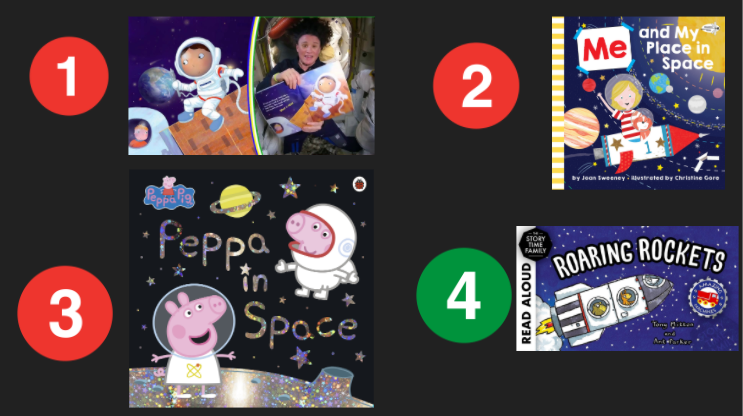
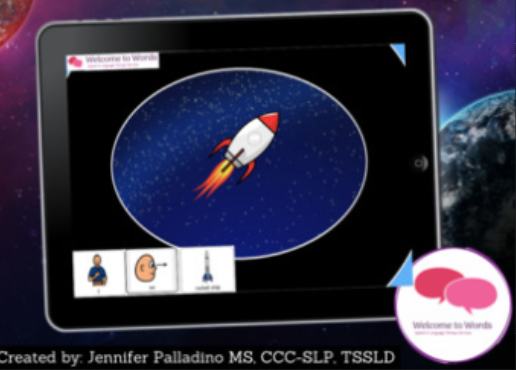
9:30-10:00 Small group instruction using a combination of Google Jamboards and Boom cards. Below are some pictures of the activities that we will be using.

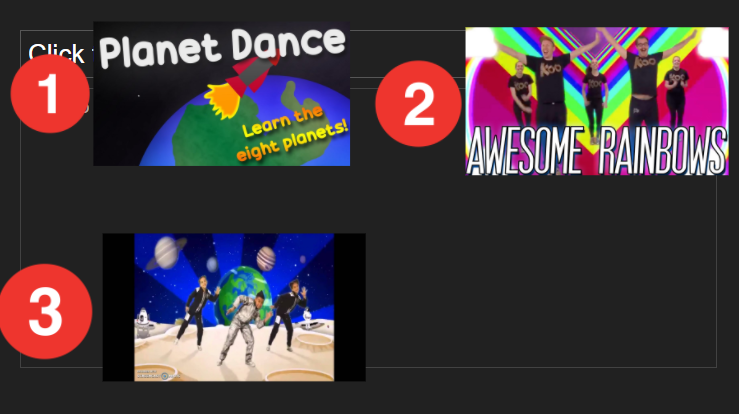
10:00-10:30 Exercise Time!! All students will join in and do an exercise program to get moving and get our heart rates up!!

Here is my New Year’s Playlist for our excercise time this week:

Exercise:

Warm up/Stretches

  1. 20 seconds Running on the spot
  2. 20 Jumping Jacks
  3. 20 Leg lifts
  4. 20 Body Twists
  5. 20 push ups on the table or wall

Dance Break

Do at least 1 more set of movement exercises. 2 if time permits

Cool down/Stretches

Remind parents that their child needs a place to move, some running shoes and comfortable clothes. It is going to be a 2021 party!!

10:30-11:00 Morning Meeting- All students gather. We practice communication, math, reading and life skills through a series of slides and songs.

11:00-11:30 Small group instruction: focus on communication, functional mathematics and functional language.

Similar to the first period in the morning we will be using a combination of Boom cards and Google Jamboards. Jamboards are ideal if your students are able to click on a link in the chat box and move to a new page. If your students are unable to do that, Boom cards are a much better option.

11:30-12:30 Lunch

12:30-1:00 Small group instruction:focus on communication, functional mathematics and functional language.

1:00-1:30 Afternoon Meeting- All students gather. We practice communication, math, reading and life skills.

1:30– Art/Creation/Friday Favourites-

Art: We do a simple drawing that works on student’s listening skills and fine motor skills. I have found that having the students use either markers, pencil crayons or crayons works best as everyone has different materials in their home. I use pastels when showing the students as it shows up better on camera.

Creation: With everyone at home, it is time to get out the lego and other materials that work on fine motor skills.

Friday Favourties: What is your favourite sport?- Every Friday we take a poll about some of our favourite things. We graph the results and work on our communication and numeracy skills. Here are a few pictures of previous Friday Favourites.


A Year in the Life: Collective Bargaining Committee

(This is post #3 in an ongoing series. For earlier posts, click here and here.) 

Around two years ago, I did something bold, for me: I put my name forward to run for a non-released position with my local. I’d been my school’s steward for several years by that point and had also attended the annual meeting in Toronto a few times. I’d served four years on a provincial standing committee. It felt like taking a more active leadership role within my local would be a good next step to get involved.

In my local, there are a variety of elected positions available to members, from released officers (our president, VPs, and chief negotiator) to non-released executive positions. The one I chose was the Collective Bargaining Committee – a group comprised of the chief negotiator and twelve others elected by the local. It’s a large committee whose responsibilities are primarily, as you might expect, related to bargaining and defending our collective agreement – but there are other duties, too, which I’ll get into in a minute.

Sending the e-mail to put my name forward was the easy part. Just a push of a button, really. It was everything that came after that which made me nervous. Despite having a job where I stand in front of people and talk all day, despite having done a lot of theatre in my youth, the idea of getting up in front of my local and giving a speech was terrifying. But I did it! I may have put off writing my speech until the last minute, as always, and I may have been petrified the entire time, but I got up there, made my case, and was elected to the CBC.

I’m in the second year of my 3-year term now. I’ve really enjoyed my time serving on the CBC, and boy, what a time I chose to be in this position. Between provincial bargaining, local bargaining, and the pandemic, it’s been… interesting, to say the least.

So, what does a member of the CBC do?

It’s worth noting that all locals have slightly different structures, and the position I have here may not exist in your local. Keep that in mind!

Naturally, our primary responsibility as CBC is to negotiate and administer the local collective agreement. During that process, we meet as a group to discuss membership priorities, collaborate on a preliminary submission for bargaining (our first presentation to the employer of what we’re looking for), and elect representatives from our committee to sit on the table team (the people who are actually there in the room when bargaining is happening).

I have to say, it can be very empowering to see your suggestions actually get put into the preliminary submission that goes to the table. Even if your suggestion feels like a small thing at the time, it’s exciting!

Beyond bargaining, however, we also have other duties throughout our terms. We have several committees which we serve on jointly with our employer, some which are a regular part of our year (such as staffing) and others which are shorter-term. During staffing, we collectively monitor the vacancy lists as they’re posted to ensure that nothing wonky happens along the way. There’s an annual survey sent to members to ensure that the CA is being followed and check in on members’ working conditions (e.g. 20 minute instructional blocks, adequate prep and supervision time, etc.) that we review. We hear about grievances (in vague details, to be clear) and discuss issues that we have heard or witnessed in schools.

We also discuss really important issues during our discussions on bargaining – such as when to go with what the majority of members have asked for and when we have a duty to fight for something even if it isn’t one of the highest-ranked priorities of members. Sometimes, the needs of the few must outweigh the needs of the many, particularly when dealing with equity issues.

I wasn’t sure what to expect when I threw my name into the running for this position, but I’m really glad I did. My term will be up at the end of the 2021-22 school year, so I’ll need to decide if I’m going to try for a second term or look for other opportunities. No matter what I decide, though, this has been an incredibly valuable experience that taught me a lot about my local and collective bargaining.

Hindsight is…

Please don’t make me finish the title until the last second has ticked off the clock. I may have developed a defensive outlook about this trip around the sun. While I know this Gregorian Calender measurement of time will soon be in the rearview mirror of our lives, it is still a battle avoiding the queasiness and wincing that come when I think about all we have been through in 2020. Can resolutions be far behind?

Dang! I just wrote 2020

My understanding, perhaps acceptance, of this year is coming into clearer focus. It has been an extraordinary year on so many levels, and thus a great opportunity for personal growth. It has also been an educational year because, dang, I learnt a lot. 

Dang! I just wrote ‘dang’ again. 

I also taught a lot, and despite it feeling like a roller coaster ride from hell along the way, it meant that there were many lessons for me as an educator in 2020 too. Which made me happy to find this quote below after thinking I made it up myself. 

“If you are not learning, then you are not teaching.” Vernon L Smith*

A wise and gentle reminder that there was always something new to learn about ourselves, the students we teach, and the world around us during periods of unexpected loss, labour strife, professional uncertainty, and a global crisis. Smith’s words echoing loudly as I type. Here’s my version of it à la René Descartes. 

I learn, therefore I am a teacher.

So here is what I learnt from hindsight/2020:

  1. Take time to grieve and offer comfort first when students/families are hurting. The lessons can wait. It hurts to lose a student to senseless violence. Our school felt this very deeply last January
  2. Sometimes governments do not have the best interests of the population in their actions. Standing up to malfeasance and legislated tyranny is the right and a responsibility of all educators. 
  3. Mental health matters more than marks. Students/educators who struggle will not miraculously get better after a call to a helpline or a conversation with a social worker/psychologist. It is a process that takes time and patience before progress. I learned that there is much more to learn in this area to better support students, colleagues, and myself. 
    Remember that no matter how many times people tell you to take care of yourself first, there have to be reasonable boundaries and supports to make that happen. An encouraging message from admin, a Board Director’s email blast, or the Minister of Ed is not going to suffice. Set your boundaries. Do what you can do within them. Take time to be still. The work can and will wait. 
  4. Equity in schools needs to go way beyond a single day in the classroom, Orange/Pink/Purple shirt days are great starting points, but most not become performative events, but rather actionable beginnings to build on everyday in classrooms. There are so many amazing inclusion and equity resources being shared via school boards and social media for educators committed to allyship and activism in areas of Truth and Reconciliation, anti-black racism, LGBTQ2+, and culturally responsive relevant pedagogy. I learned that words in a classroom mean very little if they are not accompanied by opportunities to critically engage learners to become agents of change. 
  5. I learned not all educators are ready to confront their privilege and unearned advantage. I also learned that acknowledging my own privilege comes with the responsibility to examine my pedagogy and practice. It is a chance to unlearn, learn, and then teach. 
  6. If you are going to move into emergency distance learning within a short period of time, take it slow and make sure you have an ergonomic work space for those extended hours of screen time ahead. I learned that not all students have the same amounts of available space or bandwidth required for virtual school. I also had to accept that some students checked out the moment learning became asynchronous. 
  7. Rethink, question, iterate, bend, blend, and break everything you have done in the past to teach. Say goodbye to “we’ve always done it this way thinking”. Reimagine your reading lists, your math instruction, your use of worksheets, your classroom management, and your assessment approaches. This will not be easy, but it will be worth it. Embrace the discomfort. Learn from it, and then teach forward knowing 2020 taught us all so much. 

Thank you for a wonderful year at the speed of education. Please feel free to add what 2020 taught you in the comments below. Cheers to you all, and to a safe trip around the sun in 2021. 

*  There is comfort in the knowledge that the quote above is attributed to a Nobel Prize winning thinker because before checking, I thought the words above were mined straight out of my mind. Needless to say, I am happy to share a common thought in esteemed company. Searching out the source of the quote also allowed me to discover some of Smith’s other vast body of work in economics.


New Year’s Resolutions

Hello all and I hope you had a lovely Christmas with whomever you were “allowed” to surround yourself with.I spent the holidays with my close family and enjoyed some quality time at home this year rather than visiting our favourite mouse in Florida. We are thankfully booked in for next Christmas as we are hoping the world will be almost back to normal by then or at least it will be safe to travel.

As we look forward to 2021, I find myself thinking about that time of year when everyone makes some resolutions for the new year. Mine have always been teaching related. Whether it be creating a fundraiser, making a basketball event for the school, planning soccer tournaments or this time last year, we were looking toward to the strike hopefully ending. Being virtual this year and knowing that we are in another lockdown, I find it hard to plan short term. Therefore, I am thinking about making  long-term personal goals this year.

  1. To see friends and family more. I think during the regular year I am always focused on what I want to do. The pandemic has allowed for lots of “me time” so I will look forward to planning gatherings with all of the new babies that were just born in my friend circle. Sadly I have not held any of the new babies as they were all born in June, July, November and two weeks ago!
  2. I will also look forward to re-booking a trip with my sister which was cancelled March Break 2020. I was so looking forward to travelling with her and hope to re-book soon.
  3. I look forward to re-doing the backyard of my new home. When I bought this house two months ago, the only thing which needed fixing was the backyard so I look forward to doing that in spring 2021, along with building a deck.

I hope everyone else is looking at the future in a hopeful way and not feeling too sad/stressed with the second lockdown in effect. I am interested in hearing from any virtual teachers if they have any exciting first week back activities. I find it hard to plan during the two week break and always leave it towards the end. I was thinking of continuing with my Monday morning activity “Brag, drag and goal” and maybe I will make that goal a New Year’s Resolution for my students as well. I also start off every new year with an essay writing activity about the MVP of the previous year. I always find a good youtube video about famous people who had a successful year in whatever field they are in. Then, students brainstorm who they nominate and write an essay about why they deserve the award. This is a fun but educational way to wrap up the previous year.

Let me know if there is anything else you have planned 🙂

Wishing everyone a happy new year and here’s to more moments with friends and family in 2021!


2020 – the roller coaster no one in education asked to ride

Please secure any loose items and keep your hands inside the car at all times.
Do not exit the ride until it comes to a full and complete stop.

Most of the time the exhilaration of a fast fun paced ride, filled with brief mind boggling G-forces, would come next. At an amusement park perhaps, but it is 2020 after all, and this ain’t your average roller coaster of a year. From the get go, it was destined to be different as it was determined to distinguish itself from the decades of other “normal” years before it. To add even more gravity to the moment, we all had take this ride, and hold on for dear life regardless of height. I want to share what it felt like for me this year.

2020 AsAroLLerCoaSTerInEdUcatIon

Instead of the fun and excitement that might normally have been anticipated, this year felt more like being in a time warped slow motion sequence while being suffocated inside of a dumpster that was on fire and rolling down a steep mountain. WEEEE! quickly gave way to AAAGHH!!!

Everytime I opened the lid of my own flaming dumpster car to look out at 2020, I saw flashes of things to grieve, endure, flee, confront, fix, stretch, and learn from.

It was as if the ride was designed to keep going non-stop and at a nauseating speed while everyone was expected to remain strapped in and trying not to lose what they brought on the ride. At times, it felt like working in a vacuum. My lungs empty of air while my mind and body rush up and over the same structure over and over again.

2020 AsAroLLerCoaSTerInEDucaTIon

A year.
A strike.
A job action.
A global pandemic.
A great deal of uncertainty.
A move to emergency distance learning.
A realization that not everything is equitable.
A lack of direction, support and resources at times.
A realization that things may never be the same again.
A new virtual space to occupy, connect, and teach within.
A nagging concern that students may not be coping with this.
A continuous uncertainty around teaching in September.
A cautious return to the classroom – or virtual school.
A heightened vigilance around masks and sanitizing.
A disruptive reorganization with new schedules.
A newly updated math curriculum added in.
A cough that clears crowded classrooms.
A constant need for mask checks.
A need to maintain distances.
A muting mask and shield.
A gasp for fresh air.
A firm resolve.
A bit of hope.
A new year.
A dream.

As this ride finally runs out of track, I’m thankful to be physically in one piece, but still in need of greater peace of mind over this winter break. Recovering from this ride is going to take time. While figuratively staggering off of this year’s roller coaster, I am already heading back to the line to wait and go again.

Looking back on the past 52 weeks of this ride, I am trying to see how this year shaped my personal practice as an educator. I mean, the 2020 roller coaster possessed all the thrilling twists, stomach churning turns, dizzying highs, and sinking lows which no one could have expected. It came as no surprise then that enjoying the ride, catching my breath, or being able to re-orient myself relative to the world around me would not come easy. Despite it all, I find myself resolved to bend, blend or break what has been my instructional practice in order to do better in 2021.

It is perhaps because of this discombobulation, I have questioned everything that I have ever done as an educator. Stay tuned to see where this goes.

In the meantime expressions of gratitude, encouragement, and optimism to all educators who held on through the tumultuous ride that was education in 2020. You have indeed been the models of grace, resilience, resolve, creativity, persistance, and integrity in our profession. You have been inspirations to me whenever I lifted the lid of my flaming dumpster car to look out and take a breath. I’m looking forward to teaching in 2021 because of y0u.


Brutalist worksheets

Have you ever seen something that made you wonder whether it’s sole purpose was to make you feel small or insignificant? I don’t mean this in feelgood sort of humbling way like you might ponder a mountain’s majesty or an ocean’s depth. I mean, the way you feel uneasy when looking at a decades old worksheet from a resource 20 to 25 years past its pedogogical prime – where thought and creativity were never part of its iterations. I’m talking about copy after copy of soul sucking work pages given to students only to be regurgitated upon with rote facts and little, if any, critical thought. Let’s call them Brutalist worksheets because, like the architecture, they make the learner to feel small, and powerless, and the learning devoid of inspiration.

Over the years, I have found a number of Brutalist offerings left behind in the photo-copiers, and they make me shudder a bit to think that they were destined for students’ desks and to inevitable irrelevance shortly thereafter. I’d like to say this is a long distant memory, but it is still happening in 2020.

20 years into 21st Century learning and brutalist worksheets are still being shared. But first a bit about Brutalism.

Minds On

In the creative world of architecture there are several styles that have pervaded through history. We have remnants of the Victorian, Mid-Century Modern, Art Deco, and Modernist eras that occupy much of the past century and its edifices. There is another that cannot be overlooked because of it’s austere, raw, and imposing nature, Brutalism.

Brutalism, but this is a blog for teachers? Why are we having an architecture lesson? Why not? After all, design is design and the way that we construct, craft, curate, and create content for our students matters. It is inconceivable to think it can be done without consideration of the learners we are teaching or without differentiation.

Imagine a stark and unwelcoming piece of paper that seems as if it’s sole intention is to crush your spirit. Next, think of a page full of Math calculation questions that you have been handed, and are now expected to complete before the 2 or 3 minute timer goes off. Think of a different, but equally oppressive Math sheet with instructions, but no guiding example or room to show your thinking? Think of a double-sided sheet of French -er, ir, and -re verbs to conjugate. Brutal and absolutely intended as rote busy work to keep students from being their best.

I was visting a school a few years back and came across a teacher with a stack of photocopies at least 1500 pages or more in total. I asked if this was for a whole school letter to which they replied that it was for their classroom followed by, “You have to keep ’em busy somehow.” I walked away very sad at that moment and have tried to hang on to that interaction as a reminder of what not to do.

Brutalism in our profession has no business in any of our classroom resources. In fact, we need to seriously consider the function and purpose of everything we are printing for students. It starts by cleaning out the cabinets and binders that contain outdated worksheets. I know it means having to start fresh for some, but imagine the potential for deeper learning rather than a time filler destined for the recycle bin? Perhaps doing this over the course of the year will make it less daunting. With so many digital tools at our fingertips now, creating and updating content is easier than those Xerox days of yore.

Our shift to digital learning has allowed many of us to curate constructive content with links that are informative and interactive. There are also environmental and financial benefits from avoiding copy after copy too. With a suite of apps and productivity tools. Teachers can create these spaces from a trove of templates and fellow educators who are willing to share. No need for TPT here.*

Start with the incredible digital resources being shared from your school board and from a cohort of amazing educators via Twitter. I know that PeelDSB, TDSB, DurhamDSB, and YRDSB have provided many excellent resources to their staff, and am sure there are more boards out there doing the same for theirs. If you want to start your own, you can always check out Ditch that Textbook, MathigonShukes and Giff, TV Ontario, and TED Ed for ideas. If you have a favourite, please share in the comments below.

All that I ask is that you resist the urge to hit the copy button without considering the content you intend to share with students. Will it make them feel insignificant and under-inspired? Then you might have a brutalist worksheet in your hands and it might be time to go back to the drawing board to design something inviting and engaging to students as modern learners.

* I always think of toilet paper when I see TPT. Sorry, not sorry.

This Year’s Teaching Adventure: Minecraft

Every year, I seem to take on at least one new thing to try in the classroom. I’m definitely guilty of jumping into things with both feet – and sometimes, just sometimes, taking on a bit too much at once.

This year, I’m trying to limit myself to one “big” new thing. My school board just granted us access to Minecraft: Education Edition, so that’s where all of my creative energy seems to be going this year.

I can’t imagine there’s anyone left who doesn’t know what Minecraft is in a general sense. What you may not have considered previously is that Minecraft: Education Edition provides all kinds of really interesting opportunities for student learning in a highly engaging context.

I can’t say it’s been smooth sailing. Every time Minecraft gets an update, the game seems to be blocked on my board’s network again – which, this year in particular, can take a few weeks to get sorted out depending on how busy the IT department is. But the game itself is very easy to learn and runs on a wide variety of devices. 

My students LOVE Minecraft. Every day, they ask if they’ll have some time to play. I’m quite familiar with the game as I’ve played the standard edition at home for a few years, but using it in the classroom is a brand new adventure.

Our first foray into the game involved working with a group to create a treehouse. It was a low-stress way to introduce students to the game without too many expectations. It also provided an opportunity to work in a bit of oral language, as students could then show their completed treehouse to the class and give everyone a tour.

I learned a few things quickly:

  1. If I host the game and then leave it running while I work with other students, my Minecraft students WILL create elaborate structures around me as a (harmless!) joke. I have now been encased in glass, built into a tree, had a hot tub built around me, and been set on fire multiple times (both by accident and on purpose).
  2. If I don’t provide clear guidelines for what they are doing, they will quickly throw something together that they think satisfies the requirements and then disappear, having gone off in search of treasure and discovery.

For our second big task, I had students design houses that would fit into 10×10 grids. I used one of the worlds built by the Minecraft team – called Starter Town for those interested – and showed the class the town we would be creating together. I assigned them each a plot of land in the world where they would build their house.

The world with our town in it also contains many other things to explore and discover. This week, I assigned them a scavenger hunt within the town and surrounding area. Not only does it encourage them to go off exploring and learn about in-game features, it also allows me to work in a bit of French reading, as they have to follow clues to know what to look for in the world.

Before I set them loose in the town to build their houses and explore, we discussed our digital community and what sorts of behaviours supported our community or hindered it. Students signed to acknowledge that they knew the expectations as members of the community.

My students are still hard at work building their houses, but they already have two dozen ideas for other things they think the town needs. When we finish, we plan to invite other classes in our school to visit our town and maybe do a scavenger hunt of their own. Eventually, we’d like to find some opportunities to collaborate with other classes in a shared world – we miss working with other classes in the school!


I’m really looking forward to finding more ways to integrate Minecraft into the classroom. If you’re also using Minecraft, what kinds of things are you doing with your students?

Reflecting on Professional Practice During a Pandemic

Three months into the school year, I find myself reflecting on my teaching practice a lot. I started the year feeling frustrated that everything was so different, most of what I enjoy about teaching is gone, and students were more difficult to engage in learning than I had ever experienced before.

Now, as we round the corner into December, I’m realizing that within this very different school year, there are also things to rediscover – things I had lost or forgotten about somewhere in working full time, parenting, dealing with personal issues, trying to survive.

Here are a few of the things that I find are really working this year that I hope to continue once we’re on the other side of this whole mess (and we will, one day, be living in a world where “pandemic” isn’t the word of the year).

Focus on the Big Ideas. All too often, I get caught up in all of the specific expectations in the curriculum. My class goes off on tangents. We get far, far away from the “big ideas” – the key takeaways in each unit. Usually, I’m able to get us back on track after a while, but “a while” isn’t a luxury this year affords.

To keep myself focused, I’ve been posting the big ideas in my classroom. Having them visible – to both students and myself – helps us remember what the point is. My students will connect their learning directly to those big ideas during discussions. It’s helped us have more targeted, intentional conversations about Social Studies and Science in particular.

Don’t be afraid to go back to fundamental skills. This year, I’m teaching a 4/5 split. My grade fours (16 of my 25 students) are in their first year of French Immersion, some with no French exposure at all before the first day of school. My grade fives have been in immersion since last year. The last time I taught this split, I mainly kept very early literacy skills (phonics, word sorts, etc.) to my grade four students because the grade fives were already able to decode, read with decent fluency, etc.

This year, I don’t really have the same ability to split the class and teach only one grade. My grade four students still needed instruction on French phonics, though, and rather than giving the fives independent work during those lessons, I decided I would just include everyone in these lessons. The whole class will do short “chalk and sock”-style lessons, for example – which is a lot to manage with 25 students, but not impossible.

A few months later, I can look back and say that was absolutely the right call. My grade fours are making great progress (some even further ahead this year than I would normally see by December!) and my grade fives have shown huge improvements in their literacy skills. They may have seemed “beyond” these lessons at the start of the year, but that didn’t mean that the lessons would be worthless to them. The extra practice has given them a big boost this year.

Next year, should I find myself teaching grade 5 again, I’ll likely continue whole-class lessons on phonics, spelling patterns, etc.

Not everything needs to be a big, creative, grandiose project. I really love finding creative ways to teach concepts and have my students show me what they know. My students generally love them, too. This year, though, it’s difficult to find the time or energy to come up with the same level of engaging tasks as I normally would. I’ve had to scale back my plans and teach in a much more traditional way for some concepts.

At first, I was worried about it. Would my students be miserable? Would they learn as much as they usually do? How deep would their understanding be? While I will admit their engagement in some tasks is lower than I would see in a normal year, I can confidently say that they are still learning what they need to learn. It’s not as fun to teach and they don’t get as excited about it, but they ARE learning.

This is an important lesson for me, because I often take on too much at work due to guilt over not being the super fun, creative, quirky teacher with the wild ideas. I needed the reminder that it’s really, really okay to step back and scale it down. My students will still be learning.

Finally, I REALLY need to get better about packing up well at the end of the day. I sheepishly admit that I have, in pre-pandemic times, been that teacher who has come to school sick because everything was in too much of a shambles to even know where to start planning for an OT. The pandemic really snapped me out of that mindset, but I have a long, long way to go in leaving my classroom “OT-ready” at the end of the day. I still find myself saying, “It’s fine, I’ll put those away tomorrow morning.” Except I can’t be certain that I will be back in tomorrow morning. I could wake up symptomatic and have to get a COVID test. I could have to stay home with one of my children. I could be put in self-isolation unexpectedly.

I know myself well enough to know that I’ll never be one of those teachers who can leave a perfectly tidy desk and classroom at the end of the day, but I can at least try to be better than I have been in the past. I’m getting there – it’s just slow.


I’m sure these won’t be the last little revelations that I have this year. I know none of these are new ideas – it’s just been interesting to suddenly see them differently or be reminded of their value.

Has the pandemic surprised anyone else with some teaching strategies or practices that have worked well and that you want to continue when we’re “back to normal”?

About those indoor shoes

Winter’s coming and as I share this on the eve of December and our possible first snow day of the 20-21 school year, the timing is intentional.

Recently, I had a moment of clarity while greeting students at the door of my classroom. It started out simply enough as they returned after a snowy midday recess. Amid our usual pleasantries it happened – a simple and often overlooked aspect of privilege kicked me in the thoughts as I welcomed students back inside. Although, there was nothing out of the ordinary on this particular day, all I could think about, in that moment, was indoor shoes.

You know, that 2nd pair of shoes students are expected to bring from home, that stay at school, so they can change in and out of for recess and indoor activities. The ones that every student is told they are supposed to have. The same shoes that can be found classrooms away from their owners’ personal effects after being dribbled down the hallways soccer style by budding Christine Sinclairs and Alphonso Davies’. Those indoor shoes. 

Although an extra pair of shoes might be a small issue for many of us, I wonder whether asking students to have a dedicated pair of shoes to change into for inside school exagerates the socio-economic divisions that are obvious in many of our communities. After nearly 2000 days in the classroom, I am only seeing the ability to bring a second pair of shoes as an indicator of privilege, and that got me thinking about equity.

So, I’ll ask. Do you think that requiring/expecting students to have a 2nd pair of indoor shoes is unfair to those who are unable? Have schools become too demanding to expect this considering that many families are living pay check to paycheck? How are educators working to support their learners without isolating or alienating them by their supportive actions? Don’t even get me started about winter boots.

Clearly, there is a fine line to tread and I am wondering what’s changed, what needs to change in the way we were are doing things, and what else have I/you/we been missing? 

What’s changed? 

Nothing and it is not going to either as long as our socio-political and economic structures remain the same, we will always have students coming to school from places of unearned disadvantages being asked to act like they do not.

When we know that students are in need, how do we as a school community genuinely support them equitably? Is there a way that we can help while being discrete in our actions? One way might be by intentionally looking the other way while still making a note of things like a single pair of shoes, no boots, or a lack of weather protective garments rather than confronting their lack of them outright. How do we provide help without awkward and uncomfortable moments for a child?

What needs to change?

There will always be students with needs. Even though we might have enough, and it looks like they have enough. It is easy to be fooled into inaction by the belief that their enough is actually enough. When students are sent to school with a lunch to eat at school, it’s not obvious at first look whether it is the only meal they are having each day. It starts at relationships. 

Knowing the learner is the key here. Without it, we risk allowing students to fall through the cracks. With recent restrictions to work due to the pandemic, it is becoming clearer that families are living in more precarious circumstances. That fancy car that drops students off at the kiss and ride each morning may about to be repossessed. The top dollar running shoes and brand name everything to wear seems incongruous to the jam sandwich or mac and cheese everyday that those same students are bringing for lunch. I am always hopeful that the child really likes the same lunch everyday, but am also watchful whether it is an indicator that something else is going on outside of school.

What else have I/you/we been missing?

Even though I have used indoor shoes as the soul of this post, they are not the sole indicators of unidentified needs or inequities. At-risk students are everywhere in our hallways. I am trying to pay attention to their actions, words, and body language. I never want to look back on this time and think that our students slipped through the cracks without our support. Conversations with other colleagues also help to fill in the blanks if something doesn’t seem right. It has become second nature to ask a student how their day is going. It is also important to include all of the community resources available to schools too. 

If we pay attention to the little signs, we have an excellent chance to close some of the gaps for our students. It might be as simple as connecting families with access to community supports they may not have known about. This may be a simple as ensuring that there is English language assistance for them when it comes to access. For others, it might mean ensuring there is something extra to eat available for any who are experiencing food security issues. For others it might mean an invitation to help out in class during a particularly cold day at recess. 

Whatever the circumstances, we can walk alongside students as they learn to fill the shoes that are waiting for them in the future. 

Thanks to Tim Bradford and Nicolette Bryan @ACPS for their wisdom and candour while discussing this topic. 

Further Reading:

Equity: The Missing Piece of Most Back-to-School Conversations

Fun times in a Special Education classroom

I currently work in a class for Developmentally Delayed students in a hybrid model. This means that I am teaching both students online and at home at the same time. Last week, my one student had a very difficult day. She cried for much of the morning and just generally was in a bit of a funk. After a very tough morning, I asked her to come outside with me to chat. After a few minutes, she turned and told me what was going on.

She said, “I hate home right now. I am not allowed to have any friends over. I am not allowed to see Kelly or Puneet. I am not allowed to see our family. I want to see Greg and Nancy. I can not see them right now. I am bored at home. I want to see my friends.”

This student captured how most of us are feeling right now.  I wish that I could have all her friends in our class come back to hang out but since that is not an option, making school fun is the best I can do.

Here is how we are beating the blues by making school fun right now!

Drawing pictures and writing letters for our friends that are learning at home. For one week, all the staff and students wrote letters and coloured pictures to send to our friends so that they know we are thinking of them. It was an exciting activity and we can’t wait to hear back from everyone.


We have hyped up our daily TV show at my school. We watch our school TV show every morning and enjoy the teacher who is the anchor of the show. He does an amazing job interviewing students and staff and it is just what we need during these difficult times. My students love him! We use his catch phrases often in our class. We asked for an autographed picture of him to hang in our class and we are interviewing him next week online. We are so pumped.

We decorated the classroom A LOT. This year we are not having a gathering at my home for the holidays so we took all of my home decorations and put them everywhere in the room. On the decoration day, I did have to laugh that my student who is obsessed with Halloween showed up in her pumpkin shirt to decorate for Christmas.

We are taking any chance to celebrate. Lucky for us, we have a few birthdays in our class at this time of year. We went big with the birthdays this year with lots of decorating and a big covid friendly celebration.

We have been reading some epic books and I have been taking book requests. My one student has read a lot of the Little Golden books. She is quite the expert on Lightning McQueen and Mater.

We have also started “Favourite Fridays” for both our online and in school students together. Every Friday we become Siskel and Ebert or Rolling Stone Magazine and give thumbs up or thumbs down to things that we like or don’t like. Last week was all about our holiday songs.

We also have added some exciting lights to our relaxation time!

In these times, keeping the excitement and energy is tough but as teachers that is about all we can do to ease our students woes.