We’re back and it feels…

  • …like a weird batch of emotions being mixed up in my head everyday. 

I use the word “weird” here as an amalgam of thoughts in order to come to grips with a whole whack of feelings. For now, let’s discuss 4 of the unique states of mind which I have been experiencing. They can be captured by the acronym C.A.G.E – confusion, anger, grief, elation. 

Confusion 

When we said our goodbyes in late June, we went home not knowing what was to come. How could we, no one did? It was a true test of the resilience of our profession as we transitioned from our physical spaces and into the virtual ones. It was emergency distance learning 101 for us all. Nobody knew how long it would go on, or how the students would respond. I recall the incredible stress of having to convert an old table and chair into a workstation at my house, the physiotherapy that came afterwards from my less than ergonomic set-up, and the (a)synchronous instructional awkwardness.

SO, after completing the balance of the academic year online and 3+ weeks of virtual summer school, I was really ready to be back in a classroom. In fact, I was elated at the possibility because things were proceeding as normally as they could as numbers declined and even though everything was up in the air when it came to education. 

At least, our tentative assignments and schedules had been shared, there was more than an air of uncertainty that things were bound to change. Daily news reports, and social media posts had us all still holding our breath. What was school going to look like after “emergency distance learning”? What was the government’s plan? What were are school boards doing to be prepared for September?

Anger

There was no shortage of sound bites and stories to fill in the gaps, and for a fleeting moment in late July, it almost looked like the numbers were dropping enough as if the winds of possibility filled the air. Things began looking positive, yet it was still relatively quiet when it came to direction from our current government when it came to education except that they had experts working on it. Come mid-August, my bubble of hope burst with news of increasing numbers of cases. Any residual confusion had given way to anger and disappointment in this educator. 

When school board emails began coming again in mid-August, the uncertainty around COVID 19 in our schools left us scratching our heads, as we did back in March. Little did we know what was about to drop on us all when school boards began surveying families about their choices for virtual or in class learning? But, that’s a topic for another post. 

It was pretty easy to get angry although it didn’t help. Yelling at the TV, like Grampa Simpson, everytime a new daily increase of cases was announced or at how someone somewhere decided that a large social gathering was a good idea without taking precautions. Seeing newsers with the Minister of Education spinning government yarns about funding increases, which they had stripped, and safety of the students raised my ire too. No wonder I spent so many hours muttering to myself while cleaning the garage in August. “Good grief!”

Grief

I’d like this to be at the Charlie Brown level when he says, “Good Grief,” but it isn’t. One of the single most powerful emotions I have been battling with since March has been grieving the way that education is now divided into B.C. (before COVID-19) and C.E. (COVID-19 Era). I am sad for my students who missed out on perennial rights of passage such as grads, sports, extra-curriculars, and trips. I feel grief for the students who had to stay at home without contact with their friends other than through blue screens. I feel for the adults who struggled to support their children’s learning while juggling their own work. Acknowledging this feeling is my way of trying to move forward in a healthy way. I know there are many teachers who are feeling something similar.

Elation

After great reflection, I chose the classroom option to start this school year. Admittedly, this is a selfish choice, as I thrive in the classroom. My wife mentioned on several occasions that I needed to be back at school too. Although, I am not sure if that was for her sake or mine? Regardless of who benefited most by my return to the classroom, the fact is I was elated to be back, but it also came with a cost. 

I now go for weekly COVID 19 Tests now that my bubble has expanded. With a 96 year old and a spouse with asthma in our home, we are proceeding with great caution. I am wearing a mask and frequently sanitizing my home, trips anywhere are only out of necessity, we are co-ordinating our schedules to reduce interactions so my father in-law does not become at greater risk, and any semblance of a social life or gatherings with extended family outside our residence bubble are now only on the camera roll of my smartphone. Yet, I think it is worth it. 

A stronger feeling of unity amongst colleagues is happening. This turmoil has given rise to a new sense of telepresent professionalism(virtual staff/team meetings). Conversations are fewer, but more meaningful. Smiles are now made more expressive as they are shared behind our masks. All of these little things have made the return to school possible despite the heavy and shifting workload.

Prepping to teach this September has matched the level of confusion and effort of my very first years. It’s tough sledding right now and more changes are ahead as we have only been through a few weeks, but even though my return to the classroom this month has me staggering, I am encouraged and challenged, in a good way, to innovate and adapt.

My head is spinning most days as I grapple to sanitize, mask up, shield up, and emotionally ramp up to teach. Yet, I cannot help, but still find some happiness in all of this each day. And although you can’t see it through my mask, seeing students and staff in real life has become the biggest reason for the smile on my face each day at school despite the CAGE. 

Stay strong. Thanks for reading. 
Will

Note: 

I had the bulk of this post ready to share our first week back, but could not do it. Something was telling me to bank my initial thoughts for a couple of weeks. Maybe I wanted to take some time for the dust to settle in order to make sense of it all. Sadly, it’s still pretty dusty around here, and based on the daily streams of educators sharing their ups and downs via social media, our collective ability to sift through the mess to make sense out of it, and let the dust settle has not occured. Yet. 

Writing IEPs with Alternative Goals for Online Students

Is there anyone else out there who feels like they have stepped into some dystopian novel that we all will be waking from sometime soon? 2020 has become such a bizarre year, and education has taken some seriously unusual turns over the past 6 months, that my topic for this month is writing IEPs with alternative goals for online students. Alternative goals at home? Wow. That is sure a tall order.

In the spring, I read many examples of possible alternative IEP goals for students to work on at home. They were incredibly complex and required parents to follow 5, 000 steps or take on the role of the teacher full-time. I feel there needs to be a balance between our students continuing their learning, and the realities of what families are facing in the context of a global pandemic. I understand that the goal is that we work towards 225 minutes of synchronous learning a day, but the reality is, 225 minutes is hard to achieve when I have a class in-person as well and the parents are working from home. I feel the better option is to work closely with parents to prioritize their child’s learning needs and support them through this process. Therefore, in preparing this year’s IEPs and online learning program, I have asked for a lot of parent input. I have asked for even more than usual to get an idea of what is even manageable in their home. This year more than ever, we are partners in their child’s learning. I have asked questions like:

  1. How much time are you available to support your child both online and offline?
  2. What is the most important thing that you would like to have your child learn in term 1?
  3. Which one of the following works best for you: worksheets, apps, websites, YouTube videos or manipulatives?

My goal is to have my students learning in a way that is manageable for parents as the reality is, all of my students will need family support for them to continue their learning. None of my students can turn on the computer, find activities for themselves or navigate websites. Therefore, I have focused their IEP for term 1 on goals that are manageable and beneficial.

Some example of alternatives goals that I will be using are:

Life Skills:

__________ can follow visual steps to remove sheets from their bed and place them in the laundry basket.

__________ can follow visual steps to prepare a sandwich for lunch.

__________ can follow visual steps to independently change pads during menstruation.

__________ can brush teeth after meals.

__________ can select and put on clothes in the morning.

Numeracy:

__________ can count items up to 10.

__________ can identify amounts that are more or less than 5.

__________ can count out the correct number of plates to set the table for dinner.

Literacy:

__________ can read short passages on the computer.

__________ can write a list of their favourite things.

__________ can read their name in a variety of contexts.

Communication:

__________ can respond to questions about their interests using one word answers.

__________ can listen and respond to questions that begin with “who”, using two to three words.

__________ can identify their favourite items in their home using one word.

All of the above goals will be assessed and evaluated though a combination of observations during online meetings, websites that record student progress ( e.g., education.com) and conversations with parents. To all of those first year teachers doing online learning for students on alternative IEPs, my advice is to keep it simple!

Hopefully, 2021 will start to see a return of students coming back to school where we can support them all day long. I can’t wait!!!!

Remote Learning Reflections

Welcome back!

I am sure we have all had one of the most bizarre Septembers of our careers. What seemed like a crazy year last year has the potential to be topped this year. From wondering how many students would be in our class to uncertainties regarding our positions, we really need to be prepared for it all this year.

During the first week of September, I was declared surplus from my school and I was given a position in the remote classroom. I had just under a week to set up an online classroom and familiarize myself with the HUB and MS Teams. Thank goodness I started to dabble in them last year, knowing that I was seeing the last of Google Classroom (our school board will be moving away from the Google Suite.). Anyways, I was excited to start my grade seven online class beginning the third week of September. I notified the families of our platform and I was ready to go. Here are my reflections after an exciting two weeks of remote teaching.

What has worked:

Each day, we begin with a student selected song of the day which serves as our countdown to start the teams call(our class). Then, our call commences at 9:00 AM. We review the days schedule and then a student plays O Canada from a youtube link of their choice. From there, I use a powerpoint to navigate us through the daily lessons. I put the name of the subject on the screen and then in the speakers notes, I have my lesson plan. This has been incredibly helpful as the students see the name of the subject on the screen and I have my notes (which are visible only to me).

In language, we have visited newsela to read articles followed by a quiz and then a written response. Students have used the discussions section in the HUB to write a public post responding to a newsela writing prompt. On Fridays, we use the assignment section where students use the success criteria to complete a task for the week. Last week, we did a reading task where students were asked to use evidence from the task to justify the main idea of the article, “What is a Kelp Forest?”

In math, we visit numerous websites such as Which One Doesn’t Belong?, Visual Patterns, Would you rather, Mashup Math and Estimation 180 to get our math lesson started (about 20 minutes or so). This serves as our daily number talk. Students have turned on their mic as well as typed in the chat to share their thinking when solving problems from these engaging sites. Then, we spiral into the grade seven curriculum using the TIPS document. On Fridays, students complete an assignment in the assignment section to demonstrate our learning for the week.

In our other subjects, we have started using the discussions section as well as the chat feature in MS teams to share our prior knowledge about certain topics such as ecosystems, landforms, the elements of music and art and students have even started powerpoint presentations to share about one of their passions.

Everyday at the end of the school day, we access a feature in our teams app called “Praise” and students can select a badge such as: courage, teamwork, leader, coach, awesome, achiever, etc. to award to one of their fellow classmates. They send it through the chat and they can write an explanation for why they have given that badge to their classmate. This has been my favourite part of the day as students who really helped someone out during the class get some recognition (as in the moment, these acts of kindness can go unnoticed). It has been great to see students recognizing each other’s achievements and receiving them in return.

What I am still learning:

Some challenging things have occurred such as students navigating the new websites. Everyone’s online knowledge is very different as students come fully equipped with past experiences whereas others are unsure of how to do simple things on the computer such as copy and paste. I have had to demonstrate everything in small steps using my screen share feature to explain how to create presentations, copy and paste a document and open google drive. We are working through the kinks daily but I am remembering to slow down.

Teaching physical education or having DPA online is something we have not quite figured out yet. I have received creative documents from my colleagues outlining physical tasks students can choose from, but the team aspect of the subject cannot be mimicked. We cannot have the same experience that their in-school peers are having.

We have also run into the problem of having siblings or family members inappropriately “interrupting” our teams call, sometimes by accident or one time on purpose. Some choice words have been said on the microphone so it is important to continue reviewing the proper ways to use the microphone feature each day before we start our lesson. I am always reminding students to double check that their mic is off if they do not intend on sharing that way. We have also been using the hands up feature to avoid interrupting people.

What’s Next?

As I receive new students and new resources weekly, I will continue to try to engage my online learners. I have been fortunate enough to have many successful lessons thus far because my 30 online learners have been positive, engaged and have approached each day with a can-do attitude! I am missing the real classroom but as for COVID procedures, my students do not have to worry about social distancing in the safety of their own homes. I will keep everyone updated on our remote journey.

Hope everyone has a splendid last few days of September! Sending positive vibes your way in whatever classroom you are in 🙂


Teachers Are Still Rocking It-

In March we were “Emergency Learning”.  Now we are either teaching “virtually” or “socially distanced” in classrooms.  We never thought we’d be teaching from behind a screen, learning all kinds of new technology tools, wearing masks and shields in front of students or removing all of the manipulatives from classrooms. We don’t know how long this will last.  We don’t know if COVID will worsen.  Educators aren’t used to not knowing things.  Most teachers I know like schedules, routines, knowledge and thrive on consistency.

However, in the midst of the new rules, changes and all of the things that we “can’t” do-teachers are still rocking it.  Throughout the summer I worked with a team of teachers providing virtual professional learning for KPRETFO.  Hundreds of teachers used their summer holidays to learn about technology tools before they even knew whether they were going to be teaching virtually or not. They logged in at 10 am some days in order to learn and some teachers even came to all twenty sessions that were provided. Educators were dedicated to their professional learning all summer long.

At the end of August, I had the privilege of working with another fabulous team of educators who dedicated their time to providing a three day virtual conference for over 500 Ontario Educators with ECOO.  These educators gave up their time to organize all kinds of schedules, sponsorship, presenters, keynotes and much more.  In addition, over a hundred educators created and presented webinars for their colleagues.  It truly FELT like a face-to-face educational technology conference took place in my living room!
There was a feeling of sharing, helping and collegiality.  It was exhausting but my bucket was over flowing.

As our school year is now well under way teachers are reaching out to me for assistance at all times of the day and night through email because they are dedicated to their students and want to do their best.  They are attending our evening “PD in your PJs” webinar sessions through our local union office to learn new tech tools at 7 pm on the week nights. The educators that I work with continually astound me with their dedication to professional learning.

I recently binge watched a Netflix series called “Away”.  It is a futuristic fictional narrative about the first manned mission to Mars.  The astronauts were in uncharted territory.  They encountered problems along the way for which they had not trained.  They endured mental and physical fatigue beyond anything they had ever felt before.  They were innovative and creative in order to solve problems and reach their goal.  While watching, I couldn’t help thinking about the parallels between this movie and the present state of education. We’ve heard that as we design these new learning structures and environments it is like we are building an airplane while flying. If I am going to stay true to the analogy here it is really more of a rocket ship! Educators are facing situations that they hadn’t even thought about in Faculty of Education Programs.  They are encountering issues of teaching without many of the tools they normally use such as manipulatives, group work or technology. They are suffering mentally and physically. They are being innovative  problem solvers around tools, equipment and technology.  They are building the rocket ship while they are flying it and it is full of students.

Are educators stressed?  For sure.  Are their nerves frayed?  You bet.  Are they innovative, creative, dedicated and passionate about learning and teaching? Absolutely, without a doubt.  Every educator is a front line worker,  doing their best, making a difference, being brave beyond imagination and truly an inspiration.


The cold coffee song

 AKA – A parody on a familiar melody dedicated to teachers who finished as strong, after a tough year, if not stronger than the cold beverages in their cups.

Pt 1 (sung to the chorus of Escape, The Pina Colada Song by Rupert Holmes)

Yes I like drinking cold coffee!
And ignoring my chronic back pain.

I am out of the classroom,
At home by pandemic and fate

It’s really hard to be teaching,
sharing through cold blue screens.

It’s become easy to breakdown,
seeing students struggling each day.

Yup, it’s been rough one folx. We have come so far together and we all know that the journey is just beginning. When we look back to the start of the year in September 2019, no one would have believed that we would only be voting on a contract now. No one would have believed  that we would fund our sub-cost-of-living raises by standing up for our rights on the picket lines for 6 days. And no one would have believed that we would not see our students in real life this year past March Break. Judging by what has transpired already, I am pretty sure that the future will be equally unbelievable.

Without a doubt, we’ve shared many highs and lows in our profession over the past 10 months. We have stood together. We have found ways to make a terrible situation nearly tolerable. We have worked from home in makeshift offices at the peril of our own physical detriment. We are all grieving the loss of milestones (graduations, trips, community, playdays, track, and farewells) for the classes of 2020. Yet, we still came up with innovative ways to honour them.

We have parented through a pandemic, and cared for our parents too. We have watched vulnerable communities further separated from opportunities. We witnessed the inequity that exists in presumptions around access and “emergency distance learning.” In all of this we have maintained the dignity and duty of care everyday. On occasion, we even remembered to look after ourselves.

And even though direction from the elected only spilled out like water from a kinked hose, we knew what to do because we knew our students. So when the messages changed it didn’t matter that they came out at the end of the day on a Friday after hours or at all. In the end, teachers knew how to do right by their students. This even meant going on treasure hunts to find marks to fill report cards using a very vague map to cover a number of broad areas.

For my liking, I would love to have scrapped the focus on any marks for this term, and worked within a pass/not yet model.

Pt 2 (sung to the chorus of Escape, The Pina Colada Song by Rupert Holmes)

I am not into health spas.
I won’t ride on busses or Go Trains.

I am not into incomplete reporting
though the data sets must be gained.

I don’t like marking work til midnight
or going without sunlight for days.

I have been teaching from my basement,
and there’s no chance of escape.

The deeds are done and we can look back on them knowing that each teacher poured their heart and soul into their artistry as educators. Like any good gallery, the masterpieces ranged in complexity and beauty regardless of the eyes of the beholder. I’ll leave you with the last chorus to sing however you’d like.

At the heart of education,
We’ll stop at nothing to create,

To make the best of bad situations,
and challenges so hard to relate.

Can’t wait until we’re back in the classroom,
To learn, laugh, and say remember when?

It’s the year that no one planned for,
and hope will never happen again.

Thank you for all of your support over the past year. Wishing you a safe and relaxing summer. Celebrating you all with a cup of something cool and refreshing after I finish this cold cup of coffee.


A photo of a poster. Multicoloured letters spell out Be calm, be kind, be safe.

Be Kind Be Calm Be Safe

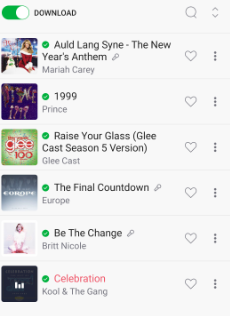
Over the past 15 years, I have played a little Kool and The Gang’s Celebration to kick off summer. I usually do a little dance down the hallway and groove my way out of my classroom. This year, I got up from my kitchen table, closed my computer and walked 3 steps to the kitchen for a glass of water. “Ce-le-brate Good Times Come On!”

The summer is usually a great time to recharge and refresh my energy levels so I go back to teaching pumped up for the new year. This summer is definitely going to be different. There are no triathlons to compete in, no concerts to attend and no weddings to dance at. Although things may look different, I think Dr. Bonnie Henry’s mantra of Be Kind, Be Calm and Be Safe is good advice for this unusual summer.

Be Kind

Be kind as many of us are struggling with mental health.

Be kind to those front-line workers who have been our foundational glue that has kept society running such as grocery store workers, truck drivers and health care professionals. One of my students has only seen her dad for one full day since this all started as he hasn’t had a day off from his job as a truck driver.

Be kind to your neighbors as they might be one of the millions of Canadians who have lost their job and have extreme stress about upcoming bills.

Be Calm

Be calm with members of your community who appear to be not following Covid guidelines. You don’t know what underlying conditions they have that prevent them from wearing a mask.

Be calm with yourself. Slow down, take a moment to breath and give yourself a break from the unbelievably difficult school year you have just completed.

Be calm with your family. Being indoors with the stress of jobs, online learning and the longest winter EVER is enough to raise anyone’s blood pressure. Hopefully, with the beginning of summer and some fresh air there will be a chance to regroup and enjoy time with family again.

Be Safe

Be safe in your home. I have fallen down the stairs twice since this whole thing has started mostly because I was on edge and trying to move too quickly. Slow down and save yourself some bruises.

Be safe in the outdoors. For many of us, this summer will be filled with new activities that we have never tried before. Before you decide to take up downhill mountain biking because pick up basketball games are not allowed, investigate the gear required for this sport and reflect on whether or not the sport it right for you.

Be safe in your community. Continue to social distance, wear masks and meet in small groups. Your actions will save others.


Have a wonderful summer of 2020. Be Kind, Be Calm and Be Safe as who knows what 2020-2021 will bring.

Anti-Black Racism in Education

Over this past year, The Peel District School Board has undergone a review specifically looking at systemic discrimination against our Black students and staff. The review clearly displays that anti-Black racism exists in the Peel District School Board and that there will need to be outcome driven action taken to reduce disproportionately and disparity in the board in many areas. In the report, data was shared that  would be helpful for all educators, administrators and school boards to review as they self reflect on their role in perpetuating anti-Black racism in their class and school board. After I read the review, some questions that I am reflecting upon are:

Student Discipline

Are Black students being suspended at a disproportionate rate?

In Peel, the answer is yes. “Black students are only 10.2% of the secondary school population, but approximately 22.5% of students receiving suspensions.”

How often is the OTH-Other code being used in suspensions?

For those like me, that didn’t know the codes for suspensions as set out by the Ministry of Education, they are:


You will notice at the bottom of the list that there is a code OTH-other. In Peel, this code was used “approximately 78% of the time in secondary suspensions and 40% of the time elementary suspensions”. These are problematic statistics that provoke questions about reasons that students are being suspended.

What board wide or school wide de-escalation protocols are implemented to reduce the number of suspensions?

In the report, there is clearly no board wide strategy that has been implemented to reduce suspensions. One school’s de-escalation strategy that was outlined was to remove oneself from the situation and ask “What is the type of incident? What are the assumptions being made about the student and student’s behaviour? And after walking through the version of events from the teacher’s perspective and student’s perspective, what makes sense?” This simple protocol reduced suspensions in this particular family of schools. Does your school have a process in place that is consistently implemented? Is it communicated well to all staff so that they know how to follow it? Does your board have a de-escalation process in place?

What steps have been taken to reduce implicit bias in staff at your school or in your board?

“Research supports the view that the increased rates of suspension may be the result of implicit biases amongst PDSB faculty who, participants (in the review) told us, viewed Black youths as prone to misbehaviour.”

Pathways and programming Choices

As an intermediate educator, guidance counselor and administrator, are you empowering Black youth and parents to ensure that students are appropriately streamed into high school so that the students can reach their full potential?

Many anecdotal examples were given in the report to indicate concerns about streaming Black students. One Math teacher stated: Do parents and students understand that it may be “better to receive a 60% in academic math than a 90% in applied math because the student’s options for future educational pathways are greater with academic credits”?

Are Black students disproportionately streamed into applied and locally developed courses?

In Peel the answer is yes. “In grade 9 and 10, Black students make up approximately 10.1% of the student population” but they are represented in the courses as follows: “in academic 7.7%, in applied 21.7% and in locally developed credit courses 25.4%.

Are black students disproportionately represented in specialized or regional programs?

Remembering that in Peel, the Black student population is about 10%, this is the representation in our specialized programs:

Curriculum

Does your school or board, embed Black history throughout the entire school year or wait until February?

This was consistently raised as an issue in the report and concerns about content knowledge among teachers was deemed to be part of the problem.

Is the primary focus of Black History taught in your school or classroom American?

I have personally sat through a lot of Martin Luther King Jr. and Rosa Parks presentations in my teaching career and the review confirmed my experiences.

Are achievements of Black Canadians visibly highlighted in the school?

The examples outlined in the report indicates that this is not happening in schools consistently across the board.

Discriminatory Comments and Conduct

Is it policy in your board and school, that both the parents of the child who made the discriminatory comment and the parents of the child who had comments made against them are informed of the incident?

Examples of only the child who made the comment’s family being contacted were presented in the review. The family of the child who had discriminatory comments made against them were often never contacted.

What protocol do you have to address micro-aggressions in your classroom and school?

How do you address the n-word in your classroom and school?

In the review, students shared that the n-word was used often in their classrooms by students and that they often experienced inaction on the part of their teachers.

So I’ve read the Review, now what?

In light of this review and the events of recent months that clearly indicate profound systemic problems in relation to anti-Black racism in Canada, many educators are pushing themselves to be better. A better teacher, A better administrator, A better Canadian, A better colleague, A better friend. They are reading incessantly about white privilege, policing Black bodies, white supremacy and white fragility which is a great start to being self reflective.

To build on this reading, the Kojo Institute’s fall education series might be just be what you are looking for. In the fall, Kike Ojo-Thompson will be leading a three-part session about moving beyond awareness to strategic action that will aim to produce more equitable outcomes for Black students and educators.  The link for registration is here .


My local has worked with Kike Ojo-Thompson to develop a strategic plan going forward. I look forward to sharing my learning throughout this process as we begin to implement action in our local and in our board. I hope to report by this time next year, how we addressed some of the questions listed above and I am sure that as we go deeper, I will have a whole list of new questions.

6 Similes to describe how it felt to teach during COVID 19 Quarantine

Teaching during a quarantine was…

Like meaning with no  I, N or G. It was just mean. There were times when it felt forced, and meaningless because I was trying to make sense out of how to do this when it seemed more about keeping students busy and less about how they were feeling. 

Education during a pandemic was…

Like an infomercial. But wait, there’s more! More to do and definitely more to worry about.  Our students went AWOL – They’d gone absent without learning because they couldn’t connect. Their worlds had been turned upside down, and the one place where they could count on from Monday to Friday had been shuttered and now they were shut out. 

Learning for students during COVID 19 was…
Like making a pizza without a crust – there was nothing to hold all of the ingredients in place for students when life’s bigger problems consumed their ability to learn from home. Students needed their teachers to keep things together when things got tough and the class pizza, with all of its different toppings, got thrown into the oven.

Emergency distance learning was…
Like an ice cream cone with a hole in the bottom – the goodness melted away fast  and ended up on your shirt. Either way what was good couldn’t last long and usually there was something to clean up afterwards. I saw my students trying to make the best out of this mess yet there always seemed to be a scoop of some new flavour that no one wanted being added to the problem of learning outside of the classroom. 

Teaching from home during a shutdown felt…
Like performing a symphony where I had to write the score, conduct, play every instrument, and stack the chairs. There were so many little things that consumed the movements and moments of my day. It felt like I was simultaneously teaching a song to 25 individual performers all locked in their own rehearsal spaces.

Distance learning was…
Like running a marathon for the first time. You knew there was a finish line, but couldn’t remember how far you’d run or where you were going once you hit the wall. There came a point where fatigue set in and I began to doubt why I took this on in the first place? Some students hit the wall after the first day while others lasted until being told that the rest of their year at school was done. Even our strongest learners hit the wall at some point. Despite all of my training as a teacher, the toll that the marathon of teaching from home took on my mind and body was significant. I can only imagine how it affected our students.

I’m tired and a bit broken. The breath was stolen from my body when our students went home on March 13th. None of us imagined that we would be away for so long. I was allowed to visit my empty classroom 3 times since then and still hope that this has all been a bad dream. Walking down an empty hall in an empty school denied it’s life breath of students and their teachers was not how any of us would have wished this time in quarantine to be. 

From the onset and onslaught of learning in quarantine we had to work together, to grow together, and to continue learning together. It took time, patience, and grace. Each moment required a willingness to work meaningfully, to seek out those who had gone AWOL, bake a crust under that pizza, put a marshmallow in that cone to stop the good stuff from dripping out, play music until our fingers ached, and get up the next day ready to run the race again. 

The summer finish line has been crossed. We made it. Now where’s that pizza and ice cream?


Rolling with the Punches

I’m the first person to admit that I don’t like change. I don’t handle it very well and I don’t handle uncertainty well either. I like to have all the information and I like to plan ahead. I know I’m not the only one! This is not the time for people like me. Our world is full of change and uncertainty right now. I’m learning to roll with the punches as we all have been during this pandemic. Almost all aspects of daily life have changed over the past few months. The change hasn’t been limited to our personal lives either, as the world of education has undergone some major changes too. Our jobs have changed drastically and the adaptability of teachers has never been so important.

This week definitely has a feeling of relief to it. I’m going to miss interacting with my students, but after the whirlwind (that’s putting it nicely) of a year we’ve had, I think every teacher is breathing a sigh of relief.

Unfortunately, that sigh of relief might feel very short-lived for a lot of us. There is so much uncertainty in the air about what the future of education looks like. What will September look like? Will we be back in classes as normal? Will we be distance teaching again? Will we be working with a blended model of both? Will we be safe? How are we possibly going to make this work? As much as we all need these answers, we simply don’t have them yet. It’s so easy to get caught up in speculation and worry. Our minds race through “what if” scenarios, which lead us to more and more questions and a lot more anxiety.

Social media can be a dangerous place during uncertain times. People speculate, share hypotheticals, and post their own ideas of needs to happen which can lead to misinformation and overload. Try not to get caught up in all of that.

We’ve worked hard to get to where we are this week. We’ve accomplished what was completely unthinkable up until it became our reality in March. Colleagues, we’ve earned this summer break. We need to honour our own wellbeing this summer. Of course, there are things we can do to prepare ourselves for possible scenarios and teaching models but we would be doing ourselves a disservice to speculate, worry, and try to create answers that simply don’t exist.

Celebrate your accomplishments, reflect on what you’ve learned (I know I’ve learned a lot these past few months!) and take some time to distance yourself from distance learning! Our students deserve refreshed and rejuvenated educators welcoming them in September.

The detailed school reopening plans will come and when they do, we will roll with the punches! That’s what us teachers do best, isn’t? Not to mention that this is a great opportunity to model adaptability for our students and our own children. Even for people like me!


How is bowling like teaching?

Think about a 7-10 split in bowling. You aim right down the middle and knock over all the pins except for the two at the back corners. Happens to me all the time!

“The ball is the lesson, the pins are the kids. We aim for the middle. We do the best we can. The pins that are left standing we often have another chance to kind of get to them, but at the end of the day those two pins that are staring back at you are the kids who need the most support and the kids who need the most challenge. So, we end up choosing one and the other one is left standing.”

Watch below to hear how bowling really is just like teaching, and how a professional bowler can teach us a valuable lesson about inclusive education that you might not have thought about.


Shelley Moore is a teacher, researcher, consultant and storyteller in Vancouver, BC. If you haven’t heard of Shelley yet, then I’m pleased to be the one to introduce you! I was first exposed to Shelley’s online content during a PD session at my board and have since found her analogies, knowledge and passion to be extremely valuable for my own growth as an educator. Her research and work has been featured at national and international conferences and is constructed based on theory and effective practices of inclusion, special education, curriculum and teacher professional development.

For teachers both new and seasoned, Shelley offers video content as well as other online learning opportunities that are sure to bend the way you think and open your eyes to things you may not have thought of before. If you enjoyed this analogy, wait until you hear her use baked potatoes to explore scaffolding complexity. You’ll probably laugh along the way, too.

I hope you spend a few minutes checking out some of her content! I just couldn’t keep this fresh, entertaining and helpful resource to myself. You can follow Shelley Moore’s channel called Five Moore Minutes on Youtube, as @tweetsomemoore on Twitter, or at www.fivemooreminutes.com .