Teaching dance and health online, yikes!

Happy week after spring break everyone!

Is anyone else feeling super impressed with their students and their ability to get right back into things after a week-long break? I have never been able to say that before so I thought I may as well express these feelings of joy while I can.

As we get closer to the end of our school year, I am quickly compiling numerous tables with expectations, activities and number of periods needed for each subject. Since I have such an engaged group, I want to cover as much as I can so they are ready for their grade eight year. I think I’ve had about ten nightmares related to teaching dance and health since I started my online journey in September. I knew I wanted to start them sooner rather than later so we had time for more relaxed subjects in June. 

So, Tuesday our first day back this week, we started dance and I was overwhelmed with the amount of participation. I wanted to keep things manageable so I started with this specific expectation:

  • Exploring cultural forms, specifically, looking at the evolution of dance over time.

We watched an eight minute long YouTube video called “The Evolution of Dance”. Using what students saw in that video as well as researching on their own, students posted sticky notes on our jamboard link, sharing anywhere from 50-60 different styles of dance. We started in the 1950s and went all the way to present day. One student went so far as to share a comment about how nowadays, dances become popular overnight due to trends set by “celebrities” on tiktok. This app allows a worldwide stage for new and viral dances. This was such a great connection and was something we were going to address the following class. I was very nervous to teach dance, but I am glad I started with some discussions and video sharing. I have never taught this topic and was unsure of how to get a group of 33 grade seven students to dance, but I was able to see such engaging conversations take off around the evolution of dance. An engaging lesson for any who are skeptical about this hard to each subject (especially in a virtual space).

I am also gearing up to teach the health curriculum for the first time in my career. We were asked to send a letter home to parents where it outlines the expectations we will be covering. We also made parents aware of the exemption form that they would be required to fill out if they are requesting an exemption (as per board policy). These are the topics that I will be teaching this year to the grade seven students:

  • Describing the dangers associated with computers/social media and identify protective responses 
  • Demonstrate an understanding of the link between mental health problems and substance use 
  • Explaining the importance of having a shared conversation with a partner about delaying sexual activity until they are older  
  • Understanding consent and the importance of communication 
  • Identifying sexually transmitted, blood-borne infections and describe their symptoms   
  • Identifying ways of preventing infections and unplanned pregnancy 
  • Mental Health Literacy  
  • Substance use, addition and related behaviours 

 The following resources will be used to assist in the delivery of this unit: 

  • Ontario Curriculum sample questions  
  • OPHEA guidelines

We will also be able to attend a lunch and learn for more information as well as hear more about these topics at our staff meeting. For a teacher who has never taught health, never talked about these topics in an online setting and never met their students, it can be quite an intimidating subject. However, I know these topics are very important to talk about and my students are well versed in the importance of learning sensitive things, especially in today’s society. I am hoping I will be able to cover these to the best of my abilities and I look forward to reading the OPHEA resources before doing so. 

If any teachers have tips/tricks for dance and health, I am all ears! For now, these are my go to plans for the two subjects. As for the other subjects I still need to cover, even though they have their challenges, are pieces of cake compared to the unfamiliar dance and health!

Enjoy your weekends everyone and hang in there, we almost made it through this wild and unique year! 
 

Who benefits from Hybrid Online Learning?

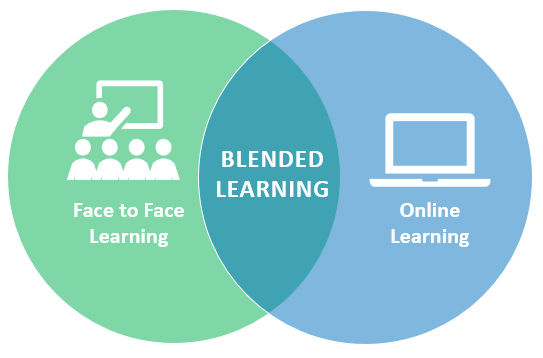
Blended Learning


Who benefits from Hybrid Learning?

ETFO’s position on in-person learning remains unchanged. The union firmly believes that the daily, in-person model of instruction and support best meets the educational, developmental and social needs of students, provides the best experience for support, and is the most equitable learning model for all students. ETFO’s expectation is that elementary virtual learning in any capacity, including through hybrid models of instruction, will end once the pandemic ends.

There has been an ongoing discussion about the possibility of sustaining online learning after the pandemic ends. In addition, there is a possibility that teachers may be online in the fall of 2021. I recently wrote a blog about the pros and cons to online learning which you can access HERE.

I’m currently in my 7th month of teaching using the hybrid online learning model – i.e. teaching students synchronously both in class and online. I’ve been successful in supporting my students’ learning through much cognitive and physical juggling. With my own money, I had to purchase several items to supplement my online learning instruction. I also had to adapt my in-class pedagogy to fit the online students’ needs. In supporting students learning from home, I’ve been making deliveries of classwork materials to the students’ houses!

As I’ve written in another blog, online learning has a particular ecology to it as it differs in space and time to in class learning. I find that time passes more slowly online as each minute counts. In class, students and teachers spend a great deal of time interacting socially with each other within the process of learning. Online, social interactions are limited, leaving behind much of the human part of learning.

Experience with Online Instruction

To put my comments into context, I’ve done a great deal of learning online via many additional teacher qualifications. I have even written an eLearning online course. As an adult, asynchronous learning works best for me as I can choose the time and place to learn. I also do not have to sit for a long period of time and can take breaks as needed.

With synchronous learning, students must sit in front of a computer for hours at a time … which is particularly difficult for those who like to move while they learn.

Cameras On or Off?

Some teachers INSIST that students keep their cameras on so the teacher can see the student sitting in front of their computer. I allow my students to decide whether they will have their cameras on or off. Just because a student is sitting in front of their computer does not ensure that they are attending to the teacher. From a professional point of view, I prefer the cameras off as I do not want to invade my students’ privacy AND the meeting streams better without the cameras on!

Who benefits from the hybrid model of online learning?

Based on my experience, I find that the hybrid model does not benefit either my online students or my in class students. My online students only experience half of what is happening in our classroom as they miss out on the hands-on activities – this is particularly important in learning math concepts with physical math manipulatives. The online students also miss the social aspect of being in school with no chance to socialize with their peers during collaborative class work and lunch and recess.

In class students also miss out in a hybrid environment as the teacher must adapt lessons to meet the needs of online students. This means less hands-on activities and less inquiries that need a collaborative setting.

There are also several equity issues that include access to technology and the reliability of internet services. Further, teachers wonder what constitutes online attendance in class and who is completing the class work. These are issues that could be considered in separate blogs so I will stop the discussion here.

Teacher Burnout

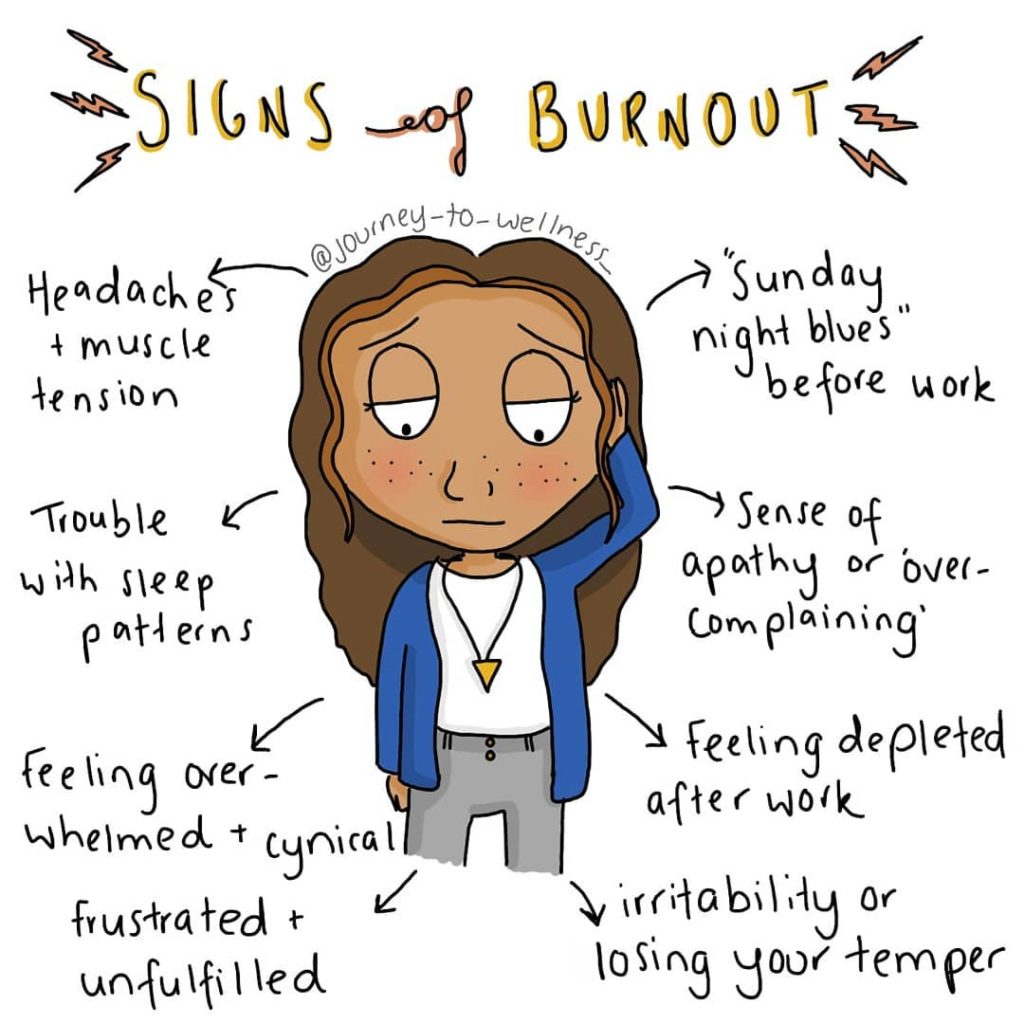
Teachers certainly do not benefit from the hybrid model as it is very taxing on their executive function  – they must juggle the competing agendas of online student needs, in class student needs, lesson planning, answering phones, taking attendance, lesson materials, and teaching curriculum. Ultimately, it is much harder to assess students’ understanding of curriculum through a computer screen. This multitasking leads to teacher burnout.

The hybrid model is not an effective format to meet the learning needs of students or the instructional needs of teachers.

So, who benefits from teaching via the hybrid model? Boards of education and ministries of education benefit because it is cheaper to run programs through the hybrid model. It is a cheaper version of educating students.

It comes down to $$$$.

Think about this.

Collaboratively Yours,

Deb Weston, PhD


“How can I help?”

The adage of “If you want something done right, do it yourself,” was ingrained in me at an early age.  Until recently, I have always thought that being confident, capable and successful meant never asking for help.  I used to think that asking for help meant that you were weak.  I now think that asking for help is incredibly brave.  My 17 year old son recently told me about a group chat with his workmates.  Someone at work had sent an urgent message to the group asking how to do something while closing up the restaurant.  Many of the coworkers poked fun at the lack of knowledge of the person seeking help.  My son (brace yourself for this proud Mama Bear moment) texted that it was really brave of his co-worker to ask for help and provided the information that the coworker needed to close up for the night. I think that his act demonstrated wisdom an empathy far beyond his years.

Have you ever felt a little territorial or protective about your ideas or lessons in your classroom?  I imagine everyone likes to be valued for their unique talents and abilities.  In general, I don’t think anyone likes to be seen to be struggling and consequently, some teachers might choose to work in isolation. Perhaps it is fear. I’ve spoken to many colleagues who have identified as suffering from imposter syndrome. Perhaps those of us who have experienced imposter syndrome think that if anyone else got eyes on what we do every day that we would be judged and found to be lacking in some way.  Often teachers will tell me that they don’t have time to share with their colleagues-there just isn’t enough time in the day to collaborate. With the busy pace of education, I know that I have absolutely felt that way. My experience has been that when I take the time to collaborate with others I in fact, have more time and consequently better programming.  It is a concerted effort and takes a trusting relationship to co-plan and co-teach but when it works, it is amazing.

In my role as an instructional leadership consultant I am responsible for two portfolios; Innovation and Technology and the New Teacher Induction Program.  At the beginning of the COVID pandemic as teachers were teaching virtually for the first time, some had never used things like Google apps, FlipGrid and Kahoot. I was doing my best to support teachers with tools for teaching online.  Thankfully, I knew some other teachers that I could reach out to and ask for help.  These teachers, close to the beginning of their careers, were using these tools in the classroom and were able to help design and present webinars to other more seasoned colleagues.  As teachers, we often think that we need to have all of the answers for our students and with one another.  I’ve heard it referred to as the “Sage on the Stage Syndrome.” We seem to feel that we need to stay ahead of everything, which is impossible.  Education is changing more rapidly than ever.  I learned so much from my colleagues over the months that we worked together as a team and even though it was stressful at times, it was also incredibly fun.  I look back now on the powerful outreach our work had and the gratitude that was expressed by our colleagues and I am so glad that I got over myself and asked for help.

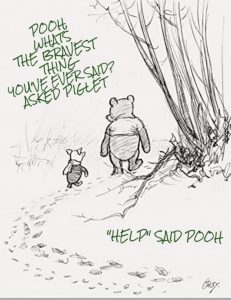
In the t.v. drama “New Amsterdam” whenever the new director of the hospital is introduced to someone, the first question that he asks is, “How can I help?”  It happens in the first episode about twenty times. This was a BIG a-ha moment for me.  What a powerful question!  How often have we wanted our students to ask for help?  How often have they refused when we have asked “Can I help you?”or “Do you need help?”  Unfortunately, asking for help is still seen as a weakness by many people.  However the question “How can I help?” turns it around so that the responsibility and focus is on the person offering assistance.  It is more difficult for someone to just say “No.” to this question.  It can help to create psychological safety in order to focus on what can be done to help rather than someone sitting in discomfort or shame because they won’t ask for help.  Sometimes just asking can make all the difference to someone when they are feeling overwhelmed, even if they decline the offer.  The four small words, “How can I help?” can make a powerful impact.  Sometimes, asking for help is the bravest thing you can do.

Online Instruction of Students with Learning Disabilities

ETFO’s position on in-person learning remains unchanged. The union firmly believes that the daily, in-person model of instruction and support best meets the educational, developmental and social needs of students, provides the best experience for support, and is the most equitable learning model for all students. ETFO’s expectation is that elementary virtual learning in any capacity, including through hybrid models of instruction, will end once the pandemic ends.

Since March of 2020, I’ve been teaching students with learning disabilities in an online environment. I’ve been wondering how well the online learning environment supports the needs of students with learning disabilities.

As a special education teacher of a contained learning disability classroom, this has been a question that’s been tricky to answer. In addition, I’ve got “skin in the game” as I also have a learning disability and can place myself in my students’ shoes.

As with all debates, there are always two sides and I’ll try to capture the main points of each side.

Online learning supports students with learning disabilities

As online learning is technology based, students can access their tools of technology by using talking word processing and many applications that support their lack of phonemic awareness and reading ability in writing and comprehension. My students seemed to thrive in this area as online learning promoted their use of technology to complete assignments. In addition, the forum also allowed them to explore new ways to present their work that did not focus on text.

For my students, some thrived as they preferred working on their own or collaborating via video with another student. One student stated that they would like to learn online all the time. Note that this student had excellent learning skills and support at home. I had my doubts as they would have missed developing the skills needed to work with others face to face. I felt that the student was missing the opportunity to develop the critical soft skills such as collaborating with peers and in building the essential friendships students need as they grow into adults.

Online learning does not support students with learning disabilities

Although I only have a small sample size of students in which to reflect on this statement, I will summarize what I noticed in this last year.

Students with learning disabilities need a great deal of teacher support to develop their reading and writing skills in order to eventually thrive in a mainstream classroom. The challenge with online instruction is that students must have some level of independence to complete work. Further, their teacher must be able to assess when to support the student and when to let the student work alone.

In Vygotsky’s Zone of Proximal Development, teachers must provide just enough support to let the student learn on their own without getting frustrated. As a teacher, teaching online, I was challenged by finding this golden spot as I could not use my senses to determine where the student was in their learning. As learning is linked to emotion, I use my senses and empathy to determine students’ level of success or frustration. Without being able to access this skill through a video link, I noted that students became increasingly frustrated before I was able to sense their distress. This is never good as students usually shut down at this point. This is where learning stops.

During online video lessons, I also noted that students with attention deficits had a great challenge attending to lessons. Often, this resulted in me calling their name several times. In a classroom, when watching students, I can redirect those who are off task. Despite presenting my very interesting online lessons, several students became disengaged. This was especially true for students with learning profiles that were tactile in nature.

Further, online learning does not provide the many accommodations needed to support students’ learning needs. Some feedback from students noted “I need to move around when I learn”, “I like to work beside my friend so we can help each other”, “I prefer doing work with a pencil instead of typing things” and “I really need to go for a walk right now.”

Online learning needs and skills specific to students’ profiles

Success in online learning depends on support from home, adequate technology, and students with good learning skills. Due to managing multiple agenda’s, parents are not always able to support their child online. This includes literally sitting beside their child to help them attend to online lessons. Many students lack adequate technology and/or reliable internet access leaving them at a disadvantage to their more resourced peers. Further, not all students have the learning skills to successfully attend and complete work online, instead needing another person to support them in their work. I’ve included a list of considerations to be made when making decisions to learn online.

Students with learning disabilities may consider online learning if they:

    • are able to follow written and/or verbal instructions effectively
    • enjoy working at their own pace
    • are able to work independently
    • are able to interact with peers and the teacher in a positive way
    • have good online manners
    • are able to communicate and ask questions when they don’t understand an assignment or directions
    • are able to start a task with confidence
    • have parental support
    • have adequate technology and internet to support learning online
    • have adequate executive function to attend to online lessons
    • have adequate self control to not play games or watch videos while online lessons are occurring
    • get one-on-one time with their teacher to support learning on an individual basis

Students should consider not participating in online learning if they:

    • need significant instructional support from teachers and/or educational assistants
    • have challenges attending to lessons online
    • need support to follow through and complete assignments
    • lack adequate support at home to stay focused
    • have challenges negotiating the online environment (i.e. finding assignments, resources, etc)
    • lack support at home (i.e. help with homework & completing class work)
    • have poor learning skills
    • enjoy the social part of school and working with others
    • are behind in multiple high school credits

8 Proven Ways to Overcome Teacher Burnout and Love Teaching Again | Prodigy Education

Teaching online is draining

From a teacher’s point of view, I found teaching online extremely draining. It did not help that at several points in the pandemic, I was teaching synchronously online and in class using the hybrid model. Without being able to use my intuition and empathy to read my students needs and feelings, I felt blind. I was only left with my visual and audio senses which became taxed very quickly.

In online learning, teachers must attend to all students, all at the same time. In an in class environment, teachers can focus on one student at a time, while others work on assigned tasks. With my students online, there were simply too many things to attend to … leaving me little energy to focus on specific individual students’ needs.

Online learning does not support the needs of most students with learning disabilities

In the end, I strongly believe that students who have learning disabilities MUST be taught in an in class environment. This means that teachers can assess, if and when students need support. Further, in class instruction allows teachers to assess and focus specifically on what one student needs to support their learning.

In this pandemic, online learning has been a stop gap to provide students with a classroom environment that is just a hint of what happens in an in class environment. Online learning does not promote collaboration and the occasions to play and interact with other students. It lacks the fundamental need, of students, for opportunities to build social skills and make friends. And I believe these skills are what make us most human.

Collaboratively Yours,

Deb Weston, PhD

Spring Break Plans

Happy beginning of a well deserved break to everyone! There are many things to celebrate at a time where things are still looking grim in Ontario. Teachers may have found out their jobs for September and are excited to be heading back to their home school or for some of us, the physical classroom! We can also celebrate being on a week long break from planning, teaching and asking “Can you see my screen?” multiple times in one day.

Today in my class, we came up with some ideas for a fun and safe spring break! I apologize that I am sending them at the end of the day but here’s hoping you can post them on your class website or even just try them with your own family.  Here is the list of some grade seven generated fun spring break ideas:

Outdoor Activities:

  • Walks around the neighbourhood
  • Sports
  • Play with pet outside 
  • Go to the park
  • Bike rides
  • Play on your trampoline
  • Walk to a nearby food place (Times, Wendy’s, Dairy Queen and more!)
  • Trampoline 
  • Practice a sport that you play but may have forgotten about 
  • Bike rides 
  • Visit the park 
  • Go to the skatepark in your area 
  • Do some physical activities outside (if allowed)
  • Ride a skateboard
  • Ride a scooter
  • Walk around the survey
  • Chalk, skip rope

Inside:

  • Baking 
  • Ask a family member to teach you a new cooking recipe 
  • Draw
  • FaceTime friends
  • Play board games with your family
  • exercise (not fun but something to do
  • Watch movies
  • Watch shows
  • Clean your room/ house
  • do chores
  • online shop
  • Make a routine
  • Make a to do list
  • Video games with friends
  • Indoor sport activities (mini versions of the sport ex: basketball, hockey, etc.)
  • Organize your room (get your summer clothes out)
  • Help siblings clean their rooms 
  • Draw a specific item by the end of Spring Break 
    • Try your best to draw that item and do it well 
  • Visit SORA (online reading app) and try to finish that book by the end of Spring Break
  • Watch TV (but get a screen break)
  • Paint a place you want to be/wish existed
  • Create your own cartoon character and add a back story to it
    • Get clay and you can create it 3D 
  • Give yourself a theme for the day and you can only wear that or shop for things that colour 
  • Create a new toy
  • Make decorations for your room 
  • Play Roblox
  • Make rings, bracelets
  • Bake or cook to try to learn more and get better
  • Learn how to do embroidery
  • Cooking
  • Making slime!
  • Colour
  • Watch a movie with your family/friends/anyone else
  • Play game boards
  • riddles/jokes
  • If not then do those activities inside in a open space (if you have)
  • Try cooking if not then try helping your mom out with cooking
  • Draw anything or paint or do it digitally
  • Maybe make a journal or calendar to organize yourself during the break
  • Try spending time with fam/siblings

These grade seven ideas are from 15 minutes of sharing so imagine what they could have come up with if they were given a full period! I hope you can try these out and focus on some positive activities. I know we all wish we were away on a beach somewhere but this will have to do for now. For me, I will be doing some landscaping in my backyard and going on some walks.

Stay safe everyone and enjoy the well deserved break!

“Breathe-in experience, breathe-out poetry.” M. Rukeyser

April is National Poetry Month.

During this challenging year, poetry has supported critical and courageous conversations, offered some comfort and hope, while honouring pain and anger. Here are some examples of what this work has looked like and sounded like in our Grade 2 classroom:

Igniting the Spark: Amanda Gorman
The whole world was inspired by the poetry and brilliance of Amanda Gorman in January 2021. Her poem, “The Hill We Climb” filled us with light during this time of “never-ending shade”. Her story about overcoming a speech impairment reminded us all to believe in ourselves and find our voice. I shared her poem and her TEDTalk with my students, and she was the spark for our inquiry about the power and possibilities of poetry.

Power Poems for Small Humans:
I have reached for poems during difficult times when I could not find the words to express my feelings. Jillian Christmas is a Vancouver-based slam-poet, who is an organizer and activist in the arts community. I have shared her poem, “On Honouring Anger” in response to racial violence and injustice that continues to impact students, staff and families, and requires educators to take action.

This poem, and other powerful voices can be found in an anthology called “Power Poems for Small Humans”, published by Flamingo Rampant. Flamingo Rampant is a micro-press that publishes children’s books that center and celebrate stories of kids taking action, disability pride, 2SLGBTQ+ voices, racial justice and more. Please check out their website and bring their books into your classroom library!

Yesterday, I Had The Blues:
When we were learning remotely, I used the Poll feature on ZOOM to check-in with students. One day, the question was: “How are you feeling today? Choose a colour to describe how you are feeling.” Students were invited to analyse the data, and share why they chose the colour. Then, we talked about different ways that people experience colour. We listened to the story, “Yesterday, I Had the Blues” by Jeron Ashford Frame, and made text-to-self connections.

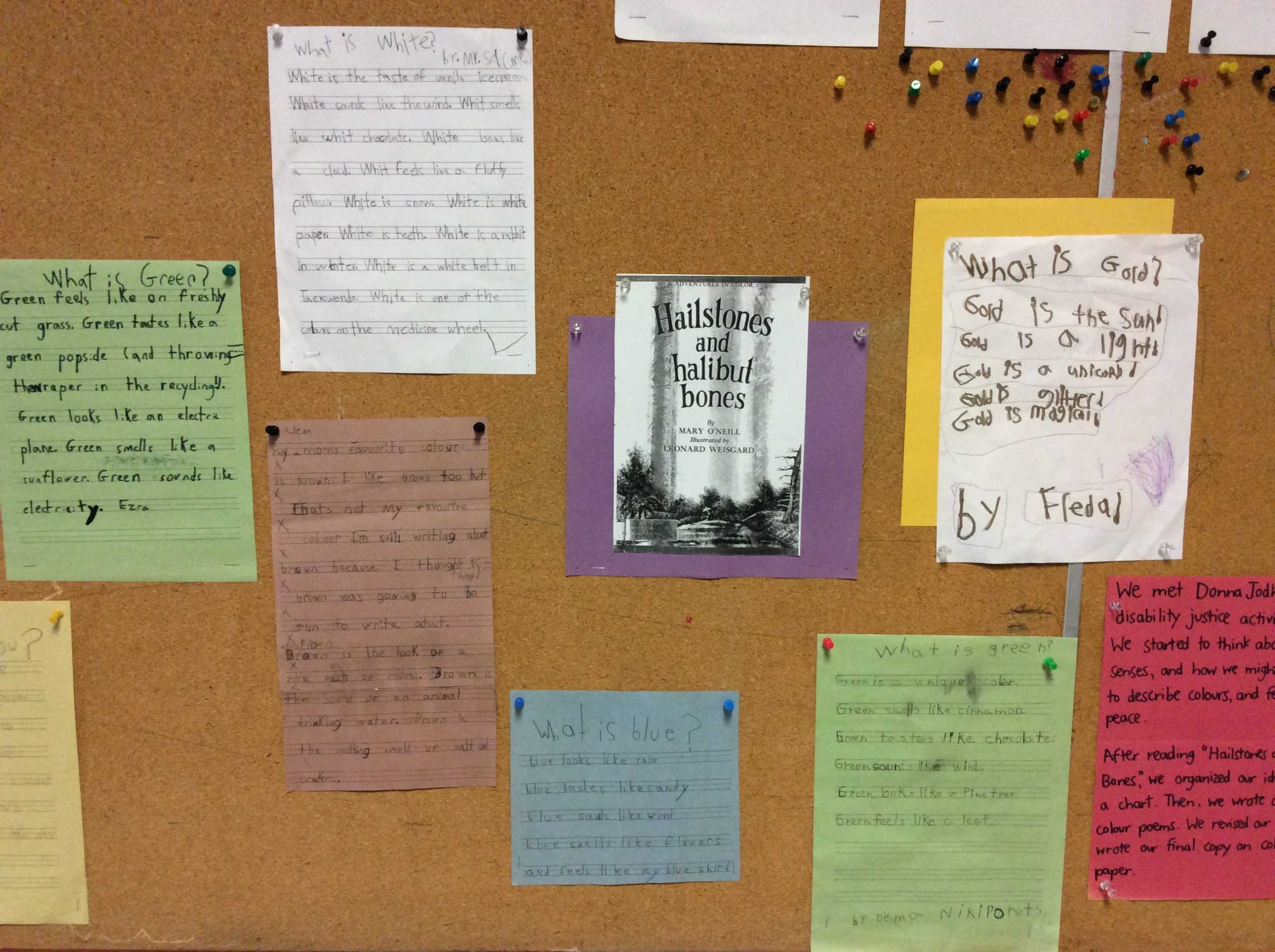
Next, we read selected poems from “Hailstones and Halibut Bones” by Mary O’Neill. I love this book, but it is important to preview the poems, because there is one poem that uses outdated language, and needs to be unpacked or revised. Each poem begins with the same question, (e.g. What is Orange?) and uses the five senses to describe colour in poetic ways. I created a graphic organizer, and students were invited to write their own Colour Poems.

Pink!
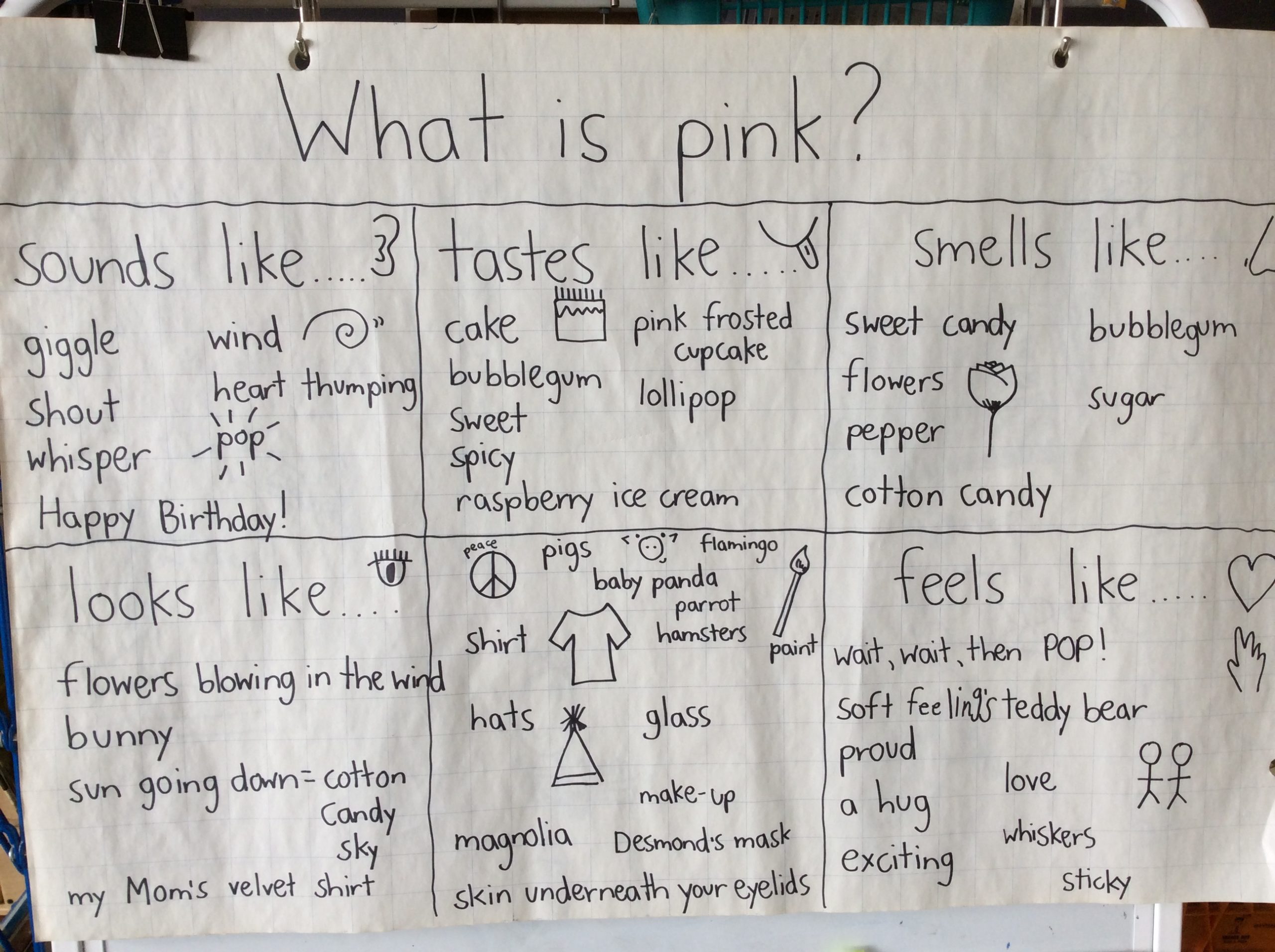
On the International Day of Pink, we had a discussion about how some people think that pink is a “girl’s colour.” We talked about where these ideas come from, and how these gender rules might make people feel excluded. We created a poster using post-it notes to capture our ideas, in the style of a JAMBoard. Then, we wrote our own “What is Pink?” poems and displayed them in the hallway. 


Quick as a Cricket:
After reading, “Quick as a Cricket” by Audrey Wood, students wrote poems using the template, “I’m as ____________as a ___________.” This was a fun and accessible way to learn about the poetic device of similes. A simile compares two different things using “like” or “as” in an interesting or unexpected way.

Gratitude Poems:
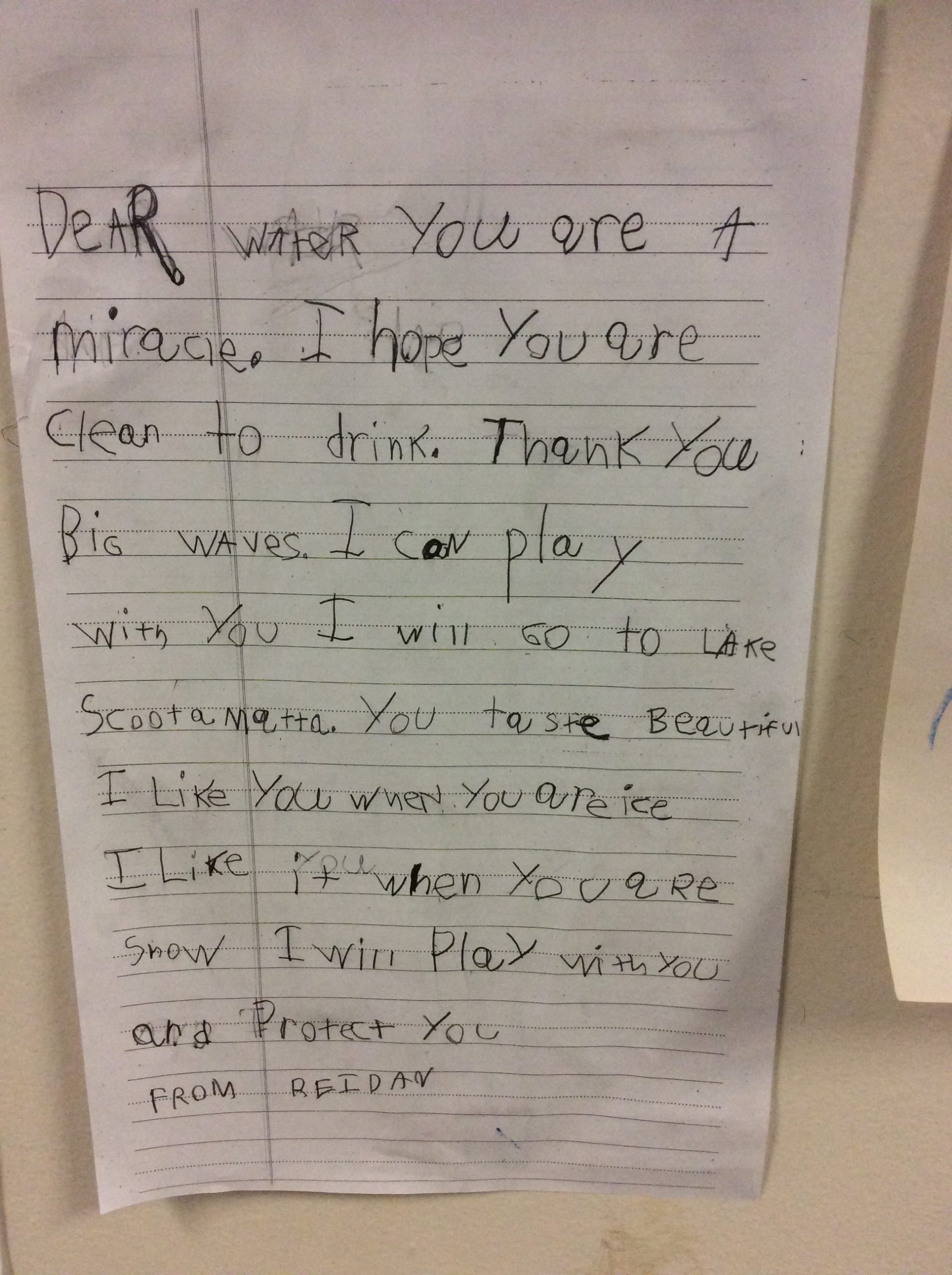
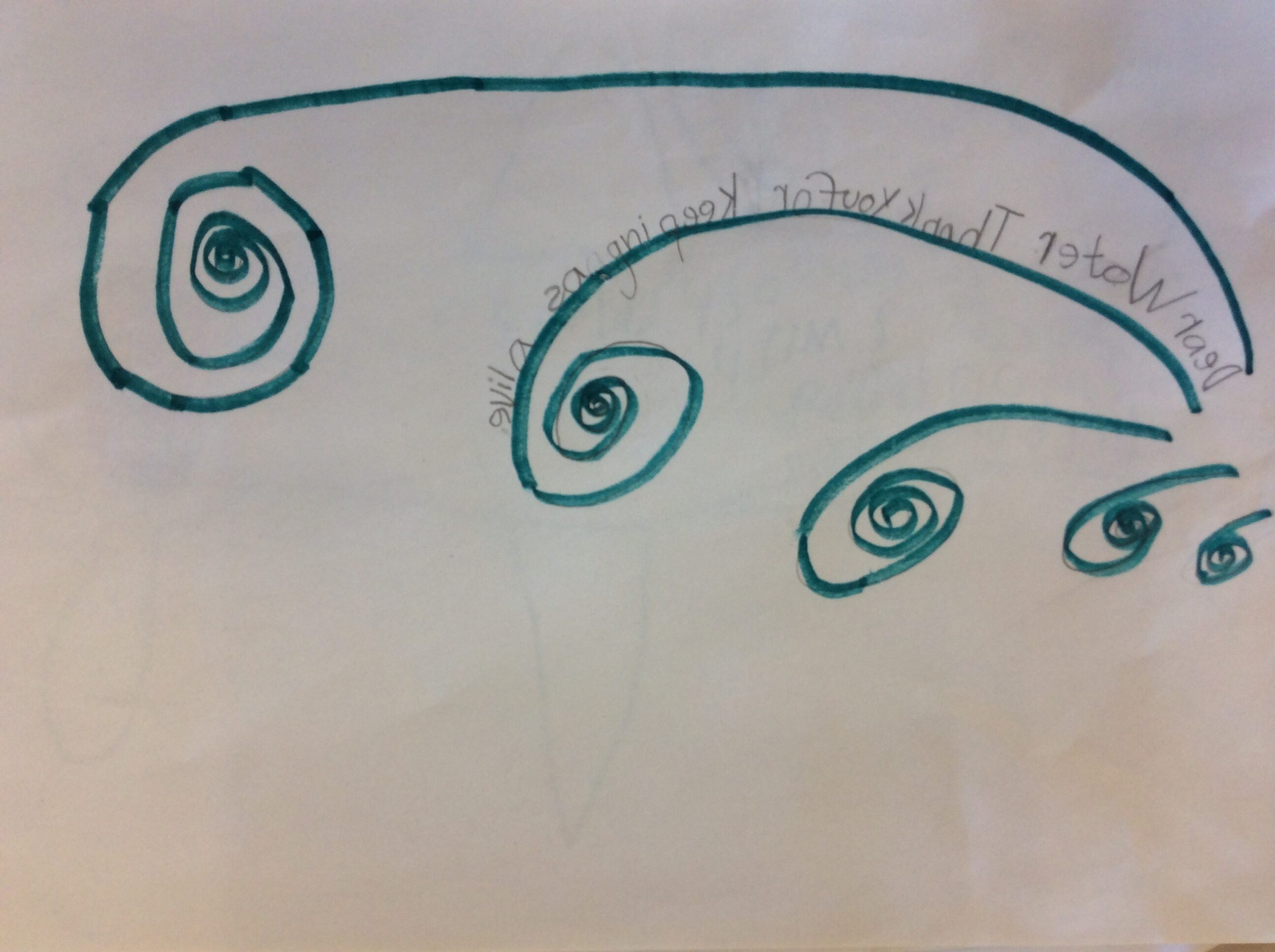
After reading several poems from a collection called “ThankU: Poems of Gratitude”, we wrote our own “Dear Water,” poems. Students used the following sentence prompts to write a letter to our relative: “I love….I think….I will….I hope….You are….” On World Water Day, we read our letters to each other in the Rainbow Garden and talked about what we value, and how we might protect water. 


Splish! Splash! Splat!
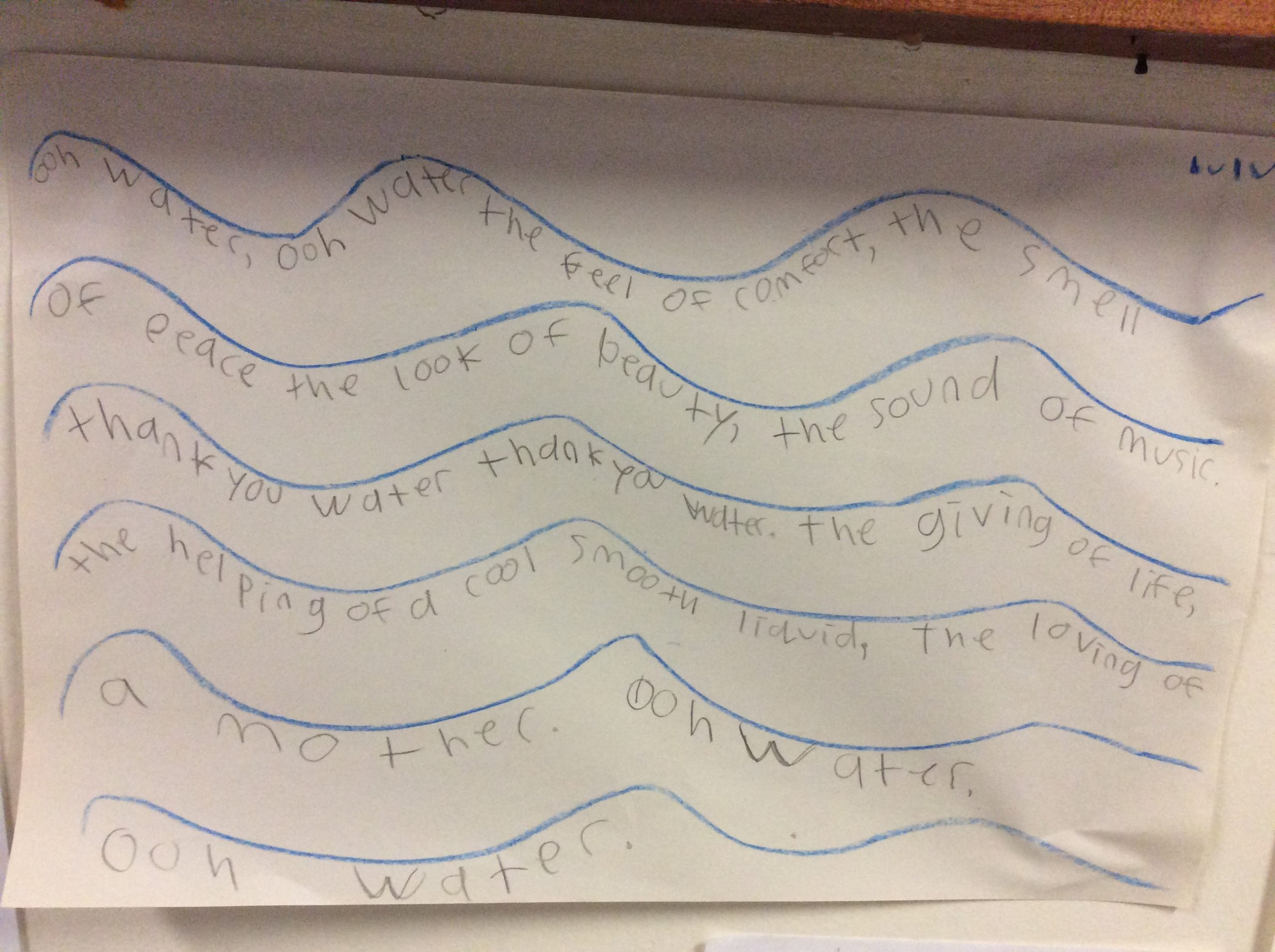
One rainy day, we brainstormed different sounds that water makes. Then, we learned about Concrete poems, which are poems that take the shape of the subject that they are describing. Students chose a shape and wrote a poem about water. 


Respond and Rebuild:
We will continue to explore poetry, self-expression and identity by writing an “I am Me….” poem. This lesson plan is from www.welcomingschools.org and can also be found in ETFO’s newest resource, Respond and Rebuild CRRP Lesson Plans. I am looking forward to integrating movement and choral reading to this work.

What are your favourite poems or poets to explore in the classroom?


Attitude of Gratitude

I don't have to chase extraordinary moments to find happiness -- it's right in front of me if I'm paying attention and practicing gratitude.

Many years ago I remember watching a gratitude themed Oprah episode.  There was a gratitude journal that the guest had developed and was relaying all of the benefits of writing down things that you were grateful for each day.  The power of suggestion (I’m a sucker for an impulse buy for self-improvement) lead me to the nearest Chapters to purchase one of those journals that weekend.  I certainly didn’t fill that journal. I think I lost interest in a couple of months because it felt as though I was writing the same thing over and over again.  I realize now that gratitude, like mindfulness and meditation, is a “practice.”

Gratitude practice is most effective when life is rough.  It sounds counterintuitive.  It is much easier to be grateful when things are going well right?  Easy to “count your blessings” when you are sitting on a beach in a resort in the Dominican Republic.  I personally feel the power of the gratitude practice when life isn’t going according to plan.  Though, I want to be clear here, there is a fine line between true gratitude practice and “looking on the bright side” or “finding the silver lining.”  That bright-side-silver-lining thinking can border on toxic positivity which isn’t helpful.

Gratitude practice means different things to different people.  For me, it is connected to daily journaling.  Each night since the fall I have been writing about my day in terms of gratitude before going to bed. Some nights I might write for 5 minutes.  Some nights I write for a half hour.  It might read something like, “I’m grateful that we got outside for a walk, that my son felt good about his essay after all of the struggles and tears, that we were able to eat a healthy meal, for Hello Fresh being delivered to my door and for the opportunity to reach out and connect to some new teachers through professional learning today.”  I try to reflect on the events of my day in terms of gratitude.  I could write in my journal that the technology in my professional learning session that day was glitchy, we got off to a rocky start trying to get everyone into the WebEx room, and there were links that didn’t work even though I had tested them twice. Instead, I choose to be grateful for the connection and discussion that I had with the teachers that day.  It isn’t that I ignore that bad things happen or think about how things can be improved, but ruminating on the bad things that happened during the day right before going to bed isn’t going to ensure much of a restful sleep.

In some of the professional learning opportunities that I have recently hosted with new teachers we have discussed the struggles of the current climate in the classroom.  It is important to have a safe place for teachers to voice those concerns and have someone listen with compassion and empathy and ask curious questions.  I will often say that there are many things that I can’t help them with, but that I am there to “embrace the suck” with them.   At the conclusion of those discussions my final question is always, “What is a recent personal or professional success that you’ve experienced that you would like to share with the group?”  This ends the discussion on a note of gratitude. It is SO easy to get caught up in venting and complaining about the situation in education right now. Teaching it is NOT an easy job on any given day but the difficulties have grown exponentially with the pressures that COVID has added.  So when we can take a moment to remember why we continue to go to work each day, why we got into the job in the first place and what our recent wins have been, I think it brings a feeling of hope.

Sometimes I practice gratitude in a less formal way that is more like mindfulness.  Recently while walking on a treed trail on a bright, sunny, winter day with my best friend, I stopped mid sentence and just looked around at the beauty.  I said to my friend, “I just had to take a minute to take this in.  We are so fortunate to be able to walk here.”  It only took a moment.  I don’t do that all of the time, we’d never get anywhere on our walks! However, remembering to do it every so often helps me to deal with stress and the bad things when they do happen.  If in the moment of a stressful situation I can take a moment to breathe and practice gratitude it sometimes keeps the emotions from escalating.  When conversing with someone who is frustrated and perhaps complaining or lashing out I try to remember that this person is doing the best they can at that moment and that each opportunity to interact with someone who is suffering is a chance to learn and I try to be grateful for that.  Author Andrea Owen in her book, “How to Stop Feeling Like Sh*t” would call it an AFOG-another flipping opportunity for growth.  When I remember to think about gratitude in a not so great moment, I might do it raised shoulders and through gritted teeth, but I keep trying.  It is, after all a practice.

“If the opposite of scarcity is enough, then practicing gratitude is how we acknowledge that there’s enough and that we’re enough.” -Brene Brown