Blog

Why It’s Time to End Publicly Funded Catholic Schools

school

What is the purpose of publicly funded schools?

According to the publication, Good Governance: A Guide for Trustees, School Boards, Directors of Education and Communities, the purpose of publicly funded Ontario schools is to “provide universally accessible education for all students, regardless of their ethnic, racial, or cultural backgrounds; social or economic status; gender; individual exceptionality; or religious preference.”

Further to this, Good Governance goes on to state that “English and French public systems are founded on the principle of equality of educational opportunity: every student deserves an opportunity to achieve to his or her fullest potential.”

How many school districts are publicly funded?

The Education Act provides for the establishment of four types of district school board systems in Ontario. Even though all schools districts do not have the “public” label, all four district school board systems are publicly funded.

According to Ontario Government in 2015-2015 (same numbers as 2013-2014) school board data:

48% Public School Boards (for 69 % of Ontario’s population)

  • 31 English Public School Boards
  • 4 French Public School Boards)

52% Catholic School Boards (for 31% of Ontario’s population)

  • 29 English Catholic School Boards
  • 8 French Catholic School Boards

According to the Statistics Canada 2011 Ontario data, Roman Catholics represented 3,948,975 out of 12,651,790 people or 31.2% of Ontario’s population (down from 34.3% Roman Catholic in 2001) with 69% of Ontario’s population identifying as non-Roman Catholic. This is evidence that students who identify as non-Roman Catholics attend publicly funded Catholic schools. According to Kelly Gallagher-Mackay, Toronto Star reporter, 8% of students attending Catholic schools are not Catholic.

Why does Ontario have so many school boards?

In 1867, the British North America Act (BNA) constituted funding for French and English schools as well as Protestant and Roman Catholic schools up to grade 10. In 1867, the majority of Upper Canada’s (now Ontario) population were Anglo-Protestant. The BNA mandated standardization and public funding for education. As Ontario’s populations grew, Protestant schools became more secular. Sometime in the mid 1970’s, as a student, I no longer had to repeat the Lord’s Prayer every morning. In 1989, required recitation of the Lord’s Prayer was held in violation of Canada’s Charter of Rights and Freedoms. Thus Protestant French and English public schools became French and English public schools with no religious affiliation. In 1984, Ontario’s Premier, William Davis, extended full funding for all secondary grades.

What’s the issue with publicly funded Catholic schools?

In 2012, Ontario’s Drummond Commission examined the reform of Ontario’s public services, which included education. The report identified areas of overlap and duplication (which could save taxpayer’s dollars) within Ontario’s four schools systems but did not ever consider the idea of ending public funding of the Catholic school system. According to the Federation of Urban Neighbourhoods (2012), the reduction in multiple boards would reduce duplication, busing, and capital funding saving the Ontario government between $1.2 and $1.6 billion annually. In the 1990s, Quebec and Newfoundland ended funding of denominational, religious-based schools. But funding of Ontario’s Roman Catholic school system has been considered a constitutional obligation and a really big political football. Note that Jewish, Muslim, and non-Catholic Christian schools are currently not publicly funded.

Why public funding of Catholic schools is unfair?

Right to refuse admission – Even though Ontario’s Catholic schools are publically funded, they have the right to refuse admission to non-Catholic students until grade 9. But with declining enrollment, non-Catholic students are being admitted. My own children attended a Catholic elementary school and had several non-Catholic, (Muslim and Hindu) students in their class. As a middle school teacher, pressure was put upon me to give grade 8 students all “Good and Excellent” learning skills on report cards as parents were told that the local Catholic high school would not take students with “Satisfactory and Needs Improvement” learning skills.

Admission of “preferred” students – According to Kelly Gallagher-Mackay (Toronto Star), research from Scott Davies at the Ontario Institute of Studies in Education showed that children attending Catholic schools are more likely to have parents with post-secondary educations. Further, EQAO data shows GTA Catholic school boards have fewer students with special education needs and significantly fewer students whose first language is not English as compared to English public schools. As a Special Education teacher, in a contained class, I have direct knowledge of Catholic students (who regularly attended Catholic church) being denied access to their local Catholic school as the school “could not accommodate the students due to their special education needs”. Based on my own anecdotal observations in three schools in which I taught multiple grades, the number of students with special education needs is increasing, every year, as a percentage of overall classroom composition.

Lack of acceptance of student diversity – Some Catholic schools ban student funding and clubs were they are “directly or indirectly” inconsistent with Catholic teachings. This means no student funding for the United Way which funds Planned Parenthood or students running Gay Straight Alliance clubs that embrace LGBTQ2S student identities. I’ve also been told that teachers who identify as LGBTQ2S are told to keep quiet about their identity.

Right to refuse employment to non-Catholic teachers – Even though Ontario’s Catholic schools are publicly funded, they have a right to refuse employment to non-Catholic teachers. This means that a large majority of non-Catholic teachers are ineligible for permanent teaching positions, advancement, or promotion. This also means that the non-Catholic students attending Catholic publicly funded schools do not have teachers who represent their religion. Further to this, sectarian Catholic education (Catholic religion classes) is not mandatory.

When my children went to the local Catholic public school, as a parent, I had to produce baptismal certificates for both children.  But as enrollment decreased, more non-Catholic students were admitted to the school. As a former Catholic, I was denied access to employment with the Catholic boards as I had to produce a letter from a priest, stating that I attended a Catholic church.

The current public funding of schools in Ontario does not honour the purpose to “provide universally accessible education for all students, regardless of their ethnic, racial, or cultural backgrounds; social or economic status; gender; individual exceptionality; or religious preference.”

Maybe we should draw school boundaries based on local neighbourhoods, instead of religion. Ontario could also consider having drawing lines in having a French and English only boards.

With Ontario’s great diversity of students from multiple backgrounds and religions, it’s time to make all of Ontario’s publically funded schools secular.

Collaboratively Yours,

Deb Weston

References

Drummond Commission Report (2012) Downloaded from https://www.fin.gov.on.ca/en/reformcommission/

Federation of Urban Neighbourhoods (2012) Downloaded from https://urbanneighbourhoods.files.wordpress.com/2010/11/ingsfromthemergerofontariopublicandseparateschoolsystems.pdf

Good Governance: A Guide for Trustees, School Boards, Directors of Education and Communities © 2014 Ontario School Trustees Downloaded from http://cge.ontarioschooltrustees.org/en/an-overview-of-ontarios-publicly-funded-education-system.html

OneSchoolSystem.org Downloaded from http://www.oneschoolsystem.org/fast-facts.html

Statistics Canada (2011) Downloaded from http://www12.statcan.gc.ca/nhs-enm/2011/dp-pd/dt-td/Rp-eng.cfm?TABID=2&LANG=E&APATH=3&DETAIL=0&DIM=0&FL=A&FREE=0&GC=0&GK=0&GRP=0&PID=105399&PRID=0&PTYPE=105277&S=0&SHOWALL=0&SUB=0&Temporal=2013&THEME=95&VID=0&VNAMEE=&VNAMEF=

Kelly Gallagher-Mackay, Toronto Star, (Tuesday, March 13, 2018) Must end publically funded schooling in Ont. Downloaded from https://www.pressreader.com/canada/toronto-star/20180313/281754154841725


Know Your Responsibilities Dealing with Safety in Learning Environments

school-safety-clipart-1

As teachers, it is our responsibility to keep our students safe at school. I tell my students that keeping them safe is my first job as their teacher. My second job is to teach them something. As a teacher, knowing your rights and responsibilities in the teaching profession is key to protecting yourself and your students. Below is a a short summary of highlighting areas that I thought would be relevant to new teachers. In the endeavor to be accurate, I decided to copy sections from the advisory instead of paraphrasing. Please refer to the Ontario College of Teachers’ document, Professional Advisory on Safe Learning Environments 2013 for further details.

Professional Advisory on Safe Learning Environments 2013

(The Council of the Ontario College of Teachers approved this professional advisory on April 4, 2013.)

INTRODUCTION (as per OCT): When student safety and well-being are involved, teachers’ “foresight, knowledge and professional judgment are essential … Recognizing student vulnerability and acting to mitigate it is a teacher’s professional responsibility”.

ETHICAL UNDERPINNINGS (as per OCT): The Ontario College of Teacher’s Ethical Standards for the Teaching Profession and the Standards of Practice for the Teaching Profession state that the ethical standard “principle of care holds that members express their commitment to students’ well-being and learning through positive influence, professional judgment and empathy in practice.”

LEGAL IMPLICATIONS (as per OCT): Relevant legislation, policies, standards and guidelines for legal implications include the Child and Family Services Act and the Occupational Health and Safety Act. “For example, under the Child and Family Services Act, OCT members are obligated to report any suspicions to a children’s aid society that a child is or may be in need of protection. The obligation to report directly is on the individual — teachers cannot rely on another person to report on their behalf.”

DISCIPLINARY IMPLICATIONS (as per OCT) : “The responsibility of Ontario Certified Teachers for student safety extends to their treatment of students during daily interactions. Not following the advice contained in the professional advisory could lead to issues of professional misconduct.”

ADVICE TO MEMBERS: MINIMIZE THE RISKS (as per OCT) :  See document, Professional Advisory on Safe Learning Environments 2013, for further details.

KNOW YOUR PROFESSIONAL RESPONSIBILITIES (as per OCT): “Ontario Certified Teachers have a professional responsibility through due diligence to safeguard and educate students who have been placed under their care. Jointly with school administrators and key stakeholders, teachers are responsible for creating safe and healthy instructional settings integrating hazard identification, assessing the risks and controlling the situation in all aspects of the facility. Due diligence refers to taking every precaution reasonable in the circumstances to avoid injuries.”


A FRAMEWORK FOR DEALING WITH SAFETY IN LEARNING ENVIRONMENTS (as per OCT)


RECOGNIZE, REPORT AND REFLECT (as per OCT)

Recognize: that incidents involving student safety generally occur when teachers least expect them.

Report: Following a safety-related incident, report the incident and actions you have taken to your direct supervisor and to appropriate health and safety representatives.

Reflect on the incident:

  • What happened?
  • Was my reaction appropriate? Yes/No. In what way?
  • Was my conduct in keeping with the ethical standards of my profession (care, respect, trust and integrity)?
  • Was my conduct in keeping with the standard of commitment to students and student learning?
  • Do I review safety instructions and procedures regularly and make improvements, as needed?
  • What could or would I do differently if faced with another similar situation?
  • Do I know how to recognize an unsafe situation and where can I go to better prepare or access additional training?
  • What have I learned from this experience?
  • Would others benefit from what I have learned and how can I share this information?

ACT PROFESSIONALLY (as per OCT): Know your obligations, Talk with other professionals, Regard your own professional development as a personal responsibility.  See document, Professional Advisory on Safe Learning Environments 2013, for further details.

Ontario Certified Teachers should be able to say with confidence (as per OCT):

  • My actions show that I treat students with care, respect, trust, and integrity.
  • I am aware of the legal parameters that guide my professional practice.
  • I am familiar with my school/employer’s policies and emergency procedures regarding student safety.
  • I reflect on past occurrences, monitor ongoing situations, and prepare for the unexpected.

As a teacher, I know my first priority is to keep my students safe. For students, school should be a safe place to learn without verbal, physical, psychological, emotional and/or sexual harm. While ensuring a safe learning school environment, it protects both students and teachers.

To protect yourself and your students, know your rights and responsibilities.

Collaboratively Yours,

Deb Weston

Professional Advisory on Safe Learning Environments 2013

Recognizing and Responding to Mental Health Problems Among Students

Supporting Minds

SupportingMinds

An Educator’s Guide to Promoting Students’ Mental Health and Well-being

Government of Ontario Draft 2013

Note that dealing with mental health problems among students is highly complex and challenging. Often students are not responsive to using mindfulness and self-regulation strategies as their significant mental health needs require the support of professionals such as doctors, psychologists, and therapists. Educators cannot diagnose mental health issues.

As stated below, educators can support their students by observing and documenting possible triggers and behaviours.

How to Use Supporting Minds Document

The Supporting Minds document is presented in two parts.

Part One provides an overview of mental health and addiction problems and guidance about the role of educators in supporting students’ mental health and well-being.

Part Two contains eight sections, each dedicated to a particular mental health problem. Each section is structured to first provide educators the information they need to recognize mental health problems in their students and offer appropriate support (under such headings as “What Is Depression?”, “What Do Symptoms of Depression Look Like?”, and “What Can Educators Do?”). Background information about the particular type of mental health problem is given towards the end of each section. Hyperlinks to resources that provide more detailed information are included throughout.

Please refer to the Supporting Minds document for more in depth information.

Knowing Your Students

A first step in recognizing whether a student has a mental health problem may be simply documenting the behaviour that is causing concern. School boards may have their own forms on which to record this information. Once several observations of the particular behaviour have been gathered, educators can share these with others who can help to develop a plan to manage the behaviour.

Educators should look for three things when considering whether a student is struggling with a mental health and/or addiction problem:

  • Frequency: How often does the student exhibit the behaviour?
  • Duration: How long does the behaviour last?
  • Intensity: To what extent does the behaviour interfere with the student’s social and academic functioning?

Highlighted Mental Health Challenges

1. Anxiety in Students

 COMMON SIGNS OF ANXIETY

Although different signs of anxiety occur at different ages, in general, common signs include the following. The student:

  • has frequent absences from school;
  • asks to be excused from making presentations in class;
  • shows a decline in grades;
  • is unable to work to expectations;
  • refuses to join or participate in social activities;
  • avoids school events or parties;
  • exhibits panicky crying or freezing tantrums and/or clingy behaviour before or after an activity or social situation (e.g., recess, a class activity);
  • worries constantly before an event or activity, asking questions such as “What if …?” without feeling reassured by the answers;
  • often spends time alone, or has few friends;
  • has great difficulty making friends;
  • has physical complaints (e.g., stomach-aches) that are not clearly attributable to a physical health condition;
  • worries excessively about things like homework or grades or everyday routines;
  • has frequent bouts of tears;
  • is easily frustrated;
  • is extremely quiet or shy;
  • fears new situations;
  • avoids social situations for fear of negative evaluations by others (e.g., fear of being laughed at);
  • has dysfunctional social behaviours;
  • is rejected by peers.

(Based on information from: CYMHIN-MAD, 2011; Hincks-Dellcrest-ABCs, n.d.) Note: This list provides some examples but is not exhaustive and should not be used for diagnostic purposes.

 STRATEGIES TO REDUCE STRESS FOR ALL STUDENTS

  • Create a learning environment where mistakes are viewed as a natural part of the learning process.
  • Provide predictable schedules and routines in the classroom.
  • Provide advance warning of changes in routine.
  • Provide simple relaxation exercises that involve the whole class.
  • Encourage students to take small steps towards accomplishing a feared task.

(Based on information from: CYMHIN-MAD, 2011; Hincks-Dellcrest-ABCs, n.d.)

See Supporting Minds document Table 1.1 for Specific strategies for supporting students with anxiety-related symptoms

2. Depression in Students

 COMMON SIGNS OF DEPRESSION

Some common signs associated with depression include the following:

  • ongoing sadness
  • irritable or cranky mood
  • annoyance about or overreaction to minor difficulties or disappointments
  • loss of interest/pleasure in activities that the student normally enjoys
  • feelings of hopelessness
  • fatigue/lack of energy
  • low self-esteem or a negative self-image
  • feelings of worthlessness or guilt
  • difficulty thinking, concentrating, making decisions, or remembering
  • difficulty completing tasks (e.g., homework)
  • difficulty commencing tasks and staying on task, or refusal to attempt tasks
  • defiant or disruptive behaviour; getting into arguments
  • disproportionate worry over little things
  • feelings of being agitated or angry
  • restlessness; behaviour that is distracting to other students
  • negative talk about the future
  • excessive crying over relatively small things
  • frequent complaints of aches and pains (e.g., stomach-aches and headaches)
  • spending time alone/reduced social interaction; withdrawn behaviour and difficulty sustaining friendships
  • remaining in the back of the classroom and not participating
  • refusal to do school work, and general non-compliance with rules
  • negative responses to questions about not working (e.g., “I don’t know”; “It’s not important”; “No one cares, anyway”)
  • arriving late or skipping school; irregular attendance
  • declining marks
  • suicidal thoughts, attempts, or acts
  • change in appetite
  • loss of weight or increase in weight
  • difficulty sleeping (e.g., getting to sleep, staying asleep)

(Based on information from: Calear, 2012; CYMHIN-MAD, 2011; APA, 2000; Hincks-Dellcrest-ABCs, n.d.) Note: This list provides some examples of symptoms or signs but is not exhaustive and should not be used for diagnostic purposes.

 STRATEGIES THAT CAN HELP ALL STUDENTS DEVELOP AND MAINTAIN A POSITIVE OUTLOOK

  • Support class-wide use of coping strategies and problem-solving skills.
  • Provide all students with information about normal growth and development and ways to cope with stress (e.g., ways to address peer pressure, build friendships, address depressive feelings, maintain good sleep hygiene, build exercise into each day).
  • Write instructions on the board to provide a visual cue for students who are having trouble focusing on spoken information.
  • Model and teach optimistic and positive attitudes, language, and actions.
  • Work with students’ strengths and build on them when they complete activities in class.
  • Provide students with responsibilities and tasks that they may enjoy (e.g., allow students who enjoy computer use to incorporate a computing component into tasks; allow art-loving students to choose illustrated reading materials).
  • Provide a space in the classroom for students to go to when they are feeling overwhelmed.
  • Help students to chunk assignments and prepare for tests well in advance of deadlines.

(Based on information from: Evans et al., 2002; Hincks-Dellcrest-ABCs, n.d.)

See Supporting Minds document Table 2.1 for Specific strategies for supporting students with depression-related symptoms

 3. Bipolar Disorder in Students

 COMMON SIGNS OF BIPOLAR DISORDER

Some common signs to watch for include the following:

  • extremely abnormal mood states (generally lasting weeks or more) and involving a depressed or manic mood
  • depressive symptoms (see the section on depression)
  • manic symptoms, including:
  • feeling extraordinarily self-confident, in a manner that is out of character for the student
  • extreme irritability or changeable, “up and down” (labile) moods that are not typical for the student
  • grandiose and illogical ideas about personal abilities (e.g., the student believes he/she has supernatural powers)
  • extremely impaired judgement compared to usual ability
  • a perception that thoughts are racing
  • extreme changes in speech, particularly very fast speech or talking as if he/she can’t get the words out fast enough
  • explosive, lengthy, and often destructive rages that are out of character for the student
  • new or marked hyperactivity, agitation, and distractibility
  • “dare-devil”, risk-taking behaviour

(Based on information from: CYMHIN-MAD, 2011) Note: This list provides some examples but is not exhaustive and should not be used for diagnostic purposes.

In addition, the cognitive functioning of students with diagnosed bipolar disorder may be affected, so that they have difficulty:

  • paying attention;
  • remembering and recalling information;
  • using problem-solving skills;
  • using critical thinking skills and categorizing and organizing information;
  • quickly coordinating eye-hand movements;
  • staying focused on a topic.

See Supporting Minds document Table 2.2 for Specific strategies for supporting students diagnosed with bipolar disorder

 4. Students with Attention and Hyperactivity and/or Impulsivity Problems

SUBTYPES OF Attention Deficit Hyperactivity Disorder

The following three subtypes of ADHD have been identified:

(1) predominantly inattentive (without symptoms of hyperactivity/impulsivity)

(2) predominantly hyperactive/impulsive (without symptoms of inattention)

(3) predominantly combined (symptoms of both inattention and hyperactivity/ impulsivity)

 (Eiraldi et al., 2012). The combined type (inattention and hyperactivity/impulsivity) is the most common of the three. (Based on information from: APA, 2000)

 COMMON SIGNS OF ATTENTION DISORDERS

Some common signs of attention problems and/or hyperactivity/impulsivity include the following:

Attention problems: The student:

  • is easily distracted;
  • fails to pay attention to details and makes careless mistakes;
  • forgets things (e.g., pencils) that are needed to complete a task;
  • loses things often;
  • has difficulty organizing tasks;
  • finds it hard to concentrate;
  • follows directions incompletely or improperly;
  • frequently doesn’t finish tasks;
  • does not listen to what is being said when spoken to;
  • avoids or shows strong dislike for schoolwork or homework that requires sustained mental effort (dedicated thinking).

(Based on information from: CYMHIN-MAD, 2011; APA, 2000; CAMH, 2007)

Hyperactivity/Impulsivity: The student:

  • has difficulty sitting still or remaining in seat;
  • fidgets;
  • has difficulty staying in one place;
  • talks excessively or all the time;
  • is overly active, which may disturb peers or family members;
  • has difficulty playing quietly;
  • is always on the move;
  • has feelings of restlessness (for adolescents);
  • is unable to suppress impulses such as making inappropriate comments;
  • interrupts conversations;
  • shouts out answers before the end of the question or without being called on;
  • hits others;
  • has difficulty waiting for a turn;
  • is easily frustrated;
  • displays poor judgement.

(Based on information from: CYMHIN-MAD, 2011; APA, 2000; CAMH, 2007) Note: This list provides some examples but is not exhaustive and should not be used for diagnostic purposes.

 STRATEGIES THAT PROMOTE A CALM CLASSROOM ATMOSPHERE TO HELP ALL STUDENTS PAY ATTENTION

  • Provide a structured environment and a consistent daily routine.
  • Provide advance warning of changes in routines or activities.
  • Establish a routine and set of rules for moving from one activity to the next.
  • Establish procedures that allow all students equal opportunities to participate in activities (e.g., establish rules for turn taking; arrange for everyone to get a chance to be first).
  • Provide easy-to-follow directions and instructions (e.g., explain one step at a time; chunk multi-step directions).
  • Post rules where everyone can see them.
  • Reinforce positive behaviour such as raising a hand before speaking, engaging in quiet work.
  • Provide opportunities to learn by doing to give students an outlet for excess energy.
  • Limit visual and auditory distractions in the classroom as much as possible while considering the needs of all students.
  • When talking to students, address them directly and use eye contact. Wait until a student is paying attention before continuing a conversation.
  • Avoid a focus on competition, as students’ urge to win or be first can increase the likelihood of impulsive behaviour.

(Based on information from: House, 2002; CAMH, 2007)

See Supporting Minds document Table 3.1 for Specific strategies for supporting students with attention and hyperactivity/impulsivity problem

5. Behaviour Disorder in Students

 COMMON SIGNS OF BEHAVIOUR DISORDERS

Some common indicators of problem behaviour include the following:

  • defiance (persistent stubbornness; resistance to following directions; unwillingness to compromise, give in, or negotiate)
  • persistent testing of limits (by ignoring, arguing, not accepting blame)
  • persistent hostile mood
  • lack of empathy, guilt, or remorse, and a tendency to blame others for his/her own mistakes
  • low self-esteem that may masquerade as “toughness”
  • acting aggressively
  • disobedience
  • oppositional behaviour (e.g., challenging or arguing with authority figures)
  • bullying, threatening, or intimidating others
  • initiating fights or displaying physical violence/cruelty
  • using weapons
  • stealing
  • deliberate destruction of property
  • frequent lying
  • serious violations of rules (e.g., in early adolescents, staying out late when forbidden to do so)
  • skipping school often
  • outbursts of anger, low tolerance for frustration, irritability
  • recklessness; risk-taking acts

Signs that the problem may be serious include the following:

  • The student shows problems with behaviour for several months, is repeatedly disobedient, talks back, or is physically aggressive.
  • The behaviour is out of the ordinary and is a serious violation of the accepted rules in the family and community (e.g., vandalism, theft, violence).
  • The behaviour goes far beyond childish mischief or adolescent rebelliousness.
  • The behaviour is not simply a reaction to something stressful that is happening in the student’s life (e.g., widespread crime in the community, poverty).

(Based on information from: APA, 2000; CPRF, 2005; Hincks-Dellcrest-ABCs, n.d.) Note: These lists provide some examples but are not exhaustive and should not be used for diagnostic purposes.

 STRATEGIES THAT PROMOTE POSITIVE BEHAVIOUR AMONG ALL STUDENTS

  • Provide predictable schedules and routines in the classroom.
  • Focus the students’ attention before starting the lesson.
  • Use direct instruction to clarify what will be happening.
  • Model the quiet, respectful behaviour students are expected to demonstrate.
  • Create an inviting classroom environment that may include a quiet space, with few distractions, to which a student can retreat.
  • Be aware of the range of needs of the students in the class in order to provide an appropriate level of stimulation.
  • Communicate expectations clearly and enforce them consistently. Use clear statements when speaking to students: “I expect you to …” or “I want you to…”.
  • Focus on appropriate behaviour. Use rules that describe the behaviour you want, not the behaviour you are discouraging (e.g., Instead of saying “No fighting”, say “Settle conflicts appropriately”).
  • At the beginning of the school year, clearly and simply define expectations for honesty, responsibility, and accountability at school. Repeat these expectations often to the entire class, especially when violations occur.
  • Don’t focus too much attention on children who blame others, since that might inadvertently reinforce the behaviour.
  • Begin each day with a clean slate.
  • Facilitate the transition from the playground to the classroom by calmly telling students when there are five minutes left and then one minute left in recess, encouraging them to prepare to come in, and helping them settle in class when recess is over. Schedule a predictable classroom activity that most students will enjoy to follow recess, to help provide a smooth transition.

(Based on information from: CYMHIN-MAD, 2011; Hincks-Dellcrest-ABCs, n.d; Lee, 2012)

See document Table 4.1 for Specific strategies for supporting students with behavioural problems in classrooms

 Please see the Supporting Minds  document for further information on 

  • Eating and weight-related problems in students
  • Substance use problems in students
  • Gambling in students
  • Self-harm and suicide in students

Taking care of self as an educator

(Supporting Minds, Appendix C: Mental Health Action Signs)

Your behavioural health is an important part of your physical health. If you are experiencing any of these feelings, let your doctor know.

  1. Feeling very sad or withdrawn for more than 2 weeks
  2. Seriously trying to harm or kill yourself, or making plans to do so
  3. Sudden overwhelming fear for no reason, sometimes with a racing heart or fast breathing
  4. Involvement in many fights, using a weapon, or wanting to badly hurt others
  5. Severe out-of-control behaviour that can hurt yourself or others
  6. Not eating, throwing up, or using laxatives to make yourself lose weight
  7. Intense worries or fears that get in the way of your daily activities
  8. Extreme difficulty in concentrating or staying still that puts you in physical danger or causes school failure
  9. Repeated use of drugs or alcohol
  10. Severe mood swings that cause problems in relationships
  11. Drastic changes in your behaviour or personality

Source: The Reach Institute, The “Action Signs” Project, p. 6. Retrieved from http://www.thereachinstitute.org/files/documents/action-signs-toolkit-final.pdf

Dealing with students with mental health needs can be very challenging and draining.

Be kind to yourself and practice self care.

Reach out for help and support if you need it.

Collaboratively Yours,

Deb Weston

 

Gender Equity in 2018


women-clipart-at-work-6

The Canadian Charter of Rights and Freedoms outlines what gender equity should look like … but do women really have gender equity in 2018?

In education and workplace participation, gender equity has made some strides.

  • in 2015, women are almost as likely to have a high school (82.5% women vs. 89.3% men) or university degree (83.1% women vs. 89.9% men)
  • in 2015, 77.5% of women were employed compared to 85.3% of men, up from 21.6% in 1950 and 65.2% in 1983
  • in 2015, women are more likely to be away from work (30.0% women vs. 23.9% men) and more likely to be away for a full week of work (38.4% women vs. 24.8% men)
  • in 2015, women are more likely to work part-time (18.9% women vs. 5.5% men)
  • in 2015, women are more likely to do volunteer work (67.2% women vs. 53.0% men)
  • In 1976 – men had higher levels of employment based on the marital status
    • 1976 men – 78.0 % employed single/never married, 92.7% employed married/common-law, and 82.3% employed separated/divorced/widowed
  • In 2015 – women employment rates of women no longer differ based on marital status
    • 1976 women – 79.4% employed single/never married, 44.6% employed married/common-law, and 59.2% employed separated/divorced/widowed

Nevertheless, challenges remain:

Too few women are advancing into leadership roles.

  • Women make up just 21.6% of Financial Post 500* board member (2016)

Women are under-represented in politics in 2015.

  • 26% of those elected to the 42nd Parliament are women
  • women made up 28% of municipal councillors and only 18% of mayors

Women continue to be responsible for the majority of care giving and household unpaid work.

  • women vs. men still spend (25.7 hrs/week) more time caring for their children (in 2010 women 50.1 vs. 24.4 hours/week on unpaid child care)
  • women vs. men are twice as likely to spend more than 10 hours per week unpaid work caring for seniors (49% women vs. 25% men)
  • women vs. men spend 5.5 hours more on housework (13.8 hrs women vs. 8.3 hrs men per week)

Women in the workforce tend to earn less than men.

  • women earn $0.876 for every dollar men earn, largely as a result of inequity between women and men within occupations (2015)

Women continue to experience high rates of gender-based violence.

  • Women have a 20% higher risk of violent victimization than men (2015)
  • Women account for 87% of victims of sexual offences and 76% of victims of criminal harassment (2015)

Some groups are at particular risk for gender-based violence.

  • 10% of aboriginal women were about three times as likely to report being a victim of spousal violence as 3% of non-Aboriginal women (2015)


How does this impact ETFO members?


As 82% of elementary teachers identify as women, women’s issues directly impact elementary teachers.


  • With too few women (21.6%) in leadership roles, women’s voices are not heard.
  • With under-representation of women in politics, women’s needs and equality are not addressed.
  • With more women spending their time, away from work, on unpaid work (caring for children and seniors, housework, volunteer work) , this unpaid work is not valued.
  • With women taking more time off work than men, this means women pay for higher sick leaves and long term leaves (on a personal note, when my children were young, I used 15 days of vacation days, before teaching, to take care of sick children and had no vacation that year). Again, women’s time at work is not valued as much as men’s time at work – if it was, more men would be taking time off to deal with family responsibilities.

Further, our ETFO colleagues are 20% more likely to be victims of violence than men and 87% of victims of  sexual violence. Our aboriginal ETFO colleagues are 3 times more likely to be victims of spousal violence.

Fortunately, female and male ETFO members are paid equitably based on experience and qualifications.

How do we change this?

  • Advocate for women leaders and leadership
  • Advocate for men to take on more caregiving and household responsibilities
  • Advocate for better, more inexpensive and supplemented childcare
  • Start small by changing attitudes and behaviours of women’s paid and unpaid work
  • Challenge gender stereotypes and subtle sexism encountered every day
  • Challenge sexism and discrimination that allow gender inequality to exist
  • Go for leadership roles and run for office

How can you change this on a personal level?

  • Expect men to take as much responsibility as women to care for children and seniors
  • Expect men to take parental leave so women to go back to work
  • Expect men to take as much responsibility as women for household chores
  • Hire house cleaners to clean your house, even if they clean part of the house
  • Advocate for better, more affordable/supplemented childcare, where the childcare workers are fairly paid


In Canada, gender equity is exists but it’s not completely equal. Let’s hope women can make similar strides in improving stats in leadership, unpaid work, and gender violence that have happened in education and employment. Let’s hope in the next 10 years, the stats noted above will look more equal, more equitable, and less biased towards women.

Happy International Womens’ Day 2018

Collaboratively Yours,

Deb Weston
Interesting Resources:

http://interactive.unwomen.org/multimedia/timeline/womenunite/en/index.html#/1840

http://www.unwomen.org/en/digital-library/multimedia/2018/2/infographic-rural-women

http://interactive.unwomen.org/multimedia/infographic/changingworldofwork/en/index.html

http://www.un.org/en/women/endviolence/

https://kids.britannica.com/kids/article/International-Womens-Day/602161

https://www.teachstarter.com/blog/free-international-womens-day-resources-activities/

https://www.internationalwomensday.com/School-Resources

http://www.caaws.ca/gender-equity-101/what-is-gender-equity/

Sources:

*The Financial Post’s ranking of Canada’s largest companies by revenue.

all data from Stats Canada

http://www.swc-cfc.gc.ca/commemoration/iwd-jif/equality-egalite-en.html

http://www.statcan.gc.ca/pub/89-503-x/2015001/article/14694-eng.htm

http://www.statcan.gc.ca/daily-quotidien/170308/dq170308b-eng.htm

Weston, DPA, 2015. Downloaded from http://hdl.handle.net/10464/6191

Student leadership

As the basketball season is coming to a close for certain age groups, it is nice to reflect on all the individuals that help things run so smoothly. Students from the past and present come together to help make things work. My grade nines came to help ref/scorekeep and some grade eights helped to ref as well.

This year rather than coach the grade 4/5/6 team myself, I had asked two grade eight students to do so. They helped to select the players as well as they run each practice and then lead each game. It is amazing to watch them turn into young adults and so great to watch the grade fours, fives and sixes look up to these two coaches. They hang off of every word they say and really appreciated them being there for them. I was so proud to see all that those grade eights offered their players and how they inspired them to play better.

Today I co-ran a soccer tournament in our school board. My players that won last year came out to ref today along with some other old students. It was awesome to see them running things and helping inspire the younger players to referee in the future. I loved the fact that they were willing to give back to their old school as well as come out even when they had all their volunteer hours already. The kids loved seeing the old students and really appreciated them being there.

When I first started teaching, coaching meant so much to me as it still does. But when you let others help out, especially the students, it feels much better knowing that one day, they may the ones in your shoes. They may be the future coaches and isn’t that all part of the main reason we teach, to inspire future leaders? I love that my current students are already the leaders I had hoped they would turn in to.

Teaching About the Genderbread Person

I’m taking the new ETFO AQ … Teaching LGBTQ Students Additional Qualification Course. I’m learning a great deal about stigma, discrimination, and privilege. PS I’m a LGBTQ2S Ally.

gingerbread-person-orientation1

Genderbread-Person-3.3-HI-RES

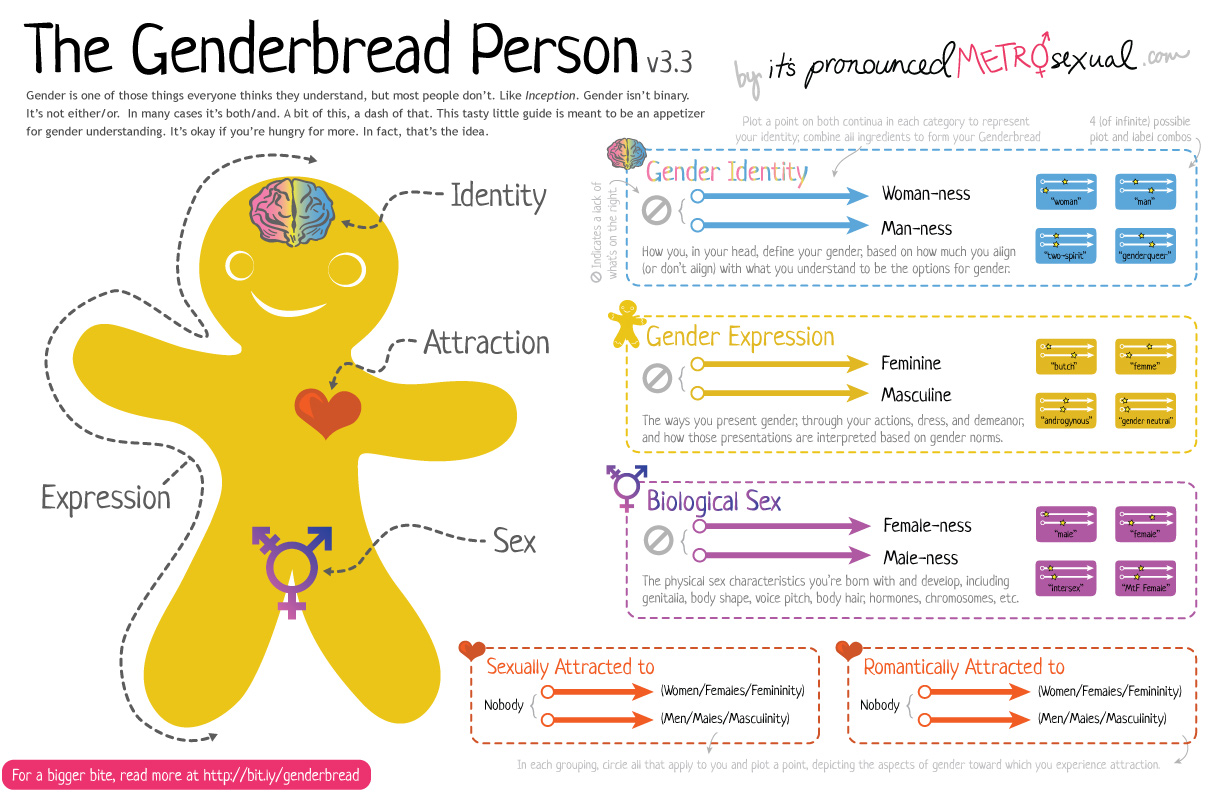
The first day of the course, we discussed the Genderbread Person which really help me understand the diversity in  people, and especially in LGBTQ2S communities. This concept was developed by Sam Killermann. I’ve included several of Sam’s resources below.

Aspects of the Genderbread Person (my understand of the Genderbread Person concept):

Gender Identity deals with how a person thinks about their gender.

Gender Expression deals with how a person presents with regards to gender.

Biological Sex is how male, intersexed, or female a person is born.

Sexual Orientation deals with who a personal is sexually attracted to but no necessarily who they fall in love with. This means that a person may be sexually attracted to another person and want to sleep with them but may or may not be romantically attracted to them.

Romantic Orientation deals with the opposite where a person may be romantically attracted to another person but may or may not to be sexually attracted to them and want to sleep with them.

All of the above occur on a separate continuum. This means Gender Identity, Gender Expression, Biological Sex, Sexual Orientation, and Romantic Orientation are all on a separate continuum. For example a person could identify as male, express themselves as male, be biologically female, have a preference for males both securely and romantically – or in other words, a girl who looks and presents as a boy but still likes to have sex and love boys (based on a real life case).

Remember about 1 in 10 or 10% of our students likely identify as LGBTQ2S so it’s important to understand about the equity issues around the identities. Knowing about LGBTQ2S is not just about celebrating a day of pink, it’s about embracing the issues everyday!

Collaboratively Yours,

Deb Weston

Check out these resources below

Genderbread Personb v3

One Huge Prickly Reason Why Anti-LBTQ Folks Don’t Change Their Views

Let’s Talk About Bathrooms

5 Reasons Why So Many People Believe Feminism Hates Men and Why They’re Not True

Dear White, Straight, Cisgender, Man People: You Are Privileged

Comprehensive* List of LGBTQ+ Vocabulary Definitions

30+ Examples of Cisgender Privilege

Solution for the “Confusing” Gender Neutral Toilet Sign Issue

Video: Understanding the complexity of gender

Video: From Boxes to “-Ness” A Journey Exploring Gender

Video: Social Justice is for Everyone

NEW AQ COURSE! Teaching LGBTQ Students Additional Qualification Course

NEW ETFO AQ COURSE! Teaching LGBTQ Students Additional Qualification Course

flat,800x800,075,f

In the spring 2018 session, ETFO-AQ is launching a new AQ course called Teaching LGBTQ Students. Candidates will critically explore a wide range of pedagogies, resources and supports related to teaching LGBTQ students. Strategies explored will foster a sense of partnership and collaboration with families, school/board personnel and communities. Ongoing critical examination of personal biases, privilege and the importance of allyship will constitute a significant element of this course as candidates engage in various learning experiences and reflect on new learning.

Online registration opens February 5, 2018 and closes 12 noon on March 29, 2018.

For more information, including important dates, visit the ETFO website at etfo-aq.ca. If you have any questions, please contact ETFO-AQ at aqcourses@etfo.org or 1-888-838-3836 extension 3803.

Collaboration Amongst The Grades

Have you ever asked kindergarten students what bugs them? Well, we were on a mission to do just that and I’m pretty amazed by what they have come up with!

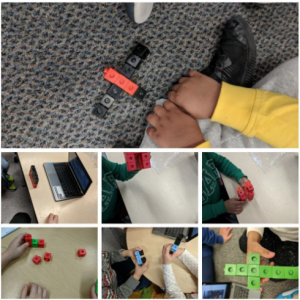
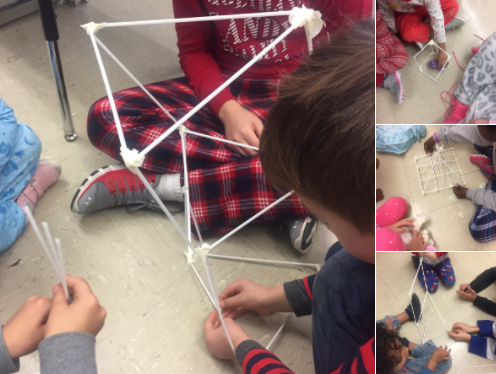
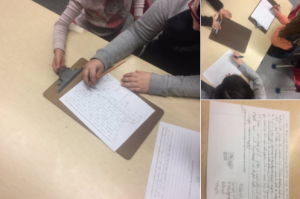
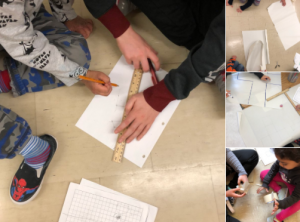
Over the years, my students and I have had the opportunity to work with younger students for Reading Buddies. And while it’s always great to have a chance to read to each other, I wondered if there was something more that could be done in order to foster true collaboration and maybe even a leadership role for my older students.  This year, we partnered with a kindergarten class in the hopes of seeing how we might be able to engage kindergarten students in STEM activities. From building with linking cubes to creating amazing structures with straws, my students have been growing in the area of questioning and documenting the works of their buddies. They’ve learned that kindergarten students can cut in straight lines, given a bit of guidance and that with the right questions, they can have incredibly imaginative conversations.

Kinder2

Kinder3


Using the Engineering Design Process, we are currently working on creating solutions for some of the things that bug them. We started the process with a brainstorming sheet and I should have left the bugs off of the top because it quickly became that the biggest problem were bugs themselves. I need to keep in mind that kindergarten students can be literal. After some discussion, we realized that while there were many who were bugged by bugs, some found it difficult to tie their shoes or carry their backpacks. Others found it a challenge to keep their devices out of the hands of their older siblings and still others found that the blocks in Kindergarten weren’t decorative enough and were way too big.

Kinder6Kinder4Kinder5

Our next step was to use a Design Template to really identify the specifics of the bug and then to work on designing a solution, including a list of materials. After some research with their buddies, this past week, we took some time to create paper prototypes of our solutions to ensure that what we envisioned was something that we might actually be able to bring to life. It was glorious. I asked my students to really take a step back and allow for the kindergarten students to be the lead in building with paper and they rose to the occasion. From asking for rulers to create straight lines to sharing that a cube has 6 faces, the kindergartens were really excited to share what they already knew and weren’t shy to ask for a helping hand when they needed it.

Kinder1Next week we are on to our build and learning about hand tool safety in kindergarten. It’s sure to be a new adventure and I can’t wait to see and share the actual solutions that they create.
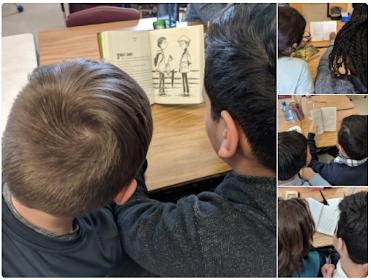
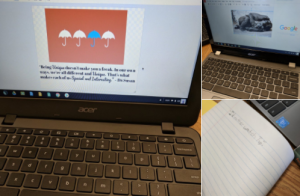
In what ways are you collaborating with others in your building? Is there a way in which you might allow for greater student leadership through a similar partnership? I’m always wondering what educators are doing in their buildings to foster collaboration amongst staff and students. Let’s start a conversation and share ideas here.


Book Clubs and Talks

Over the past month or so, we’ve been on a mission to really identify what we enjoy reading and how we can gain greater meaning or understanding from texts. From character analysis and making connections between events in texts to our lives; to searching for themes that speak to greater societal realities, we’ve been looking at what we are reading in the hopes that they may inspire us towards being better people. Now some of us enjoy light reads that make us laugh and think about ideas that may be totally out of our realm of reality. The beauty in these reads is that they elevate our spirit and increase our imagination, which may be just what we need at that time.

BookTalk1 As we started reading individually and sharing our texts with one another, I realized that there were great conversations and connections being made between texts and lived experiences. Some students found themselves or their friends or family members on the pages of the texts and some found that the scenarios in some texts reminded them of familiar experiences. This made me think of the value that comes from students – or even adults – reading a text together and drawing out some of this work through rich conversations. So this past week, we started book talks.

Students had the opportunity to select from a choice of 5 books that I thought would be of interest to them based on what they were reading over the past month. Having submitted their top 3 book selections, the difficult task was organizing the groups; creating their reading schedule; and determining assignments that might be engaging and promote discussions about the books. The goal is to hopefully have our work completed by the time we start March break so we’ve got 2 weeks to go and things have started off really nicely.

BookTalk2On Day 1, many groups decided to start off with reading and to jump into making predictions through the use of Padlet. They discussed and made inferences based on the blurb, images from the text and what they read in the first few pages and determined what they thought the text would be about and from whose perspective the text may be written. Today, some groups decided to search for a quote that had a deeper meaning that could be applied to our lives while others took some time to visualize the setting and drew a scene. It’s inspiring not only to see students helping each other out with pronouncing and/or making meaning from new or unfamiliar words but there is also a true sense of collaboration as they work understand the text and in the completion of tasks. They may not necessarily be in groups with their friends but they are making new friendships as they work together and learn from and about each other.

Amazingly as I was planning this out for my students and realizing the benefit of having a community of readers collaborating to learn together, Joanne Languay shared a flyer about ETFO’s Online Book Clubs. They run from April 1st to 28th and are a great way to engage in some incredible resources that are sure to inspire. There’s even one on the Heart and Art of Teaching and Learning. Take a look at the flyer and consider joining!


Students who don’t like to dance

Have a class that doesn’t like to dance? Me too! If my class had a choice, they would rather do anything other than dance! Instead of forcing this group of really reluctant kids to dance before they were ready, I decided to take a different approach this year. Below is how I managed to get my group of anti-dancers moving and shaking one month into term two.

  1. The very first day together all we did was talk about their feelings towards dance. I listened closely to their concerns that dance is very embarrassing. I also listening to their concerns that they would be made to move to music that they found boring or really, really awful, as my one student put it. All in all, I spent day one with my students just listening to their reasons why they didn’t like dance.
  2. On day two, I came back to them and honestly told them that learning dance was not an option at school but that I had heard all of their concerns and had some ideas on how to address their problems with dance. I made a commitment that they could always choose their own moves, own music and that they wouldn’t have to share until they were ready.   (The music comes from a pre-approved list of songs that students submitted to me.)
  3. On day three, I reassured them again that I would never put them in a position where they would be forced to dance in front of other people until they were ready.
  4. On days four and five, everyone made a dance on an app. There is a free dance app that is hilarious, called Toca Dance. Everyone’s dance was hilarious and we laughed and began to look at some of the movements that the dancers made on the app.
  5. On day six, Students watched videos of dances that they liked and shared and spoke about what they liked about the dance.
  6. On day seven, we watched a VERY simple dance together and analyzed it. We saw that there were five moves, some locomotor and some non-locomotor. Their job was to create their own dances with five moves, both locomotor and non-locomotor. Some kids chose funny moves like those from the app and some chose serious moves. All students choose their own music.
  7. On day eight, students created their own dance with a partner to a piece of music of their choosing.


The most important lesson for me was taking the time to understand my students’ feelings. This was a group of students that really wanted to make their own creations and not have their creative process dictated by the teacher. They also really needed a safe place to make their creations. Once both of these needs were met, lots of boogieing and shaking started to happen.