My Union and Me

Five ETFO members share their perspectives about the union and their engagement within it in an interview. Here is what they had to say.


Question 1: What would you say to new teachers about ETFO?

ETFO is the union for elementary teachers that advocates and protects our teachers’ rights. Get to know your union. Get involved early! You are your union and so many opportunities are available for new teachers. Grab a friend and show up to something local or provincial. Make sure ETFO has your contact information and stay connected to your Local. ETFO sends out lots of valuable information, but your Local should be your first call for clarification and support. Know your union and get involved.

Question 2: What benefits or advantages do you feel you have gained from being a member of ETFO? The collective strength of the union. Access to information and resources to help inform my practice as an educator.

Deep learning, meaningful connections with educators all across Ontario. Collective Bargaining is so important, especially when faced with systems that don’t show value for teachers and education. The government can talk about how they promote education, but their actions and budgets do not reflect this. Support and knowing my rights are protected as an educator is a crucial benefit of being a member of ETFO. ETFO fights for my rights as an educator and for the rights of my students in the classroom.

Question 3:  How do you perceive the role of your union in advocating for your rights and interests as a worker?
I feel that we receive support from our union as required. The union represents you and your interests as an educator. Overall, I feel the union advocates for the rights of teachers, however, the issues are so complex and a proactive attempt to initiate change in the education system is underway. I believe the union is doing what it can with what it can when it comes to advocating for the rights and interests of its 83000 workers. I believe the union’s role is upholding the collective agreement and advocating for better working conditions for their workers. It is the most important of its jobs.
Question 4: What ETFO activities/programs do you most look forward to yearly?
ETFO workshops are very educational and supportive of teachers’ needs even when we don’t know what our needs are. The Annual Meeting in Toronto and the Professional Learning offered create space to meet meaningfully with fellow teachers across the province. I also look forward to the events and workshops provided by my Local. Learning from/with racialized and marginalized educators wherever the opportunity presents itself in ETFO’s programming challenges my thinking and enables me to refine my teaching practice each year.
Question 5: If you could describe ETFO in one word, what word would you choose and why?
Supportive. Layered. Evolving. Responsive. ETFO is there to help educators through each ebb and flow.
Get to know your union today, and be a part of “safeguarding public education in Ontario and ensuring all students have access to high-quality public education, as we address inequities in all parts of society, ETFO takes action” (ETFO Action, 2023).


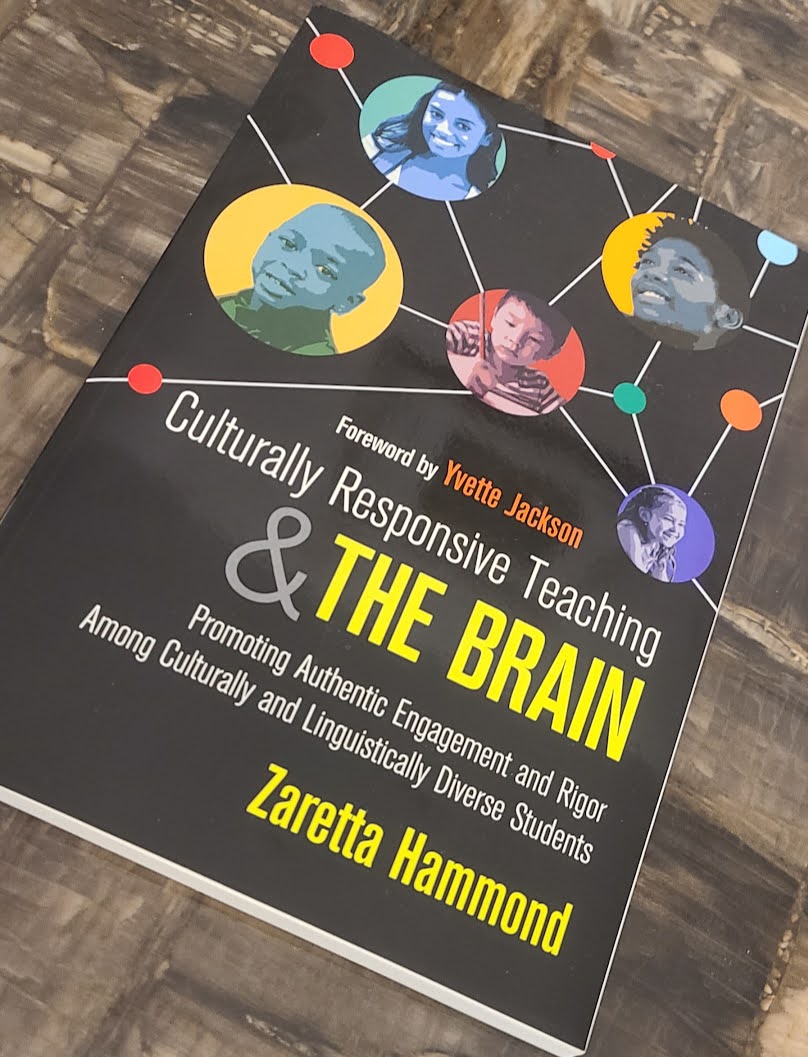
Culturally Responsive Teaching and the Brain

“Culturally Responsive Teaching and the Brain” by Zaretta Hammond (2015) explores the intersection of culturally responsive teaching practices and brain research. The book delves into how teachers can better engage and support students from diverse cultural backgrounds by understanding how the brain processes information and responds to different instructional methods. It addresses the critical need for educators to acknowledge and embrace students’ cultural identities and backgrounds while fostering optimal learning experiences in the classroom. This book offers valuable insights into how educators can effectively engage diverse learners and create inclusive learning environments.

Cultural Diversity and Educational Equity:
The book begins by highlighting the importance of cultural diversity in the classroom and its direct impact on educational equity. It discusses how students from various cultural backgrounds bring unique perspectives, experiences, and learning styles, which educators can leverage to enrich learning. Hammond emphasizes the significance of understanding the cultural influences that shape students’ cognitive development and the role of educators in acknowledging and respecting these influences.

Neuroscience and Learning:
In the following chapters, the book delves into neuroscience and its implications for teaching practices. Hammond presents research findings that shed light on how the brain processes information differently based on cultural background and experiences. By understanding these neural mechanisms, educators can tailor their instructional methods to match the diverse needs of students, thereby optimizing learning outcomes.

The Cultural Learning Framework:
Hammond introduces the Cultural Learning Framework, a practical and evidence-based model designed to guide educators in implementing culturally responsive teaching strategies. The framework provides insights into understanding cultural norms, community dynamics, and the impact of stereotype threat on student performance. It also emphasizes the role of the teacher as a cultural broker, fostering trust and building strong relationships with students and their families.

Culturally Responsive Pedagogy in Practice:
The book explores various culturally responsive pedagogical practices educators can integrate into their classrooms. Examples include incorporating culturally relevant texts, integrating students’ cultural practices into the curriculum, and promoting collaborative learning to encourage cultural exchange among students. Hammond emphasizes the significance of teaching students metacognitive strategies to develop self-regulation and critical thinking skills. Hammond provides practical examples and case studies throughout the book to illustrate how culturally responsive teaching and brain-based strategies can be implemented in various educational settings. The author emphasizes teachers’ continuous growth and development in their journey toward becoming culturally responsive practitioners.

Implicit Bias and Stereotype Threat:
Addressing the prevalent issue of implicit bias and stereotype threat, Hammond highlights these factors’ negative impact on student’s academic performance and self-esteem. The book offers practical guidance on how educators can identify and mitigate their biases and create an inclusive and supportive learning environment that fosters student success.

Professional Development and Teacher Training:
The book underscores the need for ongoing professional development and teacher training to equip educators with the knowledge and skills necessary to implement culturally responsive teaching practices effectively. It advocates for school-wide efforts to promote culturally responsive education and create a collaborative and supportive learning community for teachers and students.

Culturally Responsive Teaching and the Brain by Zaretta Hammond is an indispensable resource for educators and educational stakeholders seeking to create inclusive learning environments and improve academic outcomes for diverse student populations. By bridging the gap between neuroscience and culturally responsive teaching, Hammond offers practical and evidence-based strategies to nurture all students’ cognitive, emotional, and social development, regardless of their cultural backgrounds. Embracing cultural diversity in education empowers students and contributes to a more equitable and socially just society.

Black Education Matters: Combat Null Curriculum

“The null curriculum refers to the things students do not have the chance and opportunity to learn. In this regard, learners learn something based on the absence of certain classroom experiences, interactions and discourses” (Kazemi, et. al, 2020).

The lack of representation of Black culture, history, and accomplishments across all subject areas from K-12 exemplifies the null curriculum. Think about the absence of information about Black Canadians and the histories of Black Canadians in your curriculum. The erasure of Blackness to students devalues and depreciates the validity of the lived experiences of Black people.

For many Black students, school is not an accepting place. It’s where they come face-to-face with the stereotypes and prejudices they face in the larger society. Students have shared their feelings of neglect, heightened surveillance, and arbitrary and often unmerited punishment for any perceived disobedience.

How can you actively address Anti-Black Racism, combating Null curriculum by integrating Black Education into your teaching practice?

It is crucial that there are educators in the classrooms who are intentional about challenging the status quo. It is crucial that there are educators who are willing to better understand cultures they are unfamiliar with to meaningfully connect with their students. Adopt a culturally relevant pedagogical lens – “Culturally relevant pedagogy rests on three criteria or propositions: (a) Students must experience academic success; (b) students must develop and/or maintain cultural competence; and (c) students must develop a critical consciousness through which they challenge the status quo of the current social” (Ladson-Billings, 1995. p. 160)

Ask yourself:

  • What areas in my teaching & learning styles foster anti-racist teaching?
  • What areas in my teaching & learning styles require change?
  • How can I integrate the ten principles of Anti-Racism Education in my learning environment (classroom) to foster equitable learning?


References

Ontario Black History Society. 2020. Blacked Out History. Retrieved from https://www.youtube.com/watch?v=GKm7wQjpuac&ab_channel=OntarioBlackHistorySociety

Kazemi, S., Hamid, A., Motallebzadeh, K., & Zeraatpishe, M. | Jody S. Piro (Reviewing editor) (2020) Development and validation of a null curriculum questionnaire focusing on 21st-century skills using the Rasch model, Cogent Education, 7:1, DOI: 10.1080/2331186X.2020.1736849

Report Card Feelings

Last post, I discussed mental health activities and one was discussing report card feelings. I went further into the topic with my class and thought I would share the results of how that went.

Today was the day that report cards went home with students so I took a moment to re-read their brainstorm list of ideas about how they felt regarding report cards. I also asked today that if they felt comfortable, they could raise their hand to show how they were feeling. I thought it would be important to look around and see who was raising their hands for the positive feelings vs. the negative ones. It was not what I expected. Students who put up their hands for the negative responses were not necessarily the students who had reason for concern. We cannot always assume that the students who participate the most/ try the extensions etc. will feel positive about seeing their report cards. They may have the highest expectations for themselves of everyone and with that, their parents may share those expectations.

It will also be important to talk to my class Tuesday after they have read their reports, discussed them with family and have had time to reflect on them to see how they feel. One number/comment to summarize all their efforts in a subject can often feel defeating so I want to address those feelings next week.

I thought it would be meaningful for all educators to see the results of the question “How do report cards make you feel?” My class sorted all of the feelings into either positive feelings or negative feelings.

Positive Feelings:

  • I feel good
  • I feel okay- I like knowing my grades
  • I love them
  • It’s okay
  • I get proud of myself to see how I did
  • Exciting
  • I feel proud of myself when I get good marks
  • I like reports because it shows how good you have been doing
  • BEST THING!
  • Decent
  • I feel excited to see what to improve on
  • I feel good about it
  • I feel okay seeing my marks
  • It’s okay I guess
  • I feel good and alright

Negative Feelings:

  • I feel bad
  • I feel nervous
  • I hate them
  • I do not care about them
  • I am scared
  • I feel terrible, it’s scary
  • I am scared about when I get my report card
  • It is horrifying because I do not want my grandparents to judge me

We agreed as a class that we were happy there were more positive feelings than negative. We know that these feelings resulted from past experiences and could change based on what to come. But, as their teacher, I need to think about where to go from here. There are so many great podcasts, inservices, articles and books about how to approach report cards. The negative stigma around them will always be hard to shake because so many students struggle with feelings proud of their efforts. I hope this year to help shake those feelings and help students feel proud of what they are doing, regardless of what it all averages out to be.

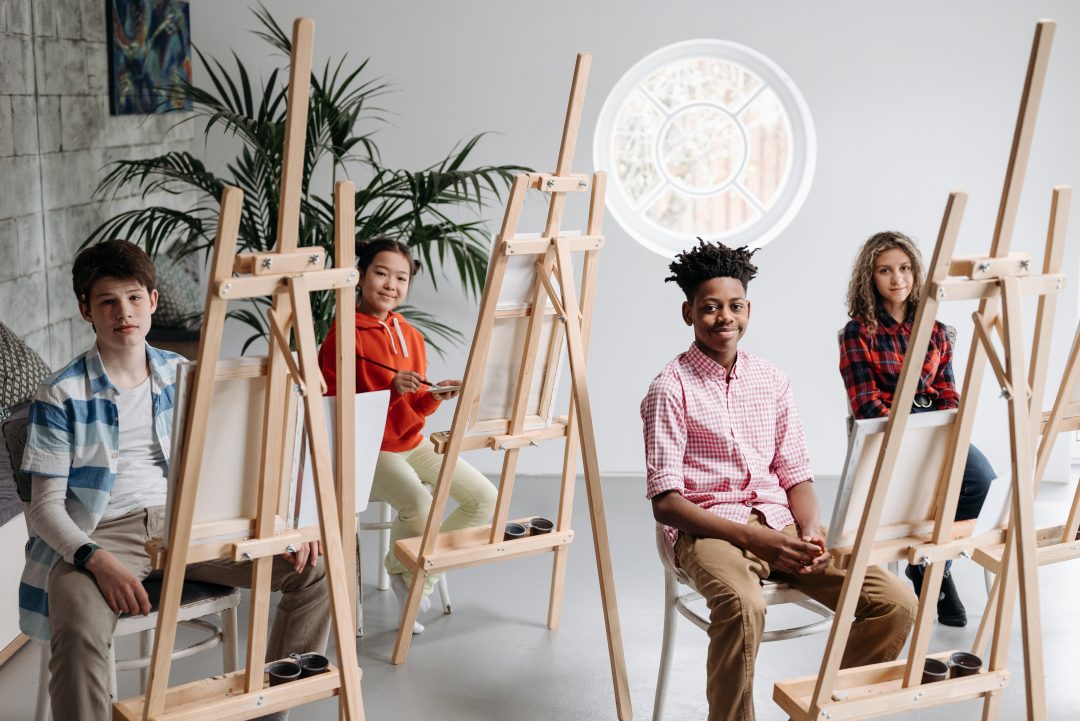
A diverse group of four students. Each is sitting in front of an easel.

Black History: Black Education Matters.

Photo By: Pavel Danilyuk

Ponder This: 
What did you learn about Black Canadian history in elementary and secondary school?
What was the narrative you were told regarding Black people in Canada? Did it begin pre-colonization?

The adoption of multiculturalism helped stabilize white supremacy by transforming its mode of articulation in a decolonizing era” (Maynard, 2017; Thobani, 2007: n.p., p. 50).

A Very Brief Canadian History

The prevailing myth in the United States is that Americans have overcome their racist past and are no longer racist, and the prevailing myth in Canada is that we are a country without a history of racism.

  • July 1784: “the first race riot in North America.” The confrontation ignited a wave of
    violence in Shelburne County that lasted approximately ten days. The majority of the
    attacks targeted the county’s free Black population.
  • Contrary to popular belief, Slavery was practiced in Canada until 1834.
  • Black families have petitioned the government and school boards for fair access and equity in education since the early 1800s.
  • Ontario was one of two provinces that legislated Black segregated schools.
  • The doors of Ontario’s last segregated school closed in 1965, while the last segregated school in Canada, located in Nova Scotia, closed in 1985.

Black Resilience over generations paved the way for the Black Lives Matter movement, which is recentering the narrative of Black Lives in Canada today. Unfortunately, systems of Anti-Black Racism are still part of the fabric of Canadian society and are still evident in our education system today. A big part of the change that needs to occur to combat Anti-Black Racism is the intentional education of students on the whole history of Canada instead of some of the highlighted parts.

One of the structural ways Black people continue to be discriminated against today is in education.

Far too often, contributions, innovations, and the ingenuity of Black people are not discussed within schools and learning environments until February, when there is a hyper-focus on Black History. During this month (February), there is a great focus on retelling the stories of oppression Black people have faced, which are presented as the only stories of triumph and fortitude attributed to Black people. In this guise, there is also a hyper-focus on American society and American issues, painting a false narrative of Canada’s racist past and present.

There needs to be a change in how we educate about the history of Black people in Canada. “It has to be changed in policies, practices, and it has to be systems change” (Hogarth, 2020). I boldly say that the change must begin in education.

“Racism is a learned behaviour that can be mitigated through the education of Ontario’s youngest learners. While there are topics in Ontario’s curriculum related to anti-racism and anti-discrimination and options for more in-depth teaching, explicit learning expectations related to Black history and issues must be built into the curriculum. A key issue that must be addressed is integrating discrimination and racism into teaching through a critical race lens. The instruction and learning must be ongoing. One-off lessons are insufficient to raise awareness and knowledge of the impacts of anti-Black racism and Black contributions to Canadian society” (Building Better Schools, 2023).

ETFO’s 365 Calendar provides ” educators and students with a visual touchstone to embed the voices of those who have been marginalized or silenced.” This resource highlights and celebrates many of the contributions and innovations of Black Canadians that have shaped Canada into the vibrant nation that it is today.  Though it is by no means an exhaustive list, it provides Elementary educators with the tools necessary to ’embed Black Canadian history in classrooms throughout the school year.”

A Call to Action

  • Deepen your understanding of the effects and impact of Anti-Black racism in education.
  • Find, read, and become familiar with your school board’s Dismantling Anti-Black Racism Strategy (if your board does not yet have one, advocate for intentional work in implementing one).
  • Conduct an audit of your unit plans, lesson plans, and teaching resources.
    • Ask yourself:
      • Do they provide windows of learning that represent the diversity of cultures, achievements, innovations, and impact of Black people in Canada and worldwide?
      • Are Black students mirrored in engaging and uplifting ways in the resources used, conversations had, and lessons learned?
  • Recognize how your own social positionality (e.g., race, class, gender, sexuality, ability) informs your perspectives, reactions, and responses as you engage with Black students and colleagues.
  • Remember that learning is ongoing. There is no one-and-done approach to systemic reformation.
  • Step out of your comfort zone and dare to engage in teaching and learning that intentionally amplifies the too often missing and omitted voices of everyday Black change-makers.
  • Join the fight in Addressing Anti-Black Racism in Education.

“ETFO supports calls by the Ontario Black History Society, Black families and others for the Ontario government to make Black studies a greater part of the public elementary curriculum” (Building Better Schools, 2023).

Black Canadian


References:

Aylward, C. (1999). Canadian critical race theory: Racism and the law. Fernwood Publishing.

Building Better Schools. (n.d.). Retrieved January 8, 2023, from https://www.buildingbetterschools.ca/addressing_anti_black_racism

CBC News. (2021). Being Black in Canada. CBC News: Special Presentation. YouTube Video. Retrieved from https://www.youtube.com/watch?app=desktop&v=Ntn0Nz8OT44&t=12s&ab_channel=CBCNews

Elementary Teacher’s Federation of Ontario. (n.d.). Retrieved February 1, 2023, from https://www.etfo.ca/classroom-resources/365-black-canadian-curriculum/365-black-canadian-curriculum-34d475930fc96a7121246be5c24e8be2

Gibson, D.O. (2018). Black Canadian. Hype B for Prosound Studios. YouTube video. Retrieved from https://www.youtube.com/watch?app=desktop&v=HSiQrXANexA&ab_channel=D.O.Gibson

Ladson‐Billings, G. (1995). But that’s just good teaching! the case for culturally relevant pedagogy. Theory Into Practice, 34(3), 159–165. https://doi.org/10.1080/00405849509543675

Lemert, C. (2021). Social Theory: The Multicultural, Global, and Classic Readings. 7th Edition. Routledge (Taylor & Francis). (Original work published 1993).

Building Better Schools: The Plan

ETFO represents approximately 83,000 members, including public elementary teachers, occasional teachers, education support personnel, professional support personnel and designated early childhood educators. ETFO provides protective and professional services for members and promotes equity and social justice within the education system and the broader society. ETFO is a social justice and equity-seeking organization” (ETFO, 2023).

Did I need to introduce ETFO to you? I don’t think so, but I wanted to ensure I shared that with you in case you did not know. ETFO advocates for equitable educational practices and equitable justice for all public elementary educators to position these educators as the changemakers we need in the education system.

Conferring on July 1, 1998, “ETFO continued the work of two federations that had worked to promote and protect the interests of public school educators for 80 years. ETFO’s two predecessors were the Federation of Women Teachers’ Associations of Ontario (FWTAO) and the Ontario Public School Teachers’ Federation (OPSTF).” There was much in the works, and much at stake during the time of this transition, but “elementary teachers proved once again they were up to the challenge” (Ritcher, 2006).

I urge you to take some time to get to know ETFO’s history, mainly to understand the consistency of ETFO as a social justice advocate and equity-seeking organization that has remained steadfast through the ages. Becoming familiar with ETFO’s history will provide a deeper understanding of ‘The Plan’ that ETFO has launched as a guide for revitalizing public elementary education.

As stated in It’s Elementary (2018), the following are five frames by which you can understand the position in the fight for social justice and equity for public elementary school educators.
1) Federations work steadfastly to promote and protect the interests of their members.
2) Federations were, and continue to be, leaders in advocating for the rights of teachers and the broader society.
3) Funding for elementary education has been an issue since the 1800s.
4) Legal or collective agreement rights are never entirely secure; the union and its members have had to be vigilant in keeping elementary education issues in the public eye and on the government agenda.
5) The union’s strength depends on its ability to build member trust and solidarity for its work” (ETFO, 2018).

These have been ETFO’s guiding principles since its inception. This is the work ETFO continues to do, Building Better Schools by creating and fostering opportunities for culturally responsive growth and development within the Elementary Public school system for educators and learners.

Let us take the time to look closely at the 9-pronged plan for building better schools.

  • Addressing Anti-Black Racism
  • A funding formula that works for kids
  • A single secular school system for Ontario
  • A stronger voice for your educators and their union
  • Enriching student learning
  • Inclusive classrooms
  • Smaller classes for everyone
  • Support for students with special needs
  • Testing rooted in learning

As educators who desire equitable learning environments for all students, let us all take the time to ‘Join the Campaign’ and “protect our public education system so we can build better schools for everyone.”

Take a moment to reflect:

  • How does this challenge you to get involved with your union?
  • What attitudes, beliefs, or ideas do you need to change or adopt to bolster this needed plan?
  • What challenges do you think might arise as this plan unfolds?
  • How can you support ETFO (your union) in surmounting these challenges?
  • What skills/attributes can you contribute to your local or provincial office?

As Sharon O’Halloran (Deputy General Secretary, ETFO) said in the ETFO Voice, winter 2022 edition, “Our Victories Prove We Are Stronger When We Work Together.”

“Join one of ETFO’s provincial Standing Committees and provide your perspective and expertise in developing provincial policies, positions, programs, and initiatives. Vacancies for the 2023-2025 term are listed on the website. The deadline to apply is March 1. Apply online at members.etfo.ca/etfo/standing-committees.”


Reference:

Building Better Schools. (n.d.). Retrieved January 8, 2023, from https://www.buildingbetterschools.ca/

A sunset over the water.

Teaching to Transgress: Embracing Change

“If the effort to respect and honour the social reality and experiences of groups in this society who are nonwhite is to be reflected in a pedagogical process, then as teachers – on all levels – we must acknowledge that our styles of teaching may need to change” (Hooks, 1994, p.35).

For every teacher in the classroom, there is another teacher out there who inspired them.  As teachers, we often teach as we were taught. We develop our teaching identity and teaching practice based on the teachers we admired growing up or the styles of teaching we witnessed and liked during our time at Teachers College (whether local or international). Unfortunately, many of the teaching styles we emulate are not grounded or founded in anti-oppressive teaching practice since multicultural narratives and diversity of educational perspectives were not the bedrock of learning. This is no longer the case in education. Meaningful learning has been identified as being culturally relevant to learners and responsive in fostering a learning environment that reflects all learners in their diversity. Simply put, do the students see themselves reflected meaningfully in their learning?

“When I first entered the multicultural, multiethnic classroom setting, I was unprepared. I did not know how to cope effectively with so much “difference.” Despite progressive politics and my deep engagement with the feminist movement, I had never before been compelled to work within a truly diverse setting, and I lacked the necessary skills” (Hooks, 1994, p. 41).

To provide context, Bell Hooks was an author, a social activist, and an educator who examined how race, feminism, and class are used as systems of oppression and class domination. She began her career as an educator in 1976 and taught until she passed away in 2018. In her 42-year career as an educator, she emphasized the power that educating from a multi-cultural perspective (a multinarrative) brings to the learning environment.

How dynamic would our classrooms be if we created and fostered space for students to be their authentic selves? How much more engagement would there be if students engaged with learning, not just as something to do, but as a part of who they are?

“The exciting aspect of creating a classroom community where there is respect for individual voices is that there is infinitely more feedback because students do feel free to talk – and talk back” (Hooks, 1994, p. 45). Students see themselves in their learning and recognize that they are part of it.

To better understand how this can be fostered in your classroom, it is first important to understand what a multicultural classroom is. “From language barriers to social skills, behaviour to discipline, and classroom involvement to academic performance, multicultural education aims to provide equitable educational opportunities to all students” (CueMath, 2021). The teacher must be intentional about utilizing teaching styles and strategies that remove barriers and eliminate issues that students often face in trying to adopt a single narrative to teaching and learning.

“Regardless of social class, caste, gender, or creed, a multicultural classroom serves all students and nurtures young minds to learn together. It also seeks transparency and acceptance of all cultural identities in a class without bias or partiality” (CueMath, 2021). A teacher who fosters multiculturalism models acceptance of differences, encourages learning beyond a single narrative and always uplifts multiplicity in learning perspectives as they accentuate students’ diverse identities.

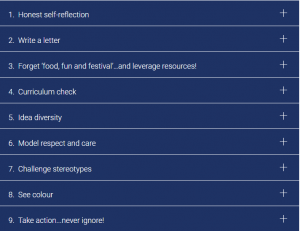
To learn more about how you can create an environment that ‘Teaches to Transgress” and embrace equality and diversity in our ever-changing classroom environments, read through these nine tips that have been provided by OISE Professor Ann Lopez and Richard Messina, Principal of OISE’s Dr. Eric Jackman Institute of Child Study (JICS).

References

Craig, L. (2017, September 7). 9 ways to create an inclusive environment in a diverse classroom. University of Toronto Ontario Institute for Studies in Education. Retrieved December 18, 2022, from https://www.oise.utoronto.ca/oise/About_OISE/Dealing_with_diversity_in_the_classroom.html

CueMath. (2021, January 21). Learn about multicultural education and ways to implement. Cuemath. Retrieved December 18, 2022, from https://www.cuemath.com/learn/multicultural-education/

Hooks, B. (1994). Teaching to transgress: Education as the practice of freedom. New York u.a: Routledge.


National Ribbon Skirt Day (January 4)

“A bill put forward by Senator Mary Jane McCallum to recognize National Ribbon Skirt Day has received Royal Assent and is now an act of parliament. McCallum was inspired to create the bill after a young Saskatchewan girl named Isabella Kulak was shamed for wearing a ribbon skirt during a formal school event” (Francis, 2022).

Bill S-219 was passed to create awareness and provide an opportunity for Canadians to learn more about the importance of Ribbon Skirts to many Indigenous cultures and heritage. “National Ribbon Skirt Day will provide an opportunity for everyone in Canada to recognize, learn about, and celebrate the importance of Indigenous traditions and expressions of culture. The Ribbon Skirt is one such tradition” (Crown-Indigenous Relations and Northern Affairs Canada, 2022).

In Indigenous communities, “Ribbon skirts are traditionally worn in ceremonies and during special events by First Nations women and represent the person’s identity, unique diversity and strength.  Women, girls and gender diverse people also wear them to express pride and confidence in their Indigenous identity and heritage.” (Crown-Indigenous Relations and Northern Affairs Canada, 2022).

According to the article by CBC News, A young Saskatchewan girl by the name of Isabella Kulak was targeted and shamed at a school function for wearing a ribbon skirt to the school’s formal event.  A teaching assistant told Isabella that her attire did not meet the requirements of ‘formal wear’ and that she should have worn a store-bought (mass-produced brand) to fit with the other students. Unfortunately, in Canada, this oppressive dialogue is not uncommon in the interactions of many racialized and marginalized people groups who choose to honour their culture or religion through their attire. According to Francis, 2022, while speaking at an interview On CBC Radio One, Isabella mentioned that on January 4, she would wear her ribbon skirt. She said, “It makes me really happy because lots of people can now wear their ribbon skirts proudly. I hope they are now proud of who they are” (Francis, 2022). Isabella’s father (Chris) mentioned that “No child should be treated like that regardless of where they come from or who they are” (Francis, 2022).

The passing of this bill is an opportunity for us as educators to gain deeper insight into the importance of traditions and practices in Indigenous culture. It is also a challenge for us to pause and think about what we deem ‘formal’, ‘proper’ or ‘acceptable’ as it has to do with how our students express themselves through their attire or nonconformity to what attires we think they should wear.

Louise Jocko of Birch Island near Manitoulin said, “Each person has their own story behind their skirts. Each person has their own colours that they bring with them when they make the skirt. I think it really does bring about the resiliency, and it shows the strength in our people that we’re reclaiming that culture and identity … wearing these skirts” (Gemmill, 2023).

There is still so much for us to learn, unlearn, and relearn. As we continue to work together to advocate for equitable learning practices and environments for all students, it is imperative that we all understand the importance of Bill S-19 in combating racism, discrimination, and oppression in all spheres, especially as it pertains to raising awareness of and celebrating Indigenous ways of knowing and being.

References

Crown-Indigenous Relations and Northern Affairs Canada. (2022, December 21). Bill S-219, an Act respecting a national ribbon skirt day, receives Royal Assent. Canada.ca. Retrieved January 1, 2023, from https://www.canada.ca/en/crown-indigenous-relations-northern-affairs/news/2022/12/bill-s-219-an-act-respecting-a-national-ribbon-skirt-day-receives-royal-assent.html

Francis, J. (2022, December 23). National Ribbon Skirt Day bill passed, to be celebrated on Jan. 4. CBC News. Retrieved January 1, 2023, from https://www-cbc-ca.cdn.ampproject.org/c/s/www.cbc.ca/amp/1.6694428

Gemmill, A. (2023, January 4). Marking 1st-ever National Ribbon Skirts Day in Northern Ontario | CBC News. CBCnews. Retrieved January 4, 2023, from https://www.cbc.ca/news/canada/sudbury/marking-ribbon-skirt-day-sudbury-1.6702580

Lambert, A. (2020, July 1). Crazy Hair Day. Crazy hair day. Retrieved January 4, 2023, from https://heartandart.ca/crazy-hair-day/

The Ten Principles [Anti-Racism Education: Theory & Practice].

An expression used colloquially in the English language says “______ wrote the book on that subject,” can be applied to George Dei’s research on Anti-Racism Education. Though written in 1996, it outlines so many fundamental principles of antiracism education that educators must grapple with in order to do this work well.

Race has been and is being used as an identifier, a marker that sets one apart from another, which is reinforced by the perceived dominant group through deliberate erasure and omission of narratives regarding who occupies particular spaces.  Action-oriented strategies and explicit identification and naming of race and social issues that strike at the heart of the power imbalance and inequities found in our education systems are what Dei explores in this resource, this call-to-action. The ten basic principles of Anti-racism Education are summarized in the chart below. “Anti-racism education may be defined as an action-oriented strategy for instructional, systemic change to address racism and the interlocking systems of social oppression… Anti-racism education seeks to build what has been termed “communities of differences.” This task can only be undertaken successfully if educators first learn how to deal with difference and the inherent conflictual interests and power imbalances in our societies.” (Dei, 1996).

As educators committed to teaching and learning centered on anti-racism and anti-oppression, it is pertinent to examine and reflect on these basic principles.

Ask yourself:

  • What areas in my teaching & learning styles foster anti-racist teaching?
  • What areas in my teaching & learning styles require change?
  • How can I integrate these ten principles in my learning environment (classroom) to foster equitable learning?

Taking the time to intentionally examine ourselves as educators, to think about our styles and reflect on our practice is essential to consistently cultivating meaningful learning for our students, particularly racialized students who are often not reflected at the forefront.

Examine, Reflect, Refine. This is one of the ways we continue to work towards ‘Building Better Schools.’

References:
Dei. G. J. S. (1996). Anti-racism education: Theory and practice. Basic Principles of Anti-Racism Education. Fernwood Publishing. Halifax & Winnipeg, Canada.

Beyond One Day – Truth & Reconciliation through curriculum planning.

Orange Shirt Day
Orange Shirt Day Bead Work

September 30 has been earmarked as the National Day for Truth and Reconciliation. Before this, most educators knew this day as Orange Shirt Day, which stemmed from the story of Phyllis Webstad, a Northern Secwepemc author from the Stswecem’c Xgat’tem First Nation, who shares the story of her experiences in a residential school. The significance of September 30 is profound as it calls for us all as a nation, particularly as educators, to pause and reflect on the effects and impact of residential schools on Indigenous peoples (children and adults) to this day. It is estimated that over 150000 Indigenous children attended residential schools in Ontario alone over the span of 100+ years (Restoule, 2013). We know that many of these children did not make it home, while many others still live with the trauma they faced within these schooling systems. 

Orange Shirt Day, now known as the National Day for Truth and Reconciliation, is but a starting point for us as educators. How can we collectively move beyond one day to infuse learning about Indigenous histories and present Indigenous impacts into our overall planning across different subject areas? In the ‘Calls to Action’ reported by the Truth and Reconciliation Commission of Canada (2015), sections 62 and 63 emphasizes the need for an educational approach that centers Indigenous histories, accounts, and perspectives in the curriculum, not as a one-off event or as an interruption to learning, but instead as an integral part of developing understanding within Canadian education. 

Simply put, Indigenous history is Canadian History. Indigenous peoples continue to shape and influence Canadian society in meaningful ways. 

“In 2015, ETFO endorsed the Truth and Reconciliation Commission’s Calls to Action. ETFO understands that it is integral for educators to move forward into reconciliation with the Indigenous Peoples of Canada” (ETFO, 2022). Challenge yourself to learn more using the curated information provided by ETFO, and be intentional about infusing Indigenous representation in the various subject areas you may teach. Resources can be found and explored at etfofnmi.ca

Fostering further development and understanding (both in learning and teaching practices) of Indigenous accounts and narratives in K-12 learning communities not as an alternate focus or ‘alternative learning’, but as a central tenet of Canadian education is critical to moving towards reconciliation as we learn and teach about Indigenous peoples of Canada.

For more exploration and information, visit https://etfofnmi.ca/.

References:

Restoule, K. (2013). An Overview of the Indian Residential School System.’ Anishinabek.ca. Retrieved from https://www.anishinabek.ca/wp-content/uploads/2016/07/An-Overview-of-the-IRS -System-Booklet.pdf.

Truth and Reconciliation Commission of Canada. (2015). Reports – NCTR. NCTR – National Centre for Truth and Reconciliation. Retrieved from https://nctr.ca/records/reports/#trc-reports.

Elementary Teachers’ Federation of Ontario. (2015). First Nation, Métis and Inuit (FNMI). Etfo.ca. Retrieved from https://www.etfo.ca/socialjusticeunion/first-nation,-metis-and-inuit-(fnmi).