Rolling with the Punches

I’m the first person to admit that I don’t like change. I don’t handle it very well and I don’t handle uncertainty well either. I like to have all the information and I like to plan ahead. I know I’m not the only one! This is not the time for people like me. Our world is full of change and uncertainty right now. I’m learning to roll with the punches as we all have been during this pandemic. Almost all aspects of daily life have changed over the past few months. The change hasn’t been limited to our personal lives either, as the world of education has undergone some major changes too. Our jobs have changed drastically and the adaptability of teachers has never been so important.

This week definitely has a feeling of relief to it. I’m going to miss interacting with my students, but after the whirlwind (that’s putting it nicely) of a year we’ve had, I think every teacher is breathing a sigh of relief.

Unfortunately, that sigh of relief might feel very short-lived for a lot of us. There is so much uncertainty in the air about what the future of education looks like. What will September look like? Will we be back in classes as normal? Will we be distance teaching again? Will we be working with a blended model of both? Will we be safe? How are we possibly going to make this work? As much as we all need these answers, we simply don’t have them yet. It’s so easy to get caught up in speculation and worry. Our minds race through “what if” scenarios, which lead us to more and more questions and a lot more anxiety.

Social media can be a dangerous place during uncertain times. People speculate, share hypotheticals, and post their own ideas of needs to happen which can lead to misinformation and overload. Try not to get caught up in all of that.

We’ve worked hard to get to where we are this week. We’ve accomplished what was completely unthinkable up until it became our reality in March. Colleagues, we’ve earned this summer break. We need to honour our own wellbeing this summer. Of course, there are things we can do to prepare ourselves for possible scenarios and teaching models but we would be doing ourselves a disservice to speculate, worry, and try to create answers that simply don’t exist.

Celebrate your accomplishments, reflect on what you’ve learned (I know I’ve learned a lot these past few months!) and take some time to distance yourself from distance learning! Our students deserve refreshed and rejuvenated educators welcoming them in September.

The detailed school reopening plans will come and when they do, we will roll with the punches! That’s what us teachers do best, isn’t? Not to mention that this is a great opportunity to model adaptability for our students and our own children. Even for people like me!


How is bowling like teaching?

Think about a 7-10 split in bowling. You aim right down the middle and knock over all the pins except for the two at the back corners. Happens to me all the time!

“The ball is the lesson, the pins are the kids. We aim for the middle. We do the best we can. The pins that are left standing we often have another chance to kind of get to them, but at the end of the day those two pins that are staring back at you are the kids who need the most support and the kids who need the most challenge. So, we end up choosing one and the other one is left standing.”

Watch below to hear how bowling really is just like teaching, and how a professional bowler can teach us a valuable lesson about inclusive education that you might not have thought about.


Shelley Moore is a teacher, researcher, consultant and storyteller in Vancouver, BC. If you haven’t heard of Shelley yet, then I’m pleased to be the one to introduce you! I was first exposed to Shelley’s online content during a PD session at my board and have since found her analogies, knowledge and passion to be extremely valuable for my own growth as an educator. Her research and work has been featured at national and international conferences and is constructed based on theory and effective practices of inclusion, special education, curriculum and teacher professional development.

For teachers both new and seasoned, Shelley offers video content as well as other online learning opportunities that are sure to bend the way you think and open your eyes to things you may not have thought of before. If you enjoyed this analogy, wait until you hear her use baked potatoes to explore scaffolding complexity. You’ll probably laugh along the way, too.

I hope you spend a few minutes checking out some of her content! I just couldn’t keep this fresh, entertaining and helpful resource to myself. You can follow Shelley Moore’s channel called Five Moore Minutes on Youtube, as @tweetsomemoore on Twitter, or at www.fivemooreminutes.com .


Distanced But Closer: Changed Relationships

Distance learning has offered rewards and challenges that I’m sure no educator could have seen coming their way. As our school year’s end is approaching, I’ve been spending a lot of time reflecting on  the overall experience of distance learning for myself and my students. While I could probably write for days about all of the ways distance learning was impactful, I wanted to highlight one in particular.

In many cases, my relationships with my students changed.

At the onset of this wild ride, I was mostly worried about my teacher-student relationships changing, and not in a good way. I worried about how removing the social interaction of being together in the same room would negatively impact our relationships. I worried about the loss of our high fives, inside jokes, and the ability to play with each other. I dreaded the thought of simply assigning work from behind a screen while they completed it alone. Luckily, that’s not all how this turned out.

I was pleasantly surprised with how well I was able to maintain special, personal and close relationships with my students even over distance learning. I teach grade 3/4 and worried that my students’ lack of proficiency with technology and even just typing on a keyboard would add increased barriers to our communication. They floored me with their ability to adapt and overcome that. Every day, I exchanged instant messages with my students and was able to maintain the same banter and tone that we would if we were right beside each other in the classroom.

However, the most impactful change to our teacher-student relationships came from outside of the curriculum, outside of my planned program, and outside of anything either of us were expected to do.

With many of my students, the ability to stay in touch digitally and in real-time (we’ve been using SeeSaw as our main platform) allowed me to become a part of their daily life at home. Many of my students welcomed my presence with open arms into their daily activities and this opened up a new way for us to interact.

After a few weeks of getting used to online communication, my students started to send me photos and videos things that weren’t school work. I was getting pictures of Lego creations, arts and crafts, forts made out of cardboard boxes, or handmade jewelry. One student sent me a photo of lunch that she had cooked by herself for the first time. Another sent me a photo of flowers she had planted in her garden. Another student sent me a photo of a fox he saw in his yard. The other day, a student sent me a photo of herself doing a handstand in her pool that she had just mastered.

These offerings from my students acted as a catalyst for what I think was our most valuable learning together throughout this whole thing. Personalized, authentic and real-time exchanges that were child directed. A chance for me to engage them in critical thinking, prompt independent inquiry and point out their learning in one-on-one manner.

It might have been easy for me to fluff that off as typical kids being excited to show things off to their teacher, but there’s a Kindergarten teacher in me. And that Kindergarten teacher’s heart jumped with joy because my students were allowing me a window into their learning through real, authentic, hands-on learning and play. With them sharing their small projects, interests and curiosities with me, I could add to their experiences by noticing or naming academic concepts, prompting wonder, and pointing out their growth through their exploration.

It reminded me so much of teaching kindergarten, where the same relationship of observing a child’s play and drawing the learning from it was my main approach to teaching. This can totally still happen in grade 3 and 4, but when the world for them to explore is expanded beyond our limited classroom walls it is so much more enriched. To illustrate this, I had an entire conversation with one of my students about the things she noticed and wondered while she and her family explored a creek in a forest. That’s not something that can happen often in a primary/junior classroom (unless you’re lucky enough to teach near a forest!).

As time has progressed, I’ve shifted my approach with some of my students to simply building a relationship with them through what they are engaged in and interested in doing. It has added so much value to distance learning for those that have been struggling with engaging academically. We now have a class blog that I will post their offerings to, as well, so they can see what their peers are doing and accomplishing. Many times, other students will try something similar and send me a photo of it to post on the blog in response. This has led to inspired, busy, and most of all socially engaged kids.

Yes, my class’ overall engagement with the assigned work has declined significantly over the past few weeks – a trend I’m sure we are all seeing – but the one thing that hasn’t declined is the daily sharing of things they are proud of.

And, to me, is that better than them completing their assigned math? Of course it is.

Saying, “I am not racist” is not enough pt 2

This is the second of 2 posts about anti-black racism and being anti-racist. Here is a link to Saying “I am not racist” is not enough pt 1.

We are now witnessing some of the most significant events in recent history and they are direct responses to the overtly racist actions of those whose jobs are to protect the community. This is by no means the first time, nor will it be the last – regrettably. The death of George Floyd and other recent national news events have many ideological battle lines being drawn in the fight against racism.

I am hoping that these incidents will not be in vain if they can be used as the origins of how white people see themselves as complicit in perpetuating the racism that has led up to this point through their long and loud silences and that a genuine change can begin to end anti-black racism. Hence these posts.

Years ago, Desmond Tutu shared:

“If you are neutral in situations of injustice, you have chosen the side of the oppressor. “

These words circle in my head right now as I consider how my actions as an educator, or perhaps more accurately, my inactions as an educator have allowed racism to continue without truly being aware of it? Seeing the streets filled with protesters seeking a change to a broken system has given me much to reflect on from the comfort and safety of my home far away. I am watching in fear as I see a system threatening to turn violently against them and at the racists who are using these tragedies as a tool to sew further seeds of their hatred and intolerance.

The events of the past week have amplified hundreds of years of inequality, inequity, and injustice in the social contracts of western society. Trevor Noah shared this so eloquently, that when the contracts that society pretends to adhere and uphold are continually broken, then what is keeping all of us from lashing out against the systems that are not honouring them as well? The only way I know how to answer this beyond changing my own actions is through education.

That got me looking for ideas on how to invite and be open to change. Here’s what I have gleaned from countless educators and activists so far that I am ready to do right now;

  1. Take a stand. Start by getting off of the fence. Stop saying “I am not racist”.
  2. Be prepared to be uncomfortable, to be called out, and to be challenged.
  3. Take stock of my past.
    Reflect on what needs to be done better to make a difference to stop anti-black racism.
  4. Excuse myself from having a saviour complex.
    Offering support not salvation.
  5. Ask and reflect about what are some of my privileges?
  6. Let my classroom resources reflect culturally relevant anti-racist convictions
  7. Let conversations with students turn into listening sessions where ideas and understandings can be turned into growth and deeper knowledge.
  8. Think about how I can leverage my privilege and position as a white male cisgendered educator to effect change.

I am sure there are more things to add to this list as I go forward, but I also need to be mindful of making choices and decisions that can be achievable without feeling overwhelmed or giving up the moment when things get tough. I am ready to apologize for mistakes I have made, am making, and will make. Relying on others is going to be a big part of my growth. Acknowledging that there is so much more to learn will play a huge part in going forward.

Consider the straight forward advice in this recent social media post from Mireille Cassandra Harper as a perfect place to ponder and equip for the journey to allyship.

We have the means to be on the side that helps change history. As educators, we can use our privilege of being agents of societal change and good citizenship to help change the values of students/society to be truly anti-racist. It will come with discomfort, change, and fresh perspectives that may not match past experiences. However, as change occurs, it will also come with a community capable of seeing everyone within it included, respected, and valued.

Accepting that meaningful change will not happen overnight is something else for me to work past, but I know that these are my first public steps to do so. I want all educators to understand the urgency that I share in this post and encourage you to be part of making this the change that needs to take place. It starts with saying, “I am anti-racist!”

Huge thanks to Ms E Ng for her genuine, supportive, and critical feedback in the writing of these posts.

Saying, “I am not racist” is not enough pt 1

“One either endorses the idea of a racial hierarchy as a racist or racial equality as an antiracist,” Kendi writes, adding that it isn’t possible to be simply “not racist.”
from New Yorker Magazine article Aug 18, 2019

It’s not enough to say, “I am not racist,” and I feel that it is time for us all to join in the battle against anti-black racism and racists. Recent events and tragedies in the news are too numerous to mention (Arbury, Taylor, and Floyd). They have left my mind spinning, and I want to do something supportive and meaningful with the privilege I have as a blogger for ETFO.

I am a white, middle-aged, cisgendered male who has watched from the sidelines, trying to mind my manners and my business for far too long. I have become uncomfortable with the skin I am privileged to be born in without becoming part of the solution to overthrow the overt and ignorant racist actions of my predecessors, contempories, and self. I want to use my next two posts to encourage all educators to join me on a journey that leads to our collective allyship in the fight against racism.

Educators find themselves on the frontlines of many socially volatile spaces. It is impossible not to be in the middle of things that impact our world because we are responsible for teaching critical thinking skills as part of our work with students. More importantly, our students are directly affected whether it is by witnessing daily violence and oppression in media or because of way they are made to feel by existing systems because of the colour of their skin. They need to see their teachers standing up for them. We have fought for good working conditions. Now it’s time for another fight against anti-black racism.

This means asking questions, listening for understanding, and allowing for ideas to be shared that lead to growth and change – especially during times of great unrest in the news. This also means being uncomfortable when answers to questions cannot be found at the back of a textbook or anywhere else for that matter.

To be sure, teachers are dealing with torrents of important issues right now and we must prioritize one above the others if we haven’t done so already – that is racism. First, we need to know where we each stand before any of us can commit to overcoming the central issue of  the day, week, month, year, and history of humanity around racism? So where do you stand as an educator? Are you trying to keep your head down, your nose to the grind stone, and avoiding making any waves on the calm waters of your practice? Admittedly, there can be a lot of peace and safety by being a witness to someone else’s battle.

But that safety is not a privilege that everyone has, there is something bigger at stake than our comfort in all of this. It is the entire fabric of our existence as educators to be the ones who foster change and encourage potential in our students. We are also really good at taking a stand along side of the oppressed in order to make something good out of bad situations. It’s time we weave a new and stronger layer.

In some places we witness systems, employers, and staff working together and taking stands against racism in solidarity. I know school boards have been embroiled in significant issues to do with anti-black racism in the past years. Some have been making slow progress to correct their past mistakes and lead forward. Breaking down Structural/systemic racism is crucial, but it must happen at the same time as we identify the signs of individual racism. Check out the 9 slides on this post from @theconsciouskid:

https://www.instagram.com/p/CAtmbeXJwOW/?utm_source=ig_web_copy_link

In know that there are countless educators already learning and working together educate themselves and others in order to move from allies to activists through social and academic spaces.

Consider the wisdom in this quote from Ijeoma Oluo

“The beauty of anti-racism is that you don’t have to pretend to be free of racism to be anti-racist. Anti-racism is the commitment to fight racism wherever you find it, including in yourself. And it’s the only way forward.”

There is so much being done already to equip hearts and minds for this battle. Yet, it seems that ideological differences continue to be amplified in the media, and allowed to build up until the pressure below the surface of a once capped/dormant social volcano rises up. A volcano has erupted somewhere else. Now, those lying dormant in our own backyards are experiencing significant seismic activity. So are you going to be standing at the bottom when the lava flows? Probably not, because like me, our privilege has us miles away watching out of harm’s way.

I understand that not everyone is capable of standing in the streets to demand justice and change, but of each of us can use the privilege of our voices to show support, demand change, and to state unwaiveringly, “I am anti-racist!” Once you’ve said it, it’s time for action.

This is a much bigger commitment than saying, “I am not racist,” because it is not enough to say that you are not something. The time for neutrality is over. Saying, “I am anti-racist!” means you are standing up against anti-black racism, and are willing to take action. It means that you are going to help others get out of danger when the volcano explodes.

Your turn. “I am anti-racist!”

If you said those words, most likely, you are already taking the steps to move from acknowledgement that racism is an issue that plagues our world. It means you are working as an anti-racist ally. As teachers, we are used to taking on challenges in the face of adversity.  Now how can the tragedy of recent events north and south of the border be used to support our students in and out of the classroom so that something positive can come from recent tragic events? It’s our turn to ask how we can help?

In Saying, “I am not racist” is not enough part 2 I will continue this thought stream and will share what I plan to do in my own life to grow into allyship and activism. For now, let’s say it together, “We are anti-racist”.
 

Ideas for Distance Learning

Nine weeks ago, the teachers of Ontario were asked to do something most of us couldn’t have conceived of when the school year began. We rose to the challenge and in under two weeks we started to deliver distance learning to the homes of the students of Ontario. We did all of this while our own children cried in our arms, our puppies jumped on us, our computers and internet failed constantly and we became the sole earner in our home as our partners lost their jobs. I often am amazed at the skills the teachers of Ontario collectively possess but this was unbelievable. Teachers pulled together to meet their students needs so fast and 9 weeks later we are still sitting at our computer screens for hours at a time to continue this important work.

I teach a class of students with Developmental Disabilities which has made distance learning difficult since they have a limited ability to read or write and incredibly complex learning needs. It has taken a large amount of creativity and unconventional ideas to attempt to meet their needs. I ended up doing a mixture of weekly assignments, online platforms, postal mail and live synchronous learning to try to reach out to every one of my students.

(Just a note about synchronous learning… I used my professional judgement that live synchronous learning would meet the needs of my particular students because of their learning profile and emotional needs. However, live synchronous learning comes with a lot of challenges and pitfalls. I have been very cautious in introducing it to my students and have had at least one TA join me for every session. My team gathered online and spoke at length about parameters and rules for synchronous learning before we started and I have worked with parents to ensure that professional boundaries are maintained. I know that the teachers of Ontario will make the right decision about what kind of synchronous learning will best meet the needs of their students using their professional judgement.)

With four weeks left, I’m sure the energy level is starting to fade for many of our students. Keeping them engaged and excited about learning online is getting tougher and tougher every day. Today I want to share some ideas that I have come up with over the last nine weeks in the hopes that one idea can give you something for your students to do over the next four weeks to keep them going. These are ideas to do with your students if you are meeting with them on Google Meet, Teams or another form of teleconferencing service.

For my students with special needs, the goal for all of these activities was to have students actively engaged in communication with me and their classmates. The activities also focused on social skills such as taking turns, working with others and having patience.

  • Who is it? I took pictures I had of my students and zoomed in on one part of the picture such as an eyeball or running shoe. It became a guessing game of who they thought the picture was of. This game allowed my students to express how much they missed their friends and to celebrate their awesome classmates.
  • Charades The students and staff all took turns pantomiming an animal. The other students had to guess what the animal was. For my students muting and unmuting their mics has been very difficult, therefore, I encouraged my students to take turn guessing.
  • Find Something in Your House On plain pieces of paper, I wrote the colours blue, pink, black, red, green and purple. I showed them to the students one sheet at a time. When the students saw the colour, they had to go and run and find something from their home that was that colour and bring it back and explain what they have found. This is by far their favourite distance learning activity!
  • Freeze Dance I used my Bluetooth speaker to play music and we grooved and moved to some of our favourite songs. I stopped the music every once in a while, to allow the students to pose in their favourite dance move.
  • Pictionary The staff in my classroom all took turns drawing a picture for the students to guess. My students are amazing guessers at my less than perfect drawings. We work on taking turns and celebrating our friends when they get the right answer through this activity.
  • Show and Tell about your pet or stuffed pet My class and I are real animal lovers and we have had many, many conversations about our pets during this time at home. I can tell you so many things about Roxy, Sugar, Herc, Rona, Coco, Fenway and Pepples. It has been a great Segway for many of students to talk about their feelings when we talk about our pet’s feelings daily.
  • Making a Bird Feeder My students and I got the materials together for a very simple bird feeder and made them together as we chatted online. We each hung it up in our backyard and watched for visiting birds.
  • Art show and tell My students have done countless art projects from chalk drawings outside and poster boards for their friends’ birthdays. We often have a sharing time to show their art and discuss their pictures.
  • Exercise Time I lead a half hour exercise time for my students. We all bring our water and get our sweat on.
  • Lego building show and share I invite my students to build anything out of lego and tell us the story of what they have built.
  • Nature share My students have been noticing things that they have seen on family walks such as ducks, a bald eagle and a beaver. No alligators yet, but you never know in the last four weeks.


Thank you, thank you, thank you for going above and beyond to help your students through a profoundly difficult time. I have never been prouder to call myself an Ontario teacher. You are truly amazing!

Resources for Jewish Heritage Month

May is Jewish Heritage Month. This relative new heritage month began in 2017 across Canada and in 2012 in Ontario. Recently, a good friend of mine was asked to write a letter to the teachers in my area about the importance of Jewish Heritage Month. While she prepared to write the letter, she shared her research and personal experiences of antisemitism as a student. I decided although many of you probably know about Jewish Heritage Month, others like me, may need an introduction to a few resources developed for teachers so that when we return to school you can introduce Jewish Heritage Month next year.

Websites with Jewish Canadian Content 

Friends of Simon Wiesenthal Centre- Toronto

This Jewish Heritage Month Guidebook is a great place to start when gathering resources for a focus on Jewish Heritage Month in your class. It includes answers to some questions about Jewish Heritage Month, a section on famous Jewish Canadians, a historical overview and introduction to Jewish history and Judaism. There are also some lesson plans to introduce Jewish food, culture and history to your students.

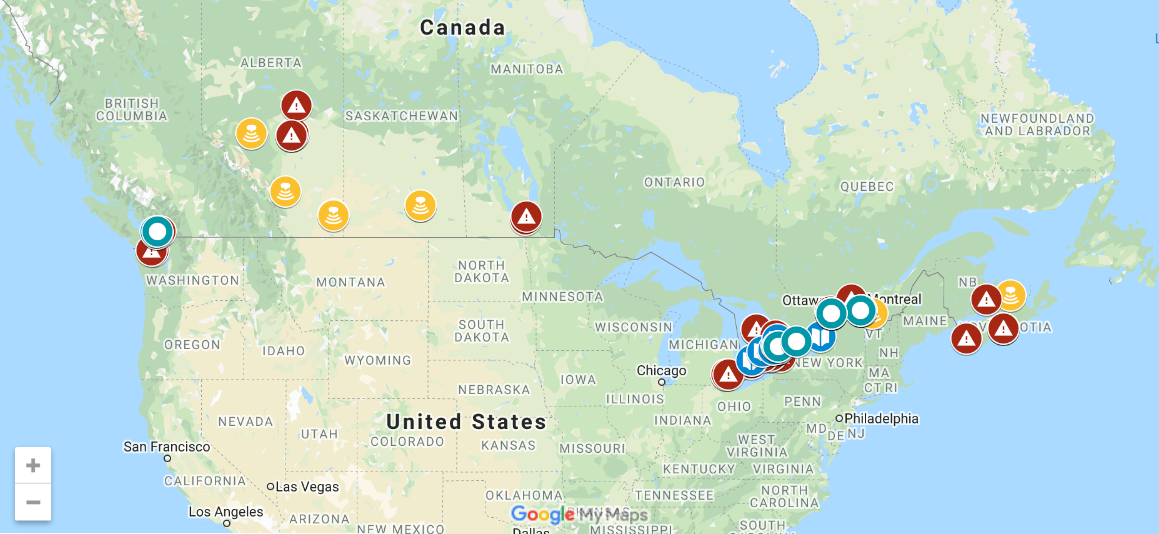
Also on the Friends of Simon Wiesenthal Centre website is a section about antisemitism in Canada. “Hate crime statistics released earlier this year by Statistics Canada revealed that the Jewish community has remained the most targeted group for hate crimes, with 347 police-reported hate crimes in 2018 committed against the community.” Antisemitism is a serious problem in Canada that is not discussed enough in schools. The interactive map pictured below is a way to open the conversation of recent acts of anti-semitism in Canada with students.


Holocaust Museum- Montreal

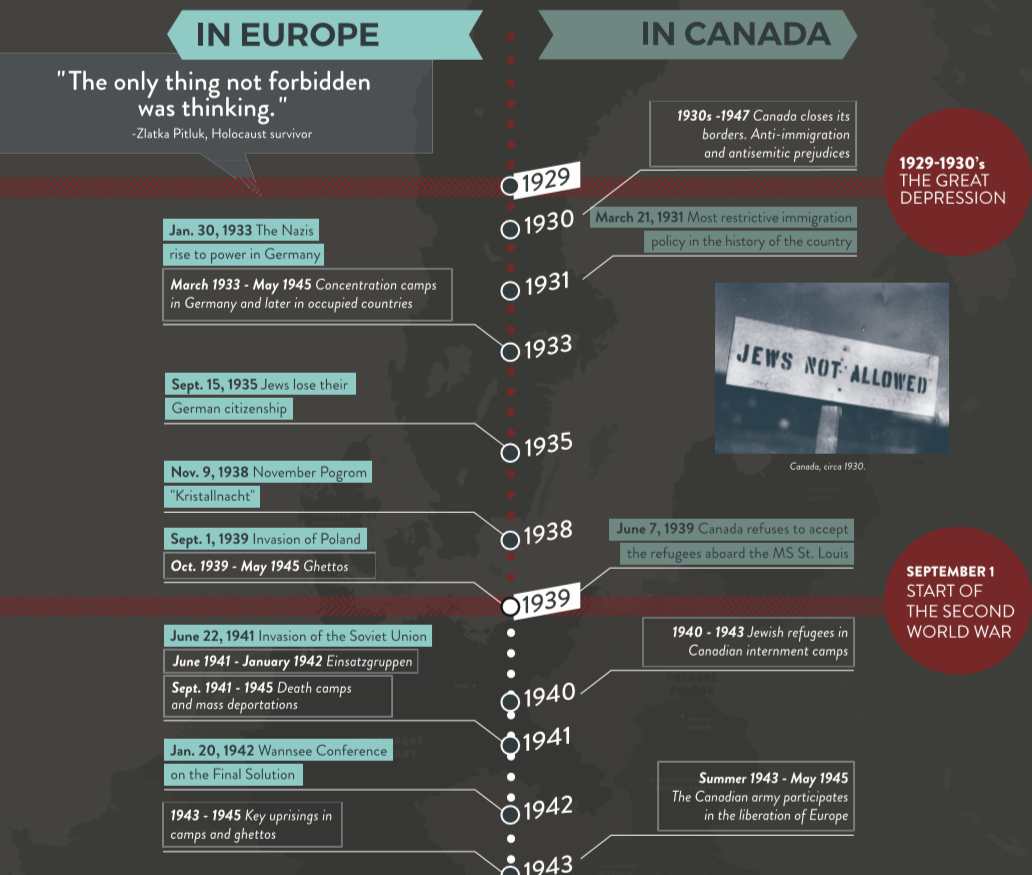
The website for the Montreal Holocaust Museum has an extensive section for educators. Within the plethora of artefacts and video testimonials for students to view, their is a section called Activities for Studying the Holocaust at Home . This section supports study of the Holocaust from anywhere in the country and contains a user friendly teacher’s guide for educators.  The visuals used in the website help students deconstruct the events that happened during the Holocaust and understand Canada’s role. Within the teacher’s guide, there are also links to multiple interactive timelines that will answer many questions students have about the Holocaust such as how the Nazis rose to power and what the rest of the world did while the Jewish people were being brutally murdered.


The Centre for Israel and Jewish Affairs

The Centre for Israel and Jewish Affairs has created a Jewish Heritage guidebook that gives introductory information about Jewish heritage and culture. It includes some introductory concepts about Judaism, some basic terms and an explanation of minor and major Jewish Holy Days. The end of the guidebook has some facts that could be posted in the classroom or shared with your students every day in May.

The screens of silence

I am wondering whether the title of this post should be “The screams of silence” because that’s how it feels some days.

It’s week four of emergency distance learning and I am feeling weaker for it. Is anyone else feeling this way from staring at their screen(s) all day? If asked, I’ve been responding with thumbs up and all good, but in reality I am fighting the dissonance disrupting my days, and it relates to the way I feel about what is happening in education right now. To top it off, I am wrestling with self-doubt about whether my instructional act is all together. Add to that the pressure I’m putting on myself to wake up feeling fit and fresh because I am working from the “comfort” of my basement. Being cooped up, I mean observing physical distancing, doesn’t help. See what I mean about interchangeable titles?

Then there is the daily media segment about something or another to do with #QuarantineEducation. This week an article in The Globe and Mail shared Some overwhelmed parents are giving up on distance learning and abandoning at-home schooling. This noise is hard to tune out when we have been asked to stay in place and create something that has never been done effectively on a large scale so quickly. Maybe that’s what is holding my head hostage? Or maybe it’s that my hair is too long? Both make me want to scream sometimes

There is something to be said about the experience of facilitating learning in the vacuum of 2020. It’s cold. As I stare at several connected screens to keeping track of at least 17 other currently opened tabs on my computer, I have to admit this is all a bit daunting – even for this tech-happy educator. If teaching is my superpower, then the screens, meetings, and other digital dungeons trying to contain me have become my kryptonite.

I share this neither in angst nor anger, but out of an admission that the struggle is a real one. It sounds like I am not alone. This surreal situation we are now in was, is, and will never be a positive experience. We were starting to recover from a devasting January and dreadful February only then to be steamrolled by March when an uncontrollable virus unleashed itself on the world. Welcome April, a month that no one would have predicted to be the first of two months away from our schools…so far.

What did we do? We rallied, we pivoted to support our students and each other, and we waited patiently knowing we had to care for our own families too. We were lucky that the start of March Break landed when it did, as it may have helped us to avoid something worse had COVID 19 entered our open schools. Throughout this time we turned to our screens to watch for updates, data, and directions.

While we waited and watched for answers, our thoughts continued to race and the questions began to bubble up. How am I going to reach my learners? How are students who are marginalized by poverty and or other circumstances coping with all of this? What are the expectations from my board, admin, families, and most importantly students? What about my life at home? How will I manage when many of my teaching resources are at school? How much work do I assign? How about due dates? Do I take attendance? What happens when students don’t complete work? How do I assess anything without fear that someone else has done the work?

Everybody was working together. As our profession embraced the challenge of this reality, digital resources were curated, virtual meetings were held, contact was reinitiated with families/students, and a sense of temporary normalcy had made its way back into our weekly M to F routines. Cue some new silences.

The enthusiasm of returning to instruction, albeit asynchronously, signified that something was being done on behalf of families and our students, but the lack of connection through voice and vision has been hard to overcome for this educator. Speaking with many other educators who are feeling the same way, it is the meaningful interactions with peers/teachers and the chance of being heard that students are craving the most right now. We need to make sure they are acknowledged and heard, and the current situation is leaving them without a voice.

Teachers are the conduits for connection in their classrooms and will never be replaced by an emoji, meme, or brief feedback on a task to be viewed in silence on a student’s screen. However, it has been difficult to connect with students due security issues relating to conferencing platforms such as Google Meet and Zoom. This is extremely frustrating for a number of reasons. With those screens dark, students are left to keyboard strokes, Screencastify, and digital classroom posts for their content and updates. This is not the education any of us signed up to deliver. Despite my efforts to adapt and fill my screens with amazing shareable content to carry on, something is missing. The voices of my students. Cue the disconnects. Cue the silent screams at silent screens.

When All of This Is Over….Remember The Number of Students Who Couldn’t Access Technology

I know I am supposed to be embracing technology and getting pumped for all the new applications and tools that I am learning how to use. I have been completely in awe of how fast Ontario teachers adapted to this new reality and created engaging learning opportunities on many different platforms for their students. However, I am facing a problem that many of the students in Ontario are currently challenged with. We are both having difficulty accessing reliable technology and the internet.

Last year, I bought a laptop and have had nothing but problems over the past couple of weeks. It has crashed multiple times, has had problems with the speaker and generally just caused me a lot of frustration. I have had to apologize to colleagues and students when our Google Meet has crashed mid sentence because of my laptop. However, I also have a tablet and a phone as emergency backup for continuing my student’s learning and connecting online with my colleagues. Many of the students in my class, school and around the province do not have the same access to technology in their home.

The thing that will stick with me from this time that we are learning from home is the number of students that required technology to complete school work. In my board alone, over 14, 500 students required technology and 2000 required internet to engage in any form of learning at home. That is an absolutely staggering number. In my classroom and my school, 20% of all students requested technology to be delivered because they didn’t have enough technology in their home to support their learning needs.

I think back now about how many messages I have sent through Google Classrooms, or assignments that have been more easily completed with internet and a computer that I have assigned. I realize how disadvantaged some of my students were every time they left the classroom and were starting behind their fellow classmates. I also think of schools where that same number was under 5% or over 50% and how monetary situations are impacting the student’s ability to access the same tools and resources required to be successful at school.

There is no doubt that students need to be confident in using technology in their daily life for many different purposes. Technology will most likely play a fundamental role in acquiring or maintaining employment as students become adults. Technology is also the primary way that many students communicate with each other. I see many of my fantastic colleagues teaching amazing lessons with the limited resources available to them to build the skills the students require. However, there is a major gap that exists between students that can go home and practice the skills regularly and those that rely on limited and sometimes broken school technology.

I am fortunate that I teach at a middle school. Working with the students there keeps me current and up to date on trends and innovations in technology. But over the last month, I have been thinking about those amazing grade eight students in my knitting club and those who assist my students with such kindness. Did they fall in the 20% at my school? If so, will they have any chance at being successful in e-learning courses in high school?


Online learning for students with DD

When much of the discussion about on-line learning happened in the media this year during the high school contract negotiations, I often thought My students should never have to participate in any course online. My students all have developmental disabilities and are working towards goals on an alternative IEP. Most have some form of communication impairment and are not able to read well enough to follow instructions online. Online learning seemed like something that would never work for my students! Little did I know when 2020 hit, we would have no choice but to figure out online learning the best we could. It has been very tricky, with some successes and some challenges. Here is what has worked:

  1. Sending a PDF file instead of logging on a pre-existing platform. My students are unable to sign onto a device or navigate difficult platforms.  My team sends home a PDF file every Monday with activities, songs and pictures for that week. The PDF has pictures that link to the activity for the student. It is simple, straight forward and allows families to work at their own pace. Since it is a PDF, families have had no trouble opening the file on phones, tablets, iPads, Chromebook or laptops.

2) Having regular parent contact. I contacted all my parents by phone the first week we started the online learning and I end every e-mail, assignment and weekly newsletter with how they can contact me. Spending a lot of time answering parent e-mails and reaching out via phone has alleviated a lot of stress and anxiety.

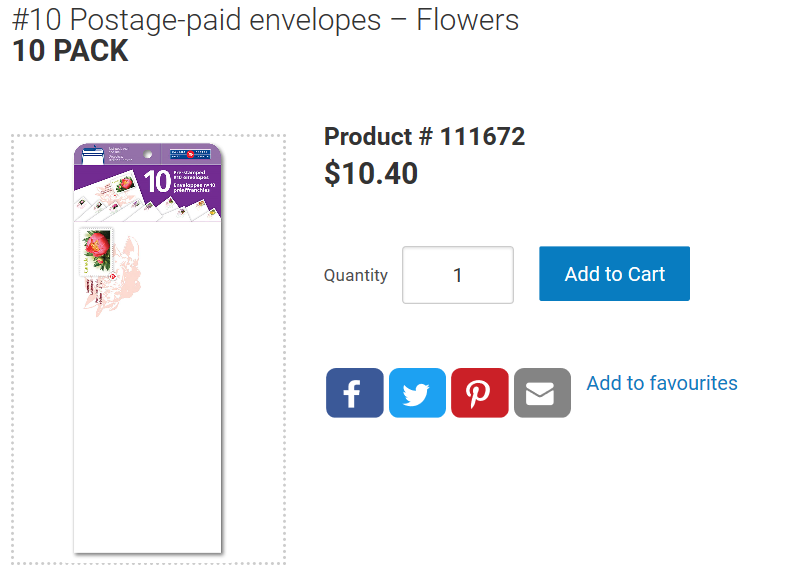
3) Sending students mail. Who out there doesn’t love to get mail? For my families that have decided not to access the online component of the learning, a letter in the mail continues to tell them that we are thinking of them and offers them another reminder how they can reach out. Did you know that Canada post will deliver pre-stamped envelops to your house? It took about a week to receive our envelops and we were so happy that no one had to leave their house to buy them!

4) Video conferencing with the class and with individual students. My local has worked closely with the board to make some specific platforms available for meeting with students online. When I am meeting with a student and their family, I take another staff member with me on all calls. Usually, it is one of the TAs from my class that my student knows very well. For my students who are incredibly socially motivated and have difficulty reading or communicating, seeing each other has been very important for their emotional well being. I keep it short and control the conversation. Only about half of my families wanted to do this option but the students that have participated, have loved it!!


5) Sharing pictures from class. At the end of every weekly file is a section called connecting. I have included pictures from school and also some parents have submitted some pictures from things that they are doing at home! Many parents have told me that the pictures have been very helpful for their child and they have enjoyed looking at them.