kids these days – educator version

I googled “kids these days” to see what would pop up on my browser and was neither surprised nor happy. In fact there was a complete absence of anything necessary to help me create a catchy opening. By necessary, I mean humorous. 

Of the 4.1 billion possibilities: a bunch of clichéd book titles, a podcast, and some music videos were all that filled the first page. Despite my optimism, all I got was not a lot. So much for this roundabout approach yielding anything interesting as a way to set this piece up. I gave it a shot, and based solely on such underwhelming search results, it is on to plan B.

Plan B: In other, more accurate, words, “the kids are alright”.

For the past month, I have been working with a teacher candidate (TC) from a Toronto area university. Happily, I might add. He now joins a mighty group of amazing educators (14+) who have patiently pursued and plied their practice in my classroom. For the record, the expression shared in the title of this post has yet to enter my thoughts when I consider the preparation, professionalism, and passion being shared each day through our interactions, in the classroom with students, and among the rest of our school community. And when you thought that things couldn’t get any better, our school has been fortunate enough to welcome an additional 3 other teacher candidates into our classes.  

Life is good and it is happening at the speed of education everyday at my school, and it is aided, in part, by the presence of 4 teacher’s in training. We are fortunate to be sure, but it could and needs to happen more often. Which was why it came as a surprise prior to welcoming my TC, to learn it has been a struggle to find host teachers. 

Granted, the last 2 or 3 years must have been very difficult for new teachers to find placements in host schools due to reasons well beyond anyone’s control. At first it was understandable as we were all forced back and forth between our school and home bases to teach on line for the first two years of COVID19, and then came the soul murdering hy&r!d learning model that still triggers my gag reflex each time I think about it. Despite the pile up of so many uncontrollable obstacles, pivots, and uncertainties I still happily welcomed 3 teacher and 4 CYW candidates into our school community. Difficult yes, yet still possible and worth it every time. 

I get that the idea of hosting a student teacher right now might be something educators have put to the side for a while, but now that we are back to school, for now, there is still a lot of upside to a TC in the new non-normal we are teaching in. With another practicum cycle only 5-6 weeks away, I wanted to share this post to encourage you all to consider being a host teacher/mentor at your school. Yes there is additional work to do, and it is worth it. 

So here is my pitch: we need more teachers to host teacher candidates. 

Here goes: firstly, without adding too much sentimentality, we all owe our host teachers some props for helping us as we were getting started. This friendly yet simple reminder never hurts once in a while. I know that my experiences as a TC all those years ago continue to anchor my practice in some way. Whether it was based in inquiry, equity, or photocopied busy work, the potential impact of those first 100 days in the classroom are what equipped me to become a host teacher. For the record, I left the photocopying busy work behind almost immediately.

Imagine if you could go back to when you were a student teacher. What advice would you have wanted to hear? What noise would you have tuned out? This is what pushes our profession forward. My goal remains to help each student teacher turn ripples of potential into limitless waves of possibility long beyond their practicums.

Even those who have not considered because they are newer to the profession I encourage you to do it. Imagine the opportunity to reflect on the growth you have made since you were in their shoes? Imagine the wisdom you have gained since you walked into the classroom as an OT, an LTO, and now as a teacher with a contract? It’s time to give back and get even more in return. 

Are there benefits?

Yes. No classroom is ever hindered by having a well prepared and supportive additional educator in the room. Need more? Sprinkle in daily doses of fresh thinking around curriculum, assessment, and educational philosophy as part of the deal. The daily conversations with my TC have been reflective and thought provoking. It is a two way superhighway of ideas and next steps. Still on the fence? Student teachers are extremely enthusiastic about planning units and lessons, and make good collaborators whether it is in planning or co-moderated assessment. 

Are there drawbacks? 

I have asked folx from different schools what their take on the idea of hosting TCs, and the answers have lined up pretty consistently in favour of them. I have also heard, “Oh, they are a lot of work and I don’t want to take that on that responsibility and paperwork.” This is a valid answer at times, and yes there is a bit of paperwork (mostly digital now), but is often used far too often without realizing the benefits, ideas, and support that a TC brings as well. Any additional work is far outweighed by their contributions in support of students. 

“I had a student teacher once, and they tried to take over my class.” There is always a possibility that a very excited and ambitious educator will come bouncing through your door for their practicum, but it is also a chance for you to impart that wisdom you’ve worked so hard on accumulating. If it is not going to be a good fit, be honest about it right away. I did have occasion to decline working with a candidate after the first day it became very clear they were neither prepared nor able to work respectfully with the students in my classroom. 

“I am not used to giving over control of my classroom.” I get it. We are used to ‘be the one and only’ in our classrooms however fresh views and voices bring a level of excitement along with them and it is good to learn how to let go knowing that you are not abdicating your role, but making room to equip the next generation. 

By sheer amount of space on the page devoted to the pros and cons of having a student teacher, it might appear that there are more downsides, but that is only a visual ruse. By far, working with teacher candidates over the past decade has provided a great deal of personal growth along with it. I hope you can make room for them in yours. 


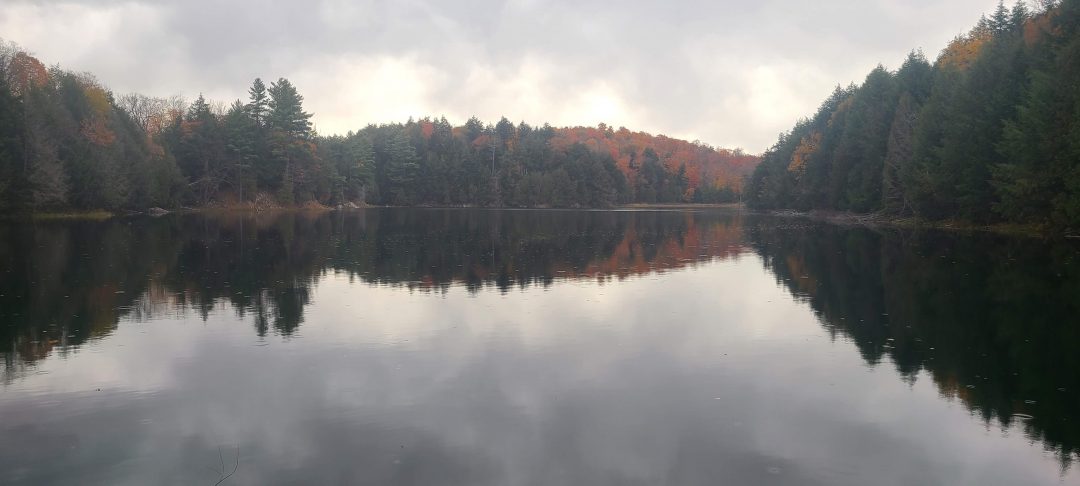
A cloudy sky reflected in a smooth lake in fall.

The Fall Months

The fall reminds us all of many things. The beauty of nature as leaves change from greens and browns to vibrant reds, yellows, and oranges. The wonder of the fall seasons that we get to partake in every year. The dominance of ‘Pumpkin Spice Lattes’ and all things pumpkin to consume. The excitement of new school sessions that are marked by the “ber” months. The fall months (September to November/December) bring richness, newness, and a sense of adventure. However, for some, there is a ‘sadness’ that fall brings with it.

According to the Centre for Addiction and Mental Health (CAMH), Seasonal Affective Disorder (S.A.D) affects 35 percent of Canadians. “Another 10 to 15 percent have a mild form of seasonal depression, while about two to five percent of Canadians will have a severe, clinical form of Seasonal Affective Disorder (SAD). It often starts with fatigue, then symptoms of sadness, lethargy, apathy and depression, said Dr. Robert Levitan, the head of depression research at CAMH” (Kwong, 2015).

The Canadian Psychological Association references “Seasonal Affective Disorder (SAD), or Depression with Seasonal Pattern, as a condition that comes and goes based on seasonal changes, appearing in the fall and going away in the spring/summer. If you have SAD, you may find yourself feeling many symptoms of depression, especially irritability, and you may be more sensitive in interpersonal relationships. People often report unusually low energy levels, causing them to feel tired, heavy, or lethargic” (Canadian Psychological Association, 2020).

This disorder may often be regarded as the ‘winter blues’ which can affect many educators who are juggling back-to-school, new schedules, classes, and sometimes responsibilities with little or limited energy to do so (let’s not yet add any home or community responsibilities teachers may have as well). How can one cope when everything just seems so S.A.D? First, it is important to note that you are not alone.

Mental health & wellness resources such as those found on the Ontario Teacher’s Federation website (titled ‘Useful Links for Wellbeing’), as well as resources and services offered by your board are ways in which educators can combat S.A.D. Some boards offer counselling, mental health professional, and community services at low or no cost to educators. These services enable educators to work with a mental health professional to develop strategies, tools, and/or action plans to mitigate/navigate Seasonal Affective Disorder. Similarly, there may be options to connect with paramedical professionals.

Part of the Building Better Schools Plan by ETFO Provincial recognizes that “As the heartbeat of public education, teachers and other education professionals play a critical role in helping to shape the system and develop our students to be the very best they can be. Ontario’s future depends on all of us to protect and build better schools” (ETFO, 2022). There is a richness, a newness, and a sense of adventure that the fall months bring. Part of ensuring Ontario’s future is using available resources and services to protect and capacitate educators’ mental well-being.

Resources to consider


References:

  • Canadian Psychological Association. (2020). “Psychology Works” Fact Sheet: Seasonal Affective Disorder (Depression with Seasonal Pattern). Canadian Psychological Association. Available at https://cpa.ca/psychology-works-fact-sheet-seasonal-affective-disorder-depression-with-seasonal-pattern/
  • Centre for Addiction and Mental Health. (2022). Seasonal Affective Disorder (SAD). Mental Illness & Addiction Index. Available at: https://www.camh.ca/en/health-info/mental-illness-and-addiction-index/seasonal-affective-disorder
  • ETFO. (2022). Building Better Schools: A plan for improving elementary education. Elementary Teachers Federation of Ontario. Available at: https://www.buildingbetterschools.ca/the_plan
  • Kwong, M. (2015). Sad Science: Why winter brings us down, but won’t for long. CBC News. CBC/Radio Canada. Available at: https://www.cbc.ca/news/health/sad-science-why-winter-brings-us-down-but-won-t-for-long-1.2981920#:~:text=About%20two%20to%20five%20per,effects%20of%20our%20chilly%20moods%3F

Photo by: Iyanuoluwa Akinrinola

Beyond One Day – Truth & Reconciliation through curriculum planning.

Orange Shirt Day
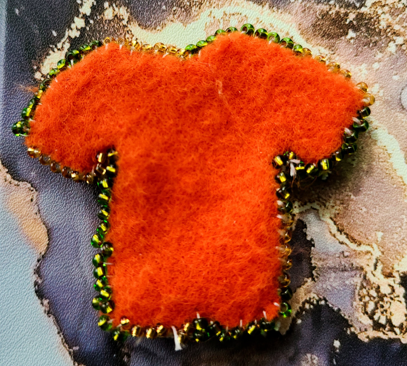
Orange Shirt Day Bead Work

September 30 has been earmarked as the National Day for Truth and Reconciliation. Before this, most educators knew this day as Orange Shirt Day, which stemmed from the story of Phyllis Webstad, a Northern Secwepemc author from the Stswecem’c Xgat’tem First Nation, who shares the story of her experiences in a residential school. The significance of September 30 is profound as it calls for us all as a nation, particularly as educators, to pause and reflect on the effects and impact of residential schools on Indigenous peoples (children and adults) to this day. It is estimated that over 150000 Indigenous children attended residential schools in Ontario alone over the span of 100+ years (Restoule, 2013). We know that many of these children did not make it home, while many others still live with the trauma they faced within these schooling systems. 

Orange Shirt Day, now known as the National Day for Truth and Reconciliation, is but a starting point for us as educators. How can we collectively move beyond one day to infuse learning about Indigenous histories and present Indigenous impacts into our overall planning across different subject areas? In the ‘Calls to Action’ reported by the Truth and Reconciliation Commission of Canada (2015), sections 62 and 63 emphasizes the need for an educational approach that centers Indigenous histories, accounts, and perspectives in the curriculum, not as a one-off event or as an interruption to learning, but instead as an integral part of developing understanding within Canadian education. 

Simply put, Indigenous history is Canadian History. Indigenous peoples continue to shape and influence Canadian society in meaningful ways. 

“In 2015, ETFO endorsed the Truth and Reconciliation Commission’s Calls to Action. ETFO understands that it is integral for educators to move forward into reconciliation with the Indigenous Peoples of Canada” (ETFO, 2022). Challenge yourself to learn more using the curated information provided by ETFO, and be intentional about infusing Indigenous representation in the various subject areas you may teach. Resources can be found and explored at etfofnmi.ca

Fostering further development and understanding (both in learning and teaching practices) of Indigenous accounts and narratives in K-12 learning communities not as an alternate focus or ‘alternative learning’, but as a central tenet of Canadian education is critical to moving towards reconciliation as we learn and teach about Indigenous peoples of Canada.

For more exploration and information, visit https://etfofnmi.ca/.

References:

Restoule, K. (2013). An Overview of the Indian Residential School System.’ Anishinabek.ca. Retrieved from https://www.anishinabek.ca/wp-content/uploads/2016/07/An-Overview-of-the-IRS -System-Booklet.pdf.

Truth and Reconciliation Commission of Canada. (2015). Reports – NCTR. NCTR – National Centre for Truth and Reconciliation. Retrieved from https://nctr.ca/records/reports/#trc-reports.

Elementary Teachers’ Federation of Ontario. (2015). First Nation, Métis and Inuit (FNMI). Etfo.ca. Retrieved from https://www.etfo.ca/socialjusticeunion/first-nation,-metis-and-inuit-(fnmi).

Schooling or Learning?

For many, when presented with both, schooling is the same as learning, and learning seems to be something that only occurs in schools. Is this the case, however?

At ETFO’s Public Symposium titled ‘Generation Black: You’re Next!’,  Dr. Carl James highlighted why educators must pause and reflect on the similarities and differences between these two concepts. 

What is schooling? According to Oxford Learner’s Dictionary (2022), schooling is defined as “the education you receive at school”. When cross-referenced with various dictionaries (Marriam-Webster, Collins, and Cambridge dictionaries), they all provide the same definition – education received at an institution, whether at a primary, secondary, or tertiary level. 

Learning, however, is not as straightforward in its definition. Going back to Oxford Learner’s Dictionary, learning is given different definitions within various contexts. According to all the dictionaries mentioned above, learning is a process that occurs in multi-settings in multiple ways, beginning when an individual is born. 

“For educators, the ability to teach is a privilege, but in a broader sense, it is a privilege that runs parallel to the responsibility of teaching relative to the complete history of ideas and events that have shaped and continue to shape human growth and development” (Dei, Karumanchery, & Karumanchery-Luikb, 2004). 

Since learning is a continuous process, and schooling is one of the environments in which learning occurs, how can we, as educators, ensure that learning is facilitated meaningfully within the school environment?

Planning Matters:

In 2020, the Ontario Black History Society examined a Grade 8 history textbook and ‘blacked out‘ any information that did not mention or acknowledge Black people in Canada. Of the 255 pages of information, only 13 pages remained. Indigenous sovereignty, economics, and culture are rarely explored in the K-12 curriculum. Thus, students absorb this information, effectively being erased within their learning, and are expected to repeat this narrative in everyday Canadian contexts as acceptable discourse within society. The impact and contributions of people within the 2SLGBTQ+ community and other cultural communities are erased from ‘settler’ rhetoric and in curriculum/resources used to direct learning. Thus, students absorb this information, effectively being erased within their learning, and are expected to repeat this narrative in everyday Canadian contexts as acceptable discourse within society.

Breaking the cycle of erasure and omission within the classroom is linked to the planning stage. Before planning, take the time to know your learners. Become familiar with the communities in which they live. Foster a classroom environment wherein their experiences inside and outside of the classroom are valued and can be welcomed in their learning space. Cultivate incorporating student input, perspectives, ideas, and resources into Unit and Lesson planning. Develop connections with community members and partners inside and outside the school that can broaden your familiarity with resources that reflect the society in which we live. Approach your planning intentionally, using an anti-racist, anti-oppressive lens, which creates a window for your students to engage with often omitted members of their society and a mirror whereby they see themselves reflected in their learning.

Representation Matters:

“Dialogue is the encounter between men, mediated by the world, in order to name the world. Hence, dialogue cannot occur between those who want to name the world and those who do not wish this naming—between those who deny others the right to speak their word and those whose right to speak has been denied them. Those who have been denied their primordial right to speak their word must first reclaim this right and prevent the continuation of this dehumanizing aggression” (Friere, 2005. p. 88).

In short, representation matters. Recentering multi-representation in learning is one of the vehicles for transformative change that can begin to shine a light on learning our whole in constructive ways.

  • Think about the resources you use and share with your class. Who is reflected? Who is erased? Who is tokenized? Who is omitted?
  • Reflect on your interactions with parents, guardians and members of your school community? Who is made to feel welcome? Who is kept at arm’s length? Whose experiences are valued? Whose experiences are often invalidated?
  • Conduct an inventory of your learning and resource plans. Are you ensuring that your plans reflect the learners in your classroom? How have you challenged yourself to plan and facilitate learning from a social justice, equity, and inclusive lens? Have you included your learners’ interests, backgrounds, and experiences as integral to planning and lesson facilitation?

Assessment Matters:

As stated in the Growing Success policy document put forth by the Ontario Ministry of Education regarding authentic assessment, “Our challenge is that every student is unique, and each must have opportunities to achieve success according to his or her own interests, abilities, and goals” (Ontario Ministry of Education Growing Success, 2010).

Assessment and Evaluation practices in Growing Success (2010) state that “the seven fundamental principles lay the foundation for rich and challenging practice. When these principles are accepted, implemented, utilized, and observed by all teachers, assessment becomes a tool for collecting meaningful information that will help inform instructional decisions, promote student engagement, foster meaningful demonstration of student understanding, and improve student learning overall.


References:

Dei, G. J. S., Karumanchery, L. L., & Karumanchery-Luikb, N. (2004). Chapter Seven: Weaving the Tapestry: Anti-Racism Theory and Practice. Counterpoints,244, 147–164. http://www.jstor.org/stable/42979563

Freire, P. (2005). Pedagogy of the Oppressed: 30th Edition (M. B. Ramos, Trans.). The Continuum International Publishing Group Inc. (Original work published 1921).

Ontario Ministry of Education. (2010). Growing Success: Assessment, Evaluation, and Reporting in Ontario Schools. Retrieved from https://www.edu.gov.on.ca/eng/policyfunding/growSuccess.pdf

Oxford Learner’s Dictionaries. (2022). Learning. Oxford Learner’s Dictionaries.
Retrieved from https://www.oxfordlearnersdictionaries.com/.

Oxford Learner’s Dictionaries. (2022). Schooling. Oxford Learner’s Dictionaries.
Retrieved from https://www.oxfordlearnersdictionaries.com/.
My Experience with Project Overseas

If you are a life-long learner who believes in equity, inclusion and public education then volunteering your time and skill-sets with the Canadian Teachers’ Federation (CTF) Project Overseas (PO) might just be the right experience for you. I myself have volunteered for PO for three years (2017, 2018 and 2019) and I can honestly say that it was one of the best experiences in my professional career. Overseas projects have not run in 2020, 2021 or 2022 due to the pandemic. You might be asking yourself, what is Project Overseas and how can I get involved? I will share a few things with you to get you started and also connect you with some websites for additional information.


What is the Canadian Teachers’ Federation (CTF)?

CTF is a national alliance of provincial and territorial member organizations across Canada (including ETFO). Its head office is located in Ottawa. The goal for CTF is to demonstrate a commitment to advancing education and building teacher solidarity worldwide. 

Here are some ways that CTF supports teachers:

  • Increased influence with government
  • Support for better working conditions
  • Research and professional development
  • Educational resources and services
  • International volunteering opportunities (i.e. Project Overseas)

For more information on CTF, please visit www.ctf-fce.ca 


What is Project Overseas?

PO is a collaborative learning opportunity for participating provincial and territorial teacher organizations with other progressive countries throughout Africa and the Caribbean. As a selected member from your union, you and your team of Canadian teachers/members will travel to the host country (usually for the month of July) and work in partnership directly with other facilitators from the host country to co-plan and co-deliver professional development strategies to their lead teachers and administrators in a series of workshops and presentations. In most situations, the experience will be similar to a train-the-trainer model. This is a shared approach to teaching and  learning, as you will learn as much from the host nation as they will learn from you. The goal for PO is to improve teaching and learning around the world, to ensure equitable access to higher education for young girls, and to promote equitable, high quality, publicly funded public education for all. 


What was my experience like with Project Overseas? 

My experiences in Sierra Leone and Uganda have been one of the best learning experiences in my professional career. I met amazing educators who were doing amazing things with very little resources, with no, or next to no access to technology and with limited opportunities for professional development. Educators were using tree bark to create soccer balls for physical education. They were using pebbles, bottle caps and seeds from fruits to support students’ learning in numeracy. They were using flattened out empty cardboard boxes as anchor charts to teach concepts in literacy, science and social studies. These amazing educators were so enthusiastic about learning new ideas and sharing their own teaching strategies with us. One of my learning highlights was understanding and appreciating their use of music in teaching new concepts and as a tool for reviewing big ideas. In fact, singing, clapping and movement were used in all aspects and subject areas throughout the learning process. Music was used to welcome people into a space, to bring the group together, to teach a new concept and to review what was taught. Music was used as an holistic and inclusive way of learning. You would certainly be moved, in more ways than one, by your shared experiences and new learning opportunities with PO. You would be certain to learn new ideas that you could bring back to your school community and incorporate into the classroom. 


With PO, we also had opportunities for cultural exchange. There was usually a cultural event where we shared aspects of our Canadian culture. This might have included a taste of certain food like maple syrup, a Canadian geography game or two, a game of hockey or lacrosse and of course the singing/playing of the national anthem. The host country in return would present a special event which usually included the wearing of traditional outfits, dancing, food and games/plays. In some cases, we were able to visit a cultural museum, a zoo or a school/classroom that might still be in session. 


Regardless of which host country you attend, you will make an impact on their access to quality education and you’re certain to return with a new outlook on what it means to be an effective educator, an advocate for change. 


Tips on Applying for Project Overseas

  • Get involved with your local/territorial and/or provincial union (volunteer to be a member of a committee, attend local meetings, participate in/lead a workshop or conference, volunteer to be a union steward, or  volunteer as an alternate or delegate at ETFO’s AGM)
  • Check ETFO’s website for information and updates about Project Overseas.
  • Begin working on your resume (including references), as you will need to demonstrate your work experiences and leadership skills 
  • If you also speak French or another language, it would be helpful
  • Consider volunteering with a non-profit organization locally and/or internationally, to gain international and intercultural experiences
  • Reflect on your willingness/readiness to be away from home (your family) for a long period of time, with limited access to technology on a daily basis, sharing accommodations with others, working in partnership with others from diverse backgrounds and cultures, and experiencing food choices that may be new to you
  • Check out CTF/FCE Project Overseas website to see a list of the various partner organizations in which they participate and begin to do your own research on the culture, costumes and educational challenges of those countries


For more information on how to apply for PO, visit CTF/FCE Project Overseas


The Butterfly Conservatory

A few years ago, I visited a butterfly conservatory. It wasn’t my first ever visit, but it was my first visit through the lens of an educator as I was a teacher candidate at the time. I left the conservatory in absolute awe. Of course, the butterflies were beautiful, but I couldn’t stop thinking about the facility that housed the butterflies and the dedicated and knowledgable staff members that kept the butterflies safe and content.

I like to think of butterfly conservatories as an analogy for classrooms.

The focus in the conservatory is on the butterflies and giving them exactly what they need to thrive. Not all the butterflies got the same treatment, but an equitable environment was maintained by giving each species of butterfly what was required to meet its needs. Much like equity in our classrooms, students do not all need the same resources or supports to be successful, but they are all given equal opportunity to succeed by receiving individualized supports.

The butterflies can co-exist peacefully in the same space. Despite the creatures being of different species, different colours, or from different parts of the word, they live harmoniously. I like to think that within the core of all humans is a desire to co-exist peacefully with other humans. For some learners, this may take practice, repetition and patience, but the human need for connection and feelings of safety and belonging are innate and essential.

Lastly, this butterfly facility does not run itself and it is not run by just anyone. There is so much “behind the scenes” work that happens at places such as this, to ensure the butterflies and their visitors have an unforgettable experience. There were many tests being done to ensure air quality, temperature and humidity were remaining at optimal levels to accommodate for each different butterfly species present. The butterfly staff were not only knowledgable and had received training on how to care for the butterflies, but they were also passionate and proud to share the butterflies with the incoming visitors. Similarly, school staff are the backbone of the education system and put in invaluable time and effort “behind the scenes” to create optimal learning conditions and plentiful opportunities for students.

My analogy sticks with me and comes to mind often. Maybe this is something you’ve thought of before, maybe you have a more applicable analogy for classrooms, or maybe you’re now creating your own analogy for the first time.

Either way, one thing is true…

An ecosystem like the butterfly conservatory is delicate. It’s fragile. It can be damaged. What are the butterflies to do if their environment becomes destroyed or the homeostasis is disrupted?

Unlike the butterflies, we don’t fly away. ETFO members and education workers stand together in solidarity.

Though we may not be “living” in optimal conditions like the butterflies, we continue to advocate for public education, safe learning environments for staff and students, and equitable learning opportunities for all.

Prom Project Hamilton

All about Prom Project

HWDSB is involved in some incredible initiatives but I thought I would take the time to write about one of my favourites- Prom Project Hamilton. If you haven’t heard of this event, I am happy to fill you in! Prom Project Hamilton is a non-profit event that focuses on finding students the best outfit for prom (grad or any other formal event they may have). Students can shop and acquire one outfit, accessories and shoes for free. Prom Project accepts donations from stores in the community and from families that have a gently used outfit that they do not need anymore. Then, volunteers sort through these outfits for the months leading up and get them organized, tagged and ready for the big day. Thankfully, I received information about this event and was able to volunteer again, not just for the day of but for the sorting parties leading up to the big day.

Preparing for Prom Project 2022

Sorting through these suits and dresses was easily one of the best parts of my week. Under the incredible leadership of co-organizers Krysta Bucci and Amy Leaming Cote, staff from around HWDSB came together to sort and organize prom outfits. We tagged each item and made sure it was suitable for students to own. Not only that, but we organized jewelry, shoes, ties and other accessories so that come the big day, students could easily browse through each item and find their perfect event outfit. I was always in awe of how hard Krysta and Amy worked to pull the event off. They had little time to advertise this year as they received notice that the event would run later than usual. All 125 volunteers (and 500 students that attended) would surely agree that they pulled off an incredible event.

Prom Project had to create a website for students to pre-register this year due to COVID. I helped my students find the website and advertised in my school to ensure students were all set. Getting our students there is something that is extremely important, so once they were all set on the website, they were halfway to Prom Project. Letting them know about transportation options was the final step. The website was user friendly so that all students and volunteers could easily register. Feel free to browse the Prom Project website. I also made sure to show my students some of the outfits available by bringing in some of my personal donations to my classroom. I asked the grade sevens and eights to model available dresses and suits, making sure to provide suit sizes for all genders. A total of 28 students modelled for their peers, really bringing the event to life! I also made sure to share and post the dresses, suits, shoes and accessories on the days leading up to the event for further advertising. Showing students how beneficial this event would be for them was a super important part of the process. Some students would not be able to afford a graduation outfit and this event gives them the opportunity to attend their event with confidence and without worrying about the costs.

Prom Project 2022

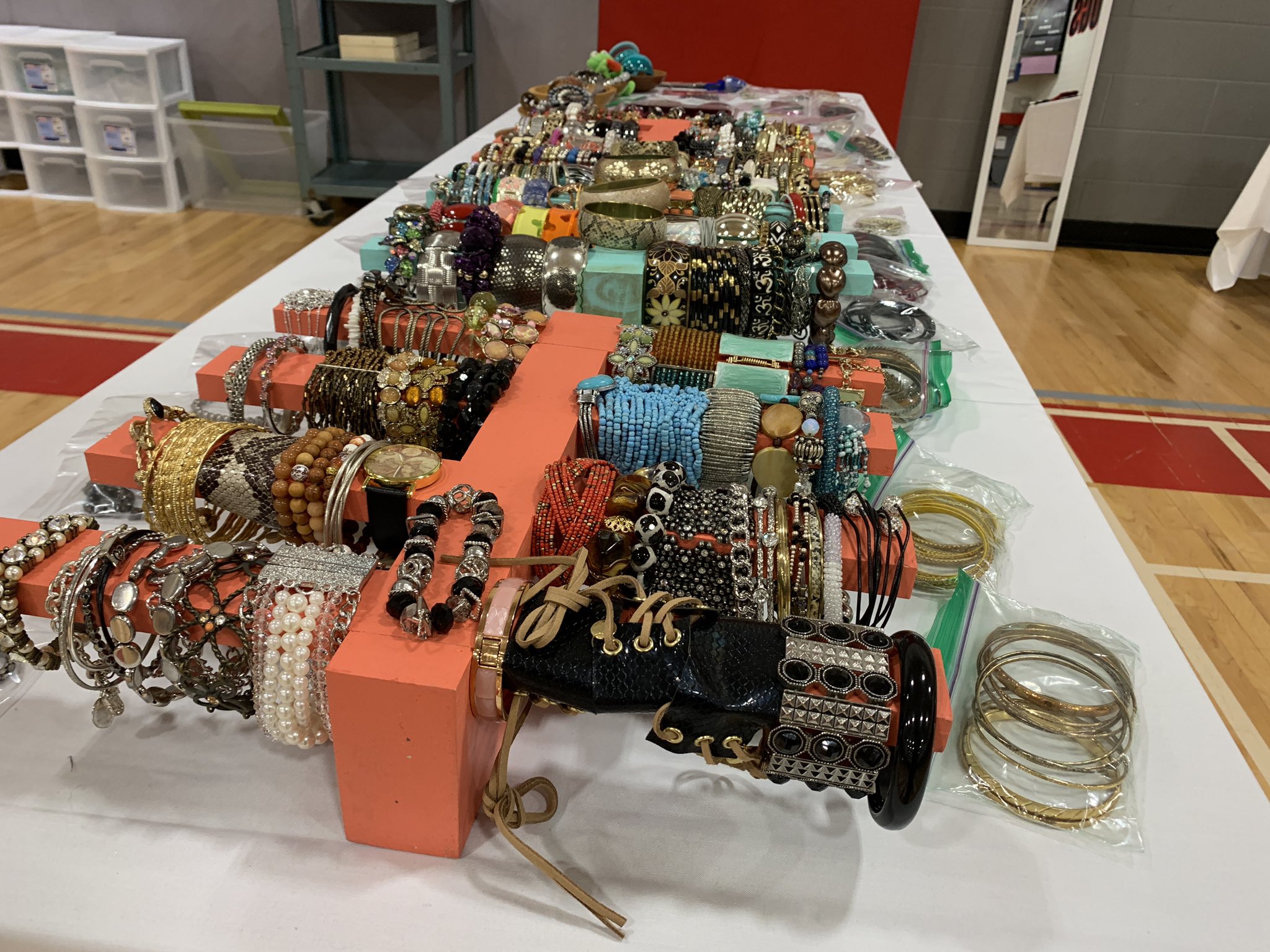
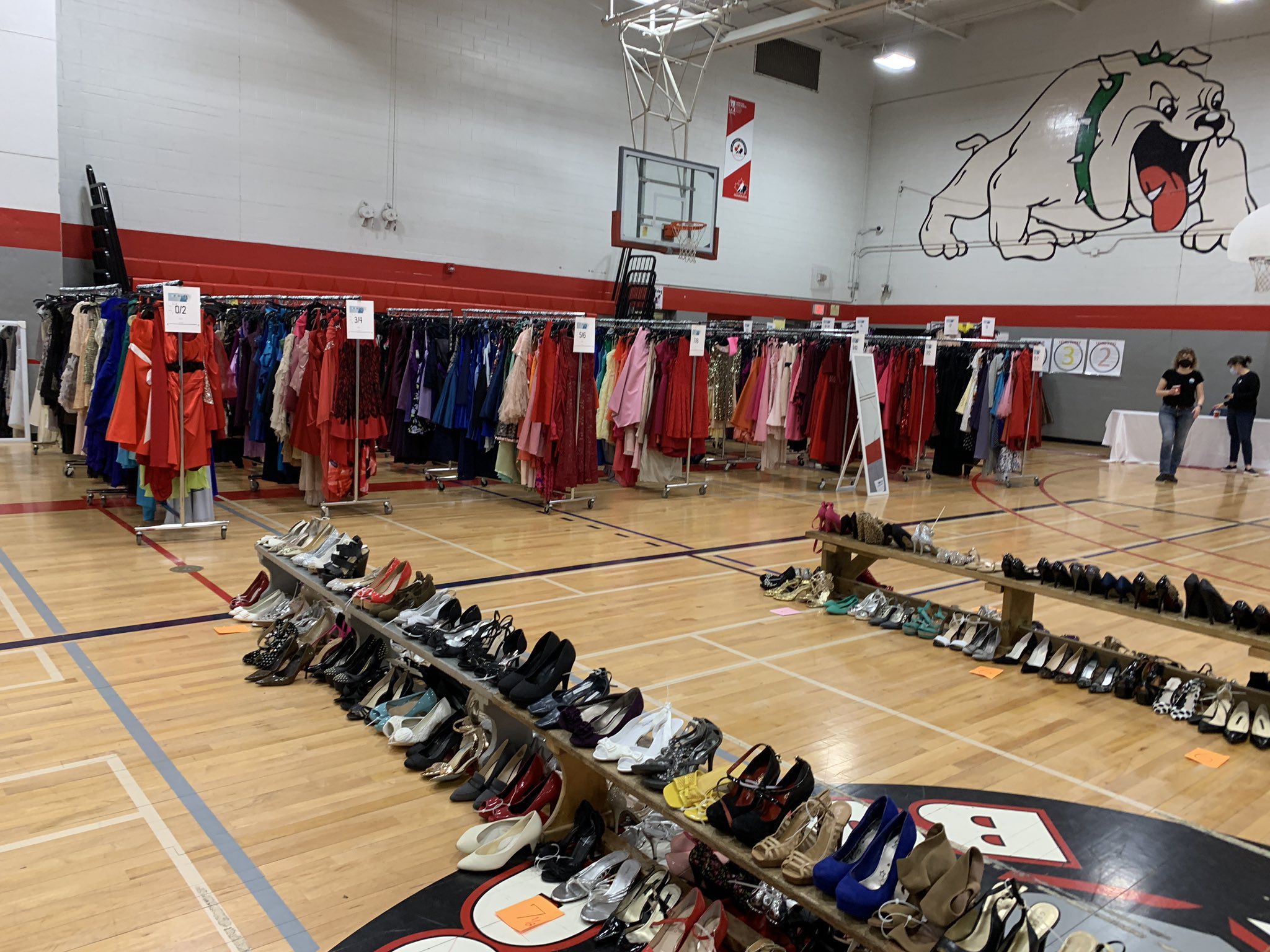
The day started at 8:00am as all of the volunteers gathered in the staff room at Sir Winston Churchill high school in Hamilton. The volunteer lead gave a speech about our roles and responsibilities and we gave a big round of applause for our co-organizers Krysta and Amy. We were graciously blessed with coffee, donuts and cookies to get the morning started. Walking into the Sir Winston Churchill gym was quite the surreal experience. All the gowns, suits and accessories that had been stored in two storage rooms were now displayed in a ginormous gymnasium. Staff, students and volunteers had spent all day Friday setting up the gym so that students could feel at ease while shopping for the perfect outfit. The ties, shoes, suits and checkout areas were at the front while the short and long dresses were at the back. The back wall also beautifully displayed the jewelry selection and the purses. The entire right wall of the gym is where the incredible team of 5-10 seamstresses were located. Alterations took place on site as volunteers hemmed, adjusted straps and took in/let out dresses. I was incredibly fortunate to have my mom come to help out as I know she is one of my favourite seamstresses. She worked with many dresses and suits, making sure that she didn’t stop until the outfit was perfect. She worked one hour straight hemming and taking in a beautiful three layer grey gown. I was really appreciative of my mom as she spent most of Prom Project working on alterations. Her sewing machine was the last one to be unplugged at the end of the event.

My students arrived at 9:00am and about eight girls from my school ran towards me. I quickly asked them about their style and colour preference, their size and then we started going through the racks. We had been talking about styles for weeks so I had a rough idea in mind. With the registration this year, students only had an hour to shop so time was not on our side. The girls pulled about ten gowns each and ran into the dressing room. I quickly ran over to the suits to see that one of my students was in good hands with another volunteer. I am not the best at suit sizes! The change rooms were private and professional, offering many mirrors and private stalls for changing. When my students showed me a dress, I was in awe at how nicely they fit and just so grateful that they agreed to come to this fantastic event. They all walked out with a beautiful dress, some with five-foot trains and others simple and perfect for their style. My toughest critic exclaimed to me on Monday, “Miss, I actually had fun, the dresses were actually nice!” Those words mean a lot coming from a skeptic grade eight. They have missed out on a lot these past few years and giving them the grad of their dreams will mean so much more when they are in something that makes them feel comfortable and confident. I also saw a lot of my old students and was excited to help them find a nice suit/dress for their upcoming formals. The event could not have run smoother. I was happy to see over 30 of my students (past and present) attend, even some grade sevens coming to find a nice outfit. Two of my students found matching pink ties which was very cute.

Things to consider in the future

There were so many beautiful shoes and dress options but I know they were lacking a lot in male clothing and male shoe donations. I noticed it was frustrating for a few families who could only get a later time slot but then arrived to find the XS male options had been taken. I will try next year to start looking for donations earlier and to ask for menswear donations rather than accumulate as many dresses as possible. Especially with so many students choosing from a wide variety of styles, options are key. I also think it is important that we find tights and long sleeve under shirts for students that need these options. I was very thankful we had multiple long dress options but felt bad when I couldn’t find something to cover a students arms. I will make sure I think of these options for next year as well.

If you are ever looking for a unique and fun volunteer experience, be sure to google Prom Project around April/May next year. I will never miss one of these events again!

Feel free to read this lovely article as a CBC reporter finds volunteers to reflect on the day. I am featured towards the end of the article.

Below are multiple photos from the event. You can also follow Prom Project on twitter and instagram to stay connected for future events.

Students as Teachers: a Culture of Inquiry and Learning

“I am just going to check in on everyone and see how they’re doing” – one of my Kindergarten students said as she led her peers through a step-by-step challenge where they created a DIY ‘marble run’ out of paper tubes and tape. 

My DECE partner and I were blown away by her kindness, patience and commitment to the success of her classmates during this process. 

We have been trying to keep an open invite for all students in our class to have the opportunity to be the “teacher” or the expert on a topic of their choice. Through online learning, fewer natural moments of teaching happen from student to student like they would in a physical classroom. Hands on collaboration between students virtually can be tricky, as they lack the opportunity to share space and materials. We decided it would be more equitable to schedule these student-led activities ahead of time, in order to allow all students time to prepare the proper materials. As I move to in person learning in the fall, it is my goal to continue this practice as a means of supporting students belonging and contributing in respect to the Kindergarten program. It is my hope to further explore the benefits of fostering students confidence as teachers in the classroom as I continue to learn from my competent and capable young learners. Here are my initial thoughts:

The classroom community

  • Inviting students as teachers creates a culture of learning, respect and curiosity
  • Students teaching their peers builds community and invites students to be vulnerable and make mistakes

Through the lens of a child

  • When our students stepped into the role of educators, it provided my DECE partner and I a unique opportunity: to see the world through their eyes. Through their ideas, descriptions and step-by-step processes we were able to develop a deep understanding of the way they view the world, the way they solve problems and the way they persevere through challenges. 
  • Many children enrolled in Kindergarten programs are immersed in their first experiences of formal schooling. For some of my students, my DECE partner and I are their very first examples of educators. The way that children go about giving instructions, gaining the attention of others and providing words of encouragement can be reflective of what they see. It can be very powerful to listen to a student recite an encouraging phrase verbatim, such as “You are a problem solver!”.

Benefits for students

  • Teaching their peers provides students with the space to take risks while gaining confidence in their own ideas and abilities 
  • For the students involved in this practice as the learner, it allows them to explore new ideas or approach learned concepts from a different perspective than my own or that of my DECE partner. 

Inviting students to perform a new role as a teacher is inclusionary, culturally responsive, relevant and meaningful – which is the basis of everything I hope to cultivate in Kindergarten. 

The Power of “Thank You”

“Thank you”

2 simple words that mean so much. Especially when they are followed by a reason for giving thanks. 

As an educator of young children, I don’t teach for the “thank you”. I teach for the students, their progress, their laughs, their smiles, and that feeling of sharing a joy for learning. 

However, when I do get those genuine, ‘from the bottom of my heart’ “thank you” ’s, they often bring me to tears. Thank you can feel so reassuring, so comforting and can be a springboard that launches deep and powerful connections. 

An amazing colleague of mine, who is many years into their career, suggested I keep a journal of these kind words of thanks from parents and families. Initially, I thought this seemed silly. Why would I keep these notes and emails? What purpose would this serve me? But, I tried it anyways. Why not? If I didn’t find this practice helpful I could stop at any point and not tell a single soul I had ever done it. 

Fast forward to the present moment, where various letters, cards and printed emails from families live in the binder I stash at the back of my filing cabinet. I spread the word of this practice, as not a way to brag or boast but to share with you the feelings it has brought me.  

First of all, it brings me joy. What better reason to do anything? Why not document these joyful moments in celebration of student success.

Secondly, I find comfort revisiting these “thank you” ‘s when I feel tired, overwhelmed or broken down. It is easy for me to fixate on a lesson that didn’t go well, or the things that I could be doing differently; therefore doing them better. Flipping through this binder of positive thoughts allows me to reframe my mindset and reflect critically on my practice while being kind to myself.

Lastly, the powerful feelings that these “thank you” ‘s bring me are inspiring. I want to pass this feeling on to my colleagues, my students and their families who show up and work hard every day. I am mindful each day to share my genuine “thank you” ‘s out loud.

What is the most powerful “thank you” that you’ve ever received?

What is the most powerful “thank you” that you’ve ever given?

Curtis Carmichael- an inspiring teacher and activist

On March 4th, my school staff was lucky enough to listen to one of the most passionate guest speakers I have ever heard. His name is Curtis Carmichael and a talented author, teacher, speaker and activist. He is best known for his bike ride across Canada, striving for change in his Toronto community. He is also known for writing Butterflies in the Trenches, the first augmented reality book of its kind. I will include his website here in case you wish to learn more about his story and specifics.

Carmichael discussed many powerful topics with us, the first one being our job as educators. Here are the things he highlighted:

  • Unwrap each child’s gift
    • Carmichael is a firm believer that every single child has a gift and its our job to “unwrap it” and see for ourselves what makes them so special.
  • Prepare them for the real world
    • Carmichael mentions the importance of not running away from the community where they grew up but looking for ways to make it better. The real world will introduce new challenges for them after their educational journey and we need to prepare them for those

As for his book Butterflies in the Trenches, Carmichael encourages educators to read it with their class and to use the teacher guide it comes with. As he puts it,

    Butterflies in the Trenches is the candid story of Curtis’ life in the public housing projects in Scarborough, Ontario, where he grew up surrounded by trap houses, attending underfunded schools, and avoiding drive-by shootings. He shares raw and intimate stories from his childhood as a drug dealer and hustler and explores the effects of poverty, systemic racism, and police brutality on Black and low-income communities.

His story is so important for other children to hear as they grow up in similar surroundings. Hearing what he did was a meaningful story that all in the room were beyond inspired by. The opportunities he is presenting for young Black Canadians is outstanding and I shared his story with my class the Monday following this presentation. They had many questions about his journey across Canada and all that he has gone through.

Other ideas he speaks about are co-creating classroom activities with your class. Asking them what works and what doesn’t and going from there. I know the year is quickly wrapping up but there is still time to get everyone on the same page. He also mentions “Gamification” which is turning educational premises into games. This will encourage participation from the students in your class and will get them more engaged in their learning.

After Carmichael’s Zoom call ended, I thought about how to continue inspiring community in my classroom. I did an activity with them on the Monday where I asked them about their definition of community. These were their answers:

  • big group of people
  • BLM
  • a large amount of people in a group that agree on a specific topic
  • civilization
  • a place where people work, live and get along

I was saddened to see that “our class” or “a school” didn’t quite make it on the list. I will work harder to create community in my classroom and continue to look at activities that will engage all. The more initiatives that we take on as a class, I find it brings us closer together. We look forward to perhaps celebrating another spirit day as a class or creating a “Pink Day” for the entire school with the other 7/8 students. I was grateful for Carmichael as he reminded me of the importance of community and how co-creation is such a great way to start.

I look forward to sharing about how my students react to his book after we receive our copy next week.

Carmichael on Twitter: @CurtisCarmicc
Instagram: curtiscarmicc