Blog

Learning about Menstruation for girls with Developmental Disabilities

A few weeks ago, I heard my student screaming in the bathroom. I mean really screaming. The bathroom is located right across the hall from our class and two of us bolted to the door to see what the problem was. 8,000,000 things went through my mind in the 4 seconds it took me to get to the door. Was she hurt? Did she cut herself? Had she broken her leg? We knocked frantically and went into the bathroom and breathed a deep sigh of relief. My student was having her first period. She was bawling and very upset because she did not understand what was happening to her. My student has a Developmental Disability that impairs her ability to process information so explaining this was normal was a very difficult thing for her to understand.

We got her cleaned up, assisted her with some materials and brought her back to class to relax. (My other students who also heard her screaming were freaked out and needed to see that she was okay)

I called mom to let her know what had happened and supported the student through the remainder of the day until it was time to go home. I explained to the student multiple times that it was part of growing up and that all women experience this but she still seemed incredibly confused by the whole thing.

I went home that night and decided it was time for my 5 girls to learn about their menstrual cycles. However, I have never tried to teach students with Developmental Delays about what happens during puberty. I thought about what I needed to do to explain this effectively.

The next day I spoke with the parents of the other four girls and told them that we would be speaking about this in class. I wanted to prepare them in case they came home and had questions. Some of my student’s ability to communicate is quite impaired so when they come home talking about blood with no context there could be some confusion.

I also prepared visuals for us to use in class and visuals with a dialogue for home. It is really helpful for my students to hear things repetitively so having the same message at home and school is very helpful. I used visuals from Boardmaker online. Here is what an example of that looked like:

Menstrual

I made a time in our schedule over the next 6 weeks for the girls and boys to do a separate activity. The girls stayed in the classroom and the boys went for a walk. During that time, I used visuals to explain when a woman grows up, she gets a period. I explained what a period was to my girls using the most basic language and pictures I could think of. It has taken some time but my girls are starting to understand. For my group, I have had to reassure them consistently that it is healthy. The word healthy was something that they all understood. They knew if you ate vegetables it was good for your body and it made you healthy. It is a word that obviously resonated and made sense for them. After using that word, they all stopped looking so horrified about the concept of becoming a woman.

Privacy has also been a real challenge for some of my students. The day after our first big talk, my student walked into school and was so excited to tell me that she explained everything to her mom and dad last night about periods. She said it so loudly that an entire class of grade eight students next door to us heard it and burst out laughing. My other student walked in and loudly asked my other student “how’s your period going?”. My girls have had to be reminded multiple times that periods are private and not something we talk about in public.

Throughout the past few weeks, we have also purchased pads from the grocery store and practiced putting them on underwear correctly.

We will continue learning about puberty and menstruation until all of my girls develop the skills to manage their monthly cycle independently.

 

The Basics of Understanding Copyright in Canada

Creative Works are Protected Under Canadian Law

When protecting creations such as writing, paintings, and even computer programs, regardless of value, Canadian law protects all creative works, under the Copyright Act. Creators of original work have rights that are protected.

“Simply put, the Act prohibits others from copying your work without your permission. Its purpose is to protect copyright owners while promoting creativity and the orderly exchange of ideas” (Government of Canada, 2018).

What is Copyright

Copyright is defined in the simplest terms, “copyright” means “the right to copy.” “In general, copyright means the sole right to produce or reproduce a work or a substantial part of it in any form. It includes the right to perform the work or any substantial part of it or, in the case of a lecture, to deliver it. If the work is unpublished, copyright includes the right to publish the work or any substantial part of it” (Government of Canada, 2018).

“People occasionally confuse copyrights with patents, trademarks, industrial designs and integrated circuit topographies. Like copyright, these others are rights granted for intellectual creativity and are forms of IP”(Government of Canada, 2018).

Important differences:

  • “Copyright provides protection for literary, artistic, dramatic or musical works (including computer programs) and other subject-matter known as performer’s performances, sound recordings and communication signals.
  • Patents cover new and useful inventions (product, composition, machine, process) or any new and useful improvement to an existing invention.
  • Trademarks may be one or a combination of words, sounds or designs used to distinguish the goods or services of one person or organization from those of others” (Government of Canada, 2018).

Copyright protects all original “literary, dramatic, musical and artistic works provided the conditions set out in the Copyright Act have been met. Each of these general categories covers a wide range of creations, including:

  • literary works such as books, pamphlets, computer programs and other works consisting of text
  • dramatic works such as motion picture films, plays, screenplays and scripts
  • musical works such as compositions with or without words
  • artistic works such as paintings, drawings, maps, photographs, sculptures and plans” (Government of Canada, 2018).

The Conditions for Copyright

Works

“Copyright applies to every original literary, dramatic, musical and artistic work where the author was at the date of the making of the work a citizen or subject of, or a person ordinarily resident in, Canada or some other treaty country. (A treaty country is defined as a Berne Convention country, a Universal Copyright Convention country or a World Trade Organization [WTO] member.)” (Government of Canada, 2018).

Benefits of registration

“The Copyright Act states that a certificate of registration of copyright is evidence that copyright exists and that the person registered is the owner of the copyright. However, the Copyright Office is not responsible for policing or checking on registered works and how people use them. It also cannot guarantee that the legitimacy of ownership or the originality of a work will never be questioned” (Government of Canada, 2018).

A lifetime of protection

“Generally, copyright lasts for the life of the author, the remainder of the calendar year in which the author dies, and for 50 years following the end of that calendar year. Therefore, protection will expire on December 31 of the 50th year after the author dies” (Government of Canada, 2018).

The difference between copyright infringement and plagiarism.

“Copyright infringement is simply any infringement up on the rights of a copyright holder. Copyright law gives a copyright holder (usually the creator of the work) a set of rights that they and they alone can exploit legally (save for exceptions such as fair use)” (Bailey, 2013). Those include:

  • The right to reproduce/copy a work.
  • The right to create version of a work based upon another work.
  • The right to distribute copies of a work to the public.
  • The right to publicly display or perform a work.

“This means a wide variety of activities can be copyright infringing including performing a copyrighted play without permission, writing an unauthorized sequel to a work or simply making copies of the work” (Bailey, 2013).

Basically, copyright infringement, under the law, covers many unlawful activities that violate the rights of copyright holders. Copyright infringement is constructed under law as plagiarism is constructed under ethics. Plagiarism is essentially taking someone else’s work and presenting it as your own.

“The definition of ‘work’ can include a variety of things including ideas, words, images, etc. Anything that is seen as an unethical and unattributed use of another’s original creation can be defined as plagiarism” (Bailey, 2013).

Teachers are held to higher standards as teaching is a public profession

As teachers, we are held to higher standards as “teaching is a public profession” and that Canada’s Supreme Court rules that “off duty conduct, even when not directly related to students” is relevant to their [the teachers’] ability to teach. The Education Act Section 264 states that teachers are to have morality “to inculcate by precept and example respect for religion and the principles of Judaeo-Christian morality and the highest regard for truth, justice, loyalty, love of country, humanity, benevolence, sobriety, industry, frugality, purity, temperance and all other virtues” (Education Act 264 (1) (c)).

 So think before you use another person’s work and cite the work when you use it.

Collaboratively Yours,

Deb Weston, PhD

References

Bailey, J. (October 7, 2013) The Difference Between Copyright Infringement and Plagiarism, Plagiarism Today, Downloaded from https://www.plagiarismtoday.com/2013/10/07/difference-copyright-infringement-plagiarism/

Government of Canada. (1985). Copyright Act (R.S.C., 1985, c. C-42). Copyright Board of Canada https://laws-lois.justice.gc.ca/eng/acts/c-42/

Government of Canada. (September 26, 2018). A Guide to Copyright. Copyright Board of Canada https://www.ic.gc.ca/eic/site/cipointernet-internetopic.nsf/eng/h_wr02281.html#understandingCopyright

Government of Ontario. (October 17, 2018). Education Act, R.S.O. 1990, c. E.2, Government of Ontario, Downloaded from https://www.ontario.ca/laws/statute/90e02

Taking the time to collaborate and learn how to bridge the gap

Once a month, my colleagues and I go to a highschool to look at a math sample from each of our “marker students”. There are a group of about ten of us which is made up of highschool teachers, elementary teachers and math facilitators. We take time to identify what the student knows, what they are struggling with and how we know this. The main point of these meetings that occur each month is to bridge the gap between elementary and high school. We are trying to review the necessary skills that kids in grade eight will need for next year and then we will spend large amounts of time focusing on these skills in addition to the topics we currently are expected to cover. It is very helpful to know which topics to spend the most amount of time on so I will look forward to the times in the future when we will be discussing those items.


At these sessions, we talk about what the student’s work shows us, if they are struggling with something, what does that tell us about how they are learning. We call this section of debriefing the interpretations.

The next part involves looking at next steps for students and teachers. It is a great use of time and helps us as teachers look at students we need to help further and then, we directly review how to help them reach these next steps.

All teachers get to share their marker students and then we spend time talking about how these students can get some help to further understand the questions and the overall math concepts.

The challenges we face when planning and attending these sessions include selecting a rich task that we can really dive into once we gather as a group. We tried using past EQAO assessments but couldn’t find any open ended questions. We then turned to some other test questions. I also find it hard to find the time to pull these students aside to help them once we find out ways to do so after the fact. The skill is so specific once we find out what they need help with that it seems hard to just discuss it as an isolated math skill.

The benefits to meeting like this is the amount of minds on tackling the questions and looking at helpful next steps. I really look forward to all of these educators coming into a classroom with me to help the students who are struggling in a real life setting. That will be great for all of the students, especially since they would then have at least ten educators in the room to help them grasp the challenging topics.


Inclusive Education for All Students Including Those With Special Education Needs

Rebecca

As Ontario teachers, we know that there is a current challenge in addressing the learning needs of special education students with significant behaviour issues including violence against school staff.

The Elementary Teachers Federation of Ontario has developed a multi-year strategy to address violence in schools. This states specific goals and includes resources such as videos on how to address needs:

  • Lobbying the Ministries of Education and Labour to address violent incidents in schools and improve school board compliance with health and safety legislation;
  • Working with Ministry and school board representatives to improve workplace violence reporting and compliance procedures and develop training materials;
  • Building community advocacy to press the government to review its education funding formula and provide more funding for special education and support for students with high risk behaviors; and
  • Providing ETFO locals and members with enhanced education, training and resources on dealing with workplace violence.

Today, I read an excellent article by Caroline Alphonso  (The Globe and Mail, January 5, 2019) discussing how students with special education needs are being excluded from school due to their behaviour and violent tendencies. Alphonso cites Annie Kidder of People for Education stating that in 2018 “58 percent of elementary school principals and 48 percent of high school principals reported asking that a student with special needs not attend school for a full day” (Alphonso, January 5, 2019) due to insufficient classroom support. In addition, in British Columbia, special needs students miss up to 35.5 school days a year (BC Confederation of Parent Advisory Councils, cited in  Alphonso, January 5, 2019).

Violence against teachers is documented in a 2018 Canada wide study, Pan-Canadian Research Review on Violence in Schools. The study showed that rates of violence against teachers ranged from 41% to 90% and that elementary teachers working in lower socioeconomic locations experience the most violence (Canadian Teachers’ Federation, July 8, 2018). Key findings included widespread funding needed to provide resources, services, and training to address inadequacies in services for student mental health, behavioural, and special education needs.

To put this bluntly, the study stated that schools do not have enough trained support staff to deal with the increases in students’ needs and the result of this discrepancy is that students are not attending school.

I was prompted to write this blog after talking to a colleague. She regularly calls me to seek advice and support for her daughter, Rebecca. When I mentioned that I would like to write about Rebecca, my colleague wanted me to use her daughter’s name. In the most recent crisis, Rebecca was banned from taking the bus to school and regularly sent home early, due to her behaviour. On the bus, Rebecca broke a school bus window, was accessing her dirty diaper and playing with its contents, and attacking the teaching assistant staff. Rebecca is a highly autistic youth who functions at about a 3 year old child’s level.

The first thing I did was question why Rebecca was in a dirty diaper on the bus. The school staff told my colleague that Rebecca said “no” to getting her diaper changed. The school staff also stated that Rebecca was having regular meltdowns in the hallways at school so they could not take her outside. The staff also said they were not allowed to touch Rebecca. Rebecca’s outbreaks and violence often resulted in her being sent home. After further discussion, I wondered how much training the educational support staff had to address Rebecca’s specific needs. In addition, Rebecca was being excluded from attending school.

Rebecca’s mother asked me to do some research specifically to help advocate for her daughter’s needs and advice on how to address these needs with the school principal. I looked into the policies and laws dealing with students with special needs. I specifically cited Policy/Program Memorandum No. 119, Developing and Implementing Equity and Inclusive Education Policies in Ontario Schools, as it states that our “publicly funded education system is to support and reflect the democratic values of fairness, equity, and respect for all” (Ontario Ministry of Education, 2013). Through Policy/Program Memorandum No. 119, school boards, and teachers, must address barriers to learning that fall within prohibited grounds of discrimination set out in the Ontario Human Rights Code.

Rebecca was facing discrimination against her right to attend school due to her disabilities. After filling my friend in on the details of Rebecca’s rights, I suggested to her that she ask questions on how Rebecca’s specific needs were being met.

Just after New Year’s day I got a call from Rebecca’s mother. The school’s principal started putting measures in place to ensure Rebecca’s needs were being met. The school brought in specialized trainers to train the teaching assistants on how to deal with Rebecca and her outbursts. The school bus windows were changed to unbreakable Plexiglas and Rebecca was fitted with a specialized body suit so she could no longer access her body while on the bus. The teaching assistants were instructed not to allow Rebecca to have meltdowns in the school hallway and told to promptly pick her up and redirect her. The teaching assistants were also told that Rebecca must have regular, daily physical activity, inside and outside of the school, as well as daily quiet time. The teaching assistants were also told to change Rebecca’s diaper immediately after a BM.

The result of this training was impressive. Rebecca stopped banging the bus window because it was too hard on her hands. Rebecca quietly stayed seated until the staff came on the bus to get her. Rebecca stopped having meltdowns because she no longer had an audience to watch her very brief outbursts. Rebecca stopped hitting staff. Rebecca’s behaviour is not perfect but it is manageable. And here is the best part, Rebecca started to ask when she was going to school. I cried when I heard that!

This story shows that with enough support and trained staff, students with behavioural issues and violent tendencies can have their needs met. With this approach, students, staff, and teachers can have good quality school experiences.

I would like to thank Rebecca’s principal for supporting Rebecca’s needs – because this girl wants to go to school.

I ask of all teachers, principals, and school staff to reach out to advocate for students who are not so easy to teach so they can attend school – because this is their human right.

Collaboratively yours,

Deb Weston, PhD

References

Alphonso, C. (January 5, 2019). Educating Grayson: Are inclusive classrooms failing students? The Globe and Mail. Toronto. Downloaded from https://www.theglobeandmail.com/canada/education/article-educating-grayson-are-inclusive-classrooms-failing-students/

People for Education. (September 4, 2018). Changes needed to make Ontario schools more inclusive: Ontario Human Rights Commission policy includes recommendations for province and school boards, People for Education. Downloaded from https://peopleforeducation.ca/research/new-policy-recommends-changes-to-make-ontario-schools-more-inclusive/

Canadian Teachers’ Federation. (July 8, 2018). News release: Lack of resources and supports for students among key factors behind increased rates of violence towards teachers, Pan-Canadian Research Review on Violence in Schools, Canadian Teachers’ Federation, Downloaded from https://www.ctf-fce.ca/en/news/Pages/default.aspx?newsid=1983998942&year=2018

Ontario Ministry of Education. (2013). Policy/Program Memorandum No. 119: Developing and Implementing Equity and Inclusive Education Policies in Ontario Schools, Government of Ontario. Toronto. Downloaded from http://www.edu.gov.on.ca/extra/eng/ppm/119.pdf

Elementary Teachers Federation of Ontario. (2019). ETFO Action on Violence in Schools, Elementary Teachers Federation of Ontario. Downloaded from http://www.etfo.ca/DefendingWorkingConditions/HealthandSafety/pages/actiononviolence.aspx

Coding with Microbits

Twice I have attended the Ontario Teachers’ Federation “Pedagogy before Technology” conference in the summer.  This year I attended a design workshop that the InkSmith company provided and would never have been able to predict the chain of events that would follow.  In the workshop we were grouped with people at our table to come up with a design concept and present it in the manner of a “Dragon’s Den” pitch.  As we discussed the concept and made diagrams on chart paper, I put the visuals together in a small Google Slide presentation and added an entertaining video.  I have my drama specialist and I’m not afraid to ham it up in front of a crowd.  When it came time for the presentation we wowed the InkSmith team and ended up presenting to the entire group.  We then went to lunch and I didn’t really think too much more about it.  However, because I had so loudly and visibly put myself out there in an entertaining way, I was contacted by the team at InkSmith and then connected with kidscodejeunesse team.  Kids Code is a federally funded program that helps students learn to code.  They provide free workshops to classrooms across the country using handheld, programmable micro-computers called micro:bits. The coding program is web based and is in the blockly format but can also be switched to html for more advanced coders.  When a workshop is provided to a classroom, the teacher is provided with ten microbits for the class to use and keep.  You can visit the website kidscodejeunesse to sign up for a workshop for your classroom.

microbit

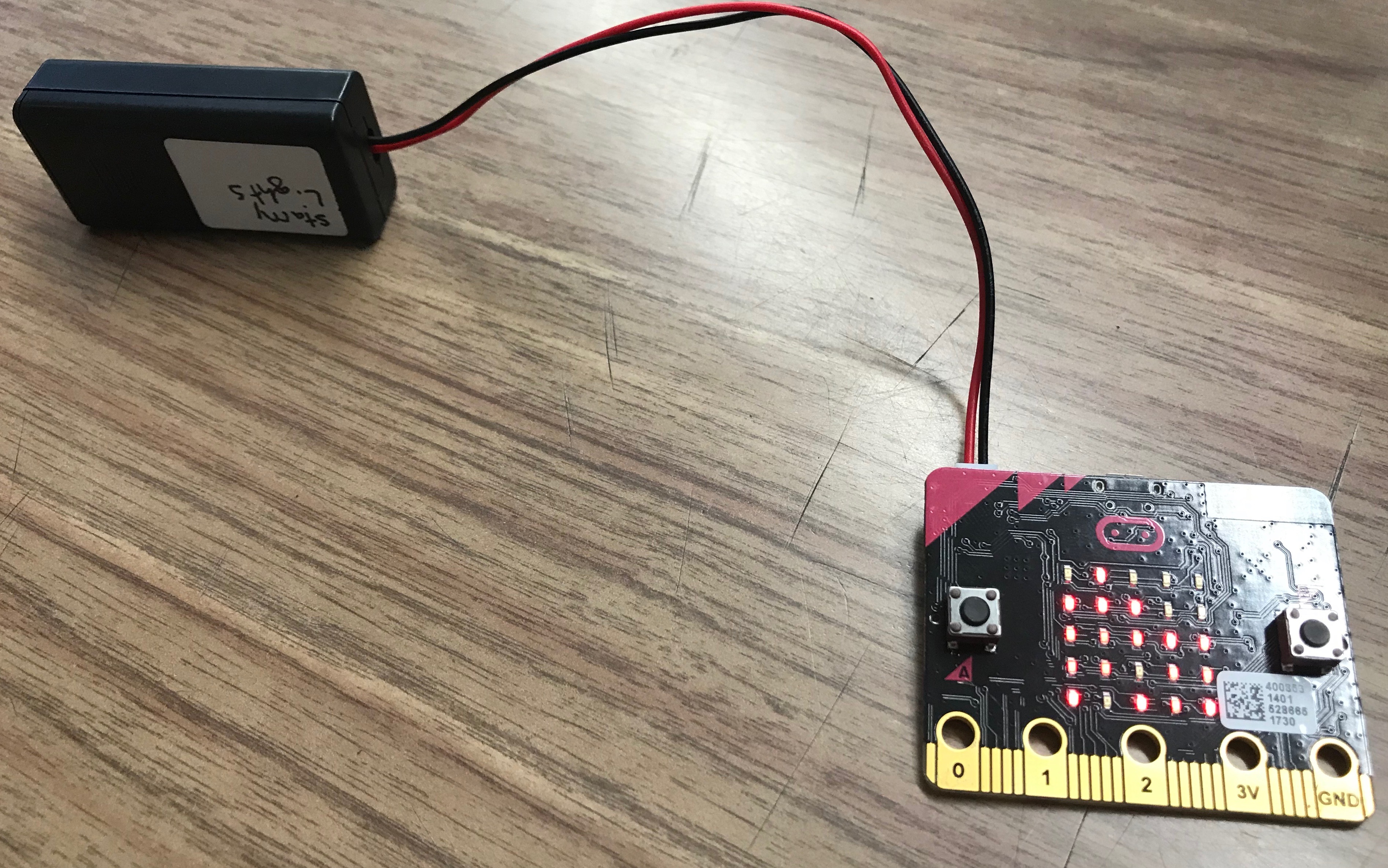
                                                                                                                                 This is the microbit connected to a battery pack.

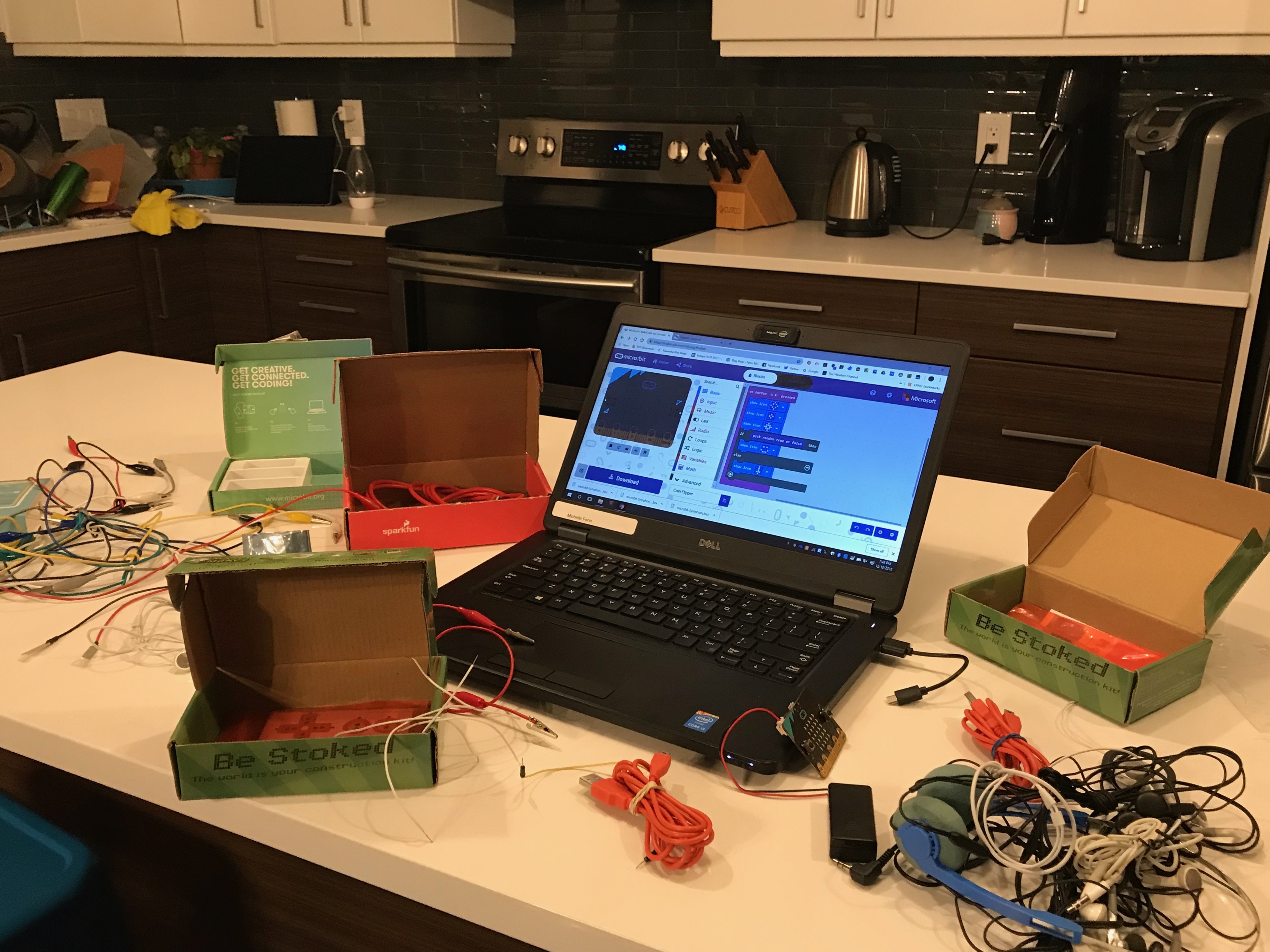
Kids Code Jeunesse provided me with training and as part of my job as an innovations consultant, I now go into classrooms within my school board to deliver workshops to students.  The only coding that I had done up to this point was with Spheros and Ozobots which was quite rudimentary.  I am now immersed into the coding culture. Which means that sometimes my kitchen counter looks like this:

IMG_6320 It was a little out of my comfort zone to be sure.  As I have gone into classrooms I have admitted to students that I’m not an expert on microbit   technology and I have learned from some of the students that have been engaged in complex coding on their own time.  With a quick conversation with   the classroom teacher I can usually make some decisions around differentiating the program to keep students engaged.

 You might be wondering what it is these little computers can do.  The LED lights on the front can be programmed to light up in patterns which create   animations.  Students can create dice or rock, paper, scissors games and with a few alligator clips and a small speaker or headphones, microbits can be   programmed to create music. With a little innovation and some adaptation it can be programmed to water plants automatically or become a pedometer.   It can also be paired with a robot called K8 which can be purchased from Inksmith and assembled.  The microbit website itself is where the coding takes   place and it has easy to follow tutorials and ideas for projects to code.

The initial workshop is only the beginning.  The only limit to these little computers is the limits of your student’s imagination.  Microbits would be incredibly useful in a maker space or genius hour environment.  The students develop design and critical thinking skills and problem solving techniques as they create and de-bug programs.  It is an amazing way to introduce coding to students-especially if you are a teacher who is brand new to coding.  Be warned: coding is extremely engaging and you and your students may have an inordinate amount of fun while learning.

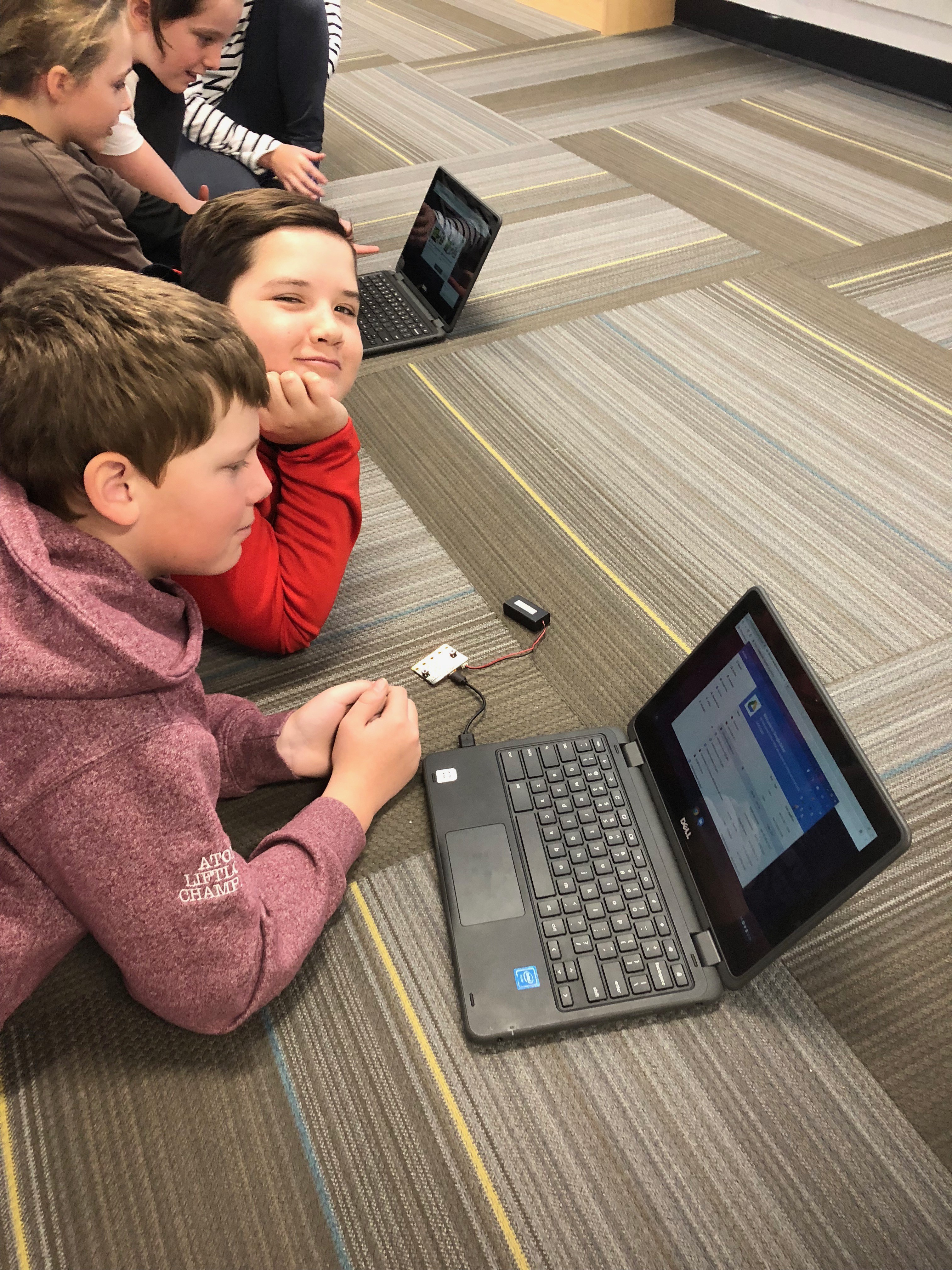
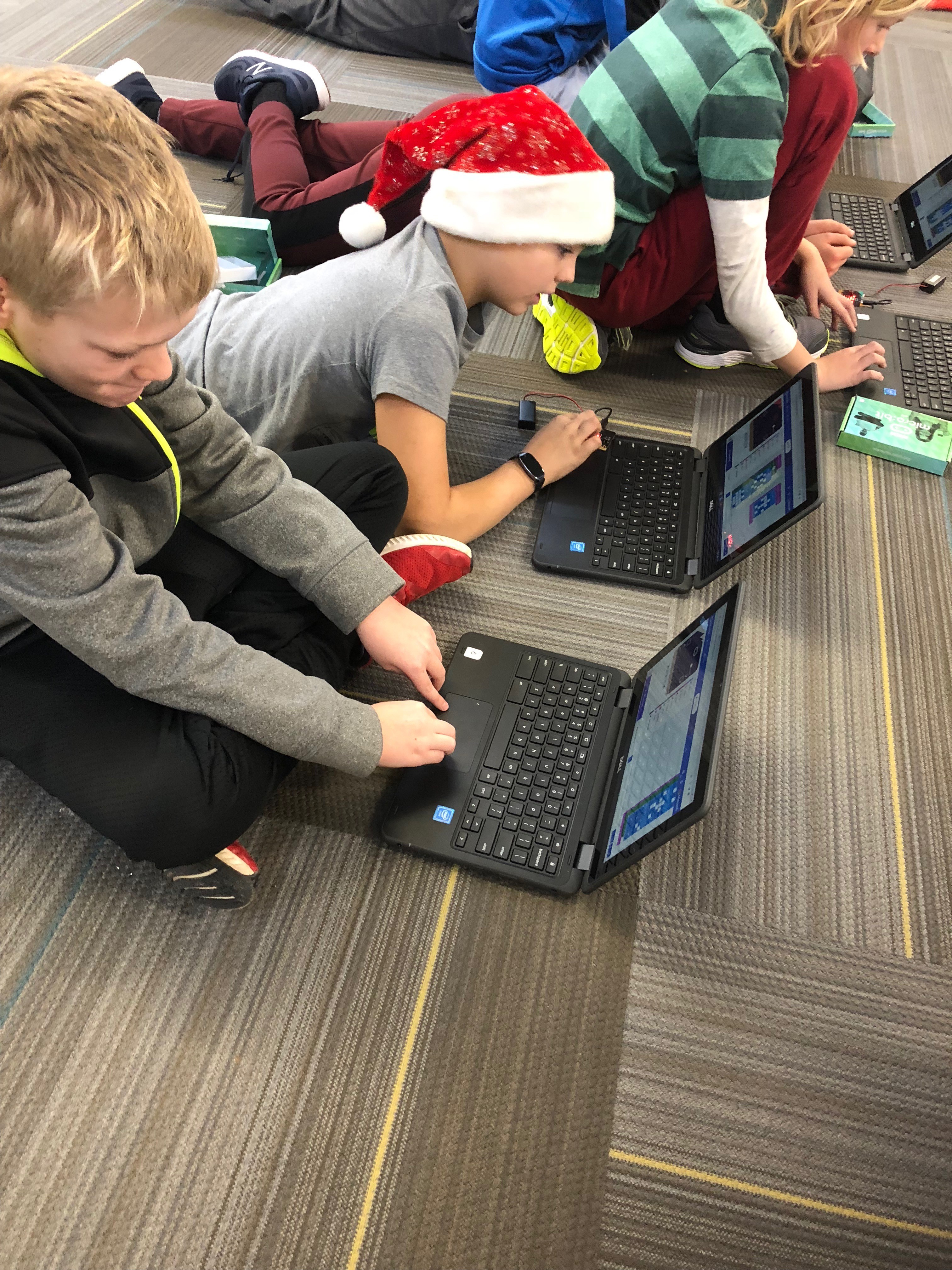
         IMG_6350IMG_6200IMG_6358IMG_6326IMG_6356

New Year, New Reading List

Something about the fresh beginning of a new year is inspiring. In my own personal reflection, I feel like I’ve really got the hang of all the wonders of being a classroom teacher. I’m in my third full-year LTO and I feel that I’m moving past the stage of “learning as I go” and “figuring it out”. I now want to spend more time refining and defining myself as an educator.

This is a list of books that I want to read this year as part of my self-guided professional development – a sort of New Year’s Resolution to myself. They are titles that I’ve heard of from colleagues or from other online sources and they have all been reviewed highly. A few of them I already own, but admittedly, have only skimmed through or read the chapters pertaining to what I needed at the time. This time, I’m focusing in and reading with the intention of building capacity and growing myself as a teacher.

If you’re looking to do the same, I recommend checking out a few of the titles listed below. They’ve been selected with primary grades in mind, but the basic principles covered by them could (and in my opinion, should) be applied to all grades.

Happy New Year and happy reading!


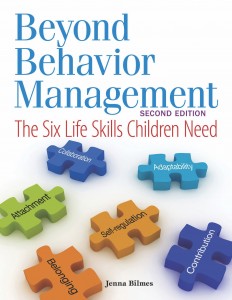
Beyond Behaviour Management: The Six Life Skills Children Need by Jenna Blimes  *This book has already totally changed my teaching, and is my highest recommendation to you!

71VJZ+OBFnL

Calm, Alert and Learning: Classroom Strategies for Self-Regulation by Stuart Shanker

41VjMb4hPYL._SX258_BO1,204,203,200_

Self-Reg: How to Help Your Child (and You) Break the Stress Cycle and Successfully Engage with Life by Stuart Shanker

0143191578

Mathematical Mindsets by Jo Boaler

Mathematical-Mindsets

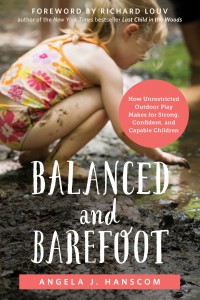
 Balanced and Barefoot: How Unrestricted Outdoor Play Makes for Strong, Confident and Capable Children by Angela J. Hanscom and Richard Louv

71BWJVWbffL

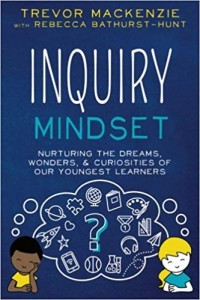
Inquiry Mindset: Nurturing the Dreams, Wonders, and Curiosities of Our Youngest Learners by Trevor MacKenzie and Rebecca Bathurst-Hunt 

51tHM4GlkbL._SX331_BO1,204,203,200_

Importance of Teaching Climate Change

climate change is a hoax

Most teachers agree that teaching climate change is important … but why is climate change really important? Given humans will be facing impending global climate change, why don’t all people care about climate change?

What climate change is and what it is not.

An important thing students need to know is the difference between climate and weather. Climate is seasonal and regional and weather is daily and local. Just because we have a big snow storm does not mean that climate change is not happening. Scientists look at trends over long periods to document regional and worldwide changes in climate.

Another thing students need to know is that climate change does not cause earthquakes and volcanic eruptions but earthquakes and volcanic eruptions can cause climate change. In our recent past, earthquakes and volcanoes have lowered the Earth’s temperature on a short term basis.

In 1816, Indonesia’s Mount Tambora exploded in a massive ash and gas cloud, destroying the city of Tambora and killing about 92000 people. The ash and sulphuric acid cloud was so great it blocked the sun and cooled the Earth’s Northern Hemisphere by 3 degrees. That year, the explosion resulted in summer frosts in North American and widespread crop failures as well as outbreaks of diseases and famines in Europe and Britain (Williams, 2016). In 1816, another eruption caused the Earth to cool 2 degrees due to Mount Krakatau’s volcanic eruption.

Further, we need to know that global warming is caused by the release of carbon dioxide into our atmosphere. Global climate change is the result of this burning of carbon creating a warming greenhouse effect on the Earth’s atmosphere.

What’s up with the importance of climate change?

When humans face serious hazards like terrorism, flu outbreaks, global market crashes, and the result of large exploding volcanoes, we deal with their short term impacts. These impacts do not have the chance of “ravaging the natural world and collapsing civilization” (Gardner, 2018) like the permanent changes that can happen to global climates. Most people understand and accept that global warming is happening, but they are not immediately and directly impacted by the change in climates as these changes come in increments. Global climate change is not an imminent threat … yet.

As humans, we have challenges understanding the long term abstract probability of climate change. We can understand the short term probability of weather as it is felt and directly experienced – like an 80% chance of a large snowfall and very cold weather. We also can understand local warming when our weather changes over time. Climate change is the probability of weather impacting humans (Gardner, 2018).

Humans don’t get long term risks.

We know that smoking causes cancer but people still smoke (Gardener, 2018). We know that consuming alcohol causes health and social problems but we still consume it (Bishop-Stall, 2018). Humans still build houses in flood plains and are surprised when their houses are periodically flooded – as a Red Cross volunteer, people showed me the flood lines in their basements over a 100 year period but were again surprised at the level of flooding in Calgary in 2013.

It is our human psychology that keeps us distant from the abstract impending consequences. Climate change is complex and abstract and we need to trust scientists to help us understand its impact on the long term of human well being.

Humans have stopped global impacts due to human activities.

In the 1980’s, governments met to put policies in place to limit ozone depletion and acid rain by managing the release of ozone depleting and acid rain causing chemicals into our global atmosphere. This is proof that when humans work together, we can affect change.

Real Impacts of Climate Change

As a human, I have been a witness to the impact of climate change on Canadians. As a Red Cross volunteer, I have listened to the stories of people who have dealt with flooding in Burlington, Ontario, in Gooderham, Ontario, and in Calgary, Alberta. I have listened to the stories shared as a result of the life changing impact fires had on people in Fort McMurray.

At home, I have lost 6 trees due to invasive beetles. I have a 3 year old snow blower that has only been used once. As a former geologist, I know that it took millions and millions and millions of years to capture all the carbon we are now releasing into our environment over 300 years up until today – that’s got to have an impact on our global climate.

People cannot feel the threats measured in atmospheric concentrations of carbon dioxide but we can listen to the stories of others who have been directly impacted by the result of global warming. By making and following policies to limit gases that result in global warming and climate change, we can limit the imminent change in our global climate.

Below are some excellent teacher and student resources.

Have a safe and healthy 2019.

Collaboratively Yours,

Dr. Deb Weston, PhD

Resources

Climate Kids Canada- Information, Games, Activities, Advocacy

Climate Kids NASA – Big Questions, Weather & Climate, Atmosphere, Using resources wisely, Clean energy.

National Geographic- Climate Change for Kids

Tiki the Penguin’s Guide to Climate Change

Ecoschools Today

Ecoschools Lesson Plans for Teachers

 Videos

Climate Change (according to a kid) Video (all grades)

Crash Course in Climate Change Video (Junior/Intermediate)

Climate Change | Educational Video for Kids (Primary/Junior)

References

Bishop-Stall, S. (December 30, 2018) Drink. Hungover. Repeat. Why do we keep doing this to ourselves? The Globe and Mail. Downloaded from https://www.theglobeandmail.com/opinion/article-drink-hungover-repeat-why-do-we-keep-doing-this-to-ourselves/

Gardner, D. (December 22, 2018). Why don’t we care about climate change. The Globe and Mail. Downloaded from https://www.theglobeandmail.com/opinion/article-why-dont-we-care-about-climate-change/

Williams, J. (June 10, 2016). The epic volcano eruption that led to the “Year Without a Summer”, The Washington Post, Downloaded from https://www.washingtonpost.com/news/capital-weather-gang/wp/2015/04/24/the-epic-volcano-eruption-that-led-to-the-year-without-a-summer/?noredirect=on&utm_term=.1908892a962e

Everyday Mental Health Classroom Resource

As January and the new year approaches, I start to reflect on balance and keeping true to what I believe to be most important. When in the classroom, I always thought that it was a great time to press the reset button with students and gear up for the next half of the year. Over the break, I often take some time to check out resources that I think will help me along this goal so that I can add fresh ideas to lessons that I know have allowed students to reflect on themselves as they start to set goals. This year was no different even though I’m not in the classroom. While taking a look through some of the amazing ETFO resources available online, I found the Everyday Mental Health Classroom resource that I think is absolutely fantastic and essential for classrooms.

Co-developed over the past two years by School Mental Health ASSIST and ETFO, this resource is designed to provide K – 8 educators with evidence-based strategies to help develop the Social Emotional learning skills of students. The great part about this resource is that the activities contained have been tested by ETFO members and not only that, but a research project was done to determine the efficacy in classrooms. It’s definitely a resource that educators should consider using in their classrooms.

Here’s why! The resource:

  • offers the evidence and need for this work in classrooms;
  • honours the professional judgement of teachers;
  • focuses on core skills;
  • is online and easily accessible.

In this post, I’ll dig into why I think it’s a great resource for using in classrooms in the hopes that you’ll try it with students and if you already have, share what you’ve noticed with others.

Evidence-Based

When I think of a resource being evidence-based, I understand that it is informed objectively. In that there is a perceived need for the development of the resource and that there is time taken and reflection made to truly understand the impacts of what is being proposed as good pedagogy in the classroom.

The Everyday Mental Health Classroom resource offers a great deal of background on the rationale for the project and the findings. The resource honours and speaks to the fact that as educators, we are not expected to me experts in mental health and yet we have an important role in working with a diverse group of students. We do have the responsibility to create safe and caring classroom environments for all and for helping our students further develop the core skills that I’ll get into later. The idea is that the lessons and activities can be easily embedded into daily classroom practices with this goal in mind. Of educators who participated in the study, 84% found the resource extremely or very useful; while 95% would recommend the resource to other educators within and outside of their division and roles. The background page on the site offers a wealth of information on the benefits of Social Emotional Learning for students (1).  I encourage your to take a look.

Honours Professional Judgement

In Understanding Your Professional Judgement, Professional Judgement is defined as, “judgement that is informed by professional knowledge of curriculum expectations, context, evidence of learning, methods of instruction and assessment and the criteria and standards that indicate success in student learning. In professional practice, judgement involves a purposeful and systematic thinking process that evolves in terms of accuracy and insight with ongoing reflection and self-correction”.  ETFO has provided support for teacher and occasional teacher members in exercising their professional judgement.

One thing that makes this resource unique is that right on the landing page, there is mention of the importance of professional judgement. The site further encourages educators to consider their students and exercise professional judgement to maximize growth in students. It also states that, “Using professional judgement, educators can select from a variety of practices within the Everyday Mental Health Classroom Resource to enhance classroom conditions and build social emotional skills in ways that best meet the needs of their students”.

This is so empowering! While I may not be an expert in mental health, knowing that I can use my professional judgement to select and embed activities that will develop core skills that can potentially have a positive impact on students mental health and wellbeing is amazing.  Sometimes hearing this is just the thing that a teacher needs to gain that confidence in trying something new.

Focuses On Core Skills

This resource focuses on developing 6 core skills:

Stress Management and Coping Skills

Everyday, we face challenges. How we manage these challenges and stresses is key to our success. Different people use different strategies in stress management. This section contains activities that helps students to develop skills and build their own toolboxes with strategies that work best for them.

Emotion Identification Skills

I’ve heard that there is power in naming emotions. We all face a variety of different emotions throughout the day. This section contains activities that help students to identify and appropriately express their feelings, further developing their ability to effectively self-regulate.

Positive Motivation Skills

This section reminds me of the importance of Growth Mindset. This section contains activities that help students in the areas of expressing gratitude, practicing optimising and perseverance, as well as reframing.

Relationship Skills

Positive relationships are important to have and are essential for a safe and caring classroom environment. This section contains activities that focus on acts of kindness, being a good friend, respect, conflict resolution, empathy and listening.

Self Confidence and Identity Skills

We all have qualities that make us unique. Understanding our identities and who we are is an important part of building our own self-confidence. This section contains activities that will help students to learn about and appreciate their identities while empowering them to hold firm to their beliefs when faced with challenging decisions.

Executive Functioning Skills

When we think of executive functioning skills, I think of the skills needed to plan, organize and complete tasks. This section contains activities that help students develop and master these skills through repeated opportunities for practice.

Online and Easily Accessible

This free resource is available online with challenge cards that can be printed for easy access while the activity is in progress. Each activity provides the teacher with information on the purpose and the time required so that they can best determine which might be best to embed into their day. The filter allows for teachers to search by division and also has a great feature that allows for Occasional Teachers to be able to search for activities that they can also use during their time with students. I think this is fantastic!

I know that this post just gives you a taste of this resource and I hope that you take some time to take a deeper look into it and consider using it in your classrooms. By developing these skills in students, we can prepare them to succeed beyond the classroom. The evidence is there, what are you waiting for?

1. https://drive.google.com/file/d/11gM59_aU_enXWpED03URIPUpS0iLjxI1/view

Parents: Key Partners In Education

While in the classroom, I think that I had a pretty good understanding of the value in parents being key partners in education. Over the past few weeks, while speaking with friends and family about their experiences as parents in the world of education, I’ve learned that there is much more to this complex partnership.

Parents genuinely want the best for their children and may be more open than perceived. Keeping this at the forefront when working with parents is key. While I would like to believe that I kept this at the forefront of every conversation or interaction with parents, when I reflect on interactions where we didn’t quite see eye to eye, I recognize that it is possible that I may have had a greater focus on an outcome that I hoped to achieve. While this was always centered on a positive outcome for the student, I wonder if we could have achieved more had I collaborated differently with the parent. I recently spoke with a friend who has a child on an IEP and she shared that in her experience, it wasn’t that she didn’t want the help offered for her child, she just didn’t understand the process or how having the IEP would impact her child. Because it was wholly new and not well explained – in her perspective – she felt defensive and didn’t feel heard or understood by those in the meeting. Her once positive sentiments around education were now tainted because she felt as though she wasn’t truly heard and her questions weren’t clearly answered. Through other conversations with educators, she’s understanding that the supports offered through the IEP are in addition to what she can do at home to support her child’s learning. She’s learning that it’s a living document that can be updated and reviewed. She genuinely wants for her child to be able succeed and I wonder if taking the time to ensure that she felt heard, if this process could have been a more positive experience for her.

Great learning is already happening in homes. I’ve never been a fan of homework. I’ve always seen it as “keep busy work” that can’t be assessed and is often a source of great frustration in the evenings for families. After sharing my thoughts on homework, while many parents have appreciated that I valued the learning that was happening through extra-curricular or other activities in the home, every year, I’ve had parents ask for homework. It was always challenging to balance the two extremes but understanding the value or perceived importance of homework was something that I was after. Through conversations with parents, many felt that it would help their child get ahead or make sure that they kept practicing what was being learned in the classroom. During these conversations, we often spoke about the skills needed beyond memorization of facts and content and activities that might further develop these skills. I shared with parents activities such as:

  1. Draw a map to your friends house. Include measurements and different ways to get there.
  2. “Invent” something using the various items in your recycle bin.
  3. Take something apart to see how it works – Reassemble it if possible or create something new with the parts.
  4. Look for geometric shapes in the yard, the store, or at home. Cut them out. Measure them.
  5. Listen to different genres of music and discuss the differences.

In my searches for other family-friendly activities, I found this link with more alternative homework ideas.

Great learning is already happening in homes. For a variety of reasons, parents are looking for creative ways to work with their children and help to give them an advantage. By helping to parents to understand the value in developing learning skills, they might just be ready to jump in and give these ideas a try with their children. Potentially helping to build even greater family bonds and connections.

Nothing! Without a doubt the answer to the question of, “What did you learn today in school?”. I’m amazed every time that I hear it and understand that it’s a challenge for parents to truly get a picture of what happens for the hours that their children are in our classrooms. It was one of the main reasons why I started a weekly classroom blog. It was my way of sharing with parents what we were learning and by adding a calendar to my site, it allowed for them to keep up-to-date with current events in our classroom and school. I found that the more parents knew, the more they felt informed about and engaged in their child’s learning, which is incredibly important. Several times the answer was still nothing, and this was a great opportunity to check-in with the student and to see how best to further support them in their learning.

Making parents feel heard. Understand that there is great learning already happening in homes. Support by sharing what is happening in the classroom. These are just 3 ways in which we might be better able to partner with parents to achieve even greater success in student learning.

Helping our Parents Find the Supports They Need

This is my first year in the role of classroom teacher for students with developmental disabilities and looking back over the past four months, I have really learned a lot. I have written my first IEPs, programmed for 9 different children and learned new assessment techniques. However, some of the biggest learning I have had was understanding what my families needed help with outside of school.

Parent teacher interviews were very eye opening for me. I introduced some of the community resources available to my families and all of them had never accessed the support they needed before.  Parents spoke about their need for help with funding and support at home. They also spoke about the challenges accessing answers to their questions about having a child with special needs. I was very surprised that all of my families had never had this discussion before as most of my students have had a formal diagnosis for many years and my students have all been in school for eight years.

Then it hit me, before my new job would I have been able to direct my families to the right organization for assistance? The answer would have been a resounding NO! No wonder my student’s families have not received support until grade 6 for this reason. Community resources are not always part of Professional development and often times parents are referred to special education teachers or ESL teachers.

Some may say ISRC or IPRC may be a good time for these conversations, however, it is very intimidating for both families and teachers to attend these meetings in many cases. There are usually about 10 people in the room, most of whom you have no relationship with. It is hard to ask questions or be vulnerable in that environment. Parents often prefer to ask these questions during a conversation with the one person the parent knows and trusts- the classroom teacher.

I did a simple google search to understand what my parents were facing and put in “Special needs support” in my area. The organization that does intake service and assigns case managers for my families came up eighth. This would be the recommended first place to start in my community and I am not sure it would have been possible to figure that out for my parents.  I also explored the government of Ontario’s website’s section for parents of special needs children. It would be incredibly challenging for my parents to navigate. There is very little explanation or resources for parents with children with developmental disabilities compared to the section on autism. The website would not be helpful for my parents in finding the answers that they need.

This year my board funded training for all of our contained teachers to learn about assessment strategies for kids who are on alternative IEPs. Within that training, there was a short portion about community resources for families with special needs. Every single teacher in that room was so grateful to have this relevant and important training that often gets overlooked. Due to this important training, I will be able to support nine families get the caring guidance that is needed. I wish every school in Ontario did this very short information session to help teachers support our families.