Blog

Believing in the power of a mentor to support new educators

It’s Progress Report time in many school boards this week. Once again, ETFO colleagues have typed and tweaked their thoughts about student stemming from conversations, observations, and products onto reports that capture “the learning” thus far. This annual first rite of assessment seems to come earlier and earlier each year, but is an important opportunity to map out the learning for then next 7 + months. Then there’s the meeting scheduling and organizing in addition to our already crammed days. So, how are you doing?

Have you had time to catch your breath since the start of the year?

I know the first weeks in the classroom seem to fly by for all of us. Regardless of years experience, it’s a hectic time of year.  This can be especially difficult for new teachers who find themselves working before/after school as well as during evenings and weekends at home to plan, prepare, and assess. All this, in addition to trying to have a personal life that may include time with friends and family or just to be still. To no one’s surprise, the hours that educators invest in their calling are often spent in equal proportions in and out of the classroom. So how are you doing?

What would you change about the first 11 weeks of your year?

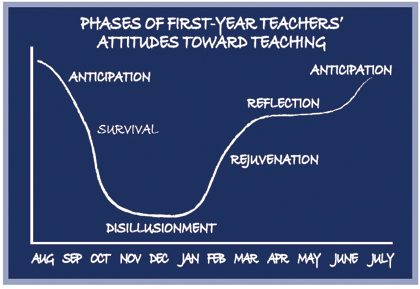
Over the years, I have enjoyed numerous conversations with new teachers at Progress Report time. For many new educators, it is the first time that they have had the time to reflect on what has gone on since the first bell in September. Many have shared that they are tired and feel a little overwhelmed by the pace and volume of work. It is not uncommon for new teachers to go through a case of the November Blahs where their energy level has waned a bit from the beginning of the year.

http://weac.org/articles/new-teacher-handbook/phases/

The first question I usually ask after “So how are you doing?” is, “Are you connecting with your colleagues to divide and conquer or are you stuck inside the walls of your classroom?” In my first year as a teacher, I made the mistake of not asking for help because I thought I could solve my own problems as they presented themselves. I did not want to appear weak to my new colleagues or admin. Needless to say, come November of the first year, things were deteriorating. So I suffered. Which means my students suffered too.

Long nights, failed planning, missed opportunities, and frustration were my regular companions at work and at home. I did not feel like I was taking advantage of the natural mentors in the building that first year. However, by my second year, my eyes and mind were open to any and all who were willing to offer their wisdom, guidance, and resources. By taking myself out of my fortress and asking for help I was able to redirect/rescue/re-invigorate my instruction and outlook.

After that point, suffering was optional. I chose to seek out the support of others when things became murky or began to go off course. It was humbling to know that the people I turned to for help had my best interests at heart. Knowing that I did not have to have it all together every moment of the day was like removing a giant gorilla from my back that was constantly whispering, “You don’t need any help. You can do this on your own. Don’t let anyone think your weak.”

Having a peer mentor to turn to has become a cornerstone of my personal development. In turn, I try to support my colleagues when they need someone in their corner. Perhaps when this time rolls around each year the first question I ask teachers is, “So how are you doing?”

Gender Rights = Human Rights

gender theory

Education is one of the foundations of Canadian society … and so are human rights.

In Ontario, education is a “publically funded education system to support and reflect the democratic values of fairness, equity, and respect for all” (Policy/Program Memorandum No. 119, Developing and Implementing Equity and Inclusive Education Policies in Ontario Schools, Ministry of Education, 2013).

The Ministry of Education recognizes that factors such as race, sexual orientation, physical or mental disability, gender, and class can create students’ barriers to learning. There is evidence that some groups of students continue to encounter discriminatory barriers to learning. Research shows that when students feel connected to teachers and other students, they do better academically (Goleman, 2006).

So what does this mean to teachers?

Through Policy/Program Memorandum No. 119, school boards must seek out barriers to learning for all students. Teachers therefore must also address barriers to learning due to factors such as race, sexual orientation, physical or mental disability, gender, and socioeconomic status.

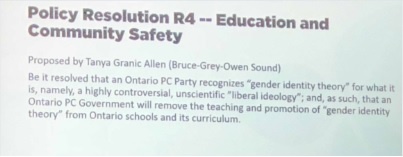
Recently, the Ontario PC Party passed a resolution to debate recognition of gender identity which was proposed by Tanya Granic Allen of the Ontario PC party.  The resolution read as follows:

“Be it resolved that an Ontario PC Party recognizes ‘gender identity theory’ for what it is, namely, a highly controversial, unscientific ‘liberal ideology’, and, as such, that an Ontario PC Government will remove the teaching and promotion of ‘gender identity theory’ from Ontario schools and its curriculum.”

The debate of whether this “theory” is “unscientific or not”, is not meaningful to all the students in Ontario who differ in their gender identity. Students who differ in their gender identity exist in our schools and in our classrooms.

I will say this again, students who differ in gender identity are real and in Ontario classrooms. Students who differ in gender identity need to be supported through their human rights and freedoms and need to be protected against abuse and bullying.

By not discussing gender identity in classrooms presents the possibility of students who differ in gender identity not being accepted for who they are and how their difference is also real. Not discussing gender identity in classrooms puts these students at risk of abuse and bullying. Not discussing gender identity in classrooms means that teachers are being asked to pick and choose factors that can be barriers to student learning. Teachers must consider all aspects of the Ontario Human Rights code that include honouring students’ diversity in  race, sexual orientation, physical or mental disability, gender, and socioeconomic status.

In not discussing gender identity, schools who ignore barriers to student learning risk violating the Policy/Program Memorandum No. 119, Developing and Implementing Equity and Inclusive Education Policies in Ontario Schools which advocates for “democratic values of fairness, equity, and respect for all” (Ministry of Education, 2013).

In promoting to “remove the teaching and promotion of ‘gender identity theory’ from Ontario schools and its curriculum” is not going to happen as this statement is against the Ontario Human Rights Code. The Ontario Human Rights Code supersedes any curriculum and therefore teachers can promote human rights within the Ontario Human Rights Code anytime in classrooms. Discussing gender and sexual orientation issues are part of the Ontario Human Rights Code.  

Be aware, that Tanya Granic Allen has a history of odious discrimination against gender and sexual orientation rights, as well as the rights of other religious groups. The Ontario Liberals released a 2014 Granic Allen video which “spewed hatred and homophobia”. The CBC News article (May 5, 2018) states that “Ontario PC Leader Doug Ford says former party leadership hopeful Tanya Granic Allen will no longer be a candidate for the party” and followed with “We are a party comprised of people with diverse views that if expressed responsibly we would respect”. Ford goes on to state that “However, the fact is her characterization of certain issues and people has been irresponsible” but then Ford continues with “She is a welcome addition to our strong and diverse PC team.”

Granic Allen was removed by Ford “as a candidate for the party in the spring election [2018] after controversial social media messages she posted were made public” (Jeffords, November 17, 2018). Granic Allen is not a Minister of Provincial Parliament of Ontario for Bruce-Grey-Owen Sound; Bill Walker, MPP holds that position. Granic Allen, in May 2018, wrote in the National Post that “The accusation by the Liberals and the press that I am somehow against the dignity and human rights of LGBT+ people is a lie” (Granic Allen, May 8, 2018).

Granic Allen also has made comments against, gay marriage and Muslin dress. CBC news cites Granic Allen tweets and blogs dating back to 2013 speaking out “against gay marriage and compares women wearing burkas to ‘ninjas’ and ‘bank robbers.’ (David Donnelly, CBC News, April 10, 2018).

Another article cites Granic Allen as a “kingmaker” for Ford. “Without Granic Allen in the race, Ford wouldn’t have had enough votes to eke out his narrow win over Christine Elliott, and he [Ford] may not have leaned as hard to the right to court social conservative members” (Fitzpatrick, March 14, 2018).

The bottom line is that it does not matter if people differ in their opinions about gay marriage or gender issues, or even Muslim dress; what does matter is that when opinions violate and impact people’s rights and freedoms according to Ontario Human Rights Code, these becomes legal issues.

Respect for all.

Collaboratively Yours,

Dr. Deb Weston, PhD

References

CBC News, (April 10, 2018), Tanya Granic Allen under fire for online comments against gay marriage, Muslim dress, CBC News. Downloaded from https://www.cbc.ca/news/canada/toronto/tanya-granic-allen-under-fire-for-online-comments-against-gay-marriage-muslim-dress-1.4613483

CBC News. (May 5, 2018) Tanya Granic Allen no longer an Ontario PC party candidate after ‘irresponsible’ comments, Doug Ford says, CBC News. Downloaded from https://www.cbc.ca/news/canada/toronto/tanya-granic-allen-no-longer-an-ontario-pc-party-candidate-after-irresponsible-comments-doug-ford-says-1.4650360

Fitzpatrick, M. (March 14, 2018). Who is Tanya Granic Allen, the kingmaker in the Ont. PC leadership race, and what’s next for her? CBC News, Downloaded from https://www.cbc.ca/news/canada/toronto/who-is-tanya-granic-allen-the-kingmaker-in-the-ont-pc-leadership-race-and-what-s-next-for-her-1.4574500

Goleman, D. (2006). Social Intelligence: The New Science of Human Relationships. New York, NY: Bantam Dell, A Division of Random House.

Granic Allen, T. (May 8, 2018). Tanya Granic Allen: I’ve been slandered. It’s time to set the facts straight, The National Post, Downloaded from https://nationalpost.com/opinion/tanya-granic-allen-ive-been-slandered-let-me-set-the-facts-straight

Jeffords, S. (November 17, 2018). Social conservatives say their voice is being ignored at Ontario Tory convention, The Canadian Press. Downloaded from https://www.thestar.com/news/queenspark/2018/11/17/social-conservatives-say-their-voice-is-being-ignored-at-ontario-tory-convention.html

Ontario Ministry of Education. (2013). Policy/Program Memorandum No. 119: Developing and Implementing Equity and Inclusive Education Policies in Ontario Schools, Government of Ontario. Toronto.

Ryan, R. (November 17, 2018). Ontario PC Party passes resolution to debate recognition of gender identity, Global News. Downloaded from https://globalnews.ca/news/4673240/ontario-pc-recognize-gender-identity/

Gaming…safely?

We have been trained to watch for concerns of a child’s well being. This didn’t include cyber information. As a responsible teacher I’m drawing the attention of students to current events. During this time of sharing, my students have become more relaxed and open about their after school activities which include gaming for many.

When a child discloses information about their safety we are obligated to report this to children’s services. Write down the facts, call and make a statement, fairly straight forward.

When a child shares information about interactions in Gaming, what do you do? I make a judgement based on what the information is, then I write down the facts are that were shared, then what? I’m really not sure where we go from here. I call the family and have a conversation? I chat with the principal? I provide the student with avenues of help, help lines, internet safety….

This is a new world which effects all of our students. Access to our vulnerable young students is wide open on the internet especially with group gaming and social media. Education is a form of protection. When a child is doing something their family may not agree with, they are reluctant to share concerns and can easily become victims of online abuse. How do we help? Keep open communication lines with students and their family. We all want our children to be safe.

6 Reasons to Say No to EQAO

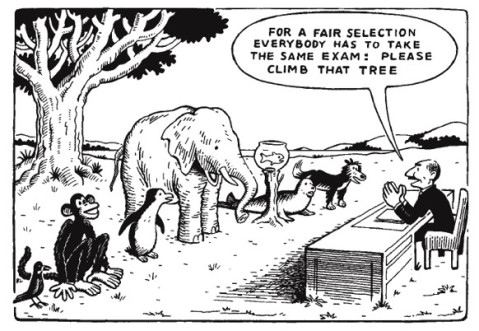
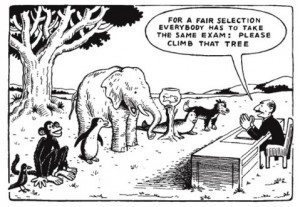
testing_cartoon

Large scale assessments, like EQAO testing, were developed to support standards-based education reform on the premise of setting high standards and establishing measurable goals in order to improve learning outcomes in education.

This blog highlights how EQAO testing does not achieve its goals and, in fact, hinders learning outcomes, especially in marginalized student populations.

1. EQAO testing is unfair to students with special education or English language needs

In EQAO testing, all students are treated equally. This means that students with low intellectual levels or learning disabilities are made to write the test. Students who have low levels of English knowledge are made to take the test. There are some exemptions for students which are hard to obtain and when students are exempt, students’ tests scores of zero are counted in their school’s overall scores. These barriers to learning result in lowering school’s test scores.

Treating students all the same does not differentiate learning needs. Students who cannot read or write, due to an exceptional learning need are made to take the test. For example, I had one student, who was non-verbal, sit in front of a computer for three hours unable to complete any part of the grade 3 EQAO  test. I have also had students who just came to Canada from a non-English speaking country, sit in front of their EQAO test paper with a blank look. Schools with many special education classrooms or high levels of English language learners have lower school scores, as these students, due to their circumstance, cannot complete the EQAO tests.

The bottom line is that EQAO testing is unfair for many students.

2. EQAO testing is unfair to students with low socioeconomic factors

In EQAO results, there is a direct link between low test scores and low socioeconomic factors. Socioeconomic status impacts language development which results in decreases in vocabulary, phonemic awareness, and an overall ability to read and comprehend text (Perkins, Finegood, & Swain, 2013). In addition, “The family stress model connects poverty with parental emotional distress that affects parenting, whereas the parental investment model involves a focus on basic needs that affects children’s language (Perkins, Finegood, & Swain, 2013, p. 1). The result of this disadvantage of poverty is that schools in areas with low socioeconomic status tend to have low EQAO test scores (Langois, 2017). Schools in wealthier areas tend to have higher EQAO scores than schools in lower socioeconomic areas. 

This is why real estate agents use EQAO test scores to sell residential property – to assess the socioeconomic status of a neighbourhood.

The bottom line is that EQAO measures socioeconomic status. 

3. EQAO does not honour education policy

Through the Policy/Program Memorandum No. 119, Developing and Implementing Equity and Inclusive Education Policies in Ontario Schools, it is stated that there is a need for our “publically funded education system to support and reflect the democratic values of fairness, equity, and respect for all” (Ministry of Education, 2013).

The bottom line is that EQAO testing procedures do not “reflect the democratic values of fairness, equity, and respect for all.”

4. EQAO diverts schools’ resources and energy away from meeting students’ learning needs

EQAO testing focuses schools’ resources and energy on doing everything to increase test scores. In my years as a teacher, I find that EQAO takes over schools and students’ learning. Grade 3 and 6 teachers become obsessed with cramming curriculum into the year before the test. Some administrators direct teachers to only teach math and language, while students miss out on social studies and science. Redirecting learning turns teaching into test focused, score based tunnel vision.

This test focused, score based tunnel vision has other impacts on school practices. There is a great deal of documentation in the Ontario College of Teachers citing teachers and principals who have changed students EQAO test answers so their school will receive more favourable test score rankings.

Why do educators cheat? 

Cheating is a big problem in government testing. Teachers and principals alter students’ answers to get better results. Cheating happens internationally. Low test scores in the US have caused teachers and principals to get fired. High stakes testing puts great pressure on educators to produce good EQAO scores.

The bottom line is that EQAO highjacks teachers’ teaching and students’ learning.

5. EQAO is not a standardized, statistically measured test format

EQAO test results are very difficult to decipher and it is often unclear how the test scores really inform educators about student learning.  

Ontario’s Education Quality and Accountability Office, the source of the EQAO testing, does not cite any reliability or validity results that ensure the test questions are actually measuring the intended skills.  A test is valid if it measures what it is supposed to measure. The EQAO website does not cite checks of Test-Retest Reliability, Cronbach’s alpha for measuring of internal consistency, Convergent reliability, or Confirmatory Factor Analysis.

I wonder about the consistency or reliability of EQAO test marking. Reliability in testing means that two identical student answers would be marked the same or in other words, test marking would be consistent. I wonder if EQAO has sufficient test procedures, checks, and tests in place to ensure reliability.

Further, I wonder how much EQAO test scores are used to inform teacher practice. Some schools use the results by breaking down specific areas of need but this takes time meaning in order to do a proper job of this analysis, teachers would need to be released from their teacher duties to do this work. Further, it would be beneficial for teachers to have some knowledge of statistics in order to assess their school’s results.

Ontario students do participate in international testing PISA (Program for International Student Assessment), TIMSS (the Trends in International Mathematics and Science Study), and PIRLS (the Progress in International Reading Literacy Study) and Canada usually does well, ranking in the top 10. Note that some of the scores in the Asian countries do not reflect all students as poorer students or students with disabilities do not participate in this testing for many reasons. Canada still does well compared to those countries.

Finally, I also wonder why a statistically minded organization like EQAO uses the words “standardized” tests to describe their testing. To be standardized, these tests would have to be statistically normalized on a bell curve like CAT (Canadian Achievement Test) and CCAT (Canadian Cognitive Ability Test) tests.

The bottom line is that the EQAO test structure is not statistically reliable or valid.

6. EQAO testing costs offers questionable return on investment

In considering the above points, EQAO offers questionable return on the public’s investment. EQAO testing cost $30,000,000 in 2014. That’s a lot of money that the province could be using to fix schools.

My question: Do the EQAO test results merit $30 million dollars worth of data?

Overall, I do not see the value of EQAO testing. As a teacher, I have never used the scores – sometimes I never get to see the scores.

Let’s put our education dollars into areas where the funds can improve learning. The real estate agents will have to think of another way to sell residential listings.

Collaboratively Yours,

Deb Weston

References

Alphonso, A. (April 21, 2018). Government-commissioned report recommends Ontario should phase out Grade 3 EQAO test, Globe and Mail. Toronto. Downloaded from https://www.theglobeandmail.com/canada/article-government-commissioned-report-recommends-ontario-should-phase-out/

Hassan, F. (February 6th, 2014). It’s time to scrap province-wide testing, Toronto Sun. Downloaded from https://torontosun.com/2014/02/06/its-time-to-scrap-province-wide-testing/wcm/dc995597-1dd0-4fa4-8afb-801a797611d3

Langois, H. (2017). Behind the Snapshot: Teachers’ Experiences of Preparing Students in Lower Socioeconomic Status Schools for the Ontario Secondary School Literacy Test. University of Toronto, Ontario.

Ontario Education Quality and Accountability Office. (2013) Top Reasons Standardized Testing in Ontario and the United States Are Not Comparable, Education Quality and Accountability Office, Ontario. Downloaded from http://www.eqao.com/en/about_eqao/media_room/communication-docs/infographic-EQAO-US-Comparison-print-version.pdf

Ontario Ministry of Education. (April 22, 2013). Ministry of Education Policy/Program Memorandum No. 119: Developing and implementing equity and inclusive education policies in Ontario Schools, Ontario Ministry of Education. Downloaded from http://www.edu.gov.on.ca/extra/eng/ppm/119.pdf

Perkins, S. C., Finegood, E. D., & Swain, J. E. (2013). Poverty and language development: Roles of parenting and stress. Innovations in clinical neuroscience, 10(4), 10.

Wong, A. (2016). Why would a teacher cheat? The Atlantic.
 

Intentionally Planning with Colleagues

Most educators are routine oriented which in the classroom is a necessity.  Routines bring us predictability and comfort.  My classroom planning was also routine.  I remember spending the majority of my Sundays planning for the week and getting annoyed and almost panicky when I had a social event interfere with my Sunday planning.  Once I had a child, I had to adapt and as I gained experience I realized that I was planning way more than was needed and had no flexibility in my program for arising student needs or interest.  I became involved in Instructional Rounds for Assessment for Learning with my school board and began to intentionally plan with the support of colleagues.  It gave me the opportunity to reflect on my practice and to have feedback with educators that shared the same growth mindset.  It shook my teaching world at the foundation and rejuvenated me as an educator.

It is easy to operate in a silo in education.  You can close your door, stay in your classroom and go directly to your car after school.  I don’t recommend teaching that way.  Not only will you burn out quickly, but your teaching practice will stagnate and you won’t have much work-life balance.  Plan with a colleague.  Make the time.

Yesterday I was able to plan with an NTIP teacher as her mentor.  She teaches Kindergarten.  I haven’t taught Kindergarten in almost 20 years so it was professional learning for both of us.  There is a perception that Kindergarten is incredibly different from the other elementary grades but when you plan intentionally for inquiry, you are thinking like a Kindergarten teacher.  Within a few hours we had planned overall expectations and specific learning activities for guiding the students through inquiry connecting literacy to coding and robotics.  We started with clustering Kindergarten Curriculum expectations from all four areas, decided specifically what to look for in the learning, what to do in order to help those students that might struggle and what evidence would be collected to document student learning.  This isn’t rigid planning.  There will be off shoots as students become engaged in different design experiences and take it into their own direction, but the plan will intentionally guide students to a specific areas of learning.  By the time we were finished the teacher had an overall idea of what would be happening in her classroom for about six weeks.  She still has work to do in terms of collecting resources and setting up learning experiences but the direction for the learning is clear.

Almost every educator speaks to not having enough time and especially don’t have time to meet with colleagues.  I have said it myself!  However, if teachers make the time at the outset and plan together, there will be more time in the long run. Time for ourselves as people.  We need to shift the balance of work and life so that we are our best selves in the classroom for students.  That’s just good for everyone.

David Suzuki’s message to us all

Today the grade seven and eights at our school were invited to attend the Eco Summit at Mohawk College. It was an exciting opportunity where we got to listen to motivated students from around Hamilton speak about the change they were making in their school community and beyond. Local poets, musicians and activists spoke as well about the changes we could be making and how the earth desperately needs our help.

I knew I had to prepare my students for in their mind what could have been a boring day listening to speakers. I needed to create an interest in them before they sat down in Mohawk’s auditorium. I shared with them a BBC article I had recently read about the key things we can do to keep the earth’s temperature from rising beyond what it can handle. I shared with them how we need to cut down and eliminate certain things or places such as Portugal (as I felt this summer) will be uninhabitable very soon.

I soon saw that this trip was a bit mature for some of our younger grade sevens and even for some of our eights. They did not quite have in them the interest in climate change. Only a few of our eights were brave enough to ask the student guest speakers some questions such as: how did you get your teachers or people in general to pay attention to your causes? How can we make a change? What is the most important issue facing us at the moment? Etc.

I did however find a few key takeaways in the main keynote address of the day. We were VERY fortunate to hear from David Suzuki via video conference. I wrote some notes regarding his message to our group today. Here are the main points:

  • we need to radically reduce our use of fossil fuels
  • we should research and read more about the blue dot agenda and we can do so by going onto bluedot.ca
    • once there, you can click take action
  • we can learn more by reading about the David Suzuki foundation
  • we can email the MP in our area and ask them to sign the MP pledge for environmental rights
  • anyone 18 or older needs to vote in the upcoming federal election for the most environmentally conscious leader
  • fight for the IPCC recommendation
  • it is important that we as educators offer solutions to our children without scaring them about the future
  • shift to what is called a biocentric view rather than what our world currently has, the human centric view
    • we need to see us a part of a web of living things
  • our students are the heroes of the future


That last point really stuck with me. Sure they may have been zoning off during David Suzuki’s talk or not listening to the inspirational music videos, but we cannot give up hope on our heroes of the future. Even if just a few of them take a stand, we can hope that they will be the change we need to see in this world. I encourage everyone to try to do some of the points as listed above. Also, a great read is this BBC article that challenges us to start making changes as well:

https://www.bbc.com/news/science-environment-45775309
Also, here is an amazing message to get a conversation started with your class about doing their part to make the world a more liveable place
https://youtu.be/B-nEYsyRlYo

Unless someone like you cares a whole lot, nothing is going to get better. It’s NOT. -Dr Seuss

Barriers to Student Learning – Black Youth

Barriers 2
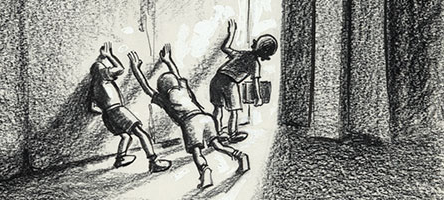
Illustration downloaded from http://www.loc.gov/teachers/classroommaterials/presentationsandactivities/activities/political-cartoon/about.html


Education is one of the foundations of Canadian society. If you are wondering why your board is addressing issues of equity and inclusion recently, a policy/program memorandum has impacted the way Ontario public school boards are conducting their business of education.

Through the Policy/Program Memorandum No. 119, Developing and Implementing Equity and Inclusive Education Policies in Ontario Schools, it is stated that there is a need for our “publically funded education system to support and reflect the democratic values of fairness, equity, and respect for all” (Ministry of Education, 2013).

The Ministry of Education recognizes factors such as race, sexual orientation, physical or mental disability, gender, and class can create barriers to learning. There is evident that some groups of students continue to encounter discriminatory barriers to learning. Research shows that when students feel connected to teachers and other students, they do better academically (Goleman, 2006).

Please refer to Barriers to Student Learning – An Overview for a more details outlined in Through Policy/Program Memorandum No. 119.

So what does this mean to teachers?

School boards must seek out barriers to learning for all students. Teachers therefore must also address barriers to learning due to factors such as race, sexual orientation, physical or mental disability, gender, and socioeconomic status.

Through Policy/Program Memorandum No. 119, school boards, and teachers, must address barriers to learning that fall within prohibited grounds of discrimination set out in the Ontario Human Rights Code.

There is significant evidence to show that Black youth face significant barriers to learning within their schools. School boards such as the Toronto District School Board and the Peel District School Board have identified barriers to learning for Black youth who face systemic discrimination and who do not feel connected to their teachers or their school communities.

In developing and implementing equity and inclusive education to address Memorandum Number 119 (2009) education policy within Ontario, the Peel District Board of Education (PDSB) has identified a part of their student community who is experiencing systemic barriers to learning. These barriers to learning are supported through research that shows that black male students feel excluded, have fewer opportunities, and experienced an achievement gap in their learning. Further, research also shows that these barriers to learning are rooted in systemic biases and in negative teacher and peer perception of Black males identity and ability (Peel District School Board, 2018). These biases result in an over representation of levels of suspension and expulsions and lower levels of representation in gifted programs and high school completion (Maynard, 2017).

System-wide, cultural responsive pedagogy and practices are being put into place to have Black male students feel more included in meaningful curriculum and instruction. This curriculum should be reflective of Black voices and help students see themselves within the lessons. This curriculum should address Black culture from all over the world, and not just from “Jamaica” (Peel District School Board, 2018).

In order to integrate the experiences of Black Canadians into the curriculum, the PDSB is providing instructional resources to be embedded into core courses and through inquiry as well as classroom resources to reflect the student body (Peel District School Board, 2018). Teachers and teacher librarians will play a critical role in building culturally responsive schools. Further, purposeful assessment and student voice will to integrated into school practices. This action plan is also embedding equitable and inclusive practices in board policies and programs while identifying and removing discrimination, biases, and system barriers to the success of Black male students. There has been a system wide leadership commitment to this initiative thus changing the board’s climate and the prevention of discrimination and harassment of Black male students’ board wide. To ensure accountability, the PDBS will be tracking the impact on data of expulsion and suspension rates, gifted student numbers, and graduation rates in Black male students ensure accountability and transparency.

In the next few blogs, I will further address some of the barriers to learning that students face based on their race, sexual orientation, disability, gender, and socioeconomic status.

If you would like me to address barriers to learning for a specific student group, please provide a suggestion below.

Collaboratively yours,

Deb Weston

Note that, although I do not have any direct experience with the barriers to learning addressed in this blog, I do identify as an educator who advocates for equity and for all students, especially when it comes to breaking down barriers to learning.

References

Caton, M. (January 31, 20198). Ontario Black Youth Action Plan aims to break down barriers, Windsor Star. Downloaded from https://windsorstar.com/news/local-news/ontario-black-youth-action-plan-aims-to-break-down-barriers

Goleman, D. (2006). Social Intelligence: The New Science of Human Relationships.-New York, NY: Bantam Dell, A Division of Random House.

Gordon, A. (October 2, 2017). Summit on barriers faced by Black male students comes to Toronto, Toronto Star. Downloaded from https://www.thestar.com/yourtoronto/education/2017/10/02/summit-on-barriers-faced-by-black-male-students-comes-to-toronto.html

Maynard, R. (2017). Canadian education is steeped in anti-black racism, The Walrus Magazine.

Ontario Ministry of Education. (2013). Policy/Program Memorandum No. 119: Developing and Implementing Equity and Inclusive Education Policies in Ontario Schools, Government of Ontario. Toronto.

Peel District School Board. (2018). We Rise Together: The PDSB action plan to support Black male students. Peel District School Board of Education.

Innovation Collaborative Inquiry

I am currently starting a really exciting journey which involves myself and a group of 10 teachers. We are choosing a topic that interests us and going on a year long journey to discover the answers to this question. We are currently thinking about our question having to do with student led learning and how can we get students to take the lead with their learning and how to make meaningful tasks that will inspire action.

We are meeting 3.5 days this year and we are able to work alongside these other teachers to discuss our findings and see how we can put this plan into action in the classroom.

The first meeting involved getting to know all the teachers. We did this by mingling with the crowd based on which card in the deck we had (all sixes went together, the tens went together..) and then we met up with the same suit cards and then we had a few different challenges after that. When we met with our random groups, we answered the question how have we seen or used innovation in our classroom. It was amazing the chats that we had when this question was posed to us. I felt happy explaining my students current inquiry projects where they research a question of their choice which they will then present to the group it relates to. I also shared about selecting meaningful projects that will somehow create change or an action in our school. We discussed all of our innovation ideas and then we were asked to go back to our seats.

A teacher across the room shared about something that someone had said to her that will change and solve all problems involving math: going gradeless. She mentioned there would be various levels in math like when children go to swimming lessons and they wouldn’t be able to move onto math level two until they finish level one. In a way it sounds like an IEP but it would be in place for all students.

The rest of the morning we had to find a group of people that had a common area of focus as us and that is how I ended up in the student led learning group where students guide themselves to tasks that they find to be meaningful and essentially are 21st century learning tasks. This group will meet next week to discuss our plans.

After going to this exciting learning opportunity, I went back to my class and made a self reflection for our drama haunted house that the students had just finished planning, creating, presenting and then cleaning up. I had them assess themselves using four words: not engaged, somewhat engaged, engaged and very engaged. I told them to circle which word best described their involvement before, during and after the haunted house. It was incredible to see that the word they had circled lined up with the way I would assess them. If they had done this same self assessment and I had put marks or levels on the page, I am not so sure they would have been as successful with their assessment.

I am excited to continue learning with my inquiry group and keep trying out things that we learn as a group. The gradeless self assessment was just one small thing that I know will come of this exciting learning opportunity. It is very fun being apart of a group of like minded people that are really hoping to see a positive change in our classrooms.

More to come!

Introducing Coding without Robots

A few years ago when I started hearing about teachers doing coding and robotics in the classroom I dismissed it as a fad.  I didn’t understand the value of coding nor could I see how it tied to the curriculum.  However, I recognize as a professional learner my initial reaction to something radically new can sometimes be resistance.  I think that this is because I can’t see myself fitting “one more thing” into my classroom practice. I always have to give myself time to process, research, find the value and then finally accept it.  After I have tried a new practice with students and see the beneficial outcomes, I endorse it and then begin to share it widely with colleagues.

When I began the journey with coding and looked at code.org I tried it on my own and admittedly, understood very little. I went to more workshops and conferences but avoided the coding and robotics thinking that it just wasn’t my bag.  Then I had a colleague that dragged me in to the world of coding and robotics.  We worked together.  I’ve since become convinced that we need to teach all students how to code.  I have also figured out that you don’t need any robots to do it.  In fact, when you start-you don’t even need a computer.

coding 4         coding 2


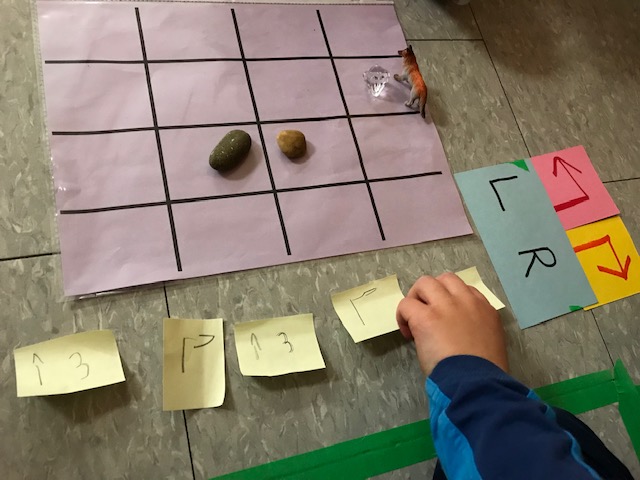
The above picture is a coding game that I used recently with a grade one and two class.  Students placed their obstacles (rocks) on a grid.  They placed their “gemstone” or finish on a spot on the board and their “robot” (animal)  on another spot.  They wrote their code on a sticky note using arrows and then had their partner take their robot through the code to test it for “bugs”.  A big part of coding is knowing your left from your right and being able to write instructions that someone else can follow.  We started out the day coding one another to walk in a square using only: “forward” “turn left” and “turn right”.  It was amazing to see how much problem solving took place.  They were using positional language, procedural writing, clear communication, visualization and proportional reasoning.  Their thinking was exploding! The students were engaged in the learning and well on their way to being able to code something online.  From there we explored the Scratch Jr. app.  After a short look together at what the different “buttons/blocks” meant they were able to code independently.  As teachers we sometimes get bogged down in the fact that we don’t have the money to purchase the technology and shy away from trying things based on the fact that we don’t have “the stuff”.  However, laying the groundwork before introducing the technology piece to students is key.  We need to always consider the pedagogy before the technology.


Play-Based in Primary

At the start of October, I began a full year assignment at a new school teaching Grade 1/2. After teaching Kindergarten last year, I am overjoyed at the opportunity to teach these grades. I am looking forward to “following” the early learning continuum from a Kindergarten environment into primary, and the opportunity to bring along my favourite aspects of Kindergarten.

As a teacher, I feel I’ve got a strong foundation in my knowledge of child development in the early years. I majored in the subject in University and I am also a Registered Early Childhood Educator. Kindergarten was my “place”. I was comfortable there. I could talk shop for hours about the research supporting play-based learning and child-directed inquiry. I truly stand behind the play-based curriculum and spent my year in Kindergarten challenging norms and pushing thinking. The potential in children that is unlocked in a play-based program is powerful, and I see it first hand.

Moving to primary, I don’t want to suddenly ignore that part of who I am as a teacher. I’m glad that there is beginning to be a shift toward more play in the primary grades, but it hasn’t fully or truly happened yet. This often makes for a rocky transition for our students, who sometimes move from a free-flow day to one with a lot of structure. Some of our students have never seen a worksheet, and are suddenly expected to sit quietly and complete them for extended lengths of time. Even just a comparison between the difference in how long we expect them to listen attentively between the two grades just doesn’t make sense. There needs to be a continuum.

I do believe that change is needed to ease this sudden shift in what we are expecting of our young learners. If Kindergarten is designed to be best for a six year old’s development, why do all of those considerations disappear when they enter primary only two months older? I don’t have these answers, and I don’t have control over this – but I do have control over how I teach.

My personal learning goal this year is to explore authentic, play-based learning and inquiry in primary. I have a lot of questions and things I am unsure of:


How do I ensure I teach to where they’re at, while simultaneously teaching them for where they’re heading?

What does this actually look like? Where does this fit in my daily schedule? How do I effectively combine play and inquiry with necessary instruction “must haves”, such as math talks/three-part lessons, small group instruction or the components of balanced literacy? 

How do I make sure I cover the necessary curriculum content?

How do I actually source the materials needed for an effective play-based environment in a primary hallway? My classroom certainly didn’t come equipped with blocks or loose parts!

How do I set up an environment that is conducive to independent inquiry? What materials will my students need access to, and what explicit teaching is needed to set them up for success here?

Aside from anecdotal and conferencing, how do I asses their progress? Obviously, pencil-paper assessments are necessary in many cases, but how can I assess in a more authentic way?

How do I ensure that my environment is meaningful and planned carefully enough that I know my students are exploring curriculum concepts in their play? I’m finding this gets trickier as the curriculum concepts increase in complexity. 

How do I support and justify a play-based environment to those who do not understand or agree?


Also on my mind, is that I want my play-based environment to be built around authentic play. There is a difference between learning centre rotations and actual play. Adult created and directed activities are fun but they are not true play. Play is self-chosen, open-ended, child-directed and does not come with instructions. This is the play that allows a child’s curiosity drive them to discover and do wonderful things. This is what I want happening in my Grade 1/2 classroom!

As I figure all of this out, I hope to share my experiences with you. Are there any other play and inquired based primary teachers out there? I’d love to hear from you!