Building Self Care and Resiliency for Educators

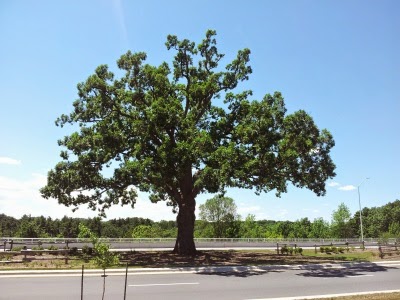
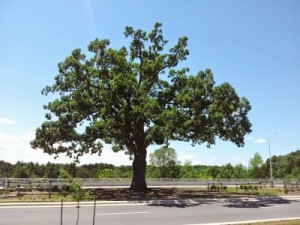
120701_133238-Bronte_Great_White_Oak_Tree

Road rerouted to preserve 250 year old Bronte White Oak Tree 

“The strongest oak of the forest is not the one that is protected from the storm and hidden from the sun. It is the one that stands in the open, where it is compelled to struggle for its existence against the winds and rains and the scorching sun.” Napoleon Hill (1883–1970)

Building Self Care and Resiliency for Educators

As educators, we deal with students and colleague who are under stress. As educators, we are at risk of being physically, mentally, and/or emotionally worn out due to our role as caregivers to our students. This feeling of being worn out can be referred to as compassion fatigue or secondary traumatic stress (Figley, 1995). Charles Figley states that “there is a cost to caring.”

The best way to deal with and limit compassion fatigue is through early recognition and self awareness.

A. Tips for Educators

(adapted from Charles Figley, 1995)

1. Be aware of the signs of compassion fatigue

  • increased irritability or impatience with students
  • difficulty planning classroom activities and lessons, decreased concentration
  • feeling numb or detached from students’ challenges
  • increased feelings and intrusive thoughts about school or dreams about challenges in school

2. Reach out for support – Don’t go it alone

  • isolation can impact ability to cope
  • get support from colleagues or your school teams
  • ask for support from administration

3. Recognize compassion fatigue as an occupational hazard

  • when educators open their hearts and ears to students’ trauma, compassion fatigue can occur
  • having a strong reaction to student trauma is not a sign of weakness or incompetence but instead it is means you care … it is the cost of caring

4. Seek help with your own trauma by seeking support for self

  • educators’ unresolved issues can put them at more risk of compassion fatigue or stress
  • seeking support for self can help educators deal with limiting compassion fatigue or stress

5. Attend to self care

  • self care is an effective way to guard against burn out from compassion fatigue or stress
  • self care helps educators deal with challenging workplace stress
  • key self care strategies include eating well, sleeping well, exercising, taking a break during the workday, taking time to self-reflect, making time to de-stress
  • know your triggers for stress

B. Stress management: Know your triggers/stressors

In order to manage stress better, you need to know your stressors or triggers. (Adapted from Mayo Clinic Staff, n.d.)

Main types of stress: Stress is your body’s reaction to the demands of work and life. Stressors are events or conditions in your surroundings that may trigger stress. Your body responds to stressors differently depending on whether the stressor is new or short term (Acute stress) or whether the stressor has been around for a longer time (Chronic stress).

Acute stress: Also known as the fight-or-flight response, acute stress is your body’s immediate reaction to a perceived threat, challenge or scare. The acute-stress response is immediate and intense, and in certain circumstances it can be thrilling. Examples of acute stressors include having a job interview or getting a speeding ticket.
A single episode of acute stress generally doesn’t cause problems for healthy people. However, severe acute stress can cause mental health problems — such as post-traumatic stress disorder. It can also cause physical difficulties such as tension headaches, stomach problems or serious health issues — such as a heart attack.

Chronic stress: Mild acute stress can actually be beneficial — it can spur you into action, motivate and energize you. The problem occurs when stressors pile up and stick around. This persistent stress can lead to health problems, such as headaches and insomnia. The chronic-stress response is more subtle than is the acute-stress response, but the effects may be longer lasting and more problematic.

Effective stress management involves identifying and managing both acute and chronic stress. Check out developing a self care plan below!

C. Build Resiliency

(Adapted from CAMH Resiliency & Short Term Self Care, n.d. )

Resilience is frequently described as the capacity to thrive and fulfill one’s potential despite (or perhaps because of) stressful circumstances. All of us are resilient in one way or another, but some people seem to be more resilient. These people are inclined to see challenges as learning opportunities which can result in healthy emotional growth and development.

Factors that are characteristic of resilient people include:

  • a sense of closeness and connectedness to others
  • strong, dependable support from at least one significant other in their lives
  • attention to their own personal health and well-being
  • high self-esteem, a strong sense of personal identity
  • a sense of humor can help you overlook the unattractive, tolerate the unpleasant, cope with the unexpected and smile through the unbearable.
  • a realistic and balanced awareness of their strengths and limitations
  • the ability to be assertive and emotionally tough when necessary, but also sensitive and compassionate
  • a playful, lighthearted approach to life
  • a sense of direction and purpose in life
  • the ability to turn difficult experiences into valuable learning opportunities
  • the capacity to pick themselves up, shake themselves off and keep moving forward after traumatic and upsetting situations
  • the ability to adapt to and live comfortably with uncertainty and unpredictability
  • the ability to laugh at themselves. Resilient people do not “sweat the small stuff.”

 D. Short-term Strategies: Putting on the brakes to relieve stress

Short-term strategies that help ease anxiety are unique to each person. List the quick wins that might be most helpful for you, and add to your list when something comes up that you find pleasant or re-energizing.

Here are some simple ways to relieve stress that I use:

Tweet more at #EdStressReliever

  • eat your lunch away from your classroom or workspace
  • talk to a colleague
  • help a colleague
  • tell a joke
  • take a walk
  • ask for help
  • ask for advice
  • stretch
  • 4-7-8 breathing 4 in-7 hold-8 out
  • bake something and share it with colleagues
  • make jam
  • practice kindness for colleagues – do something kind for a colleague to make their day better

 E. Making it Personal

Here are some quizzes you can do to help you know yourself and how you deal with stress!

Self Assessment for Stress and Burnout

“How Resilient Are You?” by A. Siebert (resiliencycenter.com)

“The Resiliency Quiz” by N. Henderson (resiliency.com/htm/resiliencyquiz.htm)

Making a self care plan that works for me

Write down strategies you use to relieve stress in your life. Self care is not just about the self, self care means looking out for other people who work with educators.

F. Connecting self care and Resiliency …

Ontario College of Teacher (OCT) Standards of Practice and Ontario Institute for Education Leadership (OLF)

Connect to OCT Standards of Practice and OLF

As educators we do more than “just teach”, we care for our students and our colleagues. Teaching is about relationships and caring. I became a teacher to make the world a better place one student at a time and one day at a time.

Be good to yourself so you can be there for your students. Be an oak tree!

Collaboratively Yours,

Deb Weston

References

Figley, C. R. (1995). Compassion fatigue: Secondary traumatic stress disorders from treating the traumatized. New York: Brunner/Mazel, 7.

Mayo Clinic Staff, (n.d.) Stress management: Know your triggers  http://www.mayoclinic.org/healthy-lifestyle/stress-management/in-depth/stress-management/art-20044151

O’Grady, C. P., & Skinner, J. W., (2007) MSCAMH A Family Guide to Concurrent Disorders (CAMH Resiliency & Short Term Self Care) Downloaded from  http://www.camh.ca/en/hospital/health_information/a_z_mental_health_and_addiction_information/concurrent_disorders/a_family_guide_to_concurrent_disorders/selfcare/Pages/shortterm_selfcare.aspx

Stress Cat (n.d.) http://www.lessons4living.com/stresscat.htm

Moving Beyond “Cultural Months”

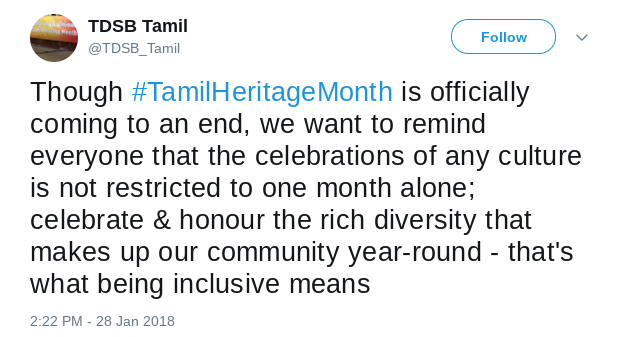
I don’t mean to be flippant but I’m sometimes leary when we have a month to celebrate a particular racialized group. What happens to their history or their identities during the rest of the year? I recently saw this post on Twitter and it got me thinking – how do we ensure that we go beyond these months and into a deeper desire for ourselves as educators and our students to value the diversity that exists in our classrooms?

Screenshot 2018-01-28 at 5.15.07 PM

Checking Our Bias

In our board, we have had many conversations around bias and equity. How are we moving from conversations and into action? In what ways are we really ensuring more equitable outcomes for our students and colleagues who are racialized? We all have bias and privilege to one degree or another. When we acknowledge our bias and privilege and are conscious of it in the spaces in which we exist, we are better equipped to extend equity and honour the experiences of others. In doing so consistently, we become those who seek out and foster ways in which to level playing field for others. What is your bias? What are your thoughts about the students that you serve? How does your bias impact the way in which you serve your students?

Courageous Classroom Conversations

Over the past few years of teaching, I’ve realized to a greater degree, the value in having conversations about the world around us with students. Earlier on in the year, we had conversations around Colin Kaepernick and other NFL players taking a knee. I had a colleague who was shocked that I was talking about it in the classroom. We have to remember that our students are living in and experiencing the same world that we are. They are keenly observing and are not oblivious to what is going on. Shouldn’t they have a space to engage in conversations about what is happening, not from a stance of judgement but of fact finding and meaningful sharing about its impact on them and the communities in which we live? By shying away from these conversations, we do a disservice to our students because that is what is real and authentic in our world and they need the opportunity to understand, discuss and determine ways in which they are able to navigate these situations in the hopes of bringing about a different tomorrow. This too is a part of education

Meeting The Needs Of Our Students Based On Their Realities

Shaughnessy is the 5th school that I have had the privilege of teaching at here in Toronto. Each school has had a different community and it’s been exciting to get to know and understand who my students and their families are. When we take the time to find out what is of value to our students and our community and teach from there, we truly start to meet the needs of our students. High expectations with lessons that are authentic and are based on the interest of our students increases engagement and allows for our students to make connections to the curriculum that are meaningful and relevant. This is what gives them greater opportunity to flourish based on who they are. We all want greater student success, why not find out what is meaningful to our students and work from there to ensure that they are represented in our lessons, tasks and classrooms?

Special months are great for celebrations of cultures but as this Tweet reminds us, let’s consider ways in which to go beyond a particular monthly celebration and make sure that our diverse identities are celebrated throughout the year.

The Teacher Who Couldn’t Read

It’s hard to imagine that a school board would every hire a teacher who couldn’t read. Well, if I have been given a reading test past the grade 4 level, I may not have been hired.

I am a teacher with 18 years experience. I am qualified in many areas including Reading, Technology, Math, and Special Education. I have 5 university degrees. But I cannot read well aloud past the grade 4 level, really.

I went through school with an undiagnosed reading disability called Dyslexia. When I read, words and letters move. I have a great difficulty writing and especially when I need to proofread my work. As a student, I was told I was slow … I failed grade one. I was told I made careless mistakes and I was sloppy. Spelling tests were a nightmare for me. Luckily, through lots of hard work and determination and using computers to support me in my work … I am here writing to you today as a teacher.

I’ve written a book about my challenges as a student to help students, teachers, and parents become informed of the challenges faced by struggling readers.

Here’s the link to a PDF download … share it with your students, their parents, and your colleagues.

Remember, everyday students come to school to do their best learning.

Collaboratively Yours,

Deb Weston

Review of The Girl Who Couldn’t Read

The Girl Who Couldn’t Read Friesen Press

The Girl Who Couldn't Read


The detour

MUTCD_M4-9bR.svgWanderers, tourists, sight seers, visitors, escape artists, runners…”Hey!” this teacher asks, with a smile, “See any cool artwork today?” or maybe the exchanges are in passing such as,  “How are you? How’s your day going?” However, what rarely gets asked is, “Aren’t you supposed to be in class right now?”

Have you ever observed a student or few who seem to be conspicuously far away from their usual classroom or floor? Have you ever watched them take the long way around the school to complete an errand? How about the students who take the time to ponder every single art exhibition or piece of student work in the hallways? Not surprisingly, these are the same students who are frequently found quenching their thirsts at the farthest drinking fountains or outside of their friend’s classes waving as well.

At first, I paid little attention to moments like these. Perhaps those students were delivering messages to the office or helping another teacher? Of course it’s a possibility, but I was able to discern the difference quite quickly when the students being observed were empty handed, on the opposite side of the school building relative to the office, and not in possession of a good reason for being in that particular space and time. I have to empathize with students like this. That was me too. I used to take lots of notes to the office for my teachers. I wonder if those notes said, “Please keep William busy for a few minutes and then send him back. Thank you.”?

The Thinking Lap

Maybe the students that I’m seeing are taking a lap to think? Most times I use this option as a means to support anxious, stressed, and or physically active learners. A walkabout is an excellent mental health strategy for all of us, but then I started to see some patterns that piqued my attention. The students who I was regularly seeing in the hallways, were showing up at around the same times each day? Was there something going on that they needed to get out of class at the same time each day? It was then that I began to see this through a different lens.

In my role as SERT, I provide resource support in a number of classes throughout the school. Recently, I observed a student from the intermediate panel at a water fountain on a different floor about 30 minutes into the first period of the day. Harmless enough in itself, but what struck me about all of this was the fact that the student would have had to pass at least 2 other fountains along the way. 45 minutes later they were skipping down an empty hall during class to their locker. 30 minutes after that, back at the faraway fountain. I smiled, said hello, and went about my morning.

Perhaps they are enjoying an extended walk to work out some stress? If so, what are the underlying factors that explain this student’s to need be out of class so often? Could all of their self-navigated detours be coincidence? Barring medical issues, this is less likely to be believable based on frequency and time of day. What’s worth noting as well, are the other students who might be taking their own detours around the school.

3 Questions and 3 Answers

Q1. Would these students like to have someone to walk alongside and listen?
Q2. How many others feel like doing the same, but don’t act on it?
Q3. How can wonderlust be infused into these learners’ days to go with their wanderlust?

A1. It depends on whether they will be heard or given a hard time for being in the wrong place at the wrong time without any understanding by others.
A2. If there is one, there are others. Albeit subtle, shifting, shuffling, and staring into space are good indicators to teachers that students need a break.
A3. Throw the map away sometimes. Keeping the learning space, active, challenged, and engaged is often a trip to an undiscovered land. It is an act of re-invention and creativity that takes practice, patience, and persistence. Don’t be afraid to change directions by throwing in detours of your own.

Thank you for reading this post. Please take time to comment and share to keep the conversation going. Enjoy your detours.


The destination

This is the companion post to The drive shared on December 30, 2017. I wrote it because trips are always more fun with a partner.

When I was in grade school, there always seemed to be one adult whose job it was to ask students, “What do want to be when you grow up?” For some reason, this was more of a cruel conundrum rather than a sparkling conversational point. I hated hearing this question in my day. I still cringe whenever it gets asked today. Secretly, I hope students respond with something creative like Unicorn rancher or underwater coffee shop owner – anything will do, as long as it changes the subject.

I see the question more like asking students to pick the trip of their lifetime without ever having a chance to take a Geography lesson, browse a web-site or read any reviews on TripAdvisor.¹ Even though our jobs are to provide and guide our students, we still must let our learners decide their own destination(s).

This is cause for concern because I fear we’re running out of road(s) for some of our learners. For many, the destinations are leading to dead-ends instead of their dreams coming true. If we consider the ruthless nature of the real world our graduates will face, there will be many detours, breakdowns, and accidents outside of the classroom courtesy of life. And yes there will be traffic, road closures, and potholes. This makes it even more crucial for us to be paving new roads with our learners.

It’s hard to drive.
It’s even more difficult to discover what drives us.
Then there’s always the destination where departure times depend.
Decidedly, education helps define destiny and dignity.

Over the past 9 years of my teaching journey, I have sped past a few common sites along the way. Like the repeating background of an old cartoon or the cookie-cutter rest stops that line the highway – each with the same caffeine, food, and fuel options. They are;

A. Our students are taught to worry so much about the destination that they risk getting lost or forgetting the reason for their journey all together. If all they are taught to see is a mark, then it is time to redraw the maps and reprogram the GPS.

B. There is no amount of training to completely equip educators for every iteration of classroom they will work within. Some or most of the learning will come on the job, and that’s okay. Redrawing the map required, again.

C. Worksheets are neither the solution for active engagement, nor parents who demand homework for their child. They are most likely mind-numbing disengagement exercises destined for the recycling bin if not managed. How can students be free to think when the answers are fed to them to regurgitate on a page? Maybe this paper could be used for the maps instead?

D. No matter how much teachers care for their student’s well-being, academic achievement, or future they will still be allowed to fall through the cracks due to decisions made outside of our school walls. This is hard to understand, but we have to accept it and support these students where possible inside of the system.

E. Students have voices that need to be equipped and amplified. If we are not listening to our learners when they whisper, it will be too late to help when they are screaming at us. Asking students for feedback, ideas, and improvements has been one of my favourite and frightening activities. It can hurt the ego from time to time, but can also break down barriers in the classroom that can lead to more effective and honest feedback as learning.

Destination TBA is A-OK

Over the course of their learning, students will change their minds 1000s of times. They will find something interesting one week and then something different the next. What worked to inspire them last year may be the thing that gets in their way the next. As educators, we have to consider the importance of our work in preparing students to reach their destinations not ours. We must always be creating new roads for them to travel not just maintaining existing ones. We must also be teaching our students to read and draw the maps to their own future.

There will also be slamming brakes, reversing at full speed, doing donuts in snowy parking lots, and tearing out engines for rebuilding. We will fill their tanks, provide directions, and clean windshields. Yet, as elementary teachers, we rarely get to see our impact on students once they’ve traveled further down life’s roads.

Hopefully, they’ll send an occasional postcard and maybe a map to let us know they’ve arrived at their destination.


1. I used to tell people corporate lawyer so they would leave me alone. It seemed to cover all of the bases even though I would have rather pursued diplomatic or NGO work overseas. And now, here I am – a teacher, writer, and question askerer.


The drive

Hands up if you’ve ever wondered what goes on in the minds of the drivers on the road around you?

Recent commutes to school and to shopping feel more like scenes out of a Mad Max movie, except with snow storms instead of sand storms. Vehicles speeding, tailgating, weaving, cutting one another off, and then there were some drivers who provided visual proof that not all birds have flown south this winter. However, none of this reflects anything close to the spirit of kindness and giving this season is supposed to celebrate.

Lately, a combination of work-life/Geo-political stress, an over-abundance of festivities/holiday cheeriness, and wintry weather have made people significantly more interesting. And by interesting, I mean disagreeable, distracted and sometimes dangerous. Being easily distracted myself, I started thinking about self-driving cars and how an autonomous vehicle would handle this time of year?¹

Then came a realization that our current cohort of elementary students could be among the first to have self-driving cars by the time they get their driver’s licences. Will this be a good thing or will a Neo-Luddite backlash prevent this particular advancement in technology from coming? What about education? Could classrooms become more autonomous too?

Why hasn’t all of this happened sooner when it could be better and safer for everyone? Are there Edu-Luddites at work trying to preserve exhausted and traditional systems? As education ploughs into this century, will it keep pace with a modern world that is changing at the speed of learning? Will broke down dogmas of teach, test, report, and repeat finally be traded-in, repaired, or left on the side of the road? Is this why NASCAR is so popular?

Getting somewhere

Speaking of NASCAR, I wondered whether everyone travelling at the same rate was a good idea. Did you know there is something called a restrictor-plate? Isn’t that what’s happening in our classrooms already? Students race through their learning based on birth years, circling the track over and over until all of their age appropriate laps are completed, and then they’re towed or driven off at the end of Grade 12.

But what if they need to stop along the way? Are there pit-stops/provisions in place to support students who do not fit the factory learning model or who prefer a different pace? I get that special and alternative education options are already available, but what if more students need them and they are not available? Think of a racer who needs tires and gas at a pit-stop, but only being able to choose one. It’s only a matter of time before frustration and failure become the outcomes.

In my next post I want to continue driving home this theme, but will shift gears to consider where we and our students are heading. Please read my companion piece The destination to continue the journey.

Thank you for reading. I hope you enjoyed it. Please share and take time to comment.


1. Did you know that Tesla’s autonomous vehicles are logging over a million miles of data per day?

Kindness and Gratitude

My hope in asking for a junior division assignment was that the students would be more independent however, I also knew that in exchange, I would be likely dealing with the issues of the tumultuous “tween” years.  My expectations for this group were particularly high because I had taught nearly half of them for two years in grades 1 and 2 and I felt as though I knew them pretty well.  Unfortunately, we have been having social issues in our classroom and the students are having difficulty treating each other with kindness.  I wasn’t prepared to have to “teach” kindness and gratitude at this age.  After 20 years in the primary grades, I suppose I assumed they would already know how to be kind.  Let me be clear.  They are not horrible kids and having raised two kids through the “tweenage” years I know the behaviour is driven by hormones etc.,  Kindness becomes more complicated in the junior grades as the social constructs change and being popular and fitting in becomes that much more important.  What I’m trying to get across to the students is that kindness is actually more powerful than being mean but they aren’t yet all buying into it…yet.  I’m not giving up.

We started by reading the book “Wonder” by R.J. Palacio together as a class.   After every few pages there was so much to unpack in discussion with the students about empathy, “precepts” for living and loyalty in friendship.  In discussions, the students were easily able to empathize the injustices suffered by Auggie and were angered by the actions of the antagonist, Julian. We also went to see the movie in order to compare the stories and they thoroughly enjoyed the experience and were thoughtful in their assessment of the themes and the major differences.  In reality, however, they were having a hard time putting all of this knowledge into practice with one another.

I needed to dig a little deeper and do some research and I happened upon a great website connected to the book; #choosekind is a campaign attached to Palacio’s book and it started us on a journey of kindness.  We’ve also been using lesson plans from the Random Acts of Kindness website and have begun daily gratitude journals.  We started restorative circles using our talking stick using Restorative Circle prompts. We have created our rules and agreement for our circle.  It has been a slow start because we are starting with topics that are allowing students to relate to one another and are not value or character based sensitive topics yet as we work to build trust in the circle.  Our first couple of prompts were, “What are 3 things that you cannot live without?” and “Who is your hero?” Not everyone is able to come up with something right away and sometimes we have to circle back, but it is a beginning.

We also wanted to do something as a class that was more global and would make an impact on people whom we didn’t even know.  In Peterborough, we have a store called Under One Sun.  They are part of a larger organization that supplies crafts from artisans in Haiti, “Restoring Dignity Through Artistry”.   We decided to participate in a Christmas ornament fundraiser which helps to create jobs and sustain families in Haiti. Some of the money goes to the artisans for healthcare, childcare, education and materials and some of the money comes back to the school.  Our class of 22 students alone sold more than $1000.00 worth of ornaments.  This fundraiser makes a difference in our community and for families living in Haiti and broadens our student’s awareness of global issues of poverty.  In addition, we are going to learn how to make paper bead jewelry ourselves as gifts for our own families.

As we move into the holiday season, December is a great month to think about giving, gratitude and kindness.  We are going to be working with the Senior Centre down the street, hanging our art work, singing songs to entertain and presenting a dramatic re-telling of “A Promise is a Promise” written by Robert Munsch.  We have created a kindness calendar which includes random acts of kindness for each day that do not cost money.  Hopefully, day by day, discussion by discussion the students will come to realize the power of kindness.

The Workshop Presenter’s Palette

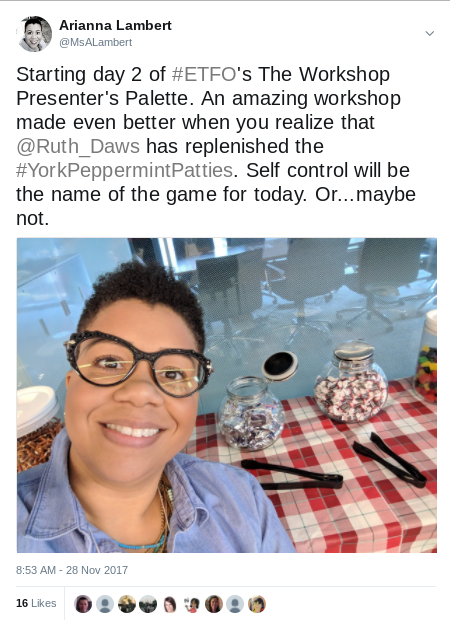
  Screenshot 2017-11-29 at 8.53.40 PMIn my last post, I blogged about attending and presenting at workshops. And well…perhaps I should have waited a few weeks before sharing about that topic. Hindsight is always 20-20 and I’m grateful for the opportunity to share with you on this topic once again.

That being said, I must admit that I am coming off of a high that I haven’t had the pleasure of experiencing enough of as of late. This past Monday and Tuesday, I had the privilege of participating in ETFO’s The Workshop Presenter’s Palette.  I walked in not knowing quite what to expect but prepared to work on something and in all honesty, quickly realized that I was really working on myself. I’ve said it before, I love sharing the work that I get to do with amazing students and this session was really for me to be able to improve on something that I already enjoy doing.

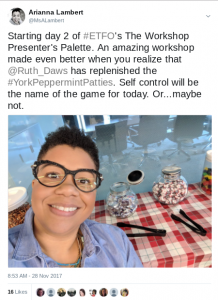
Screenshot 2017-11-30 at 7.10.16 PMMuch thanks to the “Terrific ETFO Trio” – Ruth Dawson, Joanne Myers, and Jane Bennett. Not only was it inspiring to watch these 3 women share strategies – with intentionality – but I also felt as though they gave to us on every level. From remembering our names to making sure there were yummy treats, they hosted us so well and reminded me of the importance of making my audience feel as though they matter every time that I present. I walked away wishing that I had more time to sit down and learn from them. Thank you!
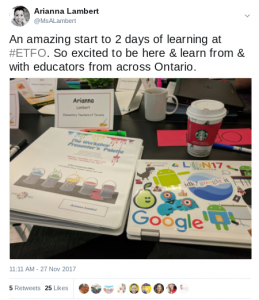
Now you’re probably wondering what was so magical. Well, here are a few tips that I picked up over the 2 days. Now I can’t go giving away all of their amazing secrets, you’ll have to stay tuned and try to get in on the fun next year.

The Environment Makes A Huge DifferenceScreenshot 2017-11-30 at 7.09.35 PM

We were in a large room with great acoustics so it was clear to hear the presenters. Everything was already set up for us and it was inviting because it made me feel as though they were welcoming me not just a group of people. If you know who your audience is and have time to prepare for them in advance, do it! Make it obvious that you have thought of them in planning your session.

Not sure who will be joining your session? Not to worry. Play some music.  I learned that the number of beats matters. Aim for 120 beats per minute. It’s uplifting and raises the energy in the room. Consider playing a game to get started. We started with a Meet Three activity where we were asked to meet 3 new people and were given prompts for each new person we met. Each prompt was timed and eased participants from a place that was familiar to them – what they plan on doing over the holiday – to the deeper purpose of the workshop – what made a workshop memorable.

When I say that there was intentionality behind every part of the workshop, there really was. Down to the variety of tools to get the attention of participants such as clappers and other noise makers. I felt heard, never screamed over but gently brought back to the larger conversation. Small things that made a huge difference in the learning space.

Help A Friend!

Ever been in a session where people were offering feedback on something you were creating? Have you ever gotten the feeling of being overwhelmed by capturing all of the amazing feedback? Well, I think I was just given the solution. We were asked to get into Mentor Groups where we shared our workshop ideas and were given the opportunity to get feedback and answers to some of the questions we may still have about our work. Rather than frantically trying to write down the wealth of information shared, the person to the right of the presenter took notes while the presenter was able to actually engage in active listening. Sound simple? It really is and believe it or not, I never thought of it. I think this is a strategy that I will take back to the classroom and use with students in peer feedback sessions.

Equity

Language matters and the idea of intention vs. impact was made so clear to me. No matter my intentions, the impact of my words is what participants and those around me actually feel. Adam Peer was our presenter for this portion of the day and he addressed the importance of being conscious of the images that are shown in our sessions. Do they show the diversity that exists in terms of abilities, skin colour, religion, age, family, and genders? Still saying girls and boys or ladies and gentlemen? Consider using children, everyone or using the person’s name instead.

I feel as though I’ve just touched the surface of all that was incredible about this 2-day session but at the same time given away a few tips that you may chose to take back to your classrooms or even workshops. I’m refreshed and excited to implement my learning into my sessions and classroom. Remember to stay tuned to ETFO’s Upcoming Events to sign up for amazing PD that is sure to change your life.  


Book group

A colleague of mine started a book club for educators in our school. We read the book “The boy who was raised as a dog” which takes you on the journey of various stories from the child psychiatrist, Bruce D. Perry. The book group involved seven to eight educators discussing the assigned chapters we had read for the week. I highly recommend this read for any teachers who have ever struggled with a “challenging” student. The book details the accounts of many children Perry encountered whose traumatic past altered their future. The book teaches all teachers to have a compassion that is so necessary for these traumatized children.

We discussed many things during our meetings each week. We started discussing the chapters but the conversations always had a way of covering anything and everything. The meetings helped me go into each day with an open mind and a compassion for a child’s situation that I did not have before. You rarely think of the reason someone behaves “badly” or defiantly. We may just assume that that is the way that child is. Many of us may have not stopped to think of the reason for that action. Realistically, we all have a lot on our plates that day and we may be thinking of a quick way to discipline the child. The book helped our book group members to think of ways to help these children in class so that they may have a successful future outside of it.

Today was our last meeting and we took the last twenty minutes to reflect on our love for teaching. How amazing of a feeling it is when you have that moment in the classroom (or outside) when you just get that feeling of “this is the most incredible job on earth!” We all discussed moments we have felt like that and how incredibly lucky we are to be teachers. The book group was a great way to celebrate and to continue our love for learning. If anyone would like more information about this book, please let me know. The book could change your entire outlook on those “tough” situations, reminding us never to give up on a child or to jump to negative conclusions especially when we do not know their entire situation.

Discipline is a noun and a verb

This post picks up from Why then? What now?
It is an ongoing reflection through my lenses as a student, educator, and constant learner.

Discipline has been a misused and misunderstood concept in education. It is an evolving remedy for a host of behavioural issues? Simply put, it’s difficult to discuss and describe. Yet, education as we know it is often defined by it in so many forms. Take this snap shot of instructions/behaviour management commands that are used daily, to some measure, in classrooms;

Listen, line up, sit here, be quiet, watch this, do this, respond now, co-operate, snack now, clean up now, play now, stop playing now, line up, sit here, listen, watch, be quiet, do this, respond now, eat now, clean up now, get dressed, line up, sit here, do this, work together, respond, clean up now, get dressed now,  get your agenda signed, do your homework, hurry to your bus, and no running in the halls.

Talk about a running list of marching orders? Out of it’s context, it would be easy to imply that there doesn’t seem to be much time for learning. But, that is not true at all. Within these lines can also exist beautiful universes of learning where students are engaging in hands on learning, creating, and collaboration. The problem is the scope of what we see is on the student(s) who are not working in these magical inner spaces of education.

Same planet, different world

I am a co-SERT at my school and there have been times, due to extraordinary circumstances, when I am unable to greet my own students at the door of our classroom after they return from their Arts classes. However, it is during this time that I have been able to witness, without them knowing, their ability to return to class, begin an activity without prompting, and wait until I made it back to our room. This is the discipline which I have been working with my students to achieve.

You see, a key goal for all my students is for them to do the right thing even when no one is watching. That isn’t only discipline, but true freedom. Consider the power in this quote from Abraham Lincoln;

Freedom is not the right to do what you want, but to do what we ought.

When we give students the time, tools, and our trust there comes an incredible discovery that they are capable of so much more. If we spend our time over-instructing, we miss the opportunities to witness this.

Am I a tough disciplinarian? Most consider me a pushover, however, I have asked and empowered my students to be decision makers capable of great things at all times. This requires high expectations and a great deal of patience. As a result, students receive a great deal of positive attention for their ability to choose to act(not behave) so wisely. This is not in the form of a bribe, but in recognition and satisfaction that as my students demonstrate strong skills of responsibility, then opportunities for more independence and greater amounts of trust, are not far behind.

I believe that if we establish high expectations for our students, and give them the trust and encouragement they will rise to meet them far more often than not. Yes, they will fail. Yes, students will forget, and will require a pep talk, but it has never been a deal breaker in my classroom.

What does discipline look like in your learning space?

While you wrestle with an answer, here’s another tidbit for context.

Growing up in the 70s left me with a share of emotional and physical scars from grade school. In grade one our teacher tied us to chairs or put us in a dark closet when we misbehaved. Other years were trouble free and filled with care, support, and grace. And then there was the 1000s of lines and broken rulers from middle school. Somewhere the paddlings became supplanted by writing cramps and time theft. All of this, meted out to me and my classmates as part of the acceptable educational landscape when I went to school. (And I was one of the good kids.)

Then there was the year, our school had a vice-principal who used to make students, who were caught fighting, fight without a crowd. Most times nothing would happen, but there were a few times when the fights continued before he would intervene. After it was all over, he made them shake hands. True story.

Barring extreme circumstances, issues of discipline usually level off as each year progresses. Granted, there will always be isolated incidents, collegial discord, and disruptions too. Thankfully, schools are quickly becoming the places to offer/provide the help/structures necessary to support students in need who are struggling to communicate through their behaviour. We have to remember that behaviour is communication (L.R. Knost).

Sadly, no amount of support or discipline can supplant the harsh realities of mental illness, apathy, addiction, neglect, abuse, despair, or poor choices that can spare our youth from a bleak future. Whether the destination is the streets or the justice system there will still be some who fall through the cracks. Despite our collective best efforts, no amount of discipline, instruction, empathy, or act of punishment that will succeed in curbing or changing behaviour. I would like to hone my skills at understanding their actions as communication in order to support and build discipline through education, in their lives. It is the thought it continues to happen despite access to education that breaks my heart the most and led to my 2016 TEDxKitchenerEd Talk.

That used to be a paddling

With years of public education under our belts, pardon the pun, discipline should be employed as a noun long before it is ever used as a verb. Instruction and knowledge were at the heart of its original use in Latin – disciplina. And along this fine line we all walk as new teachers. Thankfully, the violence of corporal punishment has been struck in favour of more holistic and civil practices, but without compassion in our classroom, no amount of discipline will ever matter.

We must also embrace new approaches in our pedagogy that are first founded in respect, relationship building, and resiliency. Inside of all this is the need to share discipline as instruction and knowledge rather than punishment and intimidation.

In my next post I want to share about restorative approaches and mindfulness as part of my classroom management and my effort to build up discipline the noun and tear down discipline the verb. Thanks for reading. Please share and comment. It keeps us going to know you’re out there and along the journey of education. Will