Blog

Let’s Talk About Shame

Author Brené Brown from her book “The Gifts of Imperfection” writes that there are three things that people need to understand about shame:

1.  We all have it.  Shame is universal and one of the most primitive human emotions that we experience.  The only people who don’t experience shame lack the capacity for empathy and human connection.

2.  We’re all afraid to talk about shame.

3.  The less we talk about shame, the more control it has over our lives.

While reading this it resonated with me as a teacher.  How many have you experienced Professional Learning Shame?  I’m a professional learning hoarder.  I consume professional learning whenever possible and yet, often I feel shame while experiencing professional learning.  I listen to another teacher who is courageous in sharing strategies and ideas that are meant to help me in my job and ultimately I end up thinking that I must be a poor teacher because I don’t do those things in my classroom. Often I come away feeling worse about myself.  I’ll think, “Well great, obviously everything that I’ve been doing has been ineffective and I need to add THIS onto everything else.” or “I haven’t been doing THAT in my classroom. Clearly I’m not working hard enough. What must my colleagues think of me?”

Shame makes us think that we are somehow not worthy.  I know that I’ve convinced myself of not feeling worthy when I compare my work to other teachers in my school, on Twitter or (cringe)…Pinterest.  I find it difficult to look at myself professionally through an asset lens.  The best way to stop feeling that shame is to talk about it.  Once shame is talked about it tends to lose power and it is easier to let it go.  So, I’m talking about it in a public forum so I can work on building up that resiliency.

I’ve felt shame as a teacher in social situations with people who aren’t educators.  I’ve felt judged, compared and found unworthy.  More than once I’ve heard, “Teachers are paid too much and have far too many holidays and benefits and they’re really just babysitters.”  Whenever a Provincial Government talks about making cuts to education, it sends a message that teachers aren’t worthy of maintaining the current working conditions and fuels the public perception held by some that teachers are unworthy of what we earn.

In our school, whenever EQAO results are returned and we have our fall meeting to talk about the school improvement plan for the year, we celebrate for a nano second the areas in which the student have succeeded and focus intently on the shortcomings.  As a school we know that we all share in the responsibility for the cumulative education of students and feel shame when we look at where we didn’t succeed, but some of my grade 3 and 6 colleagues have told me about how they feel solely responsible for EQAO scores and consequently, feel shame.

Well, this is a downer of a subject, get over it Fenn.  What can we do?  It’s the nature of our job right?  Nope.  There are some great pointers that Brené Brown shares about becoming shame resilient:

1.  Understand when you are feeling shame and recognize what messages and experiences trigger shame for you.

2.  Remember not to equate being imperfect with being inadequate.

3.  Share your stories with people you trust and own your stories.

4.  If you feel shame, name it.  Talk about how your feeling and ask for what you need.

Teachers are constantly in receipt of feedback about their job; from parents, students, administrators, colleagues, the public and themselves.  Staying open to criticism and feedback is what helps us improve education for our students.  We need to take risks to remain open so that we can experience improvement.  However, what we should also try to remember is that everyone is flawed and imperfect but that doesn’t mean that we are lacking.


Non Fiction vs. Fiction?

The majority of what I read and write daily is non fiction.  If I were to attach a statistic to it, I would hazard to say that 95% of what I read and write on a daily basis is non fiction.  I like to write poetry and narratives too but I seldom have the time to do that and it is only for pleasure.  I read fiction daily too.  I read about 2 to 10 pages each night before falling asleep with my kindle on my chest.  Many years ago I was introduced to the work of Tony Stead at a Reading for the Love of It conference.  It changed my practice as a teacher forever.  Tony made me realize that almost all of my classroom library was filled with fiction, all of my class read alouds were fiction and the majority of the writing that my students were doing was fiction in some form or another.  I was not exposing them to enough non-fiction text and I was not preparing them for adult literacy.  Using “Is that a Fact?” by Tony Stead and “Reading with Meaning” by Debbie Miller I began to create a literacy program for my primary classroom that had a much stronger focus on non fiction.  I also began using my Scholastic book order money to augment my classroom library with nonfiction texts whenever possible.

I began explicitly teaching how to not only use, but to create non fiction text.  This focus engaged those readers who had struggled most.  There is far more information that can be read and synthesized through pictures in non fiction texts which enables all students, including the struggling readers, to contribute to discussions and make sense of text.  Curiosity drove students to have a purpose for reading and authentic purpose is everything.  We created “Wonderboxes”, an idea from Debbie Miller of small recipe boxes filled with index cards where students wrote down their questions and wonders.  It wasn’t labeled inquiry teaching at that point, but in retrospect it is what we were doing.  The students also created “Non Fiction Text Feature Notebooks” in which they designed illustrations that demonstrated the function of the various non fiction text features.  More recently my grade 4 and 5 students used a screen casting app called Explain Everything in order to create short videos explaining non fiction text features.  After learning what these text features were used for, students were able to interact with non fiction texts more efficiently to find what they needed.  In addition, they began using these text features in their own writing, especially when uploading to blogs and creating Google Slide presentations.

I still value the world of fiction-especially for read alouds. I know the magic of getting lost in a book or a better yet a book series and I want my students to have that experience too.  Being able to connect with another person over the topic of a book that has been thoroughly enjoyed is why book clubs and literature circles exist.  However, I am also aware that it isn’t for everyone.  A few years ago a colleague admitted to me that she had never enjoyed novel read alouds as a student because she just couldn’t visualize what was happening in the story in her own head.  For whatever reason she was unable to provide the running movie that went along with the narration from the teacher.  My first reaction was, “How sad!” but then I began to wonder just how many students I have taught over the years that felt exactly the same.  My literacy program became a more balanced diet of fiction and non fiction.  I encourage you to look through your own classroom library and review the read alouds that you have planned for the school year and take stock of how much of it is non fiction.  You just may want to augment your classroom literary diet with something that includes diagrams, labels and a glossary.

Inquiry Project

As part of a board focus group I am involved with, I am exploring along with a group of six other teachers, the inquiry model in the classroom. Each group that has gathered together to focus on inquiry looks at how it works in their classroom in a different way. My group has selected questioning. We are looking at how and if students select better questions, they will become more successful.

I just recently came back from Disney this Christmas break and I was overwhelmed with the many posts on instagram telling me what cool food I could find at literally every inch of the parks. There were so many options and I had to try them all and take pictures of them all. This has been an interest of mine for some time now, finding a really cool looking item of food and taking a picture with it. I came home from the trip feeling inspired and thinking, I can explore this phenomenon with my class of motivated grade eight students.

At first I posed it to them as a question, what are the most trending items right now on instagram. They came up with a huge list and then I made them create the questions. They came up with a few deep questions: Why do things trend? What makes an item trend-worthy? How can we explore a trending item in our classroom? What item could we produce as a class? It took us a while to get there but we figured out that it would be cool to market a food item as a class and then create it and sell it.

Since we were just finishing up our data management unit, we talked about how can we gather results from our student body about what item would be a hit in our school? First, we asked our office staff for advice about this exciting project. We were given the okay to market and sell an item as long as proper food handling techniques were followed. We then talked about what are the top six trending food items right now? We came up with six as a class: donuts, cookies, cupcakes, bubble tea, smoothies and the Harry Potter beverage. My students paired up, created a google survey and added all these options to the survey. They emailed every teacher in the school setting up meeting times to survey their class.

Before we analyzed our results, on our inquiry wall we came up with ways our project hits every subject we study. We talked about the literacy connections to marketing, advertisements, etc. We talked about art connections when designing logos, posters, maybe even creating a wall that would be a backdrop for a cool photo with our finished product. We talked about math connections when coming up with the cost of the item, the cost of ingredients, the profit calculations, etc. We made large lists for each subject so we can see how wide this one small question covers.

We have now gathered all our results and the top choice for our school was smoothies. We have now created a list of what to do next. It is on our inquiry wall along and our team leaders will check off our ideas as we complete them.

I would love to say we work on this six periods a day, which we very well could since it covers many expectations in each subject, however, grade eight is such a huge year that there is always so many other things that we have to be working on. Currently, we work on this project one period a day. We have 25 entries for logo ideas, 10 entries for company name and probably over 100 smoothie ideas. We will be narrowing down our choices on Monday.

I will keep you all posted on our progress! It is turning out to be a great project and the engagement level is incredibly high. We all sit around the back inquiry board and the hands that go up for ideas during this project are not up for any other time of day. My students are excited about the possibilities that this project presents. It is fun turning over everything to the kids and seeing how it all ends up!

Importance of Safe Water for Aboriginal Children’s Education

drinking water

Access to potable water is a fundamental human right and essential to ongoing  human health. Good health is also essential for students to obtain an education. For over 20 years, conditions of water safety and quality on reserve lands continue to be an ongoing concern in Canada. “Despite a substantial amount of funding allocated toward improving water infrastructure on reserve, an alarming proportion of communities face boil and drinking water advisories” (White, Murphy, & Spence, 2012, p. 1). As reserve land is under the Government of Canada’s jurisdiction, bureaucracy via regulatory frameworks, legacy of colonization, funding formulas, governance and policy issues remain as roadblocks to ensuring access to safe water on lands where Aboriginal students attend school.

Limited access to safe water impacts health creating discrepancies and disproportionate levels of disease and early death among Aboriginal people. Further, health discrepancies between Aboriginal and non-Aboriginal people are also directly and indirectly related to social, economic, cultural, and political inequities (Adelson, 2005).

Even though, in 1989, Canada played a prominent role in drafting the United Nations Convention on the Rights of the Child (UNCRC), a United Nations Child Find (UNICEF) report cited the plight of Aboriginal children due to lack of adequate housing, education, and clean water (UNICEF 2007).  In 1997, the Government of Canada documented promises to improve living condition for Aboriginal children (Minister of Indian Affairs and Northern Development 1997). The 2007 Senate report (Canada, Standing Senate Committee on Human Rights 2007) recommended a legal framework and an independent national children’s commissioner to monitor implementation of children’s rights federally and to coordinate federal, provincial and territorial policies that affect children. But with no legal framework or commission to monitor change, very little continued to be done to improve living conditions.

Poor living conditions impact children’s lives as Aboriginal children have a 1.5 times greater probability of dying before their first birthday, higher rates of hospitalization for acute lung infections and accidental injury (Canadian Institute for Health Information 2004), higher rates of apprehension by child welfare services, and a greater chance of having to live in a series of foster homes outside their community (Trocmé, Fallon et al. 2005). Further, living in poverty means that a large proportion of Aboriginal children lack the basic necessities. “Aboriginal homes are often poorly constructed and ventilated; their plumbing systems are often inadequate for the number of residents; and their clean water supply is often unreliable. Six percent of these homes are without sewage services, and four percent lack running water and flush toilets” (Assembly of First Nations 2006).

One in three Aboriginal people consider their main drinking water unsafe to drink with 12 percent of communities have to boil their drinking water (Chan et al. 1997). Contaminants in the water and food supply create concerns for the health and wellness of young Aboriginal children. For example, one study found that more than 50 percent of Inuit in a Baffin Island community had “dietary exposure levels of mercury, toxaphene and chlordane exceeding the provisional tolerable daily intake levels” (Chan et al. 1997).

In 2019, the Canadian Government continues to address healthy living conditions only when emergencies and outbreaks start hitting the media. The big challenge is for the Government of Canada to increase a sustainable level of investment to produce long-term improvement of living conditions for the Aboriginal children. Aboriginal children are being denied clean water in Canada (Klasing, 2018).

In Canada, Aboriginal children living in rural and northern Canada are the least-supported children in the basic aspects to support qualify of life. Persistent inequities in health care, housing, access to safe water, protection from family violence, early childhood education and protection of cultural and linguistic heritage all impact these children’s lives and their ability to attain a quality education.

What will it take for Canada to ensure equity and dignity for Aboriginal children?

Collaboratively Yours,

Dr. Deb Weston, PhD

Classroom Resources to Support Inquiry

Grade 3 – Water the Gift of Life: Investigating Environmental Impacts

 In our own words: Bringing authentic first peoples content to the K-3 classroom

Deepening Knowledge: Resources for and about aboriginal education – Kindergarten/ Primary/ Junior/ Intermediate/Senior/ French/ Aboriginal Language

Our word, our ways: Teaching First Nations, Métis, and Inuit learners

Aboriginal Children Canada Must Do Better: Today and Tomorrow

References

Adelson, N. (2005). The embodiment of inequity: Health disparities in Aboriginal Canada. Canadian Journal of Public Health/Revue Canadienne de Sante’e Publique, S45-S61.

Assembly of First Nations. 2006. Royal Commission on Aboriginal People at 10 Years: A Report Card. Ottawa: Assembly of First Nations.

Ball, J. (2008). Promoting equity and dignity for Aboriginal children in Canada. Institute for Research on Public Policy.

Canadian Institute for Health Information (CIHI) and Canadian Population Health Initiative. 2004. “Aboriginal Peoples’ Health.” In Improving the Health of Canadians. Ottawa: CIHI. http://secure.cihi.ca/cihiweb/products/ IHC2004rev_e.pd

Chan, H.M., P.R. Berti, O. Receveur, and H.V. Kuhnlein. 1997. “Evaluation of the Population Distribution of Dietary Contaminant Exposure in an Arctic Population Using Monte Carlo Statistics.” Environmental Health Perspectives 105 (3): 316-21.

Klasing, A. (November 20, 2018). Why is Canada denying Indigenous peoples clean water? Globe and Mail. Assessed February 1, 2019. https://www.theglobeandmail.com/opinion/why-is-canada-denying-its-indigenous-peoples-clean-water/article31599791/

Minister of Indian Affairs and Northern Development. 1997. Gathering Strength: Canada’s Aboriginal Action Plan. Ottawa: Minister of Public Works and Government Services Canada. Assessed February 1, 2019.  http://dsp-psd.pwgsc.gc.ca/Collection/R32-192- 2000E.pdf

Trocmé, N., B. Fallon, B. MacLaurin, J. Daciuk, C. Felstiner, T. Black. 2005. Canadian Incidence Study of Reported Child Abuse and Neglect. Ottawa: Public Health Agency of Canada. Assessed February 1, 2019.  http://www.phacaspc.gc.ca/cm-vee/csca-ecve/index-eng.php

United Nations Children’s Fund (UNICEF). 2007. Child Poverty in Perspective: An Overview of Child Well-Being in Rich Countries. Innocenti Report Card 7. Florence: UNICEF Innocenti Research Centre. Assessed February 1, 2019.  http://www.unicef-irc.org/publications/pdf/rc7_eng.pdf

White, J. P., Murphy, L., & Spence, N. (2012). Water and Indigenous peoples: Canada’s paradox. The International Indigenous Policy Journal3(3), 3. https://ir.lib.uwo.ca/iipj/vol3/iss3/3/

A Trip to the Theatre

With report card deadlines looming and the continuation of our never-ending cold weather, I want to share some inspiration this week!

In addition to teaching full time, I have the complete pleasure of being a theatre arts educator and part of the overseeing team for a variety of youth theatre education programs at a local theatre company. Part of my responsibilities at the theatre is to coordinate several student matinee performances throughout the school year. I love this cross-over of my two passions, theatre and teaching. I’ve been fortunate enough to bring my own classes to some of these matinee performances over the past few years and each time, I’m filled with joy about what we’re doing.

This week I have been reminded of the magic of experiencing theatre in childhood. My theatre company offers free-of-charge tickets to high priority schools in my board, which allows around 4,000 children to attend a live theatre performance each year. In many cases, this is the first opportunity for a trip to a theatre for these children. My absolute favourite thing to do is stand at the back of the theatre and watch the faces and expressions of an audience full of children experience the magic of theatre for the first time. There are often audible “wow”‘s and “whoa”‘s coming from the young audience as a neat set change, prop magic or particularly powerful performance takes place.

I step back and think about all of the good things happening in that room. There are over 700 children in the audience experiencing the magic of theatre, fully engaged and often entranced by the performance on the stage. They are experiencing a beautiful culmination of literacy, drama, dance, music and visual arts. They are experiencing culture, being immersed in a new setting and learning the social cues and etiquette of attending a theatrical performance. On the stage is often our youth company – over 40 children in grades 5-8 singing, dancing and acting in front of large crowds. They are building confidence, teamwork, perseverance, resilience and so many more things that I’ll need to write another blog post about it –  but ultimately, they are being empowered. Children sharing their art with other children, an empowering exchange both ways.

I believe wholeheartedly in the value of experiences in the arts for students. Not only is participating in the art forms of dance, drama and music so rich for children, but being an audience member can be just as important. I hope that I’ll be able to continue my role in providing theatre experiences to many more children over my career, and that theatre will always remain a large part of who I am as an educator. If you haven’t considered a field trip to the theatre this year, I encourage you to do so!


Bs are “A” okay

It can vary from day to day, but for me it begins almost as the last Progress Report parent conference concludes. I become a bit frantic at the realization that Term 1 Reports are going home in about 10 weeks. Quick to follow are the second guesses as to whether or not I have not gathered enough “data” from students. Fast forward to late January and now there is not a minute of instructional time left because it’s “show what they know time”, but where did all that time go? For teachers, like me, who do not have a homeroom class on which to anchor there are a lot of factors that can impede assessment in a quasi-timely manner.

In my situation, I only see some of my classes once per week. Like all schools, class time can be interrupted by any number of events ranging from inclement weather(affects attendance when buses are cancelled), assemblies, sporting events, concerts, staff PD(off site), vacations(theirs not ours), and illness. It is not hard to see how time can speed by between Progress Reports in mid-November through Winter break and whamo it’s January 31st and your assessing, reporting, and writing blogs to meet your deadlines.


Side note: When it comes to writing blogs, it’s always a great reminder to all teachers to take frequent breaks while putting the finishing touches on report cards. Wryting is the perfekt brake four me. I especially like editting my werk, but eye digress. Which ever way you prefer to recharge, make sure you take some time for yourself as you tick the boxes and craft those comments.


This post is supposed to be a comment about assessment and I want to share a few thoughts about expectations in all of our classrooms. This is where I need your help with this question: Is an A- the new B? Are we recording too many As in our markbooks? Is this a function of self-esteem and or family/system/political pressure to show constant improvement? Considering the number of bovine births that happen each year EQAO results are released, it would seem that the adults are taking it harder than the students.

The part that throws me for a loop is how misinformed the press and public are around the results of this annual assessment-palooza. It’s time for education to do what it does best and demystify provincial assessment results for everyone. This way we can get on to helping our students instead of everyone worrying about school rankings and subsequent real estate fluctuations. Now about those marks…

A few years back, a student shared a humourous take on how report card marks were viewed

A = okay
B= better work harder
C= choose a new family
D= disowned

Although meant to be funny, the message shared by this student cut to a startling truth about many existing attitudes towards achievement in education. I have had to communicate with students and parents that achieving a B in a subject is considered success according to Ontario standards. Last September a CBC News story shared how some Ontario universities used a ranking system for  that implied that averages were inflated. This meant that A from one school might only be a B or C at another.

The intrinsic motivations of families who seemingly base their self-worth on a child’s report card are also bones of contention for me? How is this a healthy way to approach learning when students are pressured to be perfect achievers and expected only to bring home straight As in order to maintain family honour? We have to make sure that report cards are seen as snapshots of information that are captured in time. They cannot be reduced to moments of instant gratification and then ignored out of context.

It happens from JK to 12. After each teacher spends hours crafting comments about learning skills and all subject areas the eyes of most people will only track to the Level or Letter grade on the page. The messages of progress, next steps, and encouragement all need acknowledgement too.

I get that parents expect their children to do their best. What else would they expect? Their worst? What becomes difficult to translate to families is the amount of effort that students are putting into their work in order to learn, improve, and grow as learners. It is impossible to simply measure out in Levels or A to Ds. This is why teachers need to work with families to establish realistic expectations about achievement. If we are preparing our students for the real world that we have promised them in high school, post secondary education, and beyond; then marks that are other than As are going to have to B part of everyone’s alphabet.

Bs can be built upon. They show the beginnings of brighter days ahead. Bs can be the starting points of brilliance. So celebrate those hard earned Bs earned by your students because they are A okay everyday.

Beating the winter blahs

Brrrr! If my teeth weren’t chattering so much I’d be able to truly describe how b-b-b-barbarically c-c-c-cold it is outside right n-n-n-now. Not surprisingly, with such brutally un-balmy temps comes some interesting behaviour at school. Perhaps it’s a function of daylight hours(or lack thereof) or our proximity to one another as we cocoon indoors(achoo), or maybe due to the fact that we are all putting on a few pounds(of extra clothing each day). Whatever the reason(s), my demeanour is in direct dispute with my daily sunny disposition due to a lack of warm temperatures and sunlight in my life.

All this to let you know, the winter blahs have arrived. Yes, I am aware that this is what we all expect and get for living in Canada. Times like this make us tougher as a people and that living in colder climates is statistically proven to increase life spans of inhabitants. For what, so we can suffer the cold longer?

Just because we are polite Canadians does not mean we can’t be miserable about the weather(dangerous drives, snow days, bus cancellations) once in a while as an act of national unity. So winter has officially slapped us all in the face with frosty windows and frigid temperatures I thought it would be a good time to talk about how we can overcome this recurring seasonal challenge that affects staff and students alike.

Recent dips in temperatures have necessitated some strategic planning on many schools supervision staff when it comes to bus duty before and after school. Snow pants, heavy duty boots, layers of clothes(including longjohns), toques, parkas, and mittens all called in for active service when the sleet, ice, blizzards, and wind chills come.

There’s a Norwegian saying, “There is no such thing as bad weather, only bad clothes”. Recently, on a particularly cold morning I could feel my eye sockets freezing and I was angry for second guessing the decision not to bring ski goggles to school for bus duty because everything else was comfy and warm.

The cold weather also means that students have not been outside for much needed fresh air. This can compound itself in a number of behaviour issues especially when they are limited to quiet indoor games within the confines of classrooms. On occasion, I have seen the gyms at my old schools opened up for the JK/SK students who are able to work out a few wiggles, but this space can only safely accomodate so many students at once. Often it falls on teachers to up the amount of DPA on days like this to get the heart rates and minds going. Go Noodle is a great way to get everyone moving.

For the older students, staying inside is like a windfall because many in the Junior/Intermediate Divisions are happy to avoid going outside. It’s not so bad if it happens infrequently, however it becomes an issue when students are unable to understand the advantages of a break and some fresh air.

All of this time indoors takes its toll on the mood of a building. It’s as if the cold challenges us to use all of our energy to keep our emotional well-being fires burning. Here are some sure fire ways to keep mind and body stoked while making sure behaviour doesn’t burn out of control;

1. Have students be part of the decision making process well in advance of rough winter days. Let them create the standards and expectations for class behaviour and activities. They are usually more strict than you and more likely to adhere to rules they had a voice in creating.
2. Be patient. When everyone is cold and tired before the day even starts it is best to take things slowly.
3. Increase movement breaks in every class. Consider building active learning into instruction such as milling to music, yoga, counting in French while doing jumping jacks or vertical Math. Worksheets are not an option.
4. Consider Genius Hour or other ways to incorporate technology, inquiry, and presentation skills. I usually schedule this for Mondays so that students have another reason to look forward to coming to school to start the week.
5. Take time to check in and talk with students/staff. A simple smile and hello and conversation goes a long way. Sometimes a little recognition is all it takes.

All of the above have made whole-school life better for me and students when the winter blahs hit. What is working for you? Please take the time to share in the comments section. Thank you for reading. Keep the fires burning.


The Heart and Art of Teaching and Learning Resource

I’m super excited about this being my 10th year of teaching. Although this year, I’m not teaching in the traditional sense of having my own classroom, I feel really lucky to work with educators as they design exceptional learning experiences for students. Over the last month I’ve been taking some time to reflect on my 10-year journey and all of the opportunities that have lead me down my current path.

One such reflection was about my experiences with blogging and thinking about the reasons why it all began. In 2016, I was looking for an easy way to connect with parents around the work that we were doing in the classroom. I wanted to parents who weren’t always able t  o visit the school to know what was happening and to feel a part of the school experience and learning of their child. Even if only 1 parent took the time to read the blog, I found value in writing it. My weekly writings also offered me the chance to reflect and think about what we were doing in the classroom and the reasons why. I truly enjoyed blogging weekly and for the most part, kept it going for the last 3 years.

In September 2017, I started blogging for the Heart and Art of Teaching and Learning and it’s truly been an honour. Every month is an opportunity to reflect on my practice and write in the hopes of inspiring even 1 new teacher to perhaps try something new in their classroom or possibly consider an idea from a different perspective. When put that way, the task now seems a little daunting. For this post, I wanted to get back to the heart of what inspired me most about this online community and the resource that is its namesake.

Over the summer of 2017, I was sent the Heart and Art of Teaching and Learning resource. I have to say that the subtitle is a little misleading. It reads: Practical ideas and resource for beginning teachers. Perhaps it should read: Practical ideas and resources for ALL teachers. Even though this is my 10th year teaching and perhaps I’m not still a beginning teacher, there are so many amazing ideas inside. This past month, I pulled it off the shelf and dug back into it again and found a few ideas that I would love to share. I really hope that you take some time to dig in and find some amazing gems that you might be able to use in your classroom.

Mentorship

In chapter 2, there is a section on the importance of Mentorship. Throughout my career – not only as a beginning teacher – mentorship – whether formal or informal – has been an important part of my growth. In my first year, from Linda, I learned how to easily plan a Math unit that allowed for flexibility based on student learning and interest. In my second year, I learned from Toba how to truly engage students in the French language while making it relevant. In my third year, Alyson taught me the importance of connecting with students and genuinely caring for them not only academically but socially. I can honestly say that the list can continue and as the years progressed, there were often times more than one “mentor” from whom I was learning. I’ve always believed that there is something to learn from every experience and I think that I’ve been able to learn as much as I have because of the people around me. Pages 17 and 18 of the resource share models of mentorship. Take a look and see if you can find one that works for you. You never know where it might take you!

Classroom Set-up

Screenshot 2016-10-23 at 08.23.27Chapter 2 ends with classroom set-up. As many of you know, I was a passionate advocate of flexible seating in the classroom. Years ago, my students worked on a Math project where they re-designed our classroom while taking into consideration their learning needs. They measured the classroom and petitioned our Principal for some money for items they thought would better meet their learning needs. Some wanted standing tables while other wanted opportunities to sit on the floor. We created a learning environment that worked best for us and the autonomy and increased levels of ownership in the classroom were an indication that students felt as thought the classroom was their space. Now I know that we were lucky in that we were given some money to redesign but since leaving that school, I learned 2 important lessons: where possible, let students design the space so they feel that sense of ownership in the space and be intentional about what you chose to include in your classroom space. This picture of our space looks quite full and I would have to say that every item spoke to who we were as a group. On pages 25 to 30, I love that each of the classroom learning spaces are different and yet the amazing educators can speak to the differences that they have included in their classrooms with intentionality. I just started feeling a little nostalgic about designing learning spaces!


Screenshot 2019-01-29 at 1.50.16 PMIdeas

This resource has a variety of ideas meant to allow teachers and students get to know each other in the first hours/days/weeks of school. One idea that tempts me to ask around to borrow a classroom is found on page 52. I love the prompts and think they’re great for getting students – and frankly even teachers – to get to know each other on a deeper level. Beyond the first weeks of school, I think activities like these really help to promote a sense of belonging and inclusion in classroom spaces.

Tips

It’s report card time and I know that once again the crunch is on. Throughout my career there were many times that tips from others on best practices came in handy. This resource is FULL of great tips – and questions – that help to guide educators through some of the different aspects of our jobs. For report cards specifically, I really liked the Big Picture Questions on page 87. When reflecting on them, I think they would have been great questions for me to have asked myself during writing.

Screenshot 2019-01-29 at 2.04.13 PM

If you haven’t already, please take a look at this resource. It’s fantastic! Not only for the beginning teacher but I strongly believe that every teacher could gain something from taking a read. Once again, I’m grateful for the Heart and Art of Teaching and Learning for the chance to reflect and hopefully I’ve inspired you to take a look for yourself!

Bell Let’s Talk Day – Helping to End the Stigma in Classrooms

Tomorrow is Bell Let’s Talk Day. Through powerful stories and campaigns on social media, now more than ever individuals are working towards ending the stigma surrounding mental illness. When we begin these conversations in classrooms, we start to help students develop empathy and who become more aware and eager to join the fight. It’s during this time every year that I wanted to ensure that if on no other day – and the conversation needs to happen on other days – we spoke about mental health.

In years past, as a class we worked towards understanding different strategies that help to improve our mental health and wellbeing. And while particular strategies worked best for some, each person really needed to work on identifying what tools or strategies worked best for themselves. By exposure to a variety of tools – mindful colouring, journaling, emotion check-ins, meditations, and more – students were asked to consider how each of these tools or strategies made them feel and whether or not they found them useful as a means of helping them through challenging situations. The strategies that worked, they were asked to keep and the others could be discarded. Through conversations, students were able to understand the importance of mental health and that sometimes without being aware of our levels of stress and/or our abilities to handle the stress, we are all susceptible to experiencing challenges with our own mental health.

With this background knowledge, I found that students were the ones who would often initiate the work we did in the school and classroom to support initiatives like Bell Let’s Talk Day. Using some of the resources in the Toolkit, students: hung up the posters and created their own; modified the PSAs and included facts that they found; used the template to create powerful poems and other writings in support; and with my help used this template to draft tweets that we posted.

Students want to have a positive impact on the world. Using issues that are current and relevant as part of the learning happening in the classroom allows them to have a platform to share their thoughts and ideas with others and to see themselves as real change makers. Tomorrow is #BellLetsTalk. How will you and your students get involved in this very important conversation?

Examples of Alternative IEP Goals

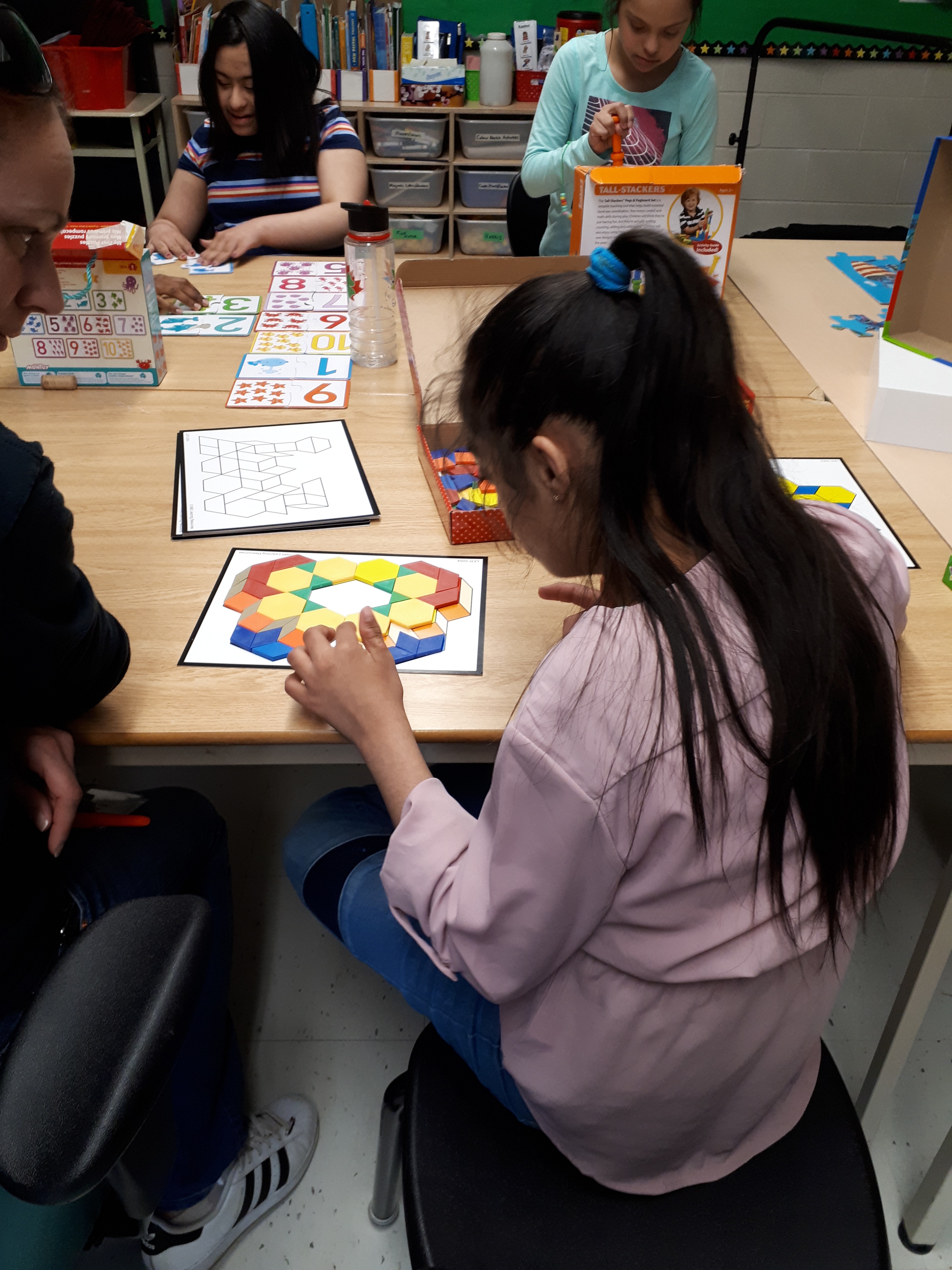
Writing goals on an alternative IEP can be a daunting task for a teacher who has never done it before. That has been my experience this year as it is my first year teaching an amazing group of students with Developmental Disabilities.

I have written many modified IEPs over the course of my career. I am very comfortable increasing or decreasing the complexity and/or number of the Ontario Curriculum expectations. I know who to consult and what information I need to gather to make an informed decision about these types of goals for my students. However, writing Alternative Goals required a whole new set of skills this year.

Since Alternative expectations represent skills that are not represented in the Ontario curriculum it is sometimes difficult to know where to begin. For many students in Ontario, they will have Alternative expectations in addition to their modified expectations such as speech remediation or social skills. However, for some students their entire IEP will be Alternative.

So where do you begin?

If your students have been in school for a few years, the face place to find information is the OSR. In the Ontario Student Record, you can see what kind of services and goals have been recommended in the previous school years. You can also refer to previous IEPs to help get your started. If your OSRs arrived a messy blob of papers, take the time now to organize them. A friend of mine sat with me in September to walk me through organizing the hundreds of papers and it has saved my life. I am either filing or referring to an item in my OSRs at least once a week this year so they have to be organized.

The next place to turn is people. Consult with the families and Special Education colleagues. Families play an important role in helping set goals and can give you great ideas about IEP goals. For example, in December one of my parents contacted me and asked if we could work on fastening buttons during our fine motor skill development time as her son was starting to wear jeans to school and needed to learn the skill.

Finally, data collection will play an ongoing role in the creation and updating of goals throughout the year. I do assessments on my students consistently throughout the year. If you want some ideas about what to assess and how to assess things that are not curriculum based, I recommend using one of the two following resources.

The FISH (Functional Independence Skills Handbook)

fish_l


The Carolina Curriculum (both the infant/toddler and preschooler resource)

Carolina Curriculum


They will help you gather the information you need.  Both are incredibly expensive to buy, so borrow them from your resource department or special education team.

Here are some examples of what your goals could look like. I am not an expert by any means but if you are like me, sometimes examples can be a really helpful place to get started.

Attention/Focus

_______ will attend to a self-selected activity without being distracted or losing interest for 10 minutes.

_______  will work on completing teacher directed tasks for 25 minutes.

Mathematics

_______ will count to 100 with 75% accuracy.

_______ will demonstrate one-to-one correspondence up to 10 between numbers and objects with 75% accuracy.

_______  will identify time that is personally relevant to her and use it to independently begin tasks.

Life Skills

_______ will wash her face and put the facecloth in the laundry bin daily after lunch.

_______ will use a visual guide to assist her with the steps necessary to establish routines regarding menstrual activities (e.g., bringing necessary items to school, changing pads, disposing of pads, washing hands)

_______ will brush her teeth and put on deodorant daily after lunch.

Personal and Social Development

______  will successfully participate in a turn taking game with a peer, 3 out of 5 opportunities

______  will orally express when someone is in her personal space.

______  will work on sharing the classroom materials with other students.

Communication

_______ will demonstrate a choice between two types of food for snack time by pointing to the item.

_______ will point to a picture when he wants to request a walk.