Overwhelming Resources

As we engage in distance/remote/online/emergency learning Educators are being inundated with resources and tools to use in their virtual classrooms.  It isn’t easy to decide which would be most effective and which ones are safe for teachers and students to use.  There is no one size fits all answer to this but there are a few things that I do in order to narrow down my choices of whether or not to use a particular digital tool or resource:

  1.  I search for tools that are designed by Canadian or better yet, Ontario Educators and where possible, data is housed in Canada.
  2. I look at whether or not the tool will still be free after the COVID crisis is over or whether it has always been a free tool.  I honestly don’t mind paying for a tool from the outset but I don’t really like the whole free trial thing.  I also don’t want to pay some kind of a monthly fee.  One time price, please!  I don’t want to love a tool so much while it is free and then have to pay for it when I go back into the classroom.
  3. I look at whether or not it is a one time fee or negative billing.  I won’t give anyone my credit card to start a free trial for a tool.
  4. I search for tools that I know will be supported by my ICT department.  Anything that wants access to email contacts in my school board is a non-starter.
  5. I search for tools that inspire collaboration and creativity.  I’m not one to sign up students for a gaming platform that is really just an engaging math drill.
  6. I look at bang for my buck (even if it is free).  Is it a versatile tool?  Does it allow for different forms of communication?  Can I embed audio and video?  Is there an opportunity for a variety of feedback methods?
  7. I look at the Privacy statement.  Although I am no expert in this, I can generally tell when something has red flags.  Anything that is attached to third party social media platforms like Facebook is a non starter for me.
  8. Right now while there are so many sign ups and passwords for students, I stay away from platforms that want to create student accounts and want information apart from an email.
  9. I look to see if it is a Microsoft or Apple Education certified product?  I know that for the most part, those tools are trustworthy.
  10. I look at user reviews and YouTube tutorials.  I want to know what the pitfalls are of something before I invest time and/or money.

At the end of the day no tool is perfect and few tools are unlikely to meet the specific needs of each and every student in your classroom.  However, I hope that what I do when choosing a tool might guide you to the most effective tools in the over abundance of resources that are floating around out there.

Content and Copyright Considerations in Distance Learning

The move to distance learning has certainly had some pitfalls. On top of all of the programming changes and logistical considerations, we’re hearing horror stories of the inappropriate use of digital tools and teachers unintentionally violating copyright laws.  It is crucial for teachers to make themselves aware of the privacy and security guidelines for their school board while also being aware of Fair Dealing and Copyright laws for online content.  Here is some food for thought, and a few tools and resources that may be helpful for teachers while creating and linking to online content.

Posting YouTube Videos

YouTube videos may be used for educational purposes in Canada so long as the creator and the source of the video is credited.  However, you might want to consider not posting a direct link to the YouTube video on your learning platform.  This link will take the students to the YouTube channel and the student may then freely search other content.  Maybe it is just me, but I’ve experienced the liquor advertisement pop up while watching a video in my classroom or the next video automatically plays and the content is not suitable for students. Teachers may want to try using online tools such as ViewPure or Safesharetv before copying the link into a learning platform.  These tools filter out advertisement and connects only the the video itself.

Reading Books Online to Students

A number of Canadian Publishers have opened up access to Educators to read published works online.  There are guidelines that an Educator must follow in order to do post an online story time.  For a list of participating publishers and more information on how to respect copyright for Canadian authors visit access copyright.  Scholastic Canada has also extended access to Educators to read published works online. The instructions on how to use Scholastic works is a little different.  Visit the Scholastic Read Aloud portion on the Scholastic Canada website in order to follow their rules and regulations.

FairDealing and Copyright

There are copyright laws specific to Education.  If you want to make sure that you can use something without violating copyright laws you can use the Fair Dealing Decision Tool.  Teachers can also refer to the Copyright Matters Document.

Privacy Policies and Statement

At the bottom of every home page for an educational digital tools you will find a link to their privacy policy or statement. I highly recommend reading what you are signing up for as a teacher when you click on a new Educational digital tool. Be aware of what data is being collected, where it is being stored and which third parties are attached to the company and make an informed decision for yourself.  Be proactive and check with someone in the Instructional Technology department at your school board to ensure that you are following recommendations before asking students and parents to sign up for a digital tool.  It is a lot for teachers to think about while at the same time just trying to get a handle on teaching in the midst of a pandemic. There is a big learning curve for everyone. Try to continue to go slowly. The move to distance learning is helping Educators truly understand the importance of digital citizenship.

New learning

It is hard to select a specific topic at this time. I find it hard each day to think about the school year, just sad to be out of the classroom and away from my students. It has already been such a hard year on the students with extracurriculars taken away and missing more than a week of school due to strike days. It is important to remember during these times to be a positive leader and to send positive vibes to students and colleagues.

Starting tomorrow, my school will be doing some online meetings and online learning. I am excited to learn something new tomorrow as I have already ran out of things to do on my “house work” list. While I have been missing the classroom, it was nice for the first time in maybe my whole life to have time to just sit and do nothing. For people that have been working part time and then full time since the age of 15, time to just relax is hard to come by. I found it hard at first because I made a list of items to complete by the April return to school date and as that date turned into “indefinitely”, I knew I had to take time to just relax. It is hard to do, but a necessary skill to master during this new learning time.

A lot of my colleagues have been talking about how during these times, it is important not to bombard our students with new skills/ new work, but to focus more on their mental well being. My colleague said this was a directive brought up by her friends school and it is an important message to send to families. We have been directed to contact families by early April and I am excited to see how my students and their families are doing. After that, then I think it’s okay to mention work that is optional and available on our school board website (however, many students may not have a device at home or may be helping care for their siblings at this time).

I think the most important thing to do during this new situation we are all in is to focus on a few positive things each day. Thinking about the future often causes anxiety and a lot of what ifs. When this first happened, I thought of grad, the rest of the term, their highschool start date…just a long list of anxieties. As soon as I acknowledged the fact that no one knows what will happen, I realized we are all in this together and that I should just focus on the time we have been given now to relax, learn something new and for once have time to just exist.

I realize this is probably a new idea for most of us adults that have been working our whole lives but it is something we need to wrap our head around if we are to get through each day.

All the best to all educators during these times. If anyone has any daily activity suggestions, I will gladly take all of them!


STEAM to Foster Innovation and Collaboration

In my heart of hearts I am a teacher of the arts.  I began integrating technology into my classroom practice a number of years ago but always from a creation perspective.  There is still a misconception that innovation is synonymous with technology.  However, some of the deepest innovative learning comes from low technology.  Keep it simple.  On the whole students enjoyed being challenged and getting the opportunity to practice problem solving in a safe and creative way.

In order to practice the true design process I have been testing a number of STEAM challenges with students in a variety of grades.  When I do this, I ask them feedback on the process that we experience and how I might change it for other grade levels.  Students always amaze me with the amount of innovation that they demonstrate when given the opportunity and their feedback has been helpful to streamline the challenges.

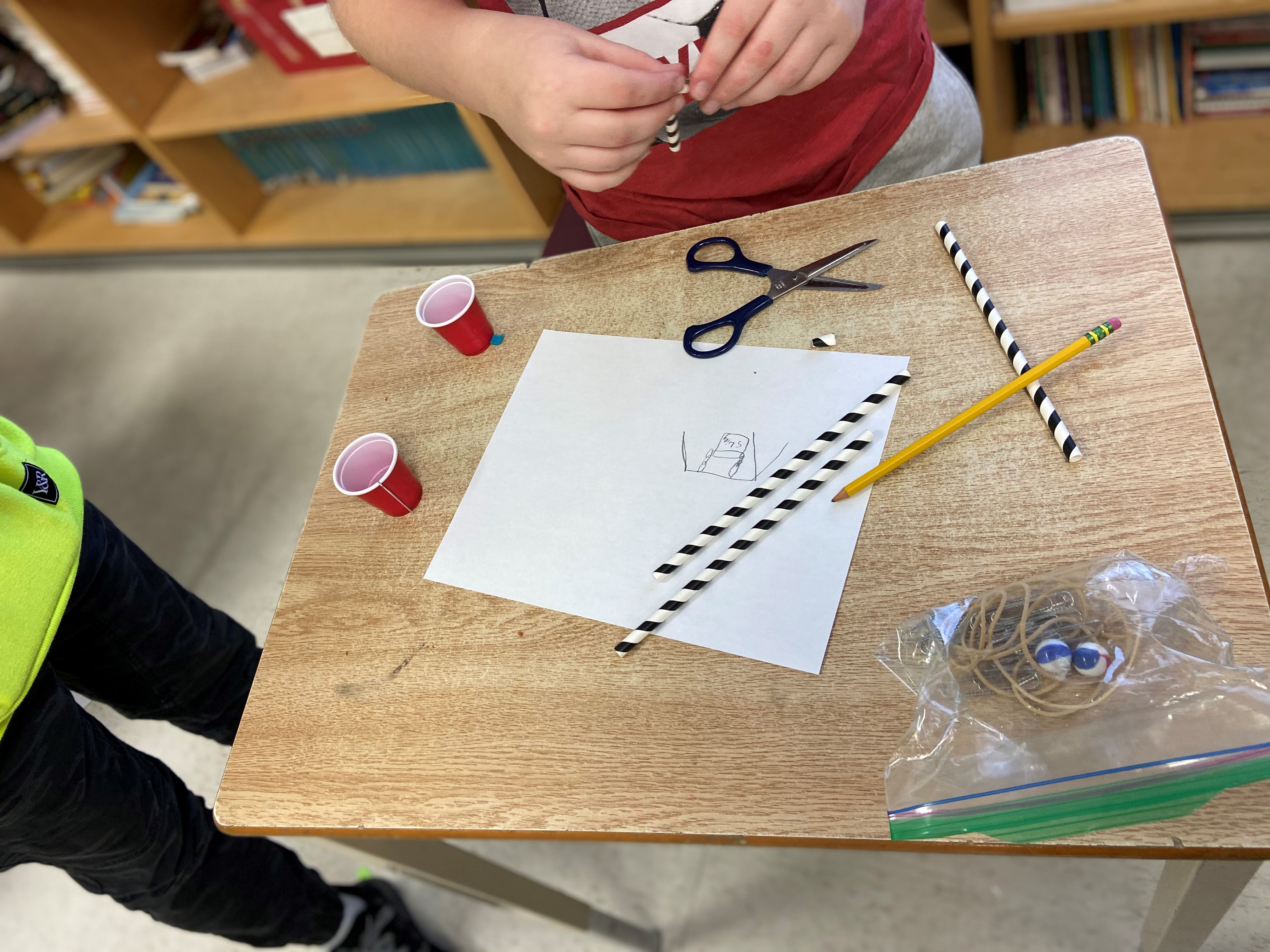
I recently worked with a grade 6 class for a STEAM challenge and brought bags of materials for each pair of students.  In the bags were: two tiny plastic cups, 10 jumbo paper clips, 10 small paper clips, 4 large elastics, 4 paper straws, 2 marbles and access to string and masking tape.  I showed the students the materials and gave them about 10 minutes to create a design.  The caveat was that whatever they created had to have some kind of function or movement.  They could cut or change the materials as needed and did not have to use all of the materials.   We discussed the different part of the The-Design-Process and made success criteria for the challenge.  The success criteria focused on communication, collaboration, critical thinking and problem solving.  It wasn’t about who build the “coolest” thing.  There was room to be creative, there was room to fail and there was room to improve upon the design and try again.

Their creations were amazing! Here are a couple of innovative designs that two of the groups created.  To my ultimate delight-the engagement was the same for all genders in our classroom.

STEAM movie

STEAM movie 2


Keeping it fresh.

As of the end of February, it is apparent to no one in Ontario that Spring is just around the corner. Judging by the blankets of snow and recent school bus cancellations, winter continues to disrupt and annoy us with the same creative sadism as a government hell-bent on destroying public education. Despite the stark reality of a manufactured education crisis and a real climate crisis, I know that Spring is coming soon. I saw a spider. Photograph by Will Gourley

Isn’t it wonderful? Putting ONGov’s systemic affronteries aside, my heart lept at the sight of a spider. On a normal day seeing one is something exciting to behold, but this opportunity came after nearly 3 days of snow, several white-knuckled commutes, and bone chilling winds. It was a sign of hope that most of winter’s worst weather would be over, well at least statistically.

It signified that Spring was on almost here because, in my own amateur scientific way, I have observed, over several years, that spiders usually emerge around my house again when winter is almost over. Usually. My returning guest got me energized and thinking about how to channel that into the classroom?

2020 has blessed me with a number of ups and downs in my professional life as an educator. It has brought me immense joy on a daily basis in the classroom, but also sadness and grief in light of tragic events that have happened to our learning community. You see, not all lessons and outcomes are going to be good. The opportunity to share the struggles and successes with students helps create a deeper appreciation of the learning process. By admitting when things got tough meant more to them and my colleagues than any veneer of perfection I could ever hope to put on.

My January post was meant to share my personal struggles in hopes of encouraging dialog among educators and to show the benefits of releasing some of the emotional weight that many of us carry inside. I wondered whether I could use my catharsis as a catalyst for our learning spaces? How could I make it fresh and keep it fresh for my students and self?

Never one to shy away from doing something differently, I quickly began working through new ways for students to interact with their learning, for demonstrating their understandings, to collaborate with each other, and to dig deeper into opportunities rarely afforded by traditional transmission and texts teaching.

Here’s what we worked on;

In Math, I remain committed to “no text book math lessons” as much as possible. Using YouCubedPeterLiljedahlMath RecessWaterloo POTWCEMC, and Khan Academy. My students love working on problems together, they argue, iterate, communicate, and solve problems. We make Math a social activity instead of a game of one upping each another.

Another change this year is having Wipebooks for students to use. They have added another dimension to our learning by enabling vertical approaches to Math problems. This has students out of their seats, standing, thinking, and  solving. They can also wander from group to group to see the different approaches being used to answer questions. This has led to some excellent discussions and growth.

Recently, I also started adding Quizizz tasks to our Google Classroom. These fun quizzes allow you to make memes for correct and incorrect responses. I find this format a great way to have students continue to work on concepts taught in prior months.

Becoming a strong group facilitator using Character Lab Playbooks and a co-constructed success criteria. Genius Hour – personal inquiry projects where every student becomes the class expert in their subject. I have shared this one before, but it was for a different class at the time. Besides, it’s a perrenial favourite and my students have asked to do it again already.

In Language, we remain very fond of TED Talks. I now find myself creating reading response tasks with posts from the TED Blog. Another tool that it is being brought back discussion and digital citizenship is Padlet. Our recent work focused around an assignment inspirted by my friend and colleague Tim Bradford  that read;

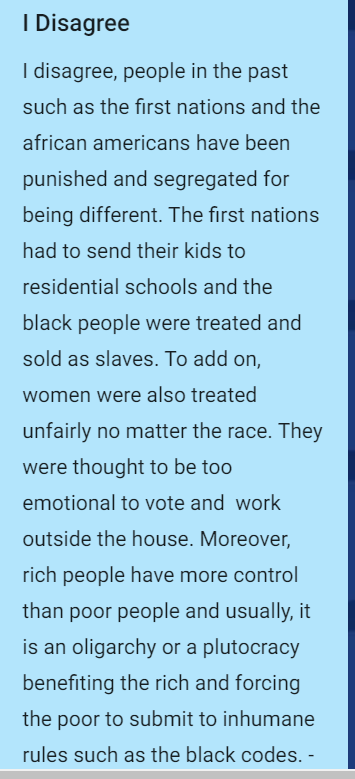
“In the past and present, people have always treated each other fairly.” Agree or disagree

Students had to create a 30 + word response to the statement and then respond to each other. The depth of understanding from them was very encouraging. It was also nice to see how they kept each other in check when it came to appropriate responses and use of technology. Here are 2 of their responses of the entire class who thoughtfully disagreed;

To add a lot of fun to my instructional week, is my grade 3 FI Music class where my students recently wrapped up creating their own identity raps in French, complete with backbeats from Groove Pizza. Once their shyness subsided, they were excited to present their hard work. It was also fun to see how they incorporated the lessons we had about how to beatbox from Nicole Paris and about the notes and rhythms we covered in Term 1.

In all of this, the focus was on hands on and collaborative experiences intended to engage and deliver the learning. Although much can go wrong, there is so much that can go right when you commit to keeping it fresh. I know that the next 4 months will bring more of the same and I am excited to try new things with my students. Looking forward to introducing Flipgrid, podcasting, and sketchnoting already to keep it fresh. Bring on Spring!

Have you tried something new that you would like to share? Mention it in the comment section and include a link if you can. Thanks for reading.

Mindfulness in Education

There is a significant amount of research about the benefits of mindfulness in education.  Much of the research shows that consistent mindfulness practices in classrooms lead to lower stress levels and higher test scores.  It is a hot topic and wanting to to do the best for students, we are seeing more of it in schools. There are all kinds of books and videos on breathing and mindfulness exercises for reduction of stress for kids.  I have learned to practice meditation myself and I have used some mindful practices with my students and believe that at the right time and in the right circumstance mindfulness practices can be powerful.  I am left wondering, however, if the practice of mindfulness in some cases is becoming routine or something to check off on a plan and not truly ‘mindful’ at all?

Let’s take yoga for example.  Yoga instructors go through intense hours of study in order to practice and teach others.  However, teachers pop on a kids yoga YouTube video and we’re “being mindful”.  I’m not being critical.  I have done it myself!  My question or wondering is; what are the implications of these actions on a broader level?  Yoga is about mind and body.  My worry is that we are literally “going through the motions” with students and not really giving them a true mindful experience.

How about a timed meditation?  Everyone drop everything and take part in a guided meditation right now!  I understand the idea behind this strategy; the whole school is engaging in the practice at the same time. However, isn’t the idea that students will learn to develop mindfulness skills to help them in stressful situations? It is a starting place, but hopefully there is more in-depth practice and explicit teaching happening.  Otherwise isn’t it more a kind of fast-food approach to mindfulness?

Mindfulness needs to have an environment that is conducive to practice.  Norms and expectations need to be established and there has to be “buy in” from the students. Students require a variety of skills in order to truly practice mindfulness and they need to be explicitly taught so that students can use what they know in order to transfer the knowledge into other situations.  Finally, it has to be modeled by the adults in the room.  If there is mindfulness being practiced, everyone should be doing it and debriefing the experience and learning together.  If a teacher is busy organizing the classroom library while the students are being mindful, it won’t demonstrate that mindfulness is valued.

We can’t be experts at everything.  We can’t always have a certified yoga teacher come into our classroom.  Whatever we are teaching it must be done with intention, done explicitly and through modeling.  Going through the motions out of habit and routine may do more harm than good.


Coding in Kindergarten

I have taught every grade from K-8 in some way, shape or form.  I can say that without a doubt or apology I have more respect for Kindergarten teachers than any other grade level.  Hands down.  I have loved every grade I taught while I was teaching it.  I was young and without children when I taught Kindergarten and can say that there is no tired like Kindergarten teacher tired.  That being said, I absolutely love going into Kindergarten classes with robotics.  Unabashedly Kinder friends approach you to ask your name and promptly tell you about the “owie” on the bottom of their foot as soon as they walk in the door.

I work with Bee Bots in Kindergarten classes to teach sequencing, estimation, problem solving, geo-spatial reasoning through coding.  Bee Bots are a rechargeable, floor robots designed for early learning.  It is easy to operate and does not require any other equipment.

We start as a whole group using the hundred’s carpet and decide how to move Bee Bot from our start to another point on the carpet.  Students decide upon the directions and we program them in to find out what will happen.  Wonderful mistakes happen here and we need to clear the code and start again.  When we achieve our goal as a group there is much rejoicing!

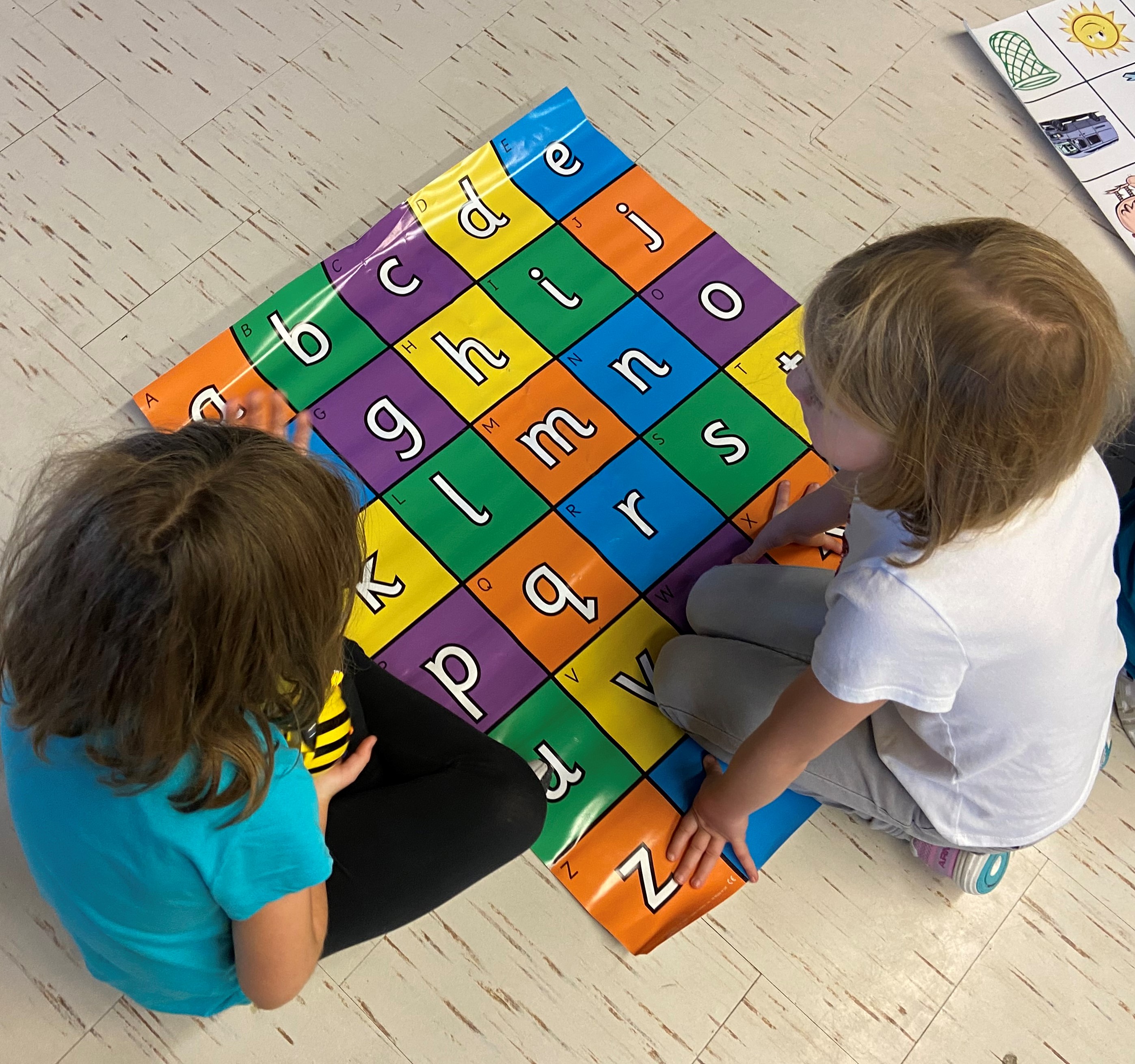
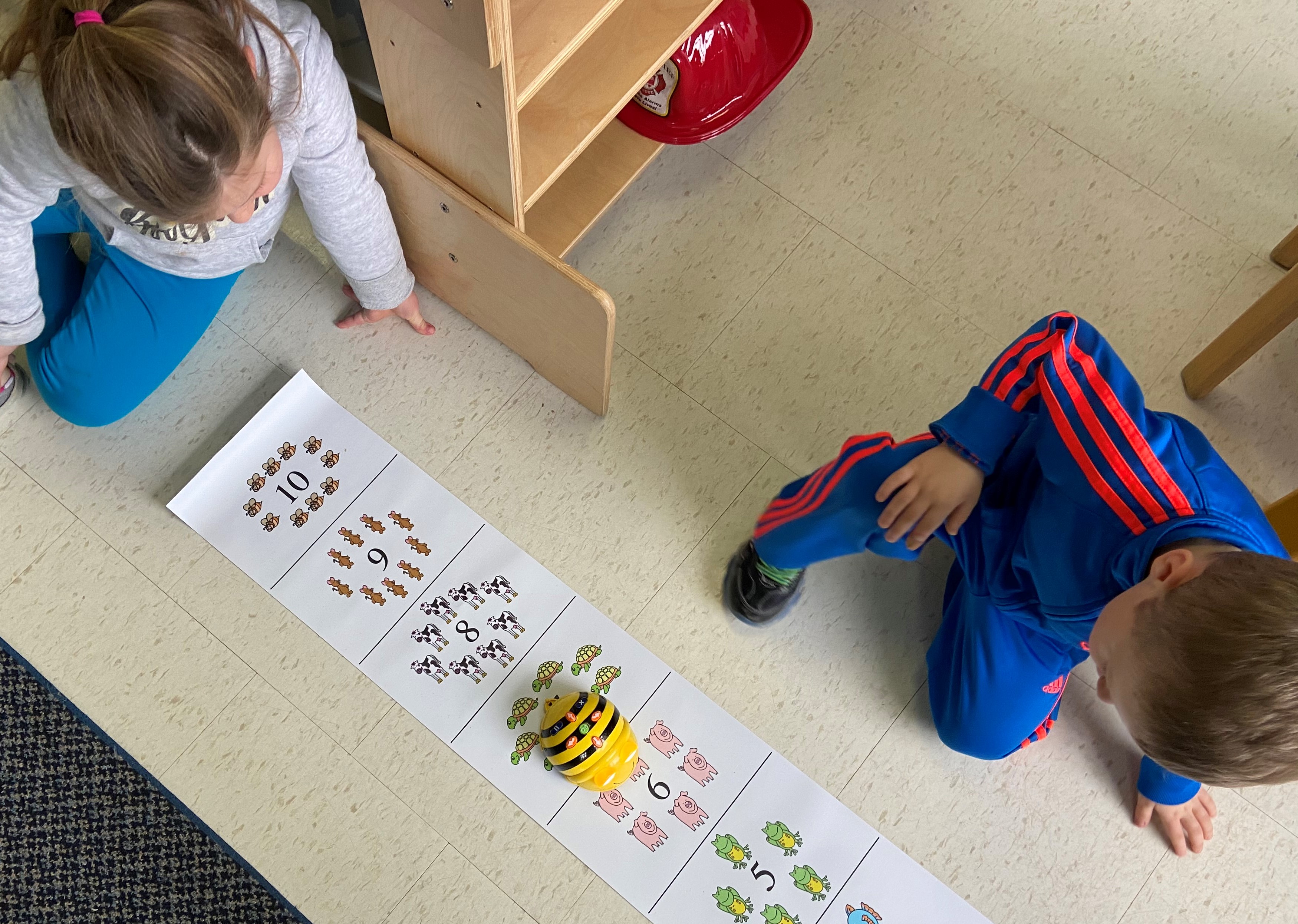
It isn’t really about teaching Kindergarten kids how to “code”.  Coding is used as a vehicle to teach many other transferable skills.  Planning, organizing and communication are just some of the learning skills that come from using the Bee Bots.   If you have access to the mats as featured in the photos, you can automatically see the ties to language and math concepts as well.  There is a romance period that needs to take place when the students first get their hands on Bee Bot.  However, even if they don’t know the words for “right” and “left” at first, they get to know them quickly through the use of Bee Bot.  Bee Bots in many of our Kindergarten classes now have homes and some have villages made from found materials so that Bee Bot can be coded to go to different places.  The possibilities for creativity really are endless.

For more information about using Bee Bot in the classroom, check out these resources:

https://krgarden.ca/media/hold/the-beebot-robot

https://blog.teaching.com.au/5-mathematics-bee-bot-lesson-ideas-for-the-classroom/


Triggers and Habits in Teaching Part One

Dreaded Seating Arrangements

Almost every teacher I talk to says, “I have a really difficult class this year.”  The difficulties identified are most often tied to “behaviour” issues.  In my experience effective classroom “management” can be connected to dynamic programming and developing solid relationships with students. Many of us go to things like Class Dojo or incentive programs to “manage” behaviour and some have their merits.  However, they might “manage” behaviour, but does it help student to learn to self-regulate?  I understand that there are students who have behaviour safety plans that can provide challenges and I do not mean to downplay the effect that even one student’s behaviour can have on an entire class.  However, there are ways in which we can have small tweaks in our triggers and habits in teaching that will have a positive outcome on developing a community of learners.

So what is a trigger?  A trigger in psychological terms can  used to describe sensations, images or experiences that re-visit a traumatic memory.  It can also mean to make something happen very quickly; a reaction.  It is also referred to as an event that kicks off the automatic urge to complete a habit.*  Habits are seen as something that people do often or regularly.  Habits can even be unconscious behaviours and sometimes difficult to stop.  What do triggers and habits have to do with teaching?

Over the years I think I have become more self aware in the classroom about my own triggers and habits.  It is easy to continue to do a routine in a classroom simply because it is something that we have always done. Even when we have sound pedagological reasoning, it can be difficult to change or cease a habit. For example, for many years I put names on the desks of students before they entered the classroom on the first day of school.  I don’t really know why I began this habit.  Besides a wedding, some kind of gala or a reservation at a restaurant, I get to choose where I sit every day.  It is a fairly important life skill.  I’m not going to find my name on a seat on the city bus.  Once I recognized that this routine was purely out of habit and was “triggered” by the first day of school, I decided to change it up.  On the first day of school with a grade 4-5 class, the students came into the room and sat wherever they wanted. I admit that this made the perfectionist in me who loves order, routine and habit rather uncomfortable.  I had some students sit in groups, some in pairs and some on their own.  Then we had a class meeting about how they had felt when they entered the room and had to make their seating choice.  There was talk of anxiousness, sweaty palms, heart rate increase, fear of missing out and for some it was no big deal.  I decided to create a google form to survey the students about where to sit in the classroom, how often we would change it up and who would decide.  The results of the survey were fascinating.  Some students wanted me to choose where they sat and wanted to have that same spot every day for 194 days.  Some never wanted to “sit” in a group but wanted to be a part of it during group work time.  We came up with a plan that each Monday the students would choose where to sit for the week and the students who wanted a regular spot would be able to keep it and the other students would respect their choices without question.  We also had some extra choices for seating that students could go to if their choices for that week weren’t working out.  The students gained incredible insight into self-regulation.  I heard things like, “I sat with Gracie all week and we’re such good friends, I didn’t get my work done so I’m not going to sit with her next week.”  or  “I don’t hang out with Olivia but I know she is a serious student so I’d like to sit with her in a group.”

It isn’t easy to be self aware while we are trying to keep our head above water, collect permission forms, listen to announcements, adjust our day plan for the assembly that was announced, deal with a parent that wants to chat in the hallway AND teach curriculum.  I GET that…however, being aware of triggers and habits and making small tweaks to our teaching behaviour can make a big difference in our classroom community.

*106:Triggers-The Key to Building and Breaking Habits, Chris Sparks, 2018


Daring Classrooms

I state the obvious when I say that teaching is a demanding job.  If you are reading this, you are most likely a teacher and this is not news to you.  I’d like to highlight a resource that feeds the soul of a teacher (and quite frankly a human being) while also providing some strategies for integrating that soul feeding into your classroom practice for your students.  Wait, what…that exists?  It is a website from Brene Brown called Daring Classrooms.  If you haven’t heard of her yet, you can find “The Call to Courage” on Netflix and/or her Ted Talk on Vulnerability.  She is inspirational in leadership, in life and in work.  Here is a snippet from her #DaringClassrooms website:

“Teachers are some of our most important leaders. We know that we can’t always ask our students to take off the armor at home, or even on their way to school, because their emotional and physical safety may require self-protection.

But what we can do, and what we are ethically called to do as teachers, is create a space in our schools and classrooms where all students can walk in and, for that day or hour, take off the crushing weight of their armor, hang it on a rack, and open their heart to truly being seen.

Teachers are the guardians of spaces that allow students to breathe and be curious and explore the world and be who they are without suffocation. Students deserve one place where they can rumble with vulnerability and their hearts can exhale.

And what I know from the research is that we should never underestimate the benefit to a child of having a place to belong—even one—where they can take off their armor. It can and often does change the trajectory of their life.

Teachers: Everyday should be Teacher Appreciation Day. I am so grateful for you and your willingness to show up and create brave, safe spaces where our children can learn, grow, and be seen.”

Some of the short (8-12 minute) video resources from Daring Classrooms include:

How do we avoid the pressure to please?

How do teachers manage oversharing?

How do we help parents understand failing as part of the learning process?

Does the word “disappointed” shame students?

In addition to the video resources there are free downloads for resources, parenting the classroom and daily life.  There are pdfs that you can print out for working with students.  My favourite one is the list of core emotions.  Sometimes when students have triggers they can’t always name or explain the emotion that caused the trigger in behaviour.  Being able to learn about the names and the definitions of core emotions is helpful for students to self-regulate.

Every year in a classroom brings new challenges.  In fact, every day in a classroom will bring on a new challenge.  I hope that as you lead your own #DaringClassroom you will find this resource helpful and that it may feed your teacher soul.

Breakout EDU

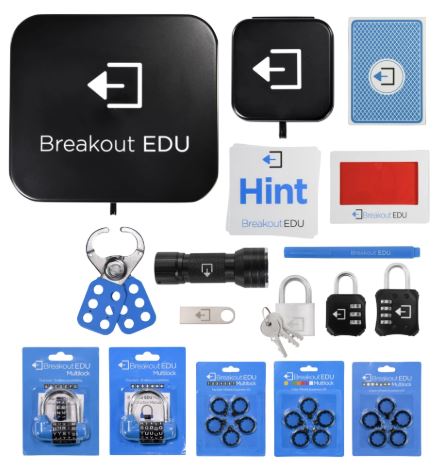
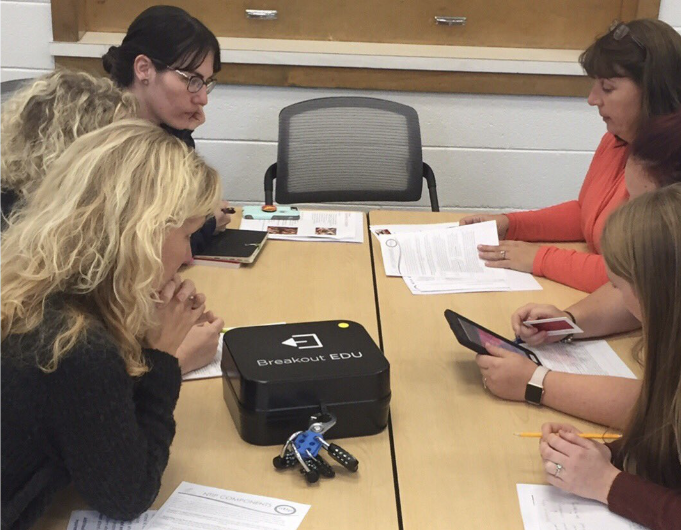
Breakout EDU is like an Escape Room in a box. The players use teamwork and critical thinking to solve a series of challenging puzzles in order to open a locked box. The first time I experienced Breakout EDU with my students I was not the designer of the game.  Another teacher had designed the Breakouts and we were using it as a provocation for an inquiry on the Olympics.  I was amazed at how much I wanted to help my students.  It was difficult to watch them struggle and yet, that is where the learning happens.  We want our students to BE “gritty” and we need to provide opportunities for students to develop that grit.  Breakout EDU is a great way in which to have the students experience “the struggle”.  The kit looks like this:
https://www.breakoutedu.com/

The kit itself is quite pricey and unless your school already has one, it is quite an investment.  However, you can make your own with a tool box and locks purchased from a variety of stores.  You can also create online digital Breakouts that create the same kind of collaborative, problem solving activity just without the cool locks.  Here is the link to some curated online “digital” breakouts.   I haven’t looked at all of these for curriculum alignment, but it will give you some ideas to use to create your own digital breakouts.

“Breakout” is sort of a misnomer.  You are actually “breaking in” to the box using a number of clues students solve puzzles in order to open the various word, number and key locks.  This can connect to the curriculum in a number of different ways and can be used effectively as an introduction, provocation or summary for learning.  You aren’t going to get too terribly deep into content when students are busy trying to solve for clues.  For me, Breakout EDU is far more about developing the 6 C’s; collaboration, creativity, critical thinking, communication, citizenship and character building.   It is fascinating to have students work in groups to solve problems with a common goal.  Breakout EDUs provide opportunities for students to practice developing their learning skills and gives the teacher the opportunity to collect data as the learning is self-directed.  The activities lead easily into self-reflection of learning skills. Below are some of the questions that I find valuable for the consolidation portion of a lesson after a Breakout EDU activity:

Questions for Reflection

1.  How did you determine roles in your group?

2.  What did you find most difficult?

3.  What did your group do really well together?

4.  What would you do differently next time?

5.  How did you contribute to the group?

6.  How did you work to include everyone in your group?

Once students are familiar with the Breakout EDU format (depending on the age/grade level) they can then create their own Breakouts for their classmates.  The students interact with the learning from a different perspective and have to find the most important information to highlight for the clues in the development of the Breakout.

So what are the drawbacks?  Breakout EDU is competitive.  The students are working against each other and/or against the clock.  You have to know which students can handle that type of pressure. Working in groups on a common task may be difficult for some students with self-regulation issues so you have to know your students well and plan accordingly, as you would for any group activity.

Finally, Breakout EDU is also a great tool to use with your staff.  If you have a lot of information to get through and you want the participants to get to some salient points and the Google Slide presentation just isn’t cutting it, using a Breakout EDU will make for an interactive, team building staff meeting!  It is also great to have the adults experience the struggle that we all want students to go through to develop grit and resilience.

Like with any tool, it takes time and research to ensure that it is right for your classroom.  The more I use Breakout EDU in my teaching,  the more I think of ways to use it!