Coding in Kindergarten

I have taught every grade from K-8 in some way, shape or form.  I can say that without a doubt or apology I have more respect for Kindergarten teachers than any other grade level.  Hands down.  I have loved every grade I taught while I was teaching it.  I was young and without children when I taught Kindergarten and can say that there is no tired like Kindergarten teacher tired.  That being said, I absolutely love going into Kindergarten classes with robotics.  Unabashedly Kinder friends approach you to ask your name and promptly tell you about the “owie” on the bottom of their foot as soon as they walk in the door.

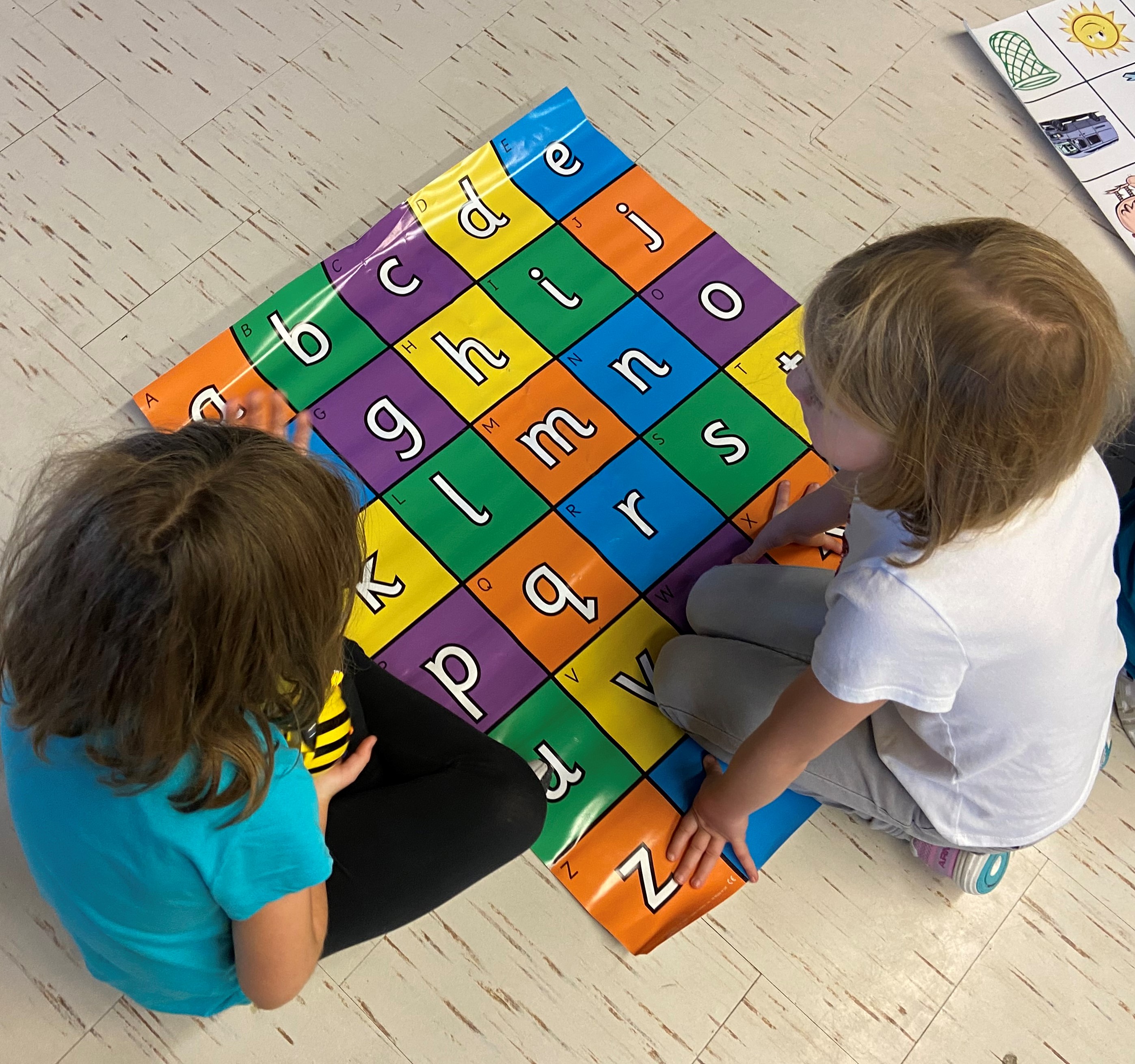
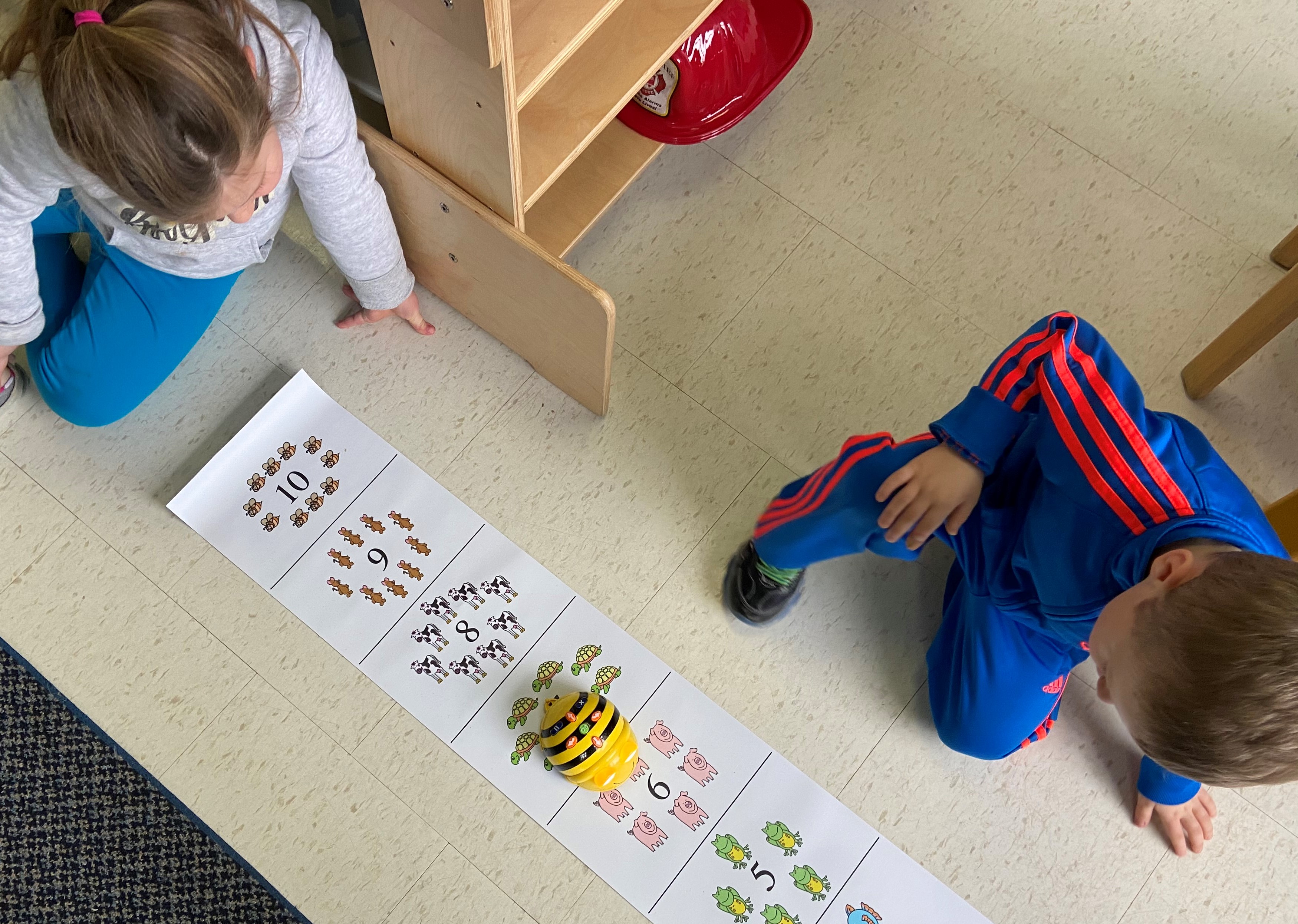
I work with Bee Bots in Kindergarten classes to teach sequencing, estimation, problem solving, geo-spatial reasoning through coding.  Bee Bots are a rechargeable, floor robots designed for early learning.  It is easy to operate and does not require any other equipment.

We start as a whole group using the hundred’s carpet and decide how to move Bee Bot from our start to another point on the carpet.  Students decide upon the directions and we program them in to find out what will happen.  Wonderful mistakes happen here and we need to clear the code and start again.  When we achieve our goal as a group there is much rejoicing!

It isn’t really about teaching Kindergarten kids how to “code”.  Coding is used as a vehicle to teach many other transferable skills.  Planning, organizing and communication are just some of the learning skills that come from using the Bee Bots.   If you have access to the mats as featured in the photos, you can automatically see the ties to language and math concepts as well.  There is a romance period that needs to take place when the students first get their hands on Bee Bot.  However, even if they don’t know the words for “right” and “left” at first, they get to know them quickly through the use of Bee Bot.  Bee Bots in many of our Kindergarten classes now have homes and some have villages made from found materials so that Bee Bot can be coded to go to different places.  The possibilities for creativity really are endless.

For more information about using Bee Bot in the classroom, check out these resources:

https://krgarden.ca/media/hold/the-beebot-robot

https://blog.teaching.com.au/5-mathematics-bee-bot-lesson-ideas-for-the-classroom/


Triggers and Habits in Teaching Part One

Dreaded Seating Arrangements

Almost every teacher I talk to says, “I have a really difficult class this year.”  The difficulties identified are most often tied to “behaviour” issues.  In my experience effective classroom “management” can be connected to dynamic programming and developing solid relationships with students. Many of us go to things like Class Dojo or incentive programs to “manage” behaviour and some have their merits.  However, they might “manage” behaviour, but does it help student to learn to self-regulate?  I understand that there are students who have behaviour safety plans that can provide challenges and I do not mean to downplay the effect that even one student’s behaviour can have on an entire class.  However, there are ways in which we can have small tweaks in our triggers and habits in teaching that will have a positive outcome on developing a community of learners.

So what is a trigger?  A trigger in psychological terms can  used to describe sensations, images or experiences that re-visit a traumatic memory.  It can also mean to make something happen very quickly; a reaction.  It is also referred to as an event that kicks off the automatic urge to complete a habit.*  Habits are seen as something that people do often or regularly.  Habits can even be unconscious behaviours and sometimes difficult to stop.  What do triggers and habits have to do with teaching?

Over the years I think I have become more self aware in the classroom about my own triggers and habits.  It is easy to continue to do a routine in a classroom simply because it is something that we have always done. Even when we have sound pedagological reasoning, it can be difficult to change or cease a habit. For example, for many years I put names on the desks of students before they entered the classroom on the first day of school.  I don’t really know why I began this habit.  Besides a wedding, some kind of gala or a reservation at a restaurant, I get to choose where I sit every day.  It is a fairly important life skill.  I’m not going to find my name on a seat on the city bus.  Once I recognized that this routine was purely out of habit and was “triggered” by the first day of school, I decided to change it up.  On the first day of school with a grade 4-5 class, the students came into the room and sat wherever they wanted. I admit that this made the perfectionist in me who loves order, routine and habit rather uncomfortable.  I had some students sit in groups, some in pairs and some on their own.  Then we had a class meeting about how they had felt when they entered the room and had to make their seating choice.  There was talk of anxiousness, sweaty palms, heart rate increase, fear of missing out and for some it was no big deal.  I decided to create a google form to survey the students about where to sit in the classroom, how often we would change it up and who would decide.  The results of the survey were fascinating.  Some students wanted me to choose where they sat and wanted to have that same spot every day for 194 days.  Some never wanted to “sit” in a group but wanted to be a part of it during group work time.  We came up with a plan that each Monday the students would choose where to sit for the week and the students who wanted a regular spot would be able to keep it and the other students would respect their choices without question.  We also had some extra choices for seating that students could go to if their choices for that week weren’t working out.  The students gained incredible insight into self-regulation.  I heard things like, “I sat with Gracie all week and we’re such good friends, I didn’t get my work done so I’m not going to sit with her next week.”  or  “I don’t hang out with Olivia but I know she is a serious student so I’d like to sit with her in a group.”

It isn’t easy to be self aware while we are trying to keep our head above water, collect permission forms, listen to announcements, adjust our day plan for the assembly that was announced, deal with a parent that wants to chat in the hallway AND teach curriculum.  I GET that…however, being aware of triggers and habits and making small tweaks to our teaching behaviour can make a big difference in our classroom community.

*106:Triggers-The Key to Building and Breaking Habits, Chris Sparks, 2018


Daring Classrooms

I state the obvious when I say that teaching is a demanding job.  If you are reading this, you are most likely a teacher and this is not news to you.  I’d like to highlight a resource that feeds the soul of a teacher (and quite frankly a human being) while also providing some strategies for integrating that soul feeding into your classroom practice for your students.  Wait, what…that exists?  It is a website from Brene Brown called Daring Classrooms.  If you haven’t heard of her yet, you can find “The Call to Courage” on Netflix and/or her Ted Talk on Vulnerability.  She is inspirational in leadership, in life and in work.  Here is a snippet from her #DaringClassrooms website:

“Teachers are some of our most important leaders. We know that we can’t always ask our students to take off the armor at home, or even on their way to school, because their emotional and physical safety may require self-protection.

But what we can do, and what we are ethically called to do as teachers, is create a space in our schools and classrooms where all students can walk in and, for that day or hour, take off the crushing weight of their armor, hang it on a rack, and open their heart to truly being seen.

Teachers are the guardians of spaces that allow students to breathe and be curious and explore the world and be who they are without suffocation. Students deserve one place where they can rumble with vulnerability and their hearts can exhale.

And what I know from the research is that we should never underestimate the benefit to a child of having a place to belong—even one—where they can take off their armor. It can and often does change the trajectory of their life.

Teachers: Everyday should be Teacher Appreciation Day. I am so grateful for you and your willingness to show up and create brave, safe spaces where our children can learn, grow, and be seen.”

Some of the short (8-12 minute) video resources from Daring Classrooms include:

How do we avoid the pressure to please?

How do teachers manage oversharing?

How do we help parents understand failing as part of the learning process?

Does the word “disappointed” shame students?

In addition to the video resources there are free downloads for resources, parenting the classroom and daily life.  There are pdfs that you can print out for working with students.  My favourite one is the list of core emotions.  Sometimes when students have triggers they can’t always name or explain the emotion that caused the trigger in behaviour.  Being able to learn about the names and the definitions of core emotions is helpful for students to self-regulate.

Every year in a classroom brings new challenges.  In fact, every day in a classroom will bring on a new challenge.  I hope that as you lead your own #DaringClassroom you will find this resource helpful and that it may feed your teacher soul.

New Ideas and Connections

This year has certainly been full of unknowns.  We are working with an expired contract.  Reorganization happens with my board late in September.  Just as I successfully created a smooth flow and eager learning with my students, my assignment was jostled around.  As a teacher, I’m flexible with changes. As a human I struggle with change.

As my grade 7/8 class finished handing in their Cell and Ecosystem models, I was moved to a different teaching assignment.  The Cell and Ecosystem unit was completed after students learned how to complete timelines, flow charts and word webs.  These graphic organizers were used as the research component for building their models.

Barrie Bennett has conducted some thorough research about different types of graphic organizers and written the resource, “Graphic Organizers”.  https://www.youtube.com/watch?v=YVasHWQo28c  This is a useful tool to help students develop their research skills and present their understanding in an organized in depth way. Many of my science ideas were gathered from teachers at ETFO’s Summer Academy and NSTA annual presentations.  Some of the resources I gathered and continue to draw my instructional ideas from, are designed and written by ETFO teachers. “Take a Closer Look, A Media Literacy Resource” and “The Power of Story” are both excellent resources with lessons which can be easily adapted for todays quickly changing world.


I am now using my mental health and wellness skills and knowledge to provide support in other areas of the school population. One of the wonderful resources I am using is the fiction story, “Blue Gold” by Elizabeth Stewart. This story brings many areas of social justice to the forefront.  While introducing curriculum content of Language Arts and Health, research and discussions are easier when students can connect to life stories of youth from around the world.

To compliment this with local stories, I have introduced, “Speaking the Truth. A Journey of Reconciliation”. http://orcabook.com/speakingourtruth/ While I am becoming educated around indigenous issues I have found myself reflecting and relating to many important issues. Monique Gray Smith presents a fantastic tool for these learning purposes. The joy of teaching for me is also learning and adapting my lessons in an engaging way.


Breakout EDU

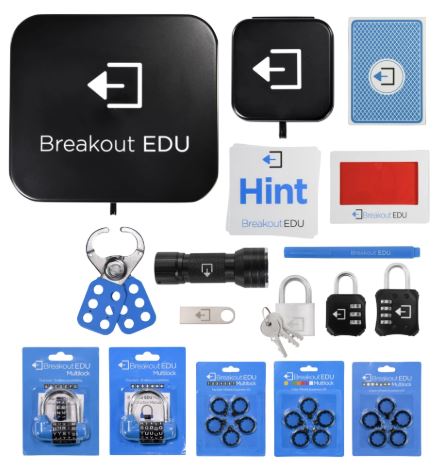
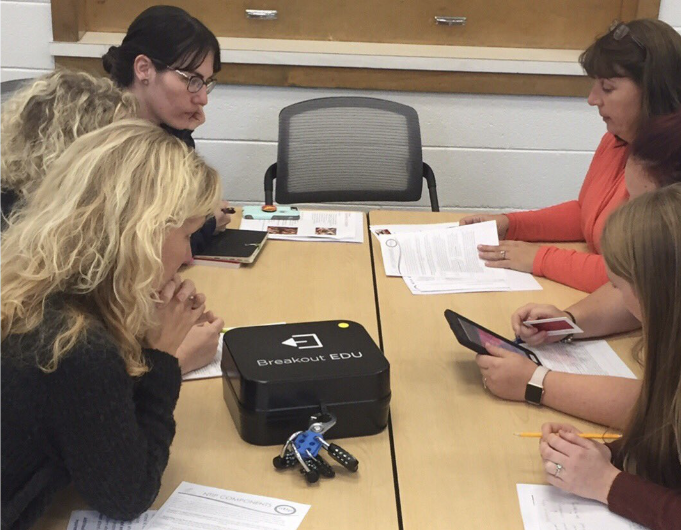
Breakout EDU is like an Escape Room in a box. The players use teamwork and critical thinking to solve a series of challenging puzzles in order to open a locked box. The first time I experienced Breakout EDU with my students I was not the designer of the game.  Another teacher had designed the Breakouts and we were using it as a provocation for an inquiry on the Olympics.  I was amazed at how much I wanted to help my students.  It was difficult to watch them struggle and yet, that is where the learning happens.  We want our students to BE “gritty” and we need to provide opportunities for students to develop that grit.  Breakout EDU is a great way in which to have the students experience “the struggle”.  The kit looks like this:
https://www.breakoutedu.com/

The kit itself is quite pricey and unless your school already has one, it is quite an investment.  However, you can make your own with a tool box and locks purchased from a variety of stores.  You can also create online digital Breakouts that create the same kind of collaborative, problem solving activity just without the cool locks.  Here is the link to some curated online “digital” breakouts.   I haven’t looked at all of these for curriculum alignment, but it will give you some ideas to use to create your own digital breakouts.

“Breakout” is sort of a misnomer.  You are actually “breaking in” to the box using a number of clues students solve puzzles in order to open the various word, number and key locks.  This can connect to the curriculum in a number of different ways and can be used effectively as an introduction, provocation or summary for learning.  You aren’t going to get too terribly deep into content when students are busy trying to solve for clues.  For me, Breakout EDU is far more about developing the 6 C’s; collaboration, creativity, critical thinking, communication, citizenship and character building.   It is fascinating to have students work in groups to solve problems with a common goal.  Breakout EDUs provide opportunities for students to practice developing their learning skills and gives the teacher the opportunity to collect data as the learning is self-directed.  The activities lead easily into self-reflection of learning skills. Below are some of the questions that I find valuable for the consolidation portion of a lesson after a Breakout EDU activity:

Questions for Reflection

1.  How did you determine roles in your group?

2.  What did you find most difficult?

3.  What did your group do really well together?

4.  What would you do differently next time?

5.  How did you contribute to the group?

6.  How did you work to include everyone in your group?

Once students are familiar with the Breakout EDU format (depending on the age/grade level) they can then create their own Breakouts for their classmates.  The students interact with the learning from a different perspective and have to find the most important information to highlight for the clues in the development of the Breakout.

So what are the drawbacks?  Breakout EDU is competitive.  The students are working against each other and/or against the clock.  You have to know which students can handle that type of pressure. Working in groups on a common task may be difficult for some students with self-regulation issues so you have to know your students well and plan accordingly, as you would for any group activity.

Finally, Breakout EDU is also a great tool to use with your staff.  If you have a lot of information to get through and you want the participants to get to some salient points and the Google Slide presentation just isn’t cutting it, using a Breakout EDU will make for an interactive, team building staff meeting!  It is also great to have the adults experience the struggle that we all want students to go through to develop grit and resilience.

Like with any tool, it takes time and research to ensure that it is right for your classroom.  The more I use Breakout EDU in my teaching,  the more I think of ways to use it!

Artificial Intelligence

Have you ever been looking at something on Amazon and then see advertisements for that exact product on your Facebook feed?  Do you ever think about how “suggestions for you” on your Kindle or Netflix make it incredibly easy to click on the next book or t.v. series?  These are little ways in which artificial intelligence is becoming a normal every day occurrence in our every day lives and we don’t even realize it and we also need to make our students aware of it too.

According to research, scientists are far away from the C3PO kind of artificial intelligence but the reality about A.I. being a part of our world is far from Science Fiction.   I firmly believe that teaching students how to think critically about how artificial intelligence works is important.  Recently I was a part of a workshop with Microsoft and Kids Code Jeunesse in which we explored some of the pros and cons of A.I. in general and then specifically in education. We need to have these serious, ethical discussions with our students so that they are aware of the implications of a world with A.I.  Those recommendations that are computer generated may be helpful or they may narrow your experiences.  Just because I like historical drama doesn’t mean I don’t want to also watch romantic comedies.  However, until I watch a few, those don’t come up in my Netflix recommendations.  The narrowing of choice can save money for companies too.  See where I’m going with the moral implications?  So…how do we have this discussion with students in a way that they can understand?  Inquiry.

During the workshop we used The Teachable Machine which is an online program designed to demonstrate how machines can learn.   It is an effective tool to show that the more data that is entered, the more accurate the outcome. If you have a moment to look up the Google image for “Blueberry Muffins and Chihuahuas” you’ll understand what I mean.  Microsoft has been working with educators to help foster an understanding of artificial intelligence and bring that awareness to students.  On their website they have a number of experiments that you can take your students through in order to experience artificial intelligence at work:  Experience A.I.  As students use software such as predictive text, Google Read and Write or even chatbots for frequently asked questions, challenge them to ask the questions of how does this work?

Teaching digital citizenship and critical thinking needs to be a constant discussion, not a one and done lesson.  Students need to generate questions and explore how to find the answers with guidance from their teacher.  I think it is also important to highlight that A.I. might be a scary thing for some students so they need to be aware that although there are skills that humans and machines share, the machines do not learn those skills without the input of a human.  Machines cannot replace the empathy, creativity, communication and relationship building capability of humans.  They also cannot replace the understanding and caring of an effective teacher.

Fore more reading on the subject of Artificial Intelligence in Education:

Ryan M Cameron, A.I. 101 A Primer on Using Artificial Intelligence in Education

Wayne Holmes, Maya Bialik, Charles Fadel, Artificial Intelligence in Education:Promises and Implications for Teaching and Learning

Risk Taking

As educators, we’ve all done it. We’ve probably said it and even perhaps written it on report cards. “So-and-so needs to take more risks.”  Over the last few weeks, I’ve been contemplating what it means to take risks and how past experiences may form our propensity for future risk taking. In this post, I invite you to join me on a little journey. 

I’ll admit it. I’ve often been the one who makes very calculated decisions when it comes to risks. More and more as an adult, I’ve learned to be a little more adventurous in “safer spaces” but I ultimately need to first find that space to hold some safety. 

In the work that I have had the opportunity to do with educators, many have put up their hands to attend a session and are possibly ready to take some time to reflect on their own practices. The process is guided and while participants are often thrown into a place where they have to quickly create, many feel safe enough to consider and try new ideas because the scaffolding has been put in place to get to them to that point. They move from a place of being unsure of what the day may hold to quickly being excited about the potential of an idea. With this in mind, I’ve been thinking about my own learning and the learning that I have the opportunity to facilitate in my classroom with students. 

As I mentioned before, I’ve always been calculated in taking risks. In school, I remember equating success with receiving high marks. High marks on the last couple of pages of the report card, not necessarily the learning skills, which I was usually able to quietly meet expectations. I think that because I knew the game of school, the learning skills were seen as perhaps the icing on the cake, while the real substance was to be found in the marks received in subject areas. These were the things that were going to help me get to my ultimate goal. I always equated the better your marks, the better your options. This thinking kept me in a space where I focused on making sure that I continued to do what I knew worked. I learned really well to safely play the game of school but at what cost?

I say all this to come back to our students. We want them to be creative risk takers but how do we do this when perhaps what is perceived to be valued is a letter grade at the end of a few months of learning about a specific subject? How do we help students to value process over product and to realize that failure is a part of the learning process? How do we help them to see that perhaps the detriment might be not in the failure itself but in perhaps failing and not learning from it or being so afraid to try that there is no room to fail? We want students to be risk takers and of course there is probably some calculation to that risk but how do we create a system that supports students in truly understand what matters most? How do we create a shift?

Clearly I don’t have all of the answers to this and I know that this isn’t the work solely of a group of educators and perhaps speaks to a larger shift in education. I wonder what changes could be made if we were to create learning environments where there are scaffolds and supports to ensure that students can safely take risks, fail, learn, try again, take even greater risks, fail or succeed and take risks again?  I know this is already being done especially in elementary but imagine if there could also be a shift in secondary also. Where an exam or test mark isn’t the only thing that speaks to the success of a student. Would we have more risk takers who are excited about new challenges they will face in an uncertain future? I’m back in the classroom in September and I have learned so much about the value of a scaffolded process and the fact that it might look different for each student. I’m looking forward to using this process to helping them develop a greater ability to take some big risks to try something new.

Podcasts for Students

Excitedly, I am back in the classroom in September! Over the past few weeks, I’ve started thinking about new ways to engage my next cohort of students. As I’ve been thinking, a friend reached out to share that her son has been enjoying podcasts and that got me thinking about how they might be useful in the classroom.  I started listening to the few mentioned to me by my friend and through searching, realized just how many there are for children. For this post, I’ve included a little about the few that I’ve started listening to so far and how they might be useful in the classroom. By no means is this an exhaustive list, nor have I really had the time to dig into this idea but I’m starting here and will continue to take time over the summer listening and trying to find ways to move students from podcast consumers into perhaps podcast creators.

Six Minutes 

Description from Kids Listen: Eleven-year-old Holiday is pulled from the icy waters of Alaska with no memory of who she is or where she came from. Are her mom and dad really who they say they are? And when she begins to develop incredible abilities, she’ll soon discover she’s not alone in the world. Six Minutes is a new mystery adventure for the whole family. Starting on March 1st, new six minute episodes, twice a week, all year long…and beyond. 

In the first episode, the Anders family goes on a whale watching trip and finds something miraculous floating in the water. While listening to this episode, I immediately found myself using my imagination to think of what the setting and characters might look like. Because there were no visuals provided, I had to envision the space as the story started to unfold. I started to wonder about having students draw their visualizations as they listened. What would they include on a page and why? What elements might be most important for some and less for others? How might students justify their reasons for adding what they did to the page. I started to think of the creativity and critical thinking skills that could be developed through conversations about what their images may include. I like the fact that the episodes are short. Six minutes is just enough time to capture your attention while leaving you wanting more. I might also think about developing key questions to ask students for each of the episodes, getting them to piece together elements of the story as they unfold, while making predictions of what might come. I only listened to a few of the episodes and this is definitely a podcast that I would listen to myself.

Tumble Science Podcasts for Kids

Description from Kids Listen: Exploring stories of science discovery. Tumble is a science podcast created to be enjoyed by the entire family. Hosted & produced by Lindsay Patterson (science journalist) & Marshall Escamilla (teacher).

As a Science enthusiast, I was intrigued by this podcast and of course I decided to listen to one of the most gross episodes, The Tower of the Vomiting Robot with Anna Rothschild. While it took some time to get into the actual episode, the podcast told how a robot named Vomiting Larry, helped scientists discover how to stop the spread of Norovirus. I thought it was great that this episode sought to find out from grade 4 students what they thought was gross. I think this could be a great way to also include answers from your own students. This episode also got me thinking about the practical applications of technology to advance research about disease prevention and possibly a new design project for grade 5 students in relation to the human body. I also thought that it was neat that there was a blog post about the episode where students could investigate more, if they wanted to. A great way to bring in real-world science to the science we do in classrooms with students. 

The Unexplainable Disappearance of Mars Patel 

Description from Kids Listen: The Unexplainable Disappearance of Mars Patel is a high-quality serial mystery story for middle graders, performed by actual kids. Think Goonies, meets Spy Kids, meets Stranger Things for 8-12 year-olds. Listen along as eleven-year-old Mars Patel and his pals JP, Toothpick, and Caddie set out on an audacious adventure in search of two missing friends. The mysterious tech billionaire Oliver Pruitt might have a thing-or-two to say about their quest, because as he likes to say, To the stars! In fact, that’s just where they might be headed.

With three seasons to this podcast, I love the fact that it’s narrated by actual children. It’s in their voices and I see how it might be totally relatable and of great interest to them. A little longer in length – 30 minutes – it might be a little long for some to listen to in its entirety in the classroom but I’ve heard that it’s engaging for students and time seems to pass very quickly. I like how Oliver Pruitt in the first episode drops you into H. G. Wells Middle School. Again, I can see how students could visualize what is happening as well as make predictions on what might come in the next part. 

The following is a list of sites that I will be investigating over the summer to find podcasts that might be interesting to introduce to my students. That being said, I know that choice and voice are extremely important and I also look forward to having conversations with my students around what they may already be listening to. Again, while I’m new to this idea of podcasts in the classroom, these lists are simply ones that I have found online that may or may not include podcasts that are ideal for your students. I think it’s wise to take a listen first and determine that for yourself. In these lists, you’ll see that there is some overlap and perhaps that might be a place to start as you investigate. 

Kids Listen – An app that has podcasts sorted in categories based on age. I found it easy to listen to podcasts on my Chromebook which also got me thinking about the ease of use within the classroom depending on the technology available. 

We Are Teachers – Curated list of the 18 best podcasts for students in elementary, middle and high school and also gives a sample activity to try along with listening to the podcast.

Cult of Pedagogy – Offers a brief reason what podcasts are and how they can be listened to, along with 8 educational podcasts with a sample episode and brief descriptions of each. 

Scholastic – Gives you a list of 9 podcasts, telling you what they are best for, why it’s worth it and where to find them.

Common Sense Media – With fantastic tips for parents and children, this list of the 20 best podcasts has them organized by category based on genres or activities. 

Common Sense Media – Another list specifically for little kids, truly highlighting that podcasts can be for everyone.

Finding Cleo – Definitely for older students, this link is to a teacher’s guide developed by the Dufferin Peel Catholic District School Board educators, for this podcast. Included are letters to parents, suggested assignments for the episodes and further resources. 

Have you used podcasts with students? If so, how? What worked and what didn’t work? I would love to hear your experiences and get some ideas from you.

However you spend your summer break, I hope that it’s filled with time to relax and rejuvenate for the upcoming year. Have a happy and safe summer!

Evaluating e-learning

Comp-44

Like many things in our lives, using technology to learn online does not seem out of place. In business and in education, adults take courses online to upgrade their skills and knowledge. Indeed, online e-learning for Additional Teacher Qualifications is a thriving business.

In March 2019, the Ontario government announced that high school students would be required to take four online course credits (4 out of 30 credits) as part of their high school course requirement to graduate (Government of Ontario, 2019). Before the change, school boards managed and delivered their own online courses and enrollment criteria. The boards paid a fee of about $773 per student to take online courses provided by organizations such as TV Ontario or other Ontario school boards (Ontario Ministry of Education, 2018). The Ontario government states it will centralize the delivery of high school e-learning courses (Naylor, 2019).

In order for across the province high school e-learning to be successful, the infrastructure needs to be firmly and consistently in place. This means that all high school students need to have access to technology in order to complete online course work. Access to technology means access to the hardware of computers/devices and reliable high speed Internet.

Use of technology

In their report, Connecting to success; Technology in Ontario Schools, People for Education site that currently 97% of elementary schools and 100% of secondary schools report at least some teachers using technology to communicate with students (People for Education, 2019). In addition 33% of elementary schools (i.e., grades K to 6), 40% of middle schools (i.e.. grades 7 & 8), and 66% of secondary schools (i.e., grades 9 to 12) encourage students to bring their technology/device (i.e. BYOD – Bring Your Own Device Peel District School Board, n.d.) to school every day (People for Education, 2019).

Access to devises

For access to computers and devices, students living in high income areas will likely have this opportunity as 85% of elementary schools in high-income neighbourhoods fundraise for technology (People for Education, 2019). For students living in low-income neighbourhoods, only 54% of elementary schools fundraise for technology (People for Education, 2019). Challenges also occur in schools as technology hubs are usually facilitated by librarians. In 1998, elementary schools had at least one full-time or part-time librarian. In 2019, this number dropped to 54% of schools with librarians (People for Education, 2019). Access to technology in elementary schools develops skills in using computers and interacting with online interfaces. Cutting funding for teacher librarians cuts students’ access to technology.

Access to Internet

If students live in or near cities, these requirements will likely be fulfilled (although I have personally had trouble with my own Internet access while living within 25 km of a major city).  If students live in rural areas or in remote areas, it can be a challenge to get high speed Internet. Internet challenges in these areas include reliable access and adequate speed. Internet can also be significantly more expensive to access in rural and/or remote areas as Internet lines, cables, fiber optics, over-the-air, and phone lines may not be in place.

Lack of research to support e-learning efficacy

The idea of e-learning holds great promise, especially given that its business model advocates greater personalized student achievement with less cost. The lower costs for instructional personnel and facilities are not supported by peer-reviewed research.

The National Education Policy Center (NEPC) at the University of Colorado at Boulder published a report Virtual Schools in the U.S. 2019 suggested that there should be a moratorium on virtual education (Molnar, Miron, Elgeberi, Barbour, Huerta, Rankin Shafer, & King Rice, 2019). The report looked at the efficacy of full-time virtual and blended schools. The NEPC Virtual Schools report stated that there is little or no pedagogical evidence justifying the benefit of e-learning model or to the empowerment of student learning (Molnar et. al., 2019).

Inequity for at risk, low-income, and racialized students

Many students are not prepared for the demands of online learning as they lack the learning skills and persistence needed to complete e-learning course work. With face to face teacher support, students who are at risk have greater success in learning and completing in-person courses (Bettinger & Loeb, 2017). The NEPC Virtual Schools report also noted that fewer low-income and racialized students were enrolled in e-learning (Molnar et. al., 2019).

Lower on-time high school graduation rates

The NEPC Virtual Schools report found that the overall US 84% on-time high school graduation rates were significantly lower for virtual schools at 50.1 % and for blended schools at 61.5% (Molnar et. al., 2019). The elearning business model may cite efficiency in performance but the graduation rate numbers do not perform as well as traditional high schools.

Challenges with instructional quality and sustaining qualified teachers

The NEPC Virtual Schools report also found that there were challenges with instructional quality and sustaining highly qualified teachers in e-learning (Molnar et. al., 2019).

Linking the research to the real world

While researching this blog, I spoke to a number of teachers who have experience teaching high school courses online. The teachers agreed upon their concerns about student success and their own working conditions.

The teachers cited up to 36 students in their online courses with at least half of the students dropping out before the course end date. The teachers also stated that they could be teaching multiple subjects at the same time (e.g., teaching grade 11 Media Arts and Grade 11 & 12 Computer Science).

The teachers noted that the majority of students struggled with self discipline and completing work in a timely manner. There were many concerns about plagiarism and confirming that student work was actually being done by the student and not another person like a parent, peer, or sibling (i.e., concerns about students cheating).

Teachers faced challenging working conditions as there was an expectation that teachers were available at all times even though they were only being paid for 10 hours a week. Poor working conditions for teachers mean poor learning conditions for students. Maybe this is why the NEPC report cited e-learning having challenges in sustaining highly qualified teachers?

Finally, one online teacher wondered if there was a challenge with the pedagogy of the e-learning courses as the courses focused on curriculum and lacked the creative components, collaboration, and contextual problem solving in face to face course work.

The summary of high school e-learning challenges:

  1. Lack of access to technology for all students
  2. Lack of access to reliable Internet for all students
  3. Lack of peer-reviewed research to support e-learning claims of efficacy
  4. Lower graduation rates as compared to traditional learning
  5. Lack of inclusion and equity for low income, at risk, and racialized students
  6. Sustainability of highly qualified teachers
  7. Potential of poor working conditions for teachers
  8. Cost-benefit models show poor e-learning outcomes as an insolvent educational policy

The human factor of learning

Finally, there is the human factor to consider in education. I have always believed that school is not just about curriculum, it is about being with people. Teachers do not just teach curriculum, they also motivate students and help students discover who they are as learners. We all have stories to tell about how teachers changed our lives and inspired us to go further and to not give up when learning gets hard.

School is also about learning to play and collaborate with other students.  School is about making friends.

As I was researching for this blog, I had a Twitter comment from a parent in the US. The mother stated that her daughter, in Grade 5, was going to school only 2.5 days a week and doing the rest of her learning online. The mother stated that the child had fewer friends at school and was making most of her friends through extracurricular activities. The mother further stated that she had less time to work as her daughter was now at home instead of at school.

For my last comment I state that it is particularly sad when business models forget about the human impact e-learning can have on making friends at school.

Collaboratively Yours,

Dr. Deb Weston, PhD

References

Bettinger, E., & Loeb, S. (2017). Promises and pitfalls of online education. Economic Studies at Brookings Evidence Speaks Reports, 2(15), 1-4. Accessed at https://www.brookings.edu/wp-content/uploads/2017/06/ccf_20170609_loeb_evidence_speaks1.pdf

Government of Ontario. (2019, March 15). Education that works for you – Modernizing classrooms. Newsroom. Accessed at https://news.ontario.ca/edu/en/2019/03/education-that-works-for-you-2.html

Molnar, A., Miron, G., Elgeberi, N., Barbour, M.K., Huerta, L., Rankin Shafer, S., & King Rice, J., (2019). Virtual Schools in the U.S. 2019,  National Education Policy Center (NEPC), Boulder: University of Colorado. Accessed at https://nepc.colorado.edu/publication/virtual-schools-annual-2019

Naylor, N. (2019, March 15). New Vision for Education (Memorandum to Directors of Education, Secretary/Treasurers of School Authorities). Toronto, ON: Ontario Ministry of Education. Accessed at https://efis.fma.csc.gov.on.ca/faab/Memos/B2019/B08_EN.pdf

Ontario Ministry of Education. (2018). E-Learning Ontario: Provincial Funding and Fees. Toronto, ON: Ontario Ministry of Education. Accessed at http://www.edu.gov.on.ca/elearning/funding.html

Peel District School Board. (n.d.). Bring Your Own Device: How Parents Can Partner for Student Success. Mississauga, ON: Peel District School Board. Accessed at http://peelschools.org/aboutus/21stCentury/byod/Pages/default.aspx

People for Education. (2019). Connecting to success; Technology in Ontario Schools, People for Education. Accessed at https://peopleforeducation.ca/report/connecting-to-success-technology-in-ontario-schools/
 

Long-Range Plans

Alright, now I know that some of you saw the title for this post and thought, “Seriously? Long-range planning now? It’s almost the end of the school year. I’m just trying to make it through!” Well, if you still gave me a chance and clicked to take a read, I thank you. This post comes out of a conversation that I had with a colleague through email earlier this week.

In April, I had the chance to visit her classroom to see the design project that students had been working on all year. It wasn’t a project that was taking them all year to work on but it was a magical experience where one piece of learning connected to another, and then another, and another. While students were developing a deep sense of community and empathy for the experiences of others, they too were uncovering how their communities can become greater places for acceptance and inclusion. While emailing back and forth, sharing pictures of student work in action, she said the following:

“There aren’t any ‘long-range plans’ that can foresee the type of community a class will become.”

While this was in context of the work that was happening in this class, I got a huge “ah ha” moment when I started to think about how I go about creating my long-range plans. I usually sit down and start to think about what grade(s) I’m teaching and go through curriculum resources to see which big ideas relate to events or times of year that might be better for authentic experiences and set about planning from there. While I like to think that I hold to what is in my plans, I know that they should be seen as a “living” document in the sense that it must reflect the abilities, needs and interests of the students it serves. While these are big ideas for our units of study, student inquiries may lead them in specific directions. My plan is mainly an outline which may be altered based on student needs. I often make this explicit to parents during curriculum nights.  But now as I think of it, the learning that my colleague, Barbara Robson, was referring too was so much more than specific curriculum, but I would dare say that it was perhaps that hidden curriculum, whereby students are learning skills that go beyond the content that we are supposed to be teaching. This got me further thinking about how I might be able to go about planning differently in future.

What if in addition to of outlining the curriculum, which I still think is important to know where you’re going within the guidelines set forth for us; the plans also included the specific skills (or the hidden curriculum) we wanted to develop with students? What if my long-range planning was more intentional and included specific opportunities where I was going to work on creating experiences for students that developed their critical thinking, communication, collaboration and creativity? What might that look like? How might I help students explicitly understand that this is also the “curriculum” that we are working to uncover while engaging them in the curriculum from the Ministry of Education? Would this help students be able to speak to the changes that they were noticing in themselves over time in these areas? Would that make for interesting parent-teacher interviews if we empowered students to speak to these skills along with knowledge acquisition and the synthesis of information to create?

I just threw out a lot of questions there and I’m really interested in how educators are working towards helping students explicitly and intentionally building a transferable skillset over time. We know that the workforce is evolving and as educators, part of our mandate is supporting the development of the skills in students. I’m starting to think about what September might bring and I wonder if the interweaving of the curriculum I’m given, along with the “hidden curriculum” that we know students need, into my long-range plans might make for more intentional work.

We’re winding down for the school year and this might be food for thought for the coming year. Already doing great things around skill development explicitly and intentionally with students? I would love to hear about it!