“The answer, my friend, is blowin’ in the wind….”

This term, I had the honour of working with a Master of Arts student in Child Studies and Education, in his first teaching placement. Working in collaboration as a co-learner and co-teacher is a humbling experience. It is always a lot of work, but I appreciate the opportunity to reflect on my own practice, and remember what it feels like to be a new educator.

Ishai Buchbinder and I had a lot of fun creating an integrated unit about Wind for the Grade 2 students. This inquiry connects to “Air and Water in the Environment” as students “investigate, through experimentation, the characteristics of air and its uses.” (The Ontario curriculum, Grades 1-8. Toronto: Ontario, Ministry of Education, 2005.) This blog post is a documentation of our learning together.

Where Do I Begin?
Ishai asked me to describe the planning process for developing a series of lesson plans and activities that culminate in a summative assessment task. This year, I am trying to integrate Indigenous perspectives through land education and environmental inquiry. I am also trying to center stories of Black excellence and innovation throughout my pedagogy.

First, I look at the expectations in the Ontario curriculum, think about the “big ideas”, and generate a few guiding questions to support our inquiry. Then, I brainstorm several activities that might help us to explore and investigate our learning goals. Next, I gather resources, including: picture books, songs, videos, real-world examples of innovation and creativity. Then, I think about a summative task that would allow students to have choice and demonstrate their understanding in different ways. Finally, I sequence the learning activities in a way that builds on prior knowledge and connects to new learning, while also being responsive and open to following the interests, needs and questions of the students.

Who Has Seen The Wind?
We started our inquiry with an active game called “When The Big Wind Blows…” and a poem by Christina Rosetti called, “Who Has Seen the Wind?” This poem has been re-imagined as a song, which I learned from an Orff Music workshop. There is a simple ostinato that is layered underneath, and patsched on the lap: “Wind, Wind, Passing By.” We chanted and sang this song outside during our Welcoming Circle, and acknowledged the wind with gratitude.

Knowledge Building:
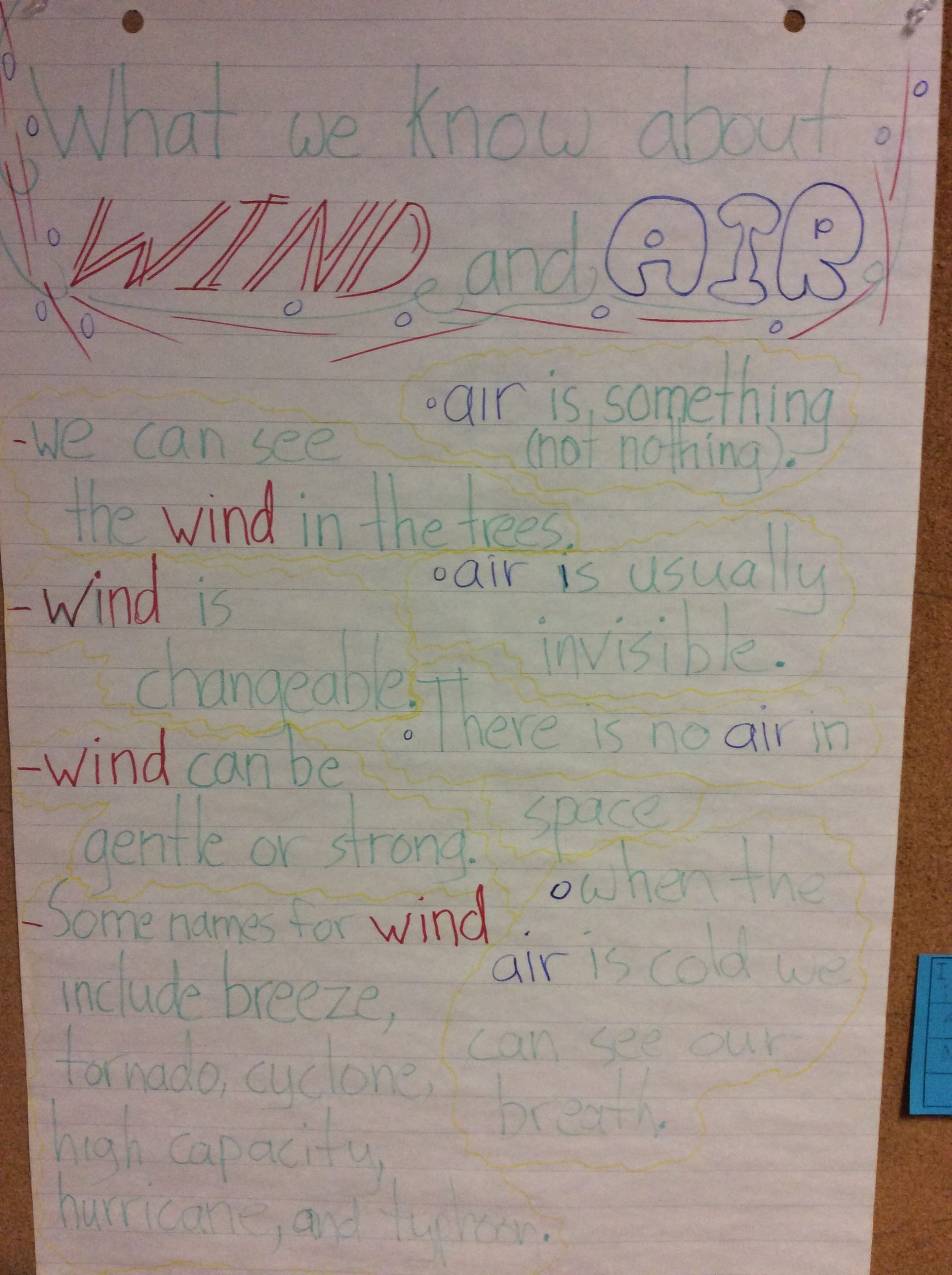
Ishai shared a riddle with the students: “What takes up the most space but is something that you cannot see?” After solving the riddle, the students shared what they already know about air and wind. Then, we asked the students to generate questions about what they wanted to know, using “I wonder…” inquiry cards.  These activities help to honour student voice and position all of us as co-learners,


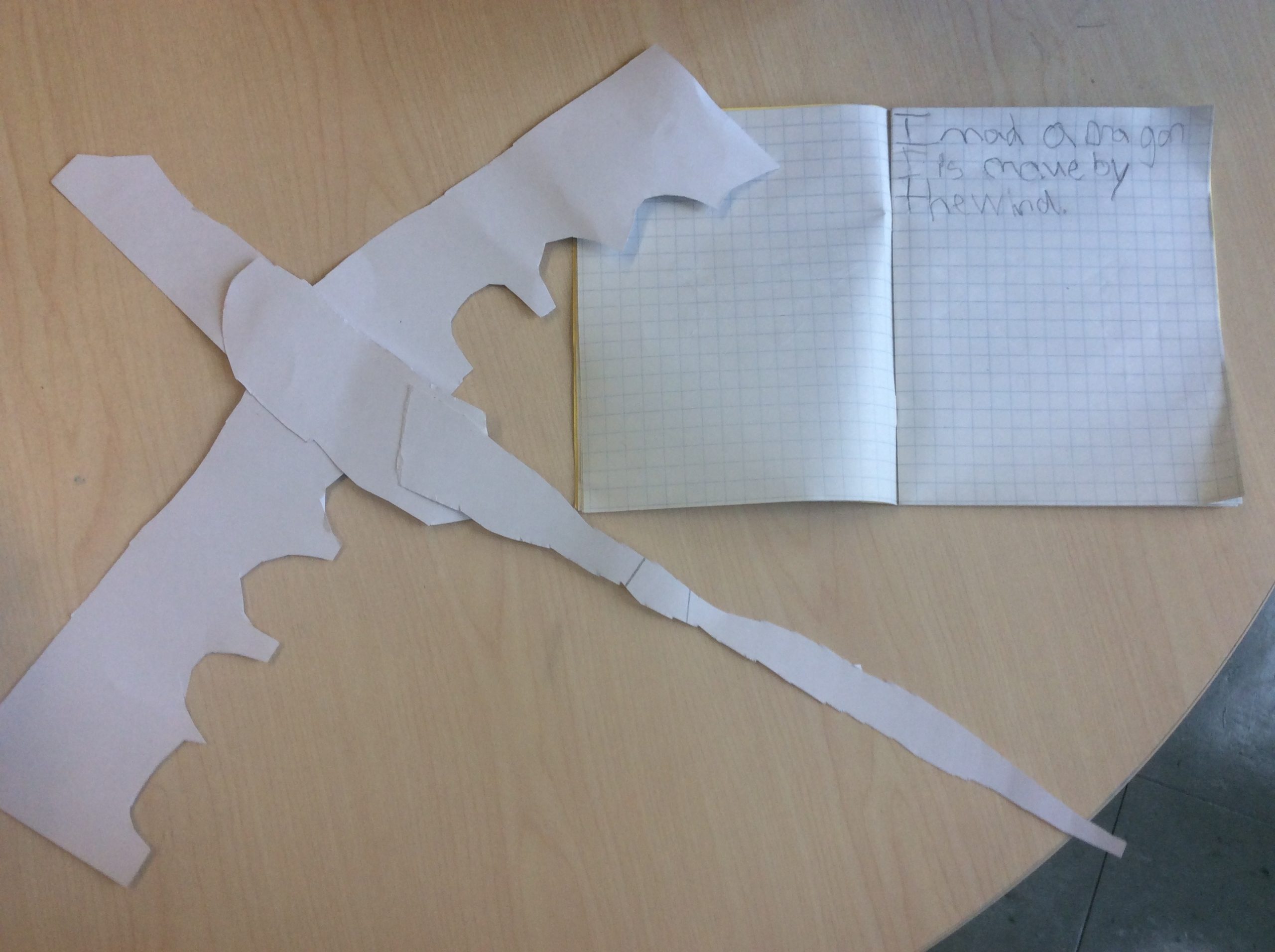
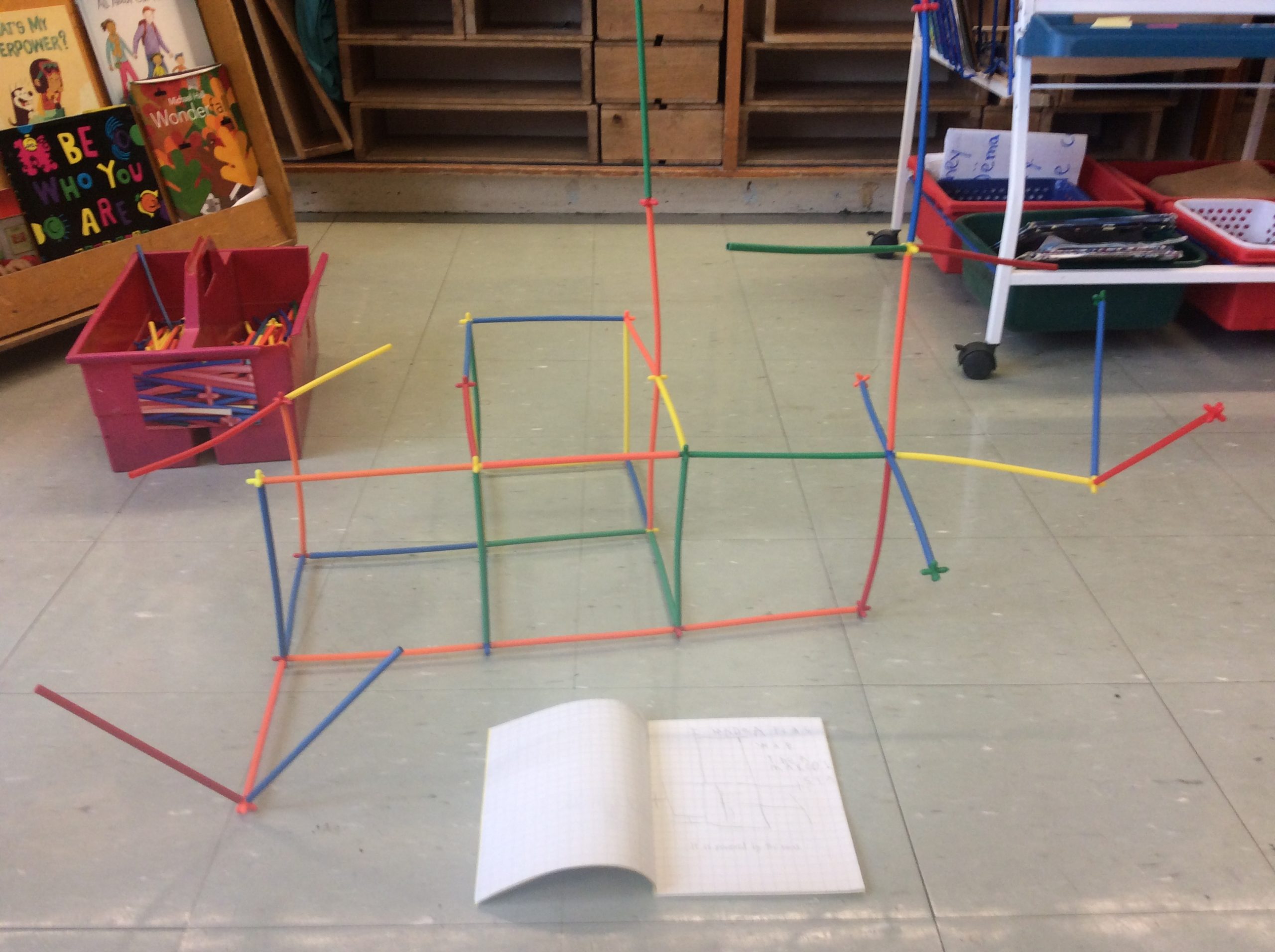
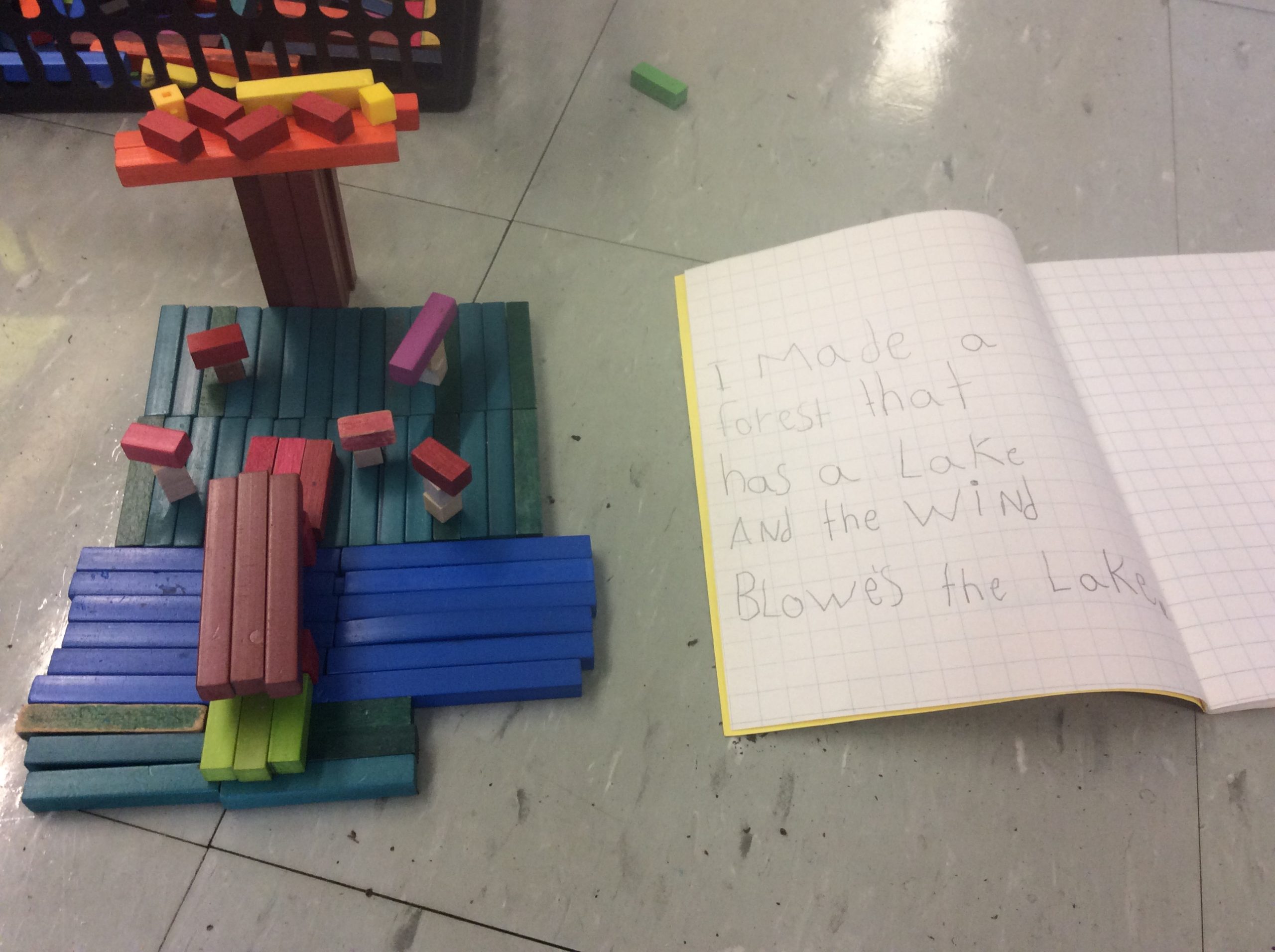
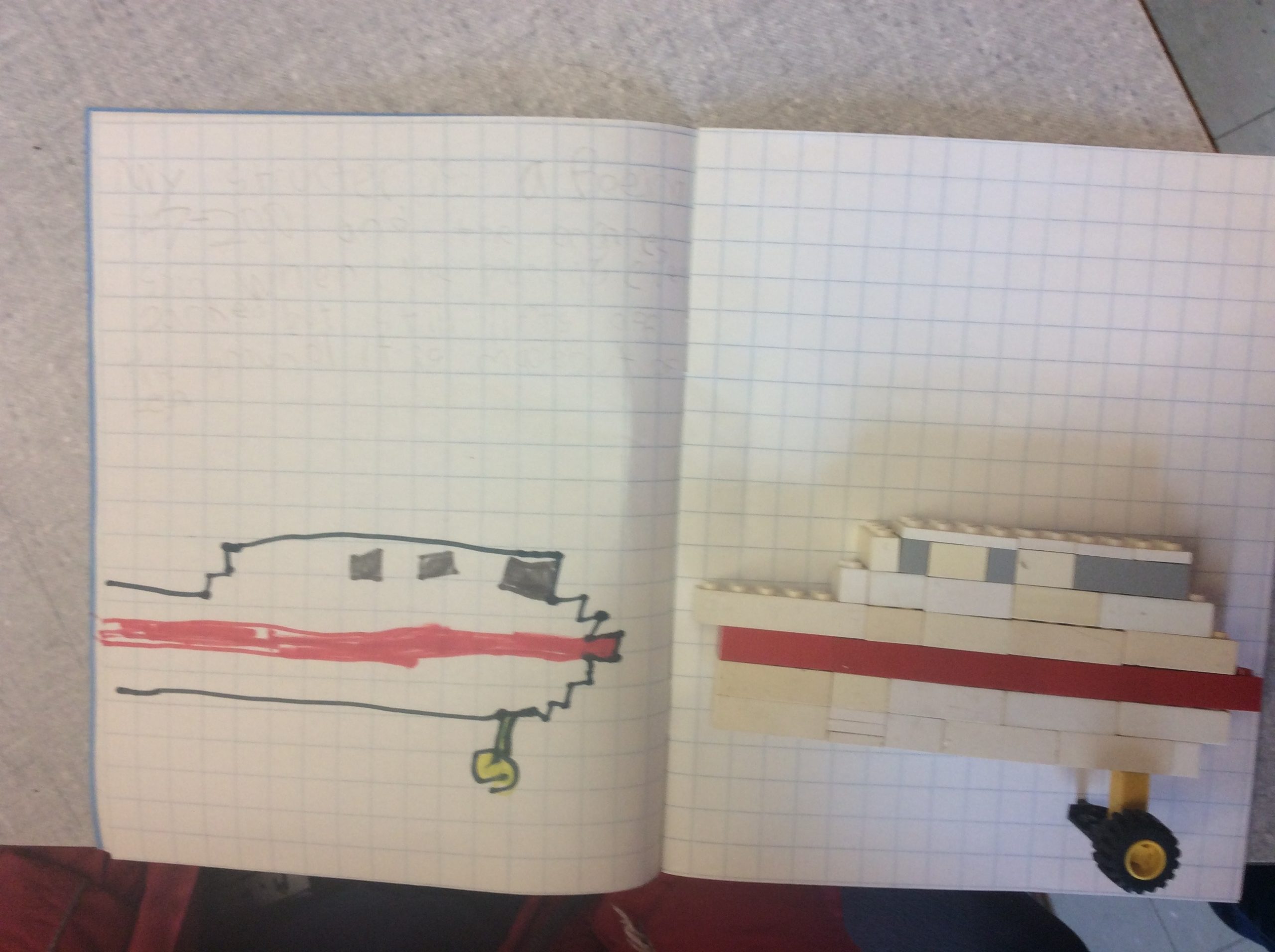
During MSI (Math-Science Investigations), I ask students to design and build a structure that is moved by the wind. Desmond made a dragon. Ezra made an airplane. Florence made a forest. Elliot made a structure that is powered by the wind. All of these activities provided diagnostic assessment and helped to guide the next steps in our inquiry journey.


The Boy Who Harnessed The Wind
We learned about the true story of William Kamkwamba, who used innovation and creativity to build a windmill out of recycled materials for his community in Wimbe, central Malawi. You can listen to “The Boy Who Harnessed the Wind” read aloud. You can find William telling his own story by searching his name. His brilliance has also inspired a movie. After reading the book, we made our own paper pinwheels and took them outside. Everyone loved running with the wind and making the blades spin! 

Paper Airplanes!
Ishai told us about the “Super Secret Mysteries of Flight”. We learned about thrust, lift, drag, and gravity, and their relationship to air. Then, he showed us how to make a ten-fold paper airplane. Here are the step-by-step instructions. It was challenging to listen and follow each instruction carefully. After folding our paper airplanes, we tested their flight in the school yard. We experimented by changing the thrust, and adapting the wings to make it fly straight and long. This was another active and fun activity!

Mr. W
After watching this short video, we had an interesting discussion about the main character. I asked: What do we know about this character? How does this character feel at the beginning and the end of the video? What kind of things do we see the character do? Why would they do these things? Who is this character? Why was this video made? This discussion encouraged students to think critically about media texts as part of our learning about Media Literacy.

This video also inspired us to begin writing our own Wind Stories. We used a graphic organizer to organize our ideas using time-order words, (First, Next, Then, Finally). Some students wrote from the perspective of Wind, and others described the movement and impact of wind. We used a collaborative editing and revision process to share our stories and improve our writing.

Testing our Theories:
This year, we are fortunate to be working with Doug Anderson, who is the co-author of Natural Curiosity 2nd Edition: The Importance of Indigenous Perspectives in Environmental Inquiry. After learning with Doug in the Rainbow Garden, several students wanted to know more about the relationship between the sun and the wind. Svea asked, “I wonder how the sun makes the wind?” 

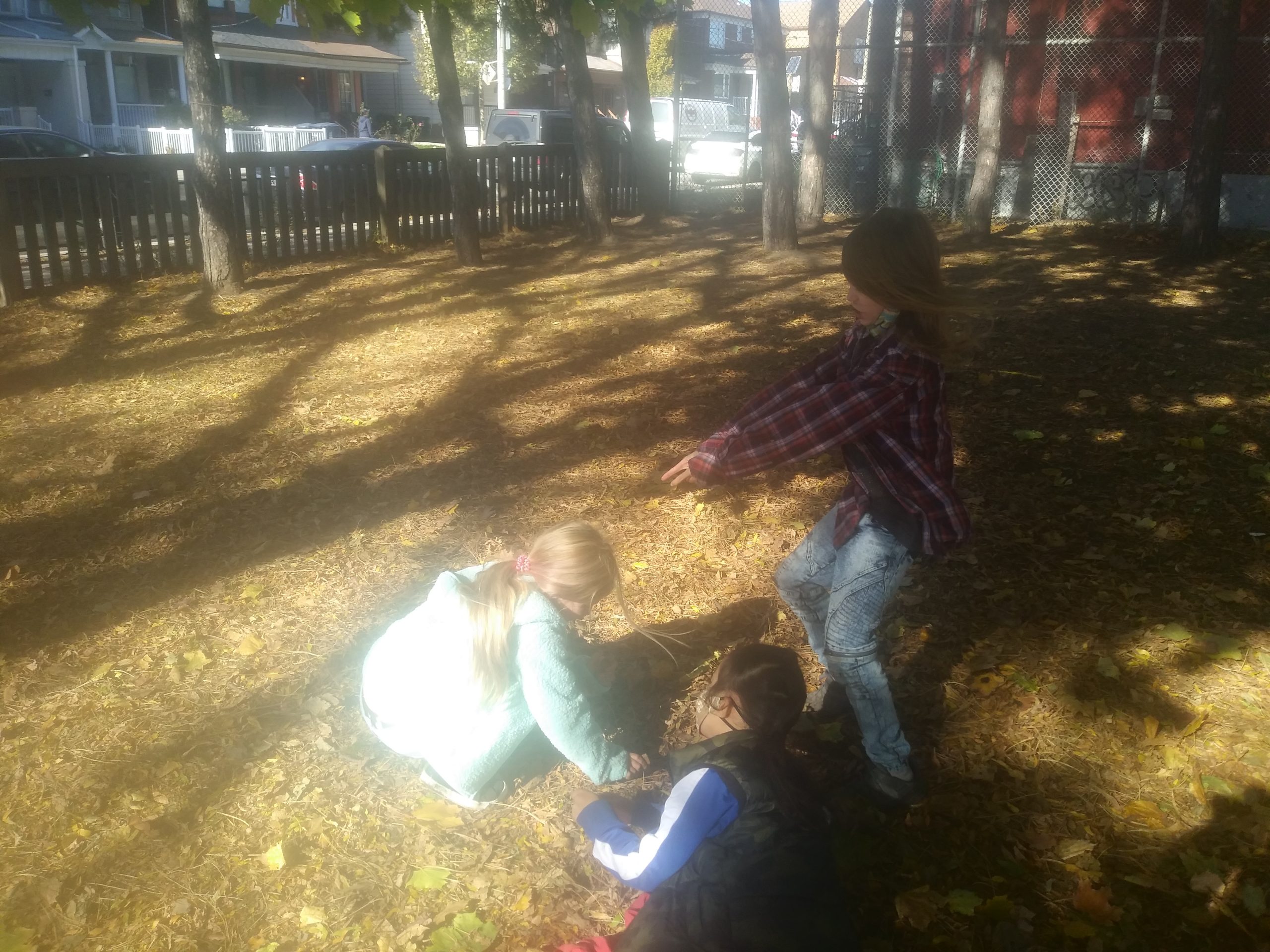
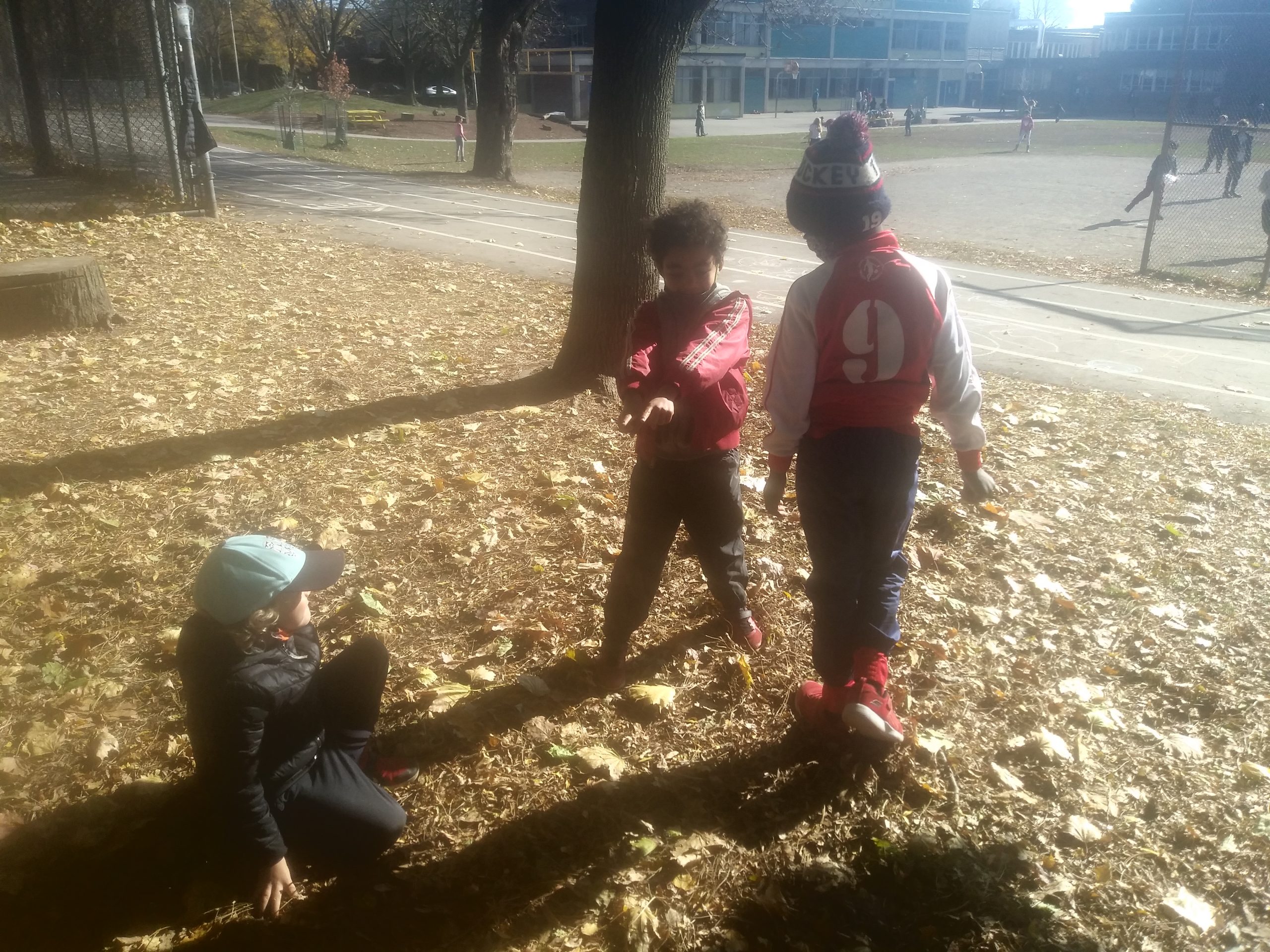
We talked about how we might find the answers to our questions. We could: read books, look on the internet, ask someone. After reading a book called “Air”, which explained some facts, Ishai asked how we might test what we learned from the book. The students had different ideas about how we could prove that warm air rises and cold air is heavy. We went outside to find out. The students worked in small groups and used movement to demonstrate how the sun makes the wind. It was a great opportunity to use our bodies to express our understanding.

Learning Through the Arts
As we explored the movement of wind, we read the book, “When I Get Older: The story behind ‘Wavin’ Flag’” by K’naan. We learned that the song was inspired by his grandfather’s poem. K’naan’s family journey story supported many thoughtful discussions about civil war and refugees, settlement and anti-Black racism, how schools might be more welcoming to new families, and the impact of poetry and music to create community.  We listened to the song many times and went outside with fabric “flags” to wave in the wind. We are hoping to choreograph a dance and embody the lyrics, “Love is the answer”.

We also learned about two artists who have created complex wind sculptures that are moved in the wind. We watched a few videos about the work of Theo Jansen and Anthony Howe. The students were mesmerized and inspired by the movement of these beautiful sculptures.

Another song that we learned was “Blowin’ in the Wind” by Bob Dylan. This is a song that we sing every year during Peace Week and on Remembrance Day. It is an opportunity to reflect on the “big ideas” of conflict and justice. In the past, we have written messages of hope and peace on leaves that are released from the third floor window.

This year, our Visual Arts teacher, Shannon Greene, made powerful connections to Treaty Recognition Week. After learning “A Treaty Poem” by Melissa MacLennon and students, Shannon encouraged the students to write promises of peace on paper leaves to keep in the classroom. Copy of Land Acknowledgement and Dish With One Spoon Resource

Squirrel Nests:
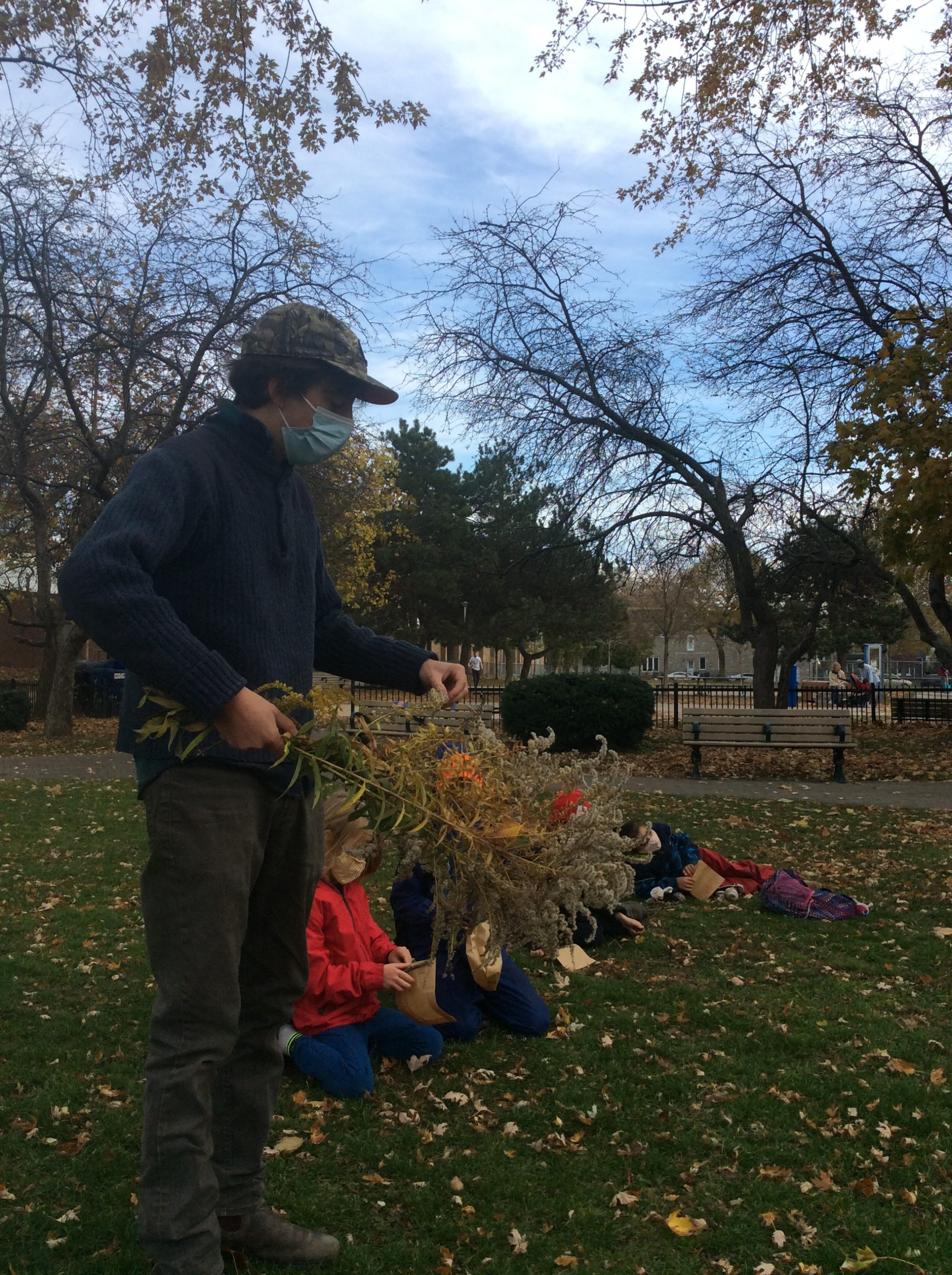
As the leaves continued to fall, the students began to notice piles of leaves in the branches. We learned that they were nests made by squirrels, and we started to think about how animals might protect themselves from the wind. We went on a walking excursion to a local park, and Ishai challenged the students to build their own squirrel nests with leaves, sticks and air.

After building with natural materials, we did a “Gallery Walk” and visited all of the squirrel nests. Students were asked to describe one thing that they were proud of and one thing that they might do to improve their nest next time. These “GLOW” and “GROW” comments allowed us to practice self-evaluation, and provided valuable formative assessment.

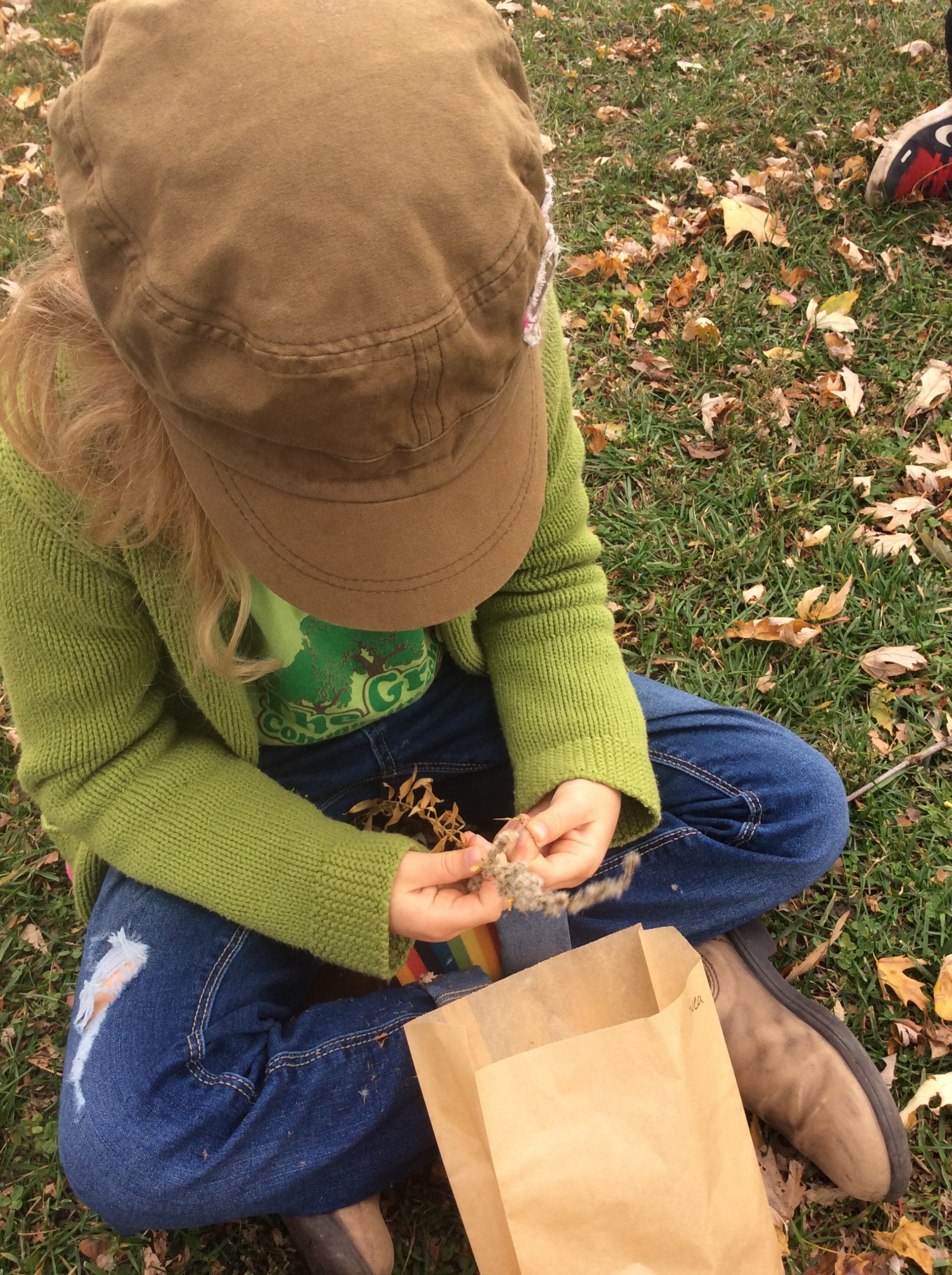
Finally, it was time to test our squirrel nests. Each student was given fluffy goldenrod seeds to represent the squirrel, which was placed inside the nest. We used straws to simulate the wind, and to test the strength of each structure. Everyone had an amazing experience learning outdoors together!

Wind Machines!
As our final summative task, the students were invited to plan, build and test a structure that can be moved by the wind. Before building, students were encouraged to think about what they had learned about wind and apply their knowledge to their structure. Everyone drew a plan and labelled the materials that they would need. We spent several days in the classroom building and revising our structures, based on descriptive feedback.
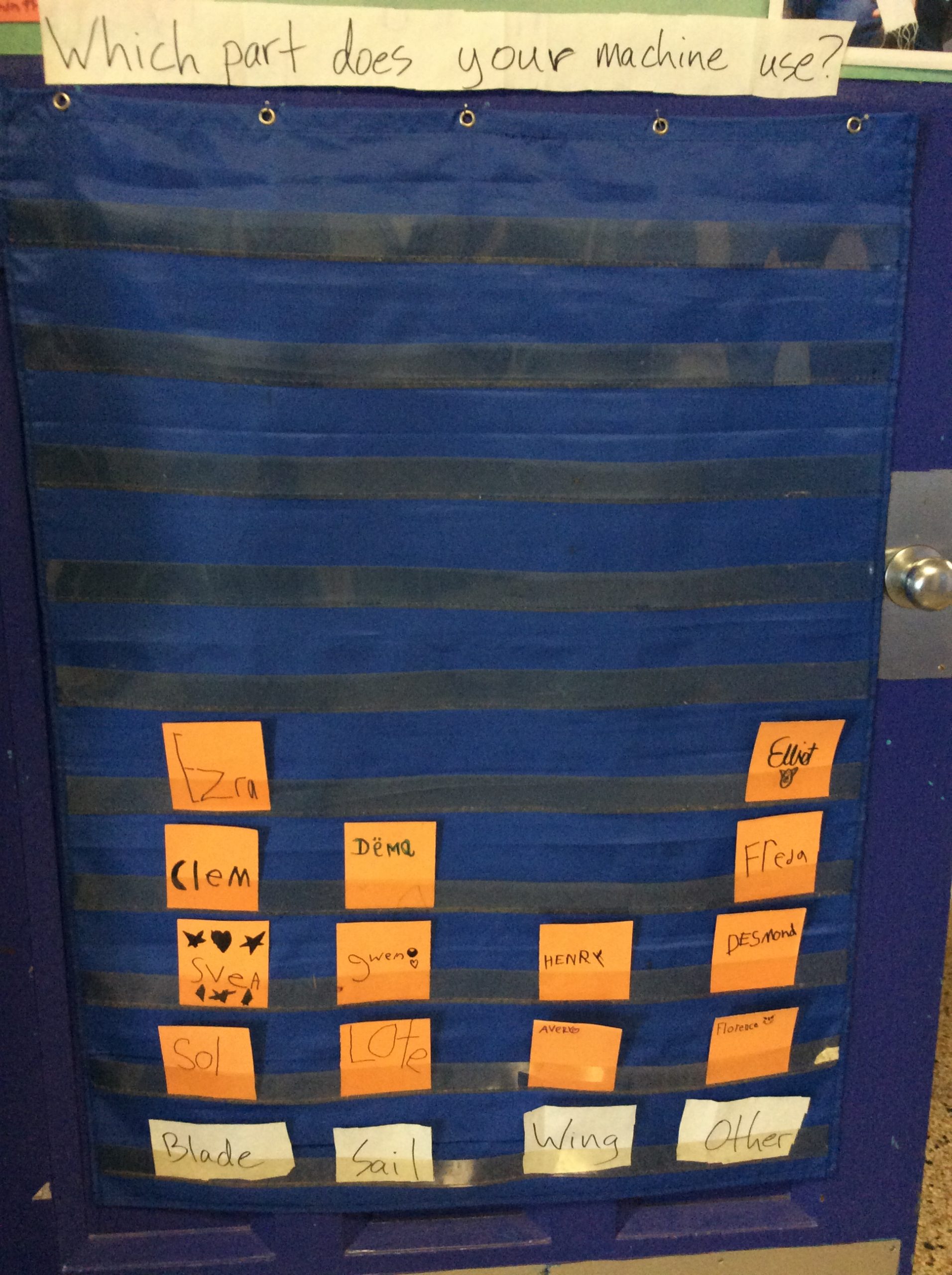
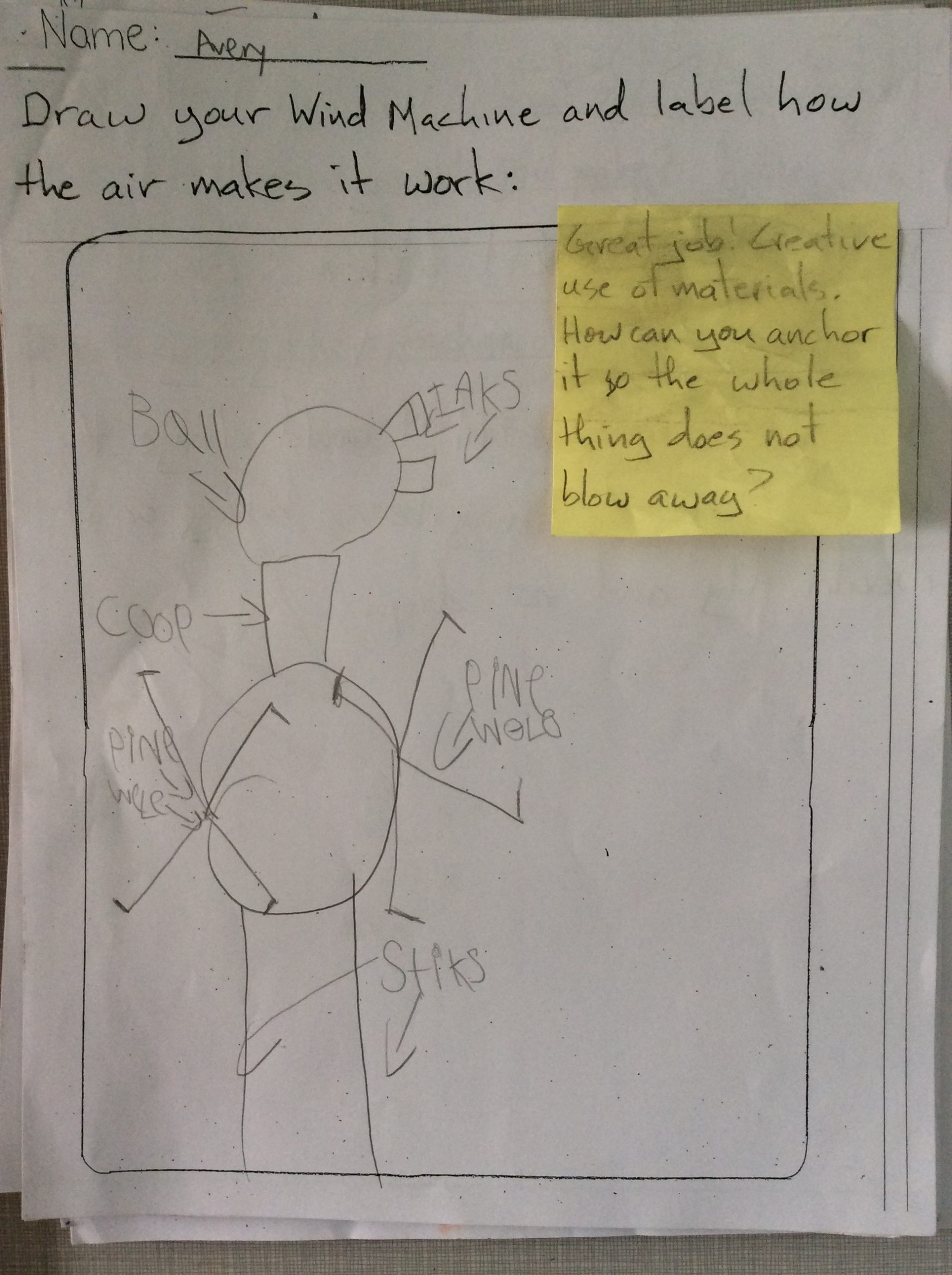
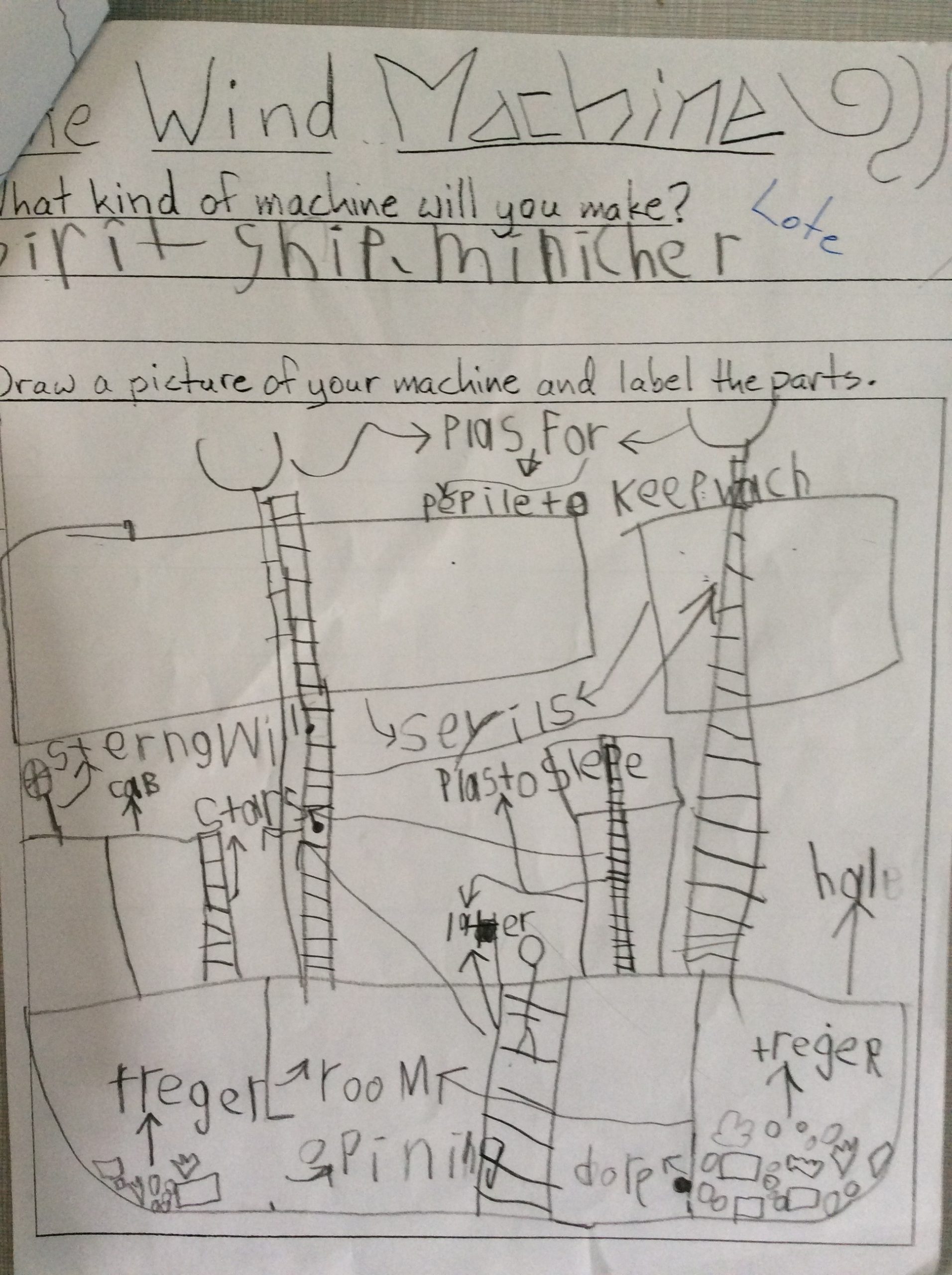
On the day that we tested our wind machines, each student had an opportunity to share their structure and make predictions about how it might move. After testing, Ishai conferenced with each student to document their thoughts and ideas about how successful their wind machine had been, and how they might improve their design next time. It requires more time to connect 1:1 with students, but conferencing provides strong summative assessment data, and supports every student to feel successful about their learning.

Journey through Inquiry
Working with a Teacher Candidate was refreshing and reminded me about the importance of play, storytelling and movement in our lesson planning. Throughout our inquiry about Wind, the students were very engaged, and they had multiple opportunities to explore and demonstrate their understanding.  As an experienced educator, I am still learning about how to integrate and make connections across the curriculum in creative ways.  I am also learning that when we trust our students and follow their natural curiosity, the journey through inquiry will be deep, meaningful and fun!
From zero to one hundred, real quick!

As my online teaching journey continues, I find myself always thinking about the importance of reaching all students.

Last week, I noticed I only had about 13 out of 31 students participating daily. I wouldn’t see the other students writing in the chat, posting in the discussion section or raising their hand to speak on the mic. I started to worry if they were even in front of the screen during our calls. I started to think about solutions to this problem. I contacted every family in the class to touch base about their child’s online participation. Not even one hour later, I noticed a huge change in my entire class. I know this motivation came from a parent this time, but in the future I believe it could turn into self motivation. I received 25 out of 31 responses in math, 18 readers for our online novel, nine more short story submissions and six students speaking on the microphone for the very first time. To top it all off, this was happening on a Friday afternoon!I wondered if Friday was just going to be a one off and students would go back to their bystander ways in the future, but participation during these past two days have been better than ever. Not only that, my original 13 that participate so much (since the first day) are always encouraging everyone that is just starting to participate. The environment could not get any better!

We started off this week talking about goal setting and the importance of student participation in the classroom. Every Monday, students would set a goal that they hope to achieve by Friday. On Friday, I will ask students to type in the chat or use the microphone to share if they met that goal. If they did not, their classmates will help them brainstorm ideas for them to reach it the next time.

I know teaching new concepts is something that I can do during math, language, etc. but I love when the students get to hear from each other on that microphone or in the chat. In math, I find students teaching each other concepts before I am even quick enough to reply. In language, students are congratulating each other about their reading abilities before I even think to do so. My favourite moment of last week was in drama when a student gave away his turn because he wanted someone else to have a turn who had not participated yet. I constantly feel like crying tears of joy because of the supportive environment my class has created.

I look forward to continuing this online journey as I know I have a group of hardworking, goal oriented, passionate and kind students.  I am so fortunate to be on this learning journey and I am learning that the online environment really is turning out to be an incredible place for student growth. I cannot wait to share another great success story!


ETFO’s 365 Black Canadian Curriculum

The last time that we were in the school together was in March. Believe it or not, some classrooms still had the omnius date of when school changed – March 13, 2020 – up on the board. One thing that was still up and brought a sense of joy was the Black History Month display that was in the library. Last school year, I was blown away by the amazing display of books that our Teacher Librarian created so that students could freely explore Black history and story. I found myself drawn to it every time I walked into the space because there were a number of books that I hadn’t explored and it was refreshing to see. 

To be honest, I struggle with Black History Month being the shortest month of the year. I’ve written before about my feelings around having months where we celebrate and move on past the everyday realities that are the lives of our students and dare I say, educators. I also always feel a certain level of pressure to do something and then feel frustrated that I, as a black person, has to be the “one” to do the “Black History Month thing”, rather than it being a collective decision. Last year I sat back and wondered what might be done. All too often this month allows schools and districts the opportunity to click the equity checkbox, yet students and educators like me recognize and understand this as performative work. When Black history and story are relegated to one month of the year, what message does this send? Does this in turn tell non-Black students as they grow up, that February is the only time to check that equity checkbox?

In this post, I want to highlight ETFO’s 365 Black Canadian Curriculum. I’ll be honest and say that it is a resource that I need to spend more time in myself. Much of the history taught widely has been American and yet there are so many remarkable Black Canadians, past and present. 

By clicking the link above, you’ll find a compilation of resources – calendar, lesson plans, workshop, and poster – that support educators and students in learning about Black Canadian history. On each day of the calendar, a Black Canadian is highlighted with information on: what they are known for; notable facts; photos; and articles about the person. When first looking at the list, I was blown away by how many of the people I didn’t know. If you haven’t taken a look at the calendar or resource, spend some time doing your own learning. I know that we often get excited about using a resource with students and with this one, I think we need to get excited about doing some learning for ourselves. That being said, please don’t use not enough time for your own learning as an excuse to not teach about this in your classrooms. ETFO has removed this excuse by compiling the resources and having them in one place. Don’t discount it, you might be pleasantly surprised by how much you learn, how interested you become and how much you enjoy it.  

The hands-on teacher resources are available in both French and English and include worksheets for primary, junior and intermediate students. This past week, I used the lesson on Molly Johnson. Students were engaged in the lesson and the great part was that students were blown away by the fact that she’s not only a Canadian jazz singer, songwriter and broadcaster on CBC. She also won a Juno Award and a National Jazz Award. She was named an Officer of the Order of Canada. She co-founded the Kumbaya Foundation AIDS charity and she has toured all over the world. The fact that she happens to look like some of us within the classroom space was a bonus. With handwashing, the lessons are short but for our next Music class, we will continue the lesson as students were so engaged and wanted to know more. 

It’s time to reflect on the history and stories that are being taught in schools. How are we ensuring that Black Canadian history and story are also being taught within our classrooms? ETFO has a great curriculum that can be easily incorporated. Let’s ensure that Black history isn’t only being shared from an American lens of the past during the shortest month of the year but that it’s celebrated within classrooms on a daily basis. Let’s learn together and please share with me what you’ve tried in your classroom.

Teachers Are Still Rocking It-

In March we were “Emergency Learning”.  Now we are either teaching “virtually” or “socially distanced” in classrooms.  We never thought we’d be teaching from behind a screen, learning all kinds of new technology tools, wearing masks and shields in front of students or removing all of the manipulatives from classrooms. We don’t know how long this will last.  We don’t know if COVID will worsen.  Educators aren’t used to not knowing things.  Most teachers I know like schedules, routines, knowledge and thrive on consistency.

However, in the midst of the new rules, changes and all of the things that we “can’t” do-teachers are still rocking it.  Throughout the summer I worked with a team of teachers providing virtual professional learning for KPRETFO.  Hundreds of teachers used their summer holidays to learn about technology tools before they even knew whether they were going to be teaching virtually or not. They logged in at 10 am some days in order to learn and some teachers even came to all twenty sessions that were provided. Educators were dedicated to their professional learning all summer long.

At the end of August, I had the privilege of working with another fabulous team of educators who dedicated their time to providing a three day virtual conference for over 500 Ontario Educators with ECOO.  These educators gave up their time to organize all kinds of schedules, sponsorship, presenters, keynotes and much more.  In addition, over a hundred educators created and presented webinars for their colleagues.  It truly FELT like a face-to-face educational technology conference took place in my living room!
There was a feeling of sharing, helping and collegiality.  It was exhausting but my bucket was over flowing.

As our school year is now well under way teachers are reaching out to me for assistance at all times of the day and night through email because they are dedicated to their students and want to do their best.  They are attending our evening “PD in your PJs” webinar sessions through our local union office to learn new tech tools at 7 pm on the week nights. The educators that I work with continually astound me with their dedication to professional learning.

I recently binge watched a Netflix series called “Away”.  It is a futuristic fictional narrative about the first manned mission to Mars.  The astronauts were in uncharted territory.  They encountered problems along the way for which they had not trained.  They endured mental and physical fatigue beyond anything they had ever felt before.  They were innovative and creative in order to solve problems and reach their goal.  While watching, I couldn’t help thinking about the parallels between this movie and the present state of education. We’ve heard that as we design these new learning structures and environments it is like we are building an airplane while flying. If I am going to stay true to the analogy here it is really more of a rocket ship! Educators are facing situations that they hadn’t even thought about in Faculty of Education Programs.  They are encountering issues of teaching without many of the tools they normally use such as manipulatives, group work or technology. They are suffering mentally and physically. They are being innovative  problem solvers around tools, equipment and technology.  They are building the rocket ship while they are flying it and it is full of students.

Are educators stressed?  For sure.  Are their nerves frayed?  You bet.  Are they innovative, creative, dedicated and passionate about learning and teaching? Absolutely, without a doubt.  Every educator is a front line worker,  doing their best, making a difference, being brave beyond imagination and truly an inspiration.


The cold coffee song

 AKA – A parody on a familiar melody dedicated to teachers who finished as strong, after a tough year, if not stronger than the cold beverages in their cups.

Pt 1 (sung to the chorus of Escape, The Pina Colada Song by Rupert Holmes)

Yes I like drinking cold coffee!
And ignoring my chronic back pain.

I am out of the classroom,
At home by pandemic and fate

It’s really hard to be teaching,
sharing through cold blue screens.

It’s become easy to breakdown,
seeing students struggling each day.

Yup, it’s been rough one folx. We have come so far together and we all know that the journey is just beginning. When we look back to the start of the year in September 2019, no one would have believed that we would only be voting on a contract now. No one would have believed  that we would fund our sub-cost-of-living raises by standing up for our rights on the picket lines for 6 days. And no one would have believed that we would not see our students in real life this year past March Break. Judging by what has transpired already, I am pretty sure that the future will be equally unbelievable.

Without a doubt, we’ve shared many highs and lows in our profession over the past 10 months. We have stood together. We have found ways to make a terrible situation nearly tolerable. We have worked from home in makeshift offices at the peril of our own physical detriment. We are all grieving the loss of milestones (graduations, trips, community, playdays, track, and farewells) for the classes of 2020. Yet, we still came up with innovative ways to honour them.

We have parented through a pandemic, and cared for our parents too. We have watched vulnerable communities further separated from opportunities. We witnessed the inequity that exists in presumptions around access and “emergency distance learning.” In all of this we have maintained the dignity and duty of care everyday. On occasion, we even remembered to look after ourselves.

And even though direction from the elected only spilled out like water from a kinked hose, we knew what to do because we knew our students. So when the messages changed it didn’t matter that they came out at the end of the day on a Friday after hours or at all. In the end, teachers knew how to do right by their students. This even meant going on treasure hunts to find marks to fill report cards using a very vague map to cover a number of broad areas.

For my liking, I would love to have scrapped the focus on any marks for this term, and worked within a pass/not yet model.

Pt 2 (sung to the chorus of Escape, The Pina Colada Song by Rupert Holmes)

I am not into health spas.
I won’t ride on busses or Go Trains.

I am not into incomplete reporting
though the data sets must be gained.

I don’t like marking work til midnight
or going without sunlight for days.

I have been teaching from my basement,
and there’s no chance of escape.

The deeds are done and we can look back on them knowing that each teacher poured their heart and soul into their artistry as educators. Like any good gallery, the masterpieces ranged in complexity and beauty regardless of the eyes of the beholder. I’ll leave you with the last chorus to sing however you’d like.

At the heart of education,
We’ll stop at nothing to create,

To make the best of bad situations,
and challenges so hard to relate.

Can’t wait until we’re back in the classroom,
To learn, laugh, and say remember when?

It’s the year that no one planned for,
and hope will never happen again.

Thank you for all of your support over the past year. Wishing you a safe and relaxing summer. Celebrating you all with a cup of something cool and refreshing after I finish this cold cup of coffee.


6 Similes to describe how it felt to teach during COVID 19 Quarantine

Teaching during a quarantine was…

Like meaning with no  I, N or G. It was just mean. There were times when it felt forced, and meaningless because I was trying to make sense out of how to do this when it seemed more about keeping students busy and less about how they were feeling. 

Education during a pandemic was…

Like an infomercial. But wait, there’s more! More to do and definitely more to worry about.  Our students went AWOL – They’d gone absent without learning because they couldn’t connect. Their worlds had been turned upside down, and the one place where they could count on from Monday to Friday had been shuttered and now they were shut out. 

Learning for students during COVID 19 was…
Like making a pizza without a crust – there was nothing to hold all of the ingredients in place for students when life’s bigger problems consumed their ability to learn from home. Students needed their teachers to keep things together when things got tough and the class pizza, with all of its different toppings, got thrown into the oven.

Emergency distance learning was…
Like an ice cream cone with a hole in the bottom – the goodness melted away fast  and ended up on your shirt. Either way what was good couldn’t last long and usually there was something to clean up afterwards. I saw my students trying to make the best out of this mess yet there always seemed to be a scoop of some new flavour that no one wanted being added to the problem of learning outside of the classroom. 

Teaching from home during a shutdown felt…
Like performing a symphony where I had to write the score, conduct, play every instrument, and stack the chairs. There were so many little things that consumed the movements and moments of my day. It felt like I was simultaneously teaching a song to 25 individual performers all locked in their own rehearsal spaces.

Distance learning was…
Like running a marathon for the first time. You knew there was a finish line, but couldn’t remember how far you’d run or where you were going once you hit the wall. There came a point where fatigue set in and I began to doubt why I took this on in the first place? Some students hit the wall after the first day while others lasted until being told that the rest of their year at school was done. Even our strongest learners hit the wall at some point. Despite all of my training as a teacher, the toll that the marathon of teaching from home took on my mind and body was significant. I can only imagine how it affected our students.

I’m tired and a bit broken. The breath was stolen from my body when our students went home on March 13th. None of us imagined that we would be away for so long. I was allowed to visit my empty classroom 3 times since then and still hope that this has all been a bad dream. Walking down an empty hall in an empty school denied it’s life breath of students and their teachers was not how any of us would have wished this time in quarantine to be. 

From the onset and onslaught of learning in quarantine we had to work together, to grow together, and to continue learning together. It took time, patience, and grace. Each moment required a willingness to work meaningfully, to seek out those who had gone AWOL, bake a crust under that pizza, put a marshmallow in that cone to stop the good stuff from dripping out, play music until our fingers ached, and get up the next day ready to run the race again. 

The summer finish line has been crossed. We made it. Now where’s that pizza and ice cream?


“Techie People”

As someone who is passionate and truly geeky about the power of technology in education, I often hear from my fellow teachers, “I’m not really a techie person.”  Now, I get where they are coming from because technology can be intimidating.  Many times I’ve said, “I’m not really a math person.”  I can “do” math and I can “learn” math but it doesn’t get me fired up quite like tech does.  However, over the last few months educators who weren’t really “techie people” didn’t have much of a choice other than to use tech in order to do their job.  I cannot imagine what that must have felt like for some educators.  For some educators, it must have been terrifying.  For me, it would have been like my Principal saying that I was now the new math consultant for the intermediate grades.  It would have caused me serious panic and anxiety. I probably would have considered resigning but I would have dug in and done the best I could with the tools available to me and I would have reached out to fellow colleagues and leaned on their expertise. THAT is what teachers all over the province of Ontario were doing after the March Break, teaching and learning by the seat of their pants.

As an innovations consultant what I witnessed during the weeks of distance learning was fellow educators doing what they do best; rolling up their sleeves, getting in there and figuring the tech stuff out.  As I (along with some fantastic  and enthusiastic educators in my board) provided webinar workshops on technological tools for teachers, I saw teachers who were self proclaimed Luddites attending and showing appreciation for what we were doing.  The resiliency of educators during this time has been absolutely amazing. The necessity of teaching through technology broke through an invisible barrier that has existed for those teachers who thought that you had to be a “techie person” in order to use tech in education.  Teachers were no longer afraid to try a new technological tool, to make mistakes and ask questions. Teachers are discovering the power educational technology and they’ve been bit by the tech bug.  Educators will always continue to seek out new and innovative ways to deliver curriculum to students and learn as they go-no matter how steep the learning curve.  Some teachers who would have quickly proclaimed, “I’m not a techie person” before March Break are now excited about the possibilities of using technology even in their face-to-face classrooms.  The Educational Technology Geek Community is over-the-moon excited about increasing it’s membership!  We are a friendly bunch, inclusive, sharing and passionate and we’re happy to help.

Looking on the bright-side during this dark time.

During this time at home, we are all probably having positive and negative learning moments. From seeing students thrive for the first time to having zero assignments turned in, the highs and lows have been a rollercoaster over the past few months. However, during this time for my sanity, I need to focus on the positive ones. I would love to share a few from my experience teaching grade eight online.

  1. Removing student anxiety: Many of my students have had a hard time in the classroom this year due to certain factors that make them extremely anxious. Attendance issues have made it hard for some of them to learn this year and that has always been something I have struggled with, how to reach the students who do not attend. Even the students who do attend have anxiety issues related to noise in the room, other students bothering them or starting the day in a terrible mood. My class is super respectful so I always had a hard time understanding what the exact factors were, but I came to realize it was just a feeling they carried with them and could not be easily fixed. With online learning, these students have submitted work daily and have been involved on our online teams meetings. They have been thriving in this environment and for the first time, I am learning so much about how intelligent they are and how much they have to share. The online platform has given them a voice and a chance to accomplish things.
  2. Reaching all learners: Now that the school day exists at all times, I can answer all questions at once without there being a physical line up or a limit on the amount of students I can help. When someone online needs help, I can help them right away as the odds that another student needs help at that exact moment is slim. Although my students are working at all hours of the day, I had informed them that I would be available (virtually) from 9-3 everyday. They keep their questions for the most part within these hours and I love that I can respond to them right away. Also, I am able to help students via platforms that work for them and I am so thankful that my students have downloaded all of the new apps that have been made available to us.
  3. Continued differentiation in a new and unique way: With the help of google classroom, I can assign specific work to every student at the click of a button. I can modify every assignment and make special ones for my students that go directly to their google drive. When creating an assignment or learning material, I can tailor the assignment to how they want to learn, what they want to learn and give it directly to them. I was already doing this in the classroom but I am happy I can continue to do it online. I was nervous about assigning work online and how I could make it specific to students so with google classroom I was happy to see it was an easy process. Then, once my students finish an assignment, I can assign them more work at their own pace. Right now I have students completing work at 25 different rates and I need to be able to keep track of what they have/have not done. Google classroom allows me to look at what they have handed in and then direct them to the next assignment.
  4. Small groups style learning: My favourite thing about teaching online is creating small groups live meetings. We have been using the apps “Teams” by Microsoft and it was has been an amazing way to teach in small and medium sized groups. Every Tuesday, I have a live math/literacy class with my students. I invite all of them but usually I only get half the class. From there, I create smaller groups to teach them the topics that they still need help with or to move them ahead in the unit. I also have a meeting on Wednesdays with my ESL students where we read a book and answer questions together. We also work on math topics and play simple word games. On Thursdays, all of the other grade eights meet together to play games and reminisce about the year. This Thursday, they will be sharing their favourite writing piece from the year and will be sharing to their classmates their strengths as a writer. Small groups is something I had done in the classroom but online now more than ever I have implemented small groups in a way that really reaches all learners. I really hope to bring that into the classroom at a new level more successful than ever before. That is my favourite success from the online learning environment.

Although there are days when I feel like I may be posting to no one, I know that there must be students who are benefiting from it. The online meetings have been such a blessing during this time as hearing their voices always remind me of how special this profession is and how lucky we are to have technology to help us through this time. I am desperately looking forward to the day where we can teach in the classroom again but for now, I am happy to have these successes to think on and to reflect about how they will make me a better educator. I hope everyone else has some moments that they can look at and reflect positively on.

STEAM to Foster Innovation and Collaboration

In my heart of hearts I am a teacher of the arts.  I began integrating technology into my classroom practice a number of years ago but always from a creation perspective.  There is still a misconception that innovation is synonymous with technology.  However, some of the deepest innovative learning comes from low technology.  Keep it simple.  On the whole students enjoyed being challenged and getting the opportunity to practice problem solving in a safe and creative way.

In order to practice the true design process I have been testing a number of STEAM challenges with students in a variety of grades.  When I do this, I ask them feedback on the process that we experience and how I might change it for other grade levels.  Students always amaze me with the amount of innovation that they demonstrate when given the opportunity and their feedback has been helpful to streamline the challenges.

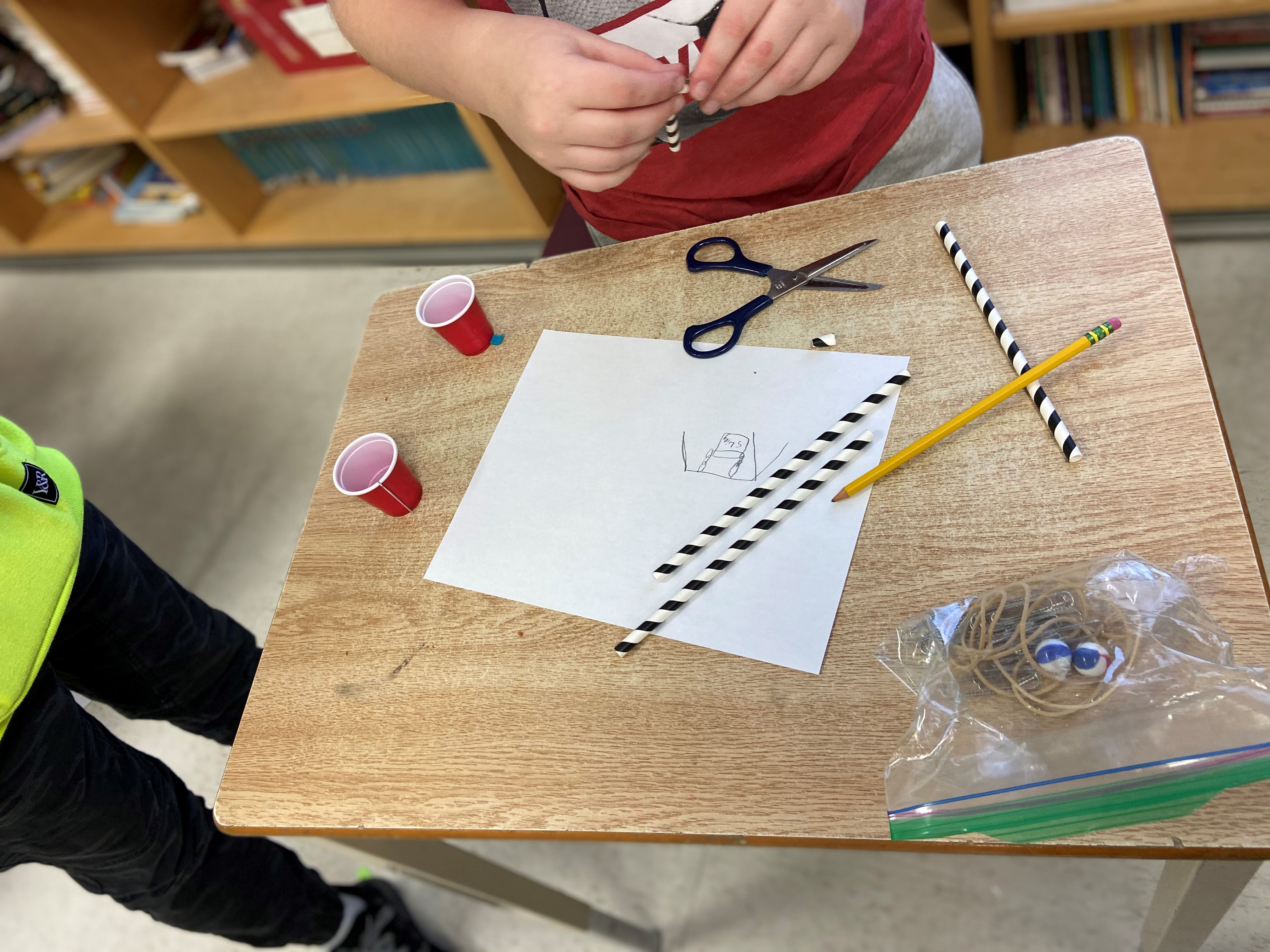
I recently worked with a grade 6 class for a STEAM challenge and brought bags of materials for each pair of students.  In the bags were: two tiny plastic cups, 10 jumbo paper clips, 10 small paper clips, 4 large elastics, 4 paper straws, 2 marbles and access to string and masking tape.  I showed the students the materials and gave them about 10 minutes to create a design.  The caveat was that whatever they created had to have some kind of function or movement.  They could cut or change the materials as needed and did not have to use all of the materials.   We discussed the different part of the The-Design-Process and made success criteria for the challenge.  The success criteria focused on communication, collaboration, critical thinking and problem solving.  It wasn’t about who build the “coolest” thing.  There was room to be creative, there was room to fail and there was room to improve upon the design and try again.

Their creations were amazing! Here are a couple of innovative designs that two of the groups created.  To my ultimate delight-the engagement was the same for all genders in our classroom.

STEAM movie

STEAM movie 2


Keeping it fresh.

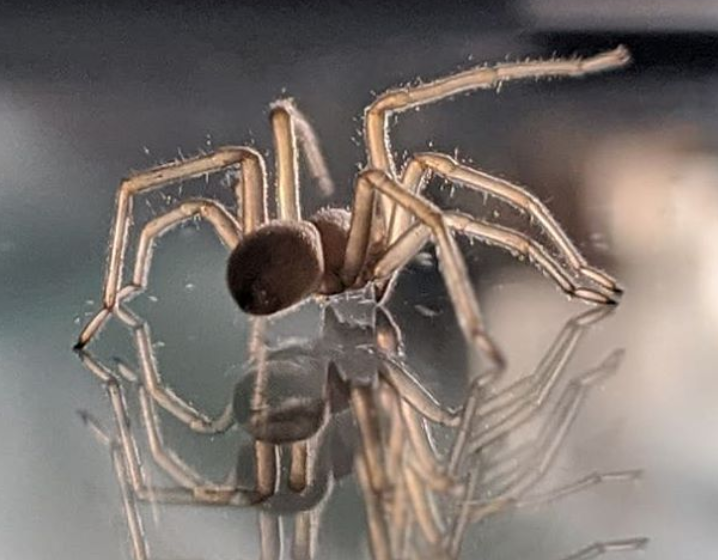
As of the end of February, it is apparent to no one in Ontario that Spring is just around the corner. Judging by the blankets of snow and recent school bus cancellations, winter continues to disrupt and annoy us with the same creative sadism as a government hell-bent on destroying public education. Despite the stark reality of a manufactured education crisis and a real climate crisis, I know that Spring is coming soon. I saw a spider. Photograph by Will Gourley

Isn’t it wonderful? Putting ONGov’s systemic affronteries aside, my heart lept at the sight of a spider. On a normal day seeing one is something exciting to behold, but this opportunity came after nearly 3 days of snow, several white-knuckled commutes, and bone chilling winds. It was a sign of hope that most of winter’s worst weather would be over, well at least statistically.

It signified that Spring was on almost here because, in my own amateur scientific way, I have observed, over several years, that spiders usually emerge around my house again when winter is almost over. Usually. My returning guest got me energized and thinking about how to channel that into the classroom?

2020 has blessed me with a number of ups and downs in my professional life as an educator. It has brought me immense joy on a daily basis in the classroom, but also sadness and grief in light of tragic events that have happened to our learning community. You see, not all lessons and outcomes are going to be good. The opportunity to share the struggles and successes with students helps create a deeper appreciation of the learning process. By admitting when things got tough meant more to them and my colleagues than any veneer of perfection I could ever hope to put on.

My January post was meant to share my personal struggles in hopes of encouraging dialog among educators and to show the benefits of releasing some of the emotional weight that many of us carry inside. I wondered whether I could use my catharsis as a catalyst for our learning spaces? How could I make it fresh and keep it fresh for my students and self?

Never one to shy away from doing something differently, I quickly began working through new ways for students to interact with their learning, for demonstrating their understandings, to collaborate with each other, and to dig deeper into opportunities rarely afforded by traditional transmission and texts teaching.

Here’s what we worked on;

In Math, I remain committed to “no text book math lessons” as much as possible. Using YouCubedPeterLiljedahlMath RecessWaterloo POTWCEMC, and Khan Academy. My students love working on problems together, they argue, iterate, communicate, and solve problems. We make Math a social activity instead of a game of one upping each another.

Another change this year is having Wipebooks for students to use. They have added another dimension to our learning by enabling vertical approaches to Math problems. This has students out of their seats, standing, thinking, and  solving. They can also wander from group to group to see the different approaches being used to answer questions. This has led to some excellent discussions and growth.

Recently, I also started adding Quizizz tasks to our Google Classroom. These fun quizzes allow you to make memes for correct and incorrect responses. I find this format a great way to have students continue to work on concepts taught in prior months.

Becoming a strong group facilitator using Character Lab Playbooks and a co-constructed success criteria. Genius Hour – personal inquiry projects where every student becomes the class expert in their subject. I have shared this one before, but it was for a different class at the time. Besides, it’s a perrenial favourite and my students have asked to do it again already.

In Language, we remain very fond of TED Talks. I now find myself creating reading response tasks with posts from the TED Blog. Another tool that it is being brought back discussion and digital citizenship is Padlet. Our recent work focused around an assignment inspirted by my friend and colleague Tim Bradford  that read;

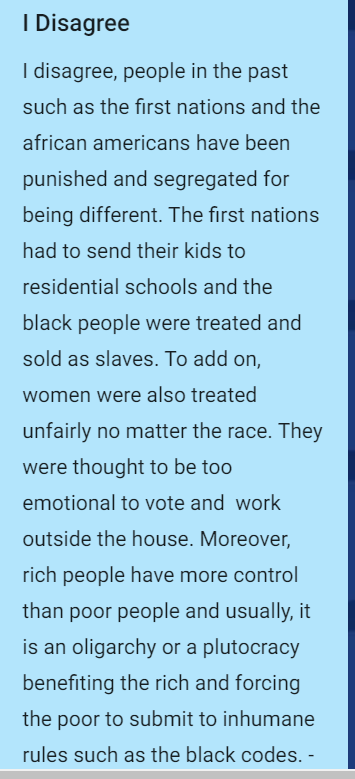
“In the past and present, people have always treated each other fairly.” Agree or disagree

Students had to create a 30 + word response to the statement and then respond to each other. The depth of understanding from them was very encouraging. It was also nice to see how they kept each other in check when it came to appropriate responses and use of technology. Here are 2 of their responses of the entire class who thoughtfully disagreed;

To add a lot of fun to my instructional week, is my grade 3 FI Music class where my students recently wrapped up creating their own identity raps in French, complete with backbeats from Groove Pizza. Once their shyness subsided, they were excited to present their hard work. It was also fun to see how they incorporated the lessons we had about how to beatbox from Nicole Paris and about the notes and rhythms we covered in Term 1.

In all of this, the focus was on hands on and collaborative experiences intended to engage and deliver the learning. Although much can go wrong, there is so much that can go right when you commit to keeping it fresh. I know that the next 4 months will bring more of the same and I am excited to try new things with my students. Looking forward to introducing Flipgrid, podcasting, and sketchnoting already to keep it fresh. Bring on Spring!

Have you tried something new that you would like to share? Mention it in the comment section and include a link if you can. Thanks for reading.