Buiding an Inclusive Playground

I am having a lot of fun learning how to center issues of disability justice and equity throughout the curriculum.

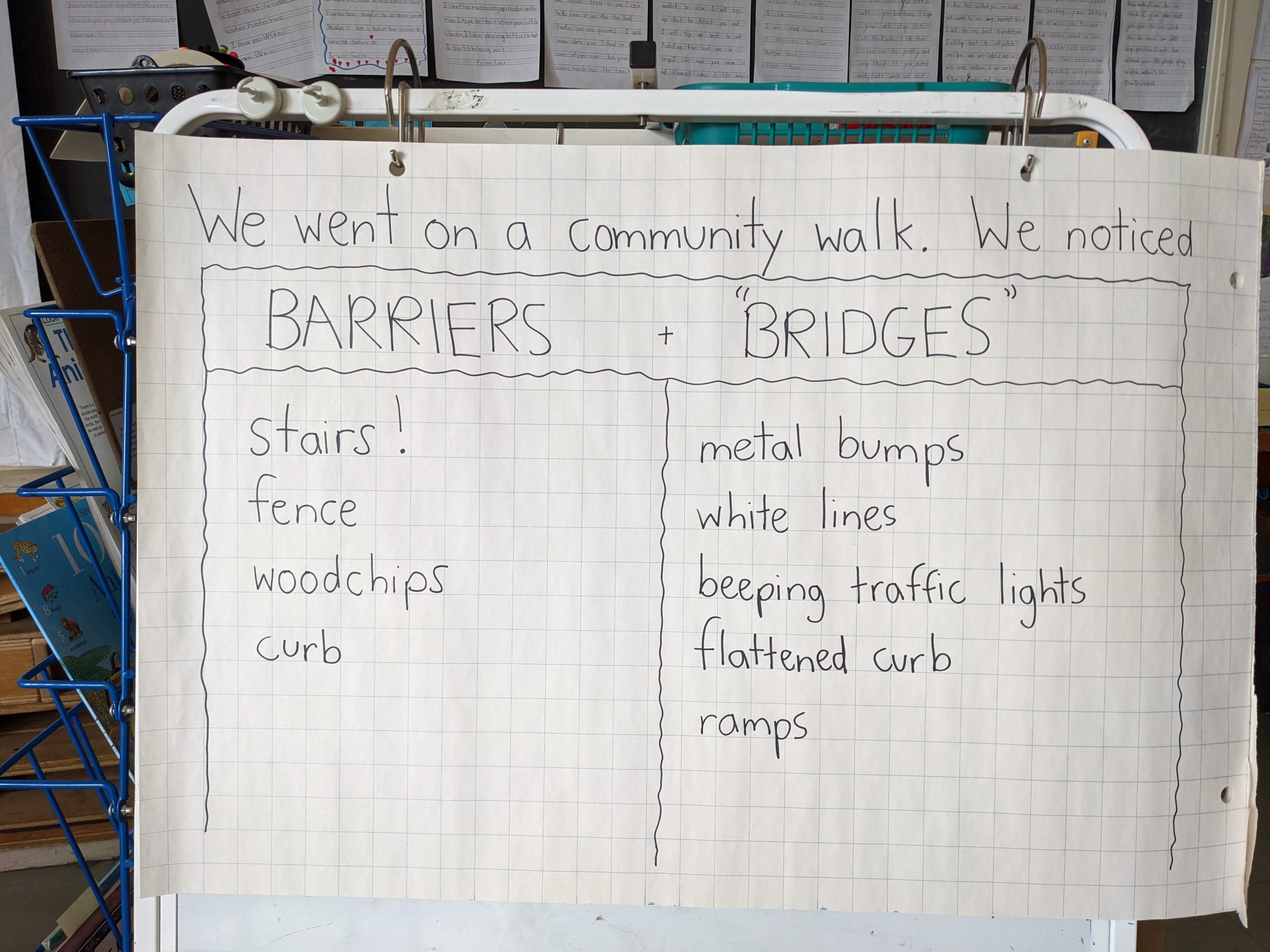
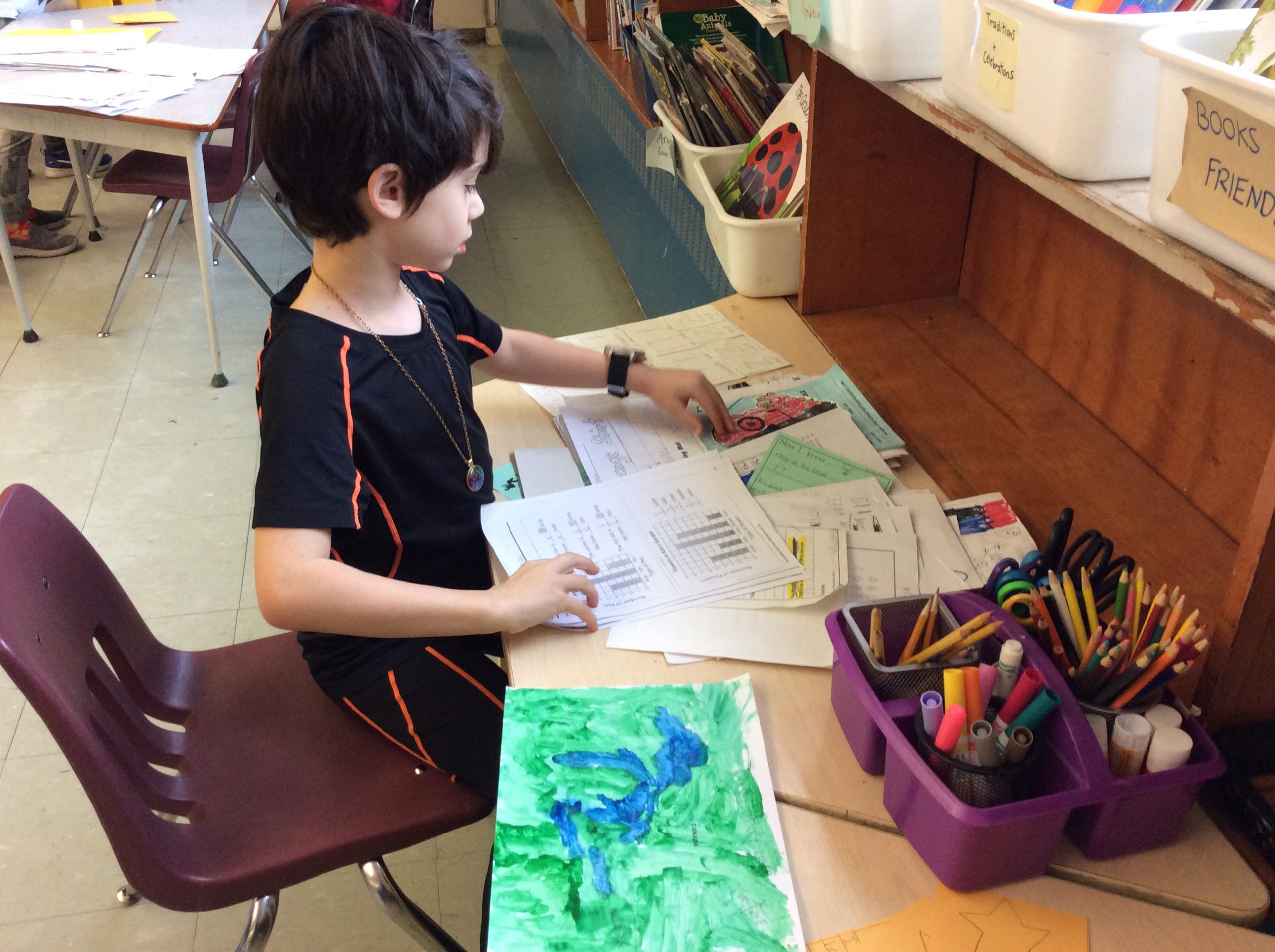
Every week, during MSI (Math-Science Investigations) the Grade 2 students solve problems using a variety of building materials. As part of the Science curriculum, we are learning about Movement and Simple Machines. We started this inquiry when we were face-to-face and finished on-line.  We have integrated this learning with disability justice, equity and community activism. For example, we went on a walk and collected data about barriers and “bridges” in our local community. Then, the Grade 2 students designed inclusive playgrounds where everyone is welcome.

Here are some other examples of how we are deepening our understanding of Structures and Mechanisms, and making connections to the local and global community.

World Water Day:
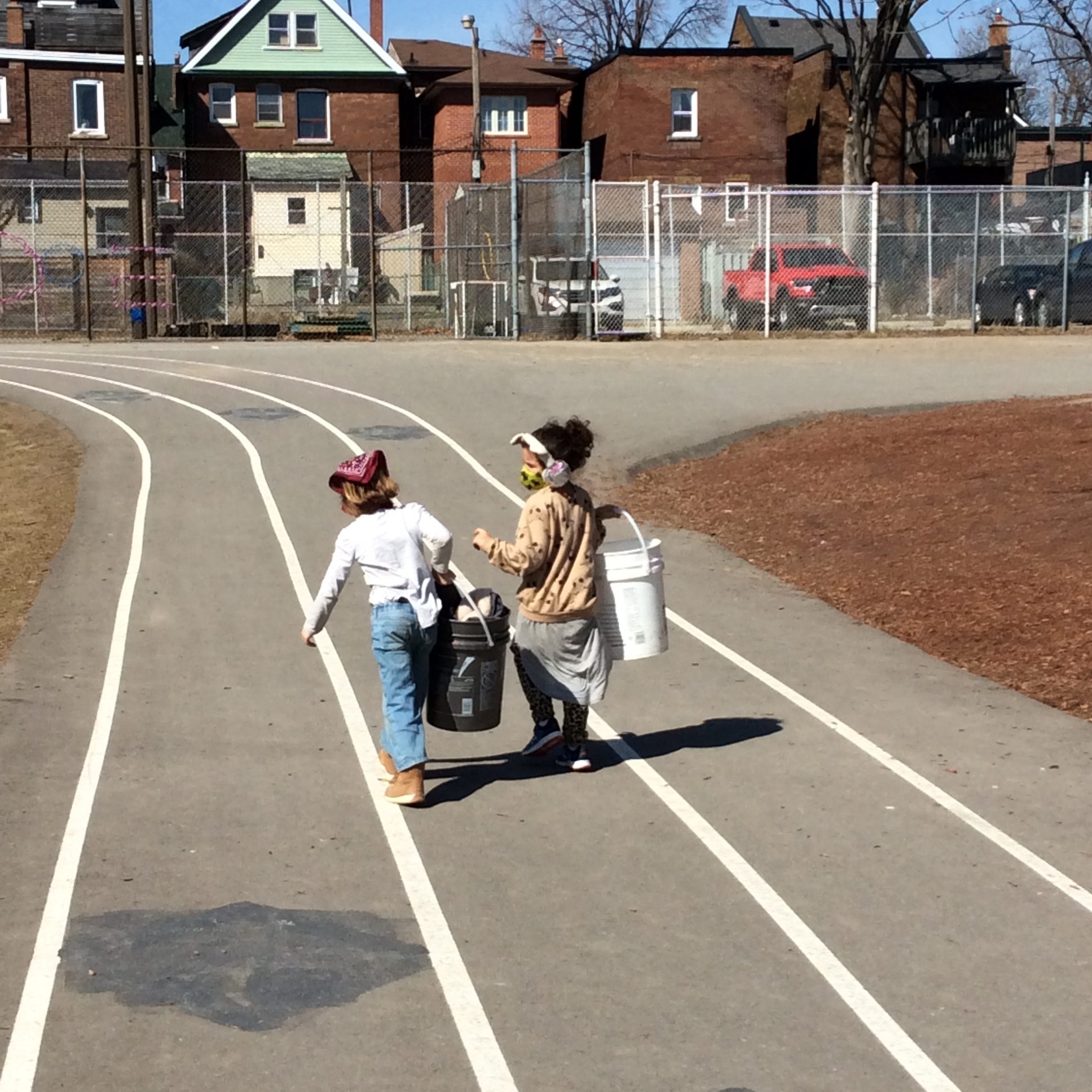
We celebrated World Water Day on March 22, as part of our year-long inquiry about water. Throughout the year, we have explored a variety of texts, including resources from The Junior Water Walker website. After reading “The Water Princess” by Susan Verde and “Anna Carries Water” by Olive Senior, our class simulated the experience of carrying a bucket around the track for 1 km, to represent the journey taken by girls and young women every day.


Then, we used building materials to investigate: How might you move water from one place to another?

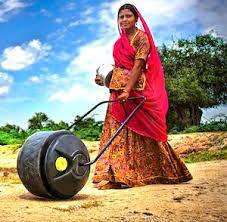
We learned about a simple machine that was invented to help families carry water in rural India. We watched a YouTube video about The Wello Water Wheel, and talked about the impact it might have.


Toy Day:
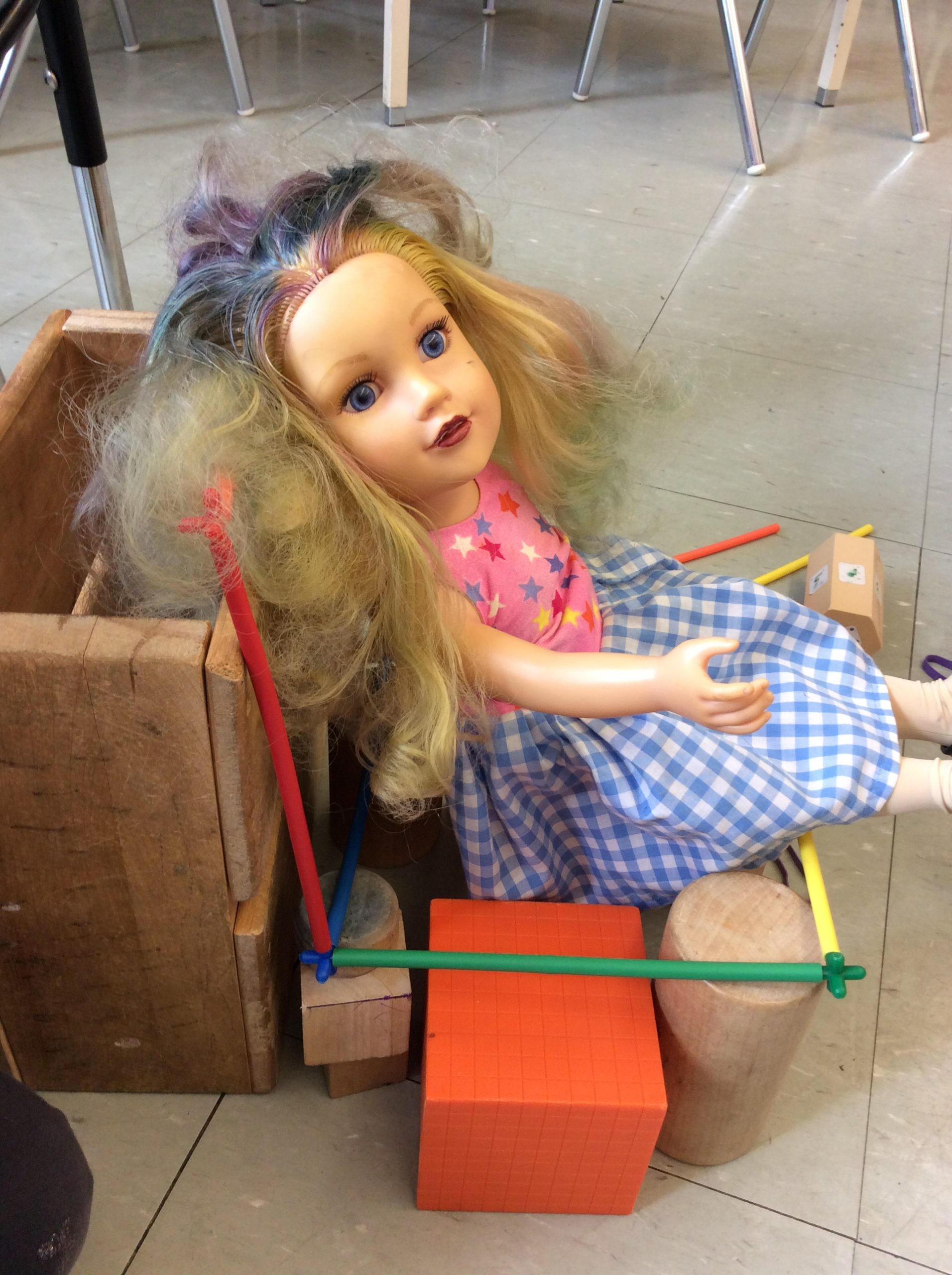
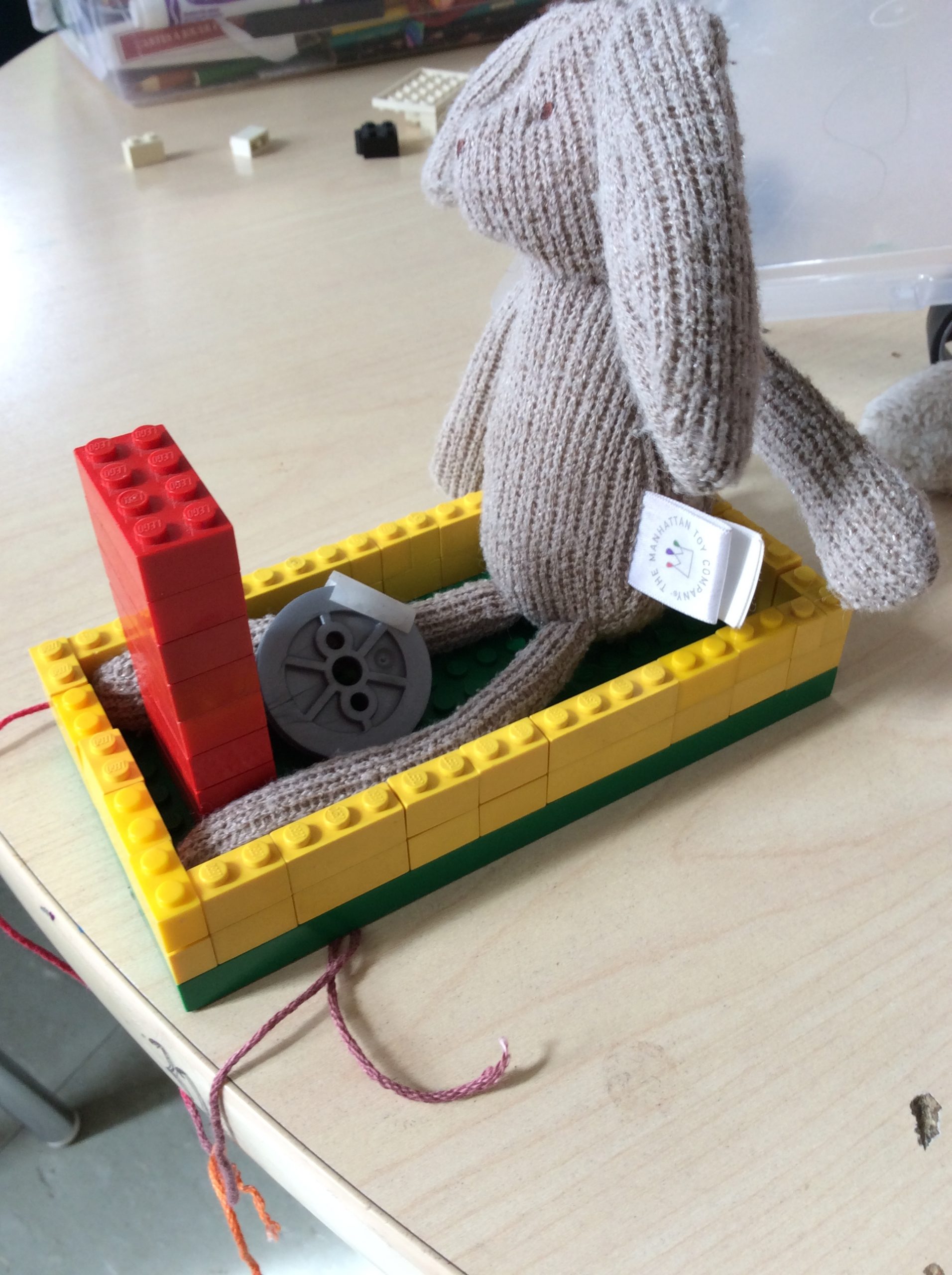
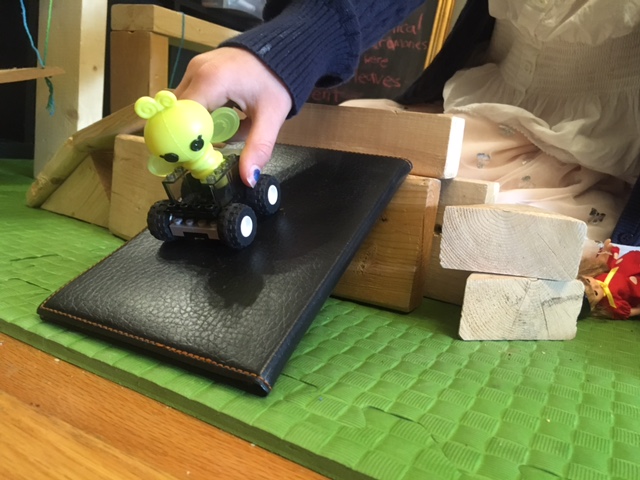
On Toy Day, the MSI challenge was: Design a structure that moves or helps your toy to move.

Freda made a wheelchair for her doll.  Svea made a sled.

After building, we watched this video:
Science Max: Simple Machines

Outdoor Learning:
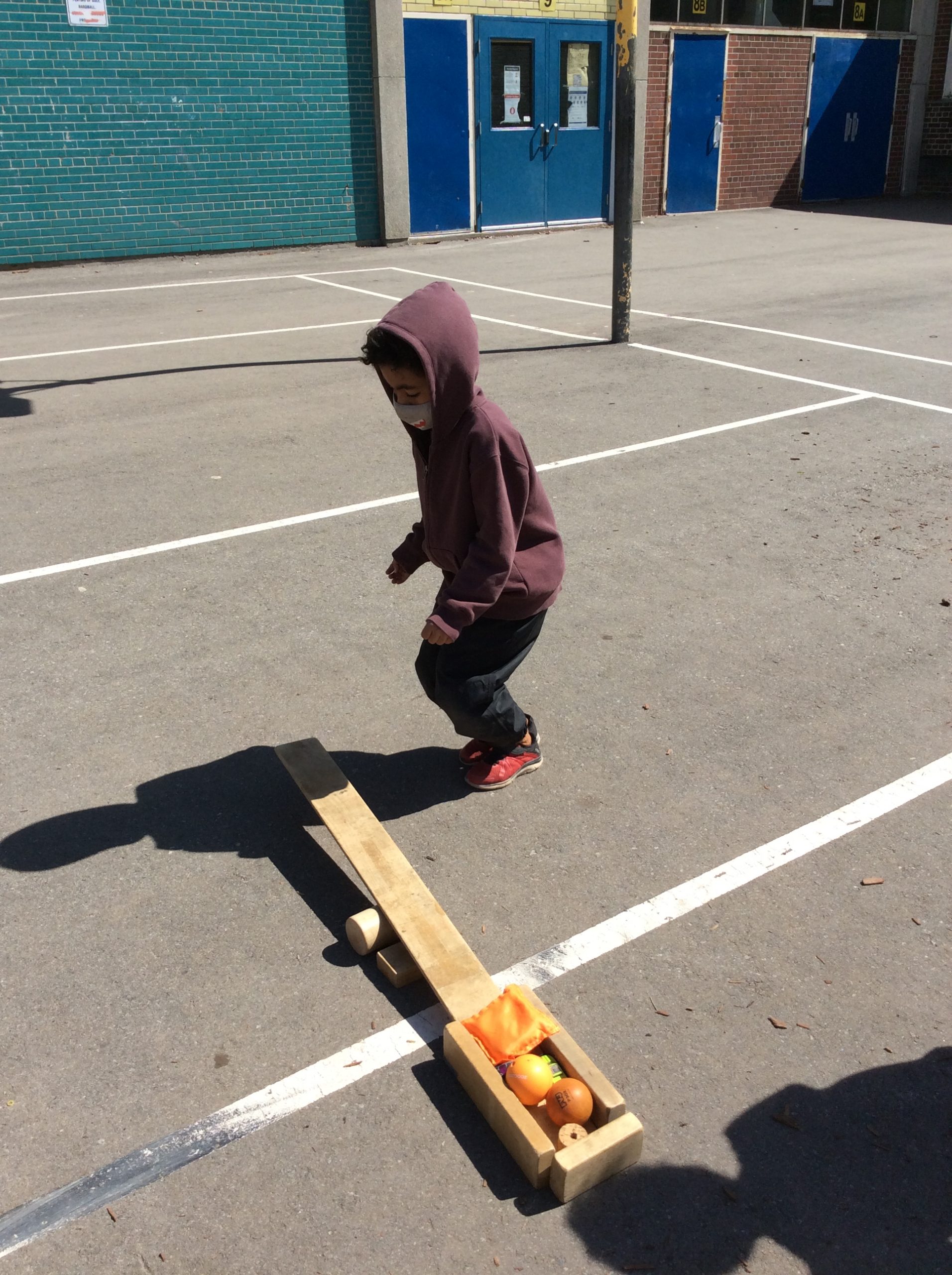
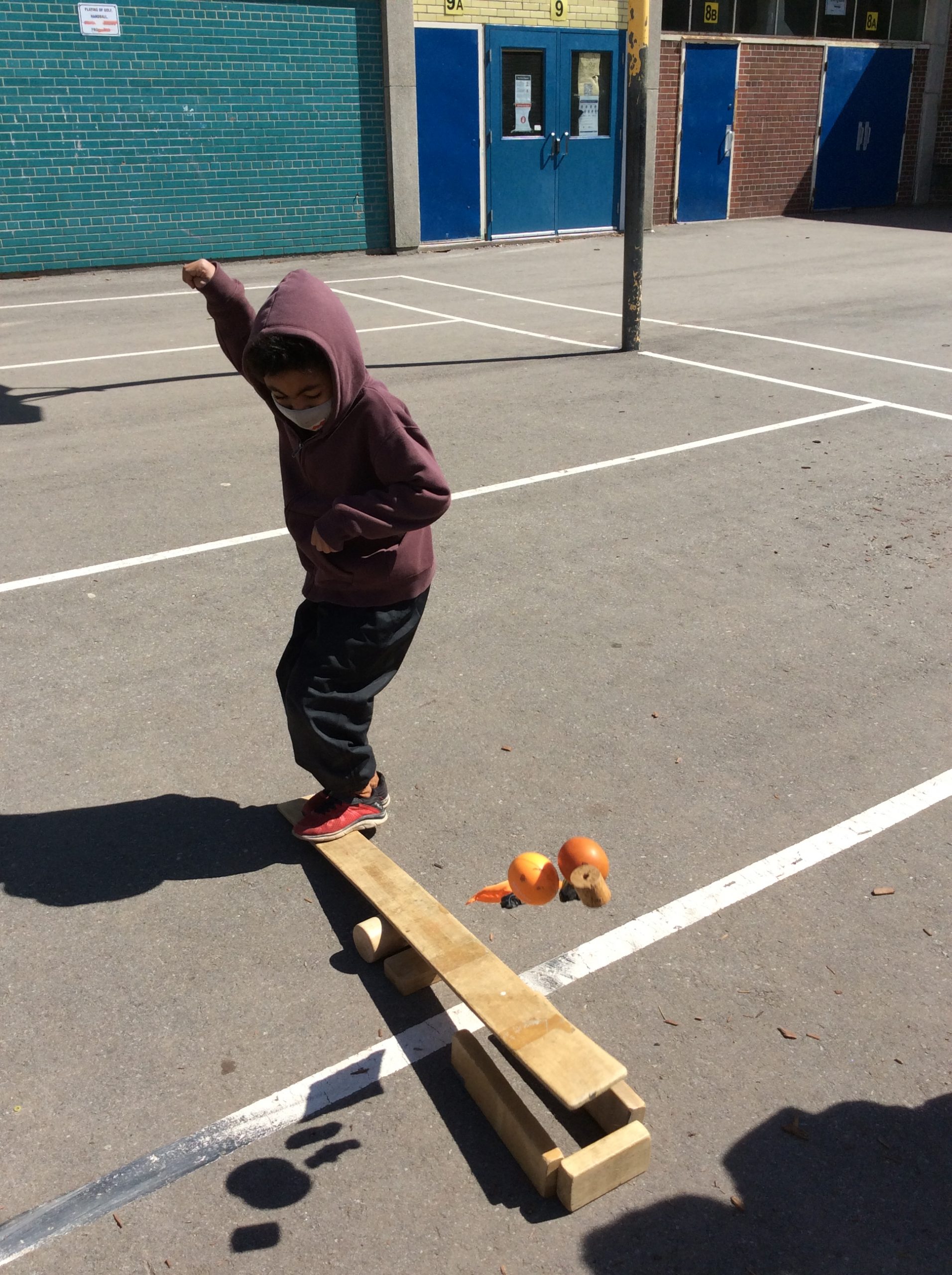
One day, we collected materials to bring outside to investigate simple machines. We worked with partners to explore: How might you use ramps and different balls to investigate levers and inclined planes?

Before schools went back to on-line learning, we went on a Community Walk.  I invited students to think about: “How might we make our community more accessible?  What are some of the barriers and “bridges” in our community?”  Students worked together to draw, write and collect data on clipboards.  We found ramps made by StopGap Foundation, and followed up our walk by reading books about children with different abilities.


Inclusive Playgrounds:
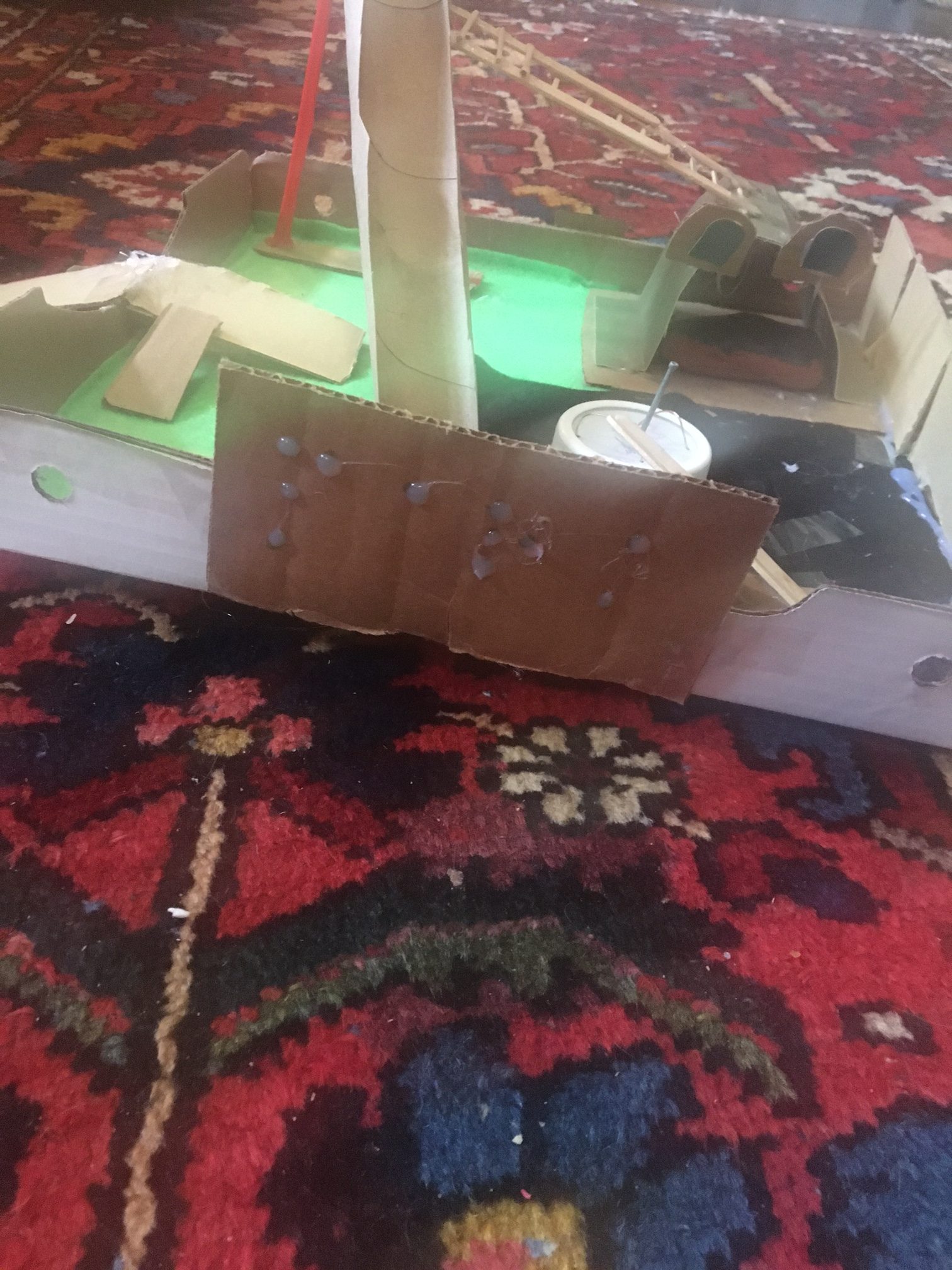
The summative task was: Design and build a model of an inclusive playground that includes a simple machine. The equipment must move a person up and down, or round and round or back and forth.

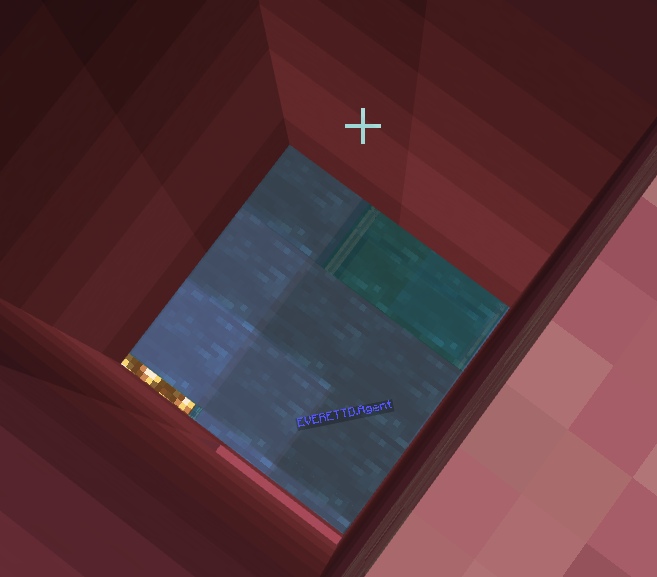
Students used a variety of materials to build their inclusive playgrounds, including Lego, recycled materials, clay, and Minecraft. Before building, everyone was encouraged to make a plan and draw their designs. Everyone worked on their project off-line and came together to share their VIP: Very Important Projects at the end of the week.

Clem used a glue gun to spell “PARK” in Braille letters.  Avery included an elevator.


Oral presentations have been an effective way to connect, share ideas and feedback, and assess students’ understanding. Technology/Being on-line has created space to hear each other, share our screens and look at photos of our work up close, and invite others into creative Minecraft worlds.  These integrated learning activities were engaging, fun, creative, and provided meaningful opportunities to explore inclusive design and disability justice.  


The Importance of Trust

The COVID-19 pandemic has led to uncertainty and change in education.  Just when I think I have a handle on the way things are going to go for the week there is a Government announcement that changes the plan.  I am “pivoting” so much I have motion sickness. When decisions that affect a work environment seem to be constantly changing, trust becomes more important than ever.  In a recent video “How Leaders Build Trust,” author and leadership thought leader Simon Sinek, describes trust:  “Trust is a feeling. It is earned and evolves based on a series of actions that prove that you are worthy of trust.  It creates a sense of belonging.  When you don’t feel trust or without a circle of safety, we inherently concern ourselves with our own survival and become cynical, selfish and paranoid.  You become convinced that everything is trying to hurt you.  We do things to protect ourselves.”  In her book “Braving the Wilderness”, author Berne Brown says that “in the absence of communication we make up stories and the majority of what we tell ourselves isn’t true.  In fact, our brain goes into self-protection mode and those stories that we make up are often exaggerate our worst fears and insecurities.” It is hard to learn or work when you are in self protection mode.

In learning more about culturally relevant and responsive pedagogy, I have noticed that a common keystone element in what I’ve been reading is that trust is crucial to creating a truly inclusive classroom.  In the famous YouTube video “Every Kid Needs a Champion” educator and speaker Rita Pierson stated, “Kids don’t learn from people they don’t like.”  I would go one step further to say that even more so, kids aren’t likely to learn from people they don’t trust.

So how do we create an environment of trust in which students can be their absolute best? More specifically how do we do this at a time when we are teaching students over Google Meet, through a PPE shield and mask or even through video that students watch asynchronously? I think that we do it the same way we would in a pre-COVID classroom.  One small interaction at a time.  I recently experienced an a-ha moment while engaging in a webinar called “The Neuroscience of Trust” presented by Dr. Rumeet Billan.  According to Dr. Billan; “Trust is something that has to be given to you and needs to be earned.”  Trust is something that comes from repeated behaviours that demonstrate that we are worthy of trust.  When we repeatedly demonstrate that we listen actively, show authentic care and empathy, we generate trust.  When we provide opportunities that deliberately and intentionally extend trust, such as giving students voice and choice in their learning, we generate trust.  When we provide actionable and meaningful feedback to students and celebrate their learning goals with them, we generate trust.  When we provide learning opportunities for students to make mistakes, when we celebrate the learning from mistakes and provide an opportunity to try again, we generate trust.  When we genuinely demonstrate transparency with students such as admitting to not knowing all of the answers about a concept or sharing times where we have failed and persevered, we generate trust.

Creating an environment of trust with our students and with our colleagues is something that we have to work on daily. It is currency that we build up with one another to draw on in a time of need.  I think of creating an environment of trust like learning how to play a musical instrument.  You cannot learn to play an instrument by practicing for seven hours straight.  You need to practice daily in order to become truly proficient.  When you don’t practice, you get rusty.  When things in my classroom feel as if they are particularly stressful or students are exhibiting behaviours that are uncharacteristic, I usually come to the realization that it is because  trust has eroded between us.  It might be that I haven’t been recognizing their accomplishments as readily.  It might be that I haven’t been giving them challenging opportunities to learn that extends trust to them to persevere and practice resilience. It may be that I haven’t followed through on something that I said was going to happen.  When I come to those realizations I have to go back to the student and repair that trust. Ignoring the event will only widen the gap. If we want kids to be innovative, creative and take risks a psychologically safe space with mutual trust is essential.  It doesn’t happen overnight but by making it a priority, amazing learning will happen.

Point of View

This month, we are exploring different points of view through reading and writing a variety of texts. This “big idea” has many possibilities for critical thinking and cross-curricular integration with Media Literacy, Social Studies, Science, Visual Arts, Music and Drama.

In my Grade 2 class, we have used point of view to explore issues of accessibility, anti-Black racism, Indigenous sovereignty and homophobia. Here are some of the texts that Kindergarten-Grade 8 educators can use when learning on-line and in class:

William’s Doll
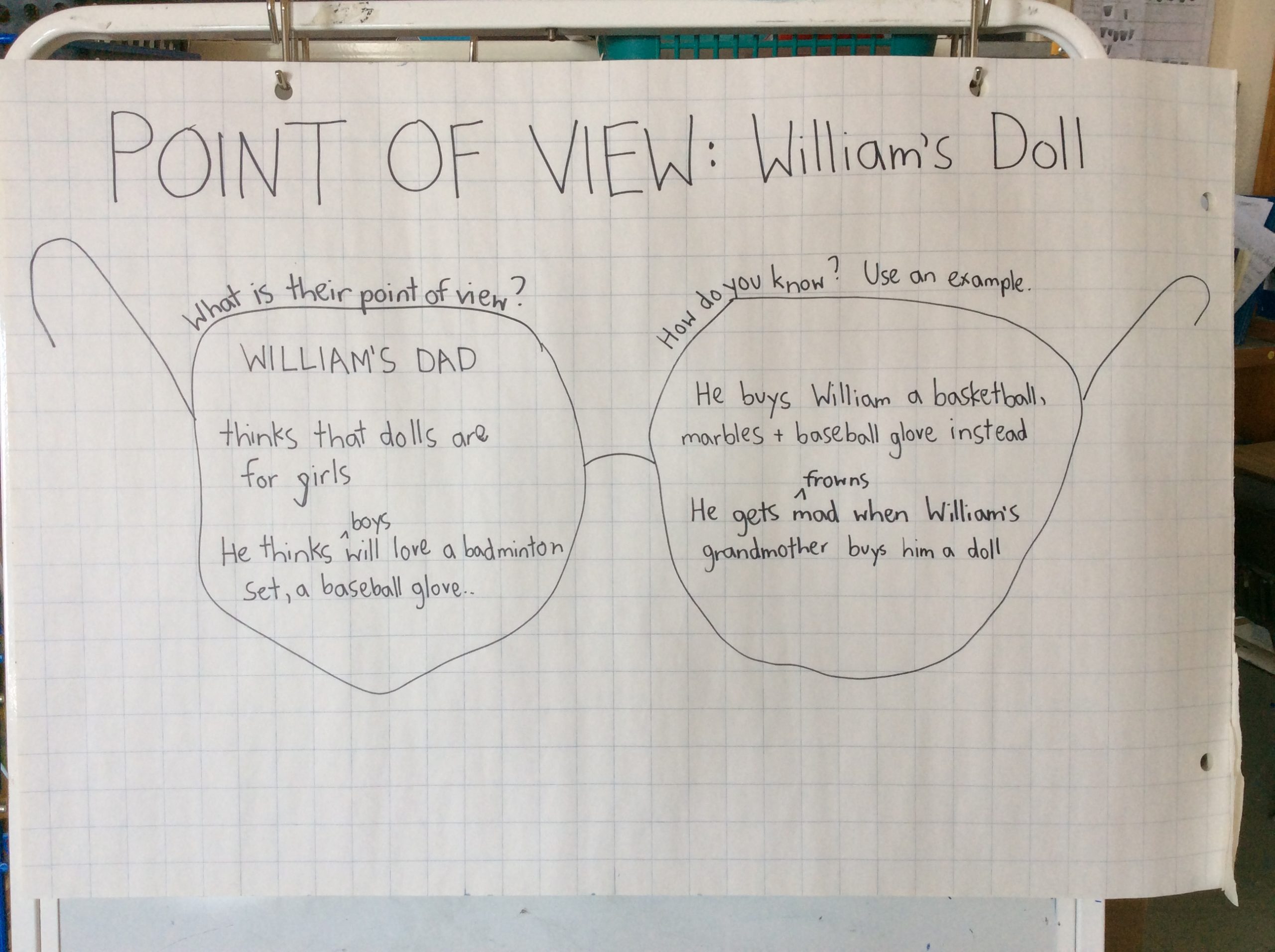
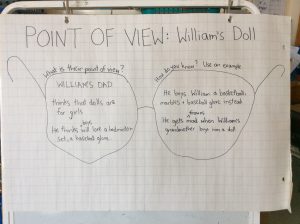
During Gender Splendour Week, we read “William’s Doll” by Charlotte Zolotov, to explore gender stereotypes and homophobia. We also watched a video from the movie, “Free to Be You and Me” that sings the story as a song. “William’s Doll” is about a boy who wants a doll to play with, but he is told that he cannot have a doll because he is a boy.

Young children receive powerful messages from family, media, clothing and toy stores about what is expected of “boys” and “girls.” These binaries reinforce heterosexism, and often cause harm and exclude students who do not fit into these boxes. It is important to give children the opportunity to name, question, and challenge these gender binaries, and create space for more possibilities.

Before reading “William’s Doll”, I asked students to share their ideas about what it means to be a “boy” and a “girl.” We talked about what a “stereotype” is and how these ideas might not include everyone. Students easily made connections to their own personal experiences of shopping, and described how different products are sorted and sold, (e.g., pink Kinder Eggs for girls). After reading, we used a graphic organizer to support our ideas with evidence from the text.  Then, students wrote about different points of view expressed in the text.  
Of Course They Do!
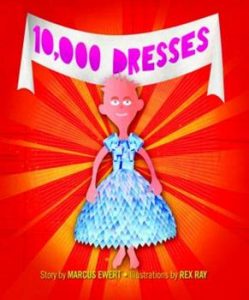
On the International Day of Pink, we continued to have courageous and critical conversations about how schools can be more inclusive, and how we can take action as allies. After reading texts such as, “Of Course They Do! Boys and Girls Can Do Anything” by Marie-Sabine Roger and Anne Sol, and “10,00 Dresses” by Marcus Ewert, students talked about their experiences of being told they couldn’t do something because of their perceived gender. For example, boys with long hair shared their experiences of being challenged in the washroom. We focussed our discussion on how we might respond to questions and/or suggestions that we don’t belong. We used Drama and role-play to practice naming and responding to behaviour.
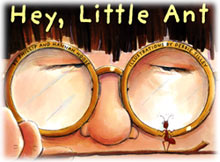
Hey, Little Ant!
“Hey, Little Ant” by Hannah Hoose and Phillip Hoose, is a story about a kid who is about to squish an ant. The story is told from two different points of view. On each page, we hear the voice of the kid and a response from the ant. The story ends with a question, which is a great prompt for discussion and writing, “What do you think that kid should do?”

This story is a great opportunity to explore empathy and compassion, and students’ relationships with animals. “Hey, Little Ant” also includes a song, which can enrich the text. After reading, students wrote about the different points of view in the story, and then wrote about their own point of view.

The Tree
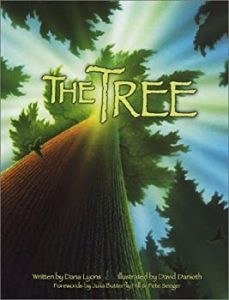
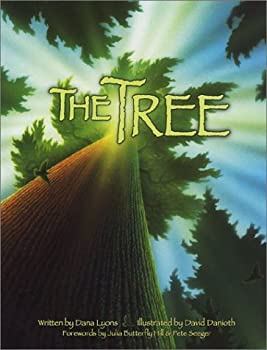
“The Tree” written by Dana Lyons is written from the point of view of a tree in the Pacific Rainforest. After writing and sharing the story, the author learned from elders of the Lummi Nation, the original inhabitants of San Juan islands, that he has written the tree’s song. Every tree has a song.

We listened to “The Tree,” drew pictures and shared stories about trees that are important to us. Then, students wrote their own poem or song from the point of view of a tree. We used sentence prompts, such as: “I live….” “I hear….” “I have seen….” “My favourite season is…..” “I wonder….” “I hope…” I found a video of Dana Lyons singing the text as a birthday present for Jane Goodall. I hope we will be able to turn our text into songs!

The Council of All Beings
I am always inspired by my teacher friends! Maria Vamvalis is currently working on her PhD, and shares her learning about climate justice with Natural Curiosity as a mentor coach. We took a course together at OISE, and Maria shared how she has used “The Council of All Beings” to allow students to connect with land and speak in-role from the point of view of other life forms, including animal, plant or natural feature, (desert, forest, etc). This article written by Joanna Macy describes the process.

I am learning that the purpose of the Council is to listen and give voice to land, which includes animals, plants, air, water, soil, etc. The process honours our shared responsibilities and relationships with more-than-humans, and helps us to remember and reconnect with land. It requires guidance and thoughtful facilitation. It sounds like a powerful teaching and learning experience.

Joanna Macy explains: “The Council unfolds in three consecutive stages. First, the beings address each other, telling of the changes and hardships they have experienced.” The second stage creates space for humans to hear from the more-than human beings directly. A few students remove their mask and are invited into the centre of the Circle to listen. The third stage of the council involves the other beings offering gifts to the humans. “As ritual guide I might cue this stage by saying, “Many humans now realize the destruction they are causing; they feel overwhelmed and powerless in the face of the forces they have unleashed. Yet our fate is in their hands. O fellow-beings, what strengths of ours can we share with them, what powers can we lend them?” With this invitation, the beings in the Council begin spontaneously to offer their own particular qualities and capacities. After speaking, each leaves their mask and steps in the centre as humans to receive gratitude and gifts. There is opportunity for singing, dancing and release, as well as reflection and stillness.

I think “The Council of All Beings” would enrich any Earth Day celebrations, and/or National Indigenous Peoples Day. I believe it could be adapted for on-line learning, and would be a powerful collaborative and creative experience for all members of the school community, including families.

People’s Tribunal on the Coronavirus Pandemic
I have a new subscription to “Rethinking Schools”, which is an excellent magazine about social justice education. In the Winter 2020-2021 issue, Caneisha Mills describes how she organized a tribunal with her Intermediate students to explore responsibility for the COVID-19 crisis in the United States. Some of those on trial include: Mother Nature, Racism, the HealthCare industry, Capitalism, and the U.S. government. You can read the article, “Who’s to Blame?” here.

Caneisha Mills honours student voice and engages students in a collaborative and critical process of exploring the global pandemic from different points of view.  She honours student voice, and creates a brave space for students to “grapple with profound social injustice” and imagine different possibilities. Mills explains that the “most important part of this lesson involves students writing a 10-point program — inspired by the Black Panthers’ 10-point program, adopted in 1966 — on how to prevent crises like this in the future.”

The article includes a clear teaching plan and provides information for educators who might want to implement the People’s Tribunal on the Coronavirus, on or off-line. “This people’s tribunal begins with the premise that a heinous crime is being committed as tens of millions of people’s lives are in danger due to the outbreak of the novel coronavirus — COVID-19. But who — and/or what — was responsible for this crime? Who should be held accountable for the spread of the virus and its devastating impact?”

The teacher plays the role of the prosecutor. Students are assigned different roles, and the “defendants” are supported to work in small groups to develop a defense against the charges outlined in the indictments. A jury is selected, and each group shares their arguments at the trial. There is only one rule: They may plead guilty, but they must accuse at least one other defendant of being responsible. After the jury deliberates and explains their verdict, all students are invited to reflect on the experience. Then, they use their voice to demand and create change.

The tribunal sounds like a meaningful learning opportunity for older students to explore different points of view. I am curious to think about how this might be adapted for younger students.

In your point of view, what are some powerful texts and/or dramatic conventions that you have used in the classroom and on-line?  Please add them to the Comments below.


Grade 4/5 Science in Minecraft: Education Edition

My students and I have really been enjoying exploring how we can use Minecraft: Education Edition to extend our learning. Last month, before we got sent back to the world of online learning, we spent some time diving into a Science task in class.

The basic premise of the task was similar between the two grades: research a topic and build a model of it within Minecraft. Grade 4 students would be choosing one of the animals from Minecraft and creating a viable habitat for that animal in the game, while Grade 5 students would be choosing a human organ system and creating a pathway that would bring visitors through the functions of that organ system. After building their model, they then presented their worlds to the class and talked about the different elements they included.

For Grade 4, they had to consider food chains, predators and prey, appropriate shelter, biomes.

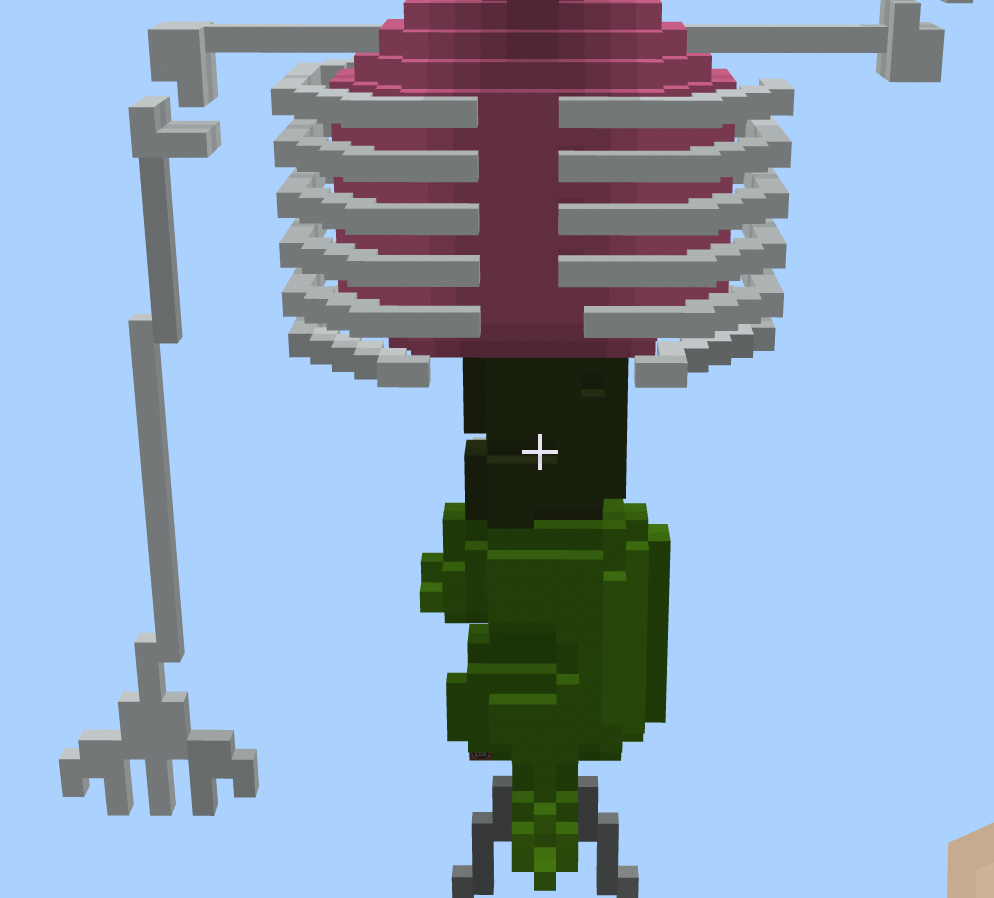
For Grade 5, they had to consider which organs were part of the system, how they’d create them in the game, what their function is and how to show that with a path or railway.

I’ll admit that I wasn’t sure how it would go when we started down this road. I considered that it might be a bit to out there as far as projects go. I should know better by now than to question these kids, though – they dove into this project with excitement and went well beyond my expectations. They enjoyed them so much that today they asked me if they could do another project like this. I’ve never had French Immersion students so willing to do an oral presentation!

Here are a few of their projects that I’d like to share.

Grade 4 Habitats


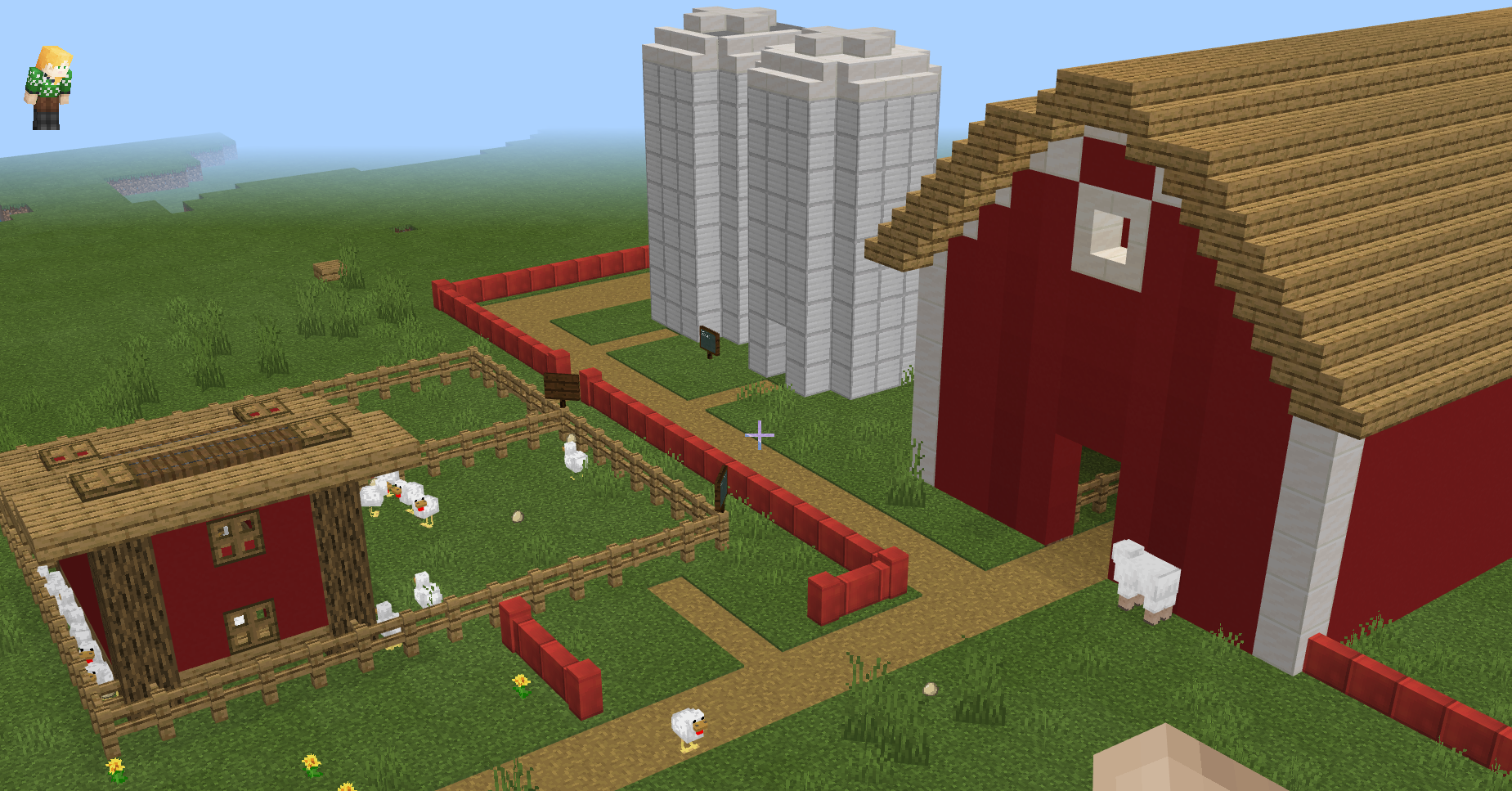
A farm habitat. The students who made this farm talked about the influence of human activity on the animals who live on the farm. There was a food chain demonstration around the side of the barn, with little pens containing different living things set up to walk visitors through the food chain.


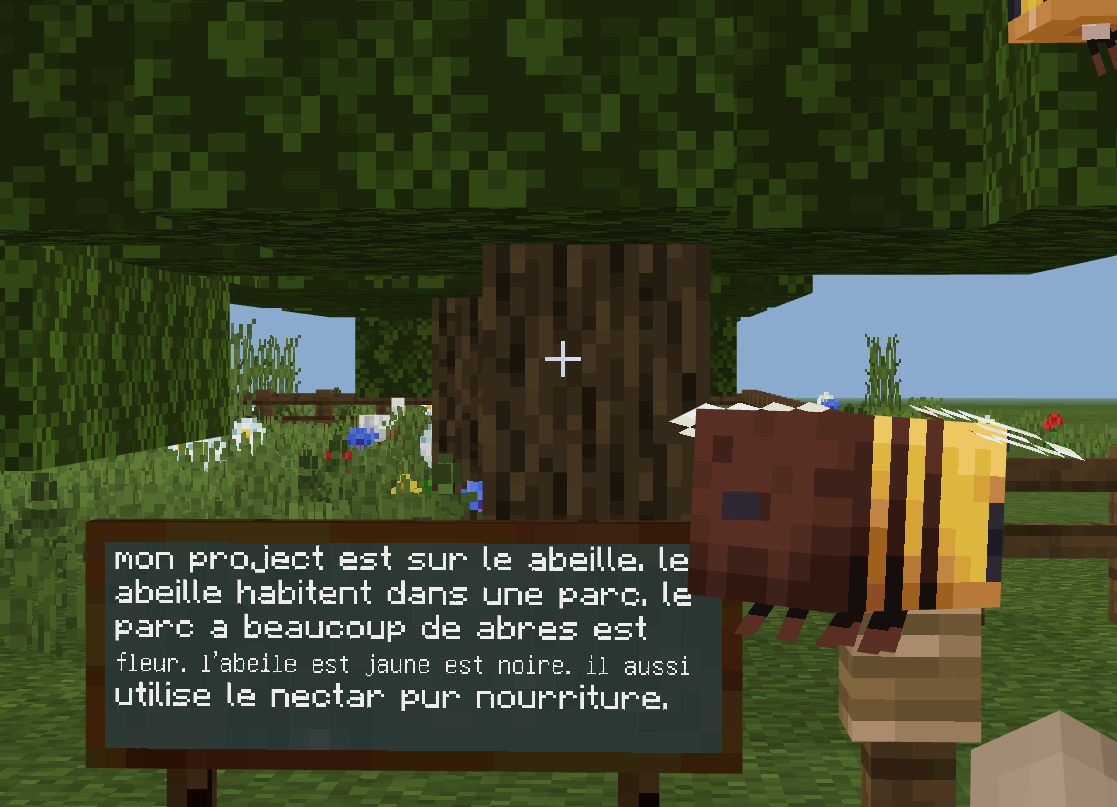
This project was on bees. The students created a park with several wildflower gardens. When you look at the level of French on these signs, consider that I teach middle immersion, meaning this is their first year in French Immersion – and for the student who did this project, it was their first year learning French at all!

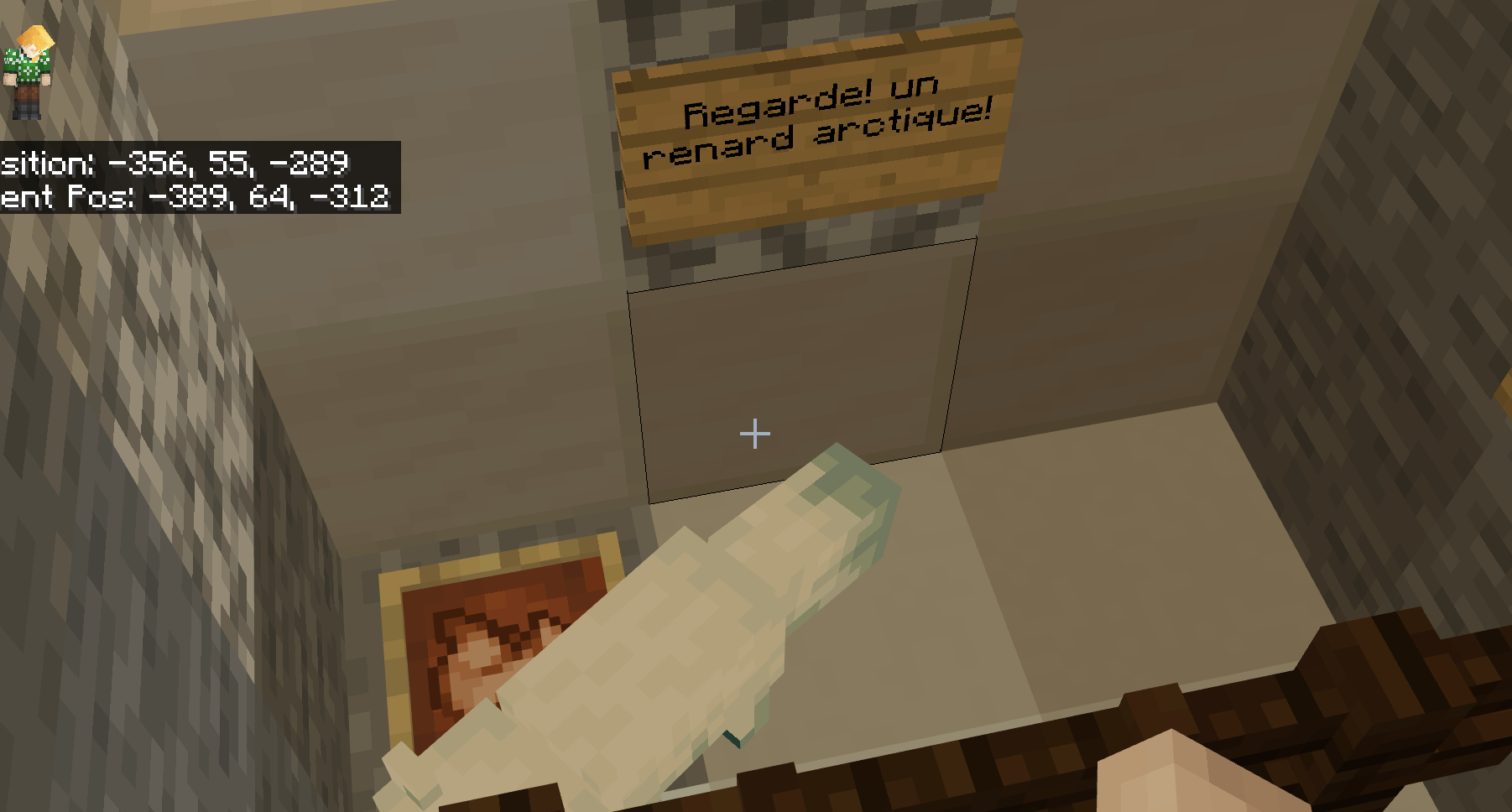
I loved how creative they got with showing what the animals eat. In this project, which was set up to resemble an artificial arctic fox habitat in a zoo, a student put an item frame on the ground and put raw chicken into the frame, making it look as though this arctic fox had been fed by caretakers.

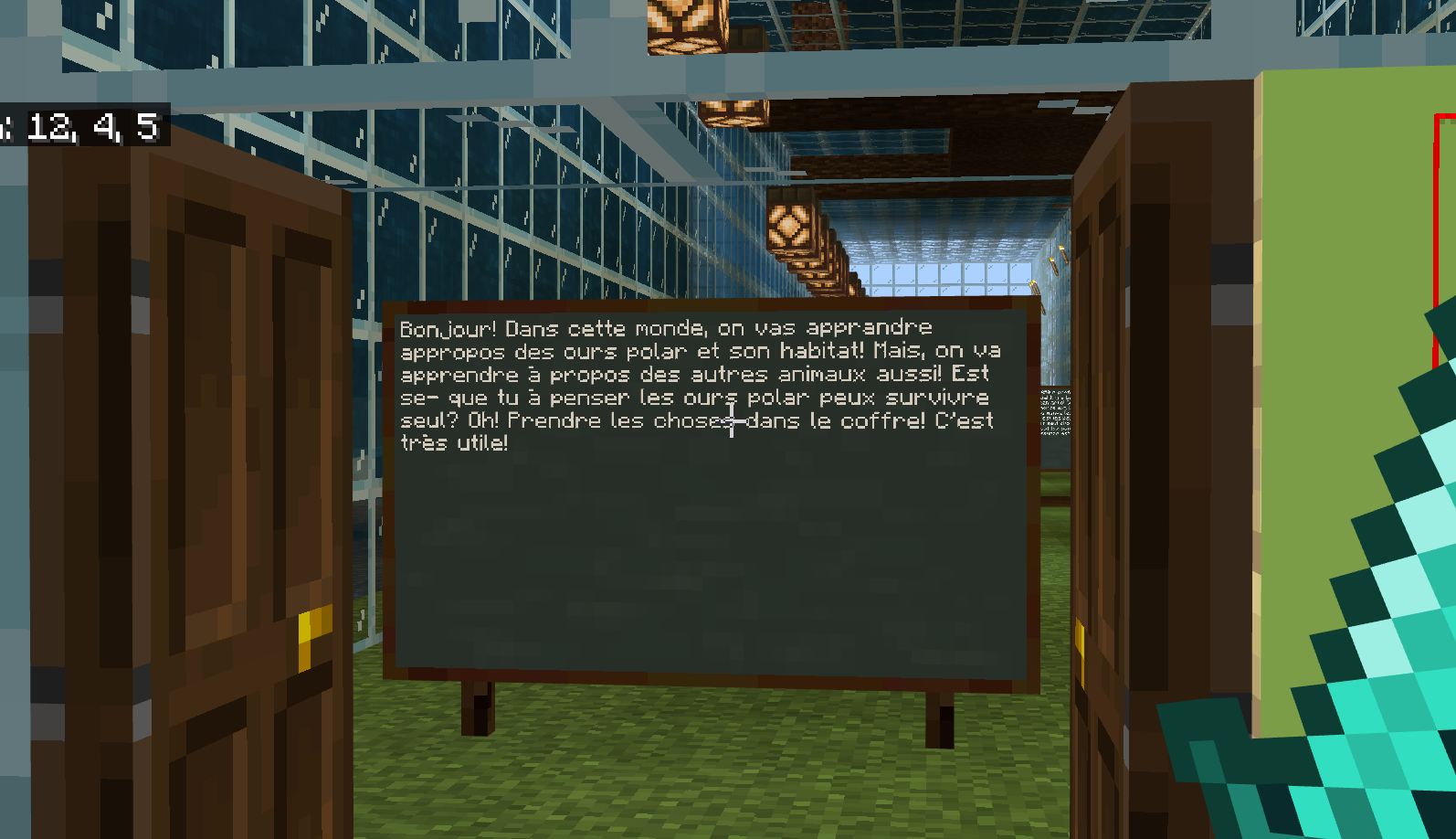
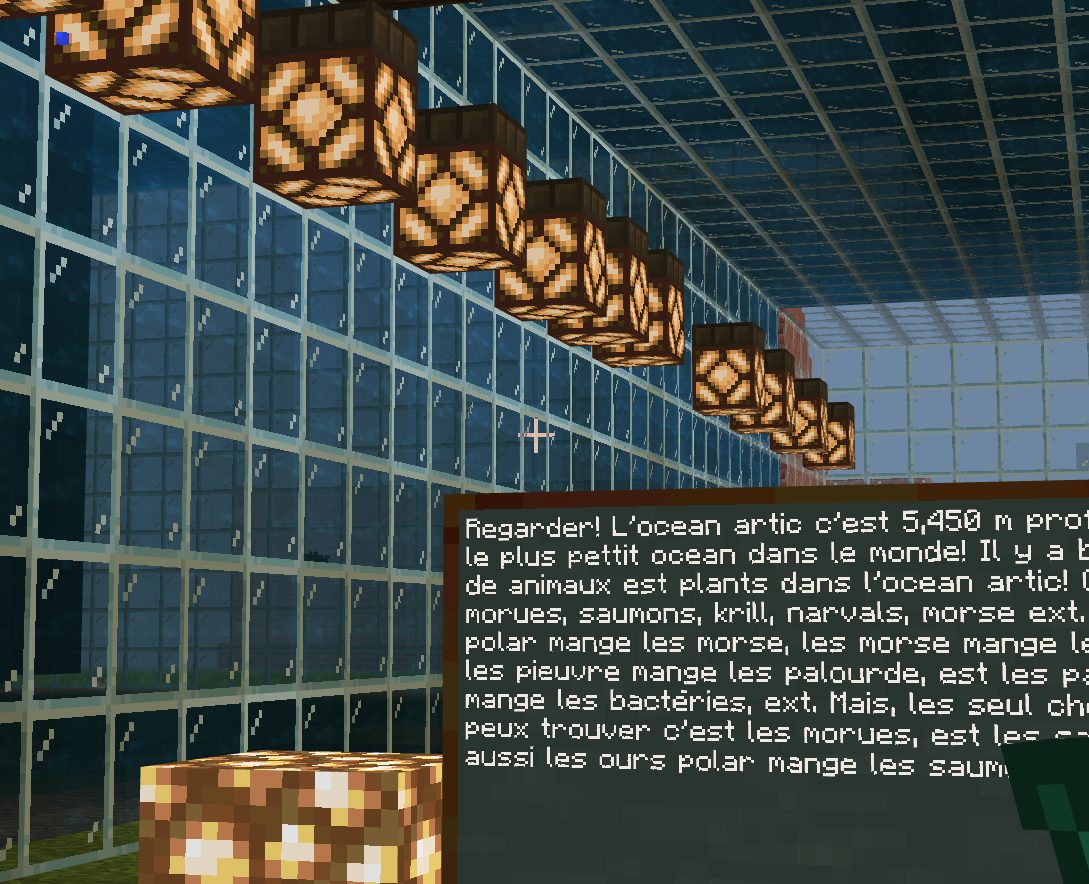
This project was extremely cool. The students wanted to show that a polar bear’s habitat includes both land and ocean. They created a glass tunnel that you could walk through, seeing into an ocean full of fish. In the tunnel, there was a point where you could drop into the water and swim out into the ocean, eventually surfacing in a polar biome where you could see polar bears on land.


Grade 5 Human Organ Systems

Sadly, I don’t have many images of the grade five projects, in part because some of them took a long time to complete and we didn’t have a chance to grab screenshots before we all wound up in online learning! I do have this one really great project, though:

The Digestive System! For this project, you would start in front of a command block that was set to teleport you inside of a mouth full of teeth. Signs on the walls would explain where you were and what part of digestion happens in that area. Then, you’d follow the path down through the esophagus…

If you looked down through the esophagus, you could see liquid below – the stomach! You could then travel from the stomach through the digestive system until, eventually, you would drop out of the human body and into a (fake) toilet.

Another project took us through the nervous system. You started your journey in a minecart at the nose, where you would pick up a piece of paper meant to be a ‘message’ for the brain to tell it that the model’s nose was itchy. You’d hop in a minecart and travel to the brain, which would exchange your sheet of paper for a new message – instructions for the hand to scratch the model’s nose.

The grade 5 projects were a bit more difficult for them to wrap their heads around, admittedly. Still, they persevered and found some very cool ways to show us how human organ systems work.


Other projects we’ve taken on in Minecraft: Education Edition so far:

  • Building a class “town” where each student has a house, plus students are creating important community buildings like a school, a hospital, an apartment building, recreational facilities.
  • Retelling a fairy tale’s important events and places using NPCs.
  • Exploring an Anishinaabe community.
  • Doing a construction challenge with limited resources to learn about environmental impacts of human activity.
  • Regular old Minecraft fun. 😉


Hope you enjoyed this little tour of Minecraft in my classroom. I’m always happy to share more and talk about any of these projects. Now, onto my weekend planning, where I need to figure out how we’re going to use Minecraft: EE in our classroom next week!

“How can I help?”

The adage of “If you want something done right, do it yourself,” was ingrained in me at an early age.  Until recently, I have always thought that being confident, capable and successful meant never asking for help.  I used to think that asking for help meant that you were weak.  I now think that asking for help is incredibly brave.  My 17 year old son recently told me about a group chat with his workmates.  Someone at work had sent an urgent message to the group asking how to do something while closing up the restaurant.  Many of the coworkers poked fun at the lack of knowledge of the person seeking help.  My son (brace yourself for this proud Mama Bear moment) texted that it was really brave of his co-worker to ask for help and provided the information that the coworker needed to close up for the night. I think that his act demonstrated wisdom an empathy far beyond his years.

Have you ever felt a little territorial or protective about your ideas or lessons in your classroom?  I imagine everyone likes to be valued for their unique talents and abilities.  In general, I don’t think anyone likes to be seen to be struggling and consequently, some teachers might choose to work in isolation. Perhaps it is fear. I’ve spoken to many colleagues who have identified as suffering from imposter syndrome. Perhaps those of us who have experienced imposter syndrome think that if anyone else got eyes on what we do every day that we would be judged and found to be lacking in some way.  Often teachers will tell me that they don’t have time to share with their colleagues-there just isn’t enough time in the day to collaborate. With the busy pace of education, I know that I have absolutely felt that way. My experience has been that when I take the time to collaborate with others I in fact, have more time and consequently better programming.  It is a concerted effort and takes a trusting relationship to co-plan and co-teach but when it works, it is amazing.

In my role as an instructional leadership consultant I am responsible for two portfolios; Innovation and Technology and the New Teacher Induction Program.  At the beginning of the COVID pandemic as teachers were teaching virtually for the first time, some had never used things like Google apps, FlipGrid and Kahoot. I was doing my best to support teachers with tools for teaching online.  Thankfully, I knew some other teachers that I could reach out to and ask for help.  These teachers, close to the beginning of their careers, were using these tools in the classroom and were able to help design and present webinars to other more seasoned colleagues.  As teachers, we often think that we need to have all of the answers for our students and with one another.  I’ve heard it referred to as the “Sage on the Stage Syndrome.” We seem to feel that we need to stay ahead of everything, which is impossible.  Education is changing more rapidly than ever.  I learned so much from my colleagues over the months that we worked together as a team and even though it was stressful at times, it was also incredibly fun.  I look back now on the powerful outreach our work had and the gratitude that was expressed by our colleagues and I am so glad that I got over myself and asked for help.

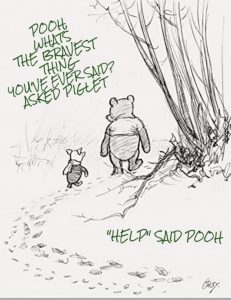
In the t.v. drama “New Amsterdam” whenever the new director of the hospital is introduced to someone, the first question that he asks is, “How can I help?”  It happens in the first episode about twenty times. This was a BIG a-ha moment for me.  What a powerful question!  How often have we wanted our students to ask for help?  How often have they refused when we have asked “Can I help you?”or “Do you need help?”  Unfortunately, asking for help is still seen as a weakness by many people.  However the question “How can I help?” turns it around so that the responsibility and focus is on the person offering assistance.  It is more difficult for someone to just say “No.” to this question.  It can help to create psychological safety in order to focus on what can be done to help rather than someone sitting in discomfort or shame because they won’t ask for help.  Sometimes just asking can make all the difference to someone when they are feeling overwhelmed, even if they decline the offer.  The four small words, “How can I help?” can make a powerful impact.  Sometimes, asking for help is the bravest thing you can do.

“Breathe-in experience, breathe-out poetry.” M. Rukeyser

April is National Poetry Month.

During this challenging year, poetry has supported critical and courageous conversations, offered some comfort and hope, while honouring pain and anger. Here are some examples of what this work has looked like and sounded like in our Grade 2 classroom:

Igniting the Spark: Amanda Gorman
The whole world was inspired by the poetry and brilliance of Amanda Gorman in January 2021. Her poem, “The Hill We Climb” filled us with light during this time of “never-ending shade”. Her story about overcoming a speech impairment reminded us all to believe in ourselves and find our voice. I shared her poem and her TEDTalk with my students, and she was the spark for our inquiry about the power and possibilities of poetry.

Power Poems for Small Humans:
I have reached for poems during difficult times when I could not find the words to express my feelings. Jillian Christmas is a Vancouver-based slam-poet, who is an organizer and activist in the arts community. I have shared her poem, “On Honouring Anger” in response to racial violence and injustice that continues to impact students, staff and families, and requires educators to take action.

This poem, and other powerful voices can be found in an anthology called “Power Poems for Small Humans”, published by Flamingo Rampant. Flamingo Rampant is a micro-press that publishes children’s books that center and celebrate stories of kids taking action, disability pride, 2SLGBTQ+ voices, racial justice and more. Please check out their website and bring their books into your classroom library!

Yesterday, I Had The Blues:
When we were learning remotely, I used the Poll feature on ZOOM to check-in with students. One day, the question was: “How are you feeling today? Choose a colour to describe how you are feeling.” Students were invited to analyse the data, and share why they chose the colour. Then, we talked about different ways that people experience colour. We listened to the story, “Yesterday, I Had the Blues” by Jeron Ashford Frame, and made text-to-self connections.

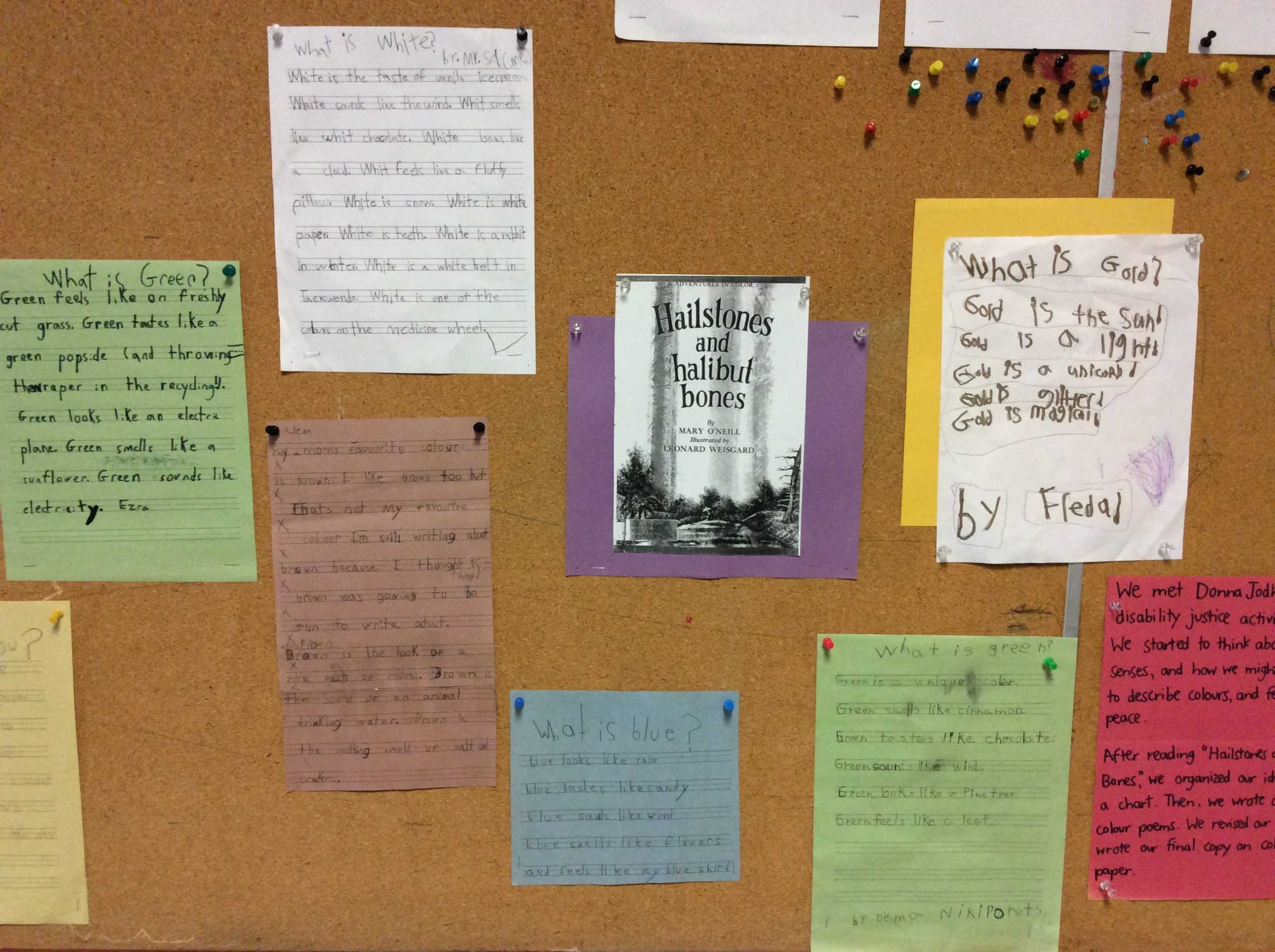
Next, we read selected poems from “Hailstones and Halibut Bones” by Mary O’Neill. I love this book, but it is important to preview the poems, because there is one poem that uses outdated language, and needs to be unpacked or revised. Each poem begins with the same question, (e.g. What is Orange?) and uses the five senses to describe colour in poetic ways. I created a graphic organizer, and students were invited to write their own Colour Poems.

Pink!
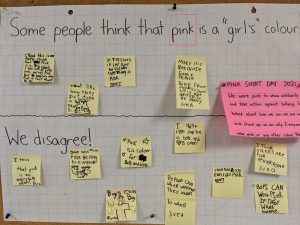
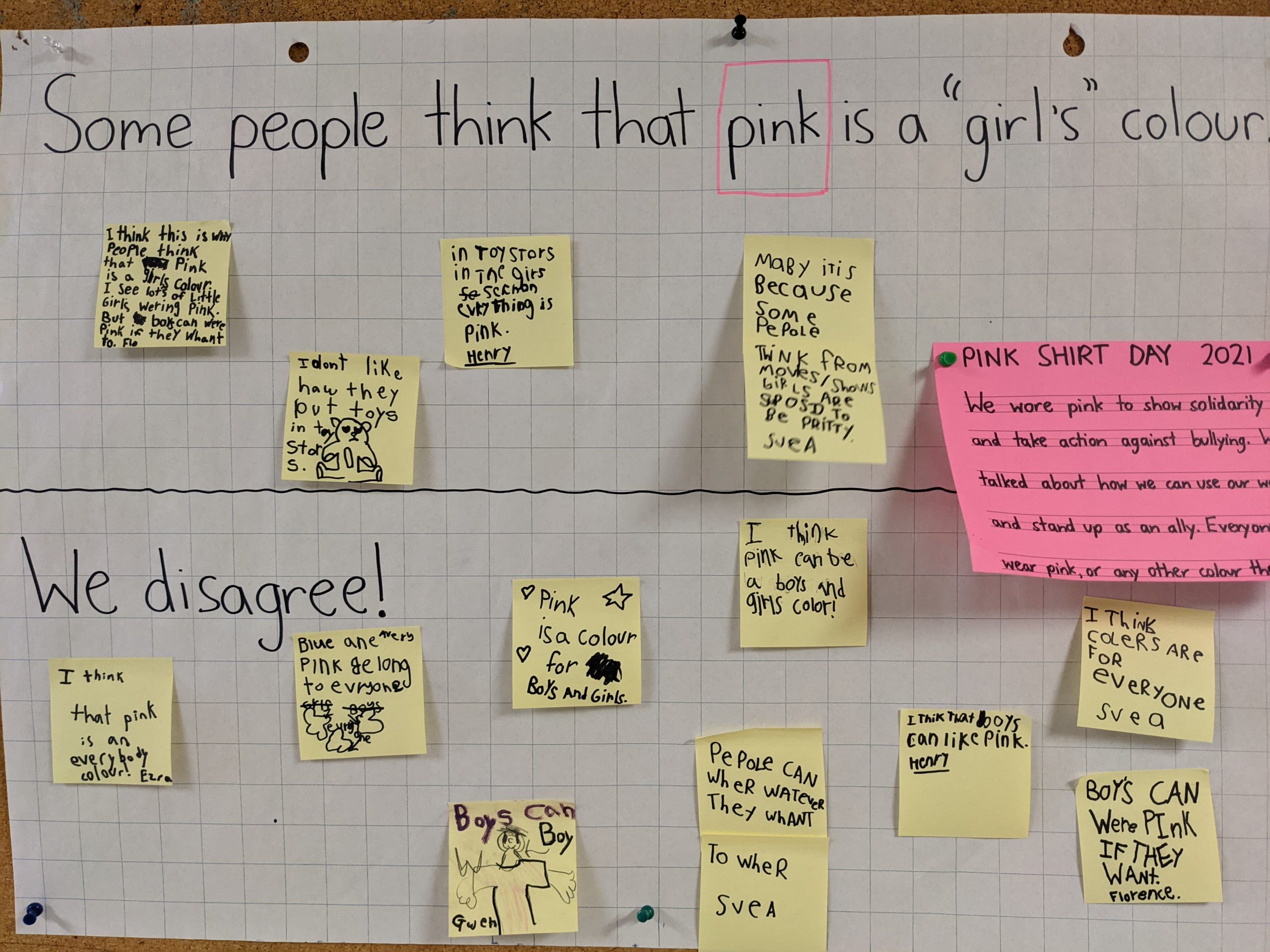
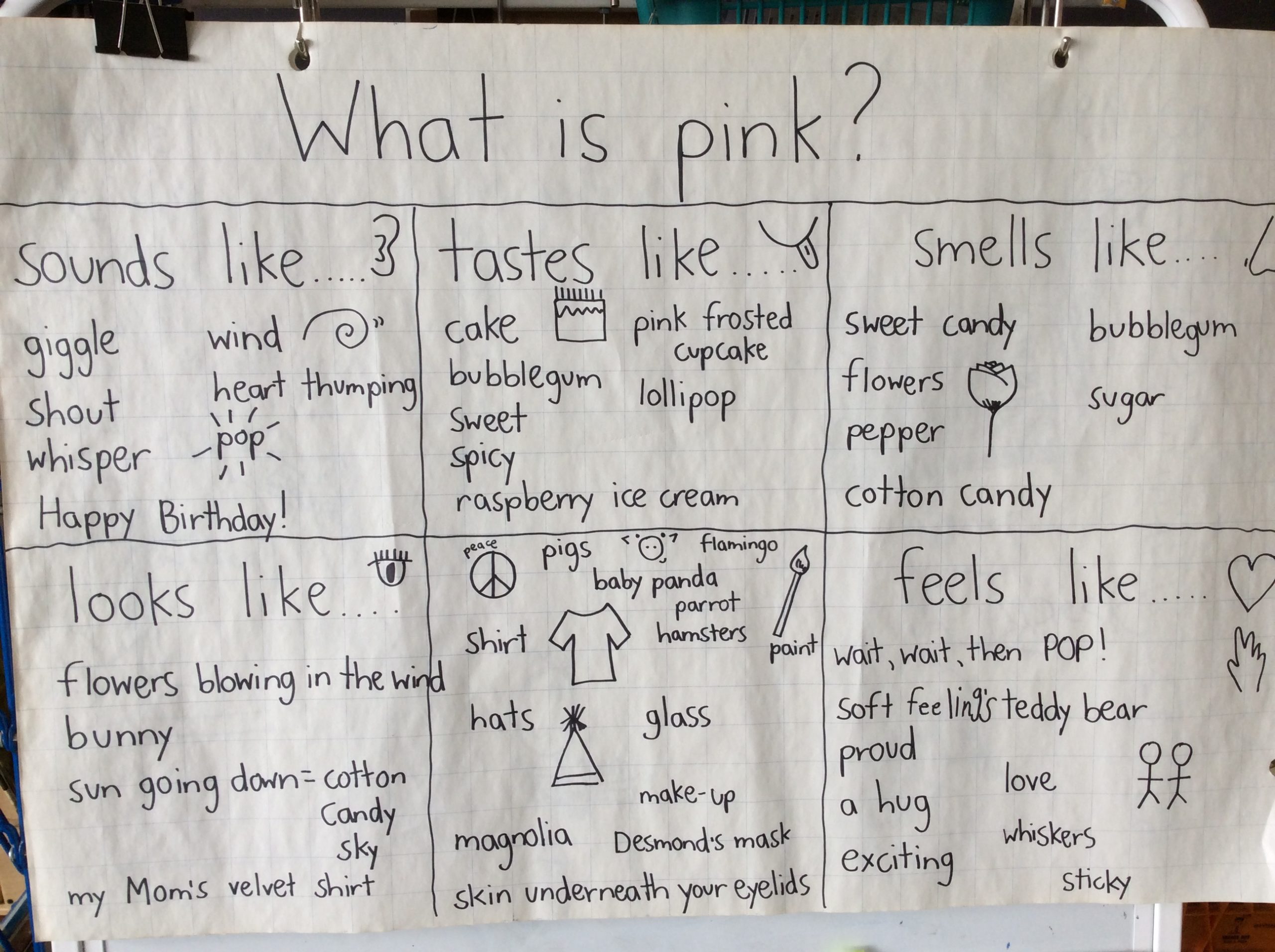
On the International Day of Pink, we had a discussion about how some people think that pink is a “girl’s colour.” We talked about where these ideas come from, and how these gender rules might make people feel excluded. We created a poster using post-it notes to capture our ideas, in the style of a JAMBoard. Then, we wrote our own “What is Pink?” poems and displayed them in the hallway. 


Quick as a Cricket:
After reading, “Quick as a Cricket” by Audrey Wood, students wrote poems using the template, “I’m as ____________as a ___________.” This was a fun and accessible way to learn about the poetic device of similes. A simile compares two different things using “like” or “as” in an interesting or unexpected way.

Gratitude Poems:
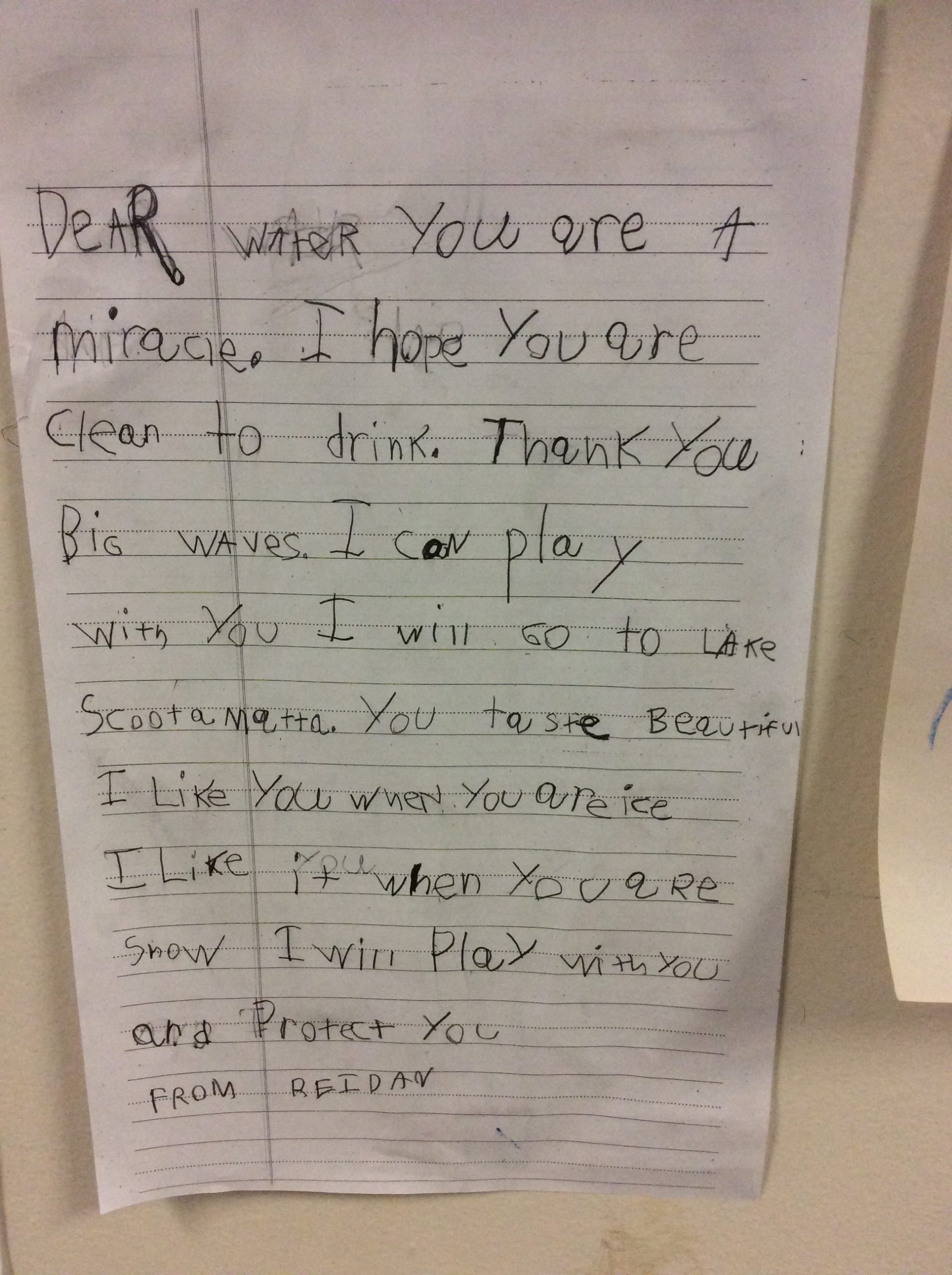
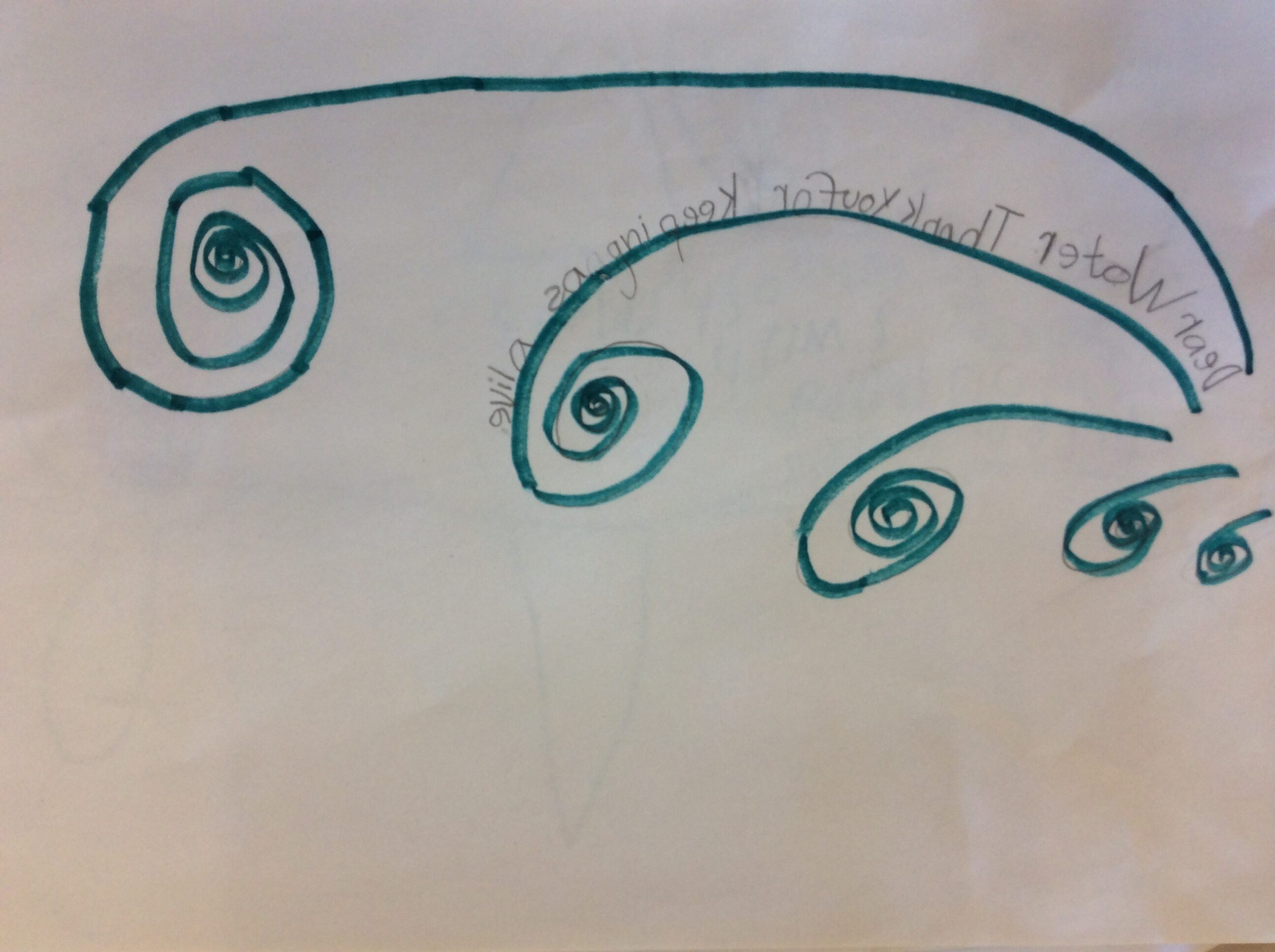
After reading several poems from a collection called “ThankU: Poems of Gratitude”, we wrote our own “Dear Water,” poems. Students used the following sentence prompts to write a letter to our relative: “I love….I think….I will….I hope….You are….” On World Water Day, we read our letters to each other in the Rainbow Garden and talked about what we value, and how we might protect water. 


Splish! Splash! Splat!
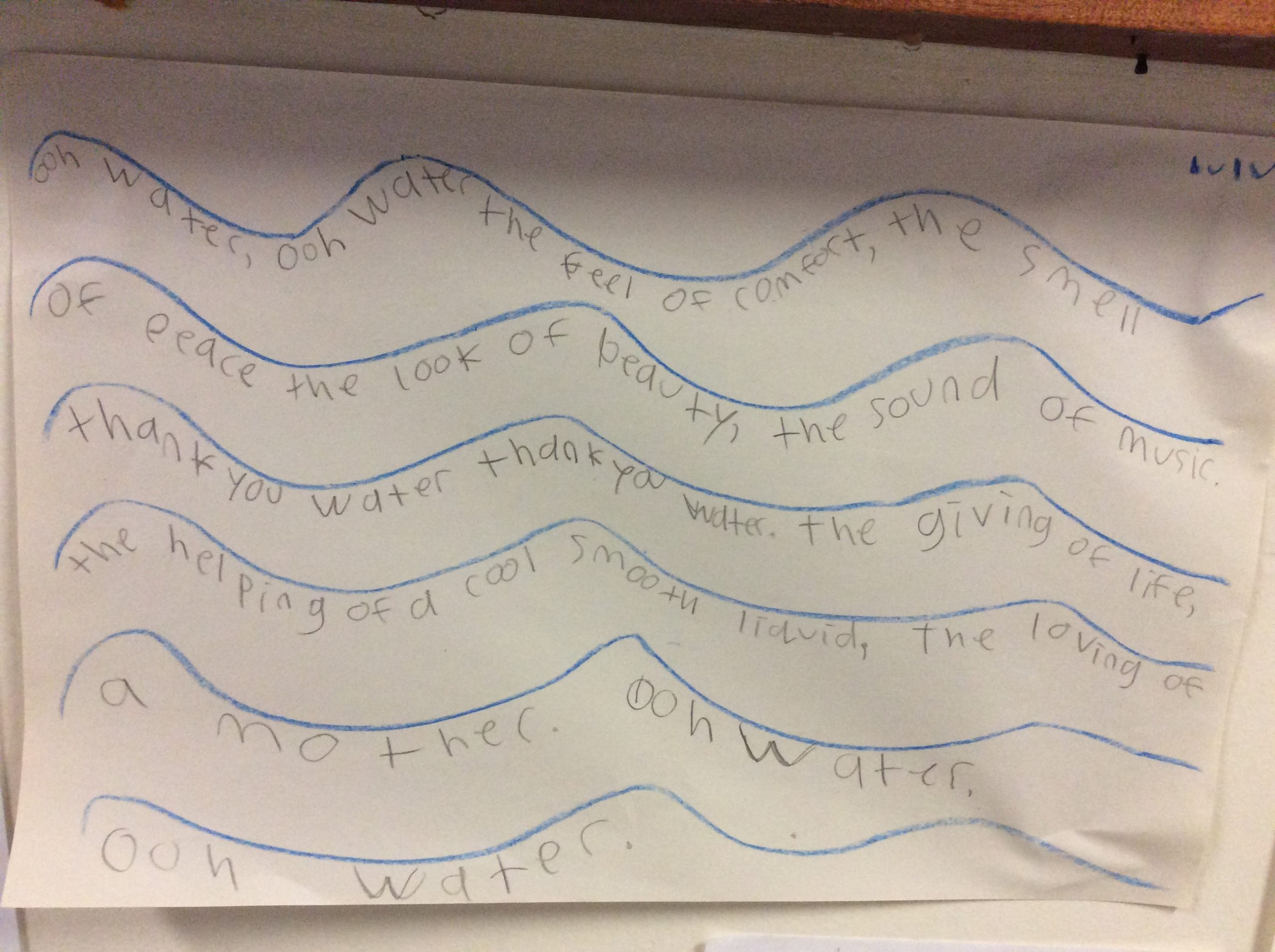
One rainy day, we brainstormed different sounds that water makes. Then, we learned about Concrete poems, which are poems that take the shape of the subject that they are describing. Students chose a shape and wrote a poem about water. 


Respond and Rebuild:
We will continue to explore poetry, self-expression and identity by writing an “I am Me….” poem. This lesson plan is from www.welcomingschools.org and can also be found in ETFO’s newest resource, Respond and Rebuild CRRP Lesson Plans. I am looking forward to integrating movement and choral reading to this work.

What are your favourite poems or poets to explore in the classroom?


International Women’s Day

Happy International Women’s Day!


What does this mean to you?
What does this mean to your teaching practice?


Feminism is for everyone

“Eighty-one percent of the members of the Elementary Teachers’ Federation of Ontario (ETFO) are women and, in many ways, the history of women teachers reflects the struggles of all Canadian women” (ETFO voice, 2016 https://etfovoice.ca/feature/looking-back-womens-history-ontario-teacher-federations). 

The world needs women. Feminism can be practiced daily by elementary educators in Ontario. Not because we are a group largely composed of women, but because a society that values women is one that promotes equity, opportunity, and growth. Feminism is not exclusively for women. Feminism in the classroom generates a culture founded on inclusivity. This environment creates a safe space for critical thinkers, status-quo challengers and allows students to grow into adults who advocate for positive change. 

You cannot have feminism without intersectionality 

You cannot support women without supporting Black women. Women who belong to racialized groups. Women with disabilities and special needs. Women who are part of the 2SLGBTQ+ community. FNMI women. Women who are marginalized by society. Elderly women. Young women. 

We must support all women, teach about all women, listen to all women and respect all women. To not value the experiences of all women is to misrepresent the harsh reality women have lived and continue to face. Inaccurate or nonexistent representation of women places student learning and well-being at a disadvantage.

Women deserve equitable opportunities and to see themselves reflected in curriculum 

Women merit the encouragement to become involved in science, math, engineering, technology and sports. Our students have the right to equitable opportunities in all aspects of curriculum and school activities. In order to promote these experiences in the classroom, students must see themselves reflected in past and current literature, stories, videos, guest speakers and so on. Let us get rid of those history books that exclude or depreciate women’s accomplishments and rather promote the positive impacts women have made, and continue to make in the world. 

Let’s continue to celebrate women today and every day

Cheers!

G.L.O.W.

GLOW (Gay, Lesbian or Whatever) is an extracurricular club for Grades 6-8 students to explore issues related to the 2SLGBTQ+ community and their allies. We have been meeting on-line every week since April 2020. Before COVID-19, we would meet during lunch at school. GLOW is a proud and positive space for students and educators to share their own stories, ask questions, make art, and take action. It is always the highlight of my week.

There is extensive data to hold schools accountable and support students who may identify as 2SLGTBQ+. Many of these students continue to be bullied or harassed by their peers, and pushed out of school. It is critical that educators respond to homophobic or transphobic comments and actions that are harmful, and to teach diverse stories of 2SLGBTQ+ communities with pride.  There are several resources provided at the end of this blog.

WHERE DO I BEGIN?
You don’t need permission to start a GSA (Gay-Straight Alliance). In fact, if a student requests a GSA, many schools are required to provide one. The first thing I did was reach out to my Grade 7/8 teacher friend, Tia Chambers. I asked her to share the role with me because everyone needs an ally. It didn’t take long before other staff wanted to join GLOW. This year, we are sharing the role of co-host with Kindergarten teacher, Nikki Kovac.

We start every meeting with an introduction, which includes our pronouns, and we answer a question. This helps us to build relationships and honour who we are. If there is a new member, we will review our GLOW Agreements. These agreements were generated together in our first meeting and describe what we hope for and what we need in order to feel comfortable.

After making our agreements, we invited students to share music that they like and we created a playlist. Some of these songs are performed by 2SLGBTQ+ performers, and other songs just make us feel good. We asked everyone for ideas about what they wanted to discuss, and the type of activities they might want to do. It is important for educators to amplify student voice, listen and respond with respect. Inspired and informed by the students’ ideas and questions, we prepare activities and questions to guide our discussion every week.

WHAT HAPPENS AT GLOW?
Here is an example of what we discussed at our GLOW meetings in February. As Valentine’s Day was approaching, I wanted to challenge the heteronormative narrative about love and romantic relationships that are reinforced by the media, and create space for more possibilities. I thought that we might discuss these issues and create our own Valentine’s Day cards with inclusive messages.

Our check-in question was about love. I asked: “What or Who do you love?” Then, I used these guiding questions: “What are the messages about love and relationships that you notice on television or in movies?” “Who do they include or exclude?” “How do these messages reinforce a “norm” about relationships that is heterosexual?” “How might we make Valentine’s Day more inclusive?” We also talked about self-love and different ways we might care for ourselves.

I shared a few examples of Valentine’s Day cards that provide a counternarrative, and I invited everyone to design their own inclusive Valentines. We talked about word play, and how Valentines often include puns and rhyme. As we drew, we listened to songs on our playlist. The following week, one of the students shared a poem that they had written about love that was inspired by our discussion. It filled my heart with pride.

RESOURCES
ETFO has created many resources to support educators who want to create brave and inclusive spaces in our schools.

My teacher friend, Melissa Major, has written two excellent articles in VOICE magazine, which can spark meaningful discussions with your students:

How to Become a Super Rad Gender Warrior reminds us that all members of a school community have the right:

To be free from discrimination and harassment.
To have a safe and inclusive learning environment.
To use the bathroom or change room they feel is the most appropriate.
To dress in a way that feels right and safe for them.
To be spoken to with their chosen name and gender pronoun.
To be treated with dignity and respect and the recognition that all gender expressions and identities are a normal and healthy part of a spectrum.
To present their gender in different ways at different times

Gender Neutral Language: An Activity for Day of Pink or Any Day explains how educators can use inclusive language to disrupt the gender binary.

Last Spring, I attended an ETFO webinar called “How to start a GSA and support 2SLGBTQ+ during Remote Learning” presented by Toronto teacher, Jordan Applebaum. It was intersectional and inspiring. You can watch the webinar in four parts here:

Be Proactive to Support Trans and LGBTQIA2S POC – Part 1
Be Proactive to Support Trans and LGBTQIA2S POC – ​Part 2​
Be Proactive: How to Start a GSA During Remote Learning – Part 3​​
Be Proactive: How to Start A GSA During Remote Learning – ​Part 4

I have also joined a few Facebook groups to support this work. Recently, I discovered that the Durham District School Board has created Pink Shirt Day and Beyond, a slide deck which is filled with lesson plans to use in the classroom or at your next GLOW meeting.

Shine on!!


Student-Led Conferences

Writing report cards and IEPs during COVID-19 was frustrating and stressful. COVID-19 has exposed deep inequities that affect families disproportionately, and it has impacted teaching, learning and assessment in significant ways. There are so many challenges to assessing and evaluating students on-line, and there are many strengths/skills that cannot be measured on a report card.

Needs Improvement
The current assessment, evaluation and reporting practices and procedures needs improvement. Ontario schools reflect a colonial, Eurocentric approach to curriculum and assessment that privileges some students over others. Report cards and IEPs measure students against standardized levels of achievement, which fail to recognize multiple and different ways of knowing. There is extensive research about the impacts of systemic racism and educator bias, which construct certain students as “failures”.

Most of our professional development is focussed on how we can meet the diverse needs of students and make the curriculum more inclusive; however, we also need to think critically about how assessment and evaluation practices reinforce racial inequity, and privilege student “success” and belonging. How might we transform our assessment and evaluation so that all students feel empowered to achieve excellence, and feel successful?

Collaborative Assessment
Student-Led Conferences are one example of how educators might disrupt traditional forms of evaluation, and facilitate a more collaborative approach to assessment. In a previous blog, I wrote about how collaborative assessment actively engages families, educators and students as co-learners, and helps to build trusting relationships that are reciprocal.

Student-Led Conferences, goal-setting and self-evaluation are powerful examples of how collaborative assessment can center student voice, support meta-cognition, and develop critical thinking and self-reflective skills. Collaborative assessment can increase student engagement and motivation, and has been shown to impact student achievement and behaviour.

What is a Student-Led Conference?
Every year, I prepare my students to facilitate a Student-Led Conference with their family in February and June. This is an alternative to the Parent-Teacher Conference, and often tells a counter narrative to the report card. Usually, there are 4-5 conferences happening in the classroom at one time, and I will rotate between families to listen and add to the discussion. These conferences can last anywhere between 15-45 minutes.

It is my hope that Student-Led Conferences support all students to feel successful, because they create meaningful opportunities for students to identify their strengths, and share evidence of how well they are meeting their learning goals. They also invite families and educators to share responsibility in the teaching and learning process.

What happens BEFORE a Student-Led Conference?
At the beginning of the year, most schools invite families to visit the classroom and meet their child’s teacher to learn about the curriculum expectations and classroom routines. During this discussion when I introduce our learning goals, I also share information about collaborative assessment and Student-Led Conferences. I explain the benefits, provide resources, and invite families to ask questions.

As we begin to build relationships and honour all of our “multiple intelligences” and different ways of knowing, I encourage students to set individual short-term goals that are “just right” for them. We talk about our strengths and struggles as we learn about different folks who have worked hard to overcome barriers and achieve excellence. Older students might engage in diagnostic surveys to find out how they feel about different subjects.

Portfolios
Every student will develop a portfolio, which will hold samples of work that demonstrate growth and learning in concrete ways. Some of these work samples will be chosen by the student and others will be chosen by educators. For example, I always include goal-setting and self-evaluation, as well as our monthly unedited, unassisted writing samples in their portfolio.

In January and June, in preparation for a Student-Led Conference, students will look through completed work, and choose samples of work that they are proud of. In my class, students staple a piece of paper to this work and write about why they are proud of it. Students also have the opportunity to look back at work samples, and identify how they know they are growing. This process can take several days, and it is a great opportunity to reflect and set new goals for Term #2 in January and/or for the summer in June.


Student Voice:
Before writing the report card, I always ask students to reflect on their Learning Skills and Work Habits and complete a self-evaluation. As a class, we might discuss each skill and generate “success criteria” and specific examples that relate to our learning together. I often try to include student voices in the report card, and quote their writing and self-reflection. It is critical that students understand the criteria by which they are being evaluated, and that they have opportunities to share their thinking about themselves as learners. It is invaluable formative feedback for educators and families.

During COVID-19, our Student-Led Conferences have continued on-line. I created a Google Form, and asked families to help their child answer questions about their learning. The form included opportunities for students to identify their strengths and areas for improvement in different subject areas, as well as the Learning Skills and Work Habits. These “stars” and “wishes”, or “GLOW” and “GROW” comments helped to guide our discussion during our virtual Student-Led Conference. I shared the screen and asked the students to read their ideas aloud, and invited families to share feedback. I was only able to support one conference at a time, but I believe it was worth the extra time.

What happens DURING a Student-Led Conference?
Student-Led Conferences will look different depending on the age of the student. In the early primary years, I provide families with a checklist and sentence prompts to help support the discussion. Older students can follow a script to lead the discussion. During a Student-Led Conference, students will share their portfolio with their family. Families are encouraged to listen, ask questions and share what they notice about their child’s growth and progress. My role is to circulate around the room, listen, and contribute observations and reflections to the discussion.

What happens AFTER a Student-Led Conference?
After a Student-Led Conference, I provide a template and ask families to write a letter to their child. This letter describes what they are proud of, and how they will help their child to achieve their learning goals. In my experience, families have found the Student-Led Conference to be meaningful and informative.

One Kindergarten parent wrote:

It really opened up space for dialogue about what types of learning matter to our child, some of which were a pleasant surprise to us that we can carry forward at home now as well. Also, being able to experience his learning environment at school from his perspective was deeply gratifying for us and self-esteem building for him. He was so proud to show us around the space and really demonstrate the independence he’s building there. Grateful for the entire process and so heartened to know that he is in a classroom and school environment that really values the agency and intelligence of children!
(Parent comment, 2018)

Student-Led Conferences are a powerful tool that educators can use to honour the multiple and diverse ways that students learn and share knowledge. They provide a counter-narrative to the report card, and engage families, educators and students in a collaborative learning relationship that celebrates student achievement with pride and possibilities.

Video Resources:
Grade 3, Grade 6, Grade 7/8 Student-Led Conferences
The Literacy and Numeracy Secretariat Webcast Professional Learning Series, Ontario Ministry of Education

Preparing for a Student-Led Conference, New Zealand

Student-Led Conferences: Empowerment and Ownership, Chicago

On becoming an anti-racist educator

Not everything that is faced can be changed, but nothing can be changed until it is faced. James Baldwin

2020 was like a personal worldview culminating activity that happened in slow motion. It was a merger of events and interactions that finally allowed me the ability to see race and racism more clearly than ever before. 2020 also showed me that there were many more threads woven into this tapestry and that I needed to look at them one by one in 2021. 

Although this post is not intended to be a look back, it definitely includes some reflection and understanding that are decades overdue.

Before ever becoming an ally, activist, and anti-racist there is something I have to do first. Confront my past and present racism. Whether it was implicit or explicit, recognizing the fact that racism is part of my past and present is the first step. In my past it came in the form of exclusion, cruel words, omission, inaction, fear, ignorance, and/or silence. In the present, my acknowledgement of racism in my life comes from waiting for so long to change what I do in the classroom before developing a culturally relevant and responsive pedagogy that was truly inclusive of the students I was entrusted to teach. It comes from sticking to a Eurocentric approach to history and by failing to include the voices of others who have been silenced by a whitewashed curriculum. 

I am sorry for all of it. Even though I was never called out or made to account for my actions I need to own them even though they cost me anything other that regret. This has taken decades to sink in because, ultimately, there was a cost, although so much of it went unnoticed.

Neither the bill, nor the collection agency arrived at my door demanding payback. Only after the realization that my racism accountability statement was seriously overdrawn was I moved to action. The clearest recollections come from middle school, where I remember not standing up for someone who was at the end of racist epithets and exclusion, and laughing while someone shared a racist joke. I see now a complete lack of caring, courage, and conviction to confront what I was willing to let continue by my complacency. I have to own this as part of my past because someone else always paid the price. What worries me more are the times that went by when I was oblivious yet still complicit to how racism was affecting those around me. There was a cost.

Even though it came to me without cost I was still given insight and the tools to effect necessary change each time I dived deeper into how to be an anti-racist beyond the hashtag. It started with some powerful reads such as the work of Ibraham X Kendi, Colson Whitehead, and Eddie S Glaude Jr.. Sharing Kendi’s Stamped from the Beginning with a men’s book club and subsequent conversations last summer have helped me more clearly understand the history of slavery, anti-black racism, and the problems they continue to cause in a time where all men and women are created equal. It wasn’t the readings alone that have brought me to this place though.

There were the #QuarantineEd Zoom calls with Matthew Morris, Jay Williams and educators from across the continent. These weekly discussions of race, identity and Black Lives Matter happened before, during and after the murder of George Floyd and the global outrage that followed. Through all of this, it seemed more beneficial to listen than speak. This extended to one on one conversations with friends and colleagues too. I am thankful for the grace with which wisdom, truth, and insights of anti-racist activists, teachers, and seekers of justice were shared. Learning more about the words white privilege, systemic racism, and black lives matter are now anchored in deeper understanding of the hurt and pain that has been caused by racism. 

I can never go back in time to repay what I owe for my past actions, but I can pay up, and pay it forward – a necessary change for which I hope we will each make a contribution. For me, atonement for past mistakes will be to acknowledge the racism in my life, and to continue listening and learning what needs to be undone and done differently to overcome it. Only then can I move forward to making sure it is eliminated from the spaces I occupy as an anti-racist educator. I want to be part of the generation that ends centuries of racial injustice in our communities and schools.

The words of the next generation sum it up quite nicely, “Racism sucks! Why would anyone want to be racist?” – grade 4 student.

Big thanks to Nicolette Bryan at Adrienne Clarkson PS, @callmemrmorris, @mstrjaywill, @MrTBradford, #QuarantineEd, @chrisjcluff, and #bc4men for the discussion, wisdom, and constant inspiration. Thanks for reading.