
Mentoring Moments: Importance of Our Names

I always wanted to write why the name each of us are given is important to consider. Each year we have the privilege as an educator to touch and impact families as we teach their children. I emphasize as a teacher we teach children that belong to many cultures and backgrounds…As a teacher we have so many opportunities to reflect on pronunciation of names, spelling of names and the chance to talk about each individual story behind the name that we are given. As we celebrate World Teacher Day this month reflect on the privilege we hold as teachers to embrace diversity, be inclusive and bring about change in the education system that we work for towards a better future for all.

This blog starts with you getting to know me a bit better as an Educator in Ontario. Nilmini is my middle name- it was given to me by my parents because “Nil” in Sinhala means the colour Blue. “Mini” in Sinhala translates into “Gem”…Nilmini means a Blue Gem a precious stone, and important name that I was given. I love it…I never really thought about how when I was born the white part of my eyes had grey and blue tones….Moreover, now as an educator I reflect on why my name holds a special place in my heart since it is also apart of my heritage the beautiful country I was born in Sri Lanka before I immigrated to Canada with my family as a child.

“Each year we have the privilege as an educator to touch and impact families as we teach their children.” @NRatwatte

Ask your students about their Name Stories

As an educator there is no better way to build a trusting relationship than to ask students about who they are so you can connect it to the curriculum that is being taught each year.

  • Build in lessons through out the year to get to know your students names
  • Their heritage
  • Their traditions
  • Call students by their names – real names
  • Don’t change them since they are long
  • Do give them pride and ownership in using their own name

Some Books that can help you start the conversation about Names

Name Jar

I love using this book to discuss the importance of keeping our language cultural name and customs. The book helps us talk about inclusion practises in a school setting and importance of feeling belonging.

Chrysanthemum

No better book for me as a teacher since my name is very long and I go by my middle name Nilmini that is a family tradition.

They call me Number One

A book I start the conversation with about the importance of making students feel welcome when learning about the First Nations Peoples of Canada and the Residential School System.

Growth Mindset to Teaching

I encourage you as an educator to embrace the differences and not shorten names but call students by their real names to give them respect for their identity. Names are apart of each individual identity since they are interconnected to who we are, our cultural heritage or our customs.

  • Ask Questions
  • Encourage sharing
  • Embrace the Learning

In my culture we have a “letter sound” that is given to us when we are born according to our horoscope and that is the sound that we use to name each child according to be prosperous in our lives. These traditions carry with us over the generations because they are meaningful and they encourage customs that hold our heritage over the centuries close to our hearts.

Reflection Question: Think about why your name is important; write down your name story that you can share with your student during a lesson and courageous conversation.

Yours in Education,

Nilmini
Top Ten Tips for Attending Virtual Professional Learning for Educators

So much learning is happening virtually now and it is amazing.  I recently attended a virtual EdTech Conference in Nebraska!  This is an opportunity I never would have been able to take advantage of before the pandemic.  I have attended a number of virtual conferences during COVID and I’ve also organized and facilitated virtual learning over the last year and it is a different way to get your learn on!

In order to really get the most out of Virtual Professional Learning here are my go-to suggestions:

  1.  Organize your time and your conference selections in advance.  If there are many choices, take the time to do the research on the session and on the presenter. If there are digital links for presentations on the conference site to add into a digital tote-do it before your sessions so that you aren’t tempted to leave the session in order to do so.  Thank you ISTE LIVE 21  for the digital tote feature!
  2. Be PRESENT.  Be mindful and intentional about your learning.  If it isn’t the kind of learning that you were expecting, hop over to another session otherwise you’ll be resentful of wasted time and learning.
  3. Put your “out of office” email message on and don’t check your email.  If you were in an in-person setting, checking your email would be rude. This is time for your learning so treasure and protect that time.
  4. When possible attend LIVE sessions not asynchronous or previously recorded sessions.  LIVE sessions have opportunities to engage and ask questions which makes the learning is deeper.
  5. Have a PLP (Professional Learning Partner) or two! No one really wants to go to a conference by themselves. Some of the best learning takes place when you share what you learned in a session that your PLP wasn’t able to attend! You double the learning!
  6. Participate in the learning.  If there is a chat feature then put who you are and where you are from in the chat.  Ask questions, engage and connect.  This is where you grow your Professional Learning Network.  In a face to face conference you would sit down and meet new people.  Think of how you would engage with others in a real conference setting.
  7. TWEET! TWEET!  Get the conference hashtag, follow it, retweet and tweet about your learning and the presenters.  Follow those presenters and give them a shoutout. Take a picture of the slide that they are sharing and post it (without people’s faces and names in it.)  It is awesome as a facilitator to see the tweets afterwards.  It is timely feedback and motivational for the presenter.
  8. Take notes.  My PLPs and I recently collaborated on note taking using a Google Slide deck while attending a conference.  We pasted links, took screenshots and put notes of important information into the slide deck so we have the learning for later.
  9. Participate.  As a presenter, it isn’t nice to present to the empty boxes on Zoom or Webex. Just as in person, it is nice to see the reaction of the audience to pace yourself and to know that they are still with you! That being said, if you are eating or dealing with your dog or family or have decided to multi-task, leaving your camera on can be distracting for the participants and the presenter.  If there is a question asked in the chat, respond! There is nothing like being a presenter left hanging.  If there is a poll, a word cloud, a Jamboard,or a Kahoot, play along! The presenter created these things in order to make the presentation interactive for the adult learner.
  10.  Take Breaks.  Make sure you look carefully at the schedule (and the time zone) in order to plan your screen, water, coffee, bathroom, movement or snack breaks.

The most important thing to remember is that the presenters put time and effort to share their learning and expertise with you.  It is nerve-wracking to present to a group of educators.  Tech savvy people have tech issues too.  Give presenters grace and remember to thank them and provide feedback for their work and expertise.  They will appreciate it!


Transition Planning

After three years together, many of my fantastic students are transitioning to high school this year. When I think about them moving on, I am incredibly emotional as they have grown so much over the past three years and I am really going to miss them! But before I can sit down and have a good cry about their departure, I must complete something called a transition plan for all my students.

With the introduction of PPM 156 in 2014, a transition plan is now required for all students who have an IEP, whether or not they have been identified. Transition plans are often embedded within the IEP and are reviewed as part of the IEP review process. Transition plans can be made for in class, grade to grade or school to school transitions. In some circumstances, the board may decide to create a transition plan for a student without an IEP but who is receiving Special Education supports. In addition, PPM 140 outlines the mandatory use of ABA methods to support students with Autism Spectrum Disorder in all aspects of school including transitions.

PPM 156 outlines what must be included in Transition Plans. They must include: goals, support needs, the actions required to achieve the goals, roles and responsibilities, and timelines. The aim is to have students develop independence skills so that they can be successful in moving through their school career in Ontario. Below are some examples of transition goals I have used for students in the past.


Examples:

Goal: Student will independently transition between activities within the school day.

The actions required to achieve the goals: Student will use anxiety reducing choice board when feeling overwhelmed during transitions.

Roles and Responsibilities: Teacher and Educational Assistants will develop choice board in consultation with the student. Teacher and Educational Assistants will support student in identifying times in the day when the choice board will be beneficial.

Timelines: Choice board created in September. Used as needed throughout the school year.


Goal: Student will transition to a new school

The action required to achieve the goal: Student will receive a social story about their new school.

Roles and Responsibilities: Teacher and Educational Assistants will review the social story in class with the student. Parents will review the social story over the summer prior to the transition to a new school.

Timelines: Prior to the transition.


According to PPM 156, transition meetings are not a mandatory part of the process of transitioning between schools. However, if you are able to arrange to meet with teachers who have taught your students at another school or who will be teaching them in the future, it is very beneficial. In the past two years, I have presented my students to high schools and I have attended many presentations for my incoming students. These presentations are very beneficial because they allow time for questions and discussion about how to best support the student’s needs.  If you have never presented a student at a transition meeting before, here is some information that I highlight:

  • Background information: name, date of birth, IPRC identification, language(s) spoken at home
  • Supports: Information about any support being provided in or out of school such as Speech and Language Support, Occupational Therapy, Behaviour Therapy etc..
  • Student’s Strengths and Needs
  • Medical Information: medication that the student takes, allergies, special equipment that they use.
  • Communication: verbal, assistive device, augmentative communication etc.. Also, what kind of supports they have to support their understanding in the classroom such as visual schedules, social stories, choice boards, independent work system bins.
  • Interests, Motivators, Reinforcements, Dislikes
  • Literacy and Numeracy Skills: letter, word and number recognition, ability to write and recognize personal information such as phone number and address.
  • Assistive Technology: Boardmaker, Clicker 5 or 6, iPad, touch screen, wireless mouse, SMARTBoard.
  • Mobility: outline support needed for student to move around the classroom and school such as adult assistance or a walker.
  • Behaviour: Outline any physical aggression or challenges with self-regulation.
  • Personal Care: level of independence with eating, dressing and toileting.
  • Transportation: requirement of a travel assistant or harness to successfully ride a bus to school.

Additional Resources:

Niagara Catholic District School Board created a great resource to support with transition planning. There are many great examples of transition plans in this resource and is a great tool to use if you have never written a transition plan before.

A group of school boards collaborated on a one page support guide for educators about writing transition plans.

The Ministry of Education has created a resource that is an overview of Special Education in Ontario.

“Just” an Occasional Teacher

Hello everyone!

I am thrilled to announce that I will be joining the Heart and Art blogging team this school year. I look forward to time spent being passionately curious with all of you.

As educators, it feels we are under the spotlight this year to openly reflect in conversations with curious strangers on how the school year is going amidst the pandemic. Everyone is wondering how educators are creating activities and lessons for students that involve social distancing, mask wearing and constant hand sanitizing. When asked personally about how this crazy year is affecting me, I often find myself replying with “I am just an Occasional Teacher”. 

I love my job and feel valued in the school system, especially this year with the demanding need for Occasional Teachers across Ontario school boards. I feel important, worthy and necessary. Why do I sell myself short each time by adding the word “just” in front of my job title? 

The word “just” has so much power and holds the potential to remove importance from meaningful concepts. As I reflect upon my own use of the word “just”, I begin to think about how this small but significant word can affect my students. Psychologist Carol Dweck talked about students’ growth mindset and the power of the word “yet”. In terms of growing and learning, students can use the word “yet” to talk about what they cannot do, but will learn to do after practicing, taking chances and making mistakes (for example: “I do not know how to multiply… yet”).

Does the word “just” have the opposite effect? Instead of granting power and adding room for growth like the word “yet” does, “just” seems to diminish the power of whatever follows.

Let’s harness the power of “yet”! Here are some phrases that should not follow the word “just”:

  • Students are “just” playing.

Play is how students explore, investigate, discover and create what they don’t know yet. No matter age or ability, each student deserves play opportunities in an environment that respects and celebrates the benefits play can have on academic progress, social and emotional growth and overall student well-being. 

  • “Just” Art, Phys. Ed, Social Science or any subject that isn’t Math or Literacy.

Each subject and learning area contributes to holistic development while providing opportunities for learning and success in areas which students have yet to grow. Students deserve to know that each subject is important and personal accomplishments can be celebrated in sports, the arts, etc. With the pressures to push for success in reading, writing and math, we must not let talent and passion in other areas go unnoticed, unacknowledged or undervalued.

  • You are “just” an Occasional Teacher/Rotary Teacher/whatever your role is in a school.

To all my fellow educators out there, no matter what you are doing, no matter where you are, you will ALWAYS be more than “just” a (insert job title here) to your students, their families and the school community.

You are passionate.

You are important.

You are valued.

For what you know now and for what you do not know yet

“Techie People”

As someone who is passionate and truly geeky about the power of technology in education, I often hear from my fellow teachers, “I’m not really a techie person.”  Now, I get where they are coming from because technology can be intimidating.  Many times I’ve said, “I’m not really a math person.”  I can “do” math and I can “learn” math but it doesn’t get me fired up quite like tech does.  However, over the last few months educators who weren’t really “techie people” didn’t have much of a choice other than to use tech in order to do their job.  I cannot imagine what that must have felt like for some educators.  For some educators, it must have been terrifying.  For me, it would have been like my Principal saying that I was now the new math consultant for the intermediate grades.  It would have caused me serious panic and anxiety. I probably would have considered resigning but I would have dug in and done the best I could with the tools available to me and I would have reached out to fellow colleagues and leaned on their expertise. THAT is what teachers all over the province of Ontario were doing after the March Break, teaching and learning by the seat of their pants.

As an innovations consultant what I witnessed during the weeks of distance learning was fellow educators doing what they do best; rolling up their sleeves, getting in there and figuring the tech stuff out.  As I (along with some fantastic  and enthusiastic educators in my board) provided webinar workshops on technological tools for teachers, I saw teachers who were self proclaimed Luddites attending and showing appreciation for what we were doing.  The resiliency of educators during this time has been absolutely amazing. The necessity of teaching through technology broke through an invisible barrier that has existed for those teachers who thought that you had to be a “techie person” in order to use tech in education.  Teachers were no longer afraid to try a new technological tool, to make mistakes and ask questions. Teachers are discovering the power educational technology and they’ve been bit by the tech bug.  Educators will always continue to seek out new and innovative ways to deliver curriculum to students and learn as they go-no matter how steep the learning curve.  Some teachers who would have quickly proclaimed, “I’m not a techie person” before March Break are now excited about the possibilities of using technology even in their face-to-face classrooms.  The Educational Technology Geek Community is over-the-moon excited about increasing it’s membership!  We are a friendly bunch, inclusive, sharing and passionate and we’re happy to help.

Content and Copyright Considerations in Distance Learning

The move to distance learning has certainly had some pitfalls. On top of all of the programming changes and logistical considerations, we’re hearing horror stories of the inappropriate use of digital tools and teachers unintentionally violating copyright laws.  It is crucial for teachers to make themselves aware of the privacy and security guidelines for their school board while also being aware of Fair Dealing and Copyright laws for online content.  Here is some food for thought, and a few tools and resources that may be helpful for teachers while creating and linking to online content.

Posting YouTube Videos

YouTube videos may be used for educational purposes in Canada so long as the creator and the source of the video is credited.  However, you might want to consider not posting a direct link to the YouTube video on your learning platform.  This link will take the students to the YouTube channel and the student may then freely search other content.  Maybe it is just me, but I’ve experienced the liquor advertisement pop up while watching a video in my classroom or the next video automatically plays and the content is not suitable for students. Teachers may want to try using online tools such as ViewPure or Safesharetv before copying the link into a learning platform.  These tools filter out advertisement and connects only the the video itself.

Reading Books Online to Students

A number of Canadian Publishers have opened up access to Educators to read published works online.  There are guidelines that an Educator must follow in order to do post an online story time.  For a list of participating publishers and more information on how to respect copyright for Canadian authors visit access copyright.  Scholastic Canada has also extended access to Educators to read published works online. The instructions on how to use Scholastic works is a little different.  Visit the Scholastic Read Aloud portion on the Scholastic Canada website in order to follow their rules and regulations.

FairDealing and Copyright

There are copyright laws specific to Education.  If you want to make sure that you can use something without violating copyright laws you can use the Fair Dealing Decision Tool.  Teachers can also refer to the Copyright Matters Document.

Privacy Policies and Statement

At the bottom of every home page for an educational digital tools you will find a link to their privacy policy or statement. I highly recommend reading what you are signing up for as a teacher when you click on a new Educational digital tool. Be aware of what data is being collected, where it is being stored and which third parties are attached to the company and make an informed decision for yourself.  Be proactive and check with someone in the Instructional Technology department at your school board to ensure that you are following recommendations before asking students and parents to sign up for a digital tool.  It is a lot for teachers to think about while at the same time just trying to get a handle on teaching in the midst of a pandemic. There is a big learning curve for everyone. Try to continue to go slowly. The move to distance learning is helping Educators truly understand the importance of digital citizenship.

Mindfulness in Education

There is a significant amount of research about the benefits of mindfulness in education.  Much of the research shows that consistent mindfulness practices in classrooms lead to lower stress levels and higher test scores.  It is a hot topic and wanting to to do the best for students, we are seeing more of it in schools. There are all kinds of books and videos on breathing and mindfulness exercises for reduction of stress for kids.  I have learned to practice meditation myself and I have used some mindful practices with my students and believe that at the right time and in the right circumstance mindfulness practices can be powerful.  I am left wondering, however, if the practice of mindfulness in some cases is becoming routine or something to check off on a plan and not truly ‘mindful’ at all?

Let’s take yoga for example.  Yoga instructors go through intense hours of study in order to practice and teach others.  However, teachers pop on a kids yoga YouTube video and we’re “being mindful”.  I’m not being critical.  I have done it myself!  My question or wondering is; what are the implications of these actions on a broader level?  Yoga is about mind and body.  My worry is that we are literally “going through the motions” with students and not really giving them a true mindful experience.

How about a timed meditation?  Everyone drop everything and take part in a guided meditation right now!  I understand the idea behind this strategy; the whole school is engaging in the practice at the same time. However, isn’t the idea that students will learn to develop mindfulness skills to help them in stressful situations? It is a starting place, but hopefully there is more in-depth practice and explicit teaching happening.  Otherwise isn’t it more a kind of fast-food approach to mindfulness?

Mindfulness needs to have an environment that is conducive to practice.  Norms and expectations need to be established and there has to be “buy in” from the students. Students require a variety of skills in order to truly practice mindfulness and they need to be explicitly taught so that students can use what they know in order to transfer the knowledge into other situations.  Finally, it has to be modeled by the adults in the room.  If there is mindfulness being practiced, everyone should be doing it and debriefing the experience and learning together.  If a teacher is busy organizing the classroom library while the students are being mindful, it won’t demonstrate that mindfulness is valued.

We can’t be experts at everything.  We can’t always have a certified yoga teacher come into our classroom.  Whatever we are teaching it must be done with intention, done explicitly and through modeling.  Going through the motions out of habit and routine may do more harm than good.


Triggers and Habits in Teaching Part One

Dreaded Seating Arrangements

Almost every teacher I talk to says, “I have a really difficult class this year.”  The difficulties identified are most often tied to “behaviour” issues.  In my experience effective classroom “management” can be connected to dynamic programming and developing solid relationships with students. Many of us go to things like Class Dojo or incentive programs to “manage” behaviour and some have their merits.  However, they might “manage” behaviour, but does it help student to learn to self-regulate?  I understand that there are students who have behaviour safety plans that can provide challenges and I do not mean to downplay the effect that even one student’s behaviour can have on an entire class.  However, there are ways in which we can have small tweaks in our triggers and habits in teaching that will have a positive outcome on developing a community of learners.

So what is a trigger?  A trigger in psychological terms can  used to describe sensations, images or experiences that re-visit a traumatic memory.  It can also mean to make something happen very quickly; a reaction.  It is also referred to as an event that kicks off the automatic urge to complete a habit.*  Habits are seen as something that people do often or regularly.  Habits can even be unconscious behaviours and sometimes difficult to stop.  What do triggers and habits have to do with teaching?

Over the years I think I have become more self aware in the classroom about my own triggers and habits.  It is easy to continue to do a routine in a classroom simply because it is something that we have always done. Even when we have sound pedagological reasoning, it can be difficult to change or cease a habit. For example, for many years I put names on the desks of students before they entered the classroom on the first day of school.  I don’t really know why I began this habit.  Besides a wedding, some kind of gala or a reservation at a restaurant, I get to choose where I sit every day.  It is a fairly important life skill.  I’m not going to find my name on a seat on the city bus.  Once I recognized that this routine was purely out of habit and was “triggered” by the first day of school, I decided to change it up.  On the first day of school with a grade 4-5 class, the students came into the room and sat wherever they wanted. I admit that this made the perfectionist in me who loves order, routine and habit rather uncomfortable.  I had some students sit in groups, some in pairs and some on their own.  Then we had a class meeting about how they had felt when they entered the room and had to make their seating choice.  There was talk of anxiousness, sweaty palms, heart rate increase, fear of missing out and for some it was no big deal.  I decided to create a google form to survey the students about where to sit in the classroom, how often we would change it up and who would decide.  The results of the survey were fascinating.  Some students wanted me to choose where they sat and wanted to have that same spot every day for 194 days.  Some never wanted to “sit” in a group but wanted to be a part of it during group work time.  We came up with a plan that each Monday the students would choose where to sit for the week and the students who wanted a regular spot would be able to keep it and the other students would respect their choices without question.  We also had some extra choices for seating that students could go to if their choices for that week weren’t working out.  The students gained incredible insight into self-regulation.  I heard things like, “I sat with Gracie all week and we’re such good friends, I didn’t get my work done so I’m not going to sit with her next week.”  or  “I don’t hang out with Olivia but I know she is a serious student so I’d like to sit with her in a group.”

It isn’t easy to be self aware while we are trying to keep our head above water, collect permission forms, listen to announcements, adjust our day plan for the assembly that was announced, deal with a parent that wants to chat in the hallway AND teach curriculum.  I GET that…however, being aware of triggers and habits and making small tweaks to our teaching behaviour can make a big difference in our classroom community.

*106:Triggers-The Key to Building and Breaking Habits, Chris Sparks, 2018


Daring Classrooms

I state the obvious when I say that teaching is a demanding job.  If you are reading this, you are most likely a teacher and this is not news to you.  I’d like to highlight a resource that feeds the soul of a teacher (and quite frankly a human being) while also providing some strategies for integrating that soul feeding into your classroom practice for your students.  Wait, what…that exists?  It is a website from Brene Brown called Daring Classrooms.  If you haven’t heard of her yet, you can find “The Call to Courage” on Netflix and/or her Ted Talk on Vulnerability.  She is inspirational in leadership, in life and in work.  Here is a snippet from her #DaringClassrooms website:

“Teachers are some of our most important leaders. We know that we can’t always ask our students to take off the armor at home, or even on their way to school, because their emotional and physical safety may require self-protection.

But what we can do, and what we are ethically called to do as teachers, is create a space in our schools and classrooms where all students can walk in and, for that day or hour, take off the crushing weight of their armor, hang it on a rack, and open their heart to truly being seen.

Teachers are the guardians of spaces that allow students to breathe and be curious and explore the world and be who they are without suffocation. Students deserve one place where they can rumble with vulnerability and their hearts can exhale.

And what I know from the research is that we should never underestimate the benefit to a child of having a place to belong—even one—where they can take off their armor. It can and often does change the trajectory of their life.

Teachers: Everyday should be Teacher Appreciation Day. I am so grateful for you and your willingness to show up and create brave, safe spaces where our children can learn, grow, and be seen.”

Some of the short (8-12 minute) video resources from Daring Classrooms include:

How do we avoid the pressure to please?

How do teachers manage oversharing?

How do we help parents understand failing as part of the learning process?

Does the word “disappointed” shame students?

In addition to the video resources there are free downloads for resources, parenting the classroom and daily life.  There are pdfs that you can print out for working with students.  My favourite one is the list of core emotions.  Sometimes when students have triggers they can’t always name or explain the emotion that caused the trigger in behaviour.  Being able to learn about the names and the definitions of core emotions is helpful for students to self-regulate.

Every year in a classroom brings new challenges.  In fact, every day in a classroom will bring on a new challenge.  I hope that as you lead your own #DaringClassroom you will find this resource helpful and that it may feed your teacher soul.

The Gender Gap in Technology

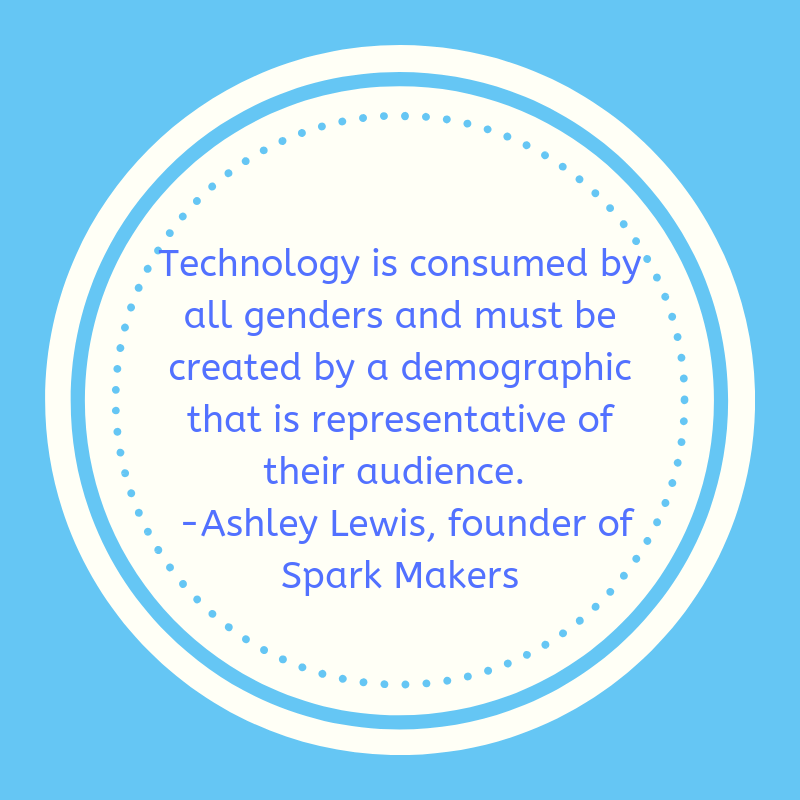
Quote for blog

According to a recent report* by ICTC (the Information and Technology Information Council) Canadian women represent about 50% of the overall workforce but represent only 25% of the technology industry workforce.  Of the 100 major tech companies in Canada only 5 have female CEOs and 1 Co-CEO.   26% of the tech companies have no women in senior leadership at all.  There is a gender wage gap in the industry of $7,000-$20,00 per year.  When I read these statistics I wondered as educators, what can we do about the gender gap in technology?  This is not an exhaustive list, but it is a place to begin:

1.  Build her confidence in her abilities.

2. Cultivate a community of supportive peers.

3.  Provide a STEM/STEAM club for girls.

4. Ensure that access to technology and computer experiences is encouraged and inclusive.

5. Foster interest in computing careers.

6. Be a role model as a LEARNER.

May 11th is National Girls Learning Code Day.  If you are looking to encourage coders in your school, why not begin on May 11th?  Below you will find links to resources for beginning coding.  Many students code on their own at home and may appreciate the opportunity to mentor fellow students.  The resources attached will get you started.  There is no special equipment or robotics required.  Teachers do not have to be expert coders to encourage their students.  Teachers can be role models of resilience, risk taking and problem solving by learning alongside their students.  Teachers only need to open the door and expose their students to the opportunities.

Girls Who Code Canada

National Girls Learn Code Day

Canada Learning Code

Scratch

Hour of Code

Code.org


*Cutean, A., Ivus, M. (2017). The Digital Talent Dividend: Shifting Gears in a Changing Economy. Information and Communications Technology Council (ICTC). Ottawa, Canada.

Elaborated and written by Alexandra Cutean (Director, Digital Innovation Research and Policy). and Maryna Ivus (Senior Analyst, Research and Policy) with generous support from the ICTC Research and Policy Team.